Why Do It?
Understand how others view your behavior.
Understand why you find some relationships more productive
than others.
Develop insight about your behavioral strengths and
behavioral weaknesses.
Make reliable assessments about another person’s behavior.
Develop a way of communicating with others that considers their
behavioral needs and preferences.
Build on your strengths and the strengths of others to
develop productive relationships.
Assertiveness Ratings
I perceive myself as:
Responsiveness Ratings
I perceive myself as:
Quiet ..........................................Talkative
1 2 3 4
Open..............................................Closed
4 3 2 1
Slow to Decide.................... Fast to Decide
1 2 3 4
Impulsive ..................................Deliberate
4 3 2 1
Going along ........................ Taking charge
1 2 3 4
Using opinions......................... Using facts
4 3 2 1
Supportive.............................. Challenging
1 2 3 4
Informal ........................................ Formal
4 3 2 1
Compliant ..................................Dominant
1 2 3 4
Emotional..............................Unemotional
4 3 2 1
Deliberate ........................... Fast to Decide
1 2 3 4
Easy to know ........................Hard to know
4 3 2 1
Asking questions ...........Making statements
1 2 3 4
Warm................................................Cool
4 3 2 1
Cooperative............................ Competitive
1 2 3 4
Excitable ..........................................Calm
4 3 2 1
Avoiding risks ........................ Taking risks
1 2 3 4
Animated................................ Poker-faced
4 3 2 1
Slow, studied............................ Fast-paced
1 2 3 4
People-oriented.....................Task-oriented
4 3 2 1
Cautious.......................................Carefree
1 2 3 4
Spontaneous ................................Cautious
4 3 2 1
Indulgent........................................... Firm
1 2 3 4
Responsive .........................Nonresponsive
4 3 2 1
Nonassertive ...............................Assertive
1 2 3 4
Humorous......................................Serious
4 3 2 1
Mellow ................................Matter-of-fact
1 2 3 4
Impulsive ................................ Methodical
4 3 2 1
Reserved.....................................Outgoing
1 2 3 4
Lighthearted .................................. Intense
4 3 2 1
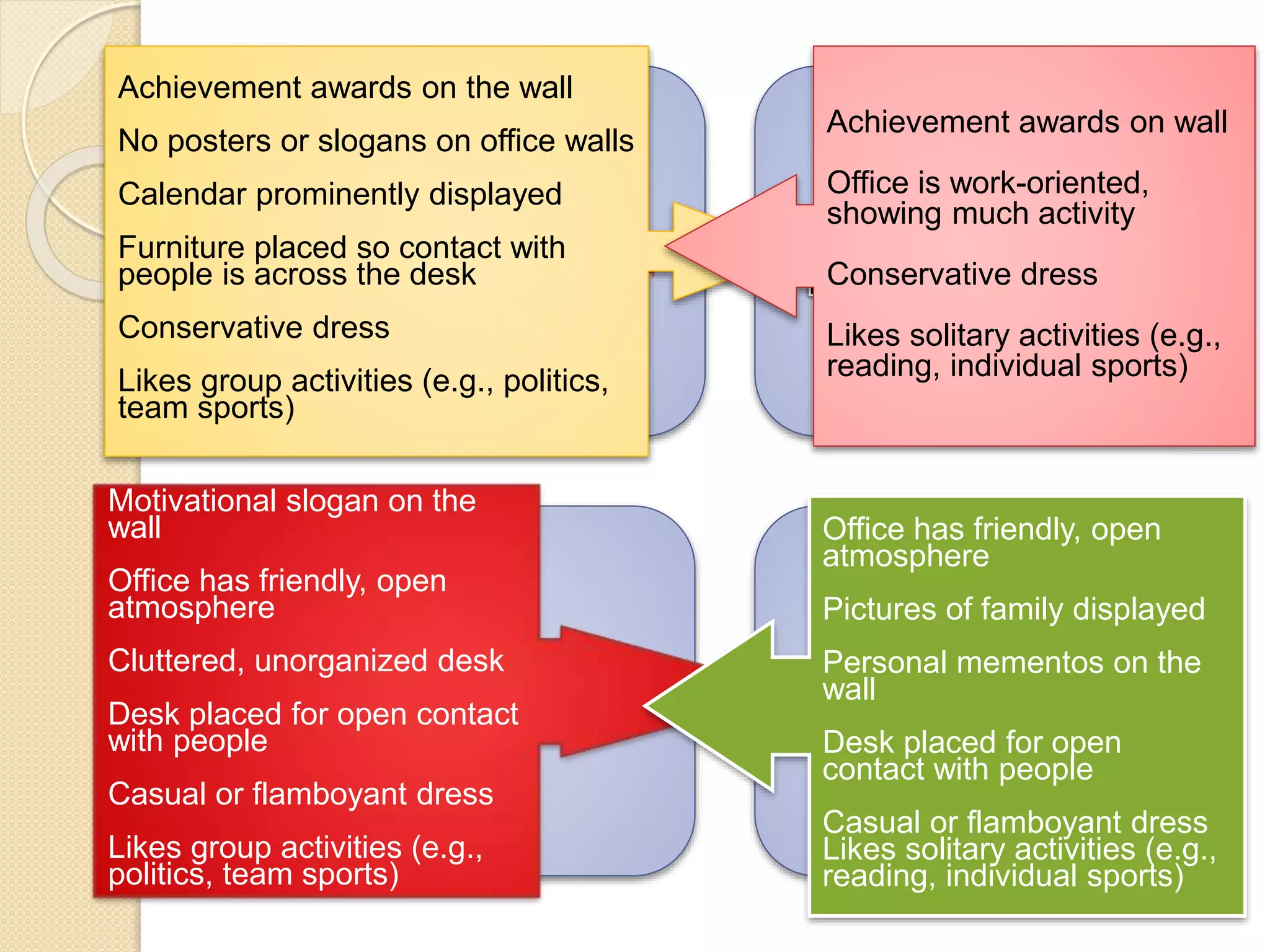
Amiable
Achievement awards on the wall
No posters or slogans on office walls
Calendar prominently displayed
Furniture placed so contact with
people is across the desk
Conservative dress
Likes group activities (e.g., politics,
team sports)
Achievement awards on wall
Office is work-oriented,
showing much activity
Conservative dress
Likes solitary activities (e.g.,
reading, individual sports)
Motivational slogan on the
wall
Office has friendly, open
atmosphere
Cluttered, unorganized desk
Desk placed for open contact
with people
Casual or flamboyant dress
Likes group activities (e.g.,
politics, team sports)
Office has friendly, open
atmosphere
Pictures of family displayed
Personal mementos on the
wall
Desk placed for open
contact with people
Casual or flamboyant dress
Likes solitary activities (e.g.,
reading, individual sports)
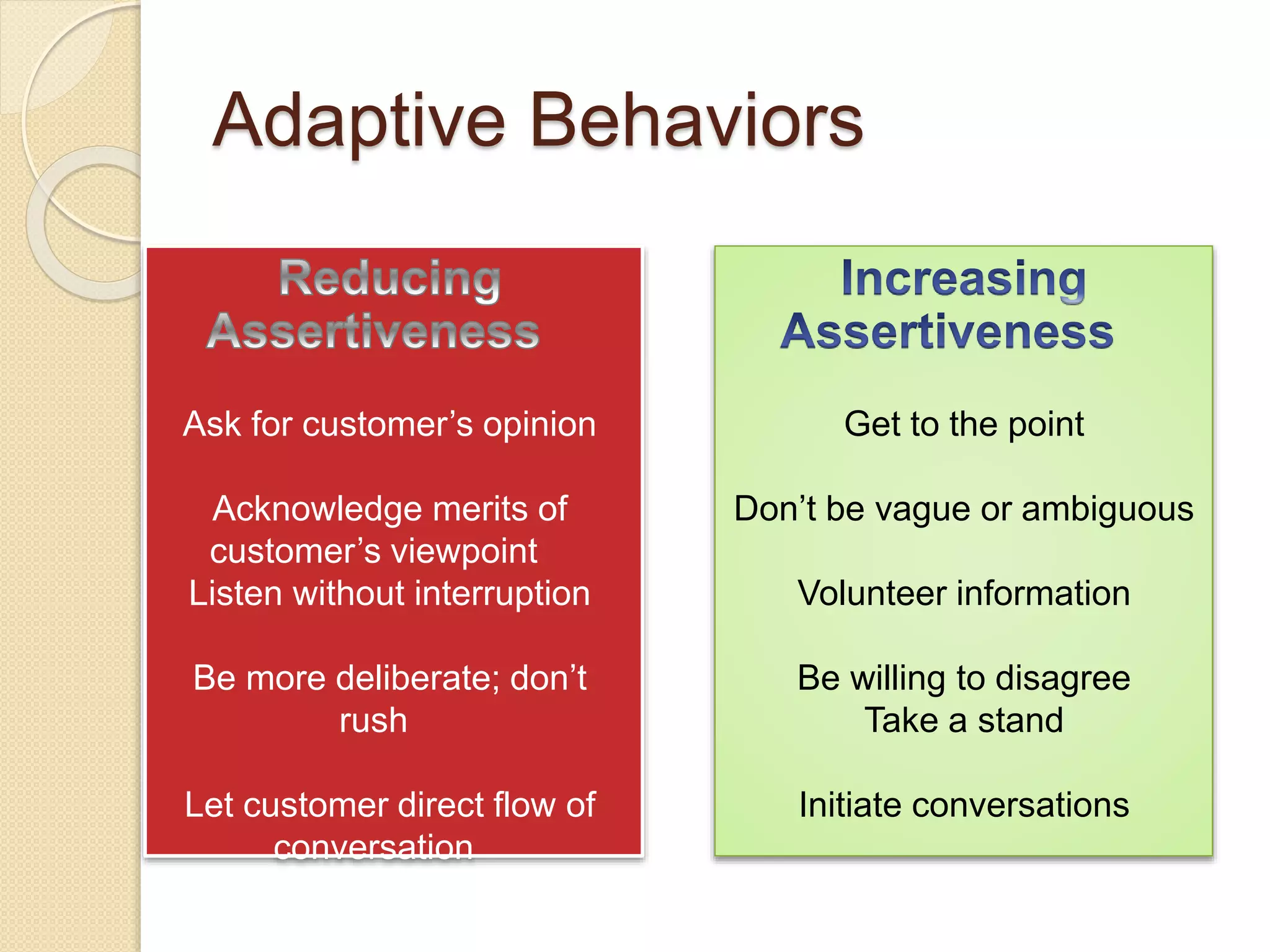
Adaptive Behaviors
Ask for customer’s opinion
Acknowledge merits of
customer’s viewpoint
Listen without interruption
Be more deliberate; don’t
rush
Let customer direct flow of
conversation
Get to the point
Don’t be vague or ambiguous
Volunteer information
Be willing to disagree
Take a stand
Initiate conversations
6-8
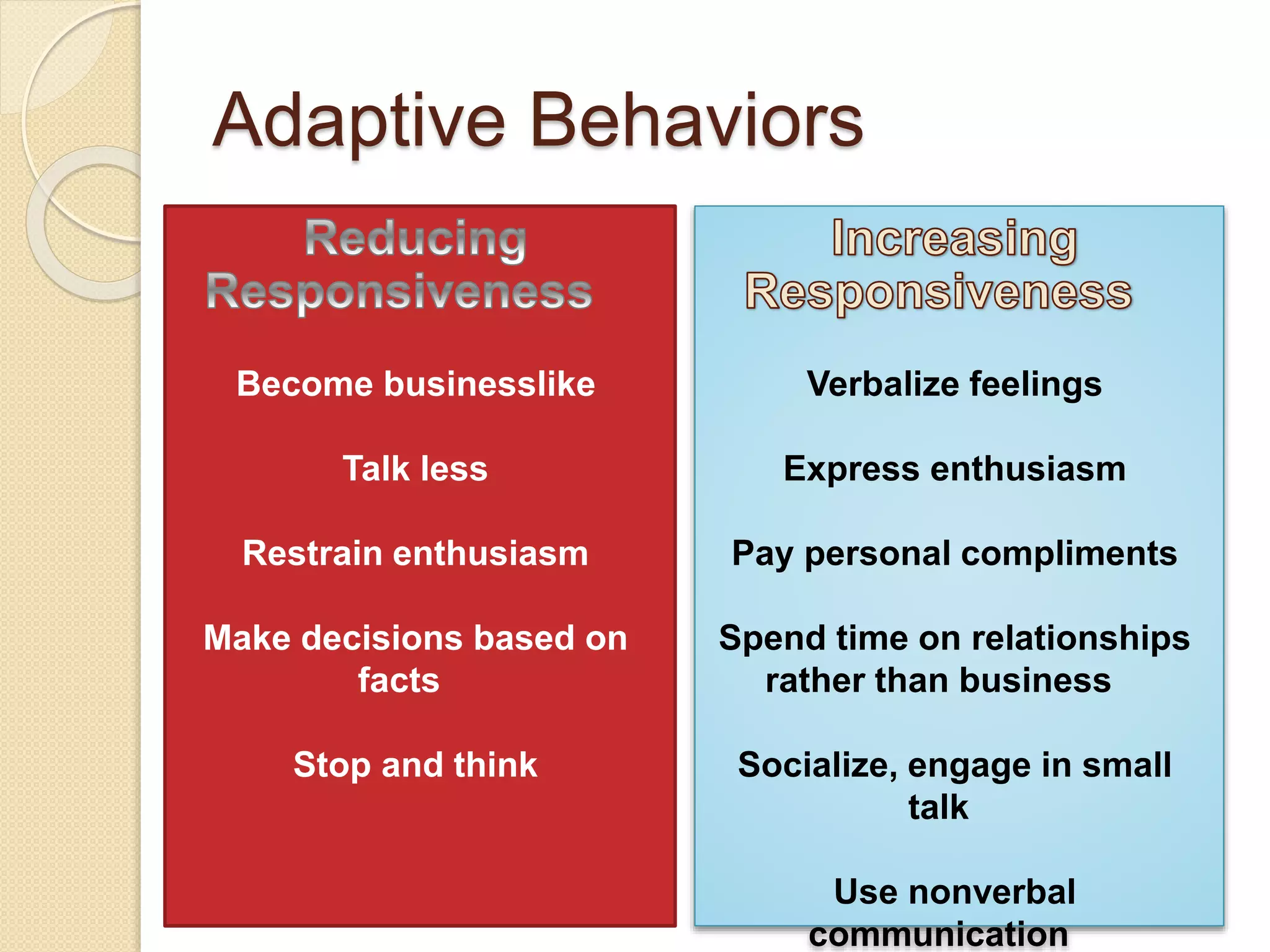
Adaptive Behaviors
Become businesslike
Talk less
Restrain enthusiasm
Make decisions based on
facts
Stop and think
Verbalize feelings
Express enthusiasm
Pay personal compliments
Spend time on relationships
rather than business
Socialize, engage in small
talk
Use nonverbal
communication 6-9
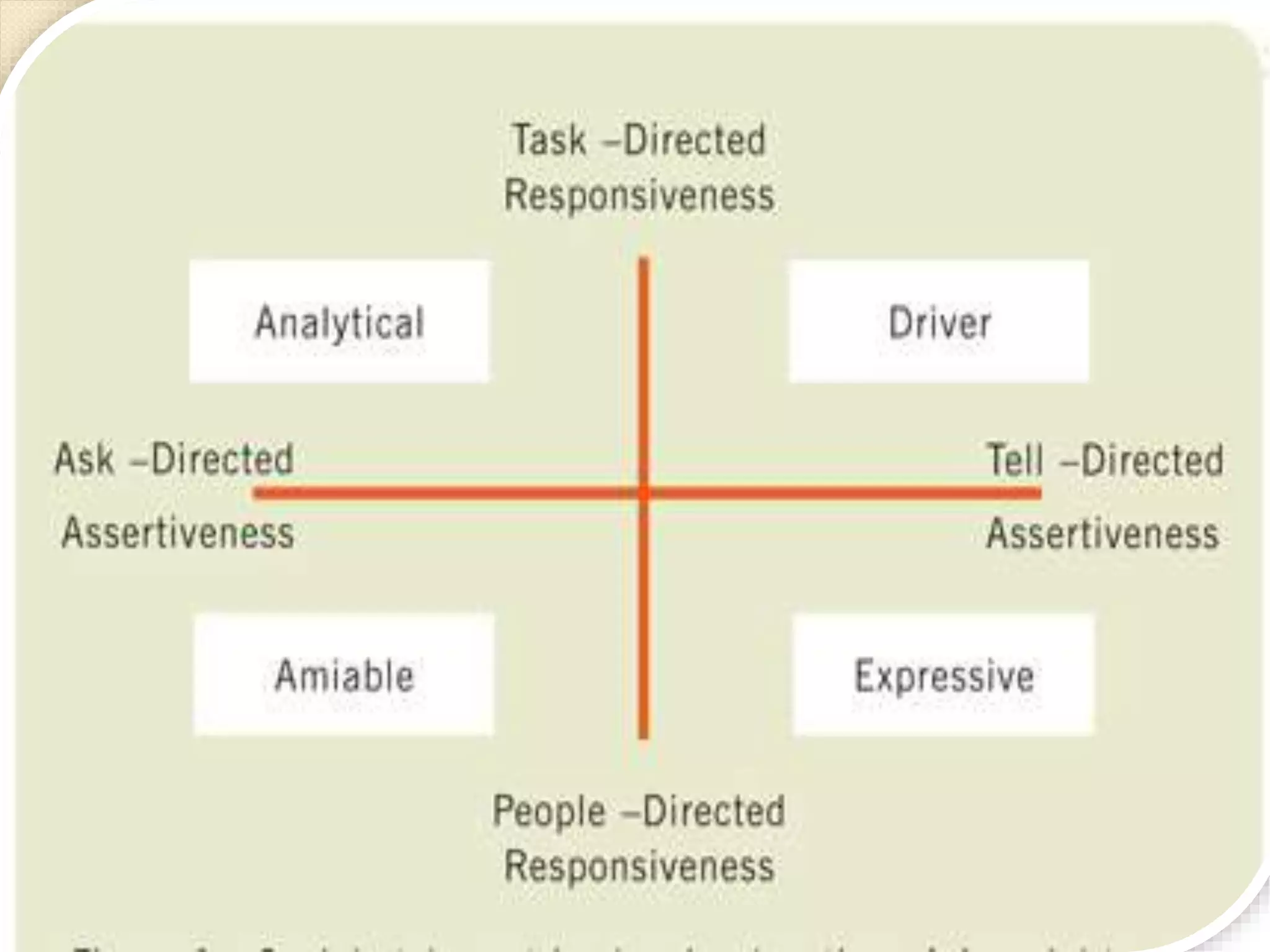
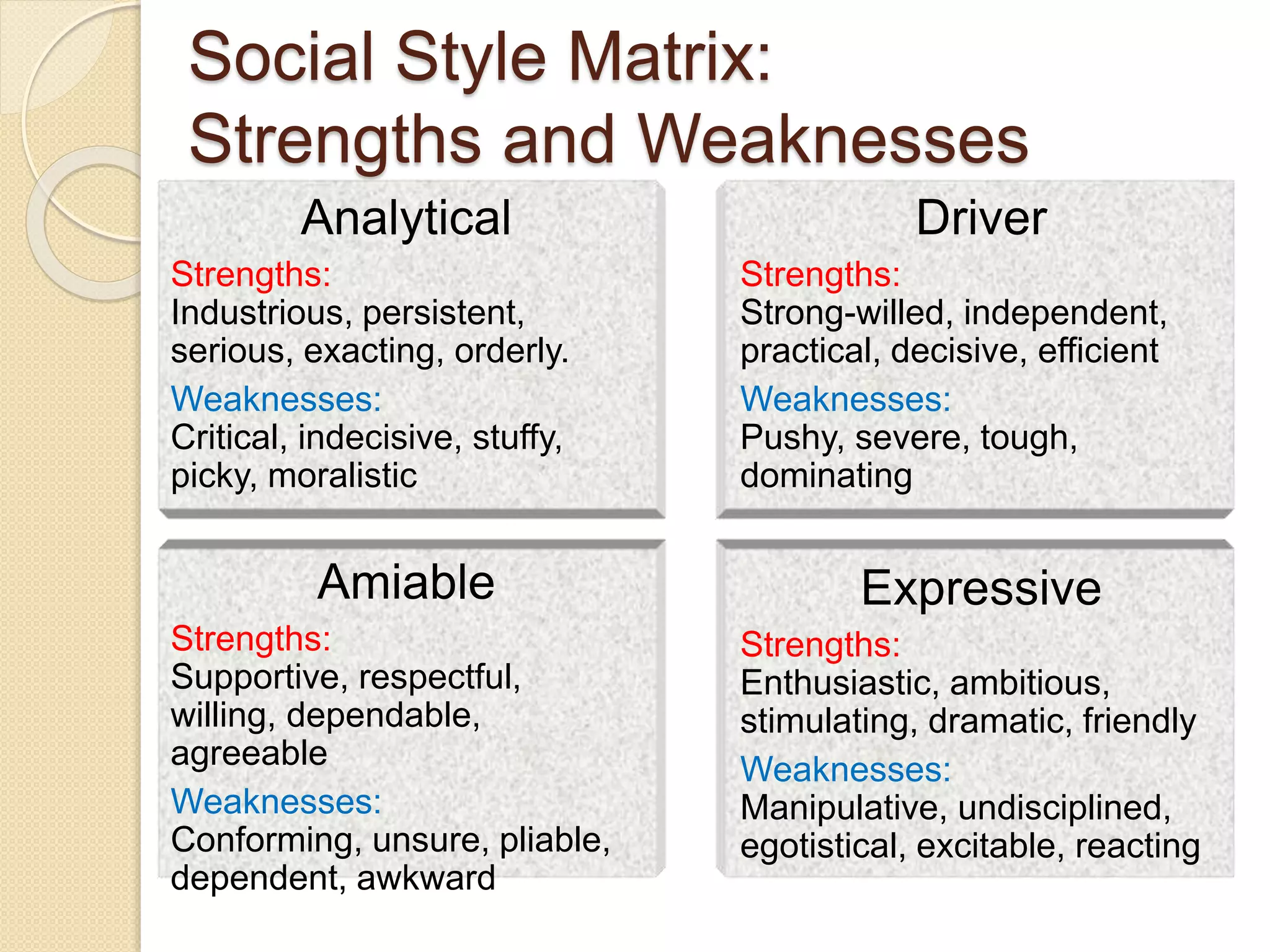
Social Style Matrix:
Strengths and Weaknesses
Driver
Strengths:
Strong-willed, independent,
practical, decisive, efficient
Weaknesses:
Pushy, severe, tough,
dominating
Expressive
Strengths:
Enthusiastic, ambitious,
stimulating, dramatic, friendly
Weaknesses:
Manipulative, undisciplined,
egotistical, excitable, reacting
Analytical
Strengths:
Industrious, persistent,
serious, exacting, orderly.
Weaknesses:
Critical, indecisive, stuffy,
picky, moralistic
Amiable
Strengths:
Supportive, respectful,
willing, dependable,
agreeable
Weaknesses:
Conforming, unsure, pliable,
dependent, awkward
6-10
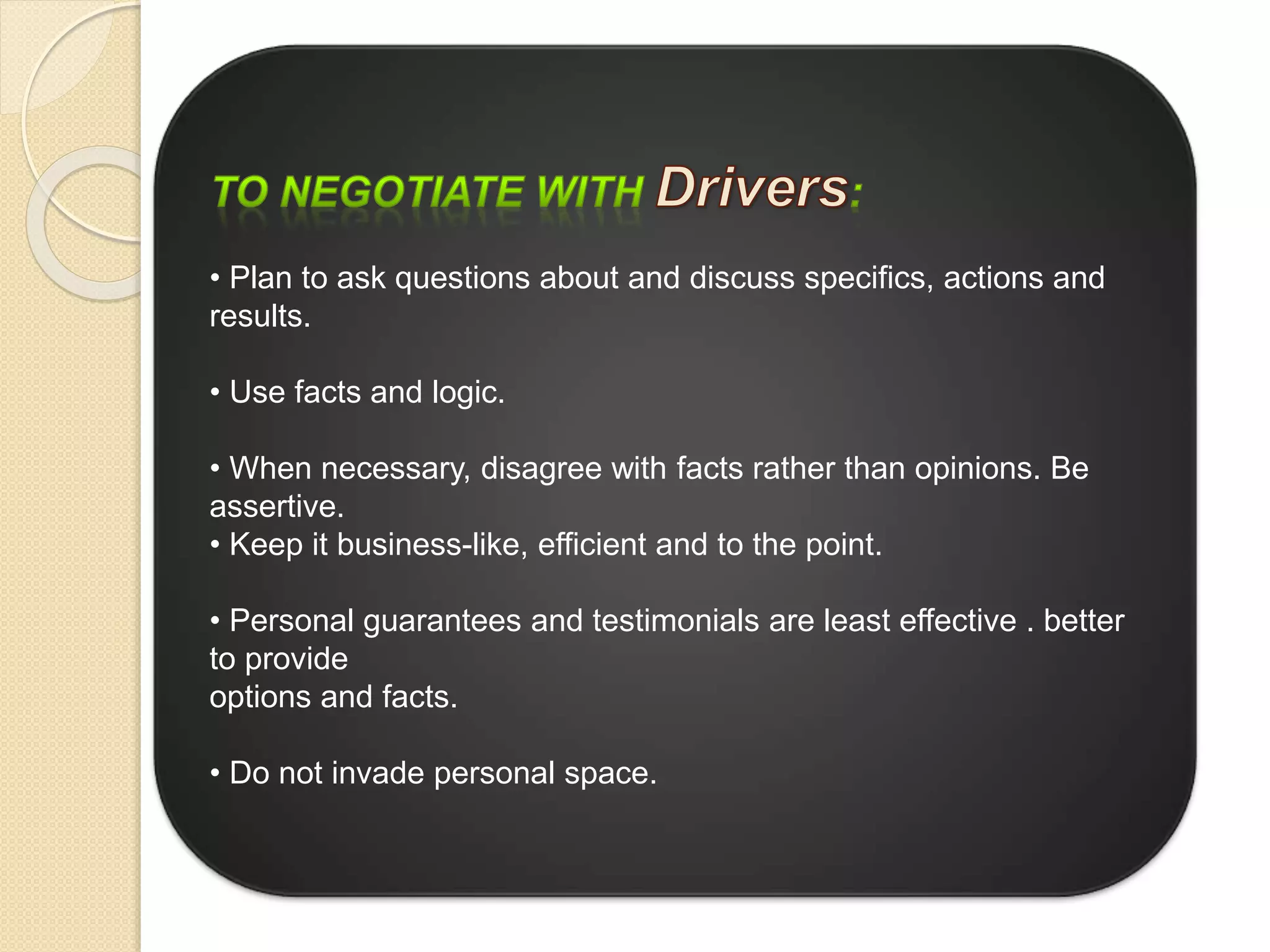
• Plan to ask questions about and discuss specifics, actions and
results.
• Use facts and logic.
• When necessary, disagree with facts rather than opinions. Be
assertive.
• Keep it business-like, efficient and to the point.
• Personal guarantees and testimonials are least effective . better
to provide
options and facts.
• Do not invade personal space.
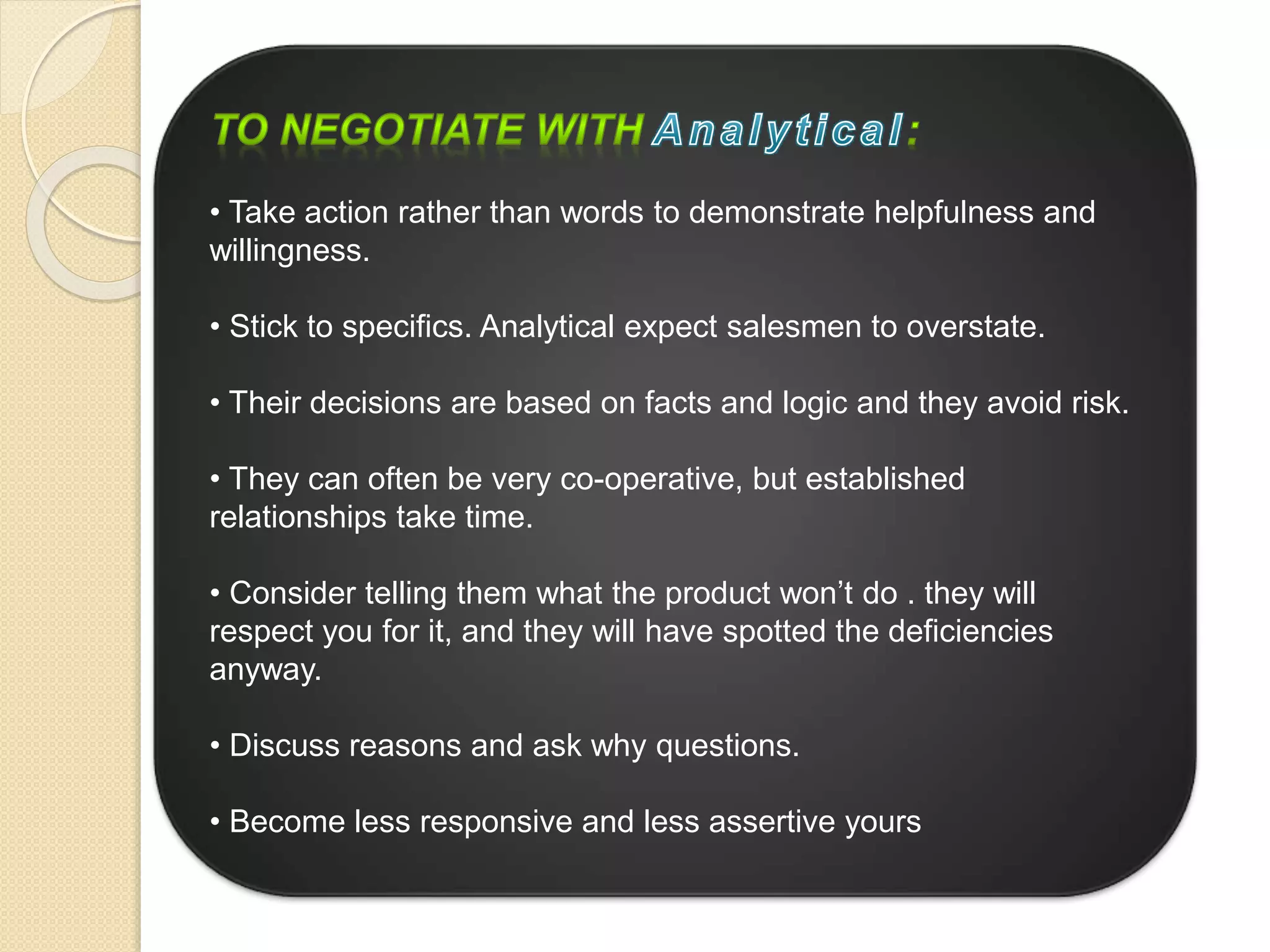
• Take action rather than words to demonstrate helpfulness and
willingness.
• Stick to specifics. Analytical expect salesmen to overstate.
• Their decisions are based on facts and logic and they avoid risk.
• They can often be very co-operative, but established
relationships take time.
• Consider telling them what the product won’t do . they will
respect you for it, and they will have spotted the deficiencies
anyway.
• Discuss reasons and ask why questions.
• Become less responsive and less assertive yours
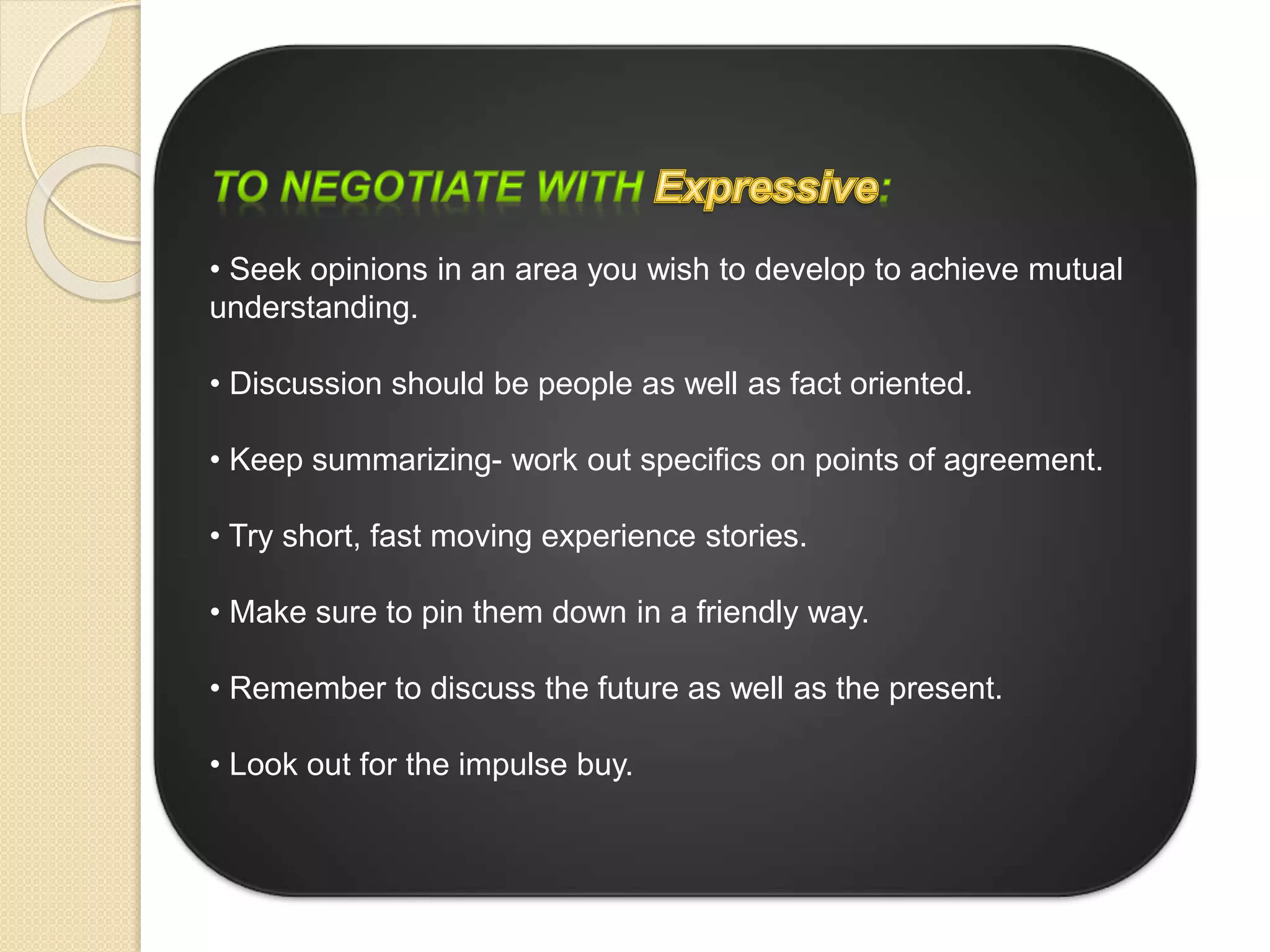
• Seek opinions in an area you wish to develop to achieve mutual
understanding.
• Discussion should be people as well as fact oriented.
• Keep summarizing- work out specifics on points of agreement.
• Try short, fast moving experience stories.
• Make sure to pin them down in a friendly way.
• Remember to discuss the future as well as the present.
• Look out for the impulse buy.
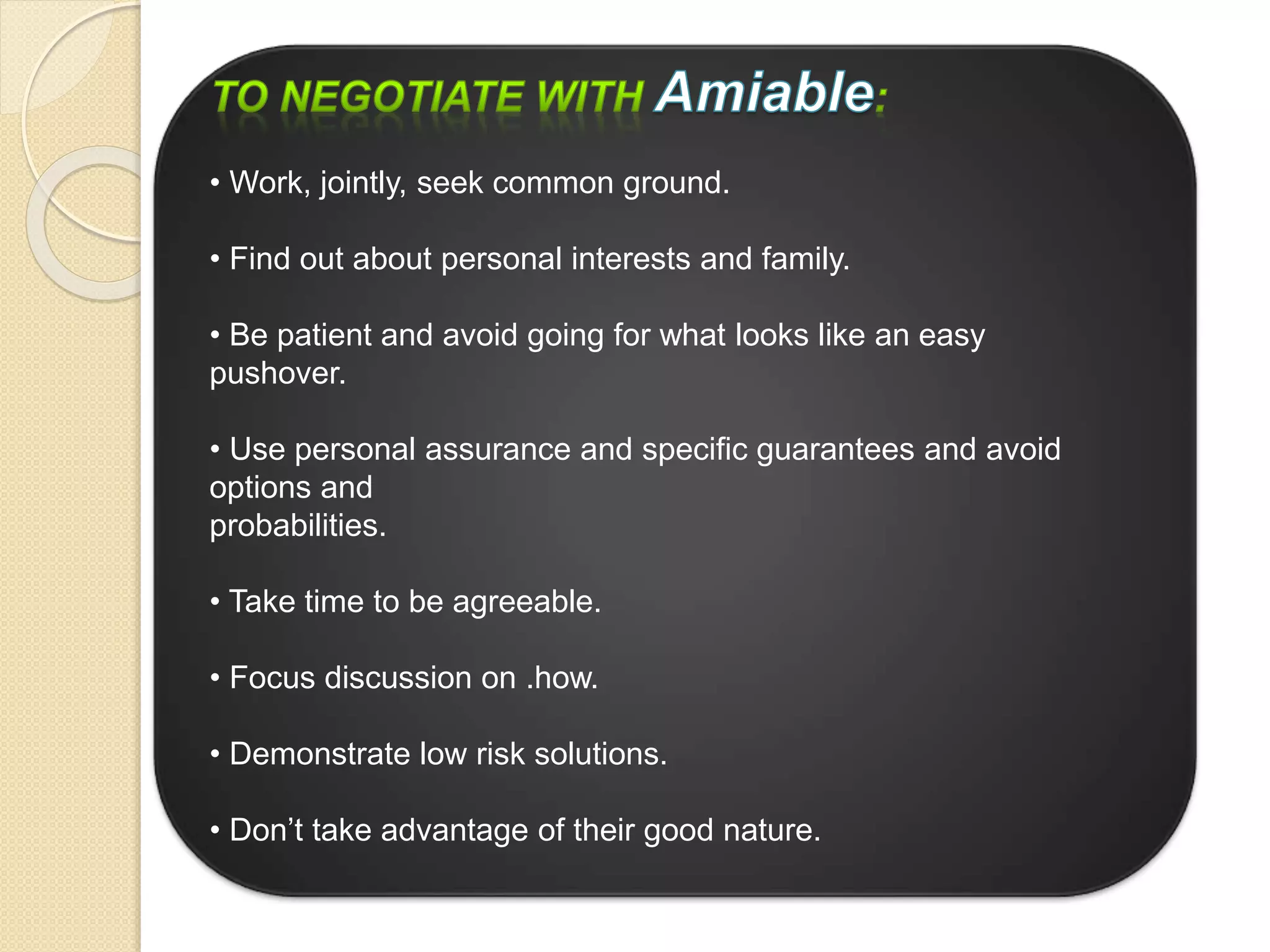
• Work, jointly, seek common ground.
• Find out about personal interests and family.
• Be patient and avoid going for what looks like an easy
pushover.
• Use personal assurance and specific guarantees and avoid
options and
probabilities.
• Take time to be agreeable.
• Focus discussion on .how.
• Demonstrate low risk solutions.
• Don’t take advantage of their good nature.
Social style matrix
Social style matrix

Social style matrix

  • 3.
    Why Do It? Understandhow others view your behavior. Understand why you find some relationships more productive than others. Develop insight about your behavioral strengths and behavioral weaknesses. Make reliable assessments about another person’s behavior. Develop a way of communicating with others that considers their behavioral needs and preferences. Build on your strengths and the strengths of others to develop productive relationships.
  • 4.
    Assertiveness Ratings I perceivemyself as: Responsiveness Ratings I perceive myself as: Quiet ..........................................Talkative 1 2 3 4 Open..............................................Closed 4 3 2 1 Slow to Decide.................... Fast to Decide 1 2 3 4 Impulsive ..................................Deliberate 4 3 2 1 Going along ........................ Taking charge 1 2 3 4 Using opinions......................... Using facts 4 3 2 1 Supportive.............................. Challenging 1 2 3 4 Informal ........................................ Formal 4 3 2 1 Compliant ..................................Dominant 1 2 3 4 Emotional..............................Unemotional 4 3 2 1 Deliberate ........................... Fast to Decide 1 2 3 4 Easy to know ........................Hard to know 4 3 2 1 Asking questions ...........Making statements 1 2 3 4 Warm................................................Cool 4 3 2 1 Cooperative............................ Competitive 1 2 3 4 Excitable ..........................................Calm 4 3 2 1 Avoiding risks ........................ Taking risks 1 2 3 4 Animated................................ Poker-faced 4 3 2 1 Slow, studied............................ Fast-paced 1 2 3 4 People-oriented.....................Task-oriented 4 3 2 1 Cautious.......................................Carefree 1 2 3 4 Spontaneous ................................Cautious 4 3 2 1 Indulgent........................................... Firm 1 2 3 4 Responsive .........................Nonresponsive 4 3 2 1 Nonassertive ...............................Assertive 1 2 3 4 Humorous......................................Serious 4 3 2 1 Mellow ................................Matter-of-fact 1 2 3 4 Impulsive ................................ Methodical 4 3 2 1 Reserved.....................................Outgoing 1 2 3 4 Lighthearted .................................. Intense 4 3 2 1
  • 5.
  • 6.
    Achievement awards onthe wall No posters or slogans on office walls Calendar prominently displayed Furniture placed so contact with people is across the desk Conservative dress Likes group activities (e.g., politics, team sports) Achievement awards on wall Office is work-oriented, showing much activity Conservative dress Likes solitary activities (e.g., reading, individual sports) Motivational slogan on the wall Office has friendly, open atmosphere Cluttered, unorganized desk Desk placed for open contact with people Casual or flamboyant dress Likes group activities (e.g., politics, team sports) Office has friendly, open atmosphere Pictures of family displayed Personal mementos on the wall Desk placed for open contact with people Casual or flamboyant dress Likes solitary activities (e.g., reading, individual sports)
  • 8.
    Adaptive Behaviors Ask forcustomer’s opinion Acknowledge merits of customer’s viewpoint Listen without interruption Be more deliberate; don’t rush Let customer direct flow of conversation Get to the point Don’t be vague or ambiguous Volunteer information Be willing to disagree Take a stand Initiate conversations 6-8
  • 9.
    Adaptive Behaviors Become businesslike Talkless Restrain enthusiasm Make decisions based on facts Stop and think Verbalize feelings Express enthusiasm Pay personal compliments Spend time on relationships rather than business Socialize, engage in small talk Use nonverbal communication 6-9
  • 10.
    Social Style Matrix: Strengthsand Weaknesses Driver Strengths: Strong-willed, independent, practical, decisive, efficient Weaknesses: Pushy, severe, tough, dominating Expressive Strengths: Enthusiastic, ambitious, stimulating, dramatic, friendly Weaknesses: Manipulative, undisciplined, egotistical, excitable, reacting Analytical Strengths: Industrious, persistent, serious, exacting, orderly. Weaknesses: Critical, indecisive, stuffy, picky, moralistic Amiable Strengths: Supportive, respectful, willing, dependable, agreeable Weaknesses: Conforming, unsure, pliable, dependent, awkward 6-10
  • 11.
    • Plan toask questions about and discuss specifics, actions and results. • Use facts and logic. • When necessary, disagree with facts rather than opinions. Be assertive. • Keep it business-like, efficient and to the point. • Personal guarantees and testimonials are least effective . better to provide options and facts. • Do not invade personal space.
  • 12.
    • Take actionrather than words to demonstrate helpfulness and willingness. • Stick to specifics. Analytical expect salesmen to overstate. • Their decisions are based on facts and logic and they avoid risk. • They can often be very co-operative, but established relationships take time. • Consider telling them what the product won’t do . they will respect you for it, and they will have spotted the deficiencies anyway. • Discuss reasons and ask why questions. • Become less responsive and less assertive yours
  • 13.
    • Seek opinionsin an area you wish to develop to achieve mutual understanding. • Discussion should be people as well as fact oriented. • Keep summarizing- work out specifics on points of agreement. • Try short, fast moving experience stories. • Make sure to pin them down in a friendly way. • Remember to discuss the future as well as the present. • Look out for the impulse buy.
  • 14.
    • Work, jointly,seek common ground. • Find out about personal interests and family. • Be patient and avoid going for what looks like an easy pushover. • Use personal assurance and specific guarantees and avoid options and probabilities. • Take time to be agreeable. • Focus discussion on .how. • Demonstrate low risk solutions. • Don’t take advantage of their good nature.