Selling Techniques
Making It Happen!
Bill Morland
Orange County SCORE
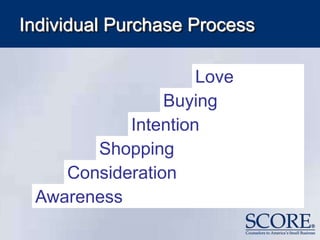
Individual Purchase Process
Love
Consideration
Shopping
Intention
Buying
Awareness
What Is Selling?
• The face to face meeting with your
prospect at the Intention or Buying level
• Getting there—right place, right time, right
person
What Do Customers Care About?
THEMSELVES!!
Wants, Needs, Desires
What Do They Buy?
SOLUTIONS!!
What You Should Know About Your
Customers
• Target – Who are they – decision maker?
• Needs, Wants – What do you need to
solve?
• Value Perception – Their perceived value
equation.
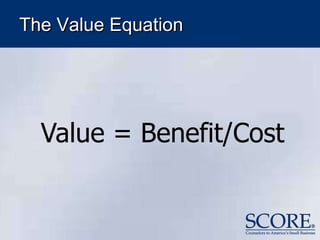
The Value Equation
Value = Benefit/Cost
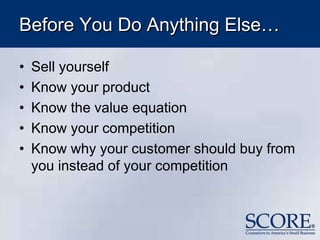
Before You Do Anything Else…
• Sell yourself
• Know your product
• Know the value equation
• Know your competition
• Know why your customer should buy from
you instead of your competition
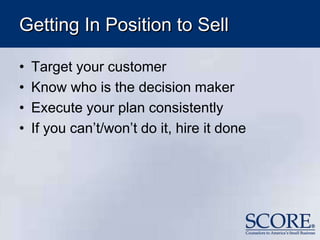
Getting In Position to Sell
• Target your customer
• Know who is the decision maker
• Execute your plan consistently
• If you can’t/won’t do it, hire it done
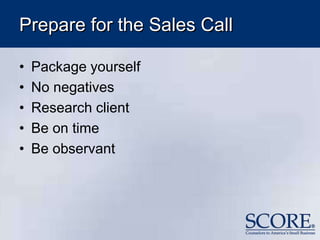
Prepare for the Sales Call
• Package yourself
• No negatives
• Research client
• Be on time
• Be observant
The Sales Presentation
• Approach
• Present
• Objections
• Negotiations
• Close
The Approach
• Eliminate possible distractions
• Lead with a question to involve client-and
don’t say “how are you?”
• State the purpose of call in terms of your
customers need
• Get agreement on the need
The Body of the Presentation
• Use all senses possible
• Be aware of clues—body language,
questions, etc
• Sell benefits not features
• Make it logical and end by filling the need
Objections-Your Best Friend
• Objections are the client telling you how to
sell them
• Restate the objection
• Answer in terms of your product’s benefits
• Move on
Negotiation
• End body of presentation with trial close
• If you get a “yes”--stop selling and start
writing
• If you get a “no” ask “why not”
• Answer objection, negotiate, and trial
close again
Close
• Either/or— ”would you like delivery on
Friday or next Monday”?
• “Is that the only thing that is stopping you
from buying”?
• Always, always ask for the order
Important Tips
• Listen—listen more than you talk
• Never, never talk over the client-listen to
what he says
• Control the flow
• Always ask for the order - if you do nothing
else ask for the order
• Ask for referrals
Follow-up
Sold:
• Thank
• Restate terms etc
• You’ll stay in the
loop
Didn’t sell:
• Thank
• Restate need and
feature/benefit
• Leave a way back
in
Keep Records
• Follow-up consistently
• Keep a tickler file
• Keep your promised dates
• Send correspondence about solutions to
their problems
• Follow-up, follow-up, follow-up
Keeping Your Customers
• Never take them for granted
• Stay in touch
• Stress benefits of your product
• Ask them if they are happy—if not, FIX IT
NOW
Customer Service
• Answer the phone
• No voice menus--no lengthy holds
• Resolve problems now
• Honor your time frames
• Complaints are your friend—you get to
show how good you really are
Handling Complaints
• Don’t argue
• Apologize even if you’re not wrong
• Restate problem
• Give time frame to resolution
• If you can’t meet time, call and extend
• Let them know you care and that you are
involved
The Three Most Common Sales
Mistakes
• Not listening to the buyer
• Not asking for the order
• Forgetting to sell existing customers
Questions and Answers
Want to get specific about solutions to
your selling challenges?
• Call SCORE at 714-550-7369 for a no-charge
counseling session
• Visit our local web site www.score114.org
• Visit our national web site www.score.org

Selling techniques

  • 1.
    Selling Techniques Making ItHappen! Bill Morland Orange County SCORE
  • 2.
  • 3.
    What Is Selling? •The face to face meeting with your prospect at the Intention or Buying level • Getting there—right place, right time, right person
  • 4.
    What Do CustomersCare About? THEMSELVES!! Wants, Needs, Desires
  • 5.
    What Do TheyBuy? SOLUTIONS!!
  • 6.
    What You ShouldKnow About Your Customers • Target – Who are they – decision maker? • Needs, Wants – What do you need to solve? • Value Perception – Their perceived value equation.
  • 7.
  • 8.
    Before You DoAnything Else… • Sell yourself • Know your product • Know the value equation • Know your competition • Know why your customer should buy from you instead of your competition
  • 9.
    Getting In Positionto Sell • Target your customer • Know who is the decision maker • Execute your plan consistently • If you can’t/won’t do it, hire it done
  • 10.
    Prepare for theSales Call • Package yourself • No negatives • Research client • Be on time • Be observant
  • 11.
    The Sales Presentation •Approach • Present • Objections • Negotiations • Close
  • 12.
    The Approach • Eliminatepossible distractions • Lead with a question to involve client-and don’t say “how are you?” • State the purpose of call in terms of your customers need • Get agreement on the need
  • 13.
    The Body ofthe Presentation • Use all senses possible • Be aware of clues—body language, questions, etc • Sell benefits not features • Make it logical and end by filling the need
  • 14.
    Objections-Your Best Friend •Objections are the client telling you how to sell them • Restate the objection • Answer in terms of your product’s benefits • Move on
  • 15.
    Negotiation • End bodyof presentation with trial close • If you get a “yes”--stop selling and start writing • If you get a “no” ask “why not” • Answer objection, negotiate, and trial close again
  • 16.
    Close • Either/or— ”wouldyou like delivery on Friday or next Monday”? • “Is that the only thing that is stopping you from buying”? • Always, always ask for the order
  • 17.
    Important Tips • Listen—listenmore than you talk • Never, never talk over the client-listen to what he says • Control the flow • Always ask for the order - if you do nothing else ask for the order • Ask for referrals
  • 18.
    Follow-up Sold: • Thank • Restateterms etc • You’ll stay in the loop Didn’t sell: • Thank • Restate need and feature/benefit • Leave a way back in
  • 19.
    Keep Records • Follow-upconsistently • Keep a tickler file • Keep your promised dates • Send correspondence about solutions to their problems • Follow-up, follow-up, follow-up
  • 20.
    Keeping Your Customers •Never take them for granted • Stay in touch • Stress benefits of your product • Ask them if they are happy—if not, FIX IT NOW
  • 21.
    Customer Service • Answerthe phone • No voice menus--no lengthy holds • Resolve problems now • Honor your time frames • Complaints are your friend—you get to show how good you really are
  • 22.
    Handling Complaints • Don’targue • Apologize even if you’re not wrong • Restate problem • Give time frame to resolution • If you can’t meet time, call and extend • Let them know you care and that you are involved
  • 23.
    The Three MostCommon Sales Mistakes • Not listening to the buyer • Not asking for the order • Forgetting to sell existing customers
  • 24.
    Questions and Answers Wantto get specific about solutions to your selling challenges? • Call SCORE at 714-550-7369 for a no-charge counseling session • Visit our local web site www.score114.org • Visit our national web site www.score.org