Downloaded 2,045 times


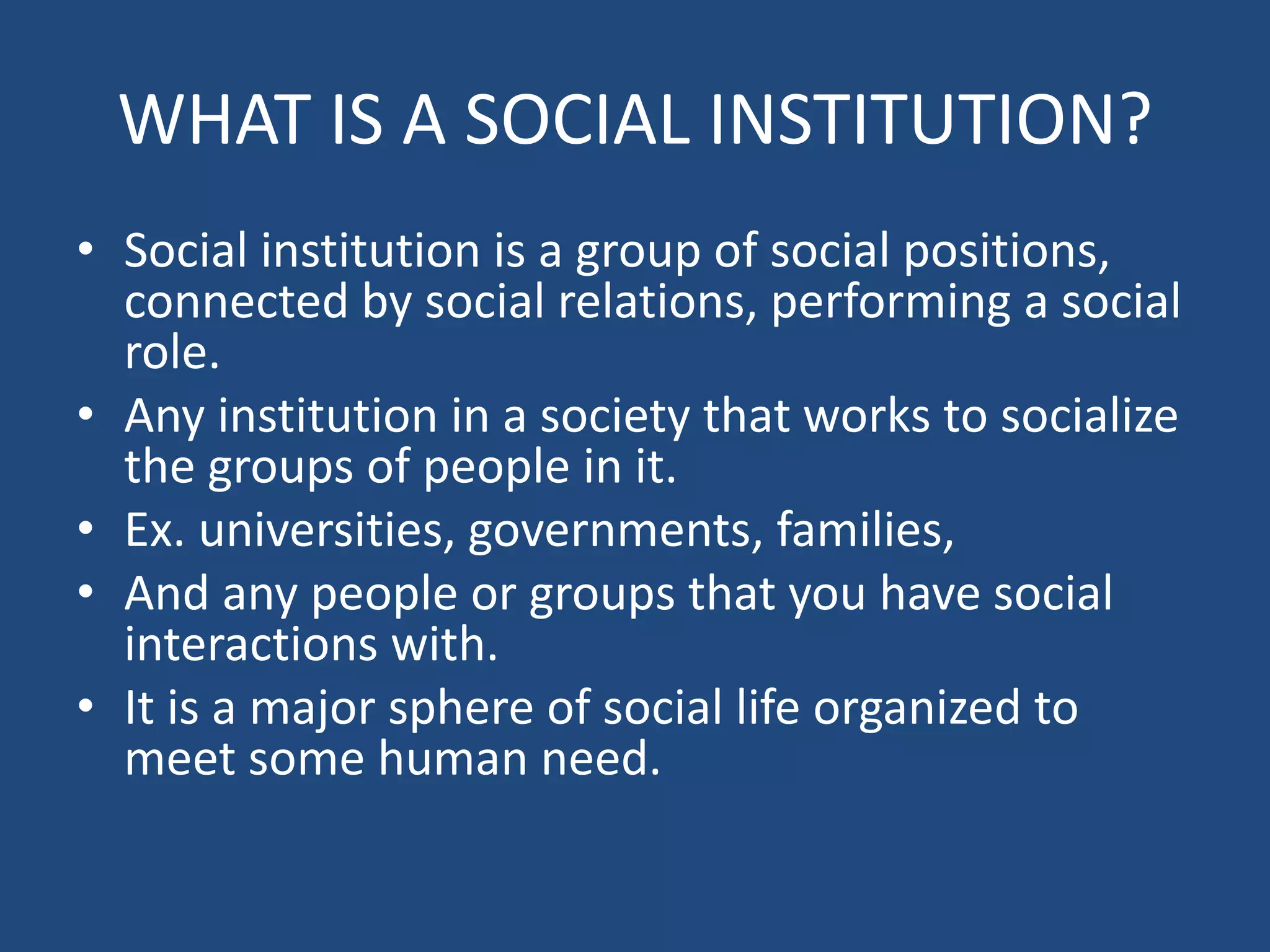

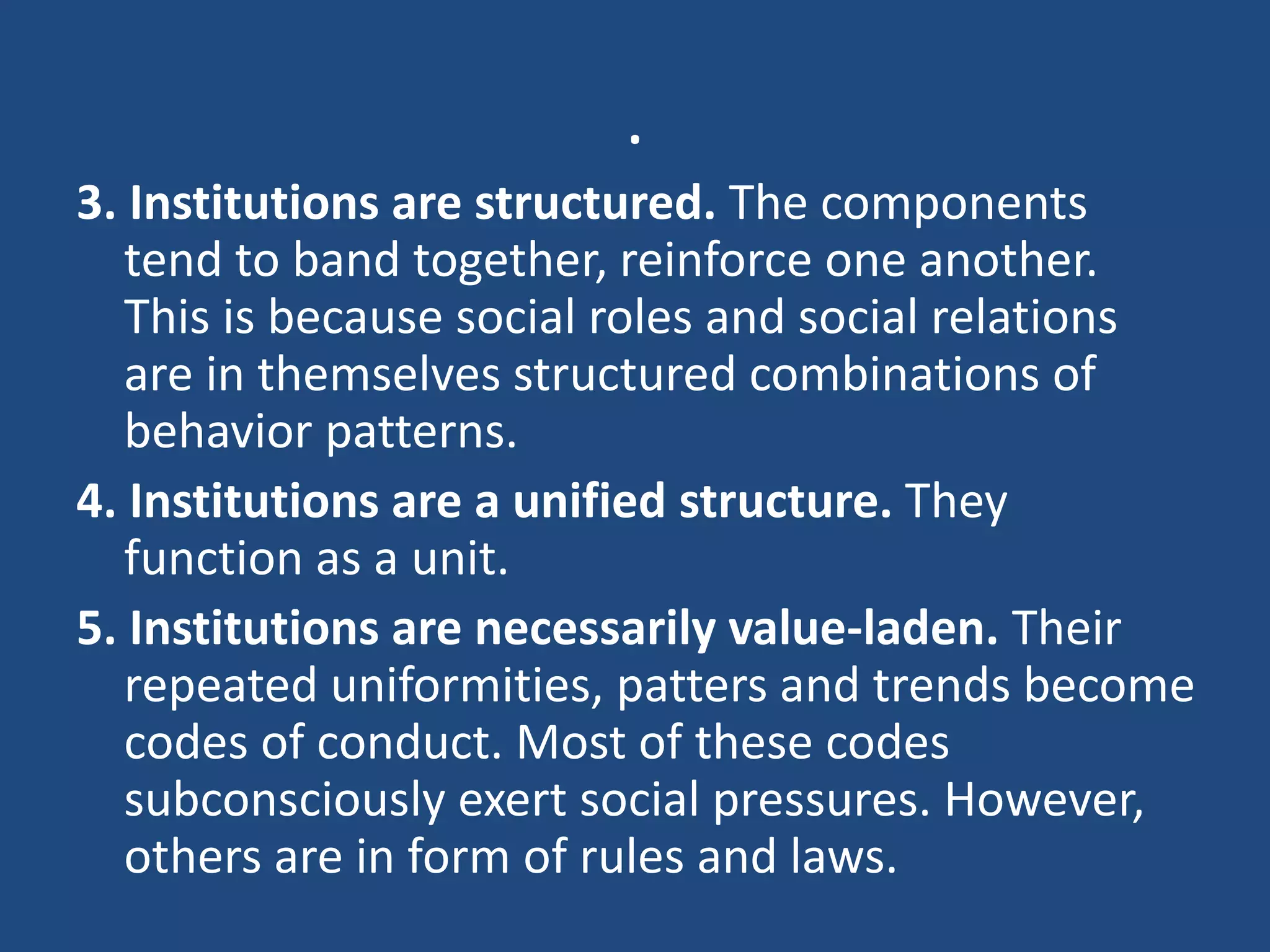
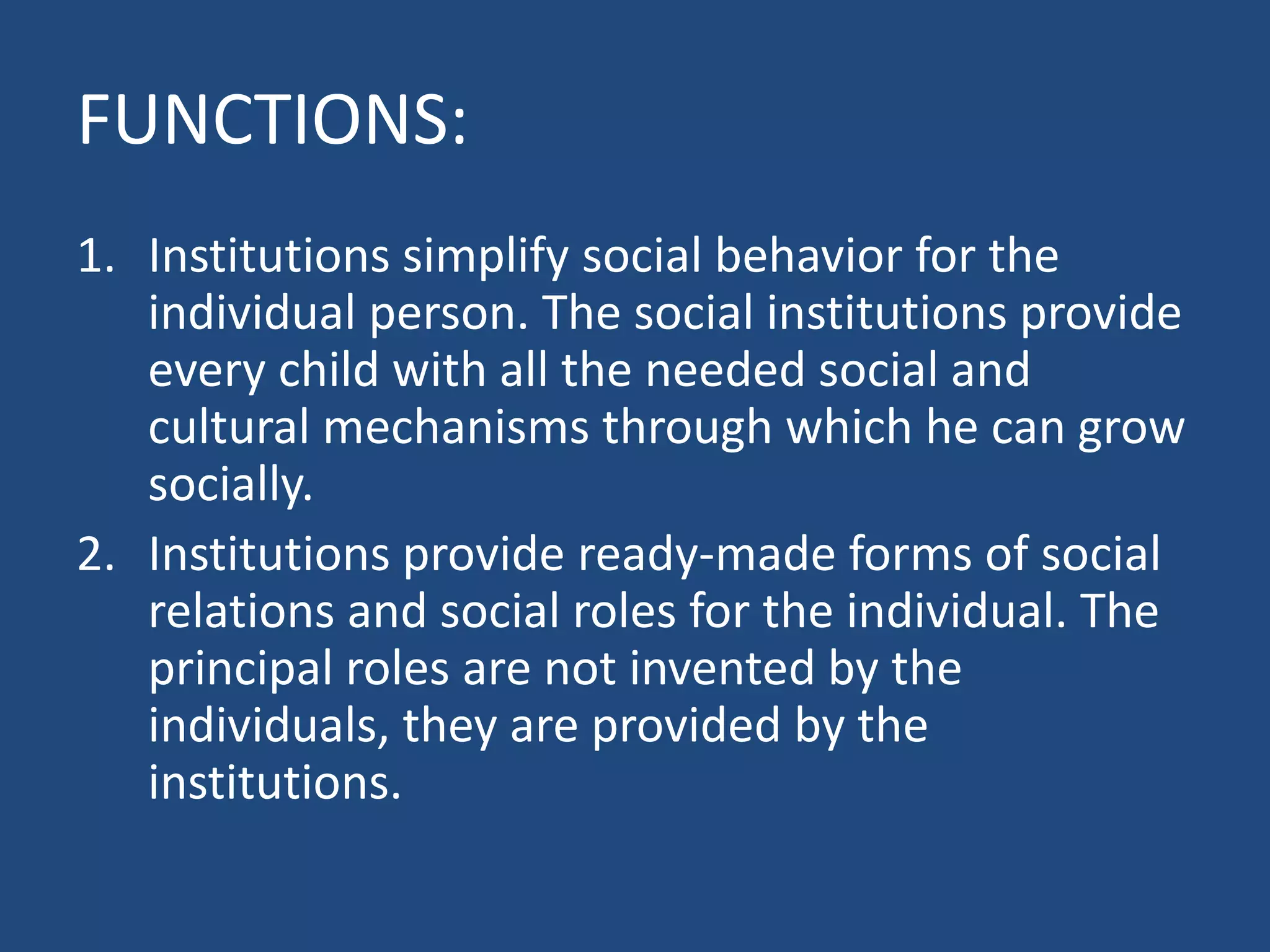















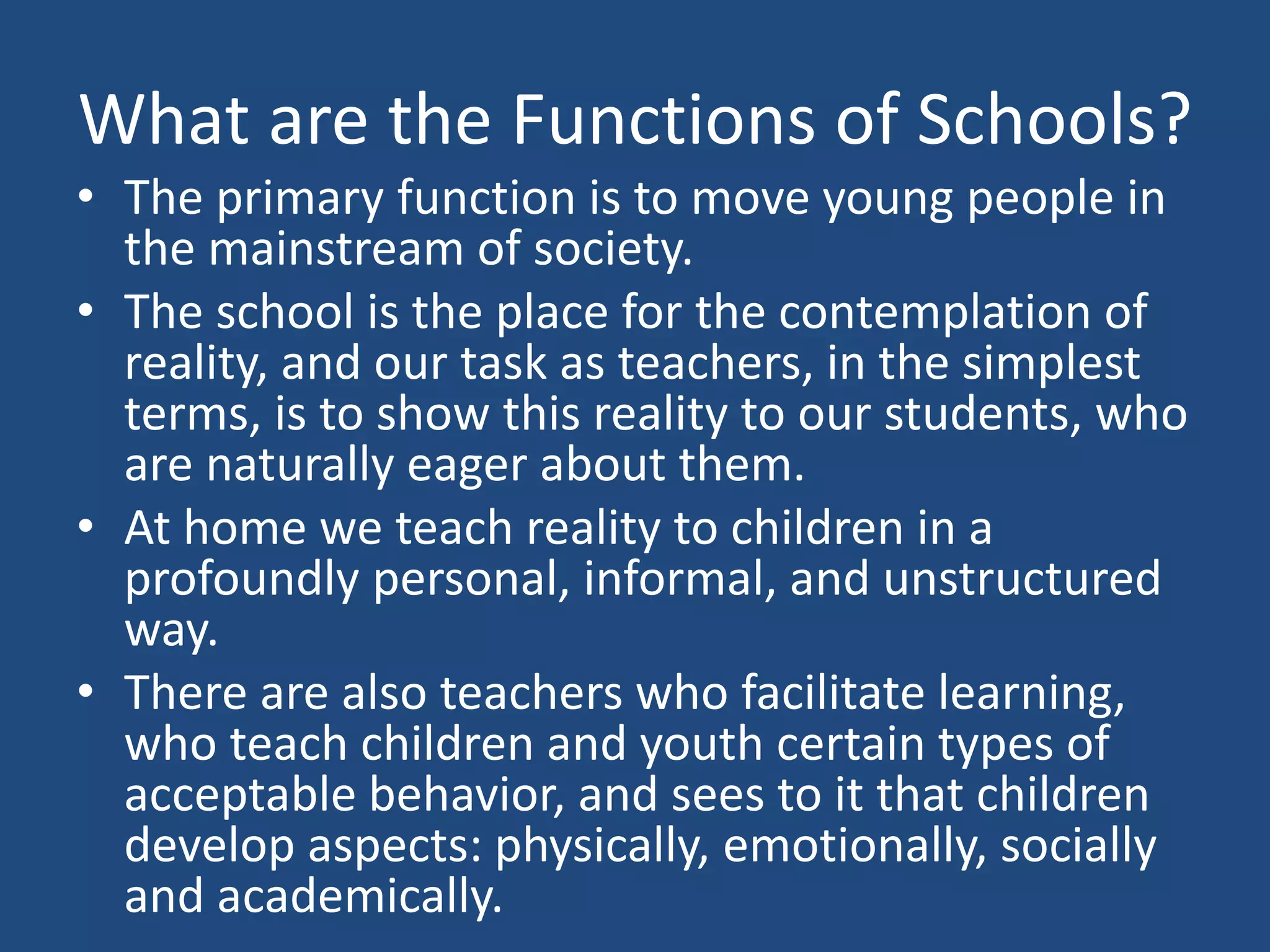
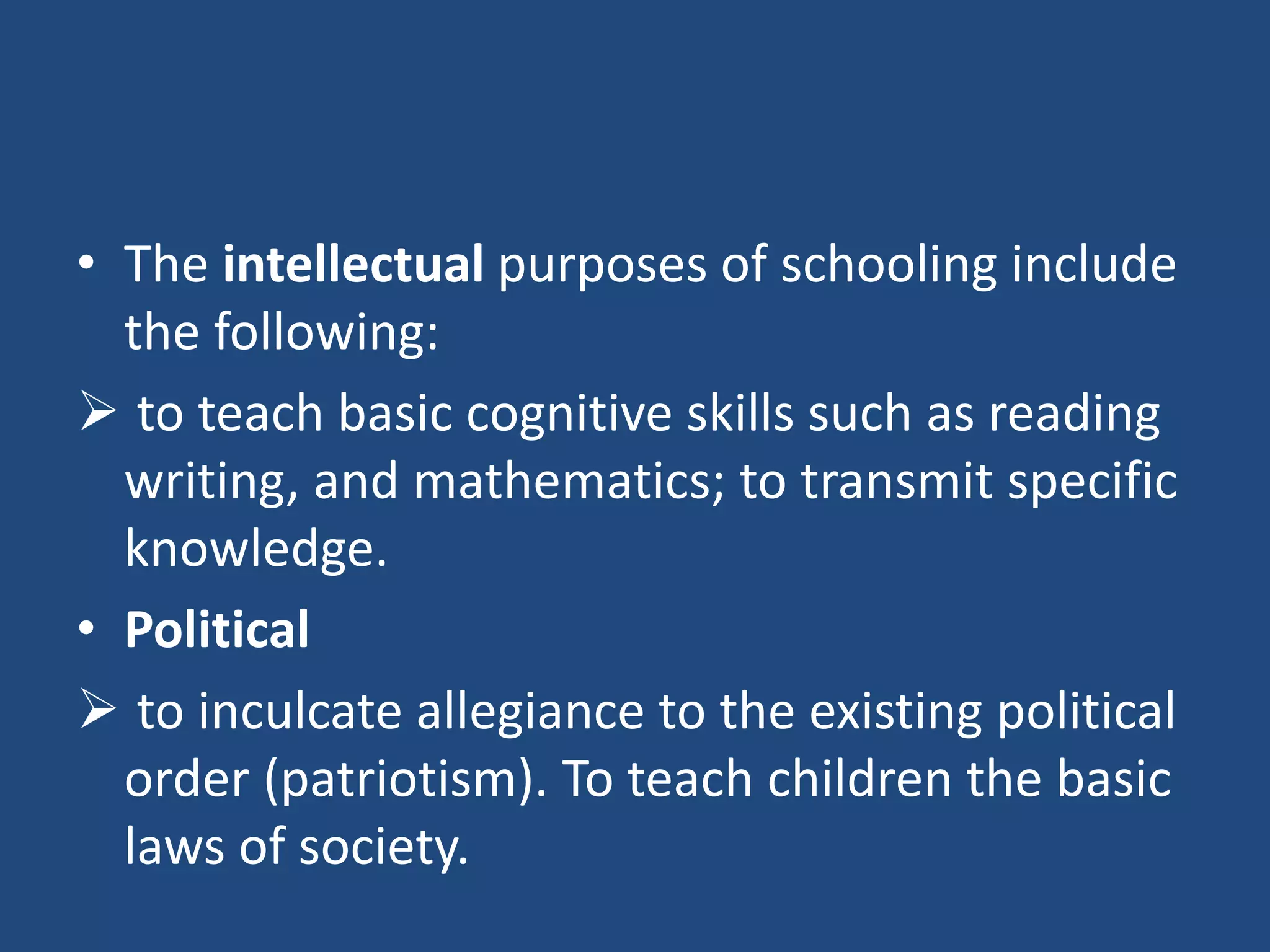


Social institutions are established sets of norms and subsystems that support a society's survival. Examples include families, governments, and universities. A social institution performs social functions like satisfying needs, socializing individuals, and coordinating and stabilizing a culture. The family is the most important social institution. It socializes children, transmits culture, and provides affection, security, and social status. Education is also a major social institution. It transmits knowledge, values, and behaviors between generations through both formal schooling and informal socialization within families. Schools have intellectual, political, social, and economic functions like teaching skills, inculcating allegiance, socializing individuals for roles, and preparing them for occupations.


