ANGLO-SAXON
PERIOD
449-1066 BC
BY: TUMANA, WJ
Anglo-Saxons brief History
 This period is traditionally known as the Dark Ages.
 It is a time of war, of the breaking up of Roman Britannia into
several separate kingdoms, of religious conversion.
“Anglo-Saxon England was born of
warfare, remained forever a military
society, and came to its end in
battle.” - J. R. Lander
Pre-Historical/Pre-Roman
 The island we know as England -
occupied by a race of people called
the Celts. Between 800 and 600
B.C., two groups of Celts from
southern Europe invaded the British
Isles.
 One of the tribes was called
Brythons or Britons. They actually
settled on the largerst island,
Britain.
 Gaels, settled on the second largest
island known to us as Ireland.
 Celts were pagans - believed
in “animism,” from the Latin
word spirits
 farmers and hunters
 organized themselves into
clans
 clans had fearsome loyalty to
chieftains
 Druids were their priests
Role: Go between the gods and
the people
Results from Roman Occupation
 Military - Strong armed forces
 Pushed the Celts into Wales and Ireland
 Prevented the Vikings from raiding for several hundred years
 Infrastructure - Government fell apart when they left
 Language and Writing - Latin official language
 Religion - Mainly Christianity
Important Events in the First Anglo-
Saxon Period
 410-450 – Angles, Saxons, and Jutes
(Germanic tribes) invade from Baltic
shores of Germany
 Anglo-Saxon kingdoms eventually
became the Anglo-Saxon heptarchy.
 New land: “Angle-land”
- small tribal kingdoms
- no written language
- supported themselves through
farming and hunting
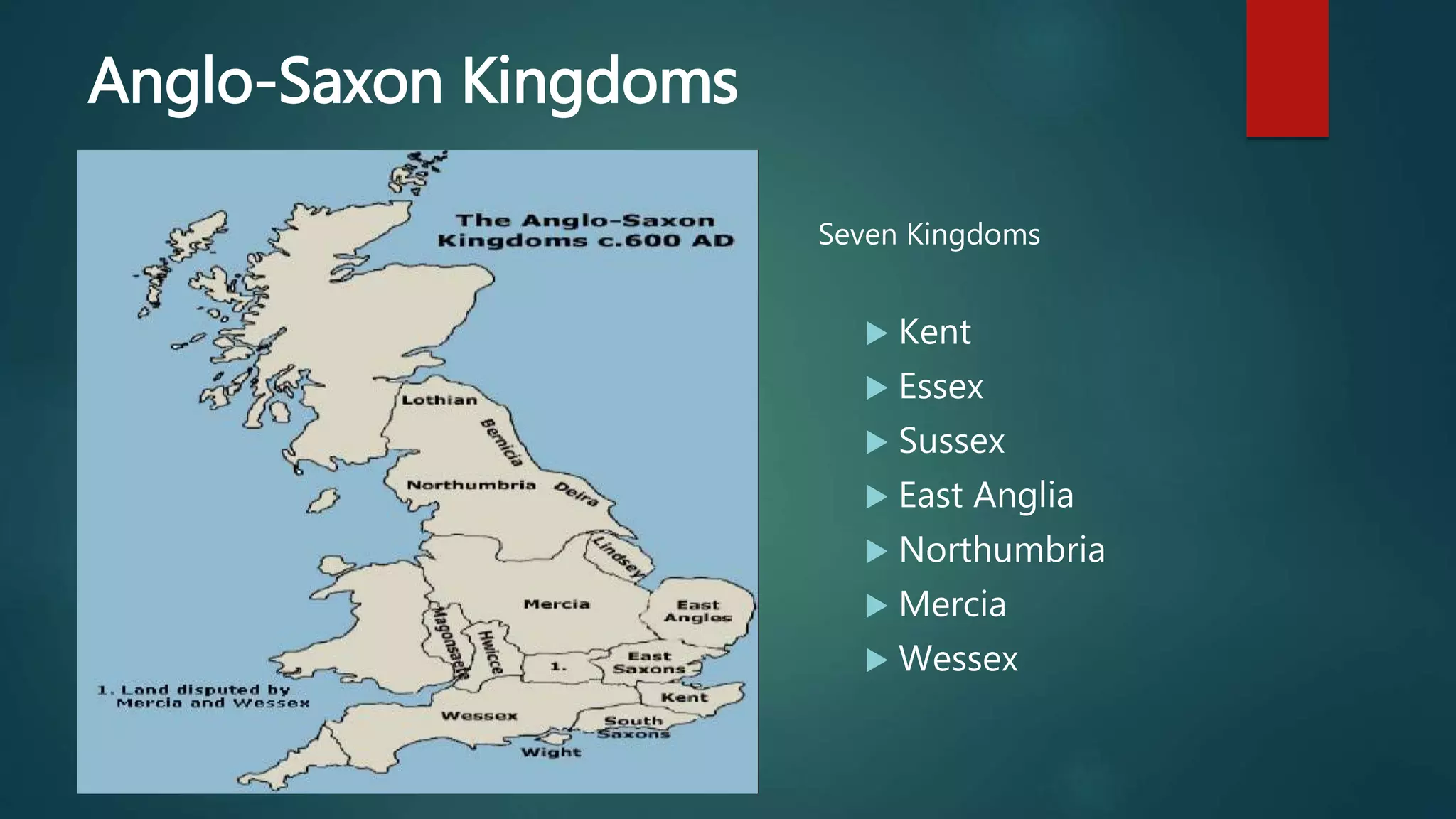
Anglo-Saxon Kingdoms
Seven Kingdoms
 Kent
 Essex
 Sussex
 East Anglia
 Northumbria
 Mercia
 Wessex
Viking Invasions (787-1066)
 Were sea-faring (explorers,
traders, warriors)
 Led to many cultural
changes...
Viking Ship,
dates 825 AD.
Results from Vikings
 Politically/Culturally - still unstable - no central government or church
 Linguistically -
 The English language is “born” and is known as Old English
 Lots of dialects of the language due to the seven kingdoms
Norman Invasion (1066)
 Battle of Hastings - the Normans
(powerful Norman Frenchmen)
defeated the English and started a
conquest of England
 Two most important effects:
 French becomes official
language of politics and power;
thus, enormous influence on
Old English
 England begins unifying under a
French political system, much of
which is still with us today
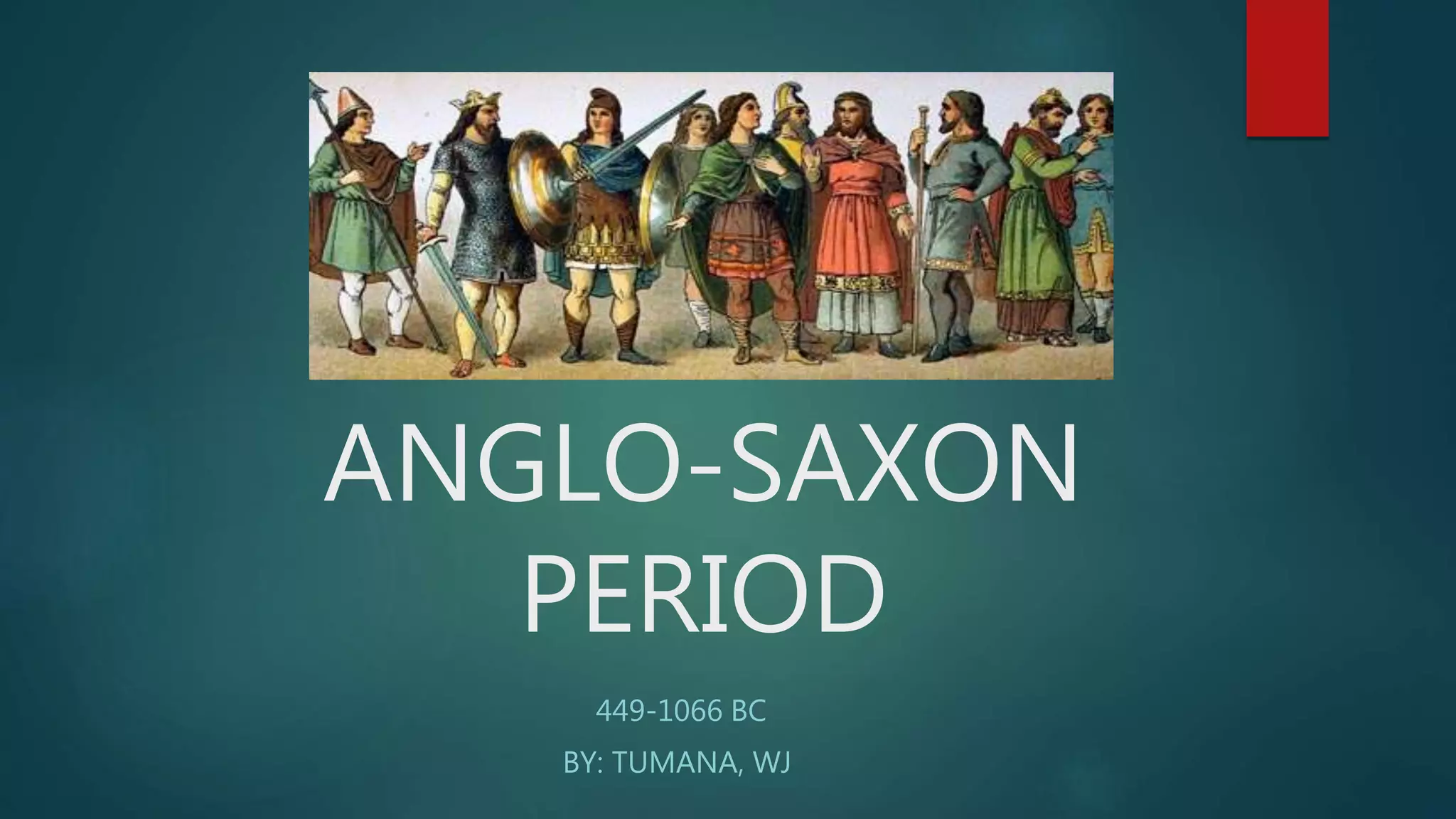
Anglo Saxon King and Warrior
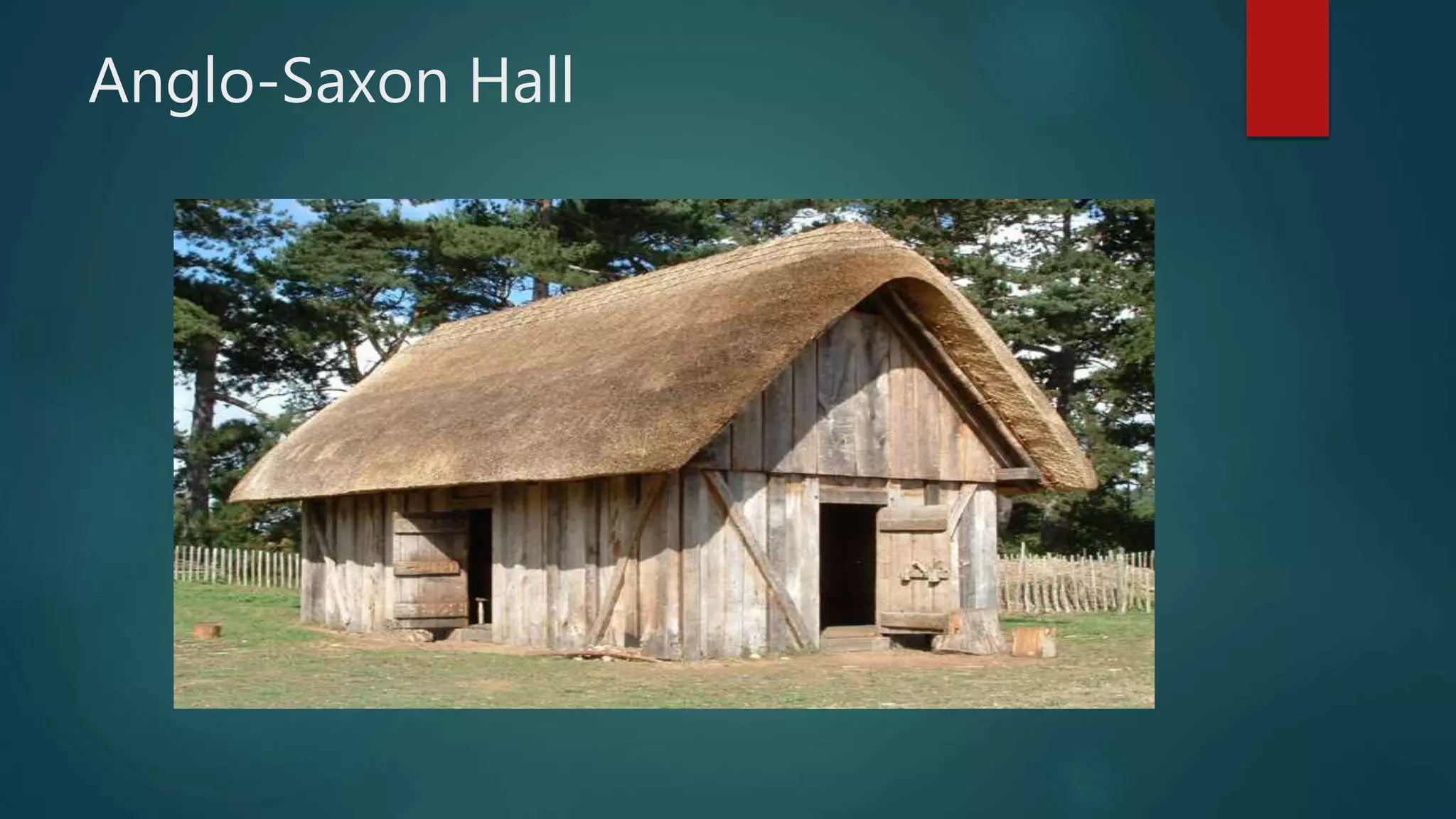
Anglo-Saxon Hall
Anglo-Saxon Farmstead
Sutton Hoo
 Burial site discovered in 1939
 Important links to Anglo-Saxon world
and Beowulf
 Remains of a boat were discovered
and large burial chamber containing
numerous artifacts
 Artifacts suggest a distinctly Christian
element intermingled with pagan
ritual
Constant Conflict
 9th Century:
Norway invaded Northumbria, Scotland, Wales,
and Ireland.
The Danes of Denmark targeted eastern and
southern England
Alfred the Great
King of Wessex 871-899
 866—resisted Danish intrusion and earned “the great”
title
 Saxons acknowledged Danish rule in East and North
 Danes respected Saxon rule in South
 End of 10th Century—Danes want to widen Danelaw
 Forced Saxons to select Danish Kings
 1042—Kingship returned to Alfred the Great’s descendent
Edward
 Edward the Confessor died in 1066. His death led to the
end of the Anglo-Saxon Period.
Anglo-Saxon Literature
 Oral Tradition – poems and songs
committed to memory and
performed by scops, bards,
gleemen, or minstrels.
 Written literature began to evolve.
 Two important traditions in
literature
heroic tradition – celebrates
heroes
elegiac tradition – passing of
earlier better times
Anglo-Saxon Literature
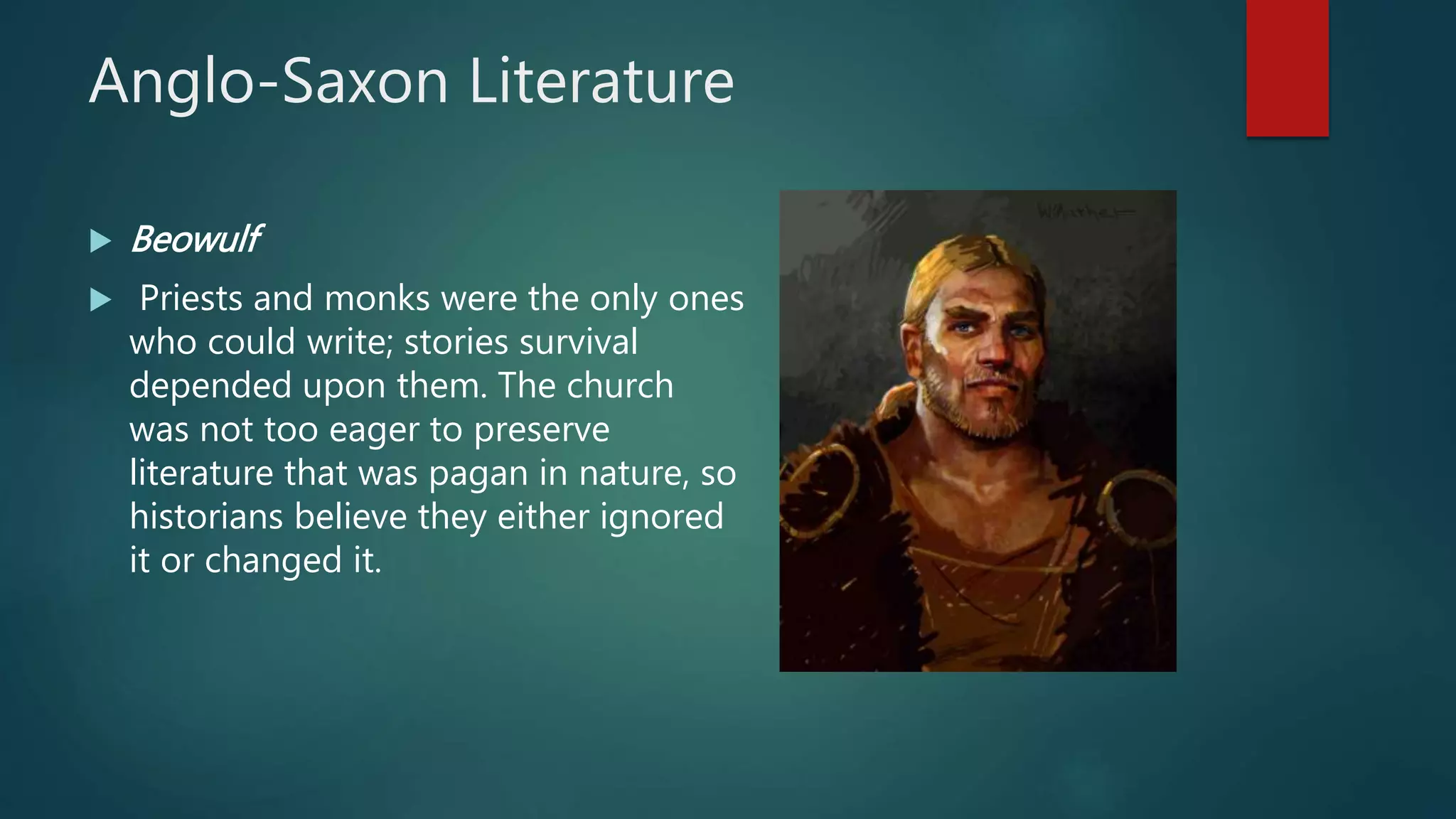
 Beowulf
 Priests and monks were the only ones
who could write; stories survival
depended upon them. The church
was not too eager to preserve
literature that was pagan in nature, so
historians believe they either ignored
it or changed it.

Anglo saxon period

  • 1.
  • 2.
    Anglo-Saxons brief History This period is traditionally known as the Dark Ages.  It is a time of war, of the breaking up of Roman Britannia into several separate kingdoms, of religious conversion. “Anglo-Saxon England was born of warfare, remained forever a military society, and came to its end in battle.” - J. R. Lander
  • 3.
    Pre-Historical/Pre-Roman  The islandwe know as England - occupied by a race of people called the Celts. Between 800 and 600 B.C., two groups of Celts from southern Europe invaded the British Isles.  One of the tribes was called Brythons or Britons. They actually settled on the largerst island, Britain.  Gaels, settled on the second largest island known to us as Ireland.
  • 4.
     Celts werepagans - believed in “animism,” from the Latin word spirits  farmers and hunters  organized themselves into clans  clans had fearsome loyalty to chieftains  Druids were their priests Role: Go between the gods and the people
  • 5.
    Results from RomanOccupation  Military - Strong armed forces  Pushed the Celts into Wales and Ireland  Prevented the Vikings from raiding for several hundred years  Infrastructure - Government fell apart when they left  Language and Writing - Latin official language  Religion - Mainly Christianity
  • 6.
    Important Events inthe First Anglo- Saxon Period  410-450 – Angles, Saxons, and Jutes (Germanic tribes) invade from Baltic shores of Germany  Anglo-Saxon kingdoms eventually became the Anglo-Saxon heptarchy.  New land: “Angle-land” - small tribal kingdoms - no written language - supported themselves through farming and hunting
  • 7.
    Anglo-Saxon Kingdoms Seven Kingdoms Kent  Essex  Sussex  East Anglia  Northumbria  Mercia  Wessex
  • 8.
    Viking Invasions (787-1066) Were sea-faring (explorers, traders, warriors)  Led to many cultural changes... Viking Ship, dates 825 AD.
  • 9.
    Results from Vikings Politically/Culturally - still unstable - no central government or church  Linguistically -  The English language is “born” and is known as Old English  Lots of dialects of the language due to the seven kingdoms
  • 10.
    Norman Invasion (1066) Battle of Hastings - the Normans (powerful Norman Frenchmen) defeated the English and started a conquest of England  Two most important effects:  French becomes official language of politics and power; thus, enormous influence on Old English  England begins unifying under a French political system, much of which is still with us today
  • 11.
    Anglo Saxon Kingand Warrior
  • 12.
  • 13.
  • 14.
    Sutton Hoo  Burialsite discovered in 1939  Important links to Anglo-Saxon world and Beowulf  Remains of a boat were discovered and large burial chamber containing numerous artifacts  Artifacts suggest a distinctly Christian element intermingled with pagan ritual
  • 15.
    Constant Conflict  9thCentury: Norway invaded Northumbria, Scotland, Wales, and Ireland. The Danes of Denmark targeted eastern and southern England
  • 16.
    Alfred the Great Kingof Wessex 871-899  866—resisted Danish intrusion and earned “the great” title  Saxons acknowledged Danish rule in East and North  Danes respected Saxon rule in South  End of 10th Century—Danes want to widen Danelaw  Forced Saxons to select Danish Kings  1042—Kingship returned to Alfred the Great’s descendent Edward  Edward the Confessor died in 1066. His death led to the end of the Anglo-Saxon Period.
  • 18.
    Anglo-Saxon Literature  OralTradition – poems and songs committed to memory and performed by scops, bards, gleemen, or minstrels.  Written literature began to evolve.  Two important traditions in literature heroic tradition – celebrates heroes elegiac tradition – passing of earlier better times
  • 19.
    Anglo-Saxon Literature  Beowulf Priests and monks were the only ones who could write; stories survival depended upon them. The church was not too eager to preserve literature that was pagan in nature, so historians believe they either ignored it or changed it.

Editor's Notes

  • #3 Dark ages - mainly because written sources for the early years of Saxon invasion are scarce Roman britania had several invaders from the continual of the battles.
  • #4 Britons – this is where we get the term Britain. They settled on the largest island and they called it Bretain.
  • #5 From about 700 B.C., the Celts dominated most of western central Europe. They introduced the use of iron to the rest of Europe. Just like in the power point, the celts believed in spirits that’s because they also had a highly developed religion, mythology, and legal system specified individual rights.
  • #6 Military – legions Language- This is why English language is strongly based in Latin
  • #7 Angles, Saxons and jutes are deep sea fishermen and farmers. Angles and Saxons are from Germany. Jutes from Denmark The kingdoms united themselves to resist invasions from Vikings or Norsemen (whom they called Danes).
  • #8 Kent- settled by the Jutes Essex- east Saxons. Famous battle of Maldon against the Vikings. Sussex – south East Anglia – made up of angles. Mercia – best-known ruler, Offa. Wessex – west. Kingdom of king Alfred English king. By 850 the seven kingdoms had been consolidated into three large anglo-saxon kingdoms: Northumbria, Mercia, and Wessex.
  • #9 vikings – invaders from Norway and Denmark Vikings destroyed monasteries and sacred objects. They slaughtered everyone in settlements that couldn’t pay enough to them. King Alfred of Wessex forced Vikings to northern England Viking ship- known as the Oseberg Ship
  • #10 Danelaw – dividing line between Viking Britain and Anglo-saxon Bretain
  • #11 Last invaders The French language represents power to the high officials. England started to use French in their political system and this is still with them today.
  • #13 This is a reconstructed on 1972.
  • #14 West stow: reconstructed village
  • #15 Found in East Anglia
  • #17 He defeated the Vikings, recaptured London from the Vikings, strengthened his kingdom’s difences by creating a series of fortresses. Had book translated into English and promoted Learning. He also commissioned the writing of the Anglo-saxon Chronicle, a historical record of the Anglo-Saxons in Bretain. He was great because he did keep some peace and wee see greed as a basic human instinct at this pont
  • #18 October 13 is the feast day of Edward the Confessor. He reigned from 1042-1066.
  • #19 Poem was based on early Celtic folk legends. Told about the struggles of heroic warriors With coming of Christian Church, written literature began to evolve Herioic tradition – recounts the achievements of warriors Elegiac tradition – laments the deaths of loved ones and the loss of the past
  • #20 Beowulf – one of few pieces that survived. The most famous example of heroic poetry This is about the great hero. Priests and monks would write stories about survival depended upon them. This may caused for the mixture of Christian and pagan elements in Beowulf.