Designing Writing Techniques
Prepared by:
TUMANA, WJ
Types of Writing Techniques
 You must choose your writing
technique carefully before you
begin writing the story.
Consider the topic of the story
and the audience that will
read it. Sometimes it is
appropriate to use the word
"I" in your story or reveal your
own opinions on a topic, while
other times it is not. Using the
appropriate writing technique
can make the difference
between your story being a hit
or total flop.
Descriptive
 Descriptive writing occurs
when the writer uses very
detailed information to
explain the story. This can
involve detailed descriptions
of the characters, the setting
and even objects. This style
of writing is used to immerse
the readers in the story,
allowing them to create a
vivid mental picture of the
setting in their minds. For
example, a line from a
descriptive story might read,
"He was 6'4, with deep blue
eyes, chestnut brown hair
and a bright white smile."
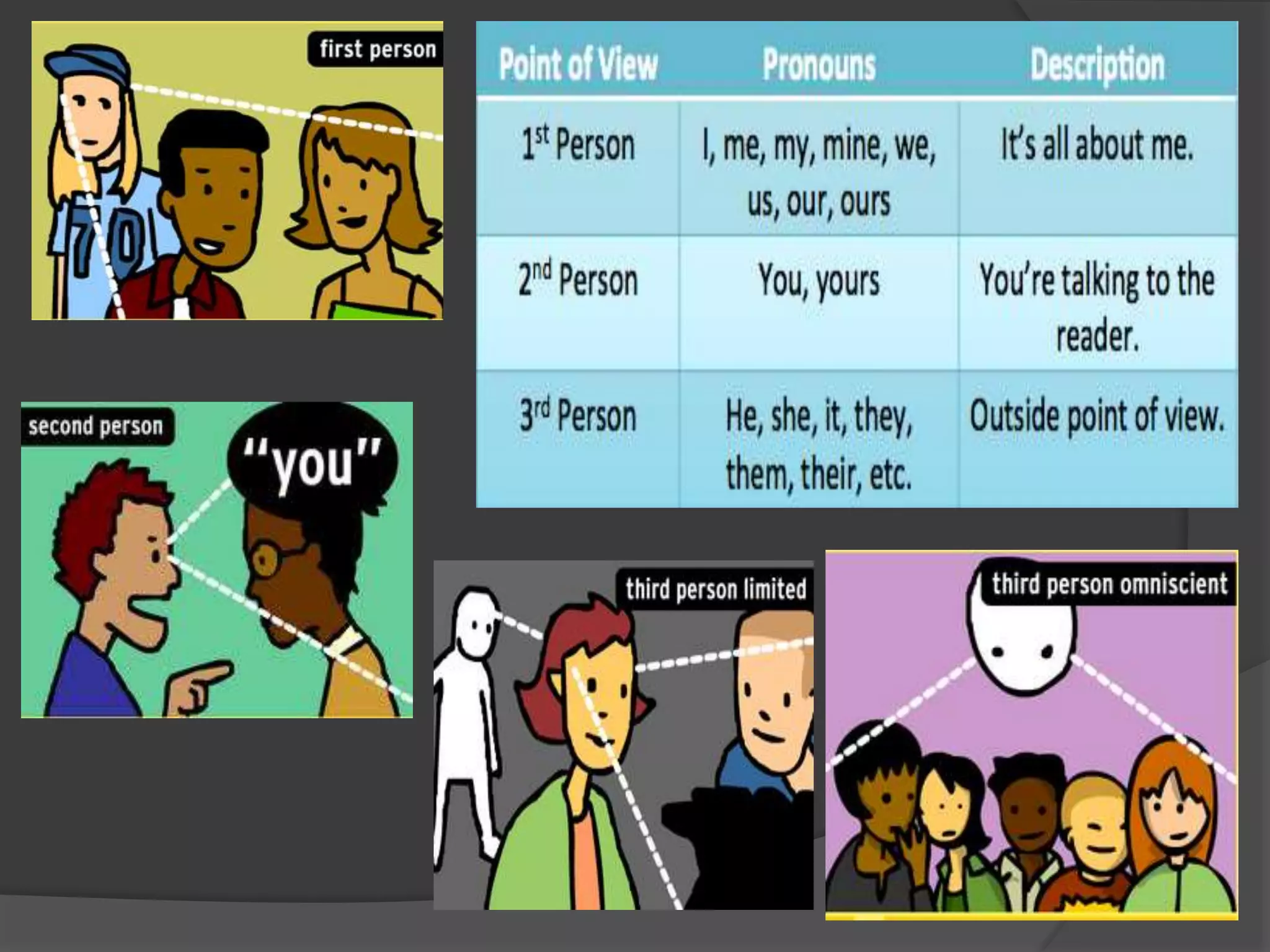
First-Person
 When using a first-
person writing
technique, the writer is
able to incorporate his
own ideas into the story.
Instead of just
presenting the facts, the
writer can let his own
opinions come out in
the writing. For
example, a story written
in a first-person
technique would have
the word "I" worked in
throughout the text.
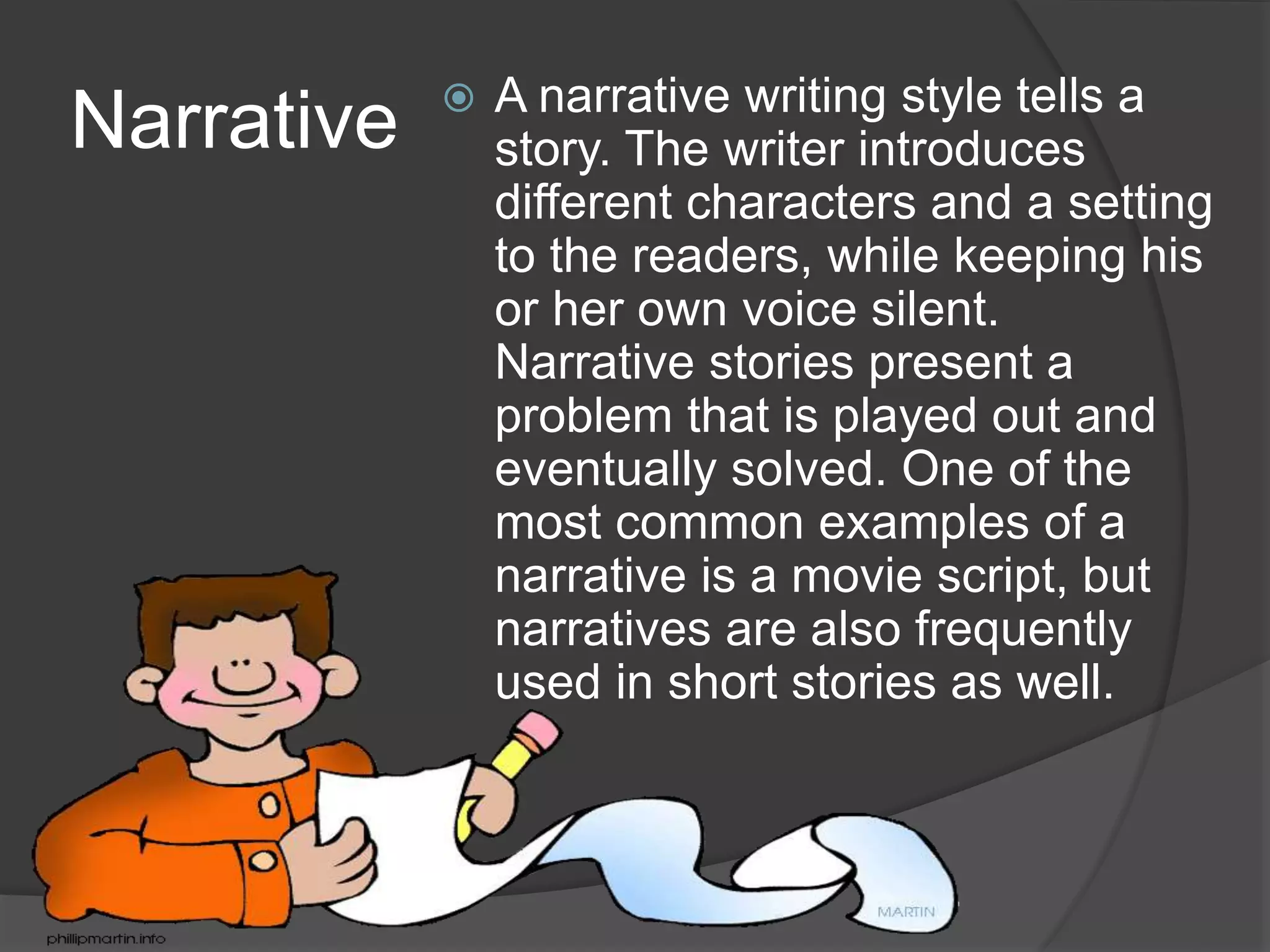
Narrative  A narrative writing style tells a
story. The writer introduces
different characters and a setting
to the readers, while keeping his
or her own voice silent.
Narrative stories present a
problem that is played out and
eventually solved. One of the
most common examples of a
narrative is a movie script, but
narratives are also frequently
used in short stories as well.
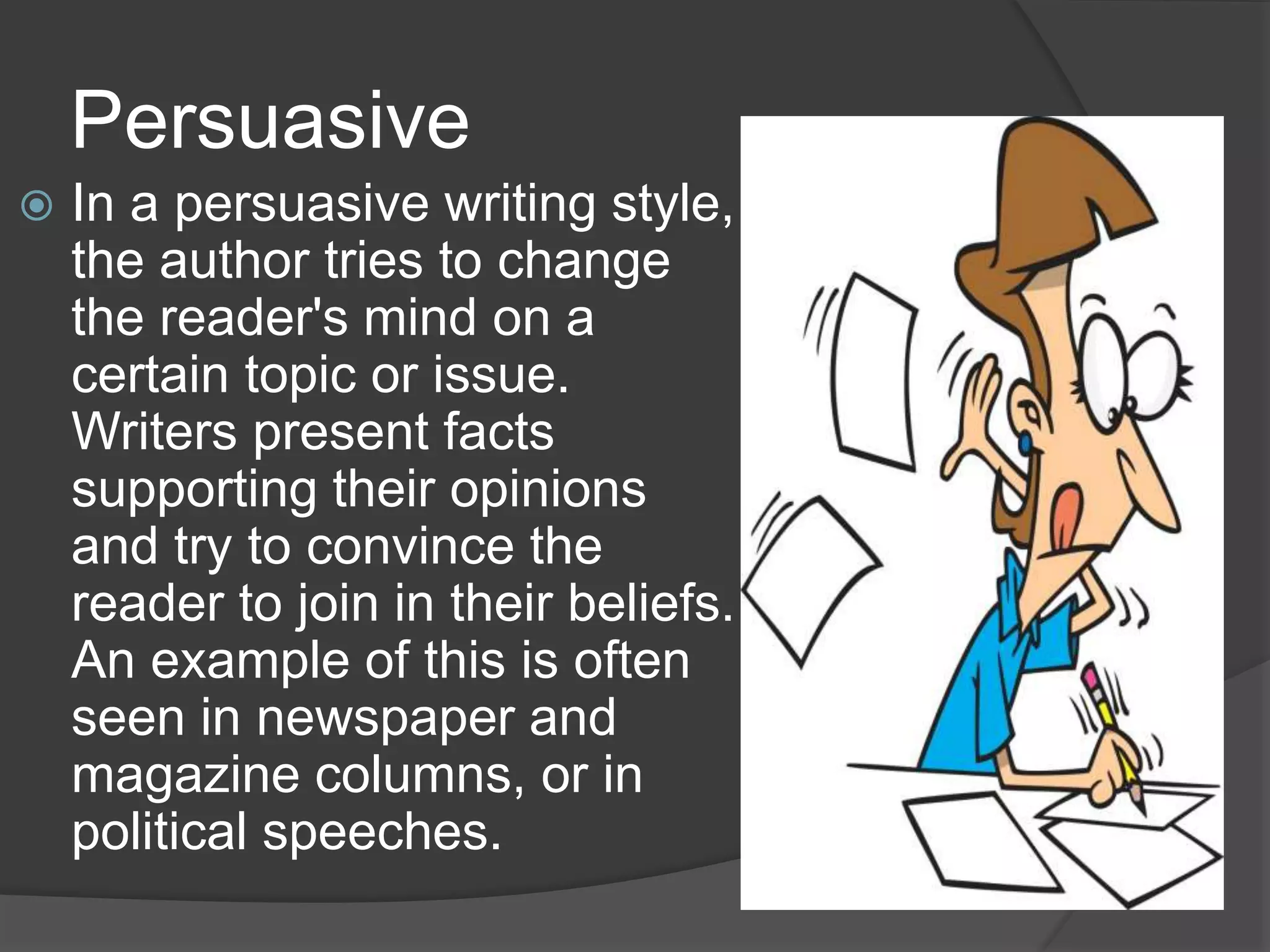
Persuasive
 In a persuasive writing style,
the author tries to change
the reader's mind on a
certain topic or issue.
Writers present facts
supporting their opinions
and try to convince the
reader to join in their beliefs.
An example of this is often
seen in newspaper and
magazine columns, or in
political speeches.
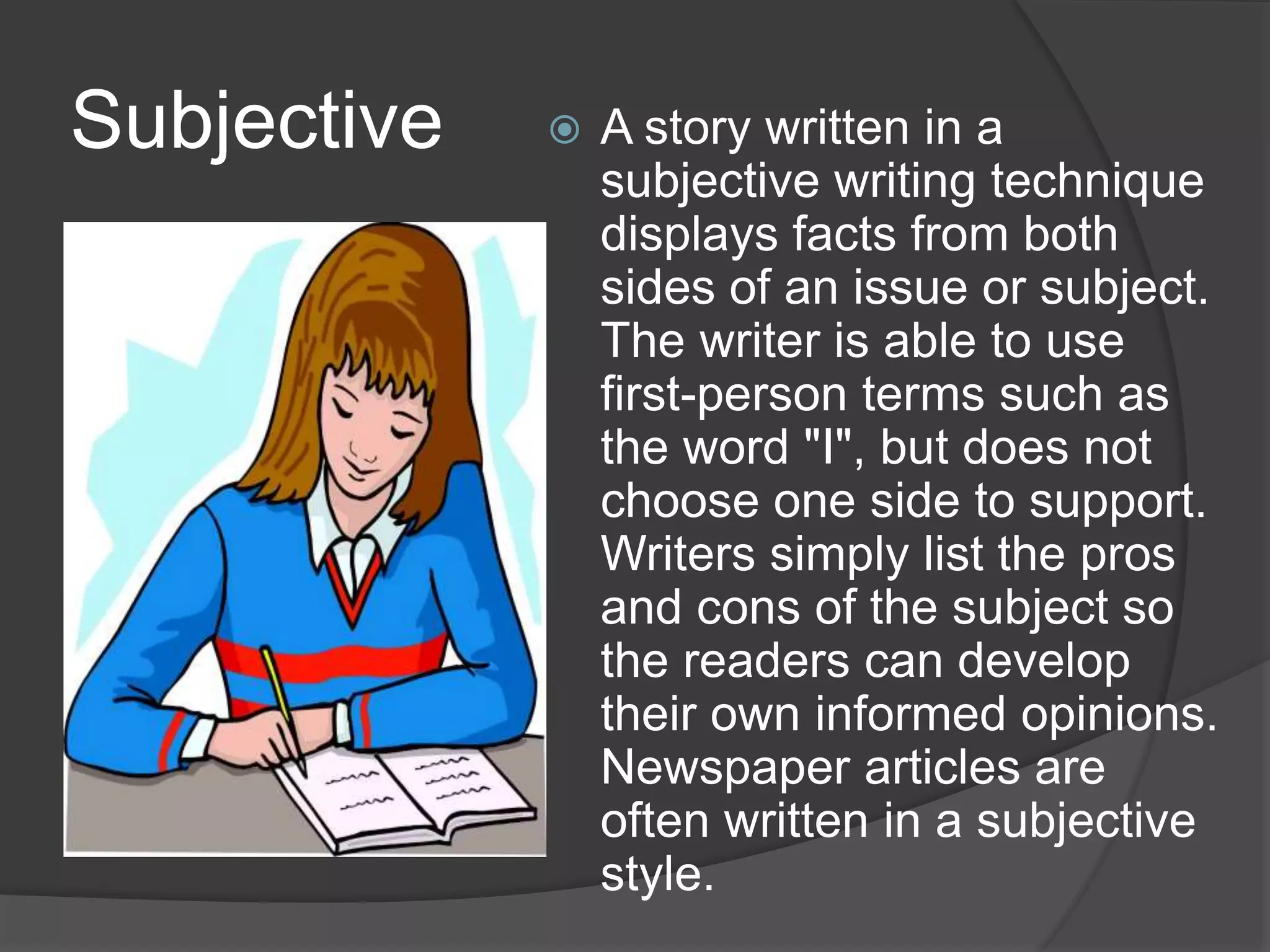
Subjective  A story written in a
subjective writing technique
displays facts from both
sides of an issue or subject.
The writer is able to use
first-person terms such as
the word "I", but does not
choose one side to support.
Writers simply list the pros
and cons of the subject so
the readers can develop
their own informed opinions.
Newspaper articles are
often written in a subjective
style.
resources
 Classroom.synonym.com
 Google Images

Designing writing techniques

  • 1.
  • 2.
    Types of WritingTechniques  You must choose your writing technique carefully before you begin writing the story. Consider the topic of the story and the audience that will read it. Sometimes it is appropriate to use the word "I" in your story or reveal your own opinions on a topic, while other times it is not. Using the appropriate writing technique can make the difference between your story being a hit or total flop.
  • 3.
    Descriptive  Descriptive writingoccurs when the writer uses very detailed information to explain the story. This can involve detailed descriptions of the characters, the setting and even objects. This style of writing is used to immerse the readers in the story, allowing them to create a vivid mental picture of the setting in their minds. For example, a line from a descriptive story might read, "He was 6'4, with deep blue eyes, chestnut brown hair and a bright white smile."
  • 4.
    First-Person  When usinga first- person writing technique, the writer is able to incorporate his own ideas into the story. Instead of just presenting the facts, the writer can let his own opinions come out in the writing. For example, a story written in a first-person technique would have the word "I" worked in throughout the text.
  • 5.
    Narrative  Anarrative writing style tells a story. The writer introduces different characters and a setting to the readers, while keeping his or her own voice silent. Narrative stories present a problem that is played out and eventually solved. One of the most common examples of a narrative is a movie script, but narratives are also frequently used in short stories as well.
  • 6.
    Persuasive  In apersuasive writing style, the author tries to change the reader's mind on a certain topic or issue. Writers present facts supporting their opinions and try to convince the reader to join in their beliefs. An example of this is often seen in newspaper and magazine columns, or in political speeches.
  • 7.
    Subjective  Astory written in a subjective writing technique displays facts from both sides of an issue or subject. The writer is able to use first-person terms such as the word "I", but does not choose one side to support. Writers simply list the pros and cons of the subject so the readers can develop their own informed opinions. Newspaper articles are often written in a subjective style.
  • 10.