Farhan Arif_____112
Arslan Tauqeer_117
Ahmad Yaqoob__128
Umer Chandia____131
Social institution
• A social institution consists of a group of people who
have come together for a common purpose.
Social institution
• A social institution consists of a group of people who
have come together for a common purpose.
These institutions are a part of the social order of
society and they govern behavior and expectations
of individuals.
Functions of an Institution
• Institution simply social behavior for the
individual person.it provides every one all
needed social and cultural transmission
through which they can grow.
• Provide ready-made forms of a social
relations and social roles for individuals.
• Control the behavior .
• Way of thinking is intitutionzied.
5 Major Social institutions
• Health Care Institutions
• Market Institutions
• Mass Media Institutions
• Social Welfare Institutions
Other Basic Institutions
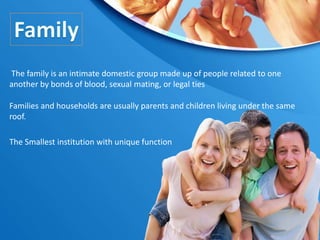
The Smallest institution with unique function
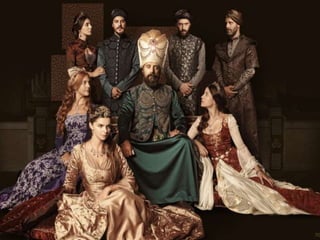
Families and households are usually parents and children living under the same
roof.
The family is an intimate domestic group made up of people related to one
another by bonds of blood, sexual mating, or legal ties
Functions of Family
• Reproduction of race.
• Cultural transmission.
• Socialization of child.
• Providing affection and sense of security.
• Providing the environment for personality development and growth
of self. concept in relation to others.
• Providing the social status.
• Religious function.
• Educational function.
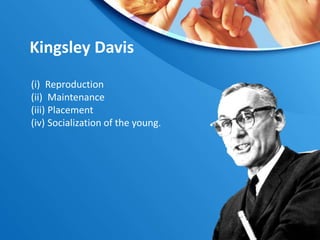
Kingsley Davis
(i) Reproduction
(ii) Maintenance
(iii) Placement
(iv) Socialization of the young.
Basic Types of Families according to structure
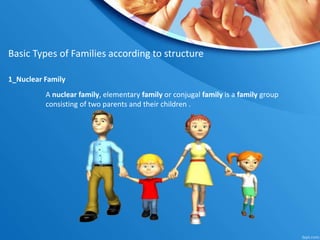
1_Nuclear Family
A nuclear family, elementary family or conjugal family is a family group
consisting of two parents and their children .
Basic Types of Families according to structure
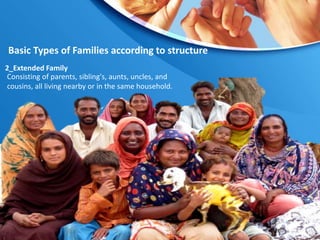
2_Extended Family
Consisting of parents, sibling's, aunts, uncles, and
cousins, all living nearby or in the same household.
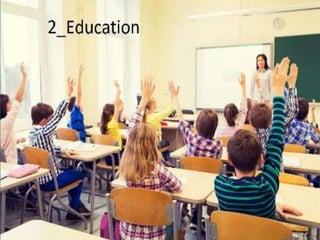
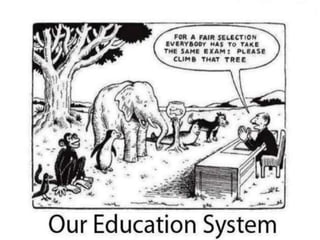
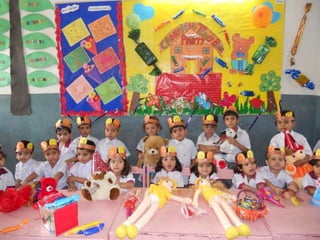
Education
A system consisting the roles and norms that ensure the transmission of knowledge
, values, and patterns of behavior from one generation to next.
The primary function Is to move people in the
mainstream of society.
School is the place for contemplation of reality
our task as a teacher Is to show this reality to our
students who are naturally eager about them.
Education
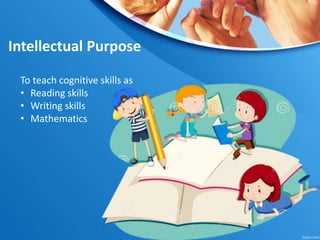
Intellectual Purpose
To teach cognitive skills as
• Reading skills
• Writing skills
• Mathematics
Political Purpose
To inculcate allegiance to the existing political order(patriotism).
To teach student the basic laws of society.
Social Purpose
To socialize children into various roles, behavior, and values of society.
The key ingredient in the stability of any society
Economical purpose
To prepare students for their later occupational roles
Manifest functions
• Social control
• Socialization placement
• Transmitting culture
• Promoting social and political integration
• Agent of change
Latent function
Restricting some activities
Matchmaking and production of social networks
Creation of generation gap
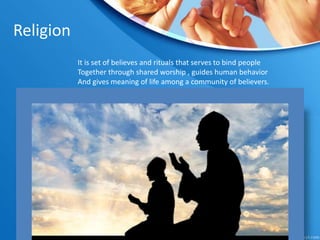
Religion
It is set of believes and rituals that serves to bind people
Together through shared worship , guides human behavior
And gives meaning of life among a community of believers.
thereby creating a social group
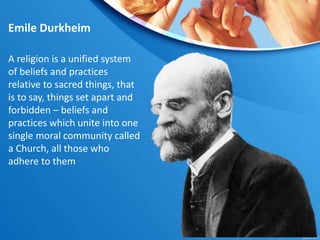
Emile Durkheim
A religion is a unified system
of beliefs and practices
relative to sacred things, that
is to say, things set apart and
forbidden – beliefs and
practices which unite into one
single moral community called
a Church, all those who
adhere to them
Functions of religion
• Serves as meaning of social control
• Exerts a great influence of personality development
• Allays fear of unknown.
• Explains the events and situations which are beyond the comprehension of man.
• Gives man comfort, strength, and hope in time of crisis and despair.
• It serves as instrument of change
• Promotes closeness, love, care, friendliness, and helpfulness.
• It provides hope for blissful life
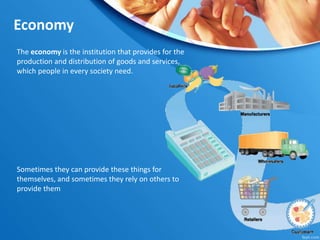
Economy
The economy is the institution that provides for the
production and distribution of goods and services,
which people in every society need.
Sometimes they can provide these things for
themselves, and sometimes they rely on others to
provide them
Economic Systems
The two dominant economic systems in the world
1_Capitalism
2_Socialism
Capitalism
It is a system under which resources and
means of
production are privately owned
Socialism
which is an economy controlled by the state and planned
by a central planning authority, provides for a greater
social welfare and decreases business fluctuations.
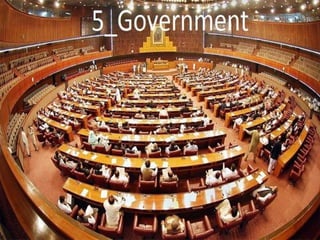
Government
A government is an institution entrusted with making and
enforcing the rules of a society as well as with regulating
relations with other societies
Your government is the system of people, laws, and
officials that define and control the country that you live
in.
Types of government
Four basic types of governments
• Monarchy
• Democracy
• Dictatorship
• also
• Oligarchy
• Authoritarianism
Monarchy
is a political system in which a representative from one
family controls the government and power is passed on
through that family from generation to generation
e.g emperorship
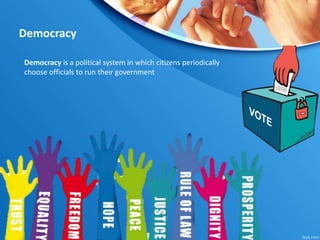
Democracy
Democracy is a political system in which citizens periodically
choose officials to run their government
Dictatorship
A dictatorship is a form of government govern by the absolute rule of one
person or a very small group of people who hold all political power. e.g
Zimbabwe Syria etc.
Very few dictator admit that they are dictator and almost always claim
to be leader of democracies
Three major branches if government
• Executive
• Legislative
• Judicial

5 major social institutions

  • 1.
    Farhan Arif_____112 Arslan Tauqeer_117 AhmadYaqoob__128 Umer Chandia____131
  • 2.
    Social institution • Asocial institution consists of a group of people who have come together for a common purpose.
  • 3.
    Social institution • Asocial institution consists of a group of people who have come together for a common purpose. These institutions are a part of the social order of society and they govern behavior and expectations of individuals.
  • 4.
    Functions of anInstitution • Institution simply social behavior for the individual person.it provides every one all needed social and cultural transmission through which they can grow. • Provide ready-made forms of a social relations and social roles for individuals. • Control the behavior . • Way of thinking is intitutionzied.
  • 5.
    5 Major Socialinstitutions
  • 11.
    • Health CareInstitutions • Market Institutions • Mass Media Institutions • Social Welfare Institutions Other Basic Institutions
  • 12.
    The Smallest institutionwith unique function Families and households are usually parents and children living under the same roof. The family is an intimate domestic group made up of people related to one another by bonds of blood, sexual mating, or legal ties
  • 13.
    Functions of Family •Reproduction of race. • Cultural transmission. • Socialization of child. • Providing affection and sense of security. • Providing the environment for personality development and growth of self. concept in relation to others. • Providing the social status. • Religious function. • Educational function.

  • 14.
    Kingsley Davis (i) Reproduction (ii)Maintenance (iii) Placement (iv) Socialization of the young.
  • 15.
    Basic Types ofFamilies according to structure 1_Nuclear Family A nuclear family, elementary family or conjugal family is a family group consisting of two parents and their children .
  • 16.
    Basic Types ofFamilies according to structure 2_Extended Family Consisting of parents, sibling's, aunts, uncles, and cousins, all living nearby or in the same household.
  • 17.
    Education A system consistingthe roles and norms that ensure the transmission of knowledge , values, and patterns of behavior from one generation to next.
  • 18.
    The primary functionIs to move people in the mainstream of society. School is the place for contemplation of reality our task as a teacher Is to show this reality to our students who are naturally eager about them. Education
  • 19.
    Intellectual Purpose To teachcognitive skills as • Reading skills • Writing skills • Mathematics
  • 20.
    Political Purpose To inculcateallegiance to the existing political order(patriotism). To teach student the basic laws of society.
  • 21.
    Social Purpose To socializechildren into various roles, behavior, and values of society. The key ingredient in the stability of any society
  • 22.
    Economical purpose To preparestudents for their later occupational roles
  • 24.
    Manifest functions • Socialcontrol • Socialization placement • Transmitting culture • Promoting social and political integration • Agent of change
  • 25.
    Latent function Restricting someactivities Matchmaking and production of social networks Creation of generation gap
  • 26.
    Religion It is setof believes and rituals that serves to bind people Together through shared worship , guides human behavior And gives meaning of life among a community of believers. thereby creating a social group
  • 27.
    Emile Durkheim A religionis a unified system of beliefs and practices relative to sacred things, that is to say, things set apart and forbidden – beliefs and practices which unite into one single moral community called a Church, all those who adhere to them
  • 28.
    Functions of religion •Serves as meaning of social control • Exerts a great influence of personality development • Allays fear of unknown. • Explains the events and situations which are beyond the comprehension of man. • Gives man comfort, strength, and hope in time of crisis and despair. • It serves as instrument of change • Promotes closeness, love, care, friendliness, and helpfulness. • It provides hope for blissful life
  • 29.
    Economy The economy isthe institution that provides for the production and distribution of goods and services, which people in every society need. Sometimes they can provide these things for themselves, and sometimes they rely on others to provide them
  • 32.
    Economic Systems The twodominant economic systems in the world 1_Capitalism 2_Socialism
  • 33.
    Capitalism It is asystem under which resources and means of production are privately owned
  • 34.
    Socialism which is aneconomy controlled by the state and planned by a central planning authority, provides for a greater social welfare and decreases business fluctuations.
  • 35.
    Government A government isan institution entrusted with making and enforcing the rules of a society as well as with regulating relations with other societies Your government is the system of people, laws, and officials that define and control the country that you live in.
  • 36.
    Types of government Fourbasic types of governments • Monarchy • Democracy • Dictatorship • also • Oligarchy • Authoritarianism
  • 37.
    Monarchy is a politicalsystem in which a representative from one family controls the government and power is passed on through that family from generation to generation e.g emperorship
  • 38.
    Democracy Democracy is apolitical system in which citizens periodically choose officials to run their government
  • 39.
    Dictatorship A dictatorship isa form of government govern by the absolute rule of one person or a very small group of people who hold all political power. e.g Zimbabwe Syria etc. Very few dictator admit that they are dictator and almost always claim to be leader of democracies
  • 40.
    Three major branchesif government • Executive • Legislative • Judicial