CONTEXT, CONTENT, PROCESSESAND
CONSEQUENCES OFSOCIALIZATION
OBJECTIVES/
LEARNING COMPETENCY
•Explain the context,
content, processes and
consequences
ofSocialization.
“THE HUMAN MIND AT BIRTH IS
NOTHING BUT A BLANK STATE, OR
TABULA RASA”
JOHN LOCKE
SOCIALIZATION
What is Socialization?
Socialization is learning on how
our society and specific
communities or group works,
so we can be a part of
them.
What is Socialization?
ENABLES THE PERSON TO GRADUALLY
BECOME A SELF – AWARE AND
KNOWLEDGEABLE HUMAN BEING,
AND LEARN THE WAYS, VALUES,
RULES, AND CULTURE OF HIS / HER
SOCIETY.
The main focus of Socialization
 acquisition of knowledge,
 language,
 values,
 habits
 and skills in the society.
TYPES OF SOCIALIZATION
Primary socialization
type of socialization when a
child learn the values, norms
and behaviors that should be
displayed in order to live
accordingly to a specific culture.
Primary socialization
Example: A child hears his father
talk bad words against an old lady.
The child would think that this
behavior is especially acceptable so
he would start talking bad words
against older people
Secondary socialization
This type occurs when a
person learns on appropriate
behavior to be displayed within a
smaller group which is still part
of a larger society.
Secondary socialization
Example: A high school
graduate chooses a career in
business management after
participating in a small group
career seminar led by college
Developmental socialization
It involves a learning
process where in the fear
on developing our
social skills.
Developmental socialization
Example: A shy senior
high school starts to
teach English to new
freshman students in
order to develop verbal
Anticipatory Socialization
“Adoption of attitudes and values of
a group to which one does not
belong, serving the twin functions of
facilitating a move into that group
and easing the process of
adjustment after becoming a
Resocialization
•Resocialization refers to a
learning process by which old
roles and behaviors of
individuals are replaced by
new ones.
Resocialization
•Moving to a new country, with a
different culture than where a
person was born and bred, and
learning the new customs and
norms is an example of
resocialization.
ASPECTS OF
SOCIALIZATION
SOCIAL CONTEXT
• PARTICULAR CIRCUMSTANCES OF A SOCIETY AND
CONSIST OF ITS CULTURE, LANGUAGE, AND THE SOCIAL
STRUCTURES THAT DEFINE SOCIAL CLASS, ETHNICITY,
AND GENDER.
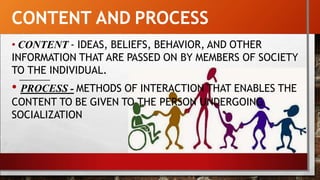
CONTENT AND PROCESS
• CONTENT - IDEAS, BELIEFS, BEHAVIOR, AND OTHER
INFORMATION THAT ARE PASSED ON BY MEMBERS OF SOCIETY
TO THE INDIVIDUAL.
• PROCESS - METHODS OF INTERACTION THAT ENABLES THE
CONTENT TO BE GIVEN TO THE PERSON UNDERGOING
SOCIALIZATION
PROCESSES
Race also
plays
a factor in
socialization.
While context sets the
stage for socialization,
the content and process
comprise the work of
this undertaking.
School plays an important role in
socialization of students of all ages.
In class, young people receive
instructions related to their
conduct, tasks, authority, schedules
and deadlines. Teaching this
content requires social interaction
between educators and students.
RESULTS
OUTCOMES OF SOCIALIZATION, AND ARE EVIDENT
WHEN INDIVIDUALS BEGIN TO PRACTICE THE
BEHAVIORS, ATTITUDES, AND VALUES THAT
SOCIETY CONSIDERS NECESSARY FOR THEM TO
FUNCTION EFFECTIVELY AS ITS MEMBER
Activity 1. Nature vs. Nurture
Directions: Complete the table below. In
the first column (Nature) list down and
discuss all the biological traits that you
have inherited from your parents (e.g.
color of the hair, color of the skin, etc.)
Activity 1. Nature vs. Nurture
while in the second column (Nurture) list down
all the sociological traits handed down to you by
your parents through the process of socialization
and learning (e.g. mannerisms, hobbies, values,
etc.). Then after listing down your answers,
write why you consider such traits as something
biological or sociological.
INDEPENDENT ACTIVITY 2
Essay Writing : In becoming a member
of society what qualities, behavior,
values, beliefs, personality, looks
and/or expressions that make you as a
person. Write your narrative answer
below at least 200 words.
ENCULTURATION
What is Enculturation?
Enculturation is the process by
which individuals acquire the
knowledge, skills, attitudes, and
values that enable them to
become functioning members of
their societies.
What I Have Learned
1. What are the content processes of
socialization?
2. How to become a competent member of the
society.
3. Why culture should be learnt in order to
become a member of the society?
4. Why it is important to learn the
Make a presentation of the following
GROUP 1 – Primary and Secondary
Socialization
GROUP 2 - Developmental socialization
and Anticipatory Socialization n
GROUP 3 – Resocialization and ASPECTS
OF SOCIALIZATION
CONTEXT, CONTENT, PROCESSESAND   CONSEQUENCES OFSOCIALIZATION.pptx

CONTEXT, CONTENT, PROCESSESAND CONSEQUENCES OFSOCIALIZATION.pptx

  • 1.
  • 2.
    OBJECTIVES/ LEARNING COMPETENCY •Explain thecontext, content, processes and consequences ofSocialization.
  • 3.
    “THE HUMAN MINDAT BIRTH IS NOTHING BUT A BLANK STATE, OR TABULA RASA” JOHN LOCKE
  • 4.
  • 5.
    What is Socialization? Socializationis learning on how our society and specific communities or group works, so we can be a part of them.
  • 6.
    What is Socialization? ENABLESTHE PERSON TO GRADUALLY BECOME A SELF – AWARE AND KNOWLEDGEABLE HUMAN BEING, AND LEARN THE WAYS, VALUES, RULES, AND CULTURE OF HIS / HER SOCIETY.
  • 7.
    The main focusof Socialization  acquisition of knowledge,  language,  values,  habits  and skills in the society.
  • 8.
  • 9.
    Primary socialization type ofsocialization when a child learn the values, norms and behaviors that should be displayed in order to live accordingly to a specific culture.
  • 10.
    Primary socialization Example: Achild hears his father talk bad words against an old lady. The child would think that this behavior is especially acceptable so he would start talking bad words against older people
  • 11.
    Secondary socialization This typeoccurs when a person learns on appropriate behavior to be displayed within a smaller group which is still part of a larger society.
  • 12.
    Secondary socialization Example: Ahigh school graduate chooses a career in business management after participating in a small group career seminar led by college
  • 13.
    Developmental socialization It involvesa learning process where in the fear on developing our social skills.
  • 14.
    Developmental socialization Example: Ashy senior high school starts to teach English to new freshman students in order to develop verbal
  • 15.
    Anticipatory Socialization “Adoption ofattitudes and values of a group to which one does not belong, serving the twin functions of facilitating a move into that group and easing the process of adjustment after becoming a
  • 16.
    Resocialization •Resocialization refers toa learning process by which old roles and behaviors of individuals are replaced by new ones.
  • 17.
    Resocialization •Moving to anew country, with a different culture than where a person was born and bred, and learning the new customs and norms is an example of resocialization.
  • 18.
  • 19.
    SOCIAL CONTEXT • PARTICULARCIRCUMSTANCES OF A SOCIETY AND CONSIST OF ITS CULTURE, LANGUAGE, AND THE SOCIAL STRUCTURES THAT DEFINE SOCIAL CLASS, ETHNICITY, AND GENDER.
  • 20.
    CONTENT AND PROCESS •CONTENT - IDEAS, BELIEFS, BEHAVIOR, AND OTHER INFORMATION THAT ARE PASSED ON BY MEMBERS OF SOCIETY TO THE INDIVIDUAL. • PROCESS - METHODS OF INTERACTION THAT ENABLES THE CONTENT TO BE GIVEN TO THE PERSON UNDERGOING SOCIALIZATION
  • 21.
  • 22.
    While context setsthe stage for socialization, the content and process comprise the work of this undertaking.
  • 23.
    School plays animportant role in socialization of students of all ages. In class, young people receive instructions related to their conduct, tasks, authority, schedules and deadlines. Teaching this content requires social interaction between educators and students.
  • 24.
    RESULTS OUTCOMES OF SOCIALIZATION,AND ARE EVIDENT WHEN INDIVIDUALS BEGIN TO PRACTICE THE BEHAVIORS, ATTITUDES, AND VALUES THAT SOCIETY CONSIDERS NECESSARY FOR THEM TO FUNCTION EFFECTIVELY AS ITS MEMBER
  • 25.
    Activity 1. Naturevs. Nurture Directions: Complete the table below. In the first column (Nature) list down and discuss all the biological traits that you have inherited from your parents (e.g. color of the hair, color of the skin, etc.)
  • 26.
    Activity 1. Naturevs. Nurture while in the second column (Nurture) list down all the sociological traits handed down to you by your parents through the process of socialization and learning (e.g. mannerisms, hobbies, values, etc.). Then after listing down your answers, write why you consider such traits as something biological or sociological.
  • 28.
    INDEPENDENT ACTIVITY 2 EssayWriting : In becoming a member of society what qualities, behavior, values, beliefs, personality, looks and/or expressions that make you as a person. Write your narrative answer below at least 200 words.
  • 29.
  • 30.
    What is Enculturation? Enculturationis the process by which individuals acquire the knowledge, skills, attitudes, and values that enable them to become functioning members of their societies.
  • 31.
    What I HaveLearned 1. What are the content processes of socialization? 2. How to become a competent member of the society. 3. Why culture should be learnt in order to become a member of the society? 4. Why it is important to learn the
  • 32.
    Make a presentationof the following GROUP 1 – Primary and Secondary Socialization GROUP 2 - Developmental socialization and Anticipatory Socialization n GROUP 3 – Resocialization and ASPECTS OF SOCIALIZATION

Editor's Notes

  • #4 tabula rasa is the epistemological study that a human is born with no built-in mental content and that human knowledge comes from experience and perception. human infants are born without any culture.
  • #18 Countries vary in things like their eating habits, not only in the foods they eat but also in how they eat them and when they have their meals. Other differences may include issues around etiquette, like what people do when they are introduced: while in some countries people kiss on the cheeks, in other they shake hands or simply say hello.
  • #20 For example, a family's economic class may have a huge impact on how parents associate or deal with their children.
  • #25 As children mature, the results of socialization include knowing how to obey rules, wait for their turn or organize their schedule to be productive. We can see the results of socialization in everything, from men hitting the gym to achieve appealing biceps to women wearing make ups to look more attractive.
  • #31 PROCESS OF BEING SOCIALIZED INTO A SPECIFIC CULTURE. INDIVIDUALS LEARN CULTURAL SYMBOLS, NORMS, VALUES, AND LANGUAGE BY OBSERVING AND INTERACTING WITH FAMILY, FRIENDS, AND THE REST OF SOCIETY.