Neural and Hormonal Regulation of GFR
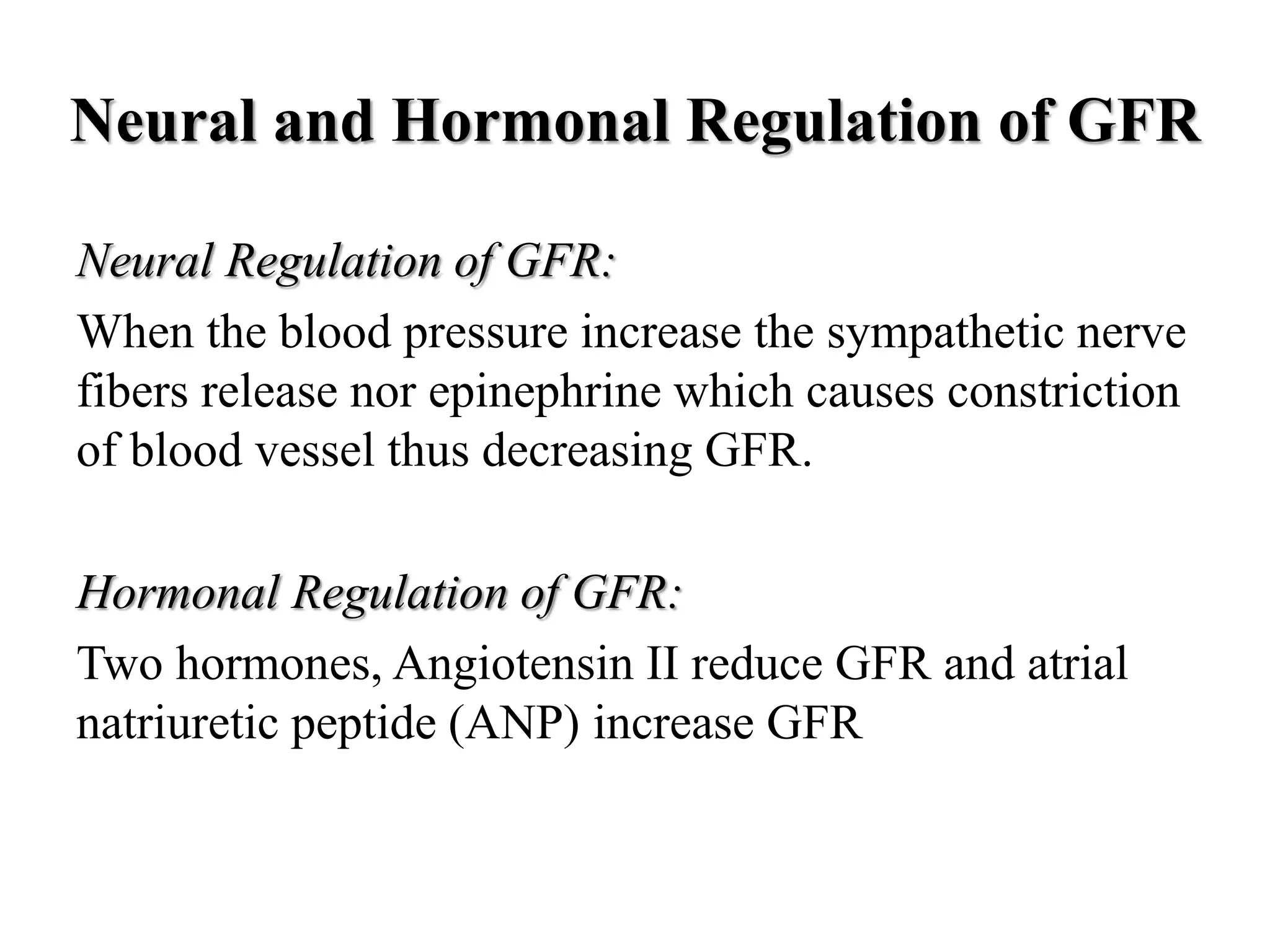
Neural Regulation of GFR:
When the blood pressure increase the sympathetic nerve
fibers release nor epinephrine which causes constriction
of blood vessel thus decreasing GFR.
Hormonal Regulation of GFR:
Two hormones, Angiotensin II reduce GFR and atrial
natriuretic peptide (ANP) increase GFR
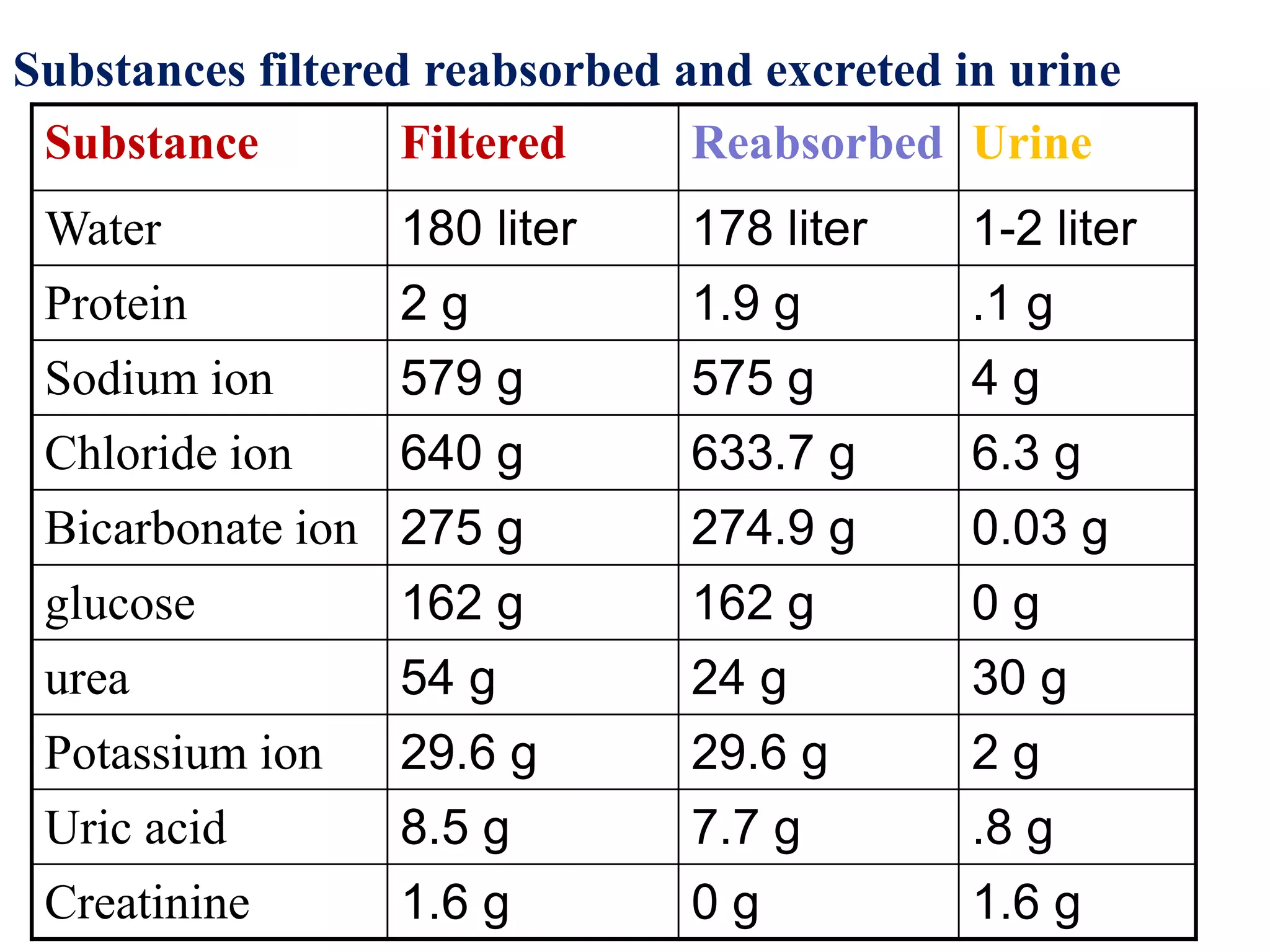
Substance Filtered Reabsorbed Urine
Water 180 liter 178 liter 1-2 liter
Protein 2 g 1.9 g .1 g
Sodium ion 579 g 575 g 4 g
Chloride ion 640 g 633.7 g 6.3 g
Bicarbonate ion 275 g 274.9 g 0.03 g
glucose 162 g 162 g 0 g
urea 54 g 24 g 30 g
Potassium ion 29.6 g 29.6 g 2 g
Uric acid 8.5 g 7.7 g .8 g
Creatinine 1.6 g 0 g 1.6 g
Substances filtered reabsorbed and excreted in urine
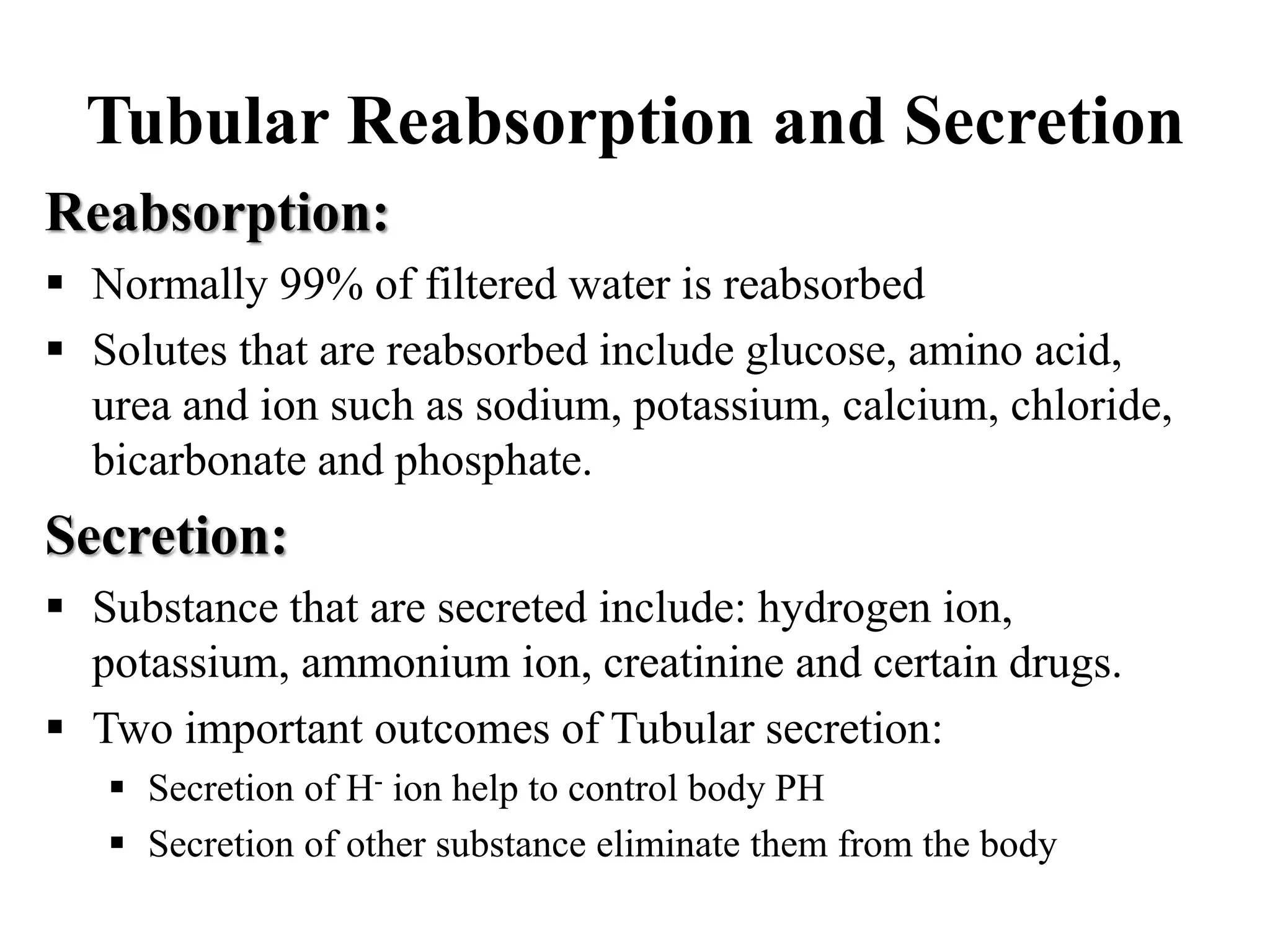
Tubular Reabsorption and Secretion
Reabsorption:
 Normally 99% of filtered water is reabsorbed
 Solutes that are reabsorbed include glucose, amino acid,
urea and ion such as sodium, potassium, calcium, chloride,
bicarbonate and phosphate.
Secretion:
 Substance that are secreted include: hydrogen ion,
potassium, ammonium ion, creatinine and certain drugs.
 Two important outcomes of Tubular secretion:
 Secretion of H- ion help to control body PH
 Secretion of other substance eliminate them from the body
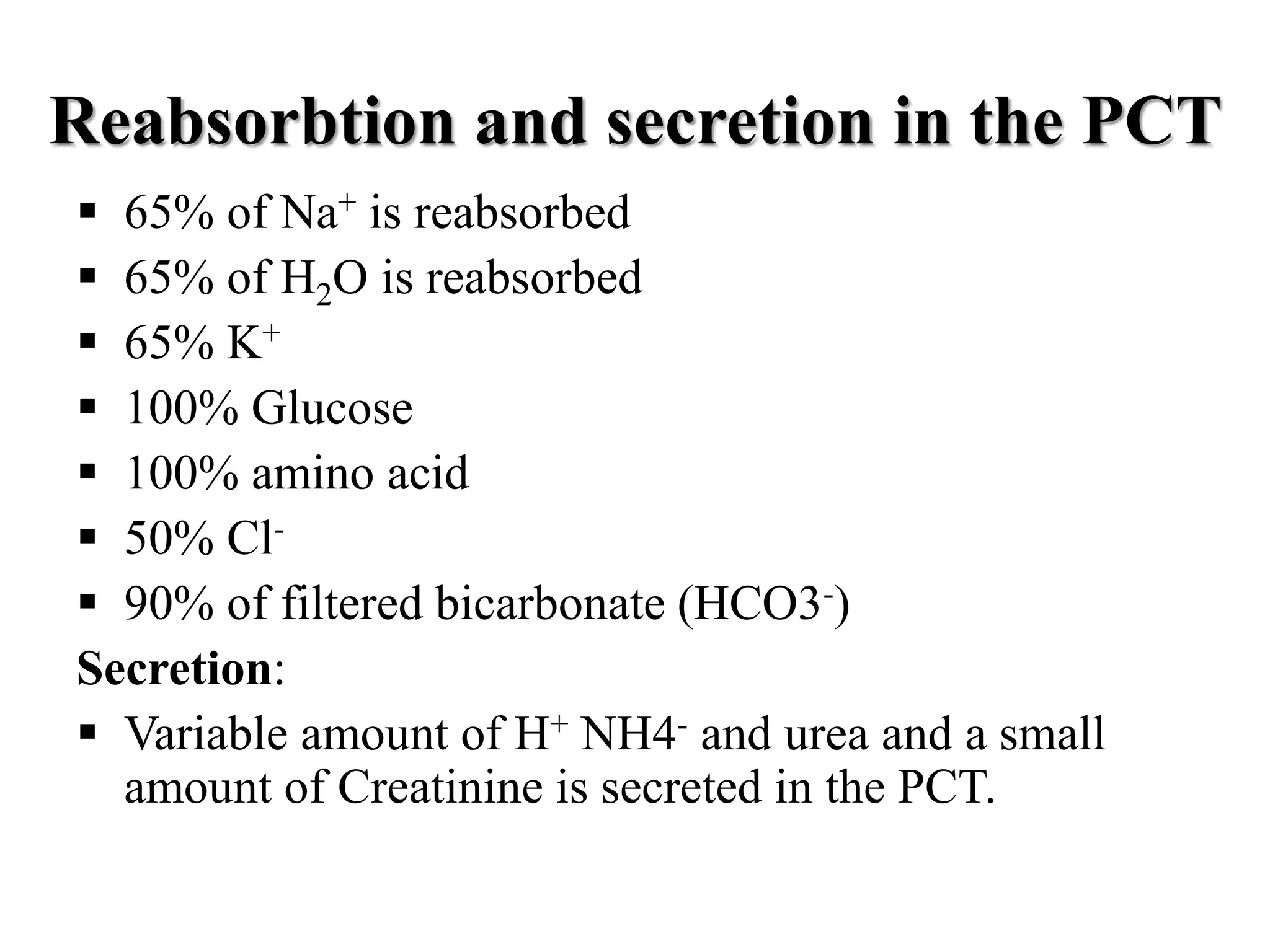
Reabsorbtion and secretion in the PCT
 65% of Na+ is reabsorbed
 65% of H2O is reabsorbed
 65% K+
 100% Glucose
 100% amino acid
 50% Cl-
 90% of filtered bicarbonate (HCO3-)
Secretion:
 Variable amount of H+ NH4- and urea and a small
amount of Creatinine is secreted in the PCT.
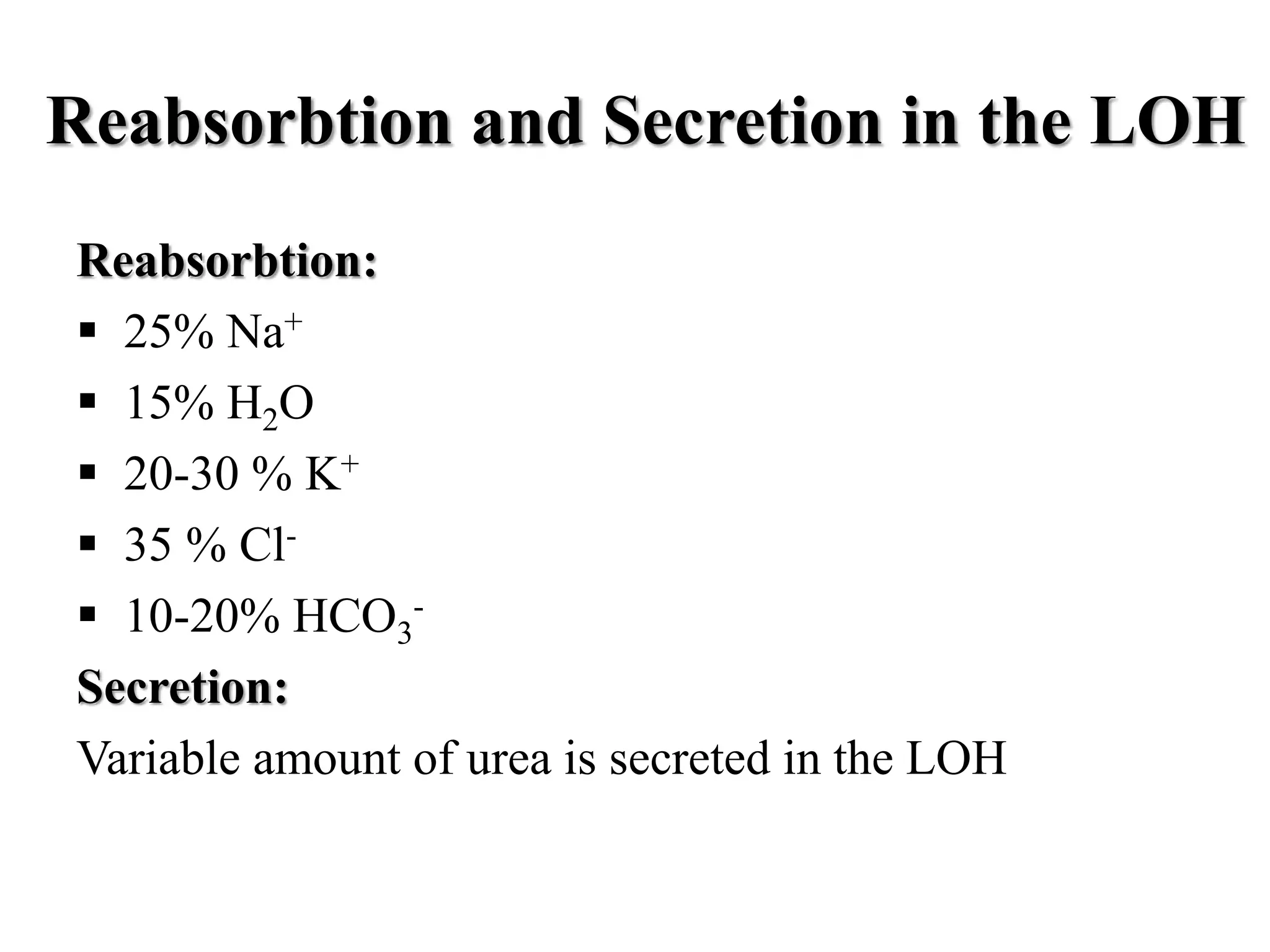
Reabsorbtion and Secretion in the LOH
Reabsorbtion:
 25% Na+
 15% H2O
 20-30 % K+
 35 % Cl-
 10-20% HCO3
-
Secretion:
Variable amount of urea is secreted in the LOH
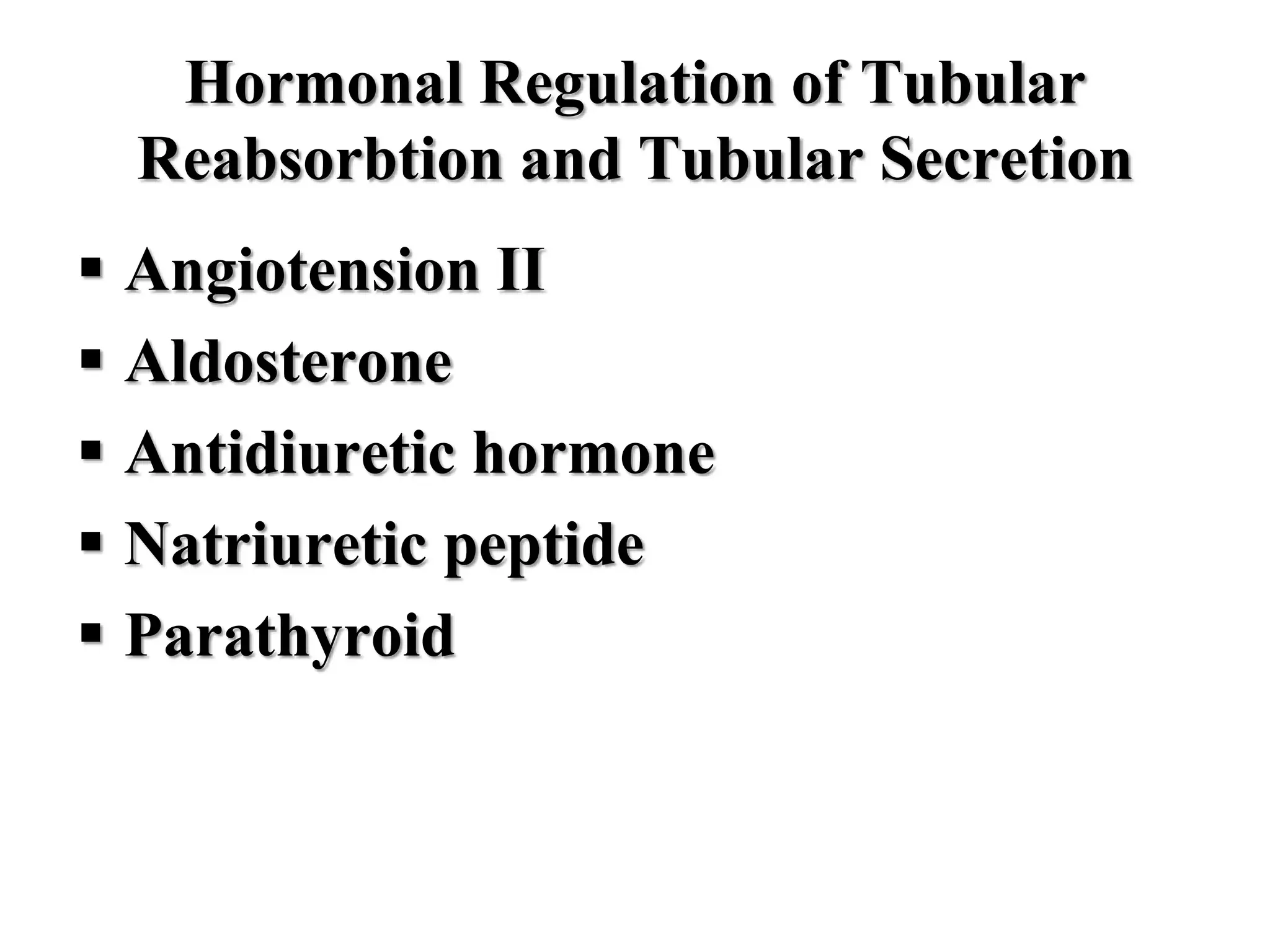
Hormonal Regulation of Tubular
Reabsorbtion and Tubular Secretion
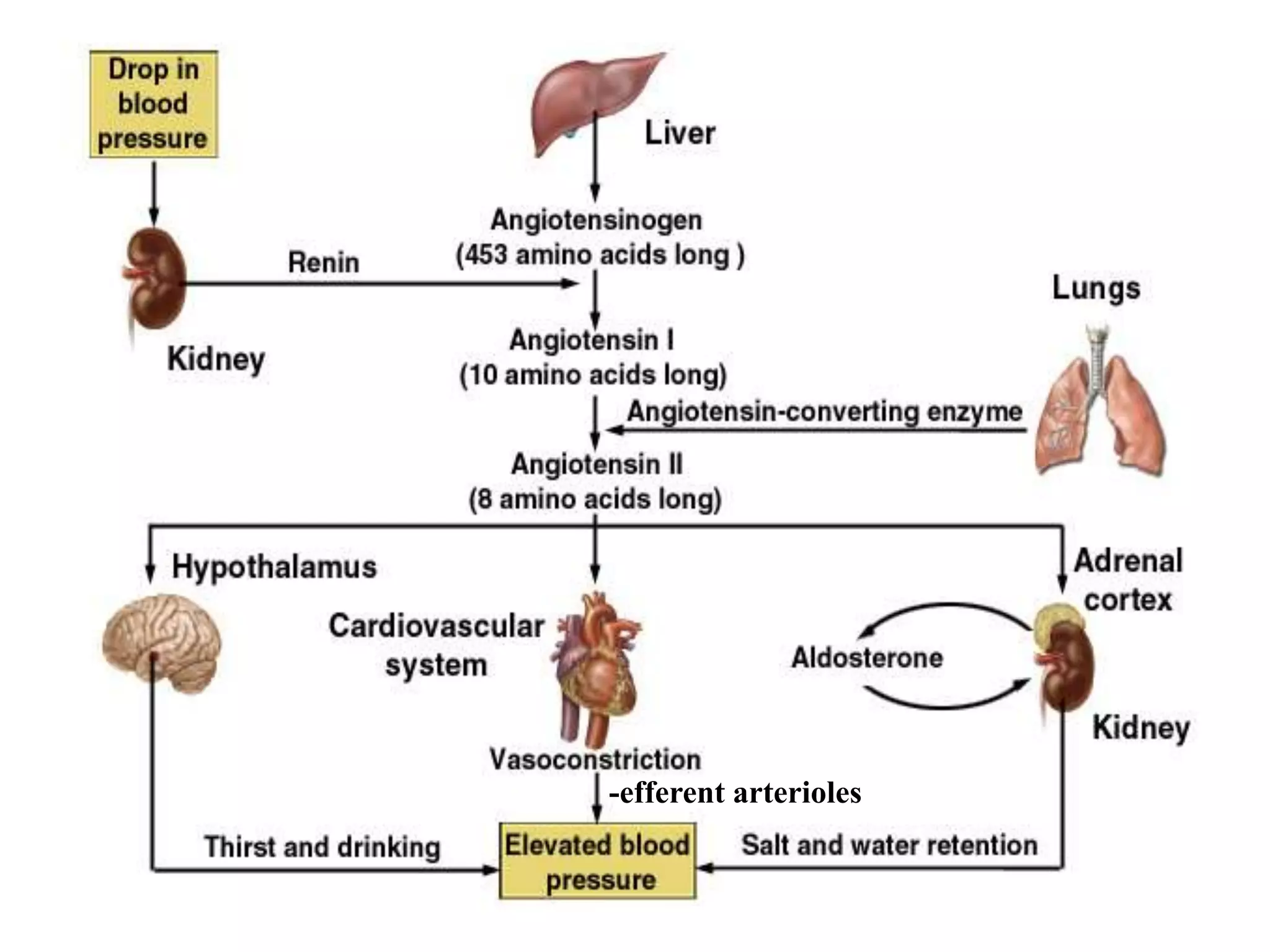
 Angiotension II
 Aldosterone
 Antidiuretic hormone
 Natriuretic peptide
 Parathyroid
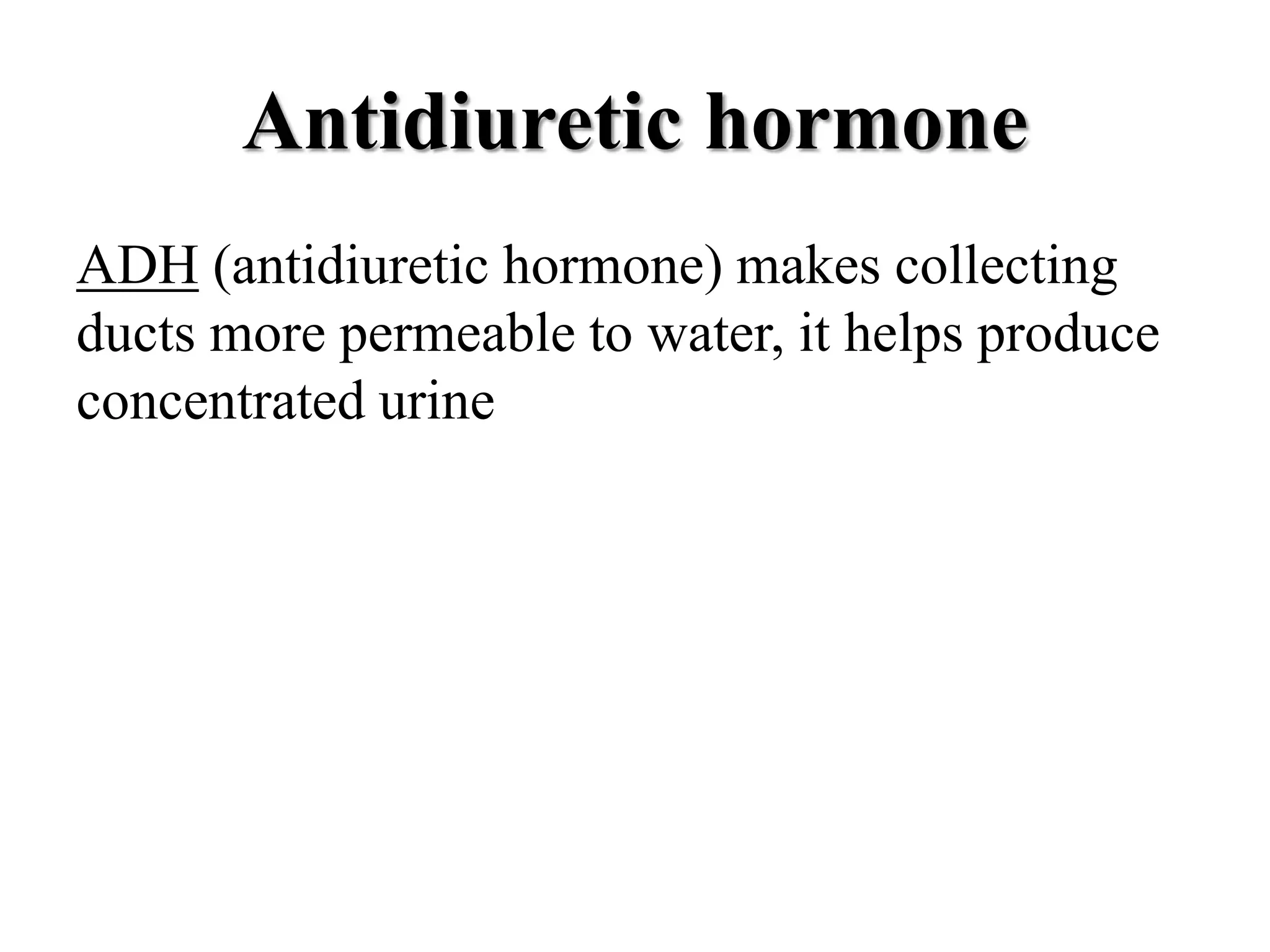
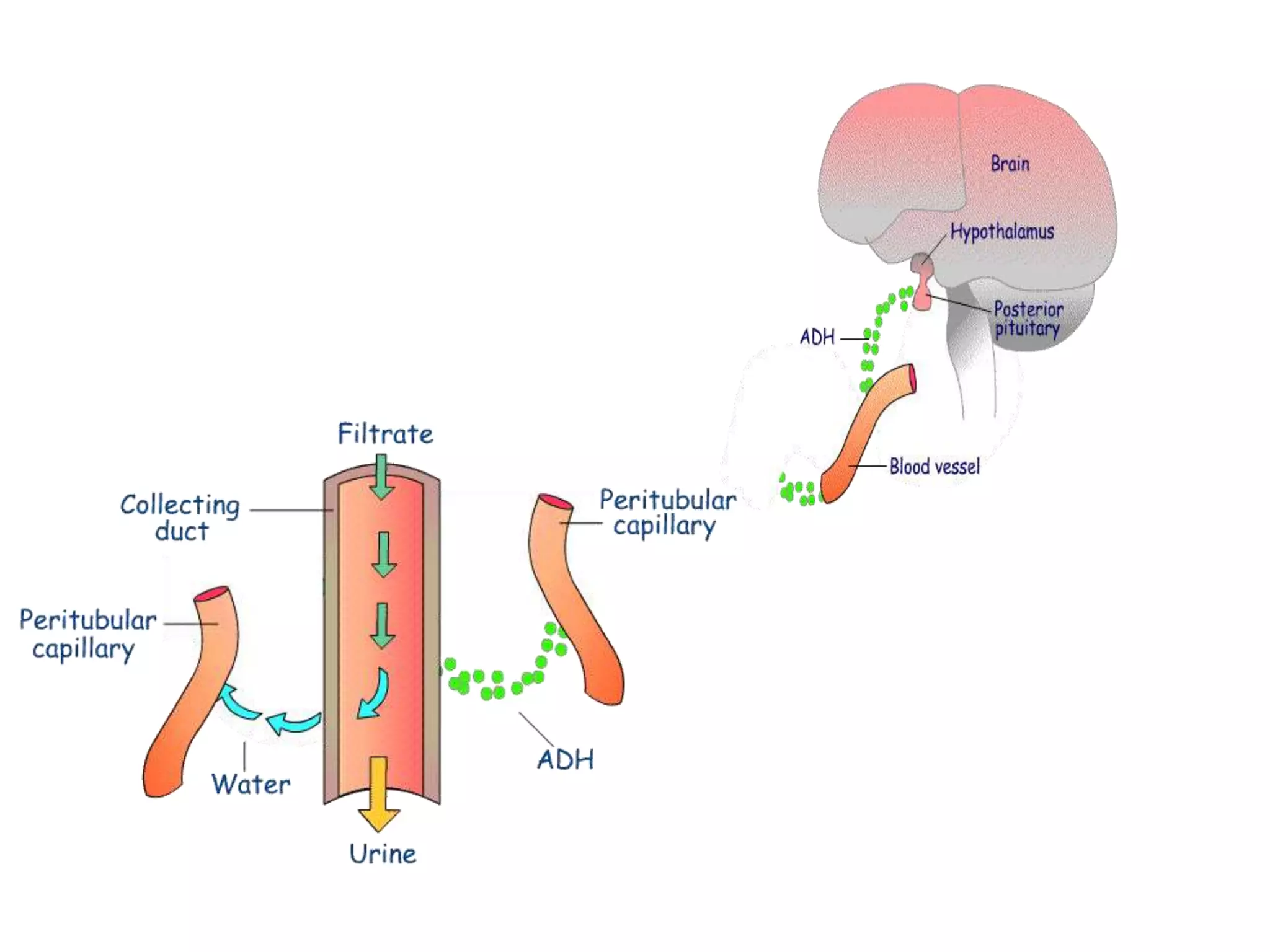
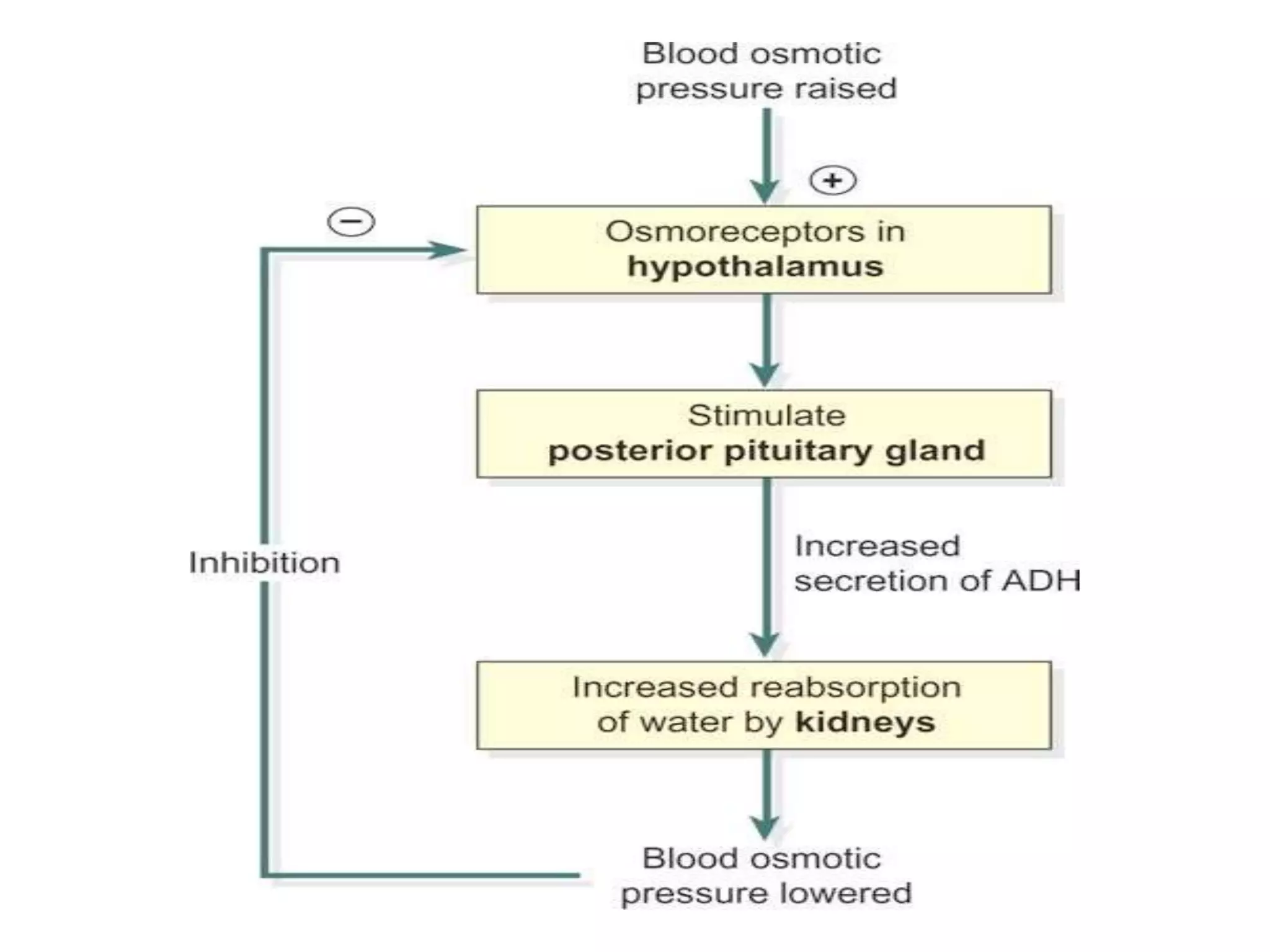
Antidiuretic hormone
ADH (antidiuretic hormone) makes collecting
ducts more permeable to water, it helps produce
concentrated urine
-efferent arterioles
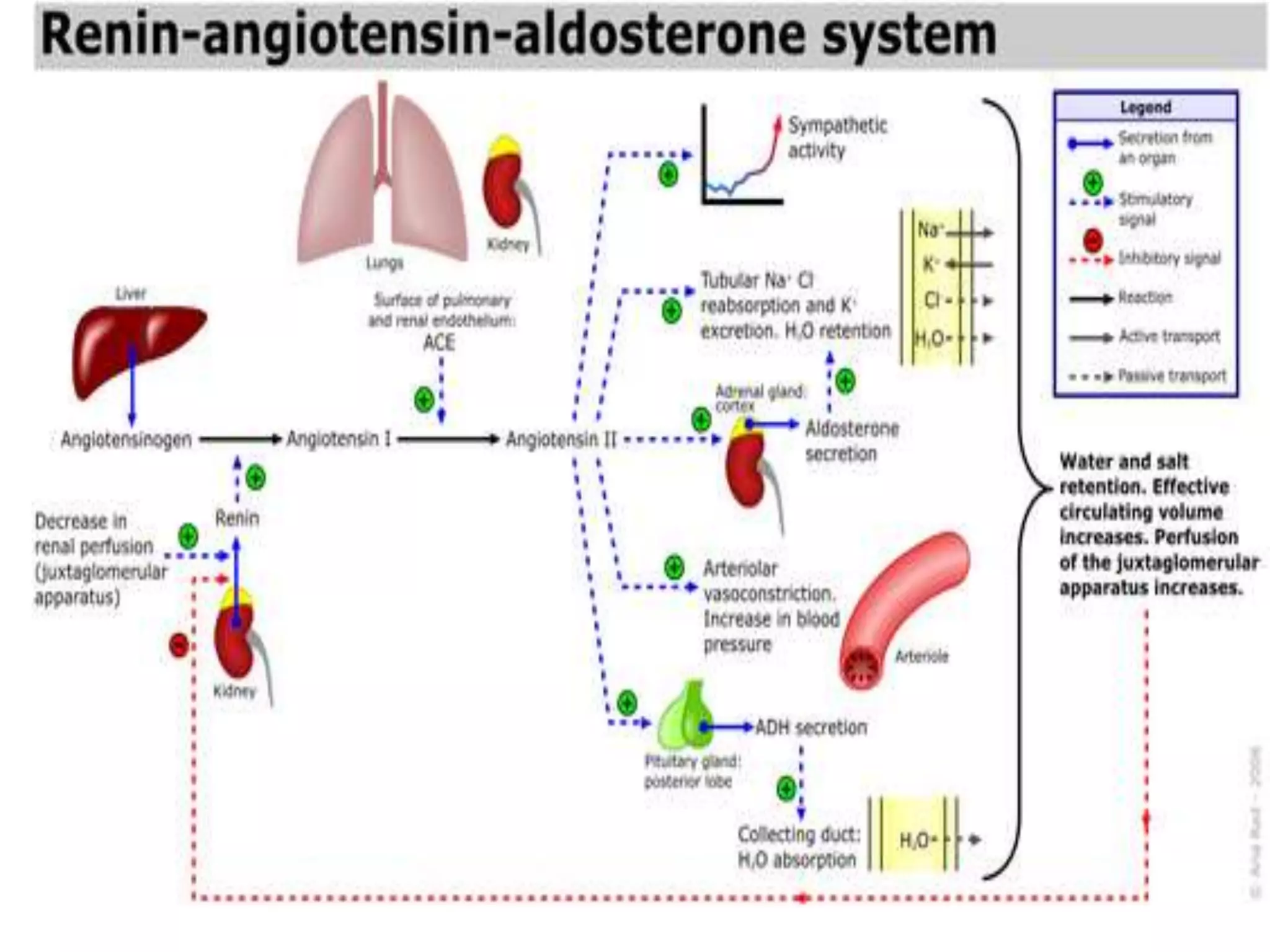
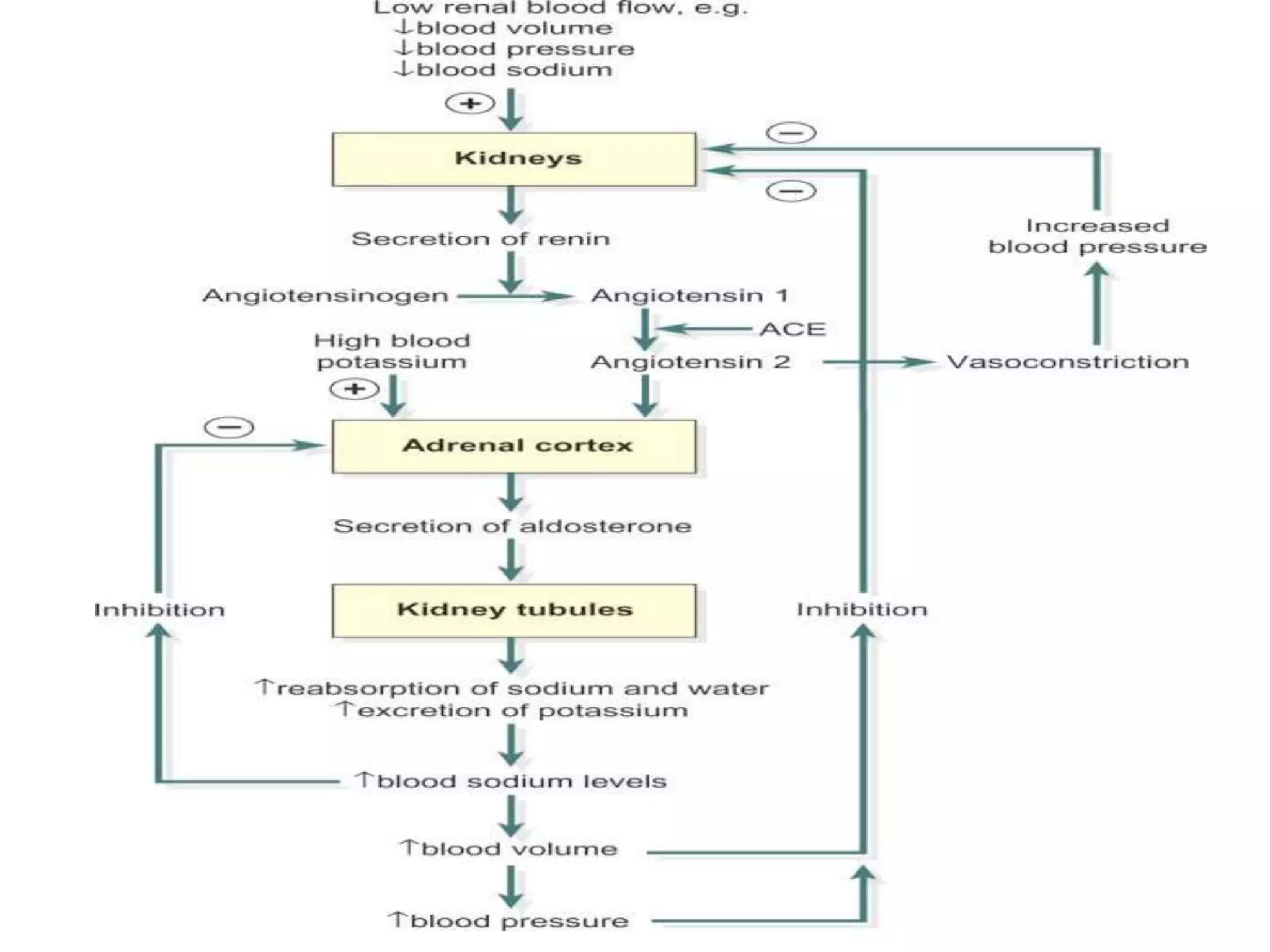
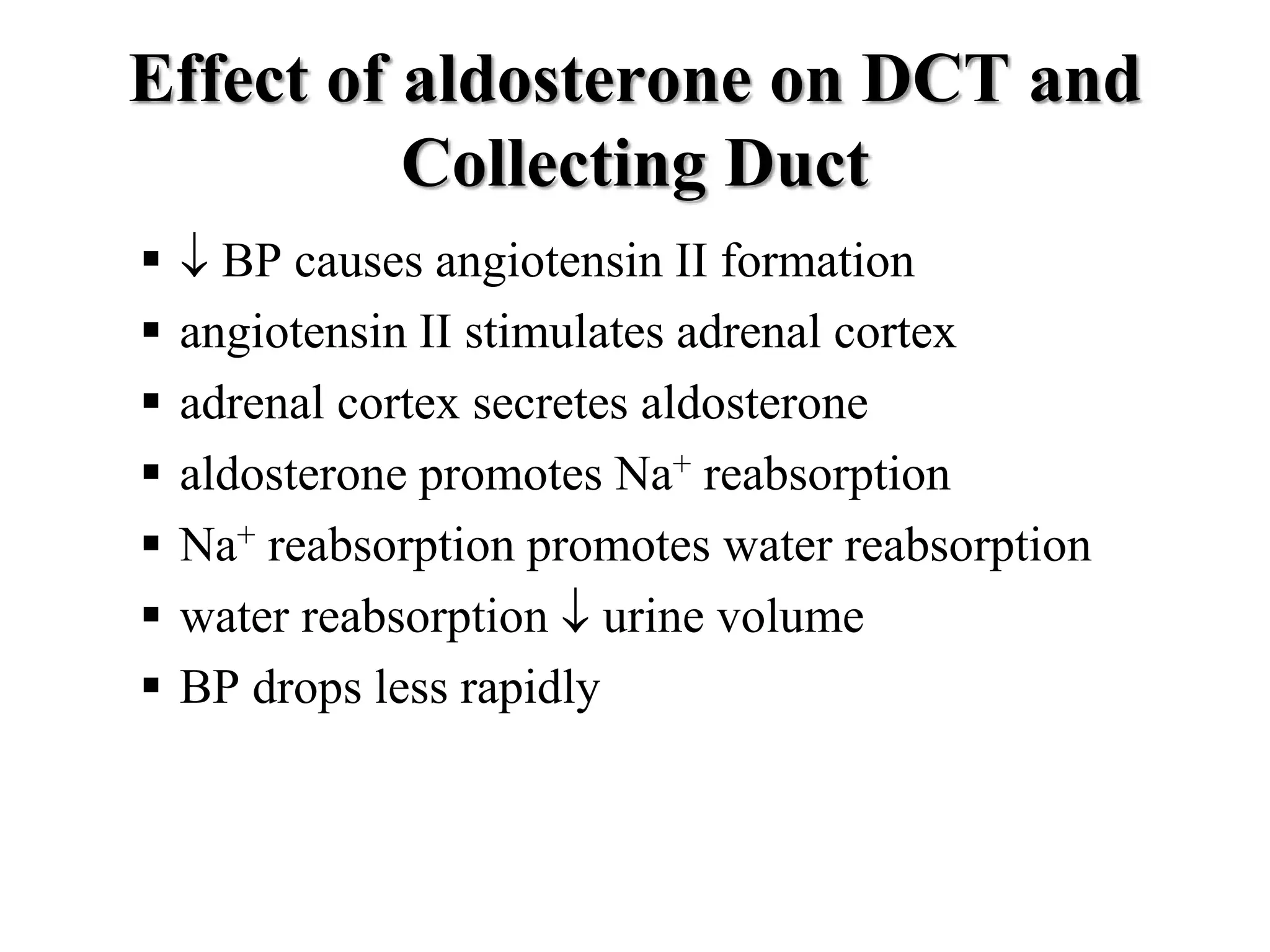
Effect of aldosterone on DCT and
Collecting Duct
  BP causes angiotensin II formation
 angiotensin II stimulates adrenal cortex
 adrenal cortex secretes aldosterone
 aldosterone promotes Na+ reabsorption
 Na+ reabsorption promotes water reabsorption
 water reabsorption  urine volume
 BP drops less rapidly
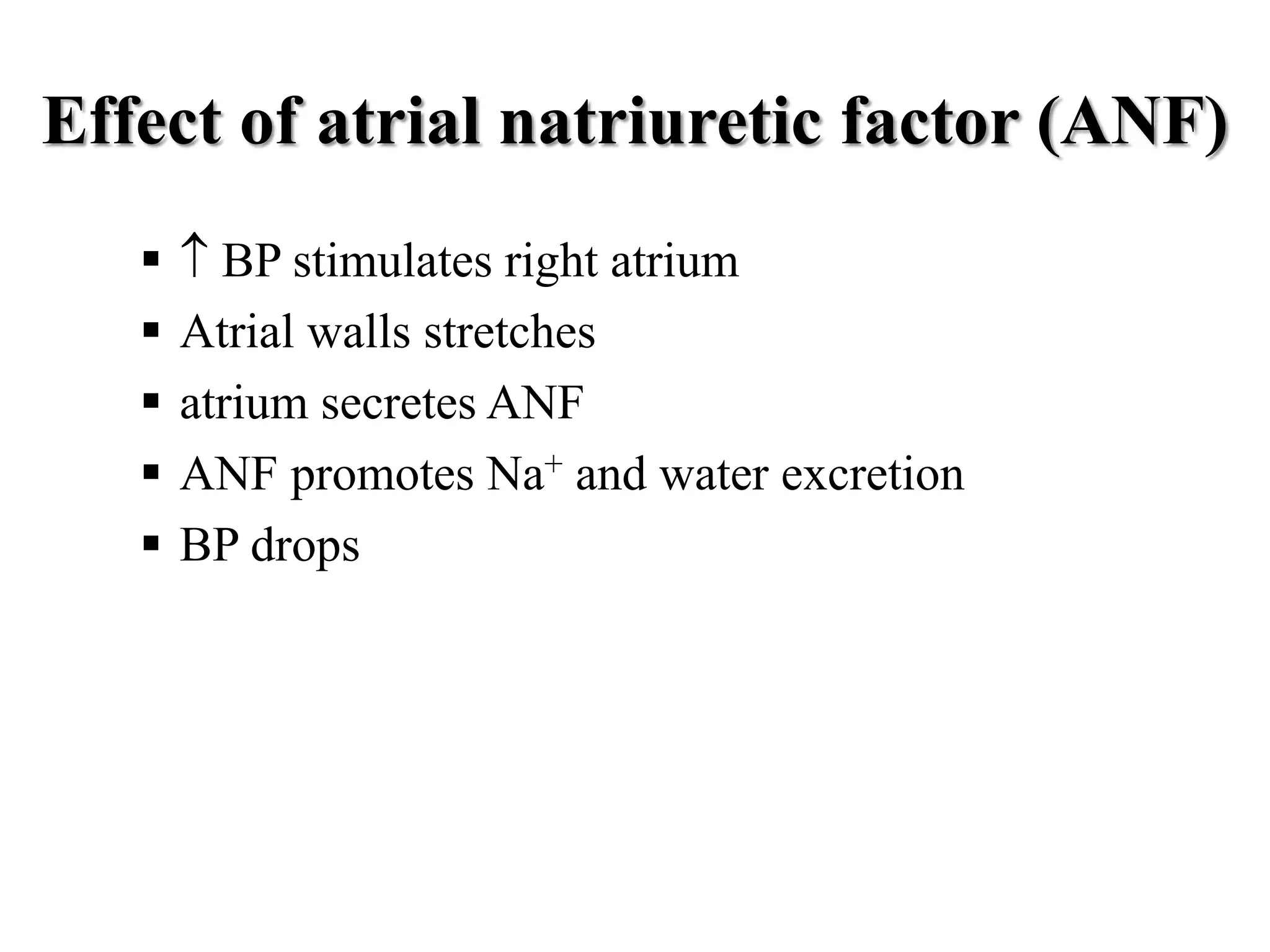
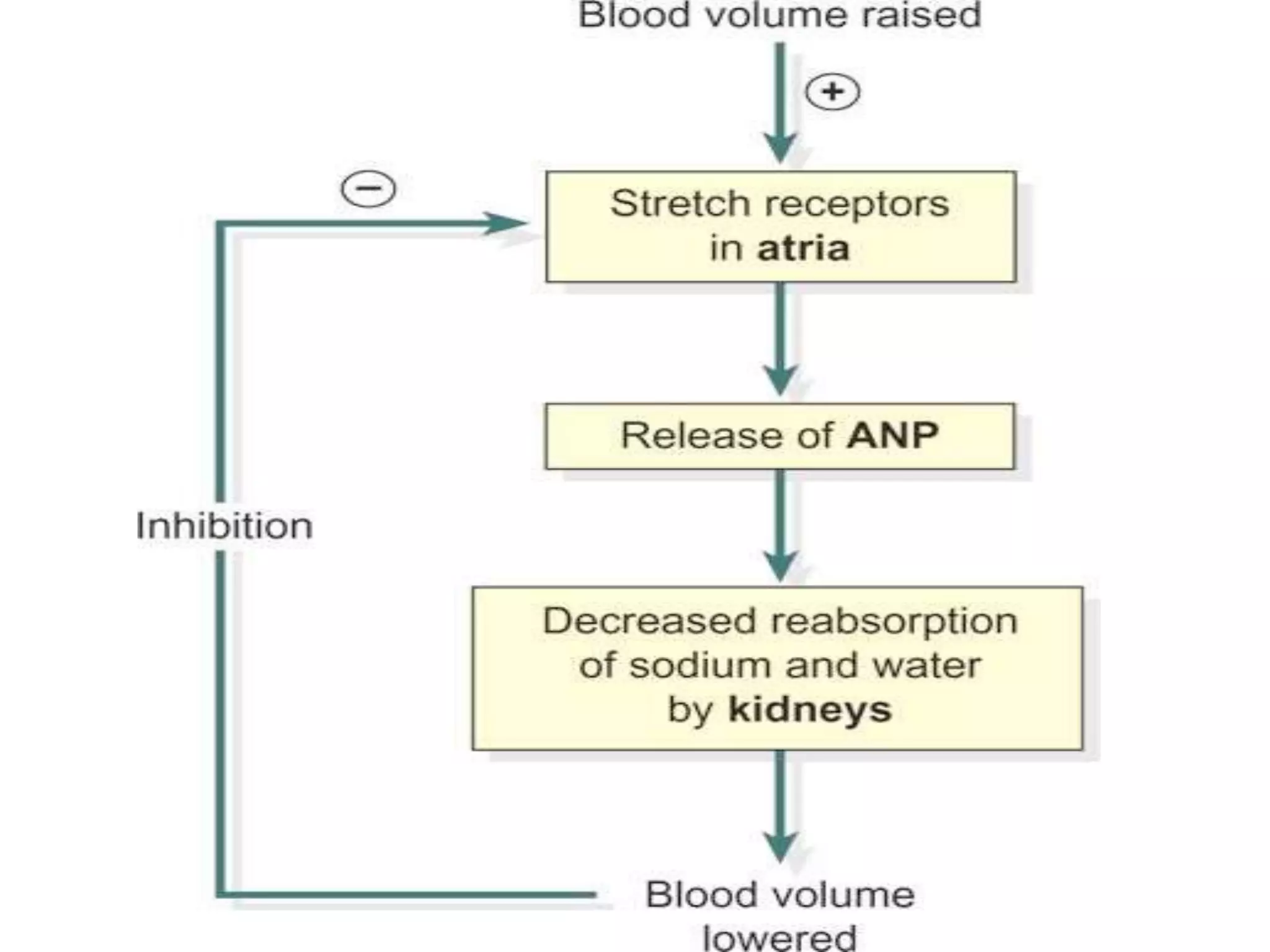
Effect of atrial natriuretic factor (ANF)
  BP stimulates right atrium
 Atrial walls stretches
 atrium secretes ANF
 ANF promotes Na+ and water excretion
 BP drops
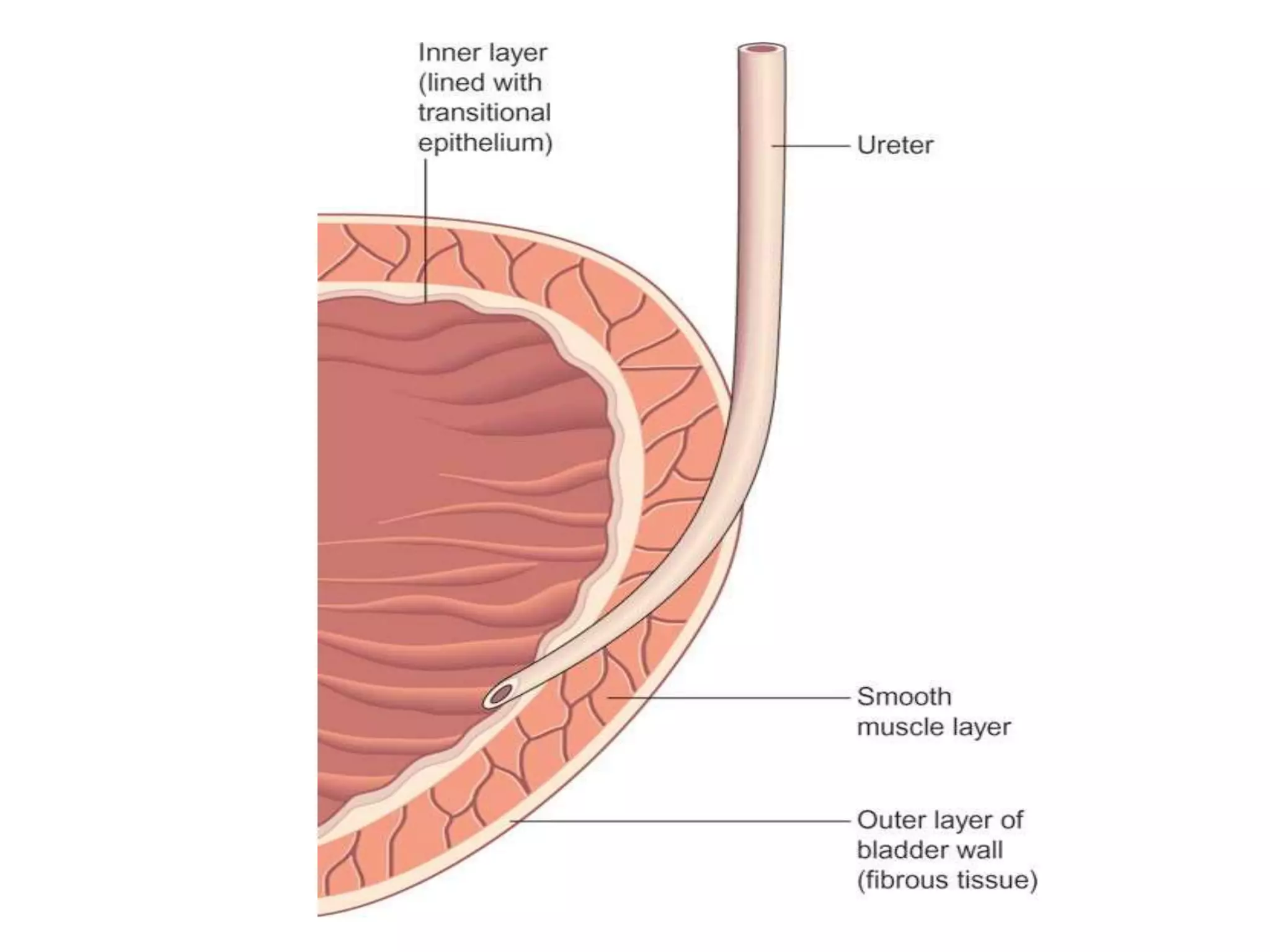
Ureters
• Tubes that convey urine from kidney to the urinary bladder
• 25-30 cm long and 3mm in diameter
• Start from pelvis, enter into pelvic cavity and passes obliquely
through the posterior wall of the bladder
Structure consists of three layers of tissue
 Outer fibrous tissue
 Middle smooth muscle layer
 Inner mucosa lined with transitional epithelium
Functions:
• Propel urine from kidney into the bladder by peristaltic
contraction of smooth muscle layer
• The wave of contraction occur in minor calyces
• Peristaltic wave occur several time per minutes and send little
spurts of urine into bladder.
Urinary bladder:
 It is a reservoir for urine whose size and position
vary, depending on the amount of urine it contain
 Lie in the pelvic cavity
Structure:
• Roughly pear shaped structure but more oval when
filled with urine.
• The posterior surface is called base and the point
where the bladder open into urethra is called neck
• The superior surface of the bladder is covered by
peritoneum
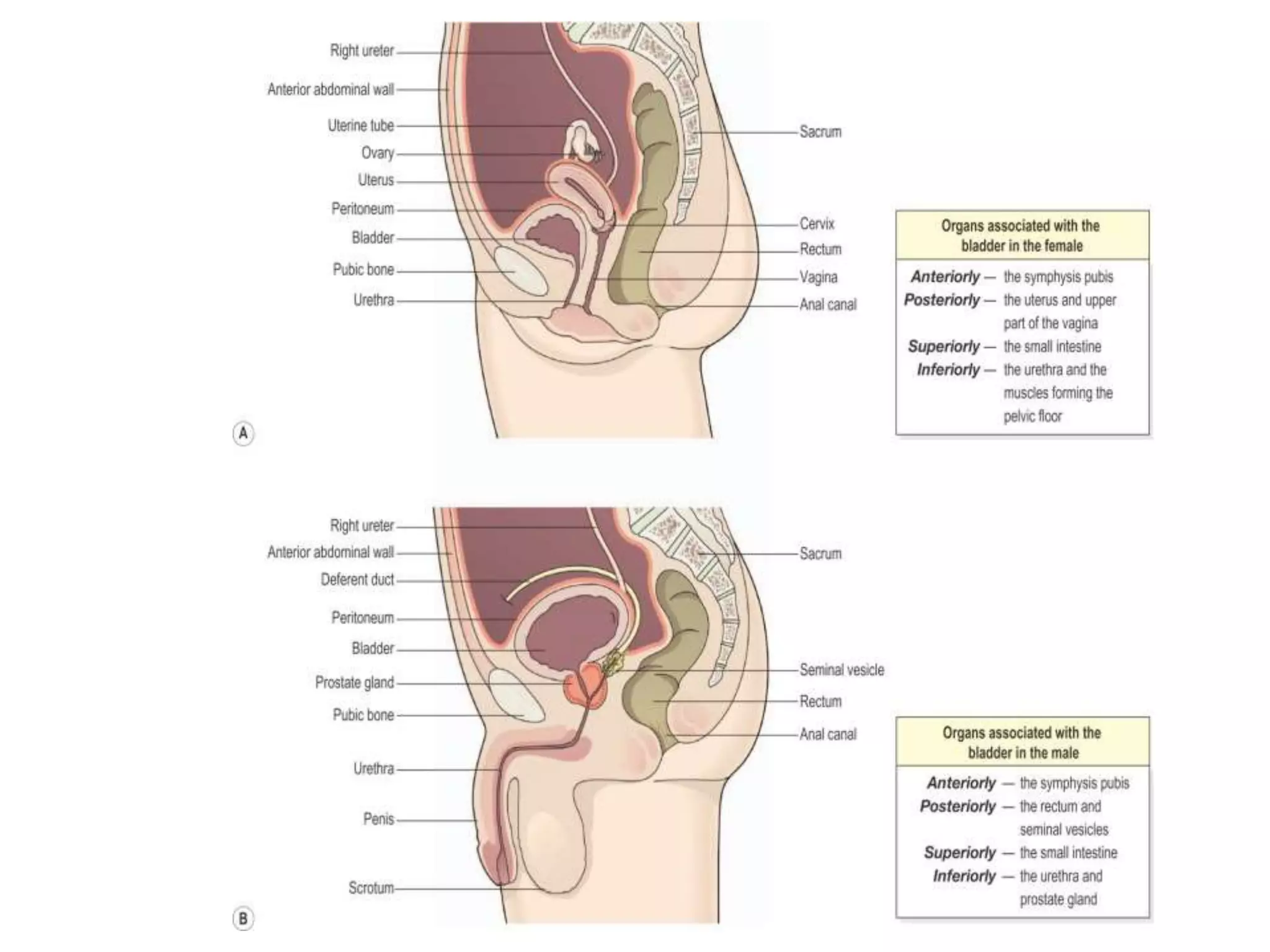
• Posteriorly bladder is surrounded by uterus in female
and rectum in male
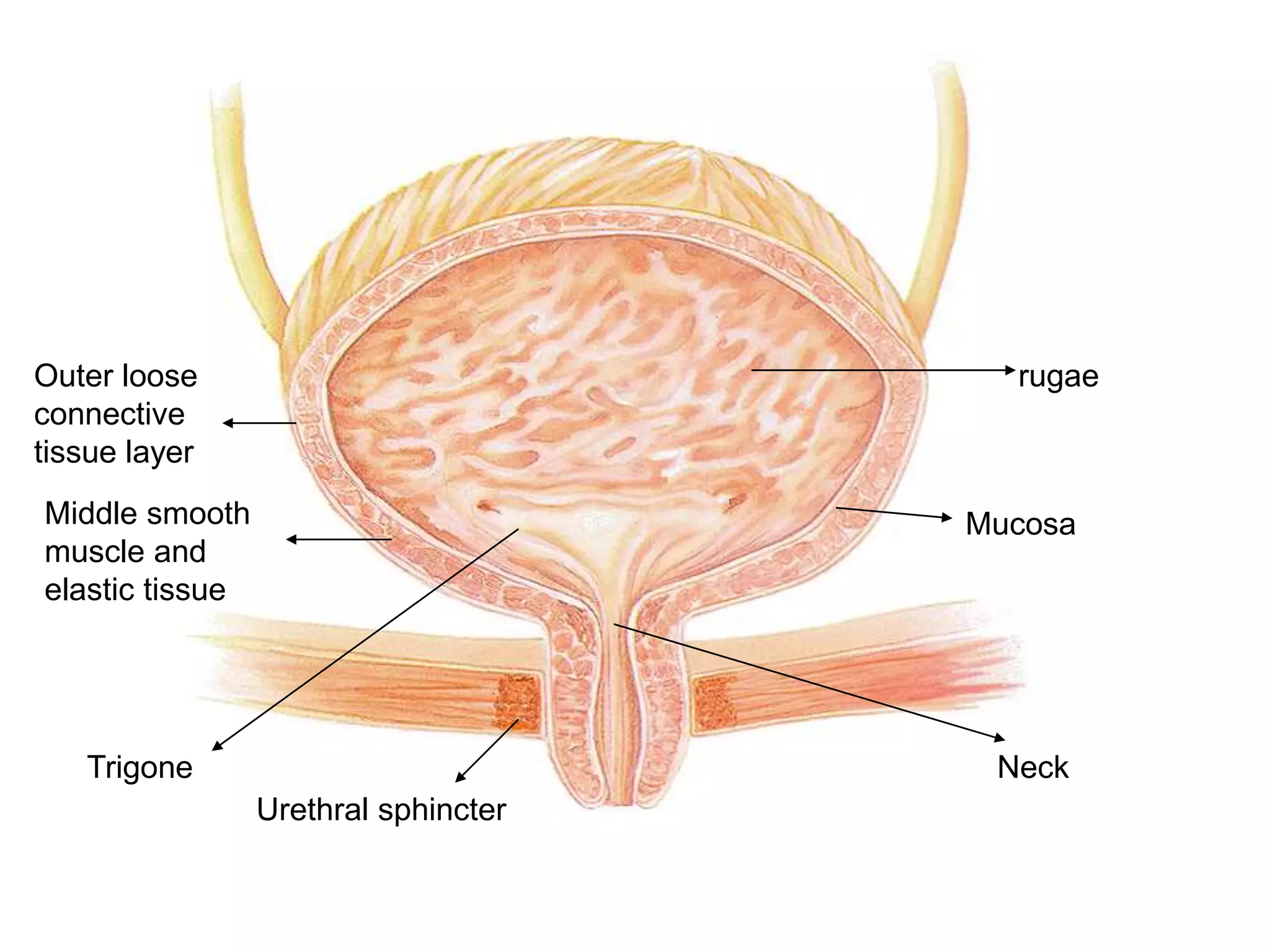
Outer loose
connective
tissue layer
MucosaMiddle smooth
muscle and
elastic tissue
rugae
Trigone Neck
Urethral sphincter
The bladder wall composed of three layers
1. Outer layer of loose connective tissue containing blood,
lymph vessels and nerve
2. The middle layer consists of inter-lacing mass of
smooth muscle fibers and elastic tissue. These are
called Detrusor muscle. It contracts to empty urine
3. The mucosa lined with transitional epithelium
 When the bladder is empty the inner layer is arranged in
folds or rugae which disappear when bladder is full
 The total capacity of bladder is more then 600 ml and
awareness of desire to urinate is initiated at 300-400ml
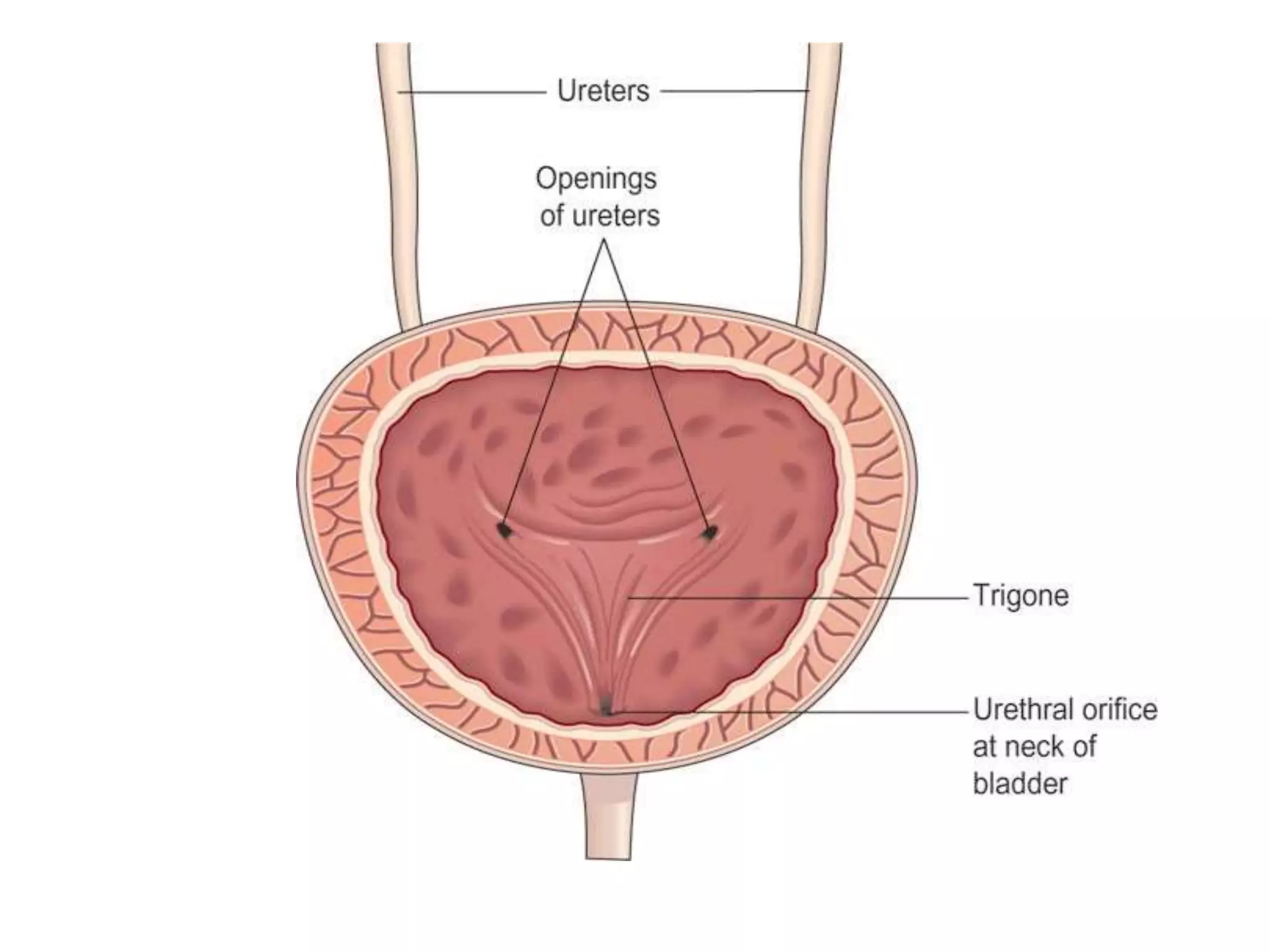
 The three orifices of the bladder wall form a triangle or
trigone.
• The upper two pore is the opening of ureter and the
lower one is the urethra
• At the site where the urethra emerge is a thick smooth
muscle layer called urethral sphincter.
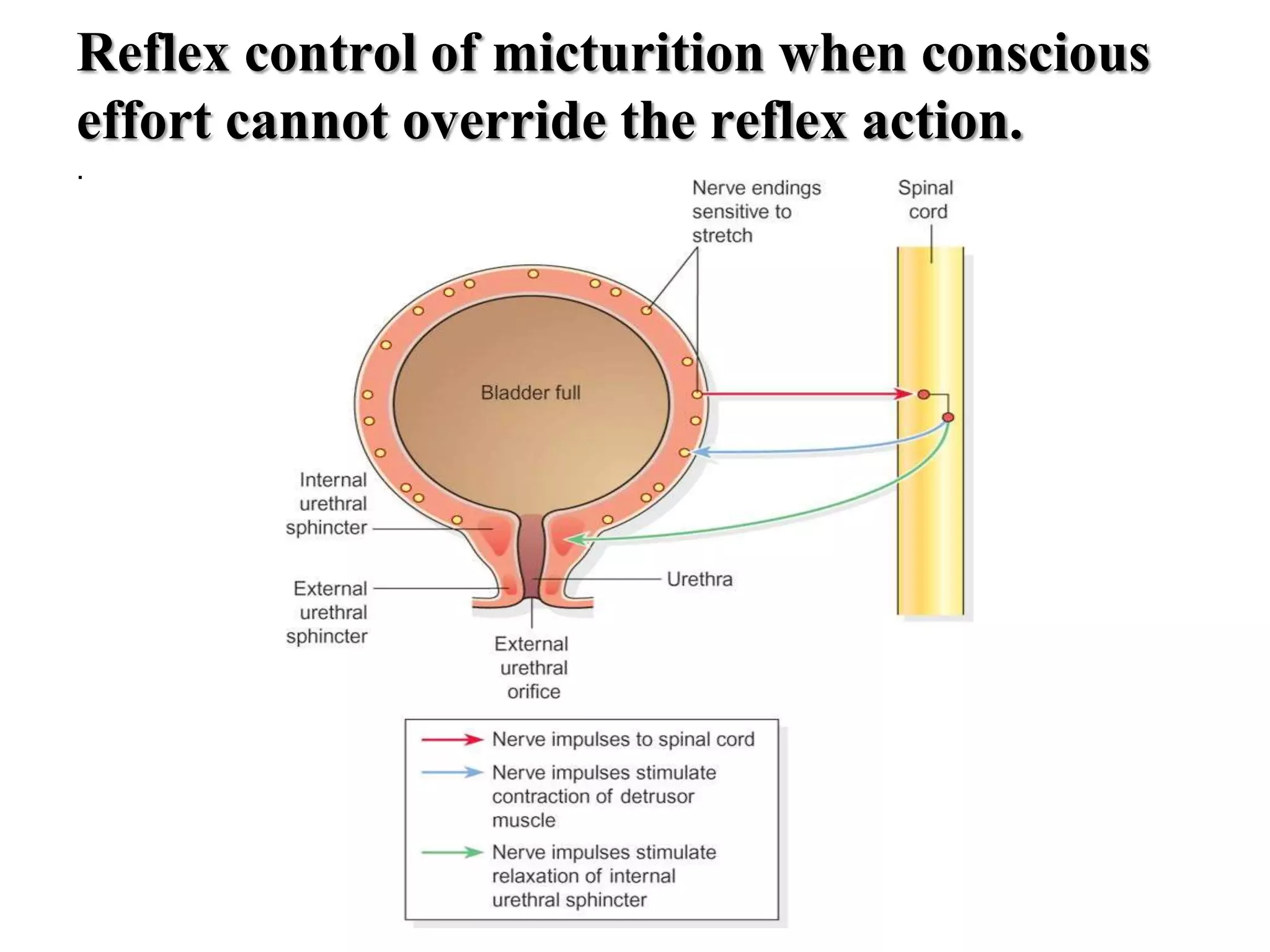
Reflex control of micturition when conscious
effort cannot override the reflex action.
.
• http://highered.mheducation.com/sites/007250
7470/student_view0/chapter26/animation__mi
cturition_reflex.html
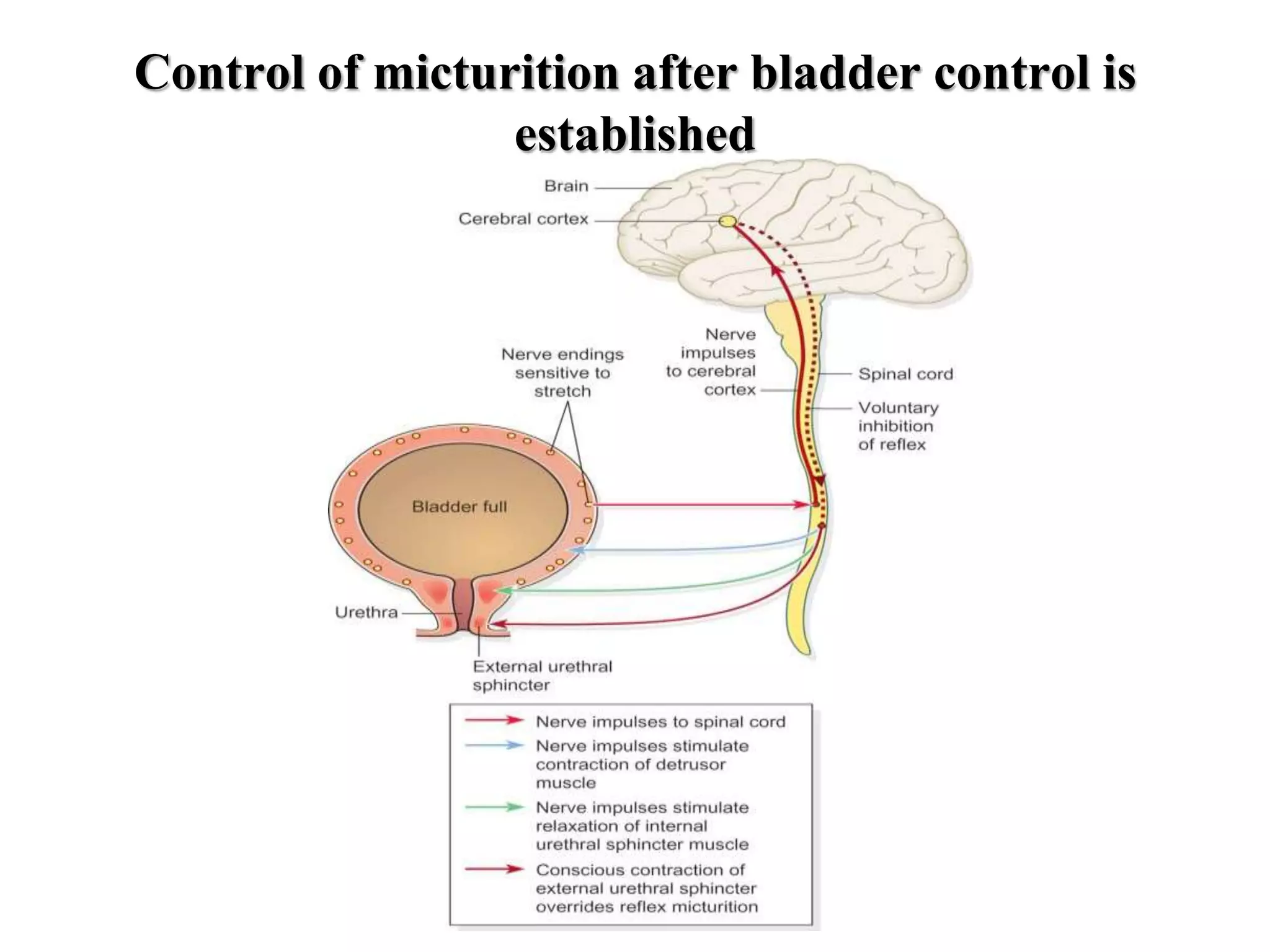
Control of micturition after bladder control is
established

Snr urinary systems_last_slides b

  • 2.
    Neural and HormonalRegulation of GFR Neural Regulation of GFR: When the blood pressure increase the sympathetic nerve fibers release nor epinephrine which causes constriction of blood vessel thus decreasing GFR. Hormonal Regulation of GFR: Two hormones, Angiotensin II reduce GFR and atrial natriuretic peptide (ANP) increase GFR
  • 3.
    Substance Filtered ReabsorbedUrine Water 180 liter 178 liter 1-2 liter Protein 2 g 1.9 g .1 g Sodium ion 579 g 575 g 4 g Chloride ion 640 g 633.7 g 6.3 g Bicarbonate ion 275 g 274.9 g 0.03 g glucose 162 g 162 g 0 g urea 54 g 24 g 30 g Potassium ion 29.6 g 29.6 g 2 g Uric acid 8.5 g 7.7 g .8 g Creatinine 1.6 g 0 g 1.6 g Substances filtered reabsorbed and excreted in urine
  • 4.
    Tubular Reabsorption andSecretion Reabsorption:  Normally 99% of filtered water is reabsorbed  Solutes that are reabsorbed include glucose, amino acid, urea and ion such as sodium, potassium, calcium, chloride, bicarbonate and phosphate. Secretion:  Substance that are secreted include: hydrogen ion, potassium, ammonium ion, creatinine and certain drugs.  Two important outcomes of Tubular secretion:  Secretion of H- ion help to control body PH  Secretion of other substance eliminate them from the body
  • 5.
    Reabsorbtion and secretionin the PCT  65% of Na+ is reabsorbed  65% of H2O is reabsorbed  65% K+  100% Glucose  100% amino acid  50% Cl-  90% of filtered bicarbonate (HCO3-) Secretion:  Variable amount of H+ NH4- and urea and a small amount of Creatinine is secreted in the PCT.
  • 6.
    Reabsorbtion and Secretionin the LOH Reabsorbtion:  25% Na+  15% H2O  20-30 % K+  35 % Cl-  10-20% HCO3 - Secretion: Variable amount of urea is secreted in the LOH
  • 8.
    Hormonal Regulation ofTubular Reabsorbtion and Tubular Secretion  Angiotension II  Aldosterone  Antidiuretic hormone  Natriuretic peptide  Parathyroid
  • 9.
    Antidiuretic hormone ADH (antidiuretichormone) makes collecting ducts more permeable to water, it helps produce concentrated urine
  • 14.
  • 15.
    Effect of aldosteroneon DCT and Collecting Duct   BP causes angiotensin II formation  angiotensin II stimulates adrenal cortex  adrenal cortex secretes aldosterone  aldosterone promotes Na+ reabsorption  Na+ reabsorption promotes water reabsorption  water reabsorption  urine volume  BP drops less rapidly
  • 16.
    Effect of atrialnatriuretic factor (ANF)   BP stimulates right atrium  Atrial walls stretches  atrium secretes ANF  ANF promotes Na+ and water excretion  BP drops
  • 18.
    Ureters • Tubes thatconvey urine from kidney to the urinary bladder • 25-30 cm long and 3mm in diameter • Start from pelvis, enter into pelvic cavity and passes obliquely through the posterior wall of the bladder Structure consists of three layers of tissue  Outer fibrous tissue  Middle smooth muscle layer  Inner mucosa lined with transitional epithelium Functions: • Propel urine from kidney into the bladder by peristaltic contraction of smooth muscle layer • The wave of contraction occur in minor calyces • Peristaltic wave occur several time per minutes and send little spurts of urine into bladder.
  • 20.
    Urinary bladder:  Itis a reservoir for urine whose size and position vary, depending on the amount of urine it contain  Lie in the pelvic cavity Structure: • Roughly pear shaped structure but more oval when filled with urine. • The posterior surface is called base and the point where the bladder open into urethra is called neck • The superior surface of the bladder is covered by peritoneum • Posteriorly bladder is surrounded by uterus in female and rectum in male
  • 22.
    Outer loose connective tissue layer MucosaMiddlesmooth muscle and elastic tissue rugae Trigone Neck Urethral sphincter
  • 23.
    The bladder wallcomposed of three layers 1. Outer layer of loose connective tissue containing blood, lymph vessels and nerve 2. The middle layer consists of inter-lacing mass of smooth muscle fibers and elastic tissue. These are called Detrusor muscle. It contracts to empty urine 3. The mucosa lined with transitional epithelium  When the bladder is empty the inner layer is arranged in folds or rugae which disappear when bladder is full  The total capacity of bladder is more then 600 ml and awareness of desire to urinate is initiated at 300-400ml  The three orifices of the bladder wall form a triangle or trigone.
  • 25.
    • The uppertwo pore is the opening of ureter and the lower one is the urethra • At the site where the urethra emerge is a thick smooth muscle layer called urethral sphincter.
  • 26.
    Reflex control ofmicturition when conscious effort cannot override the reflex action. .
  • 27.
  • 28.
    Control of micturitionafter bladder control is established