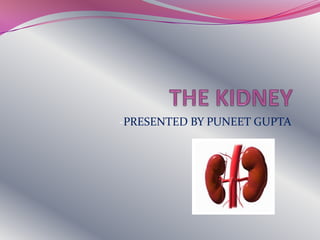
-PRESENTED BY PUNEET GUPTA
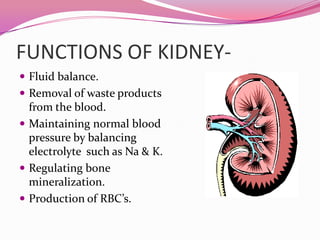
FUNCTIONS OF KIDNEY-
 Fluid balance.
 Removal of waste products
  from the blood.
 Maintaining normal blood
  pressure by balancing
  electrolyte such as Na & K.
 Regulating bone
  mineralization.
 Production of RBC’s.
FILTERATION MEMBRANE-
Nephrons
 The functional unit of
  the kidney is the
  nephrons.
 Each kidney consist of
  thousands of nephrons.
 Nephrons contains a
  filtration membrane
  which removes excess
  body water and waste
  products.
HOW DOES KIDNEY FAIL?
 When the kidney not able to clean waste product from
  the blood.
 Production of hormones go abnormal resulting in
  anaemia.
 The capacity of kidney also decline with the age.
  FAILURE ARE OF TWO TYPES:
 Acute Kidney failure -patient treated with dialysis for
  certain period until their kidney recovers.
 ESRD – loss of kidney function is permanent.
SYMPTOMS OF KIDNEY FAILURE
 NAUSEA AND VOMMITING
 LOSS OF APPETITE
 ITCHINESS
 HIGH B.P
 TIREDNESS
 SWOLLEN ANKLES
 BAD TASTE IN THE MOUTH
COMMON CAUSES FOR KIDNEY
FAILURE-
 DIABETES MELLITUS
 HYPERTENSION
 GLOMERULONEPHRITIS
 VASCULAR DISEASE
 POLYCYSTIC KIDNEY
 DISEASE
WHAT HAPPEN IF KIDNEY FAILURE
OCCURS?
End Stage Renal Disease
 These are the successful treatment which can be done:-
 PERITONEAL DIALYSIS
 HAEMODIALYIS
 TRANSPLANTATION
These treatments can help you to stay healthy and
  continue your daily activities.
HOW DOES DIALYSIS WORK?
1. DIFFUSION:
 MOVEMENT OF
   SOLUTES FROM
   HIGHER CONC. TO
   LOWER UNTIL THE
   EQUILIBRIUM STAGE
 MAINLY SMALL
   MOLECULES ARE
   REMOVED BY
   DIALYSIS.
 BOTH PD AND
   HAEMODIALYSIS
   BASED ON THIS.
2.OSMOSIS:
-Movement of solute from low conc.
   to higher until equilibrium is
   achieved.
-Solute- osmotic agenet normally
   glucose.


3.ULTRAFILTRATION:
-Done by using dialysis fluid with an
   increased conc. Of glucose or sugar.
-higher the glucose content the more
   excess fluid will b removed.


4.CONVECTION:
- Concomitant of ultrafiltration
- In this the fluid drags the solute
   with it.
TREATMENTS
1.HAEMODIALYSIS(HD)
2.TRANPLANTATION(TX)
3.PERITONEAL DIALYSIS(PD)
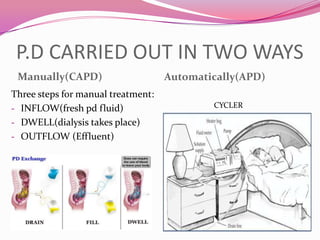
P.D CARRIED OUT IN TWO WAYS
 Manually(CAPD)                     Automatically(APD)
Three steps for manual treatment:
- INFLOW(fresh pd fluid)                    CYCLER

- DWELL(dialysis takes place)
- OUTFLOW (Effluent)
PRECAUTIONS:
 STERILE-(equipment free of micro-organism)
 CLEAN-(hand wash for 60 secs)
 Do not perform bag exchange where there is lot of
    movement.
   Pets should not be in the room.
   Avoid distraction.
   Proper medication.
   Visit regularly to the dialysis centre.
SUGGESTIONS
 Hydrate yourself.
 Avoid unnecessary medication.
 Avoid overloading of a kidney with protein(only 2
  ounces)
 Keep cholesterol in good level.
 Keep blood pressure in good control.
The kidney plays a vital role in sustaining life.

kidneys ppt

  • 1.
  • 2.
    FUNCTIONS OF KIDNEY- Fluid balance.  Removal of waste products from the blood.  Maintaining normal blood pressure by balancing electrolyte such as Na & K.  Regulating bone mineralization.  Production of RBC’s.
  • 3.
    FILTERATION MEMBRANE- Nephrons  Thefunctional unit of the kidney is the nephrons.  Each kidney consist of thousands of nephrons.  Nephrons contains a filtration membrane which removes excess body water and waste products.
  • 4.
    HOW DOES KIDNEYFAIL?  When the kidney not able to clean waste product from the blood.  Production of hormones go abnormal resulting in anaemia.  The capacity of kidney also decline with the age. FAILURE ARE OF TWO TYPES:  Acute Kidney failure -patient treated with dialysis for certain period until their kidney recovers.  ESRD – loss of kidney function is permanent.
  • 5.
    SYMPTOMS OF KIDNEYFAILURE  NAUSEA AND VOMMITING  LOSS OF APPETITE  ITCHINESS  HIGH B.P  TIREDNESS  SWOLLEN ANKLES  BAD TASTE IN THE MOUTH
  • 6.
    COMMON CAUSES FORKIDNEY FAILURE-  DIABETES MELLITUS  HYPERTENSION  GLOMERULONEPHRITIS  VASCULAR DISEASE  POLYCYSTIC KIDNEY DISEASE
  • 7.
    WHAT HAPPEN IFKIDNEY FAILURE OCCURS? End Stage Renal Disease These are the successful treatment which can be done:-  PERITONEAL DIALYSIS  HAEMODIALYIS  TRANSPLANTATION These treatments can help you to stay healthy and continue your daily activities.
  • 8.
    HOW DOES DIALYSISWORK? 1. DIFFUSION:  MOVEMENT OF SOLUTES FROM HIGHER CONC. TO LOWER UNTIL THE EQUILIBRIUM STAGE  MAINLY SMALL MOLECULES ARE REMOVED BY DIALYSIS.  BOTH PD AND HAEMODIALYSIS BASED ON THIS.
  • 9.
    2.OSMOSIS: -Movement of solutefrom low conc. to higher until equilibrium is achieved. -Solute- osmotic agenet normally glucose. 3.ULTRAFILTRATION: -Done by using dialysis fluid with an increased conc. Of glucose or sugar. -higher the glucose content the more excess fluid will b removed. 4.CONVECTION: - Concomitant of ultrafiltration - In this the fluid drags the solute with it.
  • 10.
  • 11.
  • 12.
  • 13.
  • 14.
    P.D CARRIED OUTIN TWO WAYS Manually(CAPD) Automatically(APD) Three steps for manual treatment: - INFLOW(fresh pd fluid) CYCLER - DWELL(dialysis takes place) - OUTFLOW (Effluent)
  • 15.
    PRECAUTIONS:  STERILE-(equipment freeof micro-organism)  CLEAN-(hand wash for 60 secs)  Do not perform bag exchange where there is lot of movement.  Pets should not be in the room.  Avoid distraction.  Proper medication.  Visit regularly to the dialysis centre.
  • 16.
    SUGGESTIONS  Hydrate yourself. Avoid unnecessary medication.  Avoid overloading of a kidney with protein(only 2 ounces)  Keep cholesterol in good level.  Keep blood pressure in good control.
  • 17.
    The kidney playsa vital role in sustaining life.