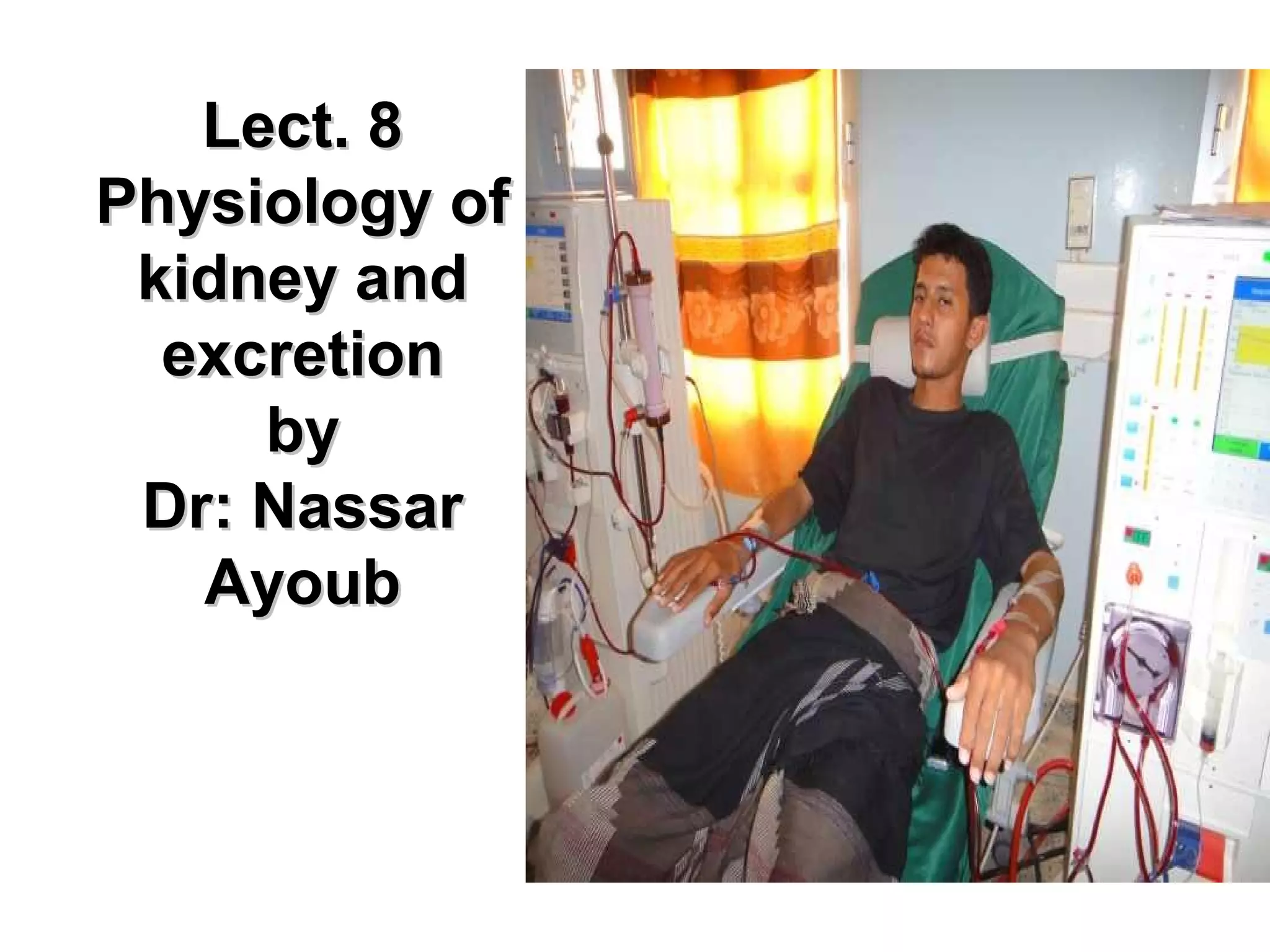
LLeecctt.. 88 
PPhhyyssiioollooggyy ooff 
kkiiddnneeyy aanndd 
eexxccrreettiioonn 
bbyy 
DDrr:: NNaassssaarr 
AAyyoouubb
UUrriinnaarryy ssyysstteemm 
• Organ system that produces, stores, and carries urine 
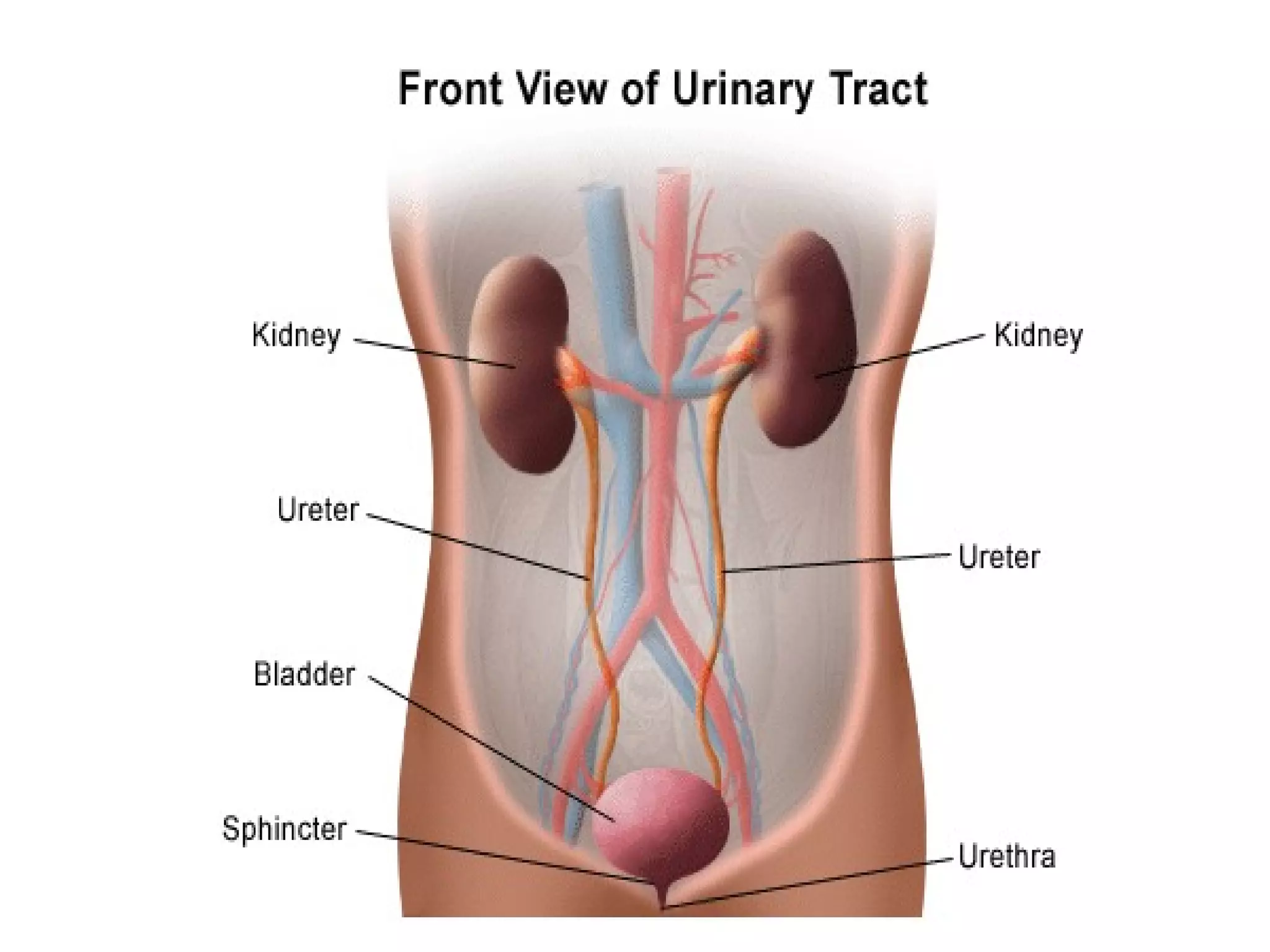
• Includes two kidneys, two ureters, the urinary bladder, two 
sphincter muscles, and the urethra. 
• Humans produce about 1.5 liters of urine over 24 hours, 
although this amount may vary according to the 
circumstances. 
• Increased fluid intake generally increases urine production. 
• Increased perspiration and respiration may decrease the 
amount of fluid excreted through the kidneys. 
• Some medications interfere directly or indirectly with urine 
production, such as diuretics.
FFuunnccttiioonn ooff uurriinnaarryy ssyysstteemm 
• Excretion 
• Keeping homeostasis 
• Keeping acid-base balance 
• Secretion (rennin, erytropoetin) 
Excreted products: 
• Product of the metabolism 
• Water 
• Hormones 
• Vitamins 
• Toxic substances
KKiiddnneeyyss 
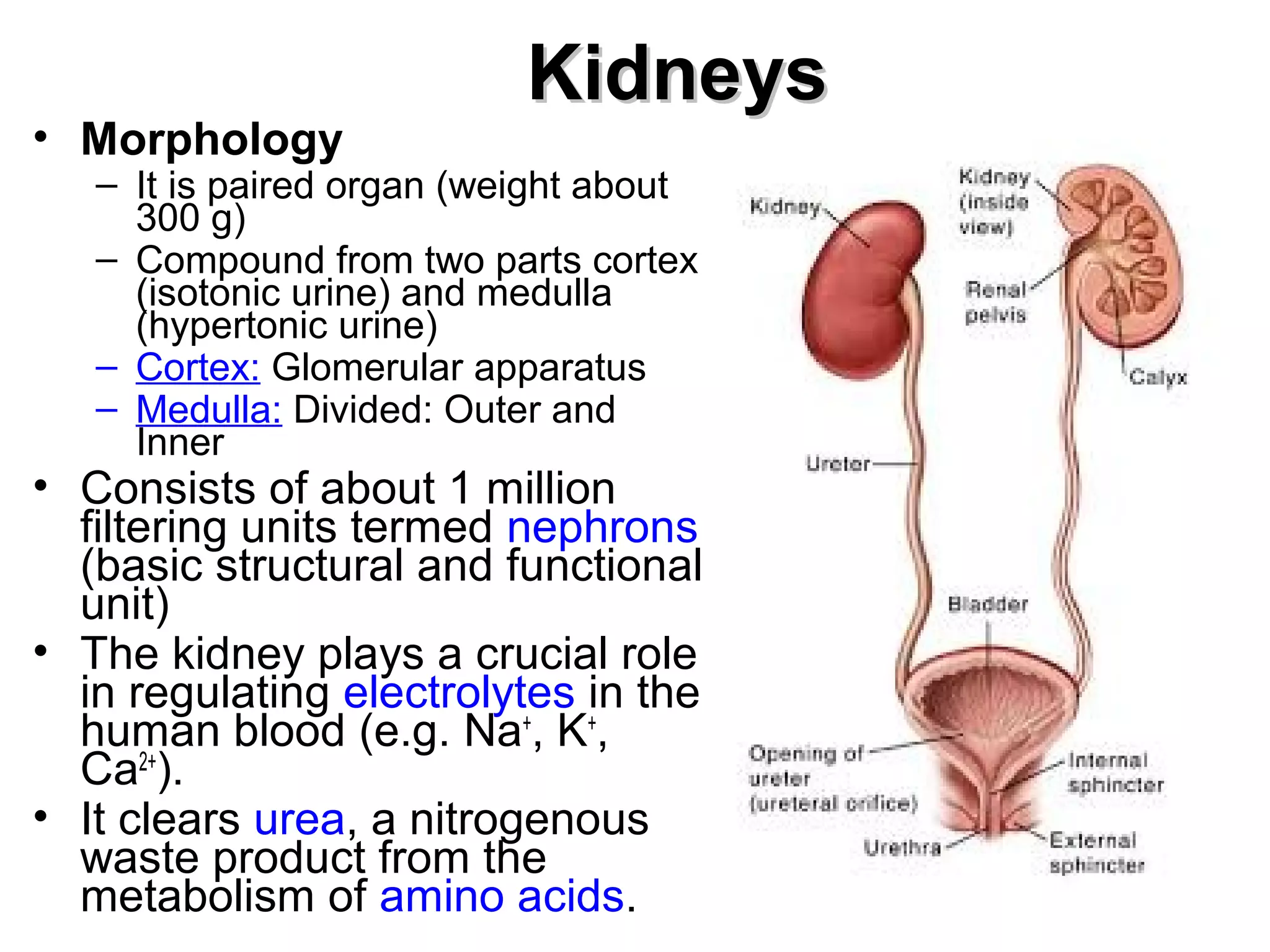
• Morphology 
– It is paired organ (weight about 
300 g) 
– Compound from two parts cortex 
(isotonic urine) and medulla 
(hypertonic urine) 
– Cortex: Glomerular apparatus 
– Medulla: Divided: Outer and 
Inner 
• Consists of about 1 million 
filtering units termed nephrons 
(basic structural and functional 
unit) 
• The kidney plays a crucial role 
in regulating electrolytes in the 
human blood (e.g. Na+, K+, 
Ca2+). 
• It clears urea, a nitrogenous 
waste product from the 
metabolism of amino acids.
RReennaall ppeellvviiss 
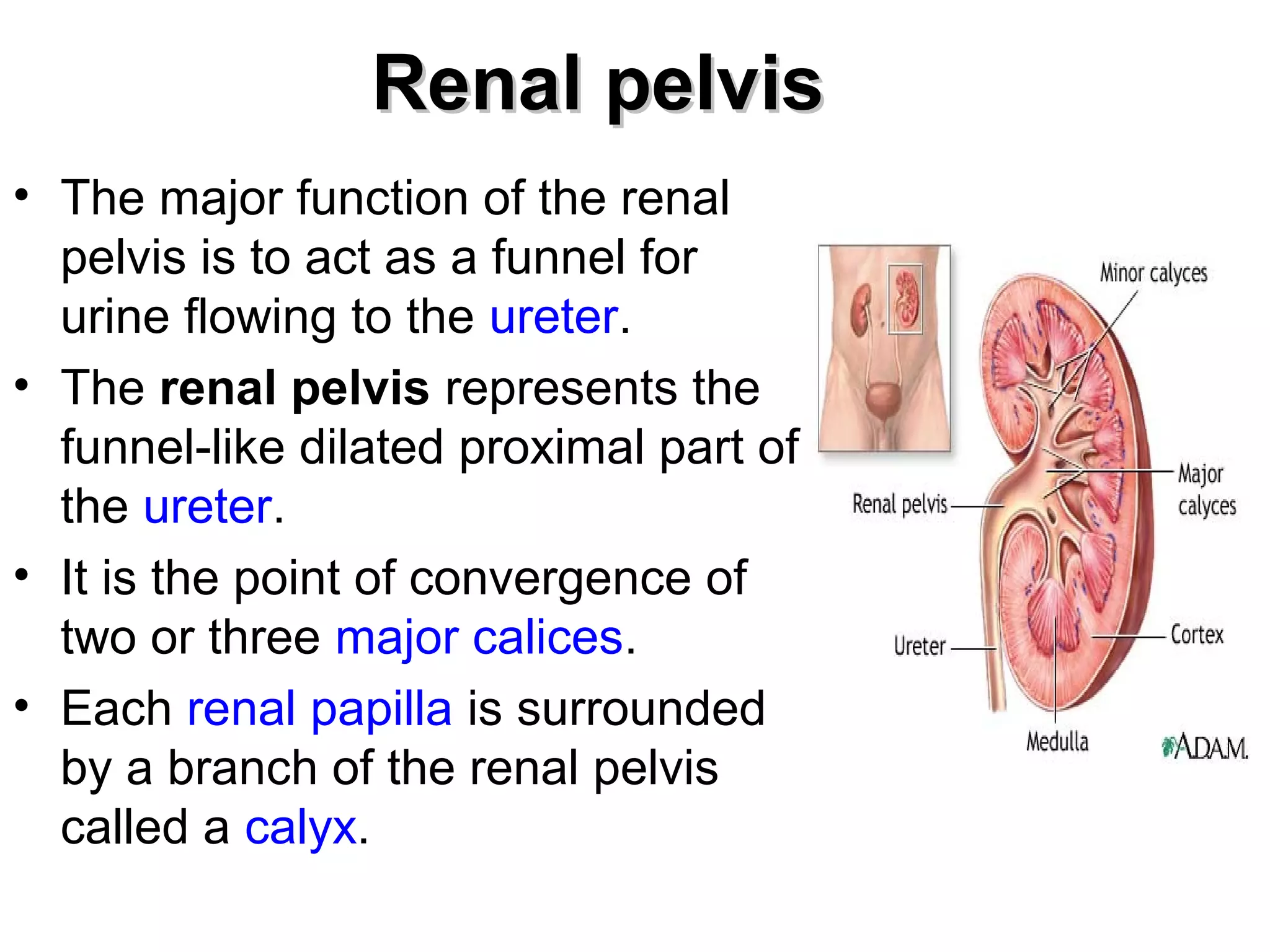
• The major function of the renal 
pelvis is to act as a funnel for 
urine flowing to the ureter. 
• The renal pelvis represents the 
funnel-like dilated proximal part of 
the ureter. 
• It is the point of convergence of 
two or three major calices. 
• Each renal papilla is surrounded 
by a branch of the renal pelvis 
called a calyx.
UUrreetteerrss 
• Urine is collected in the renal pelvis (or 
pyelum), which connects to the ureters, 
which carry urine to the bladder. 
• The ureters are about 25 cm long. 
• Smooth muscular tissue in the walls of the 
ureters peristaltically force the urine 
downward.
UUrriinnaarryy bbllaaddddeerr 
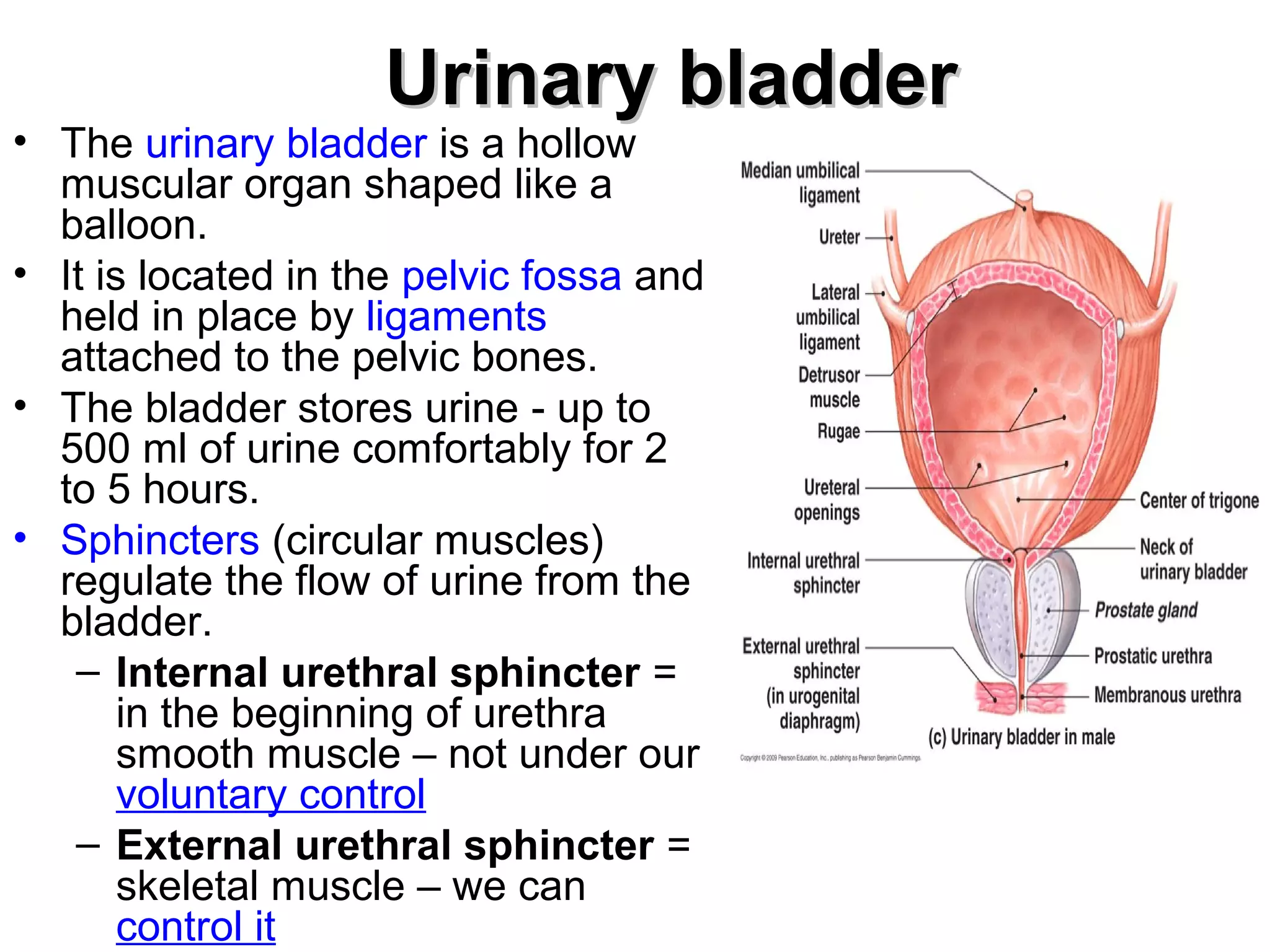
• The urinary bladder is a hollow 
muscular organ shaped like a 
balloon. 
• It is located in the pelvic fossa and 
held in place by ligaments 
attached to the pelvic bones. 
• The bladder stores urine - up to 
500 ml of urine comfortably for 2 
to 5 hours. 
• Sphincters (circular muscles) 
regulate the flow of urine from the 
bladder. 
– Internal urethral sphincter = 
in the beginning of urethra 
smooth muscle – not under our 
voluntary control 
– External urethral sphincter = 
skeletal muscle – we can 
control it
UUrriinnaarryy bbllaaddddeerr 
• The detrusor muscle is a layer of the urinary 
bladder wall, made up of smooth muscle 
fibers arranged in inner and outer 
longitudinal layers and a middle circular 
layer. 
• Contraction of the detrusor muscle causes 
the bladder to expel urine through the 
urethra. 
• Problems with this muscle can lead to 
incontinence.
UUrreetthhrraa 
• The urethra has an excretory function in both sexes, 
to pass urine to the outside, and also a reproductive 
function in the male, as a passage for sperm. 
• The external urethral sphincter is a striated smooth 
muscle that allows voluntary control over urination. 
• Urethral sphincters: 
– Internal 
– External 
• In males the internal and external urethral sphincters 
are more powerful, able to retain urine for twice as 
long as females
UUrreetthhrraa 
• Women: shorter 
• Mans: Longer 
(together with genital 
efferent system)
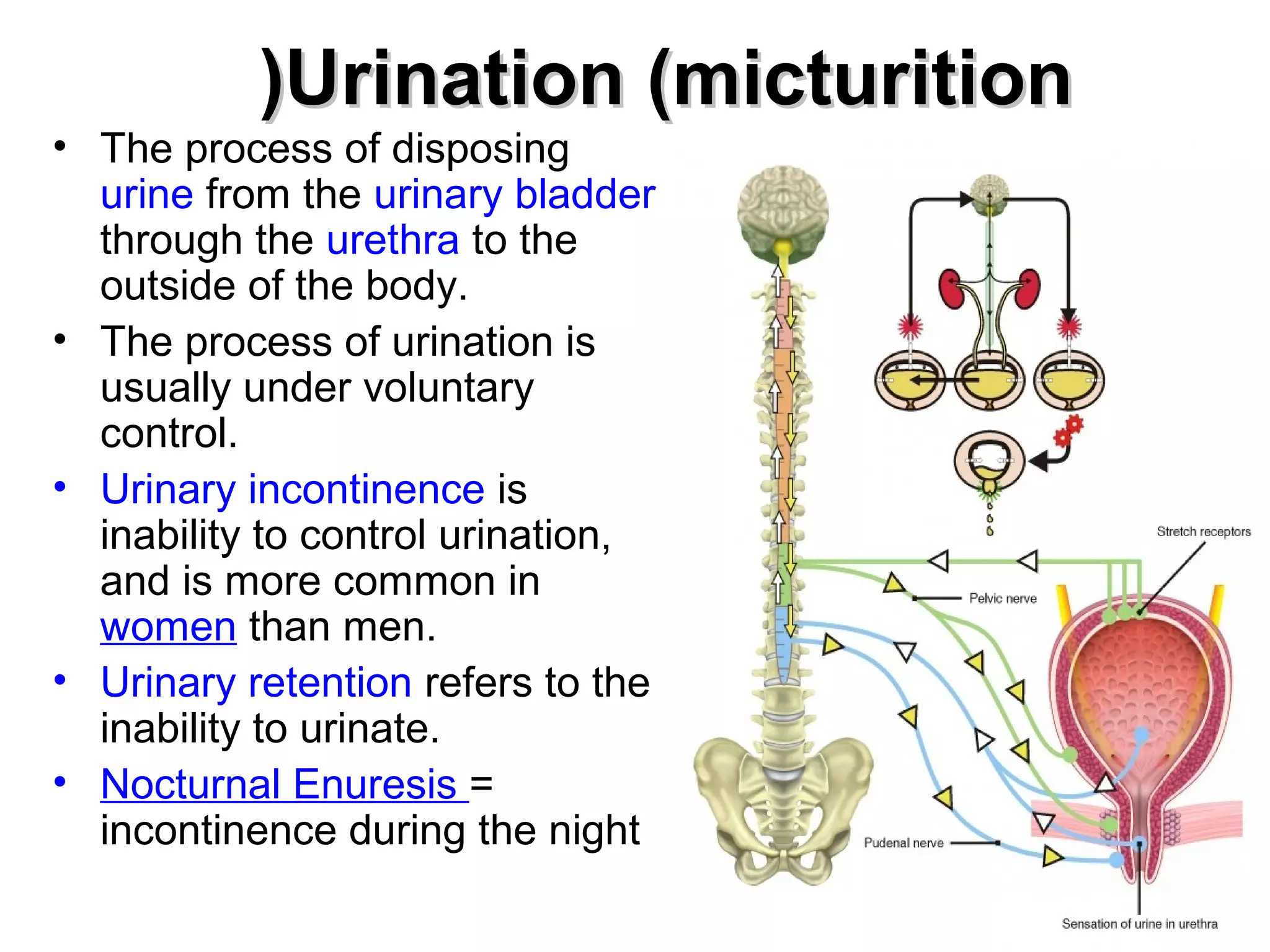
((UUrriinnaattiioonn ((mmiiccttuurriittiioonn 
• The process of disposing 
urine from the urinary bladder 
through the urethra to the 
outside of the body. 
• The process of urination is 
usually under voluntary 
control. 
• Urinary incontinence is 
inability to control urination, 
and is more common in 
women than men. 
• Urinary retention refers to the 
inability to urinate. 
• Nocturnal Enuresis = 
incontinence during the night
MMiiccttuurriittiioonn rreefflleexx 
• Activated when the urinary bladder wall is stretched; it results in 
urination. 
• This reflex occurs in the spinal cord, specifically in the sacral 
region that is modified by the higher centers in the brain: the 
pons and cerebrum. 
• The presence of urine in the bladder stimulates the stretch 
receptors, which produces action potential. 
• The action potentials are carried by sensory neurons to the 
sacral segments of the spinal cord through the pelvic nerves, 
the parasympathetic fibers carry the action potentials to the 
urinary bladder in the pelvic nerves. 
• The pressure in the urinary bladder increases rapidly once its 
volume exceeds approximately 400-500 ml.
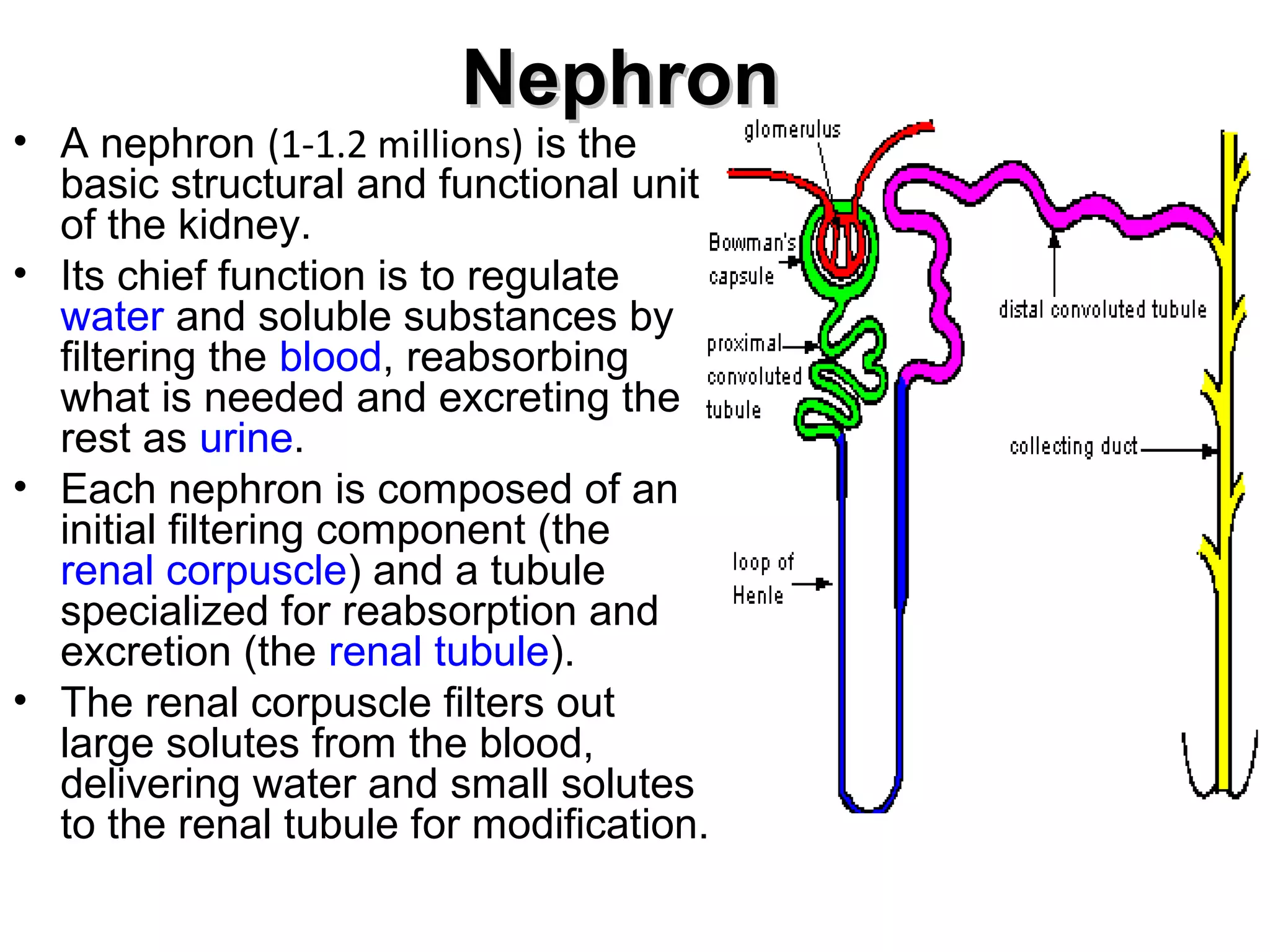
NNeepphhrroonn 
• A nephron (1-1.2 millions) is the 
basic structural and functional unit 
of the kidney. 
• Its chief function is to regulate 
water and soluble substances by 
filtering the blood, reabsorbing 
what is needed and excreting the 
rest as urine. 
• Each nephron is composed of an 
initial filtering component (the 
renal corpuscle) and a tubule 
specialized for reabsorption and 
excretion (the renal tubule). 
• The renal corpuscle filters out 
large solutes from the blood, 
delivering water and small solutes 
to the renal tubule for modification.
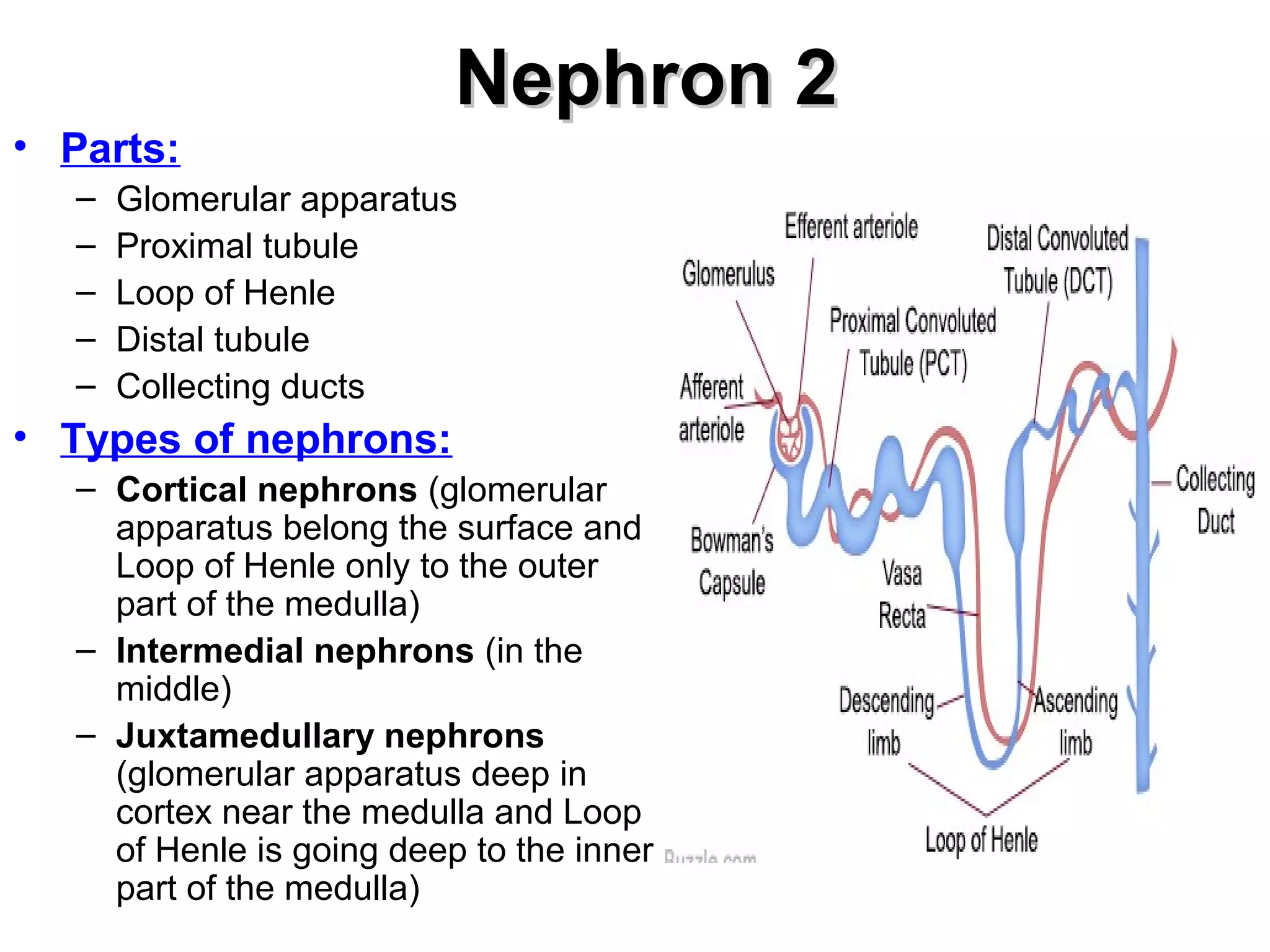
NNeepphhrroonn 22 
• Parts: 
– Glomerular apparatus 
– Proximal tubule 
– Loop of Henle 
– Distal tubule 
– Collecting ducts 
• Types of nephrons: 
– Cortical nephrons (glomerular 
apparatus belong the surface and 
Loop of Henle only to the outer 
part of the medulla) 
– Intermedial nephrons (in the 
middle) 
– Juxtamedullary nephrons 
(glomerular apparatus deep in 
cortex near the medulla and Loop 
of Henle is going deep to the inner 
part of the medulla)
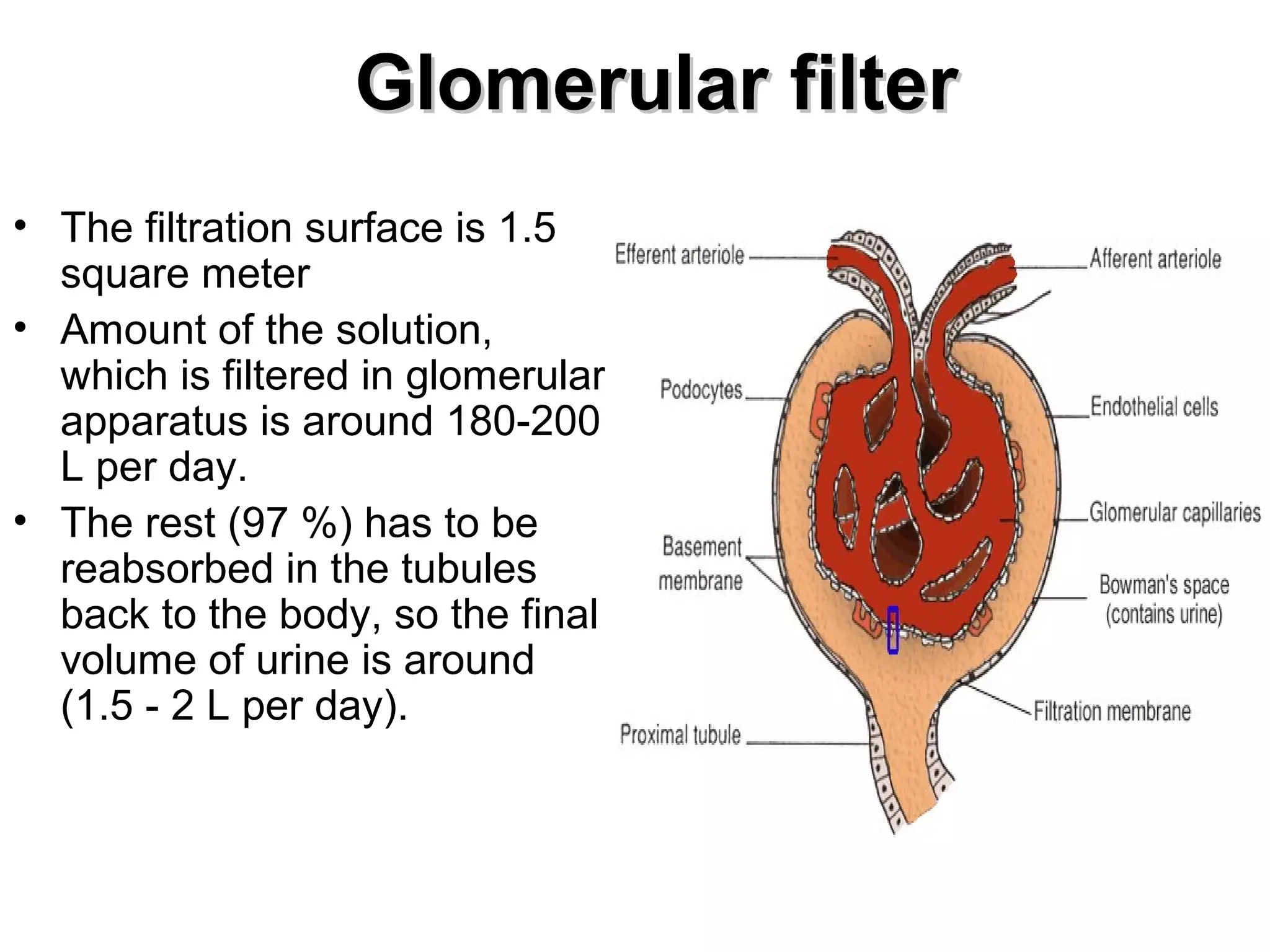
GGlloommeerruullaarr ffiilltteerr 
• The filtration surface is 1.5 
square meter 
• Amount of the solution, 
which is filtered in glomerular 
apparatus is around 180-200 
L per day. 
• The rest (97 %) has to be 
reabsorbed in the tubules 
back to the body, so the final 
volume of urine is around 
(1.5 - 2 L per day).
GGLLOOMMEERRUULLAARR FFIILLTTRRAATTIIOONN 
• Depends on: 
– Pressure gradient across the filtration slit 
(endothelium, basal membrane, epithelium = 
podocytes) 
– Blood circulation throughout the kidneys 
– Permeability of the filtration barrier 
– Filtration surface 
• The solution after filtration is very similar like 
plasma, but should be WITHOUT PROTEINS
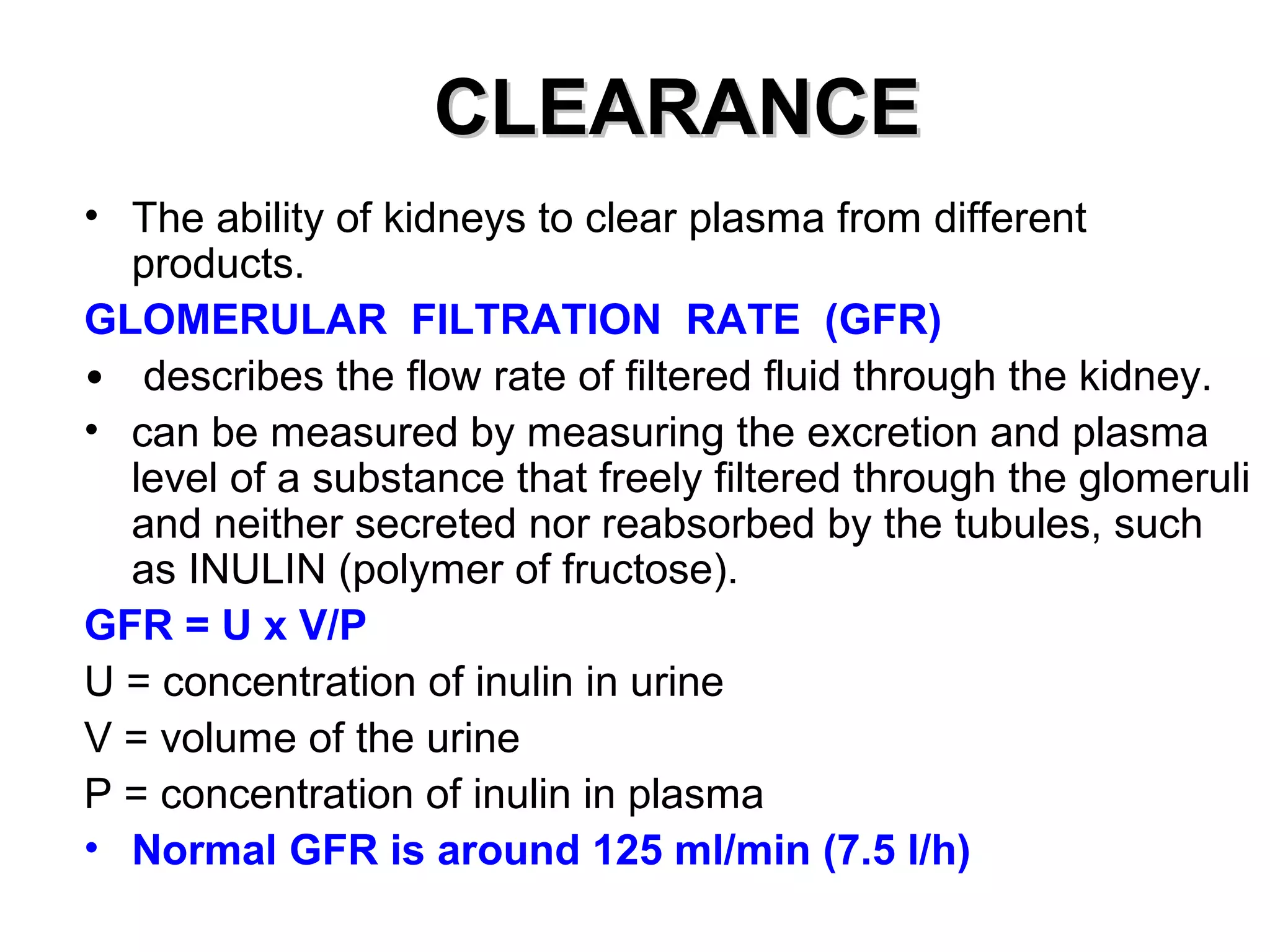
CCLLEEAARRAANNCCEE 
• The ability of kidneys to clear plasma from different 
products. 
GLOMERULAR FILTRATION RATE (GFR) 
• describes the flow rate of filtered fluid through the kidney. 
• can be measured by measuring the excretion and plasma 
level of a substance that freely filtered through the glomeruli 
and neither secreted nor reabsorbed by the tubules, such 
as INULIN (polymer of fructose). 
GFR = U x V/P 
U = concentration of inulin in urine 
V = volume of the urine 
P = concentration of inulin in plasma 
• Normal GFR is around 125 ml/min (7.5 l/h)
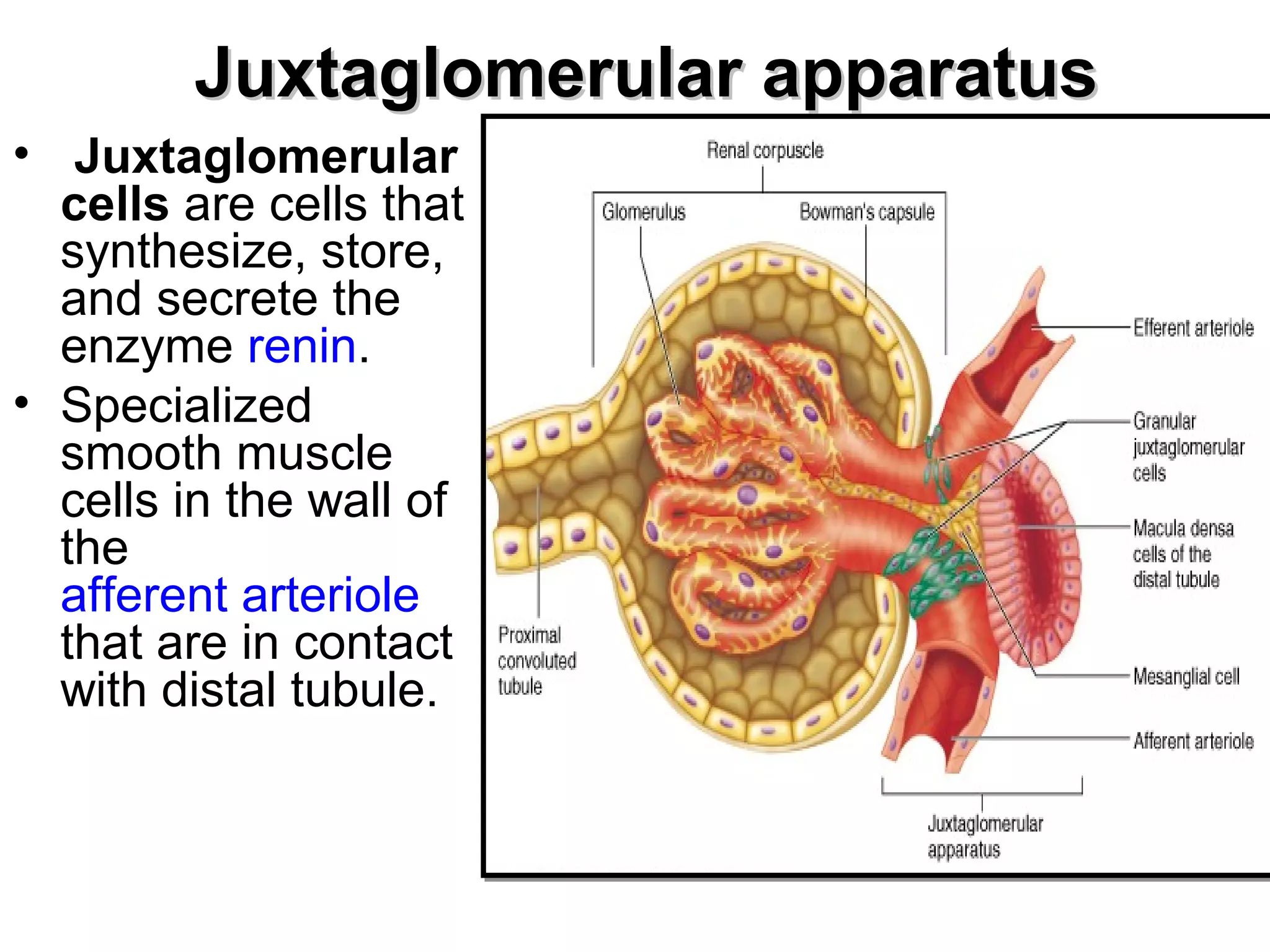
JJuuxxttaagglloommeerruullaarr aappppaarraattuuss 
• Juxtaglomerular 
cells are cells that 
synthesize, store, 
and secrete the 
enzyme renin. 
• Specialized 
smooth muscle 
cells in the wall of 
the 
afferent arteriole 
that are in contact 
with distal tubule.
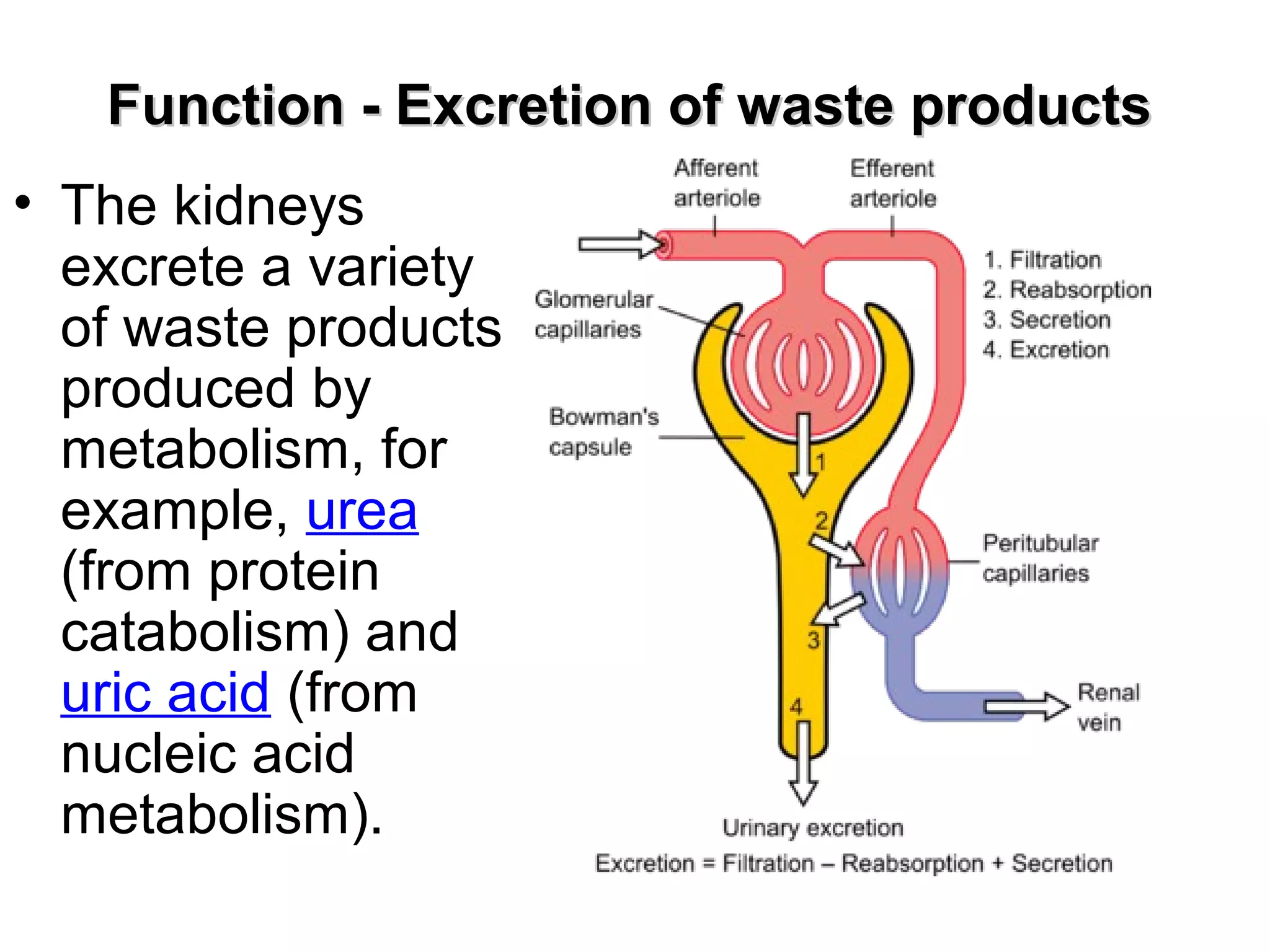
Function -- EExxccrreettiioonn ooff wwaassttee pprroodduuccttss 
• The kidneys 
excrete a variety 
of waste products 
produced by 
metabolism, for 
example, urea 
(from protein 
catabolism) and 
uric acid (from 
nucleic acid 
metabolism).
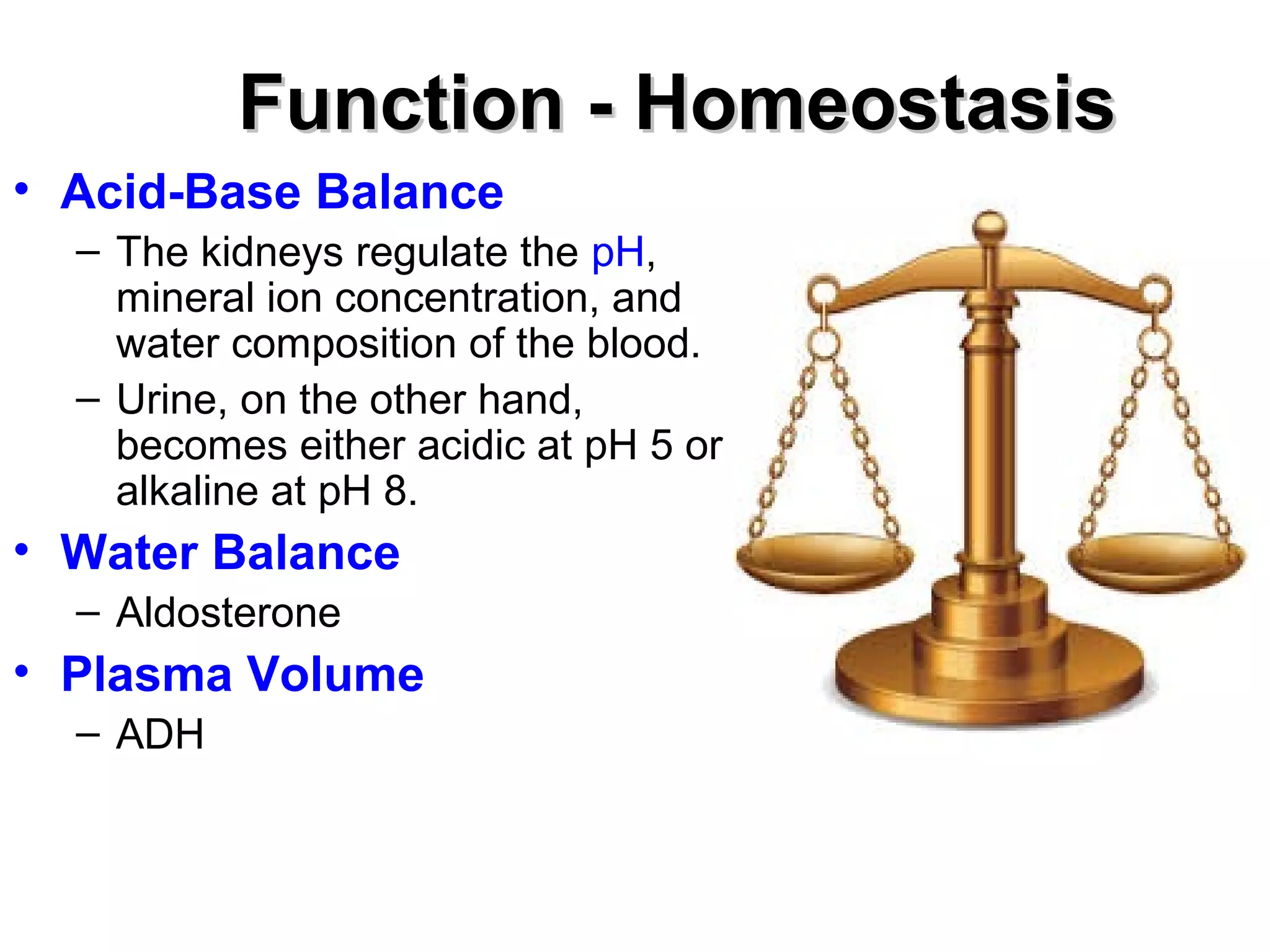
FFuunnccttiioonn -- HHoommeeoossttaassiiss 
• Acid-Base Balance 
– The kidneys regulate the pH, 
mineral ion concentration, and 
water composition of the blood. 
– Urine, on the other hand, 
becomes either acidic at pH 5 or 
alkaline at pH 8. 
• Water Balance 
– Aldosterone 
• Plasma Volume 
– ADH
AAllddoosstteerroonnee 
• A steroid hormone (mineralocorticoid) synthesized 
from cholesterol by the enzyme aldosterone synthase. 
• It is formed in the outer-section (zona glomerulosa) of 
the adrenal cortex of the adrenal gland. 
• It helps regulate the body's electrolyte balance by 
acting on the mineralocorticoid receptor (MR). 
• It diminishes the excretion of Na+ ions and therefore 
water, and stimulates the excretion of K+ ions by the 
kidneys. 
• Aldosterone is synthesized in reaction to increases of 
angiotensin II or plasma potassium, which are present 
in proportion to sodium deficiencies.
CCoonnttrrooll ooff aallddoosstteerroonnee 
rreelleeaassee 
• The role of baroreceptors 
– Baroreceptors in the human body detect the 
pressure of blood flowing though them, and can 
send messages to the central nervous system to 
increase or decrease total peripheral resistance 
and cardiac output. 
• The role of the juxtaglomerular apparatus 
• The role of sympathetic nerves 
• The role of the renin-angiotensin system
((AADDHH ((VVAASSOOPPRREESSSSIINN 
• A human hormone that is mainly released when the body is 
low on water. 
• It causes the kidneys to conserve water by concentrating the 
urine. 
• If there is not enough water in the body 
– The osmotic activity of the ECF is increased → stimulation 
of the OSMOTIC RECEPTORS in the hypothalamus → 
stimulation of posterior lobe of the pituitary gland → 
activation of VASOPRESSIN → increase of the 
permeability of collecting ductus for the water → 
reabsorption → HYPERTONIC URINE 
• If there is too much water in the body 
– The increase volume stimulates VOLUME RECEPTORS in 
the heart and big veins and arteries → decrease of the 
activation of VASOPRESSIN → decrease of the 
permeability of collecting ductus for the water → water is 
not reabsorbed → ISO- or HYPOOSMOTIC URINE
RReenniinn--aannggiiootteennssiinn ssyysstteemm 11 
• A hormone system that helps regulate long-term 
blood pressure and blood volume in the body. 
• The system can be activated when there is a loss of blood 
volume or a drop in blood pressure (such as in a hemorrhage 
). 
• If the perfusion of the juxtaglomerular apparatus in the 
kidneys decreases, then the juxtaglomerular cells release the 
enzymatic hormone renin. 
• Activation: 
– from VOLUME RECEPTORS in afferent arteriole → decrease in 
perfusion → decrease in tonus of afferent arteriole 
– from CHEMORECEPTORS in macula densa → decrease of NaCl 
in macula densa cells
RReenniinn--aannggiiootteennssiinn ssyysstteemm 33 
• Renin activates the renin-angiotensin system 
by cleaving angiotensinogen, produced in the 
liver, to yield angiotensin I, which is further 
converted into angiotensin II by specialized 
cells of the lung capillaries. 
• Angiotensin II then constricts blood vessels, 
increases the secretion of ADH and 
aldosterone, and stimulates the hypothalamus 
to activate the thirst reflex, all these actions 
leading to increased blood pressure.
RReenniinn 
• Also known as angiotensinogenase, is a circulating 
enzyme released mainly by juxtaglomerular cells of 
the kidneys in response to low blood volume or low 
body NaCl content. 
• Actions of renin: 
– Vasoconstriction in efferent arteriole (increase of glomerular 
filtration) 
– Peripheral vasoconstriction (increase in blood pressure) 
– Secretion of aldosterone (reabsorption of Na+ and water)

urinary system

  • 1.
    LLeecctt.. 88 PPhhyyssiioollooggyyooff kkiiddnneeyy aanndd eexxccrreettiioonn bbyy DDrr:: NNaassssaarr AAyyoouubb
  • 2.
    UUrriinnaarryy ssyysstteemm •Organ system that produces, stores, and carries urine • Includes two kidneys, two ureters, the urinary bladder, two sphincter muscles, and the urethra. • Humans produce about 1.5 liters of urine over 24 hours, although this amount may vary according to the circumstances. • Increased fluid intake generally increases urine production. • Increased perspiration and respiration may decrease the amount of fluid excreted through the kidneys. • Some medications interfere directly or indirectly with urine production, such as diuretics.
  • 4.
    FFuunnccttiioonn ooff uurriinnaarryyssyysstteemm • Excretion • Keeping homeostasis • Keeping acid-base balance • Secretion (rennin, erytropoetin) Excreted products: • Product of the metabolism • Water • Hormones • Vitamins • Toxic substances
  • 5.
    KKiiddnneeyyss • Morphology – It is paired organ (weight about 300 g) – Compound from two parts cortex (isotonic urine) and medulla (hypertonic urine) – Cortex: Glomerular apparatus – Medulla: Divided: Outer and Inner • Consists of about 1 million filtering units termed nephrons (basic structural and functional unit) • The kidney plays a crucial role in regulating electrolytes in the human blood (e.g. Na+, K+, Ca2+). • It clears urea, a nitrogenous waste product from the metabolism of amino acids.
  • 6.
    RReennaall ppeellvviiss •The major function of the renal pelvis is to act as a funnel for urine flowing to the ureter. • The renal pelvis represents the funnel-like dilated proximal part of the ureter. • It is the point of convergence of two or three major calices. • Each renal papilla is surrounded by a branch of the renal pelvis called a calyx.
  • 7.
    UUrreetteerrss • Urineis collected in the renal pelvis (or pyelum), which connects to the ureters, which carry urine to the bladder. • The ureters are about 25 cm long. • Smooth muscular tissue in the walls of the ureters peristaltically force the urine downward.
  • 8.
    UUrriinnaarryy bbllaaddddeerr •The urinary bladder is a hollow muscular organ shaped like a balloon. • It is located in the pelvic fossa and held in place by ligaments attached to the pelvic bones. • The bladder stores urine - up to 500 ml of urine comfortably for 2 to 5 hours. • Sphincters (circular muscles) regulate the flow of urine from the bladder. – Internal urethral sphincter = in the beginning of urethra smooth muscle – not under our voluntary control – External urethral sphincter = skeletal muscle – we can control it
  • 9.
    UUrriinnaarryy bbllaaddddeerr •The detrusor muscle is a layer of the urinary bladder wall, made up of smooth muscle fibers arranged in inner and outer longitudinal layers and a middle circular layer. • Contraction of the detrusor muscle causes the bladder to expel urine through the urethra. • Problems with this muscle can lead to incontinence.
  • 10.
    UUrreetthhrraa • Theurethra has an excretory function in both sexes, to pass urine to the outside, and also a reproductive function in the male, as a passage for sperm. • The external urethral sphincter is a striated smooth muscle that allows voluntary control over urination. • Urethral sphincters: – Internal – External • In males the internal and external urethral sphincters are more powerful, able to retain urine for twice as long as females
  • 11.
    UUrreetthhrraa • Women:shorter • Mans: Longer (together with genital efferent system)
  • 12.
    ((UUrriinnaattiioonn ((mmiiccttuurriittiioonn •The process of disposing urine from the urinary bladder through the urethra to the outside of the body. • The process of urination is usually under voluntary control. • Urinary incontinence is inability to control urination, and is more common in women than men. • Urinary retention refers to the inability to urinate. • Nocturnal Enuresis = incontinence during the night
  • 13.
    MMiiccttuurriittiioonn rreefflleexx •Activated when the urinary bladder wall is stretched; it results in urination. • This reflex occurs in the spinal cord, specifically in the sacral region that is modified by the higher centers in the brain: the pons and cerebrum. • The presence of urine in the bladder stimulates the stretch receptors, which produces action potential. • The action potentials are carried by sensory neurons to the sacral segments of the spinal cord through the pelvic nerves, the parasympathetic fibers carry the action potentials to the urinary bladder in the pelvic nerves. • The pressure in the urinary bladder increases rapidly once its volume exceeds approximately 400-500 ml.
  • 14.
    NNeepphhrroonn • Anephron (1-1.2 millions) is the basic structural and functional unit of the kidney. • Its chief function is to regulate water and soluble substances by filtering the blood, reabsorbing what is needed and excreting the rest as urine. • Each nephron is composed of an initial filtering component (the renal corpuscle) and a tubule specialized for reabsorption and excretion (the renal tubule). • The renal corpuscle filters out large solutes from the blood, delivering water and small solutes to the renal tubule for modification.
  • 15.
    NNeepphhrroonn 22 •Parts: – Glomerular apparatus – Proximal tubule – Loop of Henle – Distal tubule – Collecting ducts • Types of nephrons: – Cortical nephrons (glomerular apparatus belong the surface and Loop of Henle only to the outer part of the medulla) – Intermedial nephrons (in the middle) – Juxtamedullary nephrons (glomerular apparatus deep in cortex near the medulla and Loop of Henle is going deep to the inner part of the medulla)
  • 16.
    GGlloommeerruullaarr ffiilltteerr •The filtration surface is 1.5 square meter • Amount of the solution, which is filtered in glomerular apparatus is around 180-200 L per day. • The rest (97 %) has to be reabsorbed in the tubules back to the body, so the final volume of urine is around (1.5 - 2 L per day).
  • 17.
    GGLLOOMMEERRUULLAARR FFIILLTTRRAATTIIOONN •Depends on: – Pressure gradient across the filtration slit (endothelium, basal membrane, epithelium = podocytes) – Blood circulation throughout the kidneys – Permeability of the filtration barrier – Filtration surface • The solution after filtration is very similar like plasma, but should be WITHOUT PROTEINS
  • 18.
    CCLLEEAARRAANNCCEE • Theability of kidneys to clear plasma from different products. GLOMERULAR FILTRATION RATE (GFR) • describes the flow rate of filtered fluid through the kidney. • can be measured by measuring the excretion and plasma level of a substance that freely filtered through the glomeruli and neither secreted nor reabsorbed by the tubules, such as INULIN (polymer of fructose). GFR = U x V/P U = concentration of inulin in urine V = volume of the urine P = concentration of inulin in plasma • Normal GFR is around 125 ml/min (7.5 l/h)
  • 19.
    JJuuxxttaagglloommeerruullaarr aappppaarraattuuss •Juxtaglomerular cells are cells that synthesize, store, and secrete the enzyme renin. • Specialized smooth muscle cells in the wall of the afferent arteriole that are in contact with distal tubule.
  • 20.
    Function -- EExxccrreettiioonnooff wwaassttee pprroodduuccttss • The kidneys excrete a variety of waste products produced by metabolism, for example, urea (from protein catabolism) and uric acid (from nucleic acid metabolism).
  • 21.
    FFuunnccttiioonn -- HHoommeeoossttaassiiss • Acid-Base Balance – The kidneys regulate the pH, mineral ion concentration, and water composition of the blood. – Urine, on the other hand, becomes either acidic at pH 5 or alkaline at pH 8. • Water Balance – Aldosterone • Plasma Volume – ADH
  • 22.
    AAllddoosstteerroonnee • Asteroid hormone (mineralocorticoid) synthesized from cholesterol by the enzyme aldosterone synthase. • It is formed in the outer-section (zona glomerulosa) of the adrenal cortex of the adrenal gland. • It helps regulate the body's electrolyte balance by acting on the mineralocorticoid receptor (MR). • It diminishes the excretion of Na+ ions and therefore water, and stimulates the excretion of K+ ions by the kidneys. • Aldosterone is synthesized in reaction to increases of angiotensin II or plasma potassium, which are present in proportion to sodium deficiencies.
  • 23.
    CCoonnttrrooll ooff aallddoosstteerroonnee rreelleeaassee • The role of baroreceptors – Baroreceptors in the human body detect the pressure of blood flowing though them, and can send messages to the central nervous system to increase or decrease total peripheral resistance and cardiac output. • The role of the juxtaglomerular apparatus • The role of sympathetic nerves • The role of the renin-angiotensin system
  • 24.
    ((AADDHH ((VVAASSOOPPRREESSSSIINN •A human hormone that is mainly released when the body is low on water. • It causes the kidneys to conserve water by concentrating the urine. • If there is not enough water in the body – The osmotic activity of the ECF is increased → stimulation of the OSMOTIC RECEPTORS in the hypothalamus → stimulation of posterior lobe of the pituitary gland → activation of VASOPRESSIN → increase of the permeability of collecting ductus for the water → reabsorption → HYPERTONIC URINE • If there is too much water in the body – The increase volume stimulates VOLUME RECEPTORS in the heart and big veins and arteries → decrease of the activation of VASOPRESSIN → decrease of the permeability of collecting ductus for the water → water is not reabsorbed → ISO- or HYPOOSMOTIC URINE
  • 25.
    RReenniinn--aannggiiootteennssiinn ssyysstteemm 11 • A hormone system that helps regulate long-term blood pressure and blood volume in the body. • The system can be activated when there is a loss of blood volume or a drop in blood pressure (such as in a hemorrhage ). • If the perfusion of the juxtaglomerular apparatus in the kidneys decreases, then the juxtaglomerular cells release the enzymatic hormone renin. • Activation: – from VOLUME RECEPTORS in afferent arteriole → decrease in perfusion → decrease in tonus of afferent arteriole – from CHEMORECEPTORS in macula densa → decrease of NaCl in macula densa cells
  • 26.
    RReenniinn--aannggiiootteennssiinn ssyysstteemm 33 • Renin activates the renin-angiotensin system by cleaving angiotensinogen, produced in the liver, to yield angiotensin I, which is further converted into angiotensin II by specialized cells of the lung capillaries. • Angiotensin II then constricts blood vessels, increases the secretion of ADH and aldosterone, and stimulates the hypothalamus to activate the thirst reflex, all these actions leading to increased blood pressure.
  • 27.
    RReenniinn • Alsoknown as angiotensinogenase, is a circulating enzyme released mainly by juxtaglomerular cells of the kidneys in response to low blood volume or low body NaCl content. • Actions of renin: – Vasoconstriction in efferent arteriole (increase of glomerular filtration) – Peripheral vasoconstriction (increase in blood pressure) – Secretion of aldosterone (reabsorption of Na+ and water)