DIFFERENCEBETWEEN
UPPERANDLOWERMOTORNEURONLESION
 The term Upper Motor Neuron was first introduced by
William Gowers.
 Upper Motor Neurons are found in the cerebral cortex
and the brainstem, which carry information down to
activate inter neurons and lower motor neurons which
in turn directly signal muscles to contract or relax..
 The Lower Motor Neurons begin in the Spinal Cord
and end in the skeletal muscles. If lower motor neurons
are lost, it leads to weakness, muscle twitching, and
muscle atrophy.
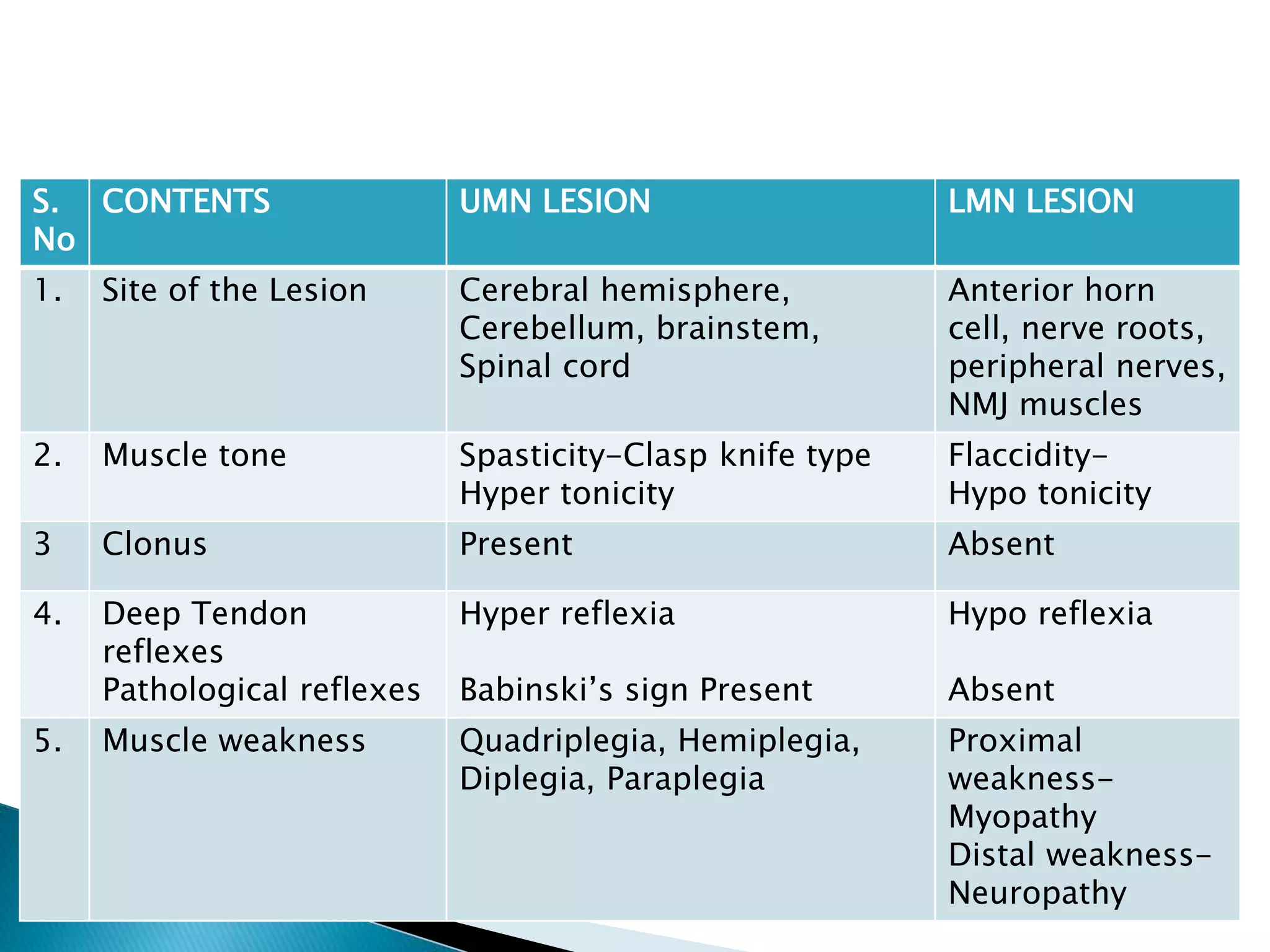
S.
No
CONTENTS UMN LESION LMN LESION
1. Site of the Lesion Cerebral hemisphere,
Cerebellum, brainstem,
Spinal cord
Anterior horn
cell, nerve roots,
peripheral nerves,
NMJ muscles
2. Muscle tone Spasticity-Clasp knife type
Hyper tonicity
Flaccidity-
Hypo tonicity
3 Clonus Present Absent
4. Deep Tendon
reflexes
Pathological reflexes
Hyper reflexia
Babinski’s sign Present
Hypo reflexia
Absent
5. Muscle weakness Quadriplegia, Hemiplegia,
Diplegia, Paraplegia
Proximal
weakness-
Myopathy
Distal weakness-
Neuropathy
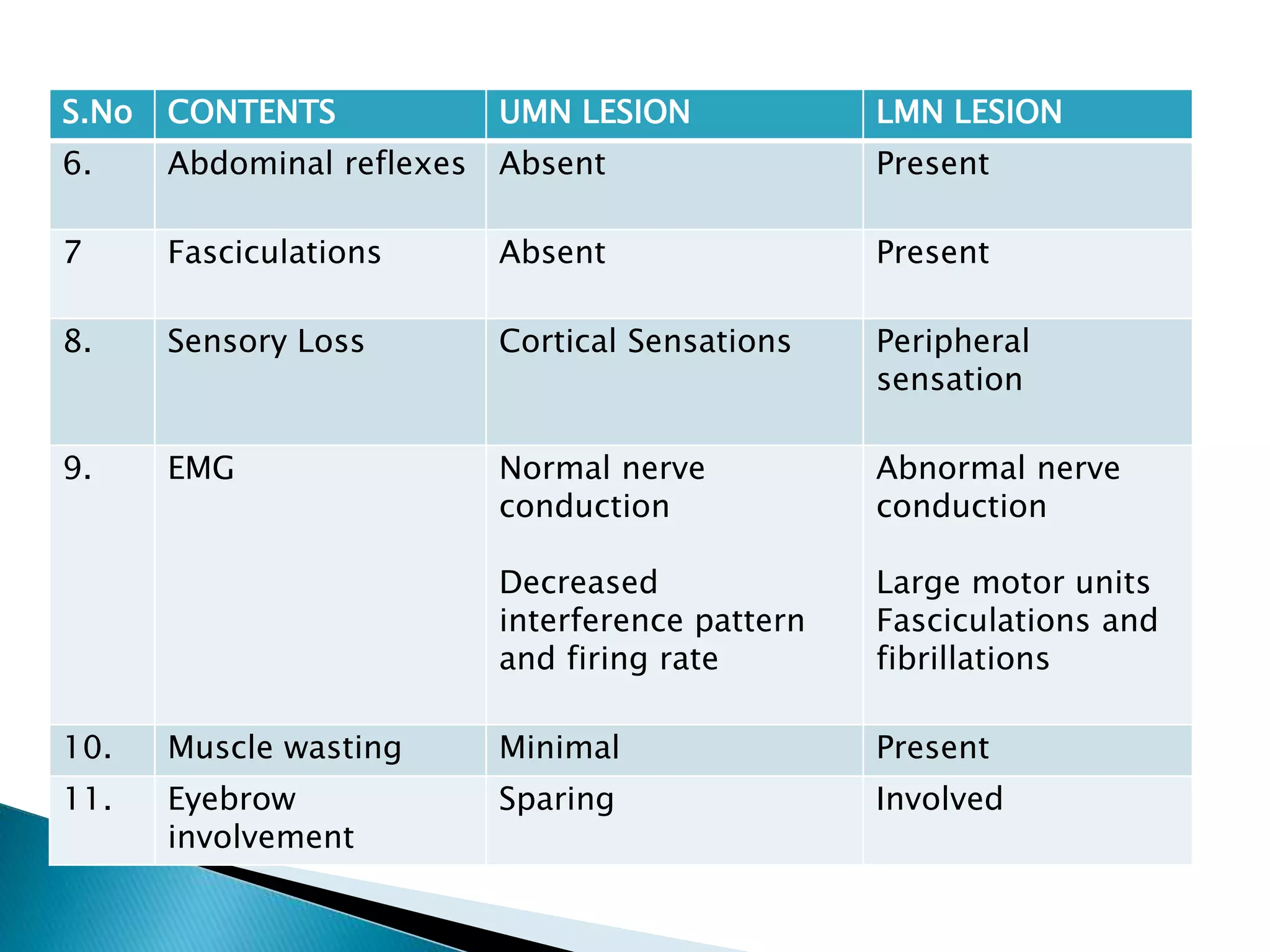
S.No CONTENTS UMN LESION LMN LESION
6. Abdominal reflexes Absent Present
7 Fasciculations Absent Present
8. Sensory Loss Cortical Sensations Peripheral
sensation
9. EMG Normal nerve
conduction
Decreased
interference pattern
and firing rate
Abnormal nerve
conduction
Large motor units
Fasciculations and
fibrillations
10. Muscle wasting Minimal Present
11. Eyebrow
involvement
Sparing Involved
SLIDE SHARE-06-04-23-UMN & LMN LESION.pptx

SLIDE SHARE-06-04-23-UMN & LMN LESION.pptx

  • 1.
  • 2.
     The termUpper Motor Neuron was first introduced by William Gowers.  Upper Motor Neurons are found in the cerebral cortex and the brainstem, which carry information down to activate inter neurons and lower motor neurons which in turn directly signal muscles to contract or relax..
  • 3.
     The LowerMotor Neurons begin in the Spinal Cord and end in the skeletal muscles. If lower motor neurons are lost, it leads to weakness, muscle twitching, and muscle atrophy.
  • 4.
    S. No CONTENTS UMN LESIONLMN LESION 1. Site of the Lesion Cerebral hemisphere, Cerebellum, brainstem, Spinal cord Anterior horn cell, nerve roots, peripheral nerves, NMJ muscles 2. Muscle tone Spasticity-Clasp knife type Hyper tonicity Flaccidity- Hypo tonicity 3 Clonus Present Absent 4. Deep Tendon reflexes Pathological reflexes Hyper reflexia Babinski’s sign Present Hypo reflexia Absent 5. Muscle weakness Quadriplegia, Hemiplegia, Diplegia, Paraplegia Proximal weakness- Myopathy Distal weakness- Neuropathy
  • 5.
    S.No CONTENTS UMNLESION LMN LESION 6. Abdominal reflexes Absent Present 7 Fasciculations Absent Present 8. Sensory Loss Cortical Sensations Peripheral sensation 9. EMG Normal nerve conduction Decreased interference pattern and firing rate Abnormal nerve conduction Large motor units Fasciculations and fibrillations 10. Muscle wasting Minimal Present 11. Eyebrow involvement Sparing Involved