RADIAL NERVE
PALSY
Dr Manoj Das
Ortho Resident
Institute Of medicine, TUTH,
Nepal
• Largest branch of the brachial plexus
• Arises from the posterior cord of the brachial plexus (C5–T1)
• Mixed nerve
Radial Nerve
Anatomy
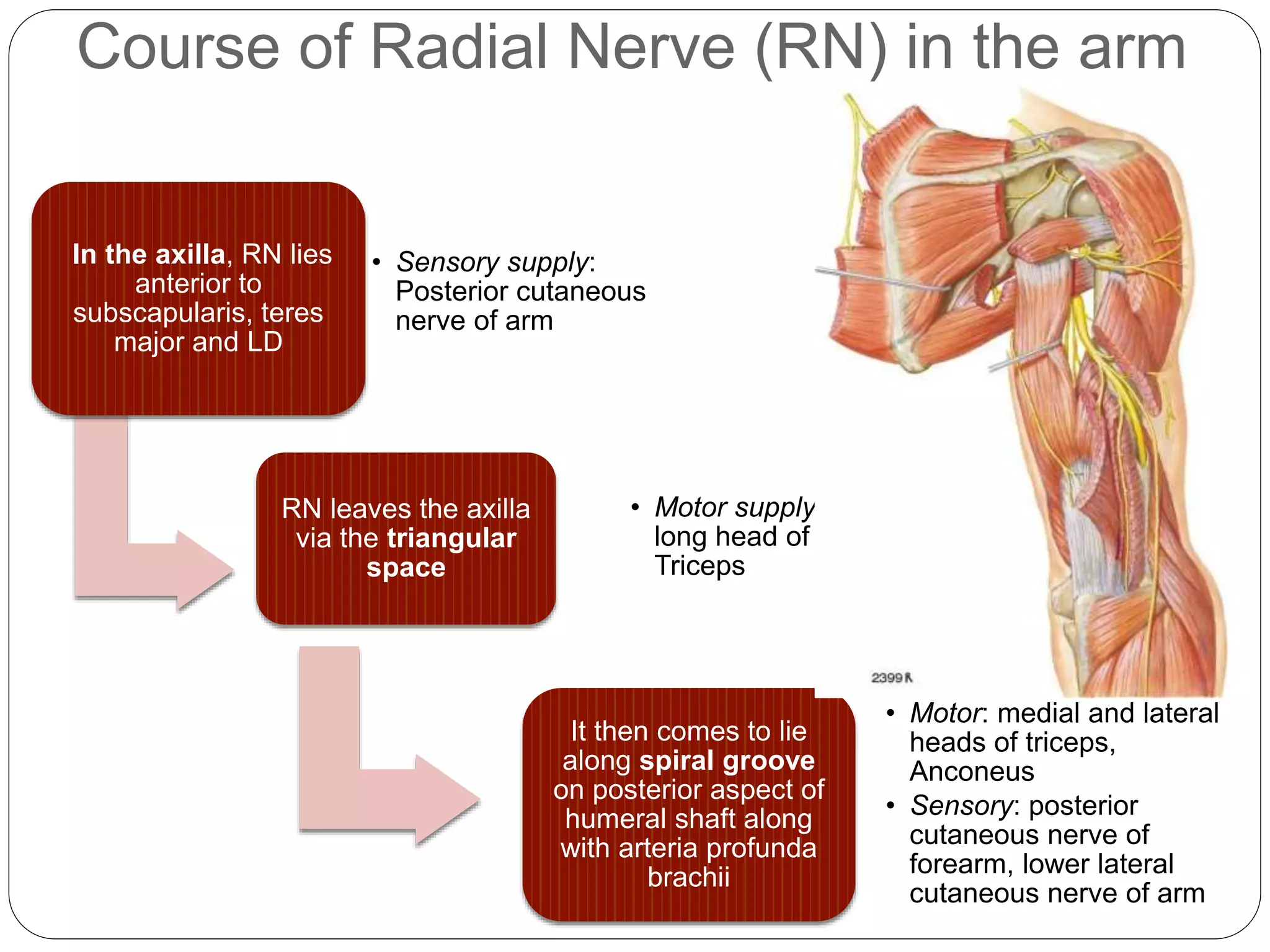
Course of Radial Nerve (RN) in the arm
In the axilla, RN lies
anterior to
subscapularis, teres
major and LD
• Sensory supply:
Posterior cutaneous
nerve of arm
RN leaves the axilla
via the triangular
space
• Motor supply:
long head of
Triceps
It then comes to lie
along spiral groove
on posterior aspect of
humeral shaft along
with arteria profunda
brachii
• Motor: medial and lateral
heads of triceps,
Anconeus
• Sensory: posterior
cutaneous nerve of
forearm, lower lateral
cutaneous nerve of arm
RN then leaves the
spiral groove by
piercing the lateral
intermuscular septum
to enter the anterior
compartment of the
arm, 10-12 cm above
the lateral epicondyle
• Motor supply: Brachialis
(lateral part), BR, ECRL
Anterior to lateral
epicondyle, RN divides
into its terminal branches
• Terminal branches:
Posterior Interosseous Nerve
(PIN) and Dorsal or
Superficial radial sensory
nerve
Here it lies b/w brachialis and BR
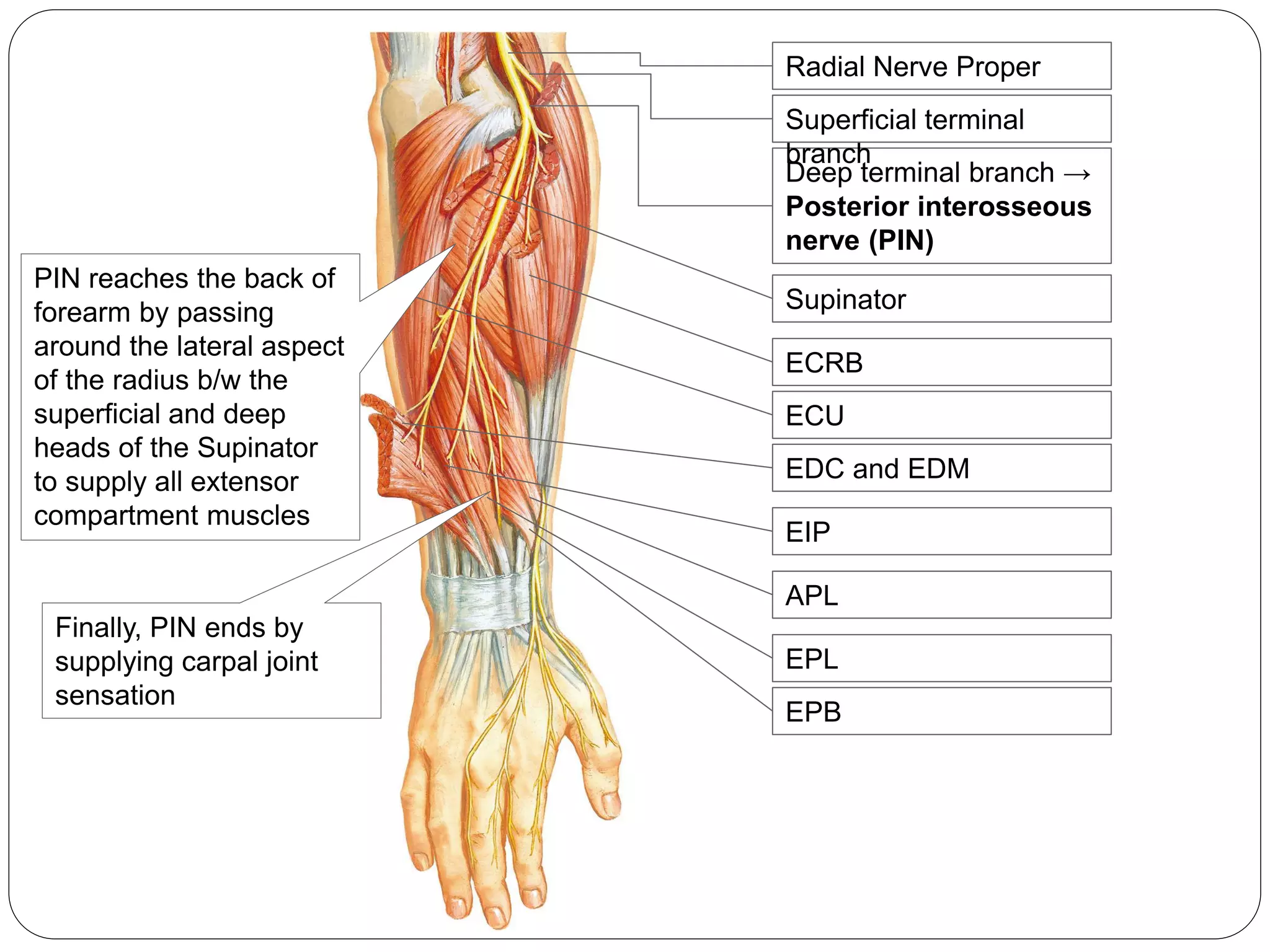
Deep terminal branch →
Posterior interosseous
nerve (PIN)
Supinator
EIP
EDC and EDM
ECU
ECRB
Superficial terminal
branch
Radial Nerve Proper
EPL
EPB
APL
PIN reaches the back of
forearm by passing
around the lateral aspect
of the radius b/w the
superficial and deep
heads of the Supinator
to supply all extensor
compartment muscles
Finally, PIN ends by
supplying carpal joint
sensation
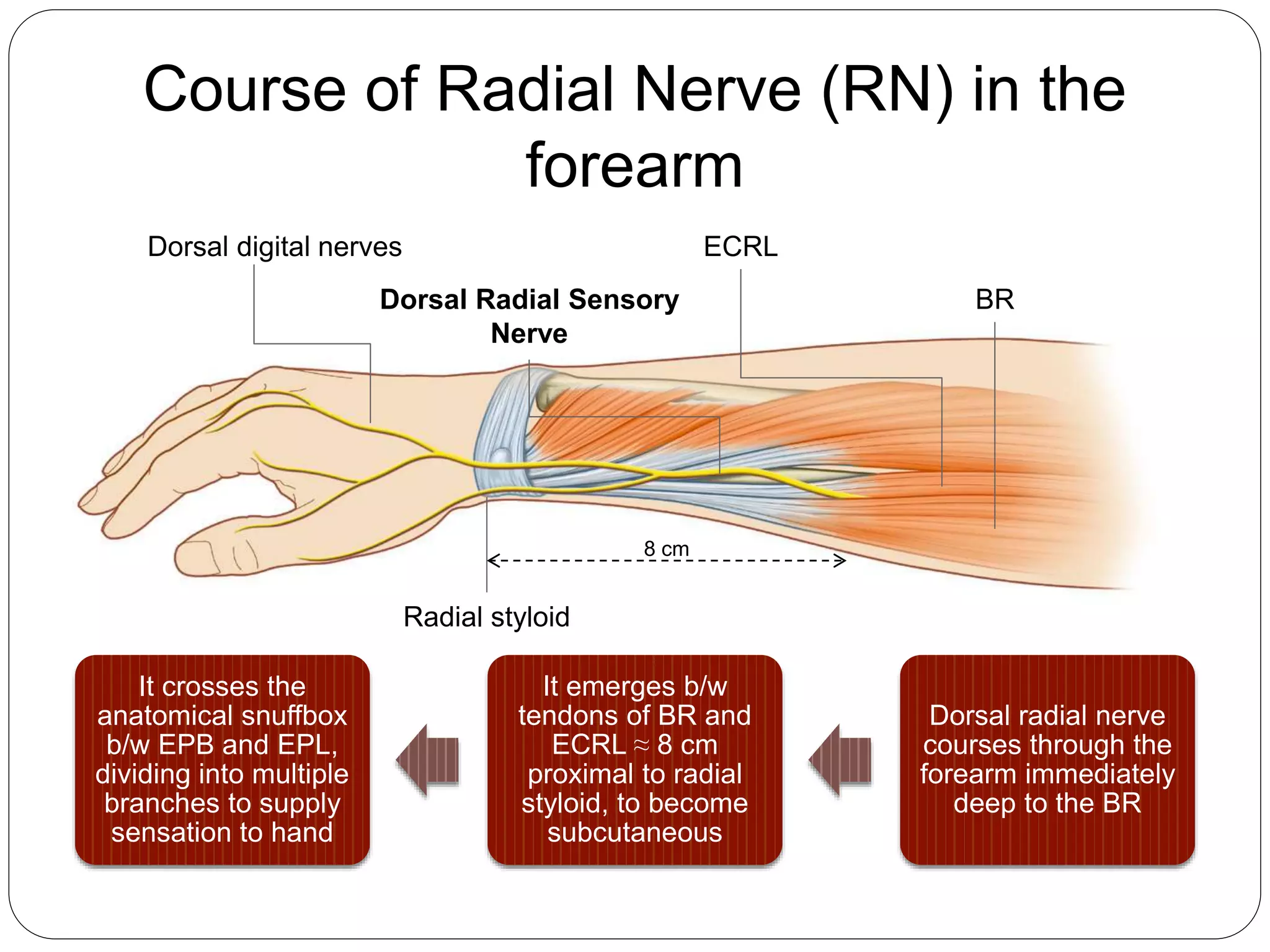
BR
ECRL
Dorsal Radial Sensory
Nerve
Dorsal digital nerves
Radial styloid
8 cm
Dorsal radial nerve
courses through the
forearm immediately
deep to the BR
It emerges b/w
tendons of BR and
ECRL ≈ 8 cm
proximal to radial
styloid, to become
subcutaneous
It crosses the
anatomical snuffbox
b/w EPB and EPL,
dividing into multiple
branches to supply
sensation to hand
Course of Radial Nerve (RN) in the
forearm
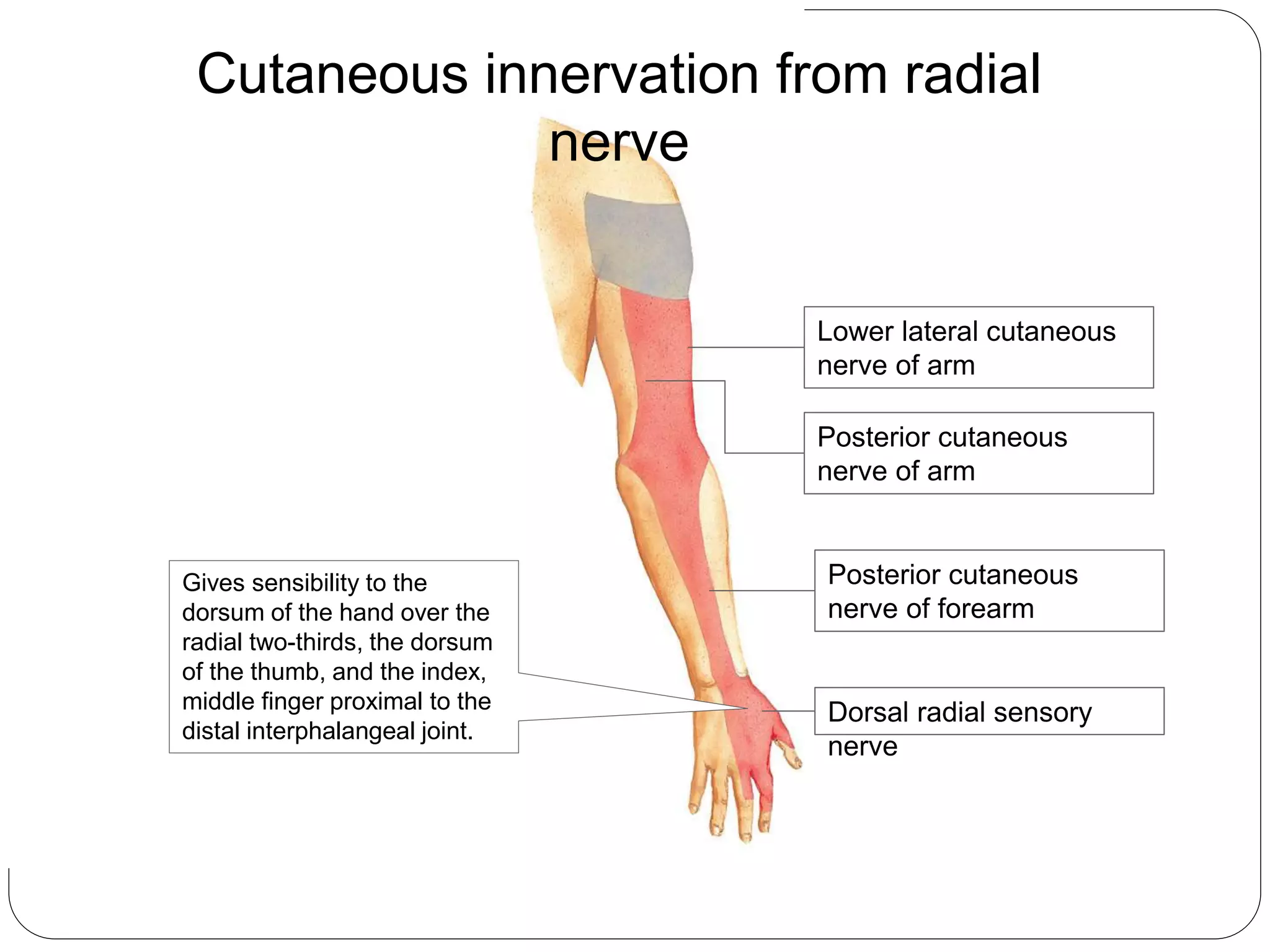
Lower lateral cutaneous
nerve of arm
Posterior cutaneous
nerve of arm
Posterior cutaneous
nerve of forearm
Dorsal radial sensory
nerve
Gives sensibility to the
dorsum of the hand over the
radial two-thirds, the dorsum
of the thumb, and the index,
middle finger proximal to the
distal interphalangeal joint.
Cutaneous innervation from radial
nerve
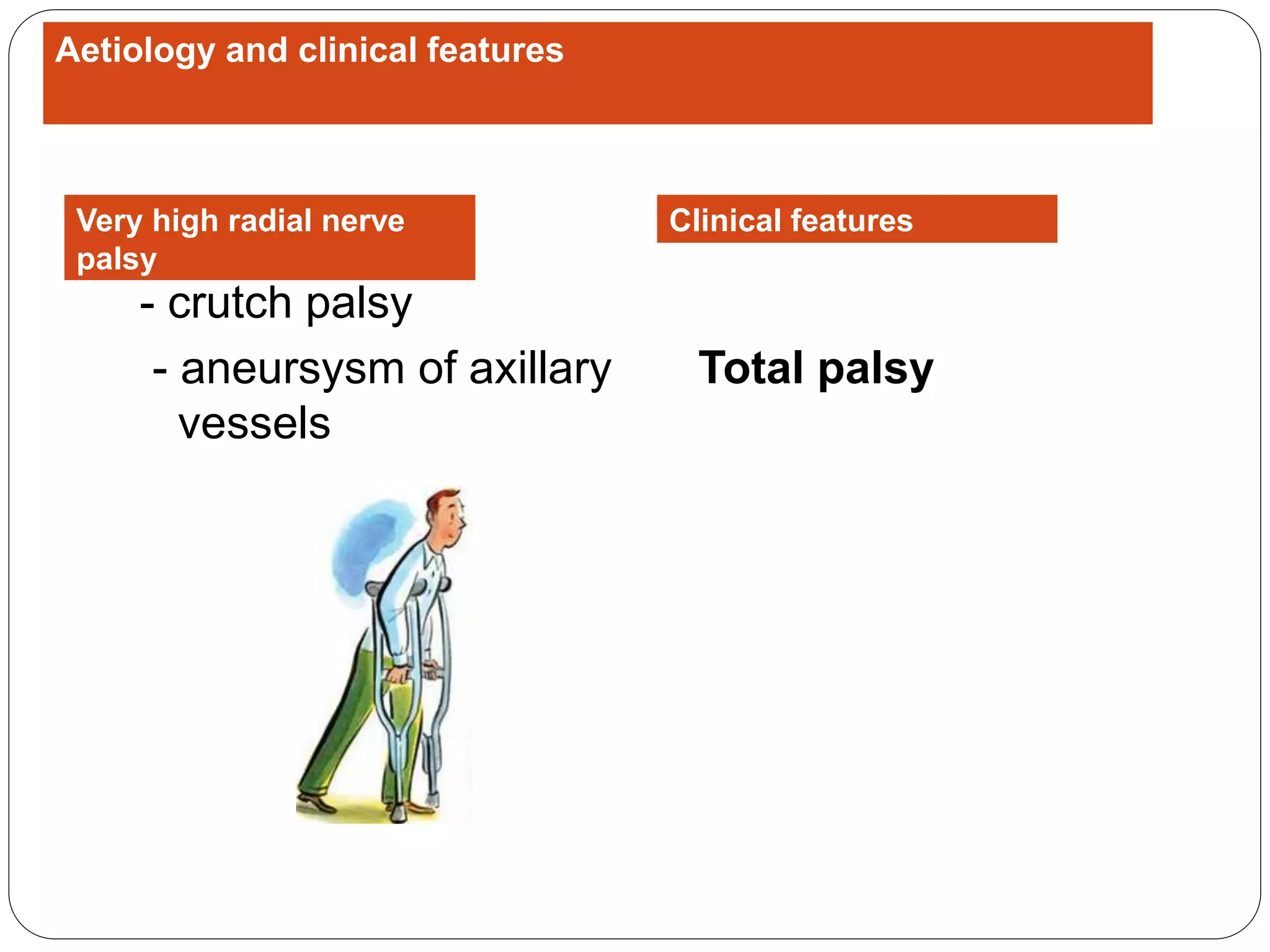
- crutch palsy
- aneursysm of axillary
vessels
Total palsy
Aetiology and clinical features
Very high radial nerve
palsy
Clinical features
- # shaft of humerus
-prolonged application of
tourniquet
-pressure on arm as in
Saturday night paralysis
-injections
-from excessive callus
formation of old fracture
impinging on the nerve
- Elbow extension spared
- Lost: Wrist, thumb and
finger extension; sensation
over 1st web space
High radial nerve palsy Clinical features
-Dislocation of elbow
-#neck of radius
-Enlarged bursae
-Rheumatoid synovitis of
elbow
-During operation for
excision of radius head
- Elbow extension spared
with weak wrist extension
and radial deviation
- Lost – thumb , finger
extension: sensory over
dorsum of 1st web space
Low radial nerve palsy Clinical features
Diagnosis
Mechanism of injury (e.g. sharp
penetrating vs. blunt trauma)
Timing of injury
Loss of motor and sensory function
Presence of pain
Interval recovery of function in patients
presenting late
History
Assessment of motor function
Assessment of sensory function
Assessment of involved joints
Physical
Examinatio
n
Individual muscles innervated by
the nerve are tested to determine
what is functioning and what is not:
▪Helps to determine the level of
injury
▪Guides future surgical planning
▪Elicitation of Tinel’s sign
▪Specific sensory testing
Each joint is taken through its
passive range of motion to assess
for suppleness → presence of fixed
joint contractures in delayed
presentations is associated with
poor treatment outcomes
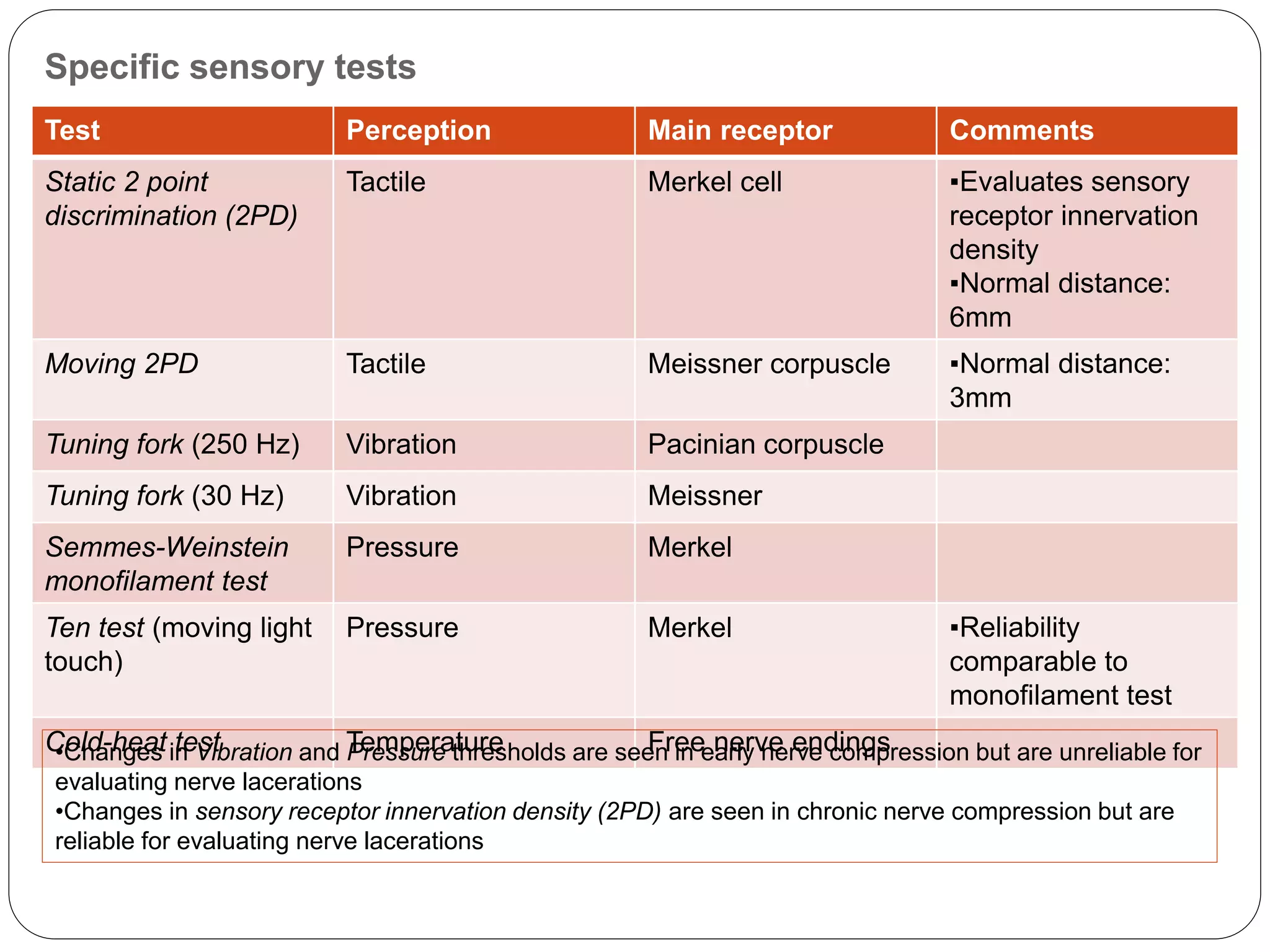
Specific sensory tests
Test Perception Main receptor Comments
Static 2 point
discrimination (2PD)
Tactile Merkel cell ▪Evaluates sensory
receptor innervation
density
▪Normal distance:
6mm
Moving 2PD Tactile Meissner corpuscle ▪Normal distance:
3mm
Tuning fork (250 Hz) Vibration Pacinian corpuscle
Tuning fork (30 Hz) Vibration Meissner
Semmes-Weinstein
monofilament test
Pressure Merkel
Ten test (moving light
touch)
Pressure Merkel ▪Reliability
comparable to
monofilament test
Cold-heat test Temperature Free nerve endings•Changes in Vibration and Pressure thresholds are seen in early nerve compression but are unreliable for
evaluating nerve lacerations
•Changes in sensory receptor innervation density (2PD) are seen in chronic nerve compression but are
reliable for evaluating nerve lacerations
Commonly used EDT
-Electromyography (EMG)
-Nerve conduction studies (NCS)
1. Documentation of injury
2. Location of insult
3. Severity of injury
4. Recovery pattern
5. Prognosis
6. Objective data for impairment documentation
7. Pathology
8. Selection of optimal muscles for tendon transfer procedure
Electrodiagnostic testing
Limitations of EDT:
▪Evaluates only large myelinated fibres → smaller axons conveying
pain and temperature are not assessed
▪Changes in unmyelinated nerve fibres, which are the first to be
affected in nerve compressions, are not evaluated
▪Performing the test before 3-6 weeks post injury can give
inaccurate results
▪Very proximal or distal nerve injuries are difficult to assess
▪Unreliable assessment of multi-level injuries
▪Examiner dependant
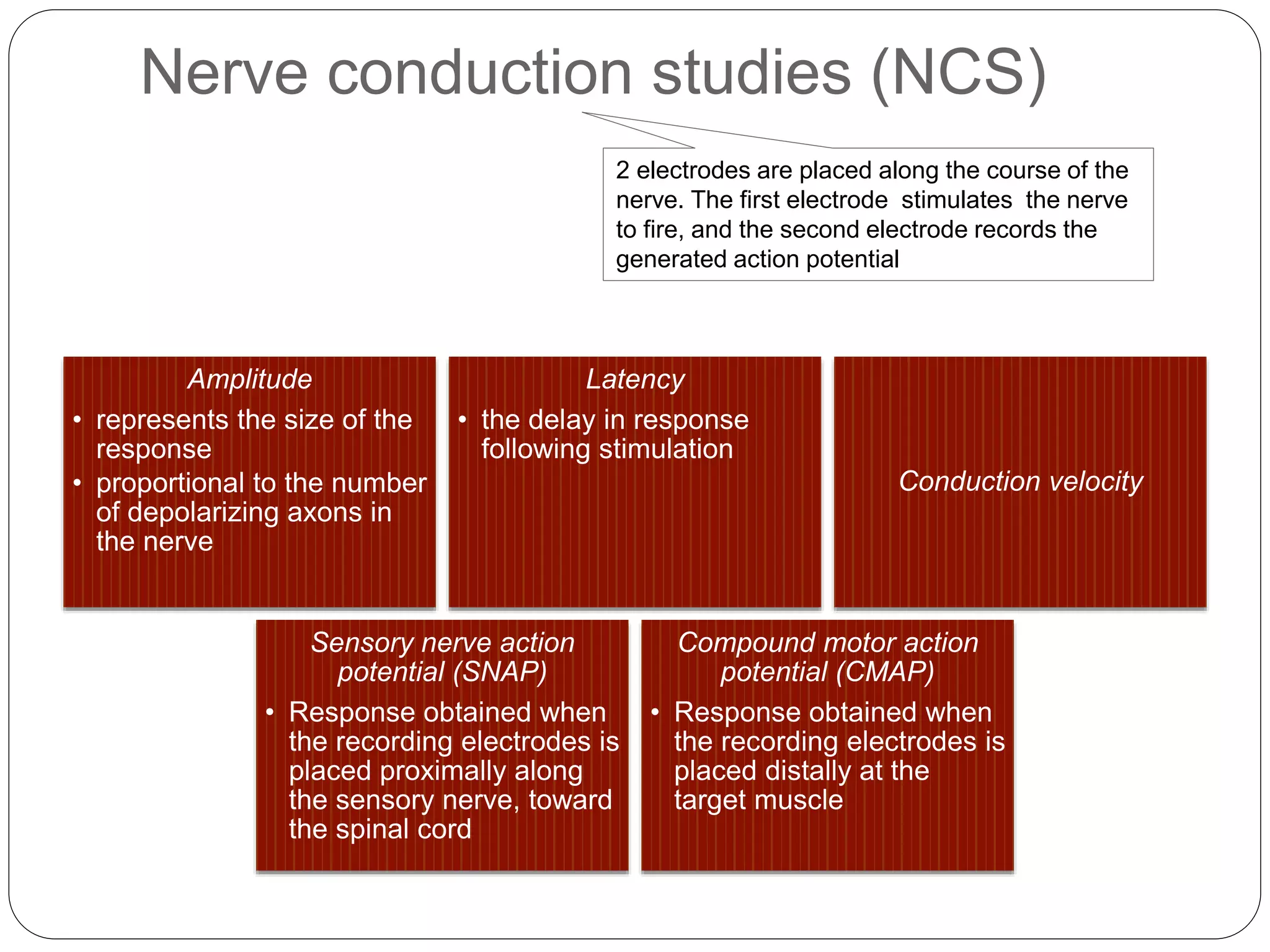
Nerve conduction studies (NCS)
2 electrodes are placed along the course of the
nerve. The first electrode stimulates the nerve
to fire, and the second electrode records the
generated action potential
Amplitude
• represents the size of the
response
• proportional to the number
of depolarizing axons in
the nerve
Latency
• the delay in response
following stimulation
Conduction velocity
Sensory nerve action
potential (SNAP)
• Response obtained when
the recording electrodes is
placed proximally along
the sensory nerve, toward
the spinal cord
Compound motor action
potential (CMAP)
• Response obtained when
the recording electrodes is
placed distally at the
target muscle
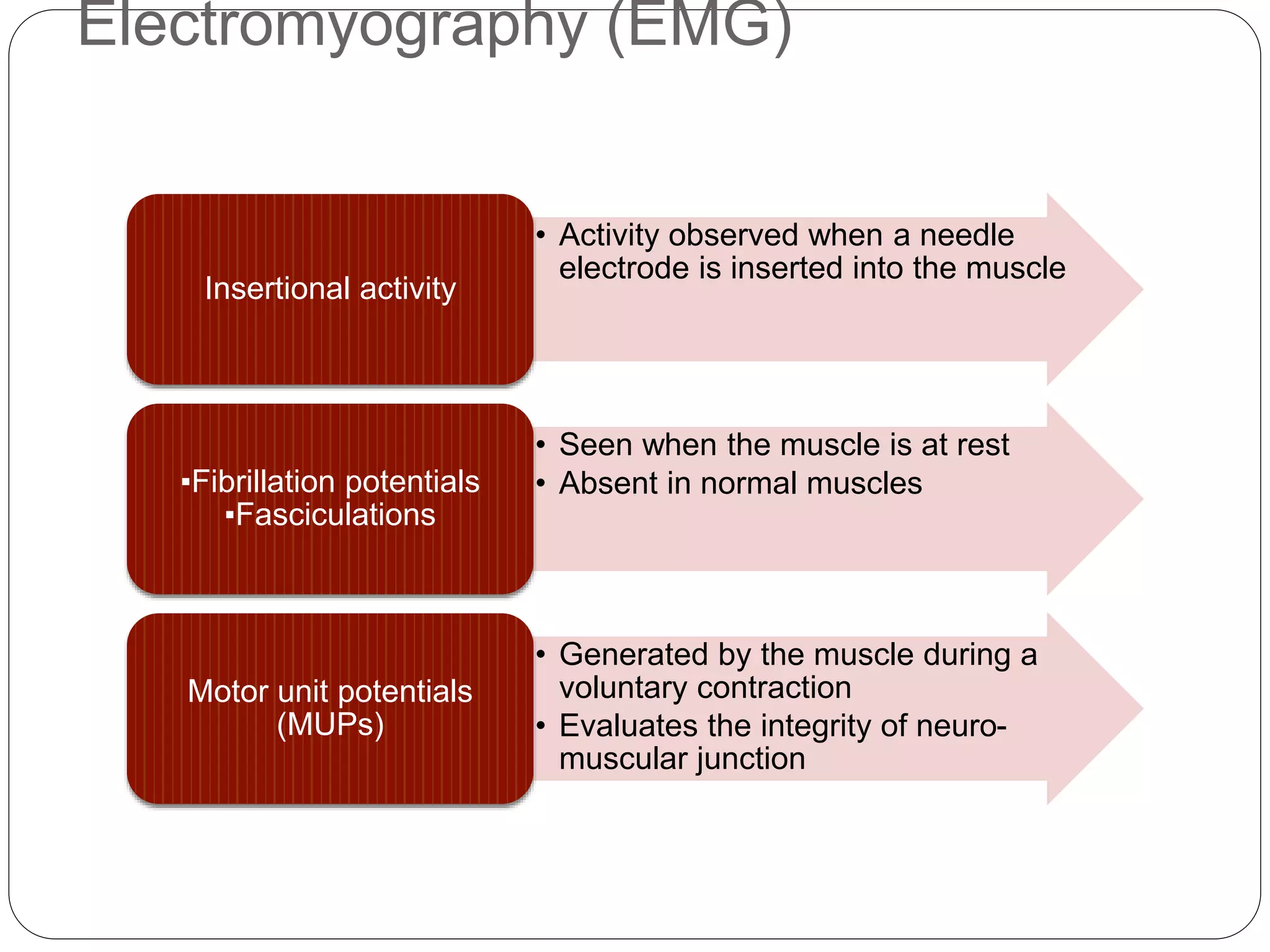
Electromyography (EMG)
• Activity observed when a needle
electrode is inserted into the muscle
Insertional activity
• Seen when the muscle is at rest
• Absent in normal muscles▪Fibrillation potentials
▪Fasciculations
• Generated by the muscle during a
voluntary contraction
• Evaluates the integrity of neuro-
muscular junction
Motor unit potentials
(MUPs)
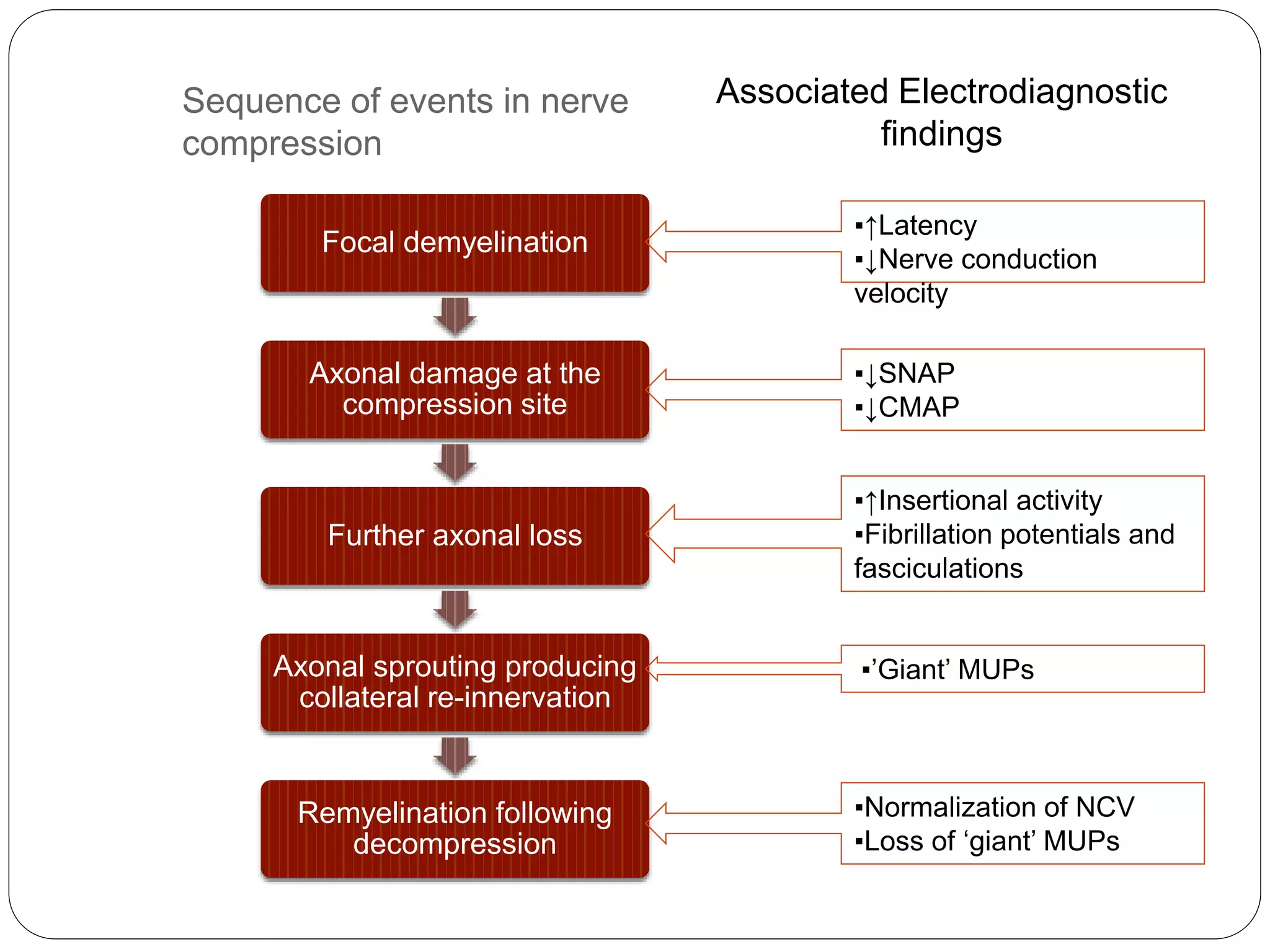
Sequence of events in nerve
compression
Focal demyelination
Axonal damage at the
compression site
Further axonal loss
Axonal sprouting producing
collateral re-innervation
Remyelination following
decompression
▪↑Latency
▪↓Nerve conduction
velocity
Associated Electrodiagnostic
findings
▪↓SNAP
▪↓CMAP
▪↑Insertional activity
▪Fibrillation potentials and
fasciculations
▪’Giant’ MUPs
▪Normalization of NCV
▪Loss of ‘giant’ MUPs
 Non-operative
-full passive range of motion in all
joints of the wrist and hand and
prevention of contractures, including
that of the thumb-index web
- splints
 wrist drop can be treated successfully
by splints
 Barkhalter has observed that grip
strength may be increased by 3 to 5
times by simply stabilizing the wrist
with splints
 Many types of splints have been
described
 Each patient individual need should
TREATMENT
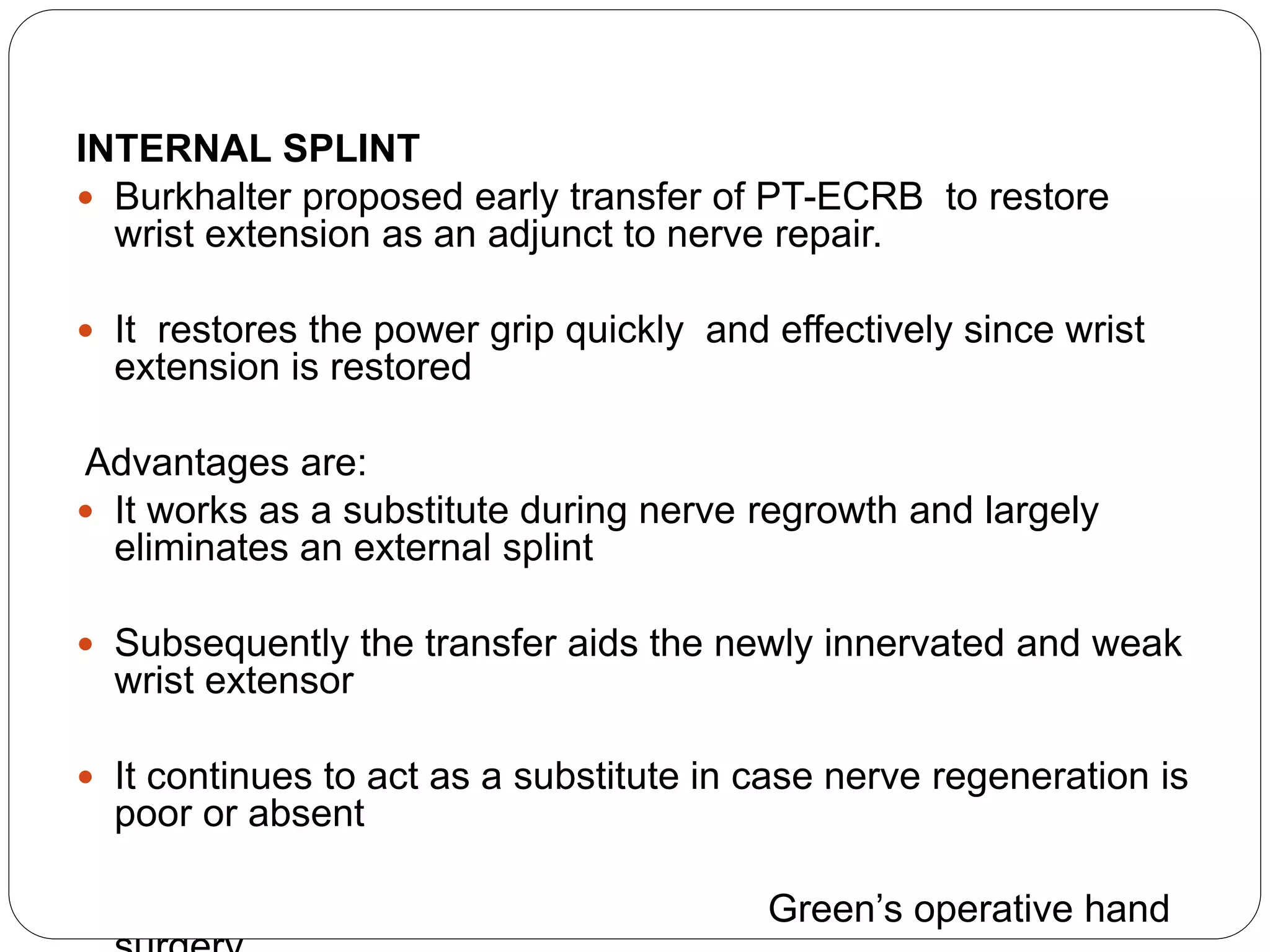
INTERNAL SPLINT
 Burkhalter proposed early transfer of PT-ECRB to restore
wrist extension as an adjunct to nerve repair.
 It restores the power grip quickly and effectively since wrist
extension is restored
Advantages are:
 It works as a substitute during nerve regrowth and largely
eliminates an external splint
 Subsequently the transfer aids the newly innervated and weak
wrist extensor
 It continues to act as a substitute in case nerve regeneration is
poor or absent
Green’s operative hand
 In a sharp injury exploration is indicated for diagnostic,
therapeutic and prognostic purposes
 In avulsion , blasting injures –to identification of the
nerve injury and making the ends of the nerve with
sutures for later repair.
 When a nerve deficit follows blunt or closed trauma,
and no clinical or electrical evidence of regeneration
has occurred after an appropriate time, exploration of
the nerve is indicated.
INDICATIONS FOR SURGERY
-primary repair gives the best result with respect to
motor,sensory recovery, is indicated in clean sharp nerve
injuries and carried out in first 6-8 hours.
-delayed,primary repair carried out between 7-18days -
primary repair fascicular alignment because of minimal
excision of the nerve ends.
-Secondary repair-preferable only in crushed,avulsed
injuries where patients life is seriously endangered.it is
done at delay of 3-6 wks.
Time of surgery
 Seddon has suggested the
maximum length of time that
may be required for motor
recovery to first manifest
itself can easily be calculated
by measuring the distance
on the x-ray from the fracture
site to the point of
innervation of the
brachioradialis muscle
(approximately 2 cm above
the lateral epicondyle)
Green's Operative Hand
Surgery
Nerve Exploration If No Return After a Longer
Waiting Period
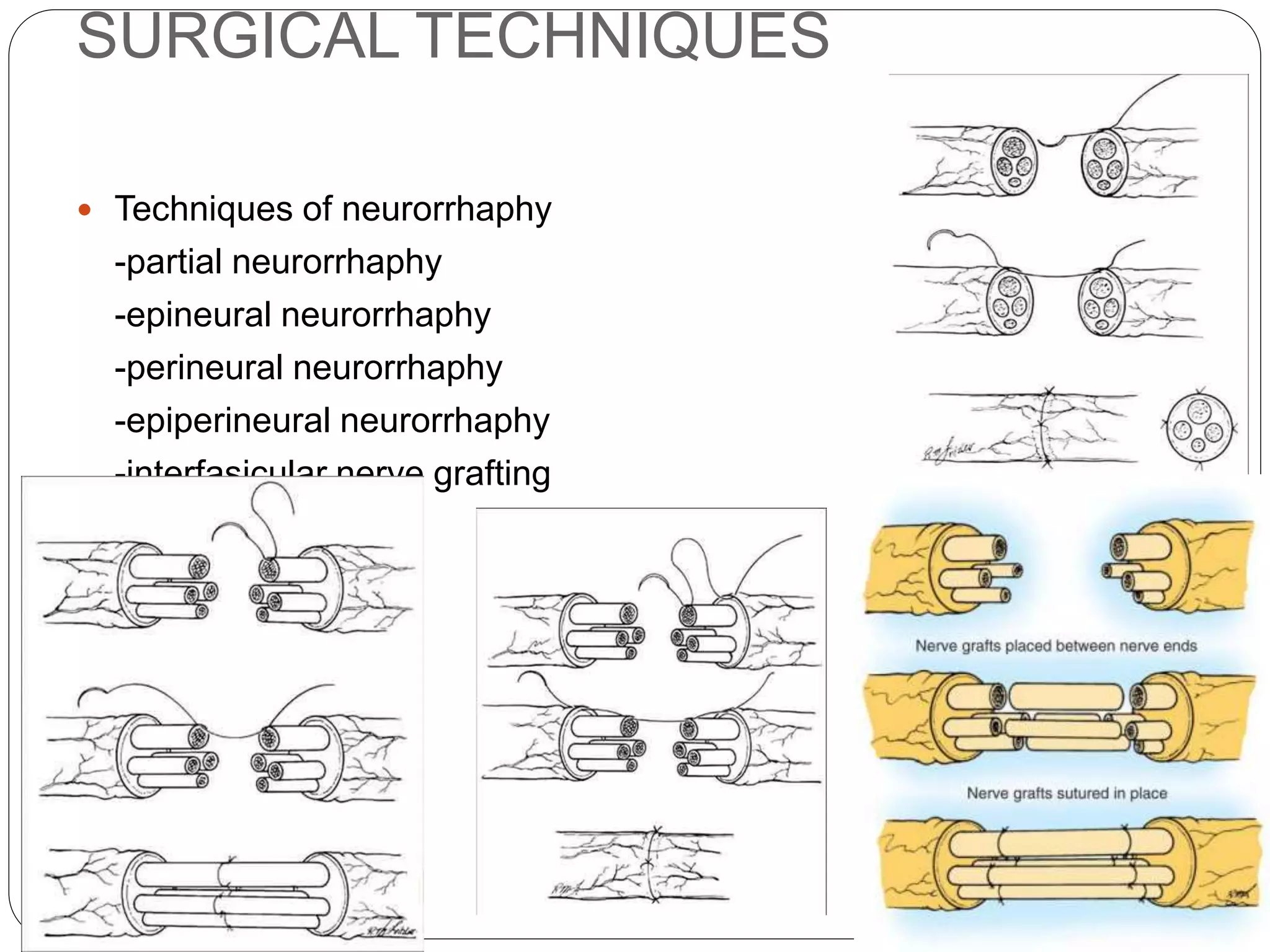
SURGICAL TECHNIQUES
 Techniques of neurorrhaphy
-partial neurorrhaphy
-epineural neurorrhaphy
-perineural neurorrhaphy
-epiperineural neurorrhaphy
-interfasicular nerve grafting
 Tendon transfers
 Arthodesis
 Tendon transfers work to correct:
 instability
 imbalance
 lack of co-ordination
 restore function by redistributing remaining
muscular forces
RECONSTRUCTIVE
PROCEDURES
 A patient with irreparable radial nerve palsy
needs to be provided with
(1) wrist extension.
(2) finger (metacarpophalangeal [MP] joint)
extension.
(3) a combination of thumb extension and
abduction.
Requirements in a Patient with Radial Nerve
Palsy
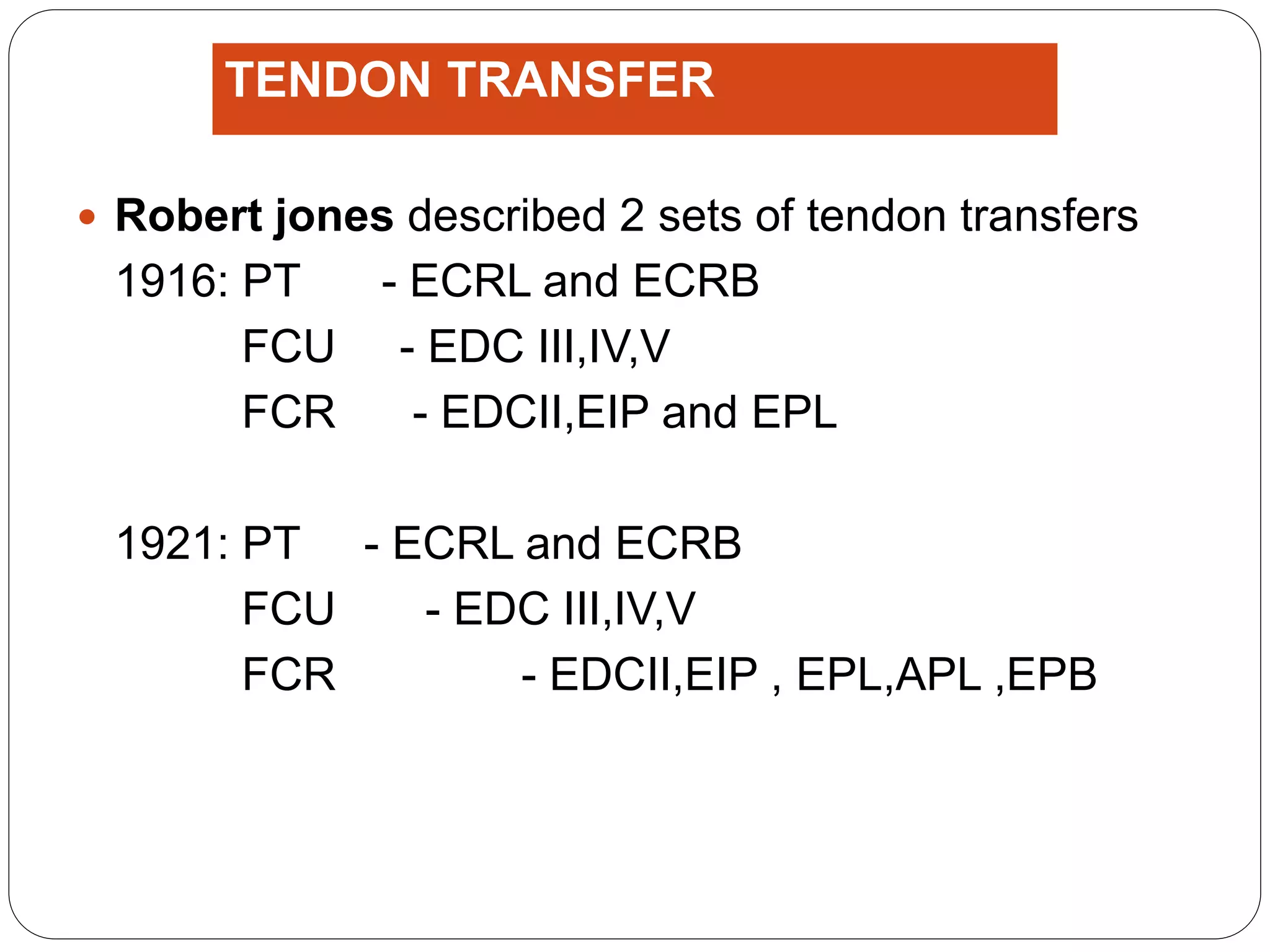
 Robert jones described 2 sets of tendon transfers
1916: PT - ECRL and ECRB
FCU - EDC III,IV,V
FCR - EDCII,EIP and EPL
1921: PT - ECRL and ECRB
FCU - EDC III,IV,V
FCR - EDCII,EIP , EPL,APL ,EPB
TENDON TRANSFER
Green’s operative hand surgery
Campbell’s operative orthopaedics
a long arm splint is applied that
 immobilizes the forearm in 15 to 30degrees of pronation.
 the wrist in approximately 45 degrees of extension.
 the MP joints in slight (10 to 15 degrees) flexion.
 the thumb in maximum extension and abduction.
 The proximal interphalangeal joints of the fingers are left
free.
The cast is removed 4 weeks postoperatively; removable
short arm splints to hold the wrist, fingers, and thumb in
extension are made, which the patient wears for an
additional 2 weeks, removing them only for exercise.
Postoperative Management
Radial Nerve
Compression
Syndromes
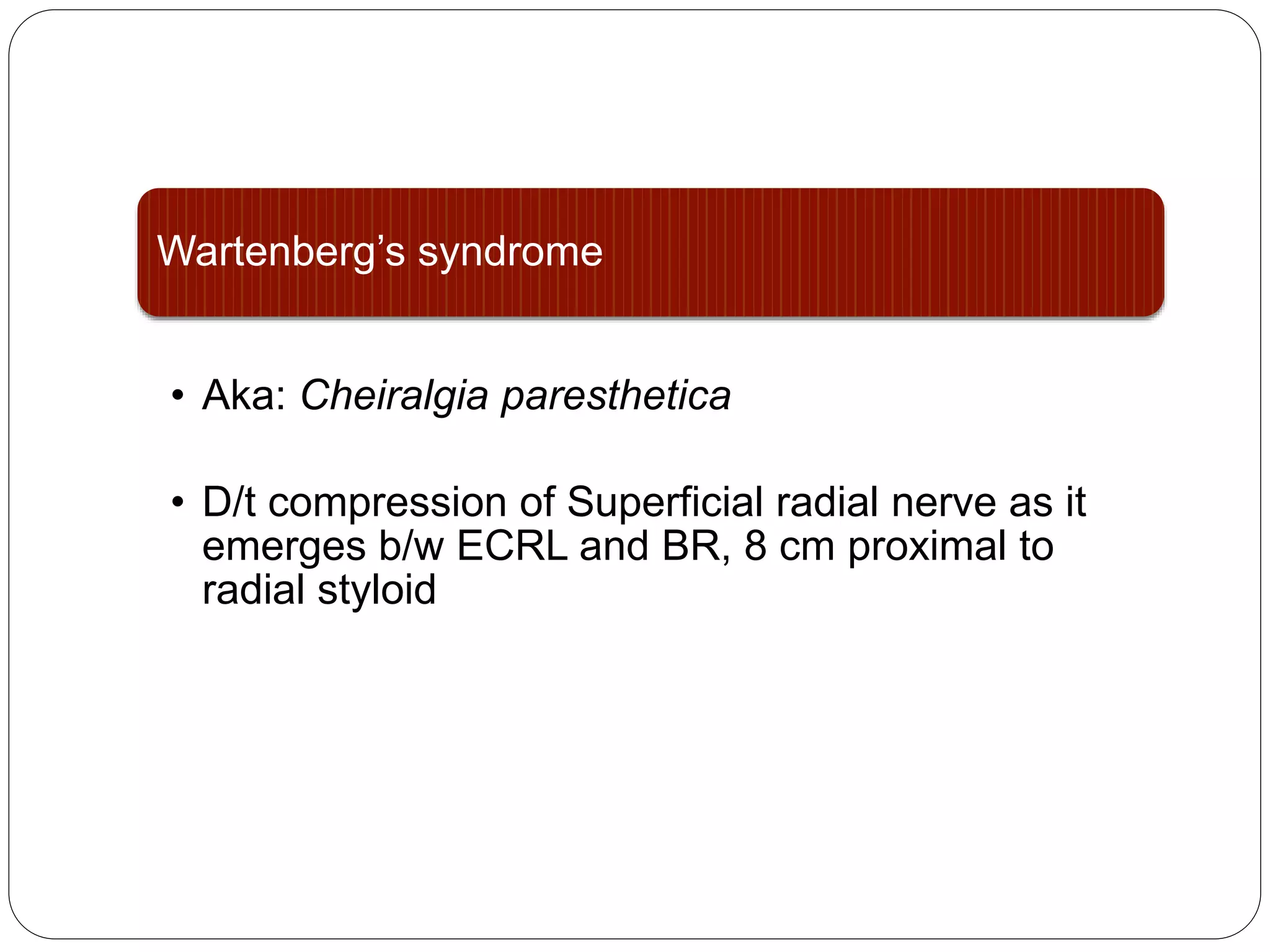
Wartenberg’s syndrome
• Aka: Cheiralgia paresthetica
• D/t compression of Superficial radial nerve as it
emerges b/w ECRL and BR, 8 cm proximal to
radial styloid
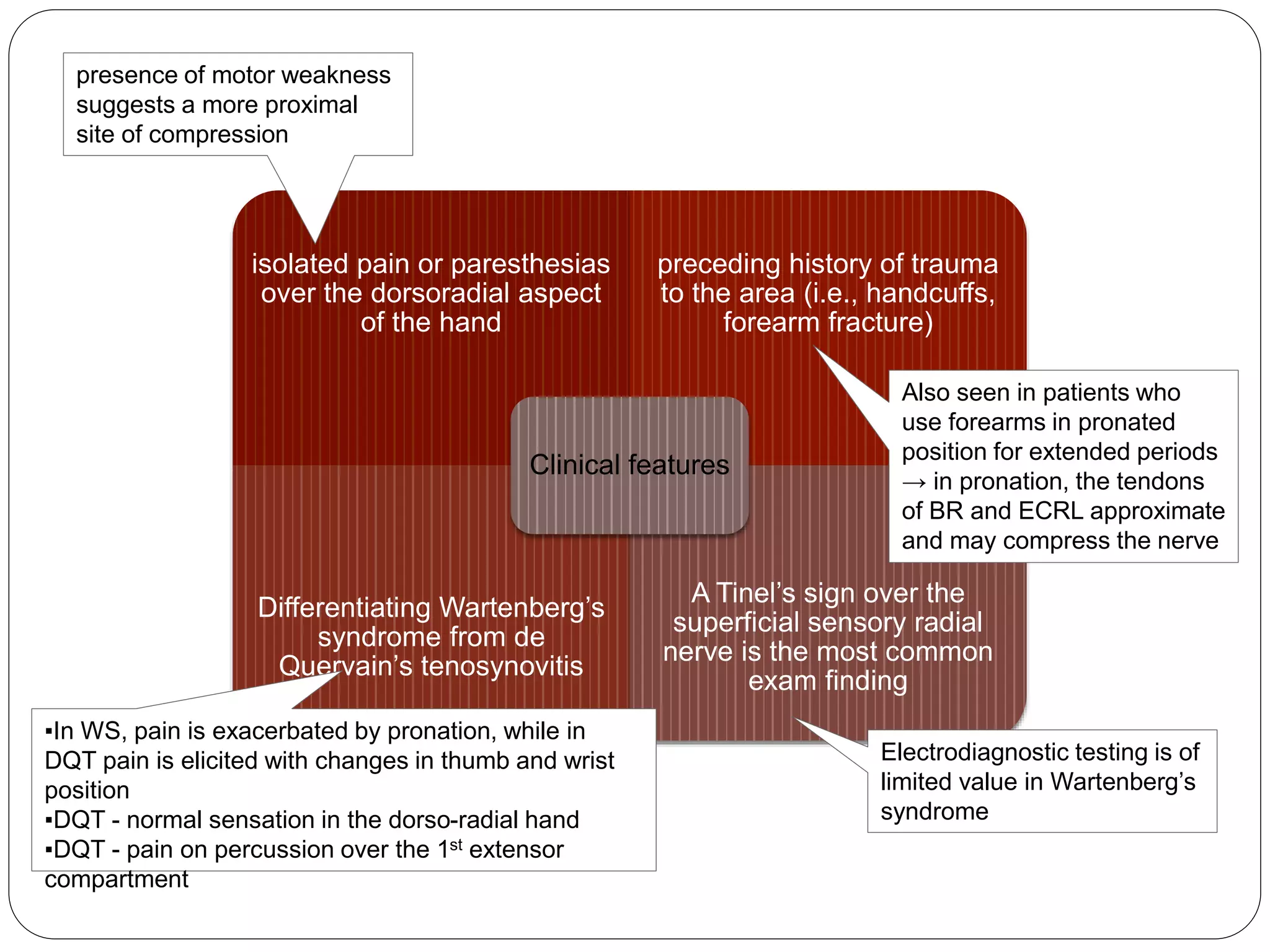
isolated pain or paresthesias
over the dorsoradial aspect
of the hand
preceding history of trauma
to the area (i.e., handcuffs,
forearm fracture)
Differentiating Wartenberg’s
syndrome from de
Quervain’s tenosynovitis
A Tinel’s sign over the
superficial sensory radial
nerve is the most common
exam finding
Clinical features
presence of motor weakness
suggests a more proximal
site of compression
Also seen in patients who
use forearms in pronated
position for extended periods
→ in pronation, the tendons
of BR and ECRL approximate
and may compress the nerve
▪In WS, pain is exacerbated by pronation, while in
DQT pain is elicited with changes in thumb and wrist
position
▪DQT - normal sensation in the dorso-radial hand
▪DQT - pain on percussion over the 1st extensor
compartment
Electrodiagnostic testing is of
limited value in Wartenberg’s
syndrome
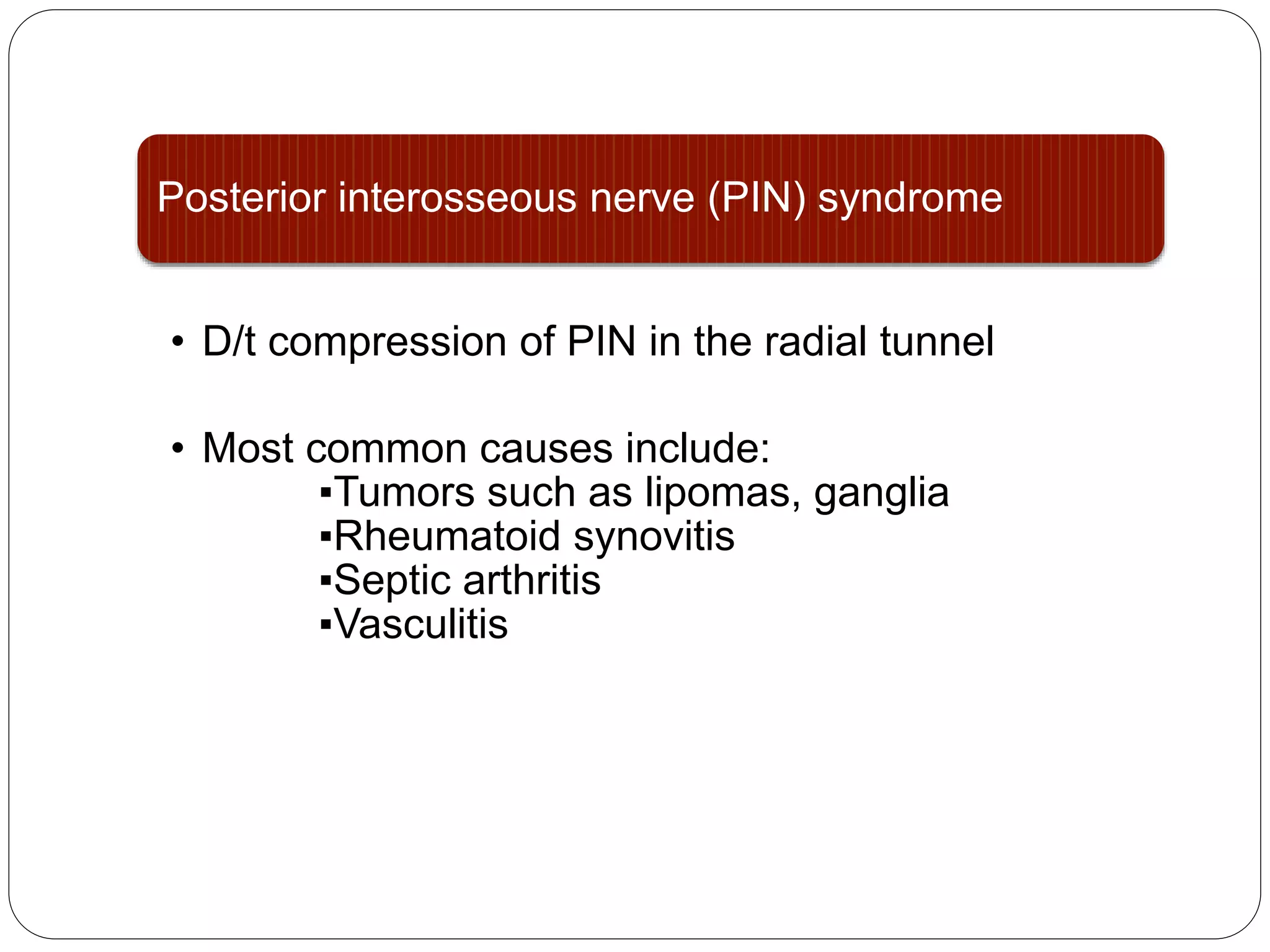
Posterior interosseous nerve (PIN) syndrome
• D/t compression of PIN in the radial tunnel
• Most common causes include:
▪Tumors such as lipomas, ganglia
▪Rheumatoid synovitis
▪Septic arthritis
▪Vasculitis
The radial tunnel is a 5 cm
space bounded by:
▪Dorsally: capsule of the
radiocapitellar joint
▪Volarly: the BR
▪Laterally: the ECRL and ECRB
muscles
▪Medially: the biceps tendon and
brachialis muscles
Within radial tunnel, there are 5
potential sites of compression:
▪fibrous bands to the
radiocapitellar joint between the
brachialis and BR
▪the recurrent radial vessels
(leash of Henry)
▪the proximal edge of the ECRB
▪the proximal edge of the
Supinator (arcade of Fröhse)
▪the distal edge of the Supinator
BR
Supinator
arcade of Fröhse
ECRL
PIN
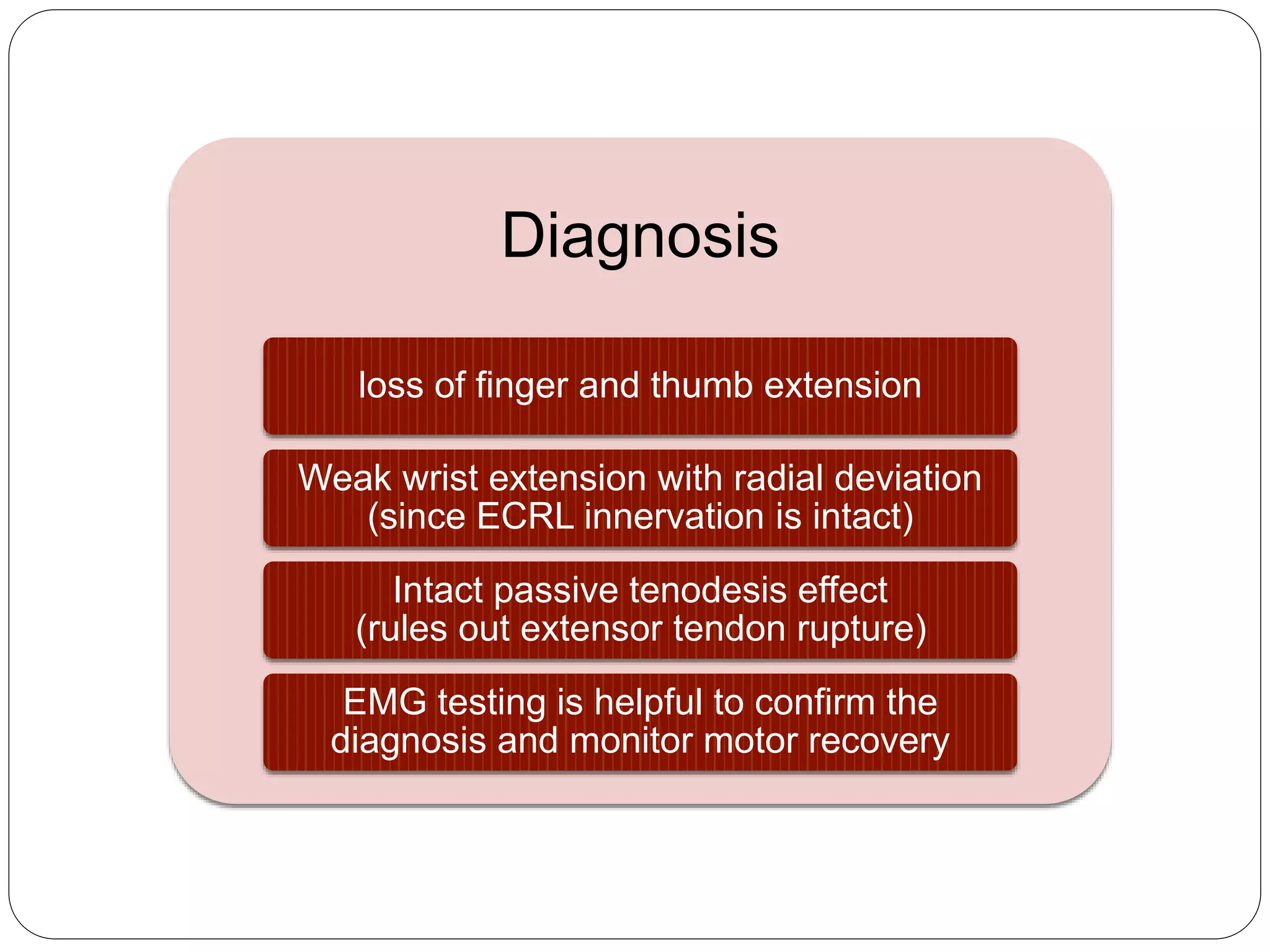
Diagnosis
loss of finger and thumb extension
Weak wrist extension with radial deviation
(since ECRL innervation is intact)
Intact passive tenodesis effect
(rules out extensor tendon rupture)
EMG testing is helpful to confirm the
diagnosis and monitor motor recovery
Radial Tunnel syndrome
• Similar to PIN syndrome, it is also d/t
compression of PIN in the radial tunnel
• Not considered a true compression neuropathy
by some
Radial Tunnel Syndrome is a clinical diagnosis
Radial Tunnel
Syndrome
Tenderness over
radial tunnel
(lateral proximal
forearm, 3-4 cm distal
to lateral epicondyle
over the mobile wad)
Pain at ECRB origin
with resistance of
middle finger
extension
Pain with resisted
forearm supination
↑ Pain on combined
elbow extension,
forearm pronation,
and wrist flexion
Transmuscular Brachioradialis-
Splitting Approach
Posterior (Henry or Thompson
Approach)
Anterior (Modified Henry)
Approach
THANK YOU

Radial nerve palsy

  • 1.
    RADIAL NERVE PALSY Dr ManojDas Ortho Resident Institute Of medicine, TUTH, Nepal
  • 2.
    • Largest branchof the brachial plexus • Arises from the posterior cord of the brachial plexus (C5–T1) • Mixed nerve Radial Nerve Anatomy
  • 3.
    Course of RadialNerve (RN) in the arm In the axilla, RN lies anterior to subscapularis, teres major and LD • Sensory supply: Posterior cutaneous nerve of arm RN leaves the axilla via the triangular space • Motor supply: long head of Triceps It then comes to lie along spiral groove on posterior aspect of humeral shaft along with arteria profunda brachii • Motor: medial and lateral heads of triceps, Anconeus • Sensory: posterior cutaneous nerve of forearm, lower lateral cutaneous nerve of arm
  • 4.
    RN then leavesthe spiral groove by piercing the lateral intermuscular septum to enter the anterior compartment of the arm, 10-12 cm above the lateral epicondyle • Motor supply: Brachialis (lateral part), BR, ECRL Anterior to lateral epicondyle, RN divides into its terminal branches • Terminal branches: Posterior Interosseous Nerve (PIN) and Dorsal or Superficial radial sensory nerve Here it lies b/w brachialis and BR
  • 5.
    Deep terminal branch→ Posterior interosseous nerve (PIN) Supinator EIP EDC and EDM ECU ECRB Superficial terminal branch Radial Nerve Proper EPL EPB APL PIN reaches the back of forearm by passing around the lateral aspect of the radius b/w the superficial and deep heads of the Supinator to supply all extensor compartment muscles Finally, PIN ends by supplying carpal joint sensation
  • 6.
    BR ECRL Dorsal Radial Sensory Nerve Dorsaldigital nerves Radial styloid 8 cm Dorsal radial nerve courses through the forearm immediately deep to the BR It emerges b/w tendons of BR and ECRL ≈ 8 cm proximal to radial styloid, to become subcutaneous It crosses the anatomical snuffbox b/w EPB and EPL, dividing into multiple branches to supply sensation to hand Course of Radial Nerve (RN) in the forearm
  • 7.
    Lower lateral cutaneous nerveof arm Posterior cutaneous nerve of arm Posterior cutaneous nerve of forearm Dorsal radial sensory nerve Gives sensibility to the dorsum of the hand over the radial two-thirds, the dorsum of the thumb, and the index, middle finger proximal to the distal interphalangeal joint. Cutaneous innervation from radial nerve
  • 8.
    - crutch palsy -aneursysm of axillary vessels Total palsy Aetiology and clinical features Very high radial nerve palsy Clinical features
  • 9.
    - # shaftof humerus -prolonged application of tourniquet -pressure on arm as in Saturday night paralysis -injections -from excessive callus formation of old fracture impinging on the nerve - Elbow extension spared - Lost: Wrist, thumb and finger extension; sensation over 1st web space High radial nerve palsy Clinical features
  • 10.
    -Dislocation of elbow -#neckof radius -Enlarged bursae -Rheumatoid synovitis of elbow -During operation for excision of radius head - Elbow extension spared with weak wrist extension and radial deviation - Lost – thumb , finger extension: sensory over dorsum of 1st web space Low radial nerve palsy Clinical features
  • 11.
  • 12.
    Mechanism of injury(e.g. sharp penetrating vs. blunt trauma) Timing of injury Loss of motor and sensory function Presence of pain Interval recovery of function in patients presenting late History
  • 13.
    Assessment of motorfunction Assessment of sensory function Assessment of involved joints Physical Examinatio n Individual muscles innervated by the nerve are tested to determine what is functioning and what is not: ▪Helps to determine the level of injury ▪Guides future surgical planning ▪Elicitation of Tinel’s sign ▪Specific sensory testing Each joint is taken through its passive range of motion to assess for suppleness → presence of fixed joint contractures in delayed presentations is associated with poor treatment outcomes
  • 14.
    Specific sensory tests TestPerception Main receptor Comments Static 2 point discrimination (2PD) Tactile Merkel cell ▪Evaluates sensory receptor innervation density ▪Normal distance: 6mm Moving 2PD Tactile Meissner corpuscle ▪Normal distance: 3mm Tuning fork (250 Hz) Vibration Pacinian corpuscle Tuning fork (30 Hz) Vibration Meissner Semmes-Weinstein monofilament test Pressure Merkel Ten test (moving light touch) Pressure Merkel ▪Reliability comparable to monofilament test Cold-heat test Temperature Free nerve endings•Changes in Vibration and Pressure thresholds are seen in early nerve compression but are unreliable for evaluating nerve lacerations •Changes in sensory receptor innervation density (2PD) are seen in chronic nerve compression but are reliable for evaluating nerve lacerations
  • 15.
    Commonly used EDT -Electromyography(EMG) -Nerve conduction studies (NCS) 1. Documentation of injury 2. Location of insult 3. Severity of injury 4. Recovery pattern 5. Prognosis 6. Objective data for impairment documentation 7. Pathology 8. Selection of optimal muscles for tendon transfer procedure Electrodiagnostic testing
  • 16.
    Limitations of EDT: ▪Evaluatesonly large myelinated fibres → smaller axons conveying pain and temperature are not assessed ▪Changes in unmyelinated nerve fibres, which are the first to be affected in nerve compressions, are not evaluated ▪Performing the test before 3-6 weeks post injury can give inaccurate results ▪Very proximal or distal nerve injuries are difficult to assess ▪Unreliable assessment of multi-level injuries ▪Examiner dependant
  • 17.
    Nerve conduction studies(NCS) 2 electrodes are placed along the course of the nerve. The first electrode stimulates the nerve to fire, and the second electrode records the generated action potential Amplitude • represents the size of the response • proportional to the number of depolarizing axons in the nerve Latency • the delay in response following stimulation Conduction velocity Sensory nerve action potential (SNAP) • Response obtained when the recording electrodes is placed proximally along the sensory nerve, toward the spinal cord Compound motor action potential (CMAP) • Response obtained when the recording electrodes is placed distally at the target muscle
  • 18.
    Electromyography (EMG) • Activityobserved when a needle electrode is inserted into the muscle Insertional activity • Seen when the muscle is at rest • Absent in normal muscles▪Fibrillation potentials ▪Fasciculations • Generated by the muscle during a voluntary contraction • Evaluates the integrity of neuro- muscular junction Motor unit potentials (MUPs)
  • 19.
    Sequence of eventsin nerve compression Focal demyelination Axonal damage at the compression site Further axonal loss Axonal sprouting producing collateral re-innervation Remyelination following decompression ▪↑Latency ▪↓Nerve conduction velocity Associated Electrodiagnostic findings ▪↓SNAP ▪↓CMAP ▪↑Insertional activity ▪Fibrillation potentials and fasciculations ▪’Giant’ MUPs ▪Normalization of NCV ▪Loss of ‘giant’ MUPs
  • 20.
     Non-operative -full passiverange of motion in all joints of the wrist and hand and prevention of contractures, including that of the thumb-index web - splints  wrist drop can be treated successfully by splints  Barkhalter has observed that grip strength may be increased by 3 to 5 times by simply stabilizing the wrist with splints  Many types of splints have been described  Each patient individual need should TREATMENT
  • 21.
    INTERNAL SPLINT  Burkhalterproposed early transfer of PT-ECRB to restore wrist extension as an adjunct to nerve repair.  It restores the power grip quickly and effectively since wrist extension is restored Advantages are:  It works as a substitute during nerve regrowth and largely eliminates an external splint  Subsequently the transfer aids the newly innervated and weak wrist extensor  It continues to act as a substitute in case nerve regeneration is poor or absent Green’s operative hand
  • 22.
     In asharp injury exploration is indicated for diagnostic, therapeutic and prognostic purposes  In avulsion , blasting injures –to identification of the nerve injury and making the ends of the nerve with sutures for later repair.  When a nerve deficit follows blunt or closed trauma, and no clinical or electrical evidence of regeneration has occurred after an appropriate time, exploration of the nerve is indicated. INDICATIONS FOR SURGERY
  • 23.
    -primary repair givesthe best result with respect to motor,sensory recovery, is indicated in clean sharp nerve injuries and carried out in first 6-8 hours. -delayed,primary repair carried out between 7-18days - primary repair fascicular alignment because of minimal excision of the nerve ends. -Secondary repair-preferable only in crushed,avulsed injuries where patients life is seriously endangered.it is done at delay of 3-6 wks. Time of surgery
  • 24.
     Seddon hassuggested the maximum length of time that may be required for motor recovery to first manifest itself can easily be calculated by measuring the distance on the x-ray from the fracture site to the point of innervation of the brachioradialis muscle (approximately 2 cm above the lateral epicondyle) Green's Operative Hand Surgery Nerve Exploration If No Return After a Longer Waiting Period
  • 28.
    SURGICAL TECHNIQUES  Techniquesof neurorrhaphy -partial neurorrhaphy -epineural neurorrhaphy -perineural neurorrhaphy -epiperineural neurorrhaphy -interfasicular nerve grafting
  • 29.
     Tendon transfers Arthodesis  Tendon transfers work to correct:  instability  imbalance  lack of co-ordination  restore function by redistributing remaining muscular forces RECONSTRUCTIVE PROCEDURES
  • 30.
     A patientwith irreparable radial nerve palsy needs to be provided with (1) wrist extension. (2) finger (metacarpophalangeal [MP] joint) extension. (3) a combination of thumb extension and abduction. Requirements in a Patient with Radial Nerve Palsy
  • 31.
     Robert jonesdescribed 2 sets of tendon transfers 1916: PT - ECRL and ECRB FCU - EDC III,IV,V FCR - EDCII,EIP and EPL 1921: PT - ECRL and ECRB FCU - EDC III,IV,V FCR - EDCII,EIP , EPL,APL ,EPB TENDON TRANSFER
  • 32.
  • 33.
  • 34.
    a long armsplint is applied that  immobilizes the forearm in 15 to 30degrees of pronation.  the wrist in approximately 45 degrees of extension.  the MP joints in slight (10 to 15 degrees) flexion.  the thumb in maximum extension and abduction.  The proximal interphalangeal joints of the fingers are left free. The cast is removed 4 weeks postoperatively; removable short arm splints to hold the wrist, fingers, and thumb in extension are made, which the patient wears for an additional 2 weeks, removing them only for exercise. Postoperative Management
  • 35.
  • 36.
    Wartenberg’s syndrome • Aka:Cheiralgia paresthetica • D/t compression of Superficial radial nerve as it emerges b/w ECRL and BR, 8 cm proximal to radial styloid
  • 37.
    isolated pain orparesthesias over the dorsoradial aspect of the hand preceding history of trauma to the area (i.e., handcuffs, forearm fracture) Differentiating Wartenberg’s syndrome from de Quervain’s tenosynovitis A Tinel’s sign over the superficial sensory radial nerve is the most common exam finding Clinical features presence of motor weakness suggests a more proximal site of compression Also seen in patients who use forearms in pronated position for extended periods → in pronation, the tendons of BR and ECRL approximate and may compress the nerve ▪In WS, pain is exacerbated by pronation, while in DQT pain is elicited with changes in thumb and wrist position ▪DQT - normal sensation in the dorso-radial hand ▪DQT - pain on percussion over the 1st extensor compartment Electrodiagnostic testing is of limited value in Wartenberg’s syndrome
  • 38.
    Posterior interosseous nerve(PIN) syndrome • D/t compression of PIN in the radial tunnel • Most common causes include: ▪Tumors such as lipomas, ganglia ▪Rheumatoid synovitis ▪Septic arthritis ▪Vasculitis
  • 39.
    The radial tunnelis a 5 cm space bounded by: ▪Dorsally: capsule of the radiocapitellar joint ▪Volarly: the BR ▪Laterally: the ECRL and ECRB muscles ▪Medially: the biceps tendon and brachialis muscles Within radial tunnel, there are 5 potential sites of compression: ▪fibrous bands to the radiocapitellar joint between the brachialis and BR ▪the recurrent radial vessels (leash of Henry) ▪the proximal edge of the ECRB ▪the proximal edge of the Supinator (arcade of Fröhse) ▪the distal edge of the Supinator BR Supinator arcade of Fröhse ECRL PIN
  • 40.
    Diagnosis loss of fingerand thumb extension Weak wrist extension with radial deviation (since ECRL innervation is intact) Intact passive tenodesis effect (rules out extensor tendon rupture) EMG testing is helpful to confirm the diagnosis and monitor motor recovery
  • 41.
    Radial Tunnel syndrome •Similar to PIN syndrome, it is also d/t compression of PIN in the radial tunnel • Not considered a true compression neuropathy by some
  • 42.
    Radial Tunnel Syndromeis a clinical diagnosis Radial Tunnel Syndrome Tenderness over radial tunnel (lateral proximal forearm, 3-4 cm distal to lateral epicondyle over the mobile wad) Pain at ECRB origin with resistance of middle finger extension Pain with resisted forearm supination ↑ Pain on combined elbow extension, forearm pronation, and wrist flexion
  • 43.
  • 44.
    Posterior (Henry orThompson Approach)
  • 45.
  • 46.

Editor's Notes

  • #21 Many types of splints have been designed for patients with radial nerve palsy, most of which offer some type of extension assist.A, In one of the less cumbersome designs, passive MP extension is provided by simple elastic webbing beneath the proximal phalanges.B, Active flexion of the PIP joints is not impeded
  • #34 Transfer of pronator teres (PT) to extensor carpi radialis brevis (ECRB), transfer of flexor carpi radialis (FCR) to extensor digitorum communis (EDC), and palmaris longus (PL) to rerouted extensor pollicis longus (EPL). A and B, Volar and dorsal incisions used in combination of transfers. Note short transverse incisions over thumb metacarpal joint dorsally and wrist volarly used in rerouting EPL. C, Transfer of PT into more centralized ECRB. PT insertion is harvested with 2- to 3-cm periosteal extension strip. D, FCR transfer to EDC. FCR motor tendon attachment at 45-degree angle into recipient tendon. E and F, Transfer of PL to rerouted EPL. By rerouting EPL out of its third extensor compartment, combination of thumb abduction and extension can be achieved.