Collecting, Storing and
Analyzing Big Data
trieunt@fpt.com.vn
tantrieuf31@gmail.com
Big Data Process Development
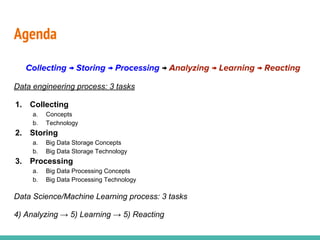
Agenda
Collecting → Storing → Processing → Analyzing → Learning → Reacting
Data engineering process: 3 tasks
1. Collecting
a. Concepts
b. Technology
2. Storing
a. Big Data Storage Concepts
b. Big Data Storage Technology
3. Processing
a. Big Data Processing Concepts
b. Big Data Processing Technology
Data Science/Machine Learning process: 3 tasks
4) Analyzing → 5) Learning → 5) Reacting
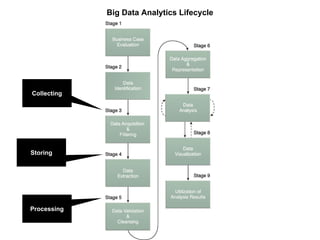
Big Data Analytics Lifecycle
Collecting
Storing
Processing
(Collecting) → Storing → Processing → Analyzing
→ Learning → Reacting
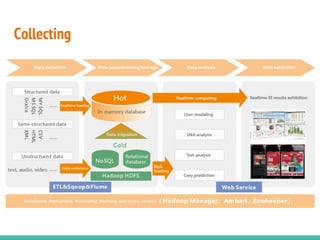
Collecting
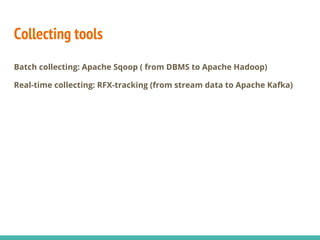
Collecting tools
Batch collecting: Apache Sqoop ( from DBMS to Apache Hadoop)
Real-time collecting: RFX-tracking (from stream data to Apache Kafka)
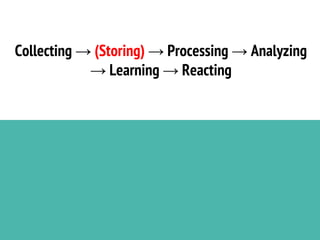
Collecting → (Storing) → Processing → Analyzing
→ Learning → Reacting
Storing Concepts
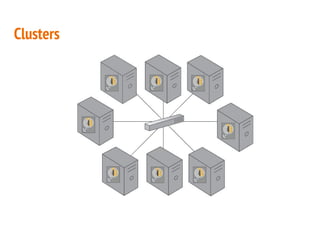
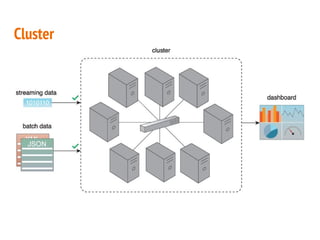
Clusters
File Systems and Distributed File Systems
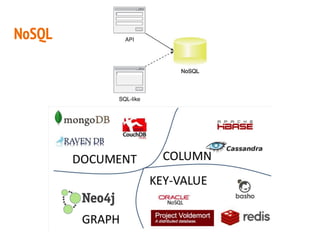
NoSQL
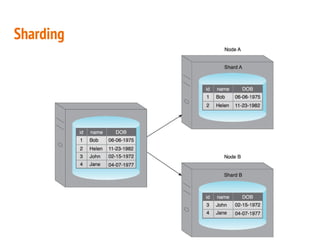
Sharding
Replication
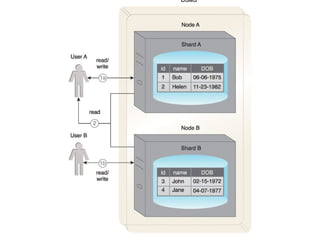
Sharding and Replication
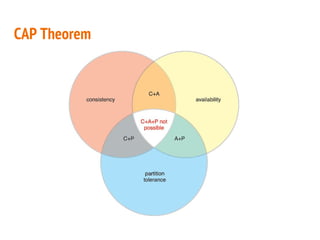
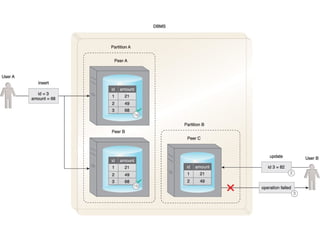
CAP Theorem
ACID
BASE
Clusters
NoSQL
Sharding
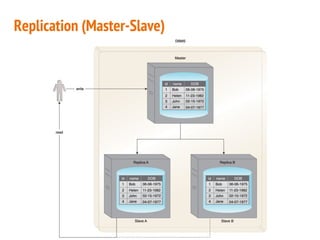
Replication (Master-Slave)
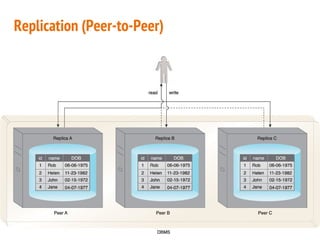
Replication (Peer-to-Peer)
CAP Theorem
Collecting → Storing → (Processing) → Analyzing
→ Learning → Reacting
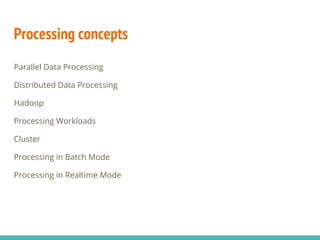
Processing concepts
Parallel Data Processing
Distributed Data Processing
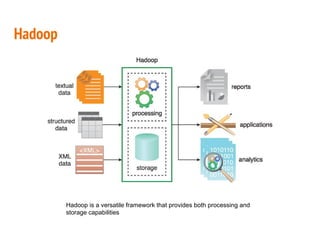
Hadoop
Processing Workloads
Cluster
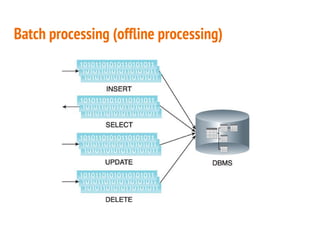
Processing in Batch Mode
Processing in Realtime Mode
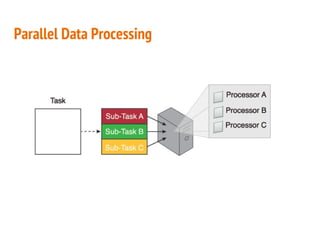
Parallel Data Processing
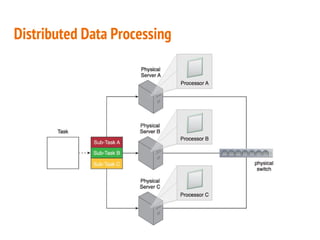
Distributed Data Processing
Hadoop
Hadoop is a versatile framework that provides both processing and
storage capabilities
Batch processing (offline processing)
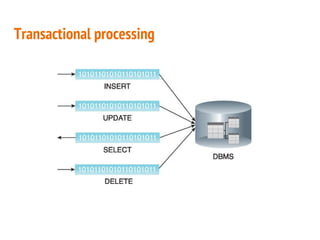
Transactional processing
Cluster
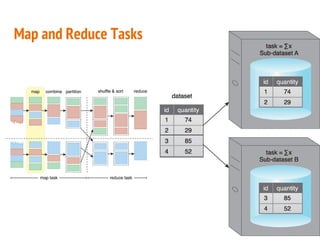
Map and Reduce Tasks
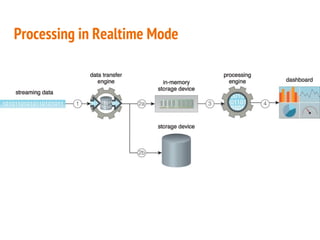
Processing in Realtime Mode
Tools
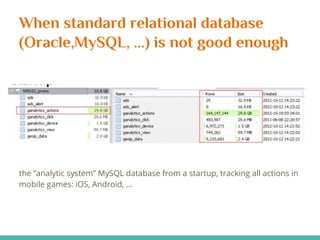
When standard relational database
(Oracle,MySQL, ...) is not good enough
the “analytic system” MySQL database from a startup, tracking all actions in
mobile games: iOS, Android, ...
3 common problems in Big Data System
1. Size: the volume of the datasets is a critical factor.
2. Complexity: the structure, behaviour and permutations of the datasets is
a critical factor.
3. Technologies: the tools and techniques which are used to process a
sizable or complex dataset is a critical factor.
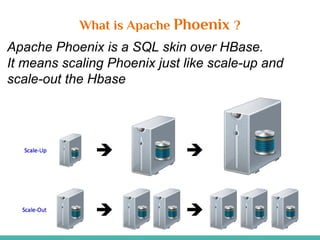
What is Apache Phoenix ?
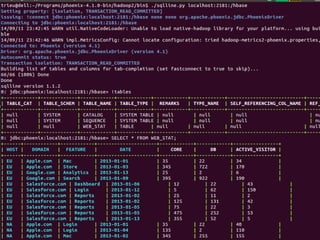
Apache Phoenix is a SQL skin over HBase.
It means scaling Phoenix just like scale-up and
scale-out the Hbase
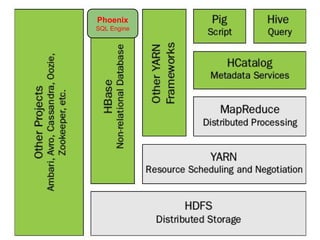
Phoenix
SQL Engine
Interesting features of Apache Phoenix
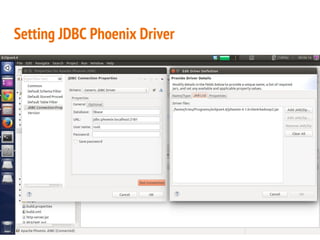
● Embedded JDBC driver implements the majority of java.sql interfaces, including
the metadata APIs.
● Allows columns to be modeled as a multi-part row key or key/value cells.
● Full query support with predicate push down and optimal scan key formation.
● DDL support: CREATE TABLE, DROP TABLE, and ALTER TABLE for
adding/removing columns.
● Versioned schema repository. Snapshot queries use the schema that was in
place when data was written.
● DML support: UPSERT VALUES for row-by-row insertion, UPSERT SELECT for
mass data transfer between the same or different tables, and DELETE for
deleting rows.
● Limited transaction support through client-side batching.
● Single table only - no joins yet and secondary indexes are a work in progress.
● Follows ANSI SQL standards whenever possible
● Requires HBase v 0.94.2 or above
● 100% Java
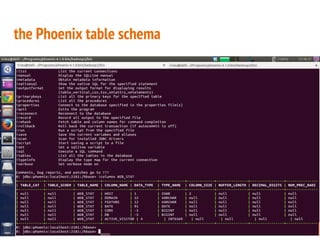
the Phoenix table schema
Setting JDBC Phoenix Driver
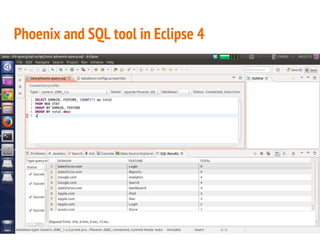
Phoenix and SQL tool in Eclipse 4
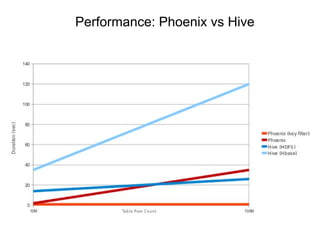
Phoenix vs Hive
(running over HDFS and HBase)
http://phoenix.apache.org/performance.html
Performance: Phoenix vs Hive
Readings
1. https://medium.baqend.com/real-time-stream-processors-a-survey-and-d
ecision-guidance-6d248f692056#.s00ac9xtu
2. https://medium.baqend.com/nosql-databases-a-survey-and-decision-guid
ance-ea7823a822d#.pn63unwx6
3. https://www.infoq.com/articles/apache-kafka
4. https://docs.google.com/document/d/1ZtEhLw3lrQSeNWVEJkKLLy8B8t9zA
0MGRqmCOV3_hsA/edit?usp=sharing

Slide 2 collecting, storing and analyzing big data