The document discusses the transition from a commodity-based economy to an experience economy, emphasizing the importance of creating meaningful customer experiences that go beyond mere transactions. It highlights the frameworks for developing and staging experiences, including concepts like personalization, storytelling, and engagement across various sensory dimensions. Ultimately, it delineates strategies for businesses to innovate and design compelling experiences that resonate with consumers' emotions and desires.
Introduction to the Experience Economy, its significance in the 21st century, and an agenda covering its development and elements.
Overview of the historical evolution from commodities to experiences, including contributions from key authors.
Factors driving the experience economy include rising consumer demands, commoditization, and economic progression from products to experiential services.
Exploration of how experiences add value to products, emphasizing branding, storytelling, and events.
Examples illustrating branding events and storytelling principles that enhance emotional connections and consumer engagement.
The process of creating experiences involves sensory perceptions, emotions, and the formation of meaningful experiences.
The quest for meaningful experiences, integrating psychological models to explain consumer motivations.
Framework for selling experiences using realms models, explaining dimensions of customer engagement in entertainment and education.
Five crucial stages for developing experiences ranging from innovation to understanding the economic implications.
Principles for designing experiential settings that engage consumers' senses and create memorable moments.
Experience Economy
Agenda:
âą Backgroundfor the development: From commodity
to experience
âą Indirect use of experiences: Experience as value
adding
âą Experience process
âą Selling pure experiences: Using the experience realm
model
âą How to develop experiences
âą Creating the experience settings
Historical development
âą AlvinToffler: First author to define the concept
In âFuture Shockâ from 1970: âFrom a system
designed to provide material satisfaction, we are
rapidly creating a new economy geared to the
provision of psychic gratificationâ
âą Gerhard Schultze describes a development in
society based on experiences, hobbies and values
in âErleibnisgemeinschaftâ in 1992
âą First management book in 1999: The experience
Economyâ by Joseph Pine & James Gillmore
5.
The Pine &Gillmore contribution
âą Presenting a business view on the experience concept
(and a way to avoid commoditization)
âą Introducing experiences as a source of economic value
âą Separating services and experiences
âą Using a theatre metaphor to explain their points
âą Providing tools to identify and develop experiences
Their definition:
Companies stage meaningful events to engage
customers in a memorable and personal way
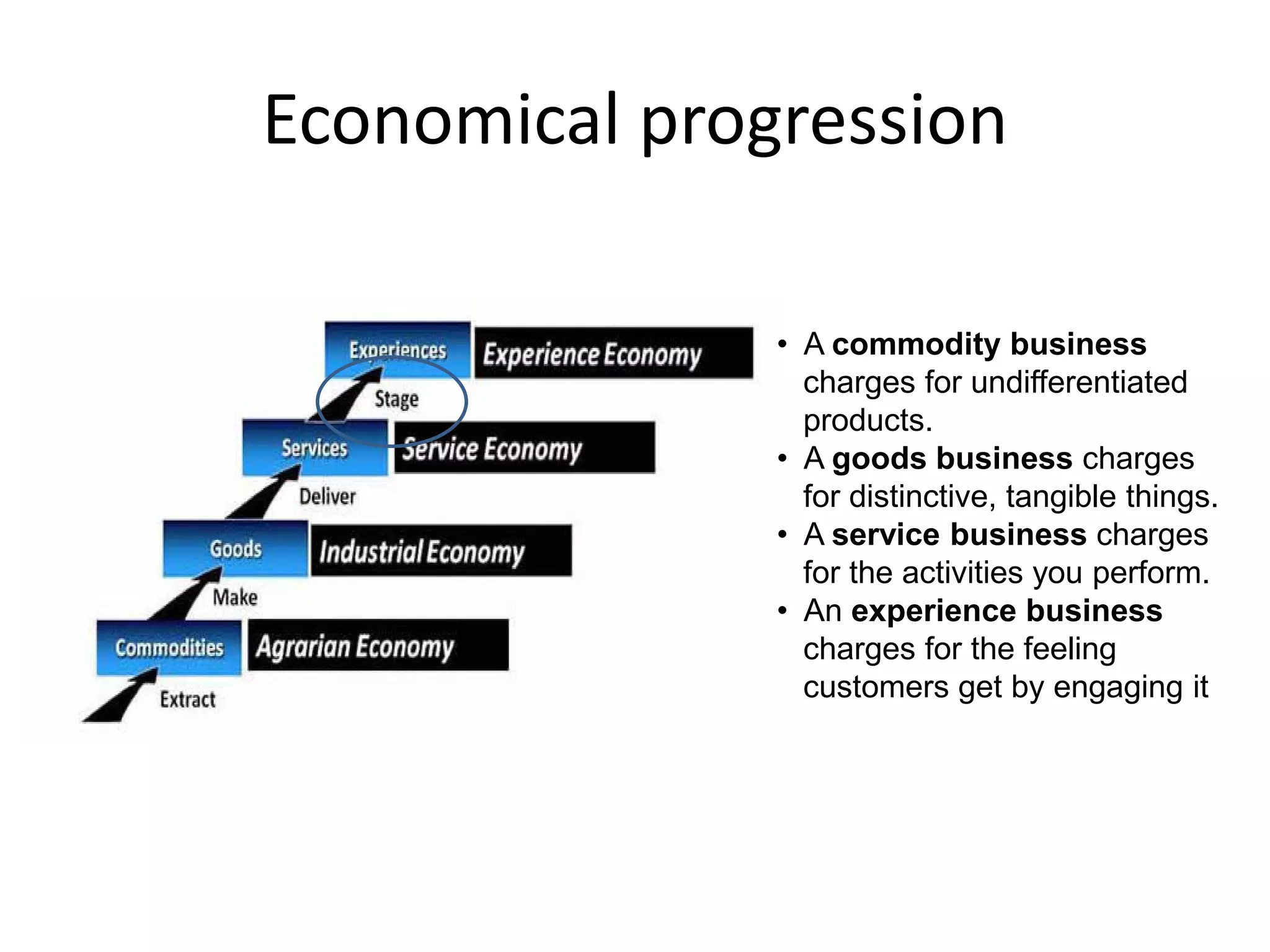
Economical progression
âą Acommodity business
charges for undifferentiated
products.
âą A goods business charges
for distinctive, tangible things.
âą A service business charges
for the activities you perform.
âą An experience business
charges for the feeling
customers get by engaging it
Indirect use ofexperience economy:
Experience as value adding
10.
Producers
1. Direct
- theexperience is the business idea
- theme parks, movies, concerts,
tourism, computer games etc.
2. Indirect
- experience is added to the physical
product (value adding)
- Emotional state achieved by owning or using product
Tools: branding, story telling, events, customization
11.
Indirect use ofexperience economy
Companies need to focus on:
âą Building a strong Brand
âą Personalizing products: Customization
âą Telling a story
âą Staging events
12.
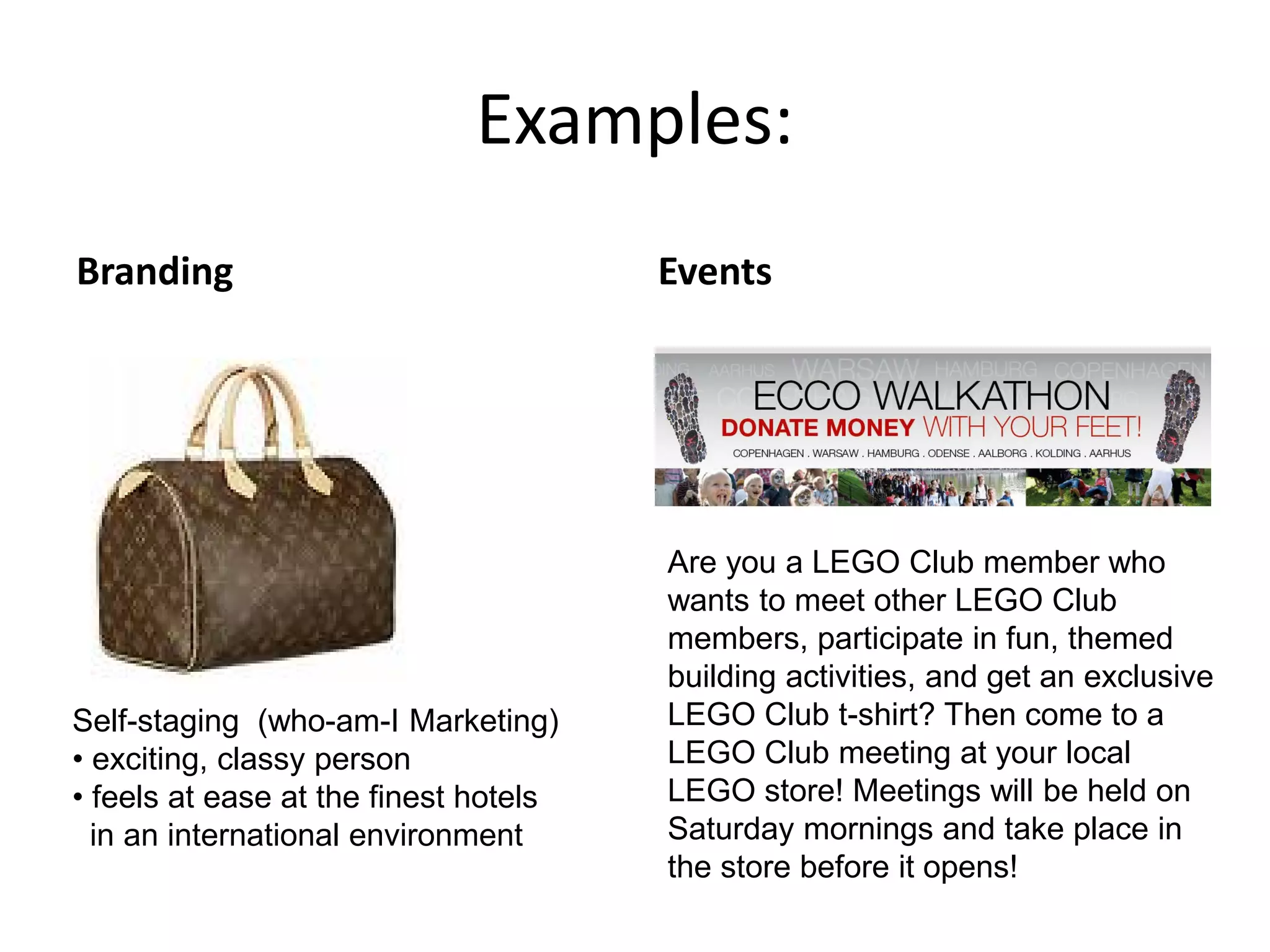
Examples:
Branding Events
Are youa LEGO Club member who
wants to meet other LEGO Club
members, participate in fun, themed
building activities, and get an exclusive
LEGO Club t-shirt? Then come to a
LEGO Club meeting at your local
LEGO store! Meetings will be held on
Saturday mornings and take place in
the store before it opens!
Self-staging (who-am-I Marketing)
âą exciting, classy person
âą feels at ease at the finest hotels
in an international environment
13.
Examples:
Story telling
It allstarted in New Yorkâs Greenwich Village in
1972. Childhood friends Leonard Marsh, Hyman
Golden and Arnold Greenburg saw more potential
in fruit than just something to throw in the
lunchroom. But where did they get the name
Snapple? It actually came from a carbonated apple
soda that was part of the original beverage line.
The soda had a great snappy apple taste. Now
thatâs cleverness at its best. Fast forward to the era
of hair bands and acid-washed jeans. Weâre
talking 1987, my friends. Thatâs when Snapple teas
were born. Today, Snapple produces more than 50
varieties of teas, juice drinks and flavored waters â
all Made from the Best Stuff on Earth.
Customization
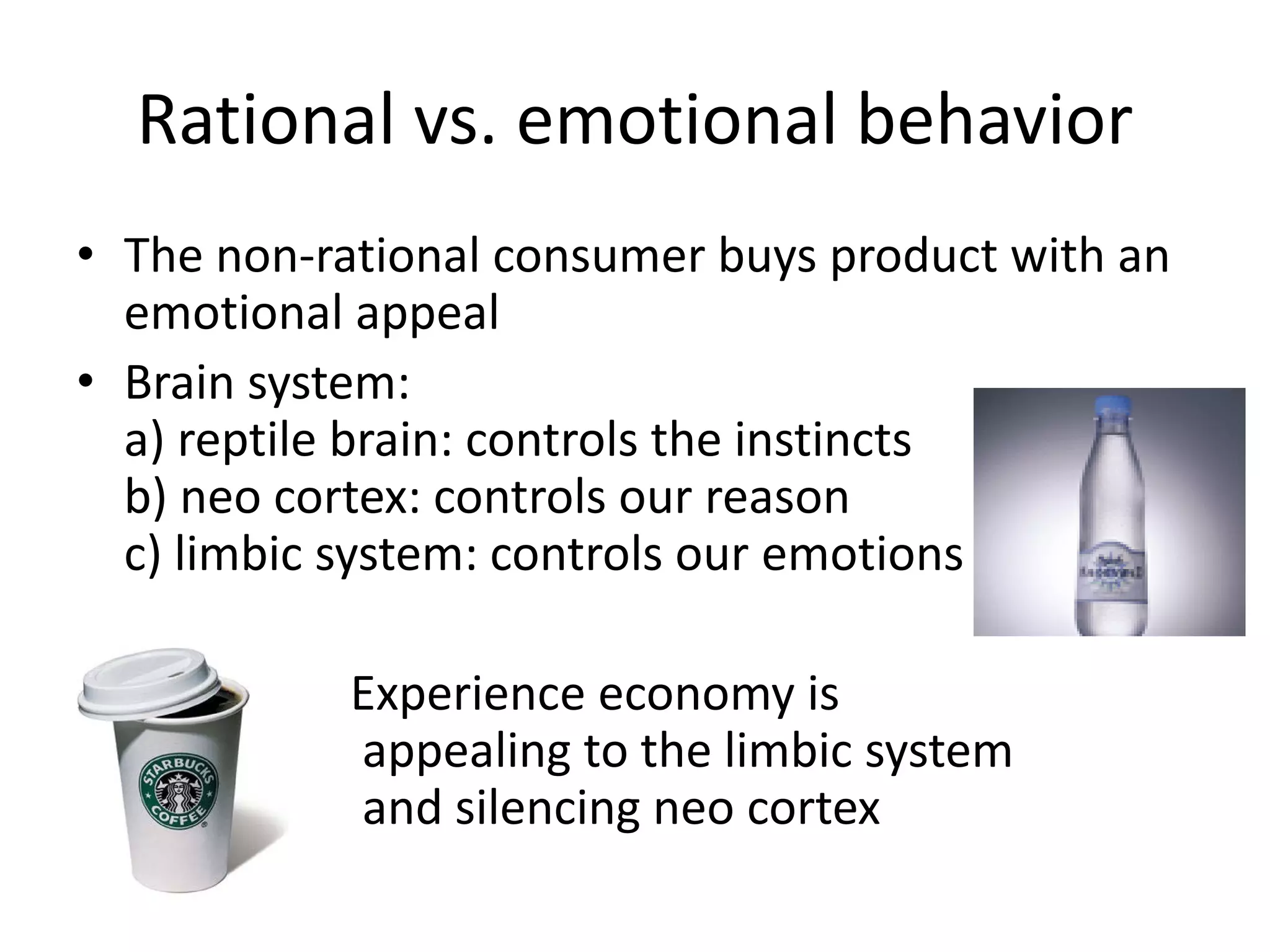
Rational vs. emotionalbehavior
âą The non-rational consumer buys product with an
emotional appeal
âą Brain system:
a) reptile brain: controls the instincts
b) neo cortex: controls our reason
c) limbic system: controls our emotions
Experience economy is
appealing to the limbic system
and silencing neo cortex
16.
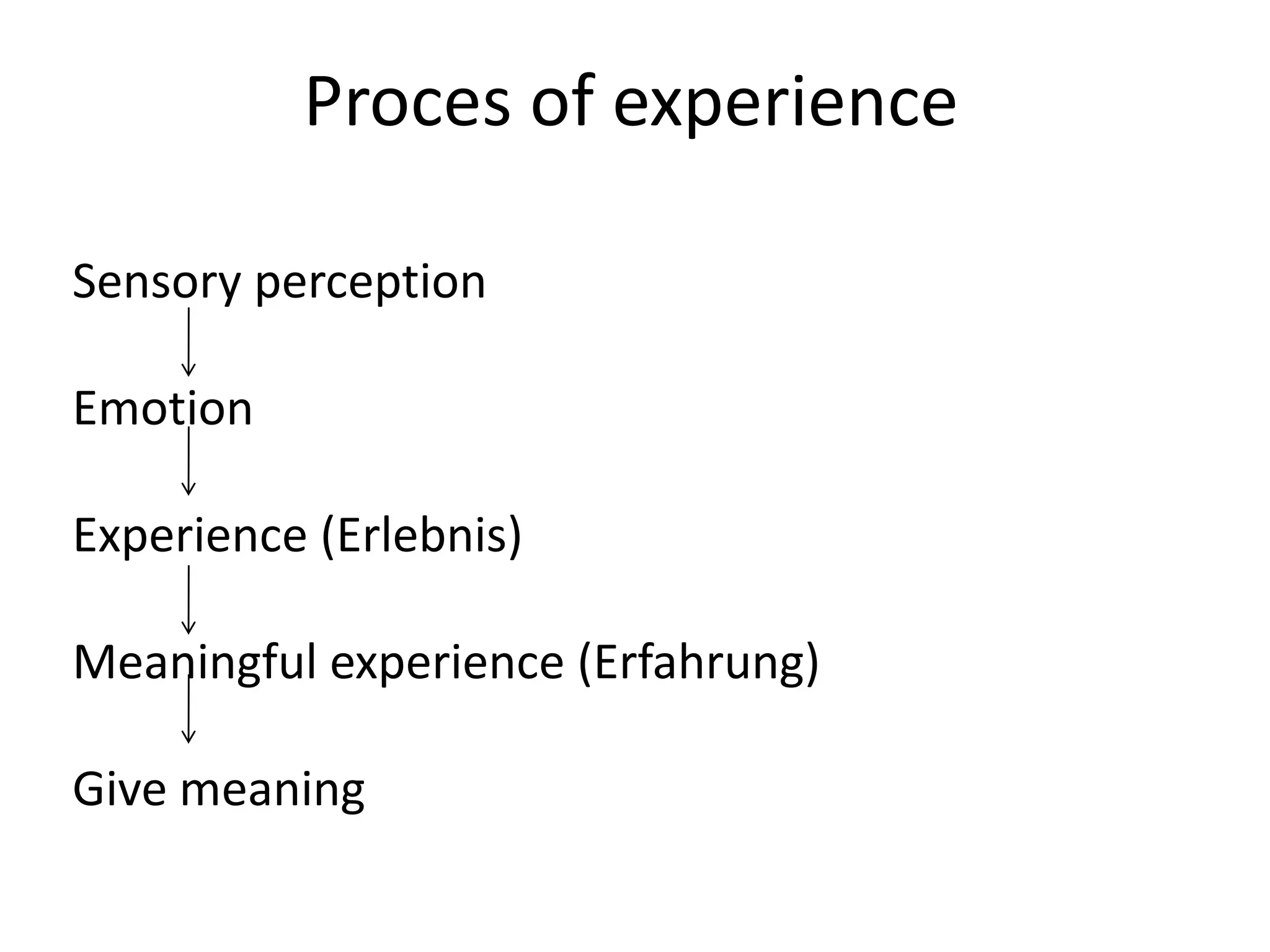
Proces of experience
Sensoryperception
Emotion
Experience (Erlebnis)
Meaningful experience (Erfahrung)
Give meaning
17.
Sensory perception andemotions
âą Use of the senses in creating experiences (sight,
hear, smell, taste, touch)
âą Hierarchy of senses â useful to establish
âą Senses lead to emotions (a way of dealing with the
world)
âą Emotions are part of the evaluation process
âą Mental state has a big impact on emotions
18.
Experience and meaningfulexperience
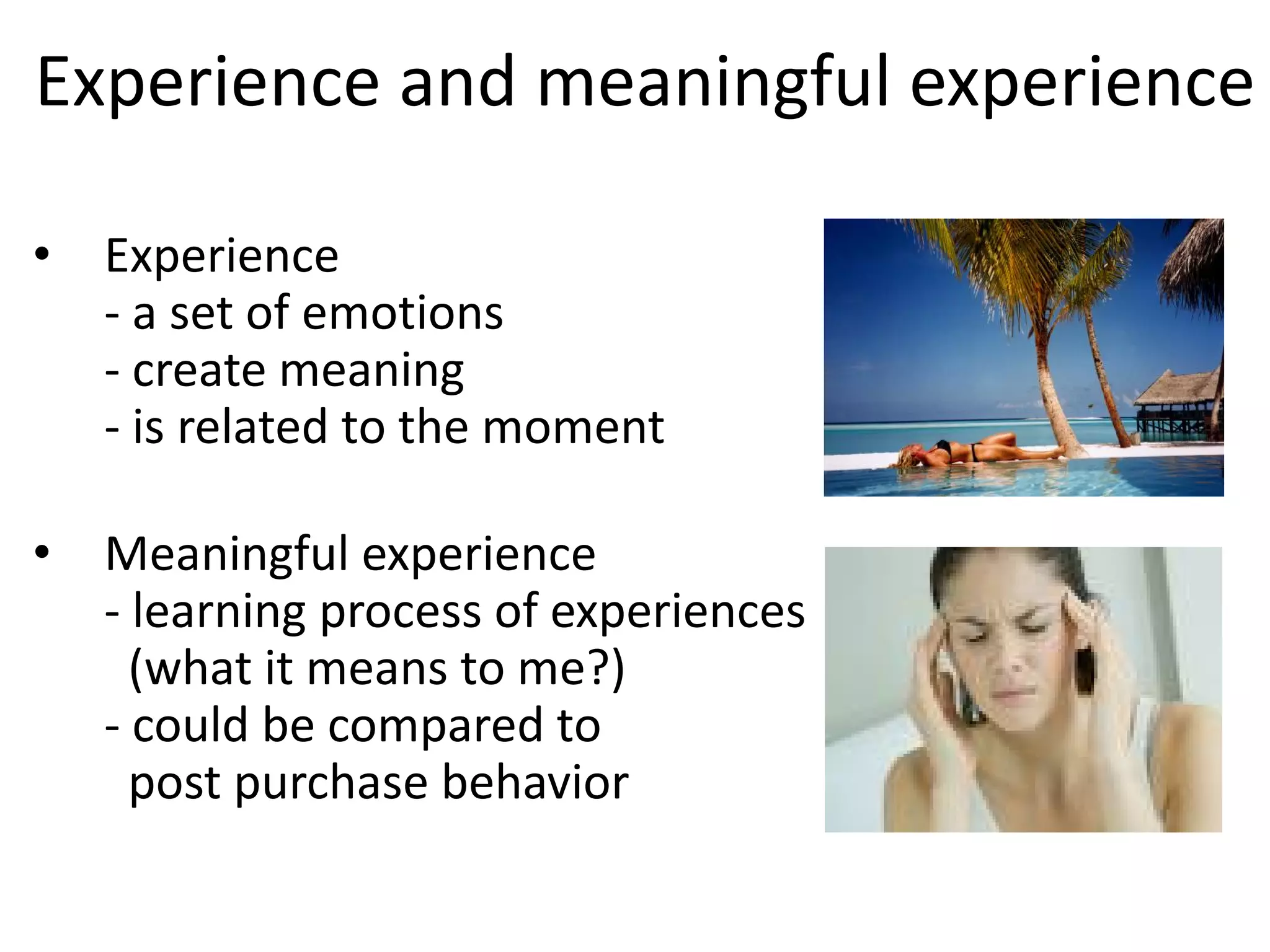
âą Experience
- a set of emotions
- create meaning
- is related to the moment
âą Meaningful experience
- learning process of experiences
(what it means to me?)
- could be compared to
post purchase behavior
19.
Motivation
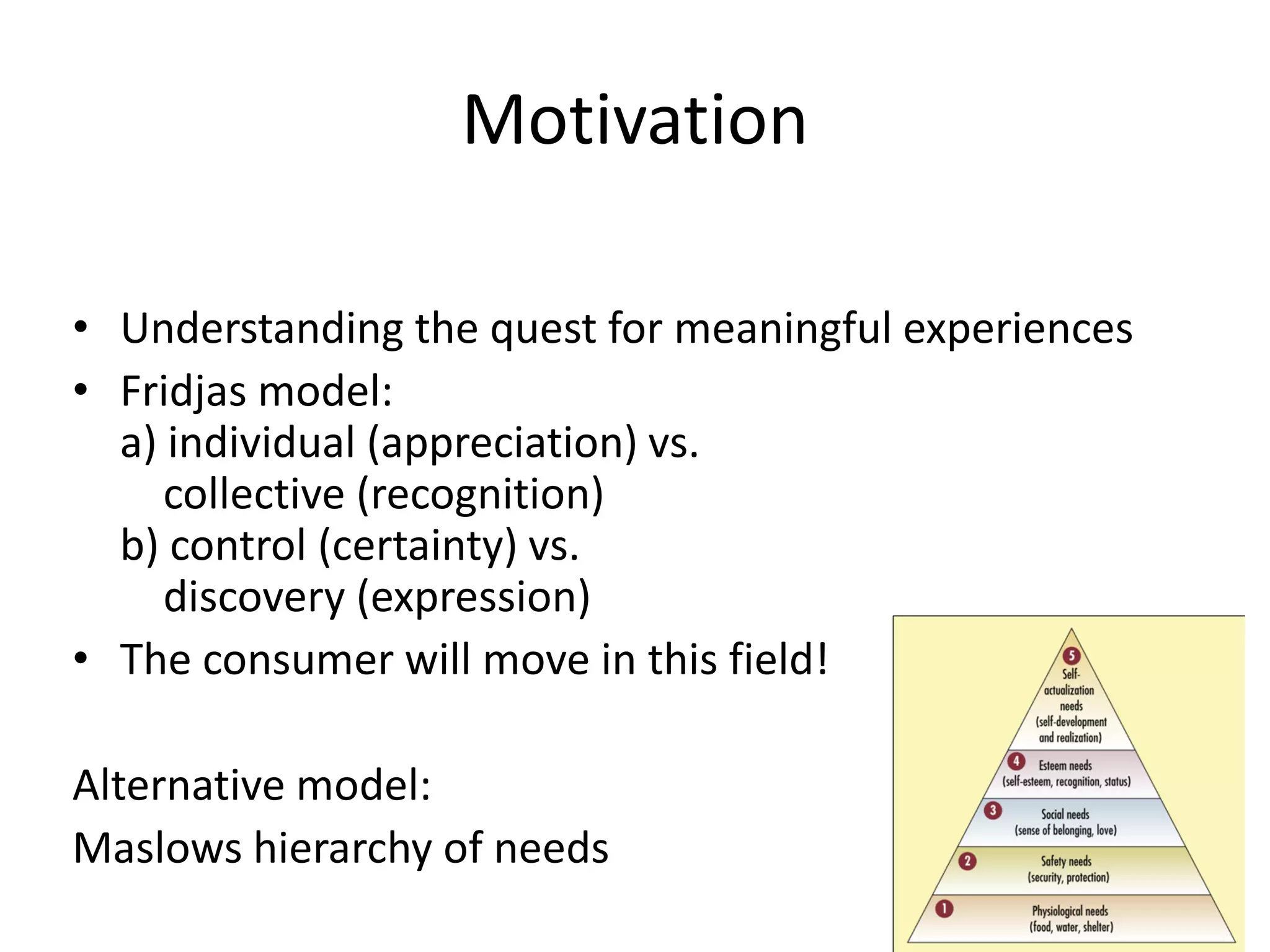
âą Understanding thequest for meaningful experiences
âą Fridjas model:
a) individual (appreciation) vs.
collective (recognition)
b) control (certainty) vs.
discovery (expression)
âą The consumer will move in this field!
Alternative model:
Maslows hierarchy of needs
20.
Conclusion: Meaningful experience
Includethe following characteristics:
âą They involve all senses
âą High degree of focus and concentration
âą A loss of time and place
âą Being emotionally touched
âą A unique and valuable process
âą Being in contact with the environment
Dimensions
An experience canengage customers based
on two dimensions:
âą Degree of customer participation
passive - observe, listen; do not affect the experience
active â affects and takes part in the experience
âą Customers relation to the experience
absorption â experience âgoes intoâ the customer
immersion â customer âgoes intoâ the experience
Entertainment
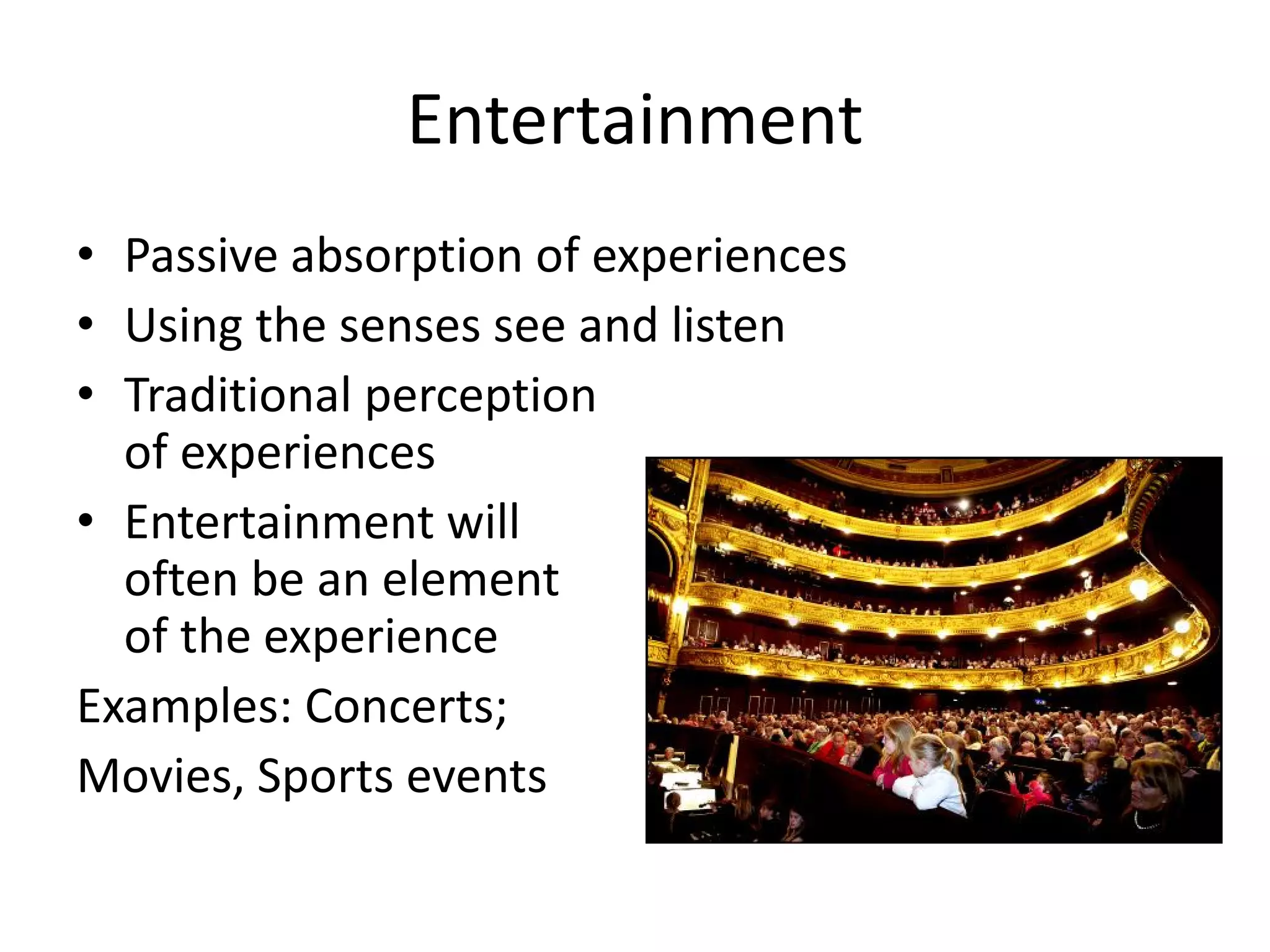
âą Passive absorptionof experiences
âą Using the senses see and listen
âą Traditional perception
of experiences
âą Entertainment will
often be an element
of the experience
Examples: Concerts;
Movies, Sports events
25.
Education
âą Active absorptionof knowledge by engaging the
intellect or the body (training)
âą Is often seen as serious experiences (you learn
something or is developed physically)
âą a fusion with entertainment is becoming
popular (edutainment)
Examples: Fitness, Courses, Museums
26.
Escapism
âą Active immersion;customer becomes part of the
experience; the experience can be affected
âą Customer participates in activities, where you
forget about time and place
âą The most development is seen within this area
Examples: Amusement parks;
Extreme sport; Gambling;
Cyberspace
27.
Esthetic
âą Passive immersion;no influence on the
experience
âą Special moments of enjoyment to remember
âą The environment is unchanged; only the
customer is affected
âą Is often related to art and nature
28.
Major points
âą Entertainment:Is about sensing
âą Education: Is about learning
âą Escapism: Is about doing
âą Esthetic: Is about being there
Objectives:
âą Expanding the experience by adding more realms
âą The ultimate experience includes all four realms
(the sweet spot)
Five stages ofdeveloping experiences
1. Innovation and creativity: Idea stage
2. Developing experience proposition: Design stage
3. Internal processes and core competencies: How it
affects organization
4. People and culture: The people who makes it
happen
5. The business model: How money is earned
31.
Stage 1: Ideastage
Objective: Find new concepts; improving
existing concepts
Creative thinking: break through existing
patterns of thinking (âstep into lunacyâ)
Methods:
âą Brainstorming
âą Association techniques
âą Power of imagination
Check your ideas with questions on page 171-173
32.
Stage 2: Designstage
âą Pine & Gillmore focus on 5 principles in
designing experiences
Important principles:
1. Use a theme
2. Use positive cues
3. Avoid negative cues
4. Include memorabilia
5. Engage all five senses
33.
Stage 2: Designstage
Another approach is developing on the value
chain by creating a customer experience
chain (also related to buying process)
âą Determine the sequences of stages that a
customer goes through
âą Determine needs, considerations, emotions
and impressions
âą Design your offer
34.
Stage 2: Designstage
Customer experience chain (booking a holiday)
1. Getting the idea (inspiration)
2. Finding information
3. Choosing between options
4. Booking the trip
5. Preparing for the trip
6. Taking the trip
7. Enjoying the memory of the trip
8. Getting a new idea
35.
Stage 3: Organizationalconsequences
âą The experience chain activities has to be
translated into supporting processes
(both physical and virtual settings)
âą The basic processes has to be under complete
control
âą Need competencies to carry out the necessary
processes
âą Technology should support the processes
36.
Stage 4: Personnel
âąQuality of experience depends to a great
extent on the contact moments
âą Important to determine desired behavior from
the personnel
âą Determine the level of freedom (behavior is
often controlled and standardized)
âą Satisfied employees will deliver more value to
the customer (motivation factors)
37.
Stage 5: Economy
âąThe cost of creating an experience ultimately
have to be returned â customers have to be
willing to cover the value adding cost
âą Costs include: development; salaries; physical
settings; marketing
âą Can be hard to calculate as most cost does not
relate to one specific experience product
Designing the setting
Importantprinciples:
1. Use a theme
2. Use positive cues
3. Avoid negative cues
4. Include memorabilia
5. Engage all five senses
40.
Principle 1: Themes
âąForms the foundation of a story
âą Scripting a participative story
âą Examples: nostalgia; wild west; Arabian fantasy;
urban motif; tropical paradiseâŠ
41.
Principle 2 &3: Positive and negative cues
âą The âtakeawaysâ of the experience
âą Leave indelible impressions
âą Can be divided into:
1) Mechanics: sights, smells, sounds,
tastes and textures generated by things
2) Humanics: comes from people; the
behavior of employees
âą Eliminate distractions (like overservicing; long
check-in procedures etc.)
42.
Principle 4: Memorabilia
âąProducts that creates memories
âą Are important for the meaningful experience
(after the experience is over)
âą Souvenirs or merchandise: could be an important
income factor
âą Not just for memories;
also to show others to
generate conversation
âą Could also be given away
43.
Principle 5: Fivesenses
âą The more an experience engages the senses,
the more memorable it will be
âą Easiest way: add taste sensations (simply by
serving food and drinks)
âą Be careful not to overwhelm the customer
with sensory input â map the effect of each
cue on the senses