


Onome Whiteru, MD
Fellow, Division of Rheumatology
Albert Einstein College of Medicine
Get into the Loop!
New York City Hospital Tour 2013
Annual Lupus Patient Education Series
 You may have wondered:
 “Why am I taking all of these medications in
the first place.”
 You may have felt:
 “I am tired of taking all of these pills”
 You may been concerned about medication
side effects.
 Because its your body!
 Lupus can affect your body in so many ways!
 We will talk about the ways lupus can
possibly affect your body.
 Then we will go over the medications for
lupus and how they can help to protect your
body.
 Autoimmune disease:
 Caused by an over-active immune system
 Your immune system begins to attack your own
body.
 Certain genes are more likely to occur in patients
with lupus
 Many of these genes involve parts of the immune
system.
 Female:Male ratio of 9:1 during childbearing
years
 Closer to 2:1 during childhood and after
menopause, suggesting hormonal influence
 Disease in males can be more severe
 70% of SLE: females between ages 15-45
 10% present age >60
 Highest occurrence is in Afro-Caribbean
females 1:250
 African American to Caucasian ratio 3:1
 Child of SLE mother - risk of SLE 7%
 10-15% of SLE patients have 1st degree
relative with SLE
 Lupus can be controlled with treatment and in
some instances can go into remission.
 90% survive 5 years, 80% 10 years
 Lupus kidney disease worsens prognosis
 African Americans have more aggressive and
treatment resistant disease
 2 different causes of death:
 Early: disease activity and infections
 Late: due to long-term disease and treatment
 Skin
 Brain and Nerves
 Heart
 Lungs
 GI system
 Kidneys
 Joints
 Blood
 MALAR RASH:
 Fixed red, flat or
raised, over the bridge of
the nose and cheeks
 Tends to spare the
nasolabial folds
 Discoid lupus:
 Red or dark patches of
inflammation and scarring
 Tends to occur on the
face, ears, and scalp
 Ulcers in the
Mouth and Nose:
 Usually painless
 Hair Thinning:
 Mood Changes and Psychosis
 Trouble with memory
 Severe unending headache
 Strokes and Seizures
 Vasculitis-inflammation of
blood vessels of the brain
 Neuropathy-tingling, burning
sensation on body
 Myelitis- inflammation of the
spinal cord causing paralysis
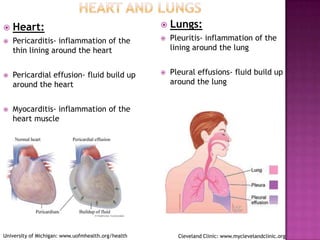
 Heart:
 Pericarditis- inflammation of the
thin lining around the heart
 Pericardial effusion- fluid build up
around the heart
 Myocarditis- inflammation of the
heart muscle
University of Michigan: www.uofmhealth.org/health
 Lungs:
 Pleuritis- inflammation of the
lining around the lung
 Pleural effusions- fluid build up
around the lung
Cleveland Clinic: www.myclevelandclinic.org
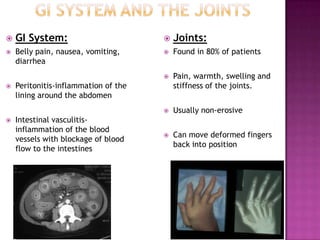
 GI System:
 Belly pain, nausea, vomiting,
diarrhea
 Peritonitis-inflammation of the
lining around the abdomen
 Intestinal vasculitis-
inflammation of the blood
vessels with blockage of blood
flow to the intestines
 Joints:
 Found in 80% of patients
 Pain, warmth, swelling and
stiffness of the joints.
 Usually non-erosive
 Can move deformed fingers
back into position
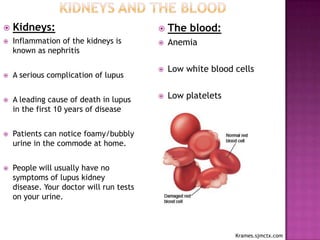
 Kidneys:
 Inflammation of the kidneys is
known as nephritis
 A serious complication of lupus
 A leading cause of death in lupus
in the first 10 years of disease
 Patients can notice foamy/bubbly
urine in the commode at home.
 People will usually have no
symptoms of lupus kidney
disease. Your doctor will run tests
on your urine.
 The blood:
 Anemia
 Low white blood cells
 Low platelets
Krames.sjmctx.com
 Malar (Butterfly) Rash
 Discoid Rash
 Sensitivity rash to the
sun (Photosensitivity)
 Ulcers in the nose and
mouth
 Arthritis
 Fluid around the
heart, lungs and in
the abdomen
 Lupus kidney disease
 Neurologic Disorders:
 Stroke, inflammation,
depression, memory
dysfunction, etc…
 Anemia, low platelets
and low white blood
cell count
 Abnormal blood
antibody levels
 ANA blood test
 Affects of lupus are harmful to your body
 Some complications of lupus are life
threatening
 This is why your medications for lupus are so
important:
 Your medications protect your body from the
harmful and even life threatening affects of
lupus.
Active treatment Preventative Treatment
 Topical Steroids
 NSAIDs:
 Advil, Mobic, Naproxen
 Antimalarials:
 Plaquenil
 Steroids:
 Prednisone, Medrol
 Cytotoxics/Biologics:
 Cellcept, Cytoxan, Metho
trexate, Imuran, Benlysta
 Sunscreen
 At least SPF 30
 Calcium, Vitamin
D, Folate supplements
 To help prevent SE from
other medications
 Influenza Vaccine
 Pneumococcal
Vaccine
 Typically use both oral and IV steroid in lupus
depending on the severity of manifestation
 Oral:
 Prednisone
 Medrol
 IV:
 Solu-medrol
 Very potent anti-inflammatory drugs.
 Not only anti-inflammatory but also suppress
the immune system.
 Work very quickly by blocking the formation
of inflammatory proteins.
 Also promote action of anti-inflammatory
proteins.
 Acute Lupus flare
 Active Lupus kidney disease
 Acute active Lupus of the nervous system
 Acute anemias
 Resistent fluid around the heart, lungs or in
the abdomen
 Inflammation of the blood vessels
 Severe fever, fatigue, weight loss, arthritis,
etc.
 Increased appetite
 Fluid retention
 Weight gain
 High Blood Pressure
 High cholesterol
 Diabetes
 Stomach ulcers
 Cataracts
 Osteoporosis
 Anxiety/Psychosis
 Monitoring:
 Important to follow blood pressure and
cholesterol
 Check bone density for bone loss
 Calcium and vitamin D
 May need alendronate
 Healthy diet to help weight gain and diabetes
 Medicines like omeprazole to help prevent
stomach ulcers
 Frequent eye exams
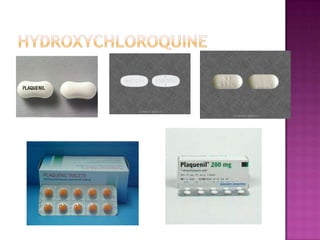
 Also known as Plaquenil
 Old medication used to treat malaria
 Accumulates in the cell interfering with the
recognition of self proteins
 Used as a preventative agent
 Decreases the risk of flare
 Lowers risk of permanent damage
 Also used for joint and skin manifestations
 Typically a well tolerated medication
 Safe to use during pregnancy; probably helps
with disease activity
 Side effects include:
 Anemias
 Visual changes
 Retinal problems
 Certain rashes and skin discoloration
 Monitoring:
 Most side effects are quite rare
 Recommend frequent eye exams
 Other common names: Imuran and Azasan
 Decreases immune cells from proliferating by
stop DNA production in the cells
 Typically used to treat moderate to severe
manifestations of lupus:
 Maintenance of lupus kidney disease
 Anemias including low platelets and blood cell
counts
 Arthritis
 Small studies show that the risk for fetal
abnormalities is low when used in pregnancy
 Side effects:
 Anemias
 Infection
 Liver inflammation
 Pancreatitis
 Lymphoma
 Monitoring:
 Before starting medication should check for
infections like hepatitis B/C and HIV,
 Requires frequent blood tests to monitor for
anemias, and liver inflammation
 Vaccination to prevent common infections
 Typically do not screen for lymphoma unless
there are concerning symptoms
 Other common names: Rheumatrex, Trexall
 Used as a chemotherapy in much higher doses
 Inhibits folic acid metabolism in cells as well as
causes release of adenosine which is anti-
inflammatory
 Typically used to treat the arthritis component
of lupus especially if presenting like rheumatoid
arthritis
 Must take with folic acid to prevent side effects
 Methotrexate cannot be taken during
pregnancy and can cause fetal abnormalities
and miscarriage
 Must stop methotrexate and allow for wash
out before getting pregnant
 Side effects:
 Mouth ulcers
 Anemias
 Infections
 Liver inflammation
 Lung fibrosis
 Hair loss
 Monitoring:
 Before starting medication should check for
hepatitis, HIV, PPD
 Check baseline chest x-ray
 Frequent blood tests for anemia and liver
inflammation
 Other common name: Cellcept
 Mycophenolate mofetil: inhibits a molecule
called inosine monophosphate
dehydrogenase, inhibiting DNA and cell
multiplication
 Typically used for lupus kidney disease as well as
refractory cytopenias, vasculitis
 Side effects:
 Nausea/vomiting
 Upset stomach
 Diarrhea
 Anemias
 Infections
 Lymphomas
 Mycophenolate is not safe during pregnancy
and has been proven to cause birth defects
 Patients should be off of this medication
before getting pregnant
 Monitoring:
 Frequent blood test to look anemias and any liver
or kidney problems
 Work up any signs of infection
 Aggressive vaccinations to avoid common
infections
 Other common name: Cytoxan
 Cyclophosphamide works by causing changes
to DNA so that inflammatory cells cannot
multiply
 Typically used for the most severe
manifestations of Lupus:
 Lupus kidney disease
 Lupus of the nervous system
 Severe vasculitis
 Severe refractory anemias
 Cyclophosphamide can be given either IV or
orally but is a chemotherapeutic agent
 Side effects:
 Nausea/Vomiting
 Hair loss
 Anemias
 Infections
 Inflammation of the bladder
 Infertility
 Cyclophosphamide is not safe during pregnancy.
Can cause birth defects and fetal loss.
 Must be off medication before getting pregnant
 Monitoring:
 Aggressive hydration and the medication MESNA
to help prevent bladder issues
 Anti-nausea medication
 Frequent blood tests especially to monitor for
anemias
 Lupron monthly to help limit infertility
 Immunizations
 Other common name: Benlysta
 Is given as monthly IV infusions
 In an antibody that inhibits the molecule
BAFF
 BAFF stimulates B cell production: the cells that
churn out auto-antibodies in lupus that can cause
damage
 Used to:
 Help get patients off of their steroids
 Particularly effective for the skin and arthritis
manifestations of lupus
 Side effects:
 Infection
 Allergy
 Infusion reaction
 It is unknown what the risk to the fetus is
during pregnancy
 Monitoring:
 Frequent labs
 Vaccines and avoidance of infection
 Irene Blanco, MD
 Yasmin Santiago
 Our Audience!

Sle body meds.onome

  • 1.
    Onome Whiteru, MD Fellow,Division of Rheumatology Albert Einstein College of Medicine Get into the Loop! New York City Hospital Tour 2013 Annual Lupus Patient Education Series
  • 2.
     You mayhave wondered:  “Why am I taking all of these medications in the first place.”  You may have felt:  “I am tired of taking all of these pills”  You may been concerned about medication side effects.
  • 3.
     Because itsyour body!  Lupus can affect your body in so many ways!  We will talk about the ways lupus can possibly affect your body.  Then we will go over the medications for lupus and how they can help to protect your body.
  • 4.
     Autoimmune disease: Caused by an over-active immune system  Your immune system begins to attack your own body.  Certain genes are more likely to occur in patients with lupus  Many of these genes involve parts of the immune system.
  • 5.
     Female:Male ratioof 9:1 during childbearing years  Closer to 2:1 during childhood and after menopause, suggesting hormonal influence  Disease in males can be more severe  70% of SLE: females between ages 15-45  10% present age >60
  • 6.
     Highest occurrenceis in Afro-Caribbean females 1:250  African American to Caucasian ratio 3:1  Child of SLE mother - risk of SLE 7%  10-15% of SLE patients have 1st degree relative with SLE
  • 7.
     Lupus canbe controlled with treatment and in some instances can go into remission.  90% survive 5 years, 80% 10 years  Lupus kidney disease worsens prognosis  African Americans have more aggressive and treatment resistant disease  2 different causes of death:  Early: disease activity and infections  Late: due to long-term disease and treatment
  • 8.
     Skin  Brainand Nerves  Heart  Lungs  GI system  Kidneys  Joints  Blood
  • 9.
     MALAR RASH: Fixed red, flat or raised, over the bridge of the nose and cheeks  Tends to spare the nasolabial folds  Discoid lupus:  Red or dark patches of inflammation and scarring  Tends to occur on the face, ears, and scalp
  • 10.
     Ulcers inthe Mouth and Nose:  Usually painless  Hair Thinning:
  • 11.
     Mood Changesand Psychosis  Trouble with memory  Severe unending headache  Strokes and Seizures  Vasculitis-inflammation of blood vessels of the brain  Neuropathy-tingling, burning sensation on body  Myelitis- inflammation of the spinal cord causing paralysis
  • 12.
     Heart:  Pericarditis-inflammation of the thin lining around the heart  Pericardial effusion- fluid build up around the heart  Myocarditis- inflammation of the heart muscle University of Michigan: www.uofmhealth.org/health  Lungs:  Pleuritis- inflammation of the lining around the lung  Pleural effusions- fluid build up around the lung Cleveland Clinic: www.myclevelandclinic.org
  • 13.
     GI System: Belly pain, nausea, vomiting, diarrhea  Peritonitis-inflammation of the lining around the abdomen  Intestinal vasculitis- inflammation of the blood vessels with blockage of blood flow to the intestines  Joints:  Found in 80% of patients  Pain, warmth, swelling and stiffness of the joints.  Usually non-erosive  Can move deformed fingers back into position
  • 14.
     Kidneys:  Inflammationof the kidneys is known as nephritis  A serious complication of lupus  A leading cause of death in lupus in the first 10 years of disease  Patients can notice foamy/bubbly urine in the commode at home.  People will usually have no symptoms of lupus kidney disease. Your doctor will run tests on your urine.  The blood:  Anemia  Low white blood cells  Low platelets Krames.sjmctx.com
  • 15.
     Malar (Butterfly)Rash  Discoid Rash  Sensitivity rash to the sun (Photosensitivity)  Ulcers in the nose and mouth  Arthritis  Fluid around the heart, lungs and in the abdomen  Lupus kidney disease  Neurologic Disorders:  Stroke, inflammation, depression, memory dysfunction, etc…  Anemia, low platelets and low white blood cell count  Abnormal blood antibody levels  ANA blood test
  • 16.
     Affects oflupus are harmful to your body  Some complications of lupus are life threatening  This is why your medications for lupus are so important:  Your medications protect your body from the harmful and even life threatening affects of lupus.
  • 17.
    Active treatment PreventativeTreatment  Topical Steroids  NSAIDs:  Advil, Mobic, Naproxen  Antimalarials:  Plaquenil  Steroids:  Prednisone, Medrol  Cytotoxics/Biologics:  Cellcept, Cytoxan, Metho trexate, Imuran, Benlysta  Sunscreen  At least SPF 30  Calcium, Vitamin D, Folate supplements  To help prevent SE from other medications  Influenza Vaccine  Pneumococcal Vaccine
  • 18.
     Typically useboth oral and IV steroid in lupus depending on the severity of manifestation  Oral:  Prednisone  Medrol  IV:  Solu-medrol
  • 19.
     Very potentanti-inflammatory drugs.  Not only anti-inflammatory but also suppress the immune system.  Work very quickly by blocking the formation of inflammatory proteins.  Also promote action of anti-inflammatory proteins.
  • 20.
     Acute Lupusflare  Active Lupus kidney disease  Acute active Lupus of the nervous system  Acute anemias  Resistent fluid around the heart, lungs or in the abdomen  Inflammation of the blood vessels  Severe fever, fatigue, weight loss, arthritis, etc.
  • 21.
     Increased appetite Fluid retention  Weight gain  High Blood Pressure  High cholesterol  Diabetes  Stomach ulcers  Cataracts  Osteoporosis  Anxiety/Psychosis
  • 22.
     Monitoring:  Importantto follow blood pressure and cholesterol  Check bone density for bone loss  Calcium and vitamin D  May need alendronate  Healthy diet to help weight gain and diabetes  Medicines like omeprazole to help prevent stomach ulcers  Frequent eye exams
  • 24.
     Also knownas Plaquenil  Old medication used to treat malaria  Accumulates in the cell interfering with the recognition of self proteins  Used as a preventative agent  Decreases the risk of flare  Lowers risk of permanent damage  Also used for joint and skin manifestations
  • 25.
     Typically awell tolerated medication  Safe to use during pregnancy; probably helps with disease activity  Side effects include:  Anemias  Visual changes  Retinal problems  Certain rashes and skin discoloration
  • 26.
     Monitoring:  Mostside effects are quite rare  Recommend frequent eye exams
  • 28.
     Other commonnames: Imuran and Azasan  Decreases immune cells from proliferating by stop DNA production in the cells  Typically used to treat moderate to severe manifestations of lupus:  Maintenance of lupus kidney disease  Anemias including low platelets and blood cell counts  Arthritis
  • 29.
     Small studiesshow that the risk for fetal abnormalities is low when used in pregnancy  Side effects:  Anemias  Infection  Liver inflammation  Pancreatitis  Lymphoma
  • 30.
     Monitoring:  Beforestarting medication should check for infections like hepatitis B/C and HIV,  Requires frequent blood tests to monitor for anemias, and liver inflammation  Vaccination to prevent common infections  Typically do not screen for lymphoma unless there are concerning symptoms
  • 32.
     Other commonnames: Rheumatrex, Trexall  Used as a chemotherapy in much higher doses  Inhibits folic acid metabolism in cells as well as causes release of adenosine which is anti- inflammatory  Typically used to treat the arthritis component of lupus especially if presenting like rheumatoid arthritis  Must take with folic acid to prevent side effects
  • 33.
     Methotrexate cannotbe taken during pregnancy and can cause fetal abnormalities and miscarriage  Must stop methotrexate and allow for wash out before getting pregnant  Side effects:  Mouth ulcers  Anemias  Infections  Liver inflammation  Lung fibrosis  Hair loss
  • 34.
     Monitoring:  Beforestarting medication should check for hepatitis, HIV, PPD  Check baseline chest x-ray  Frequent blood tests for anemia and liver inflammation
  • 36.
     Other commonname: Cellcept  Mycophenolate mofetil: inhibits a molecule called inosine monophosphate dehydrogenase, inhibiting DNA and cell multiplication  Typically used for lupus kidney disease as well as refractory cytopenias, vasculitis
  • 37.
     Side effects: Nausea/vomiting  Upset stomach  Diarrhea  Anemias  Infections  Lymphomas  Mycophenolate is not safe during pregnancy and has been proven to cause birth defects  Patients should be off of this medication before getting pregnant
  • 38.
     Monitoring:  Frequentblood test to look anemias and any liver or kidney problems  Work up any signs of infection  Aggressive vaccinations to avoid common infections
  • 40.
     Other commonname: Cytoxan  Cyclophosphamide works by causing changes to DNA so that inflammatory cells cannot multiply  Typically used for the most severe manifestations of Lupus:  Lupus kidney disease  Lupus of the nervous system  Severe vasculitis  Severe refractory anemias
  • 41.
     Cyclophosphamide canbe given either IV or orally but is a chemotherapeutic agent  Side effects:  Nausea/Vomiting  Hair loss  Anemias  Infections  Inflammation of the bladder  Infertility  Cyclophosphamide is not safe during pregnancy. Can cause birth defects and fetal loss.  Must be off medication before getting pregnant
  • 42.
     Monitoring:  Aggressivehydration and the medication MESNA to help prevent bladder issues  Anti-nausea medication  Frequent blood tests especially to monitor for anemias  Lupron monthly to help limit infertility  Immunizations
  • 44.
     Other commonname: Benlysta  Is given as monthly IV infusions  In an antibody that inhibits the molecule BAFF  BAFF stimulates B cell production: the cells that churn out auto-antibodies in lupus that can cause damage  Used to:  Help get patients off of their steroids  Particularly effective for the skin and arthritis manifestations of lupus
  • 45.
     Side effects: Infection  Allergy  Infusion reaction  It is unknown what the risk to the fetus is during pregnancy  Monitoring:  Frequent labs  Vaccines and avoidance of infection
  • 46.
     Irene Blanco,MD  Yasmin Santiago  Our Audience!