



Maryann Lee, MD
UPG Rheumatology
  Staten Island, NY
Systemic lupus erythematosus is a chronic inflammatory disease
of unknown cause that can affect any organ in the body
including the skin, joints, kidneys, lungs, nervous system, and
the heart.
Lupus affects more women than men usually in their 20s and
30s during their child bearing years.

It is characterized by periods of remissions and chronic or acute
relapses or “flares”

Common symptoms are fatigue, fever, weight loss, joint and
muscle pain, sores in the mouth or nose, rashes the most
common of which is the “butterfly” or malar rash after sun
exposure, and Raynauds or microvasospasm of the small blood
vessels especialy in the hands or feet.

Lupus can affect any organ especially the kidneys and heart so
your Rheumatologist is always on the lookout for any signs of
problems in these organ systems.
Lupus can be like the game of telephone.


                                                    The initial order from
                                                    your body’s immune
                                                    system may be protective
                                                    but somewhere down the
                                                    road the order gets
                                                    changed and things take
                                                    a wrong turn.


                                http://www.flickr.com/photos/fuffer2005/3006563299/lightbox/
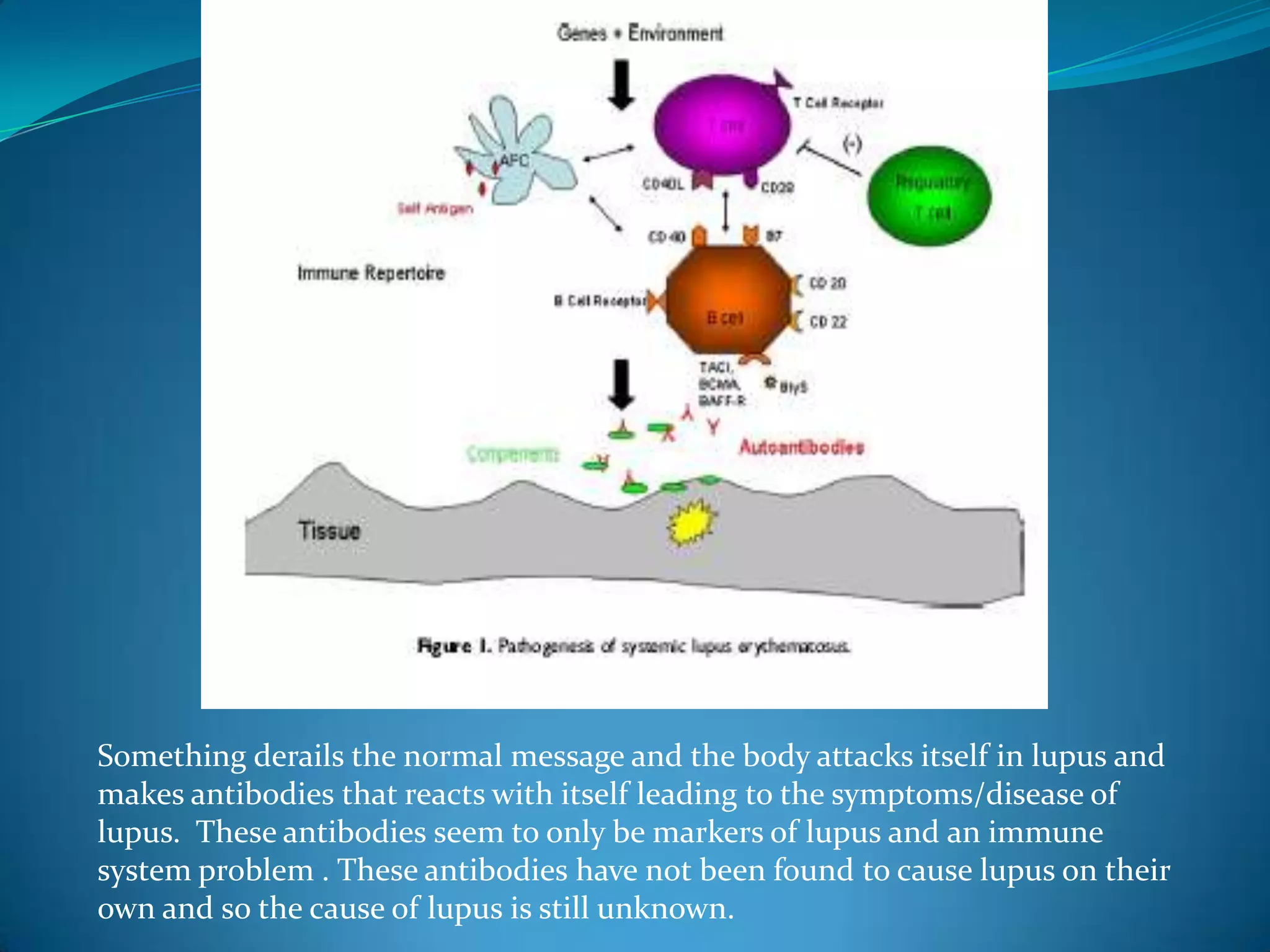
Something derails the normal message and the body attacks itself in lupus and
makes antibodies that reacts with itself leading to the symptoms/disease of
lupus. These antibodies seem to only be markers of lupus and an immune
system problem . These antibodies have not been found to cause lupus on their
own and so the cause of lupus is still unknown.
These antibodies can then travel throughout the
body and trigger other chemical signals which
leads to inflammation in different parts of the
body and can cause damage in these different
organs including the heart in various ways
Valvular disease
The heart has 4 valves that control the flow of blood circulating through
your body

These valves can be injured by bacterial infection or by immune complexes
of antibody/antigen reactions that occur during lupus activity.

More inflammation is then triggered and in the process of healing
, fibrosis, scarring and calcification can occur, which can ultimately
damage the valves

Often this is asymptomatic to the patient but over time valves can become
stiff or floppy and not work as effectively leading to heart failure
These damaged valves are also more prone to bacterial infection
or sometimes fragments of deposits on the valves caused by the
lupus inflammatory process can break off and cause emboli
leading to strokes

Patients with antiphospholipid antibodies are also at a higher
risk for endocarditis perhaps from increased deposition of
antibody complexes
Antibiotic prophylaxis for lupus patients with valvular lesions
is not an absolute recommendation by the AHA but is suggested
especially when the patient is undergoing procedures that may
cause transient bacteremia which include:

Invasive dental procedures/surgeries
Surgery of the respiratory tract such as tonsillectomy or
bronchoscopy
Invasive surgery/procedure of the GI tract
Steroids and other immunosuppressive therapy does not seem
effective for these valve deposits.

Anticoagulation may be helpful for Antiphospholipid antibody
associated valve deposits.

Patients with cardiac symptoms suggestive of valve disease
should undergo echocardiogram testing however screening of
asymptomatic patients is not recommended
It is usually asymptomatic and found incidentally but is the most frequent
cause of symptomatic cardiac disease

Pericarditis refers to inflammation of the lining around the heart .

Symptoms include positional substernal chest pain with abnormal heart
sounds on exam.

Pericardial effusion will occur at some point at least half of lupus patients

Pericarditis/pericardial effusion usually occurs when lupus is active
Usually it is a benign condition and is treated with
NSAIDS/anti-inflammatories and sometimes steroids with
success

If fluid has built up significantly around the heart surgical
drainage would be required

Myocarditis occurs when the heart muscle is inflamed and is a
much more serious condition but fortunately occurs rarely but
can be treated with immunosupressant medications and would
need be treated aggressively to prevent irreversible heart
damage
Conduction defects where the electrical system of the heart is
disrupted sometimes occurs as a result of myocarditis episode.

Usually it is a result of inflammation and fibrosis of the
conduction system of the heart and can lead to arrythmias such
as heart block.

Most often it is a first degree heart block and often short term
and reverses with time. Higher degree heart block are not
usually seen in adult lupus patients.
Neonatal lupus is observed in 1-2 % of babies born to mothers with
autoimmune disease. There seems to be an association with Ro and La
antibodies carried by the mother being transferred the the fetus

There is an increased incidence up to 17% in mothers with Ro and La
antibodies who already had a previous child with heart block. Still this is
a minority of births.

Symptoms include a facial/body rash that can occur up to 4 months old

Cardiac manifestations such has heart block usually occurs in utero or in
the neonatal period. It is less common after birth ( a Toronto based study
reported an incidence after birth of only 5%) This heart block is
irreversible and life threatening and requires aggressive fetal monitoring
during pregnancy.
Patients with SLE have been found to have an increased risk of
accelerated atherosclerosis leading to coronary heart disease
and heart attack

Several studies have given reports of up to double the risk of
heart disease in young women with SLE in their 30s and 40s as
opposed to other women at that age without SLE
With improvements in treatments of other life-threatening
organ disease caused by lupus such as kidney failure coronary
artery disease is emerging as the leading cause of morbidity and
premature death in patients with SLE

Reasons for this are likely multifactorial:
Traditional risk factors such as diabetes, high
cholesterol, hypertension, family history, obesity, sedentary
lifestyle, cigarette smoking are still important modifiable risk
factors

Other factors special to lupus include steroid use and lupus
itself are factors as well
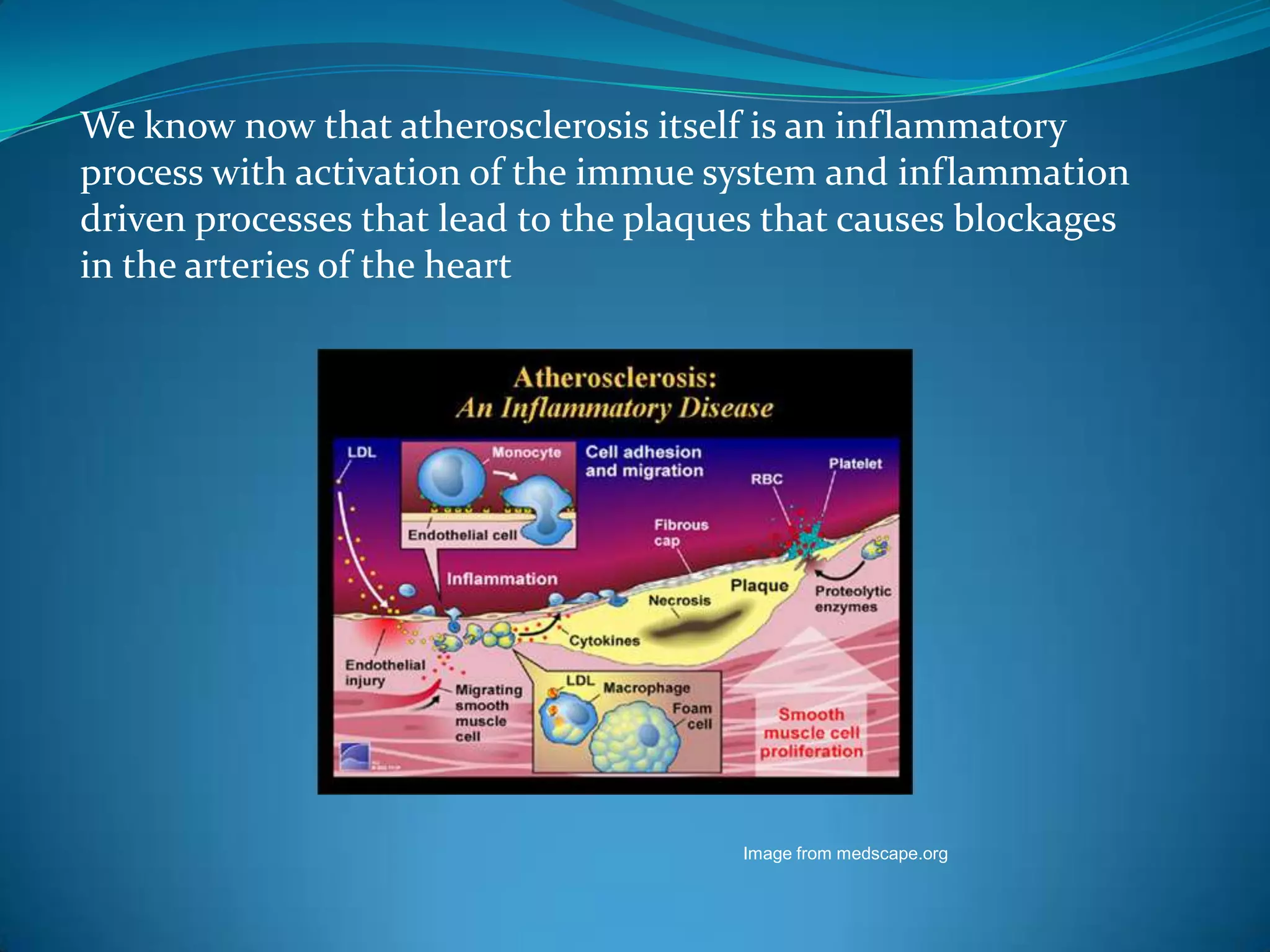
We know now that atherosclerosis itself is an inflammatory
process with activation of the immue system and inflammation
driven processes that lead to the plaques that causes blockages
in the arteries of the heart


                                       Image from medscape.org
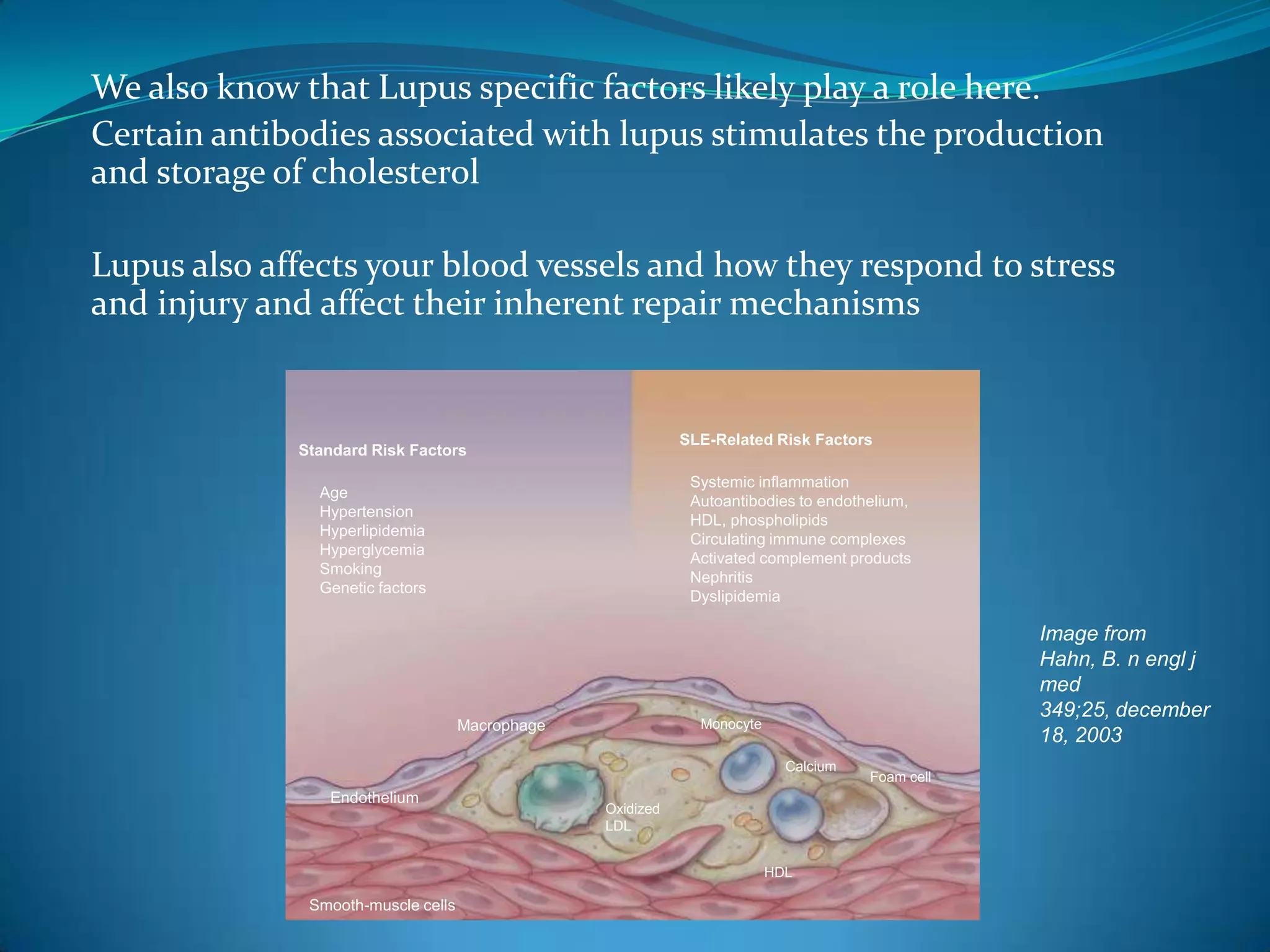
We also know that Lupus specific factors likely play a role here.
Certain antibodies associated with lupus stimulates the production
and storage of cholesterol

Lupus also affects your blood vessels and how they respond to stress
and injury and affect their inherent repair mechanisms


                                                            SLE-Related Risk Factors
             Standard Risk Factors

                                                             Systemic inflammation
               Age
                                                             Autoantibodies to endothelium,
               Hypertension
                                                             HDL, phospholipids
               Hyperlipidemia
                                                             Circulating immune complexes
               Hyperglycemia
                                                             Activated complement products
               Smoking
                                                             Nephritis
               Genetic factors
                                                             Dyslipidemia

                                                                                                 Image from
                                                                                                 Hahn, B. n engl j
                                                                                                 med
                                                                                                 349;25, december
                                    Macrophage                Monocyte
                                                                                                 18, 2003
                                                                           Calcium
                                                                                     Foam cell
                Endothelium
                                                 Oxidized
                                                 LDL


                                                                         HDL

              Smooth-muscle cells
Numerous studies have shown an increased prevalence in Lupus
patients of certain risk factors for heart disease including

Hypertension
Diabetes
Premature menopause
Sedentary lifestyle
At risk body habitus
Metabolic syndrome (central obesity, high cholesterol, diabetes)
Steroid use- can cause or worsen traditional risk factors like
       high cholesterol, diabetes, and obesity
       - dose and duration of steroid use may be an important
       factor with higher dose and longer use may also be a
       maker of more active SLE

Active SLE which indicates an active inflammatory state may
also in itself be a risk factor for accelerated atherosclerosis and
heart disease
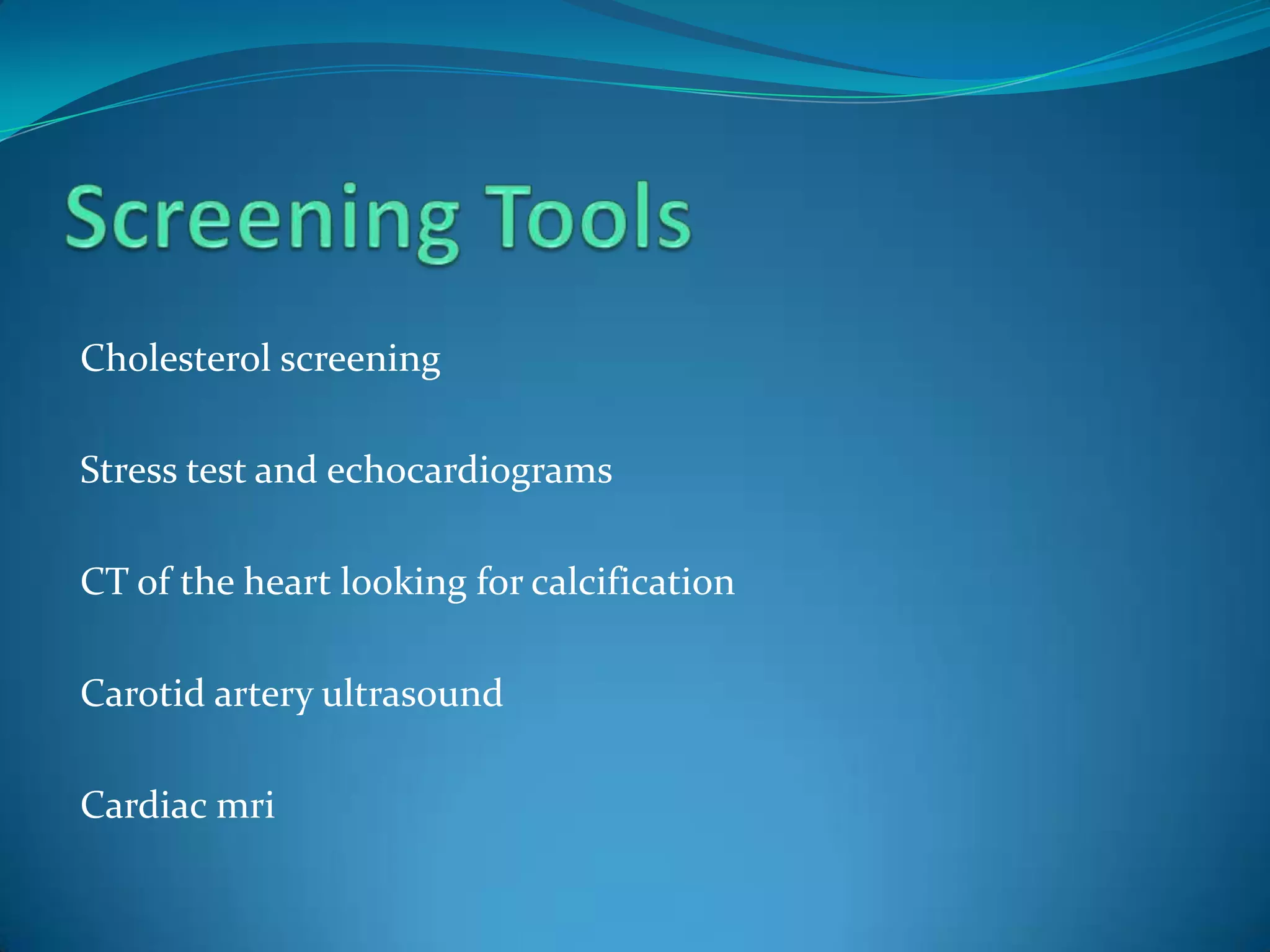
Cholesterol screening

Stress test and echocardiograms

CT of the heart looking for calcification

Carotid artery ultrasound

Cardiac mri
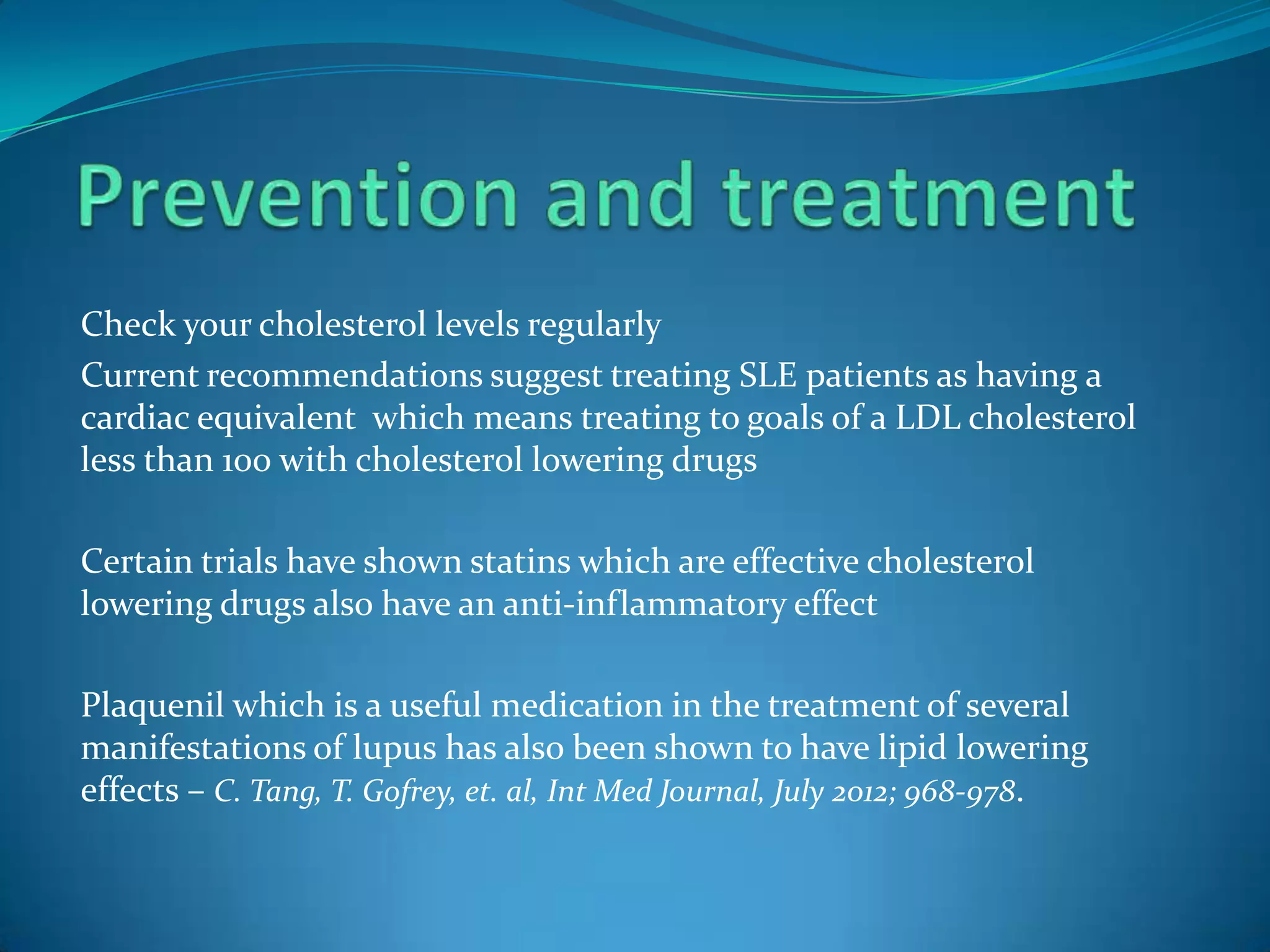
Check your cholesterol levels regularly
Current recommendations suggest treating SLE patients as having a
cardiac equivalent which means treating to goals of a LDL cholesterol
less than 100 with cholesterol lowering drugs

Certain trials have shown statins which are effective cholesterol
lowering drugs also have an anti-inflammatory effect

Plaquenil which is a useful medication in the treatment of several
manifestations of lupus has also been shown to have lipid lowering
effects – C. Tang, T. Gofrey, et. al, Int Med Journal, July 2012; 968-978.
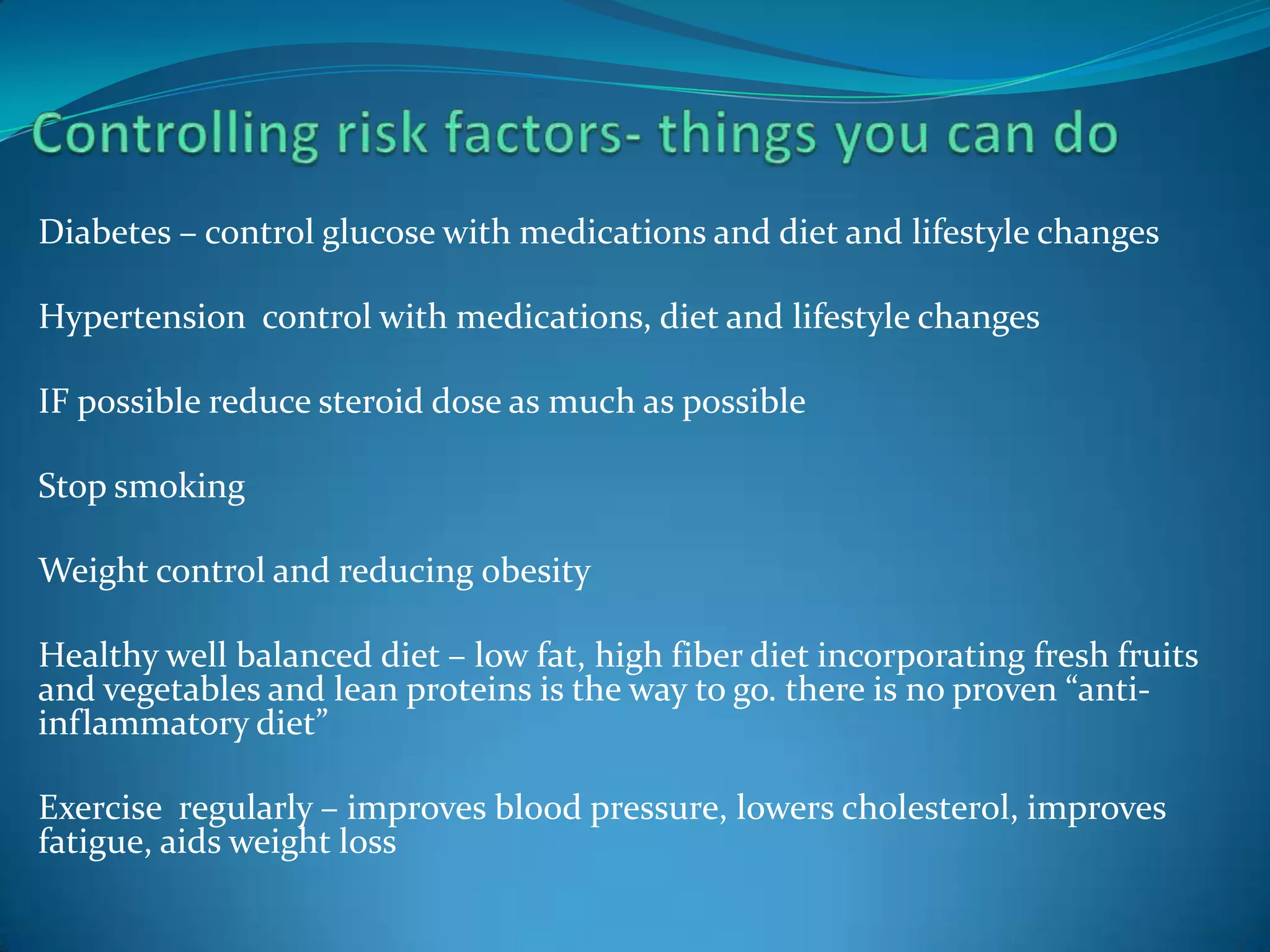
Diabetes – control glucose with medications and diet and lifestyle changes

Hypertension control with medications, diet and lifestyle changes

IF possible reduce steroid dose as much as possible

Stop smoking

Weight control and reducing obesity

Healthy well balanced diet – low fat, high fiber diet incorporating fresh fruits
and vegetables and lean proteins is the way to go. there is no proven “anti-
inflammatory diet”

Exercise regularly – improves blood pressure, lowers cholesterol, improves
fatigue, aids weight loss

Lupus and the heart

  • 1.
    Maryann Lee, MD UPGRheumatology Staten Island, NY
  • 2.
    Systemic lupus erythematosusis a chronic inflammatory disease of unknown cause that can affect any organ in the body including the skin, joints, kidneys, lungs, nervous system, and the heart.
  • 3.
    Lupus affects morewomen than men usually in their 20s and 30s during their child bearing years. It is characterized by periods of remissions and chronic or acute relapses or “flares” Common symptoms are fatigue, fever, weight loss, joint and muscle pain, sores in the mouth or nose, rashes the most common of which is the “butterfly” or malar rash after sun exposure, and Raynauds or microvasospasm of the small blood vessels especialy in the hands or feet. Lupus can affect any organ especially the kidneys and heart so your Rheumatologist is always on the lookout for any signs of problems in these organ systems.
  • 4.
    Lupus can belike the game of telephone. The initial order from your body’s immune system may be protective but somewhere down the road the order gets changed and things take a wrong turn. http://www.flickr.com/photos/fuffer2005/3006563299/lightbox/
  • 5.
    Something derails thenormal message and the body attacks itself in lupus and makes antibodies that reacts with itself leading to the symptoms/disease of lupus. These antibodies seem to only be markers of lupus and an immune system problem . These antibodies have not been found to cause lupus on their own and so the cause of lupus is still unknown.
  • 6.
    These antibodies canthen travel throughout the body and trigger other chemical signals which leads to inflammation in different parts of the body and can cause damage in these different organs including the heart in various ways
  • 7.
    Valvular disease The hearthas 4 valves that control the flow of blood circulating through your body These valves can be injured by bacterial infection or by immune complexes of antibody/antigen reactions that occur during lupus activity. More inflammation is then triggered and in the process of healing , fibrosis, scarring and calcification can occur, which can ultimately damage the valves Often this is asymptomatic to the patient but over time valves can become stiff or floppy and not work as effectively leading to heart failure
  • 8.
    These damaged valvesare also more prone to bacterial infection or sometimes fragments of deposits on the valves caused by the lupus inflammatory process can break off and cause emboli leading to strokes Patients with antiphospholipid antibodies are also at a higher risk for endocarditis perhaps from increased deposition of antibody complexes
  • 9.
    Antibiotic prophylaxis forlupus patients with valvular lesions is not an absolute recommendation by the AHA but is suggested especially when the patient is undergoing procedures that may cause transient bacteremia which include: Invasive dental procedures/surgeries Surgery of the respiratory tract such as tonsillectomy or bronchoscopy Invasive surgery/procedure of the GI tract
  • 10.
    Steroids and otherimmunosuppressive therapy does not seem effective for these valve deposits. Anticoagulation may be helpful for Antiphospholipid antibody associated valve deposits. Patients with cardiac symptoms suggestive of valve disease should undergo echocardiogram testing however screening of asymptomatic patients is not recommended
  • 11.
    It is usuallyasymptomatic and found incidentally but is the most frequent cause of symptomatic cardiac disease Pericarditis refers to inflammation of the lining around the heart . Symptoms include positional substernal chest pain with abnormal heart sounds on exam. Pericardial effusion will occur at some point at least half of lupus patients Pericarditis/pericardial effusion usually occurs when lupus is active
  • 12.
    Usually it isa benign condition and is treated with NSAIDS/anti-inflammatories and sometimes steroids with success If fluid has built up significantly around the heart surgical drainage would be required Myocarditis occurs when the heart muscle is inflamed and is a much more serious condition but fortunately occurs rarely but can be treated with immunosupressant medications and would need be treated aggressively to prevent irreversible heart damage
  • 13.
    Conduction defects wherethe electrical system of the heart is disrupted sometimes occurs as a result of myocarditis episode. Usually it is a result of inflammation and fibrosis of the conduction system of the heart and can lead to arrythmias such as heart block. Most often it is a first degree heart block and often short term and reverses with time. Higher degree heart block are not usually seen in adult lupus patients.
  • 14.
    Neonatal lupus isobserved in 1-2 % of babies born to mothers with autoimmune disease. There seems to be an association with Ro and La antibodies carried by the mother being transferred the the fetus There is an increased incidence up to 17% in mothers with Ro and La antibodies who already had a previous child with heart block. Still this is a minority of births. Symptoms include a facial/body rash that can occur up to 4 months old Cardiac manifestations such has heart block usually occurs in utero or in the neonatal period. It is less common after birth ( a Toronto based study reported an incidence after birth of only 5%) This heart block is irreversible and life threatening and requires aggressive fetal monitoring during pregnancy.
  • 15.
    Patients with SLEhave been found to have an increased risk of accelerated atherosclerosis leading to coronary heart disease and heart attack Several studies have given reports of up to double the risk of heart disease in young women with SLE in their 30s and 40s as opposed to other women at that age without SLE
  • 16.
    With improvements intreatments of other life-threatening organ disease caused by lupus such as kidney failure coronary artery disease is emerging as the leading cause of morbidity and premature death in patients with SLE Reasons for this are likely multifactorial: Traditional risk factors such as diabetes, high cholesterol, hypertension, family history, obesity, sedentary lifestyle, cigarette smoking are still important modifiable risk factors Other factors special to lupus include steroid use and lupus itself are factors as well
  • 17.
    We know nowthat atherosclerosis itself is an inflammatory process with activation of the immue system and inflammation driven processes that lead to the plaques that causes blockages in the arteries of the heart Image from medscape.org
  • 18.
    We also knowthat Lupus specific factors likely play a role here. Certain antibodies associated with lupus stimulates the production and storage of cholesterol Lupus also affects your blood vessels and how they respond to stress and injury and affect their inherent repair mechanisms SLE-Related Risk Factors Standard Risk Factors Systemic inflammation Age Autoantibodies to endothelium, Hypertension HDL, phospholipids Hyperlipidemia Circulating immune complexes Hyperglycemia Activated complement products Smoking Nephritis Genetic factors Dyslipidemia Image from Hahn, B. n engl j med 349;25, december Macrophage Monocyte 18, 2003 Calcium Foam cell Endothelium Oxidized LDL HDL Smooth-muscle cells
  • 19.
    Numerous studies haveshown an increased prevalence in Lupus patients of certain risk factors for heart disease including Hypertension Diabetes Premature menopause Sedentary lifestyle At risk body habitus Metabolic syndrome (central obesity, high cholesterol, diabetes)
  • 20.
    Steroid use- cancause or worsen traditional risk factors like high cholesterol, diabetes, and obesity - dose and duration of steroid use may be an important factor with higher dose and longer use may also be a maker of more active SLE Active SLE which indicates an active inflammatory state may also in itself be a risk factor for accelerated atherosclerosis and heart disease
  • 21.
    Cholesterol screening Stress testand echocardiograms CT of the heart looking for calcification Carotid artery ultrasound Cardiac mri
  • 22.
    Check your cholesterollevels regularly Current recommendations suggest treating SLE patients as having a cardiac equivalent which means treating to goals of a LDL cholesterol less than 100 with cholesterol lowering drugs Certain trials have shown statins which are effective cholesterol lowering drugs also have an anti-inflammatory effect Plaquenil which is a useful medication in the treatment of several manifestations of lupus has also been shown to have lipid lowering effects – C. Tang, T. Gofrey, et. al, Int Med Journal, July 2012; 968-978.
  • 23.
    Diabetes – controlglucose with medications and diet and lifestyle changes Hypertension control with medications, diet and lifestyle changes IF possible reduce steroid dose as much as possible Stop smoking Weight control and reducing obesity Healthy well balanced diet – low fat, high fiber diet incorporating fresh fruits and vegetables and lean proteins is the way to go. there is no proven “anti- inflammatory diet” Exercise regularly – improves blood pressure, lowers cholesterol, improves fatigue, aids weight loss