SKIN INFECTIONS
Dr Badriya Al-
Mahrouqi
Family physician
26/11/2017
OBJECTIVES
By the end of this presentation the participants will be
able to:
Illustrate Structure Of Skin
List The Most Common Causes Of Skin Infection
Diagnose The Most Common Presentation Of Skin
Infection
Manage The Most Common Causes Of Skin Infection
CAUSES OF SKIN INFECTION
Bacterial: Cellulitis, Abscess and
impetigo
Viral: Shingles, warts, and herpes
simplex
Fungal: Athlete's foot and yeast
infections
BACTERIAL
INFECTIONS
FOLLICULITIS,
FURUNCULOSIS, AND
CARBUNCULOSIS
Folliculitis is a superficial infection of
the hair follicles characterized by
erythematous, follicular-based papules
and pustules.
Furuncles are deeper infections of the
hair follicle characterized by
inflammatory nodules with pustular
drainage,
carbuncles IS GROUP OF Furuncles
which can coalesce to form larger
draining nodules ().
Treatment
folliculitis. :Topical treatment with
clindamycin 1% or erythromycin 2%,
applied two or three times a day to
affected areas
furuncles and carbuncles :Systemic
antistaphylococcal antibiotics
(Augmentin- fluxacilline - doxycycline)
larger furuncles and carbuncles often
ABSCESS
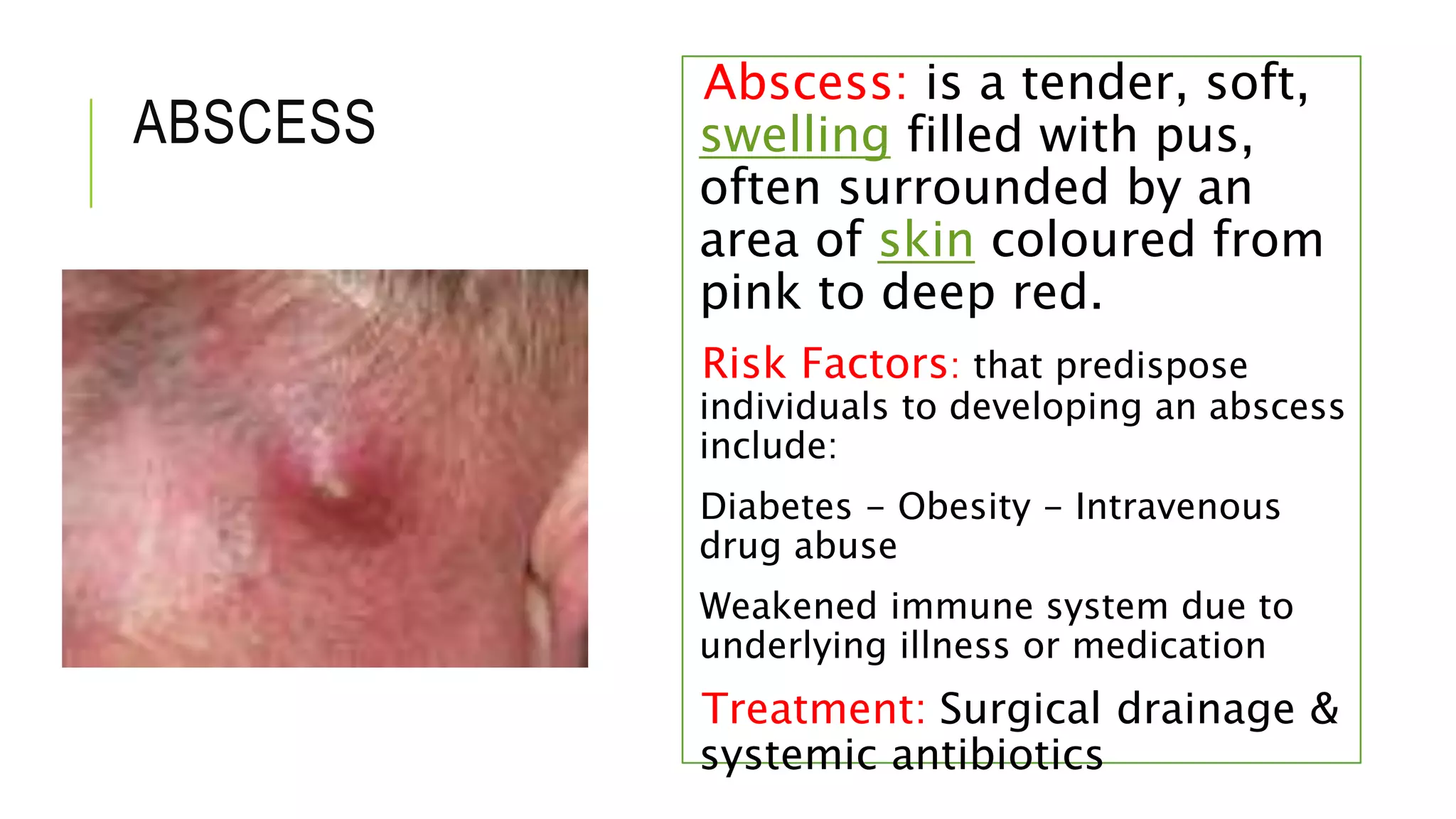
Abscess: is a tender, soft,
swelling filled with pus,
often surrounded by an
area of skin coloured from
pink to deep red.
Risk Factors: that predispose
individuals to developing an abscess
include:
Diabetes - Obesity - Intravenous
drug abuse
Weakened immune system due to
underlying illness or medication
Treatment: Surgical drainage &
systemic antibiotics
IMPETIGO
Two clinical types of impetigo exist:
Nonbullous : face and extremities -
, initially with vesicles or pustules on
reddened skin WHICH rupture to
leave the characteristic honey-
colored
Bullous: flaccid bullae with clear
yellow fluid that rupture and leave a
golden-yellow crust.
Treatment
For most patients topical treatment
is adequate, either with bacitracin
(Polysporin) or mupirocin
(Bactroban), applied twice daily for 7
to 10 days.
Systemic therapy may be necessary
ERYSIPELAS AND
CELLULITIS
Erysipelas is a superficial cutaneous
infection of the skin involving
dermal lymphatic vessels./ young
children/ is a tender, well-defined,
erythematous, indurated plaque on
the face or legs
Cellulitis is a deeper process that
extends to the subcutis./ a warm,
tender, erythematous, and
edematous plaque with ill-defined
borders that expands rapidly
Treatment
Penicillin (250-500 mg, qid × 7-10
days) is the treatment of choice for
erysipelas;
parenteral therapy is warranted for
patients with extensive disease or
with systemic symptoms as well as
for immunocompromised patients.
FUNGAL AND YEAST
INFECTIONS
1-
DERMATOPHYTOSI
S/
TINEA
Dermatophytosis implies infection
with fungi, organisms with high
affinity for keratinized tissue, such
as the skin, nails, and hair.
Trichophyton rubrum is the most
common dermatophyte worldwide.
Fungal reservoirs for these
organisms include soil, animals, and
infected humans.it include :
Tinea Pedis - Tinea Cruris- Tinea
Corporis - Tinea capitis- Tinea
unguium
Treatment
For most patients, topical treatment
with antifungal cream applied twice
daily for 6 to 8 weeks. if no
improvement systemic antifungal
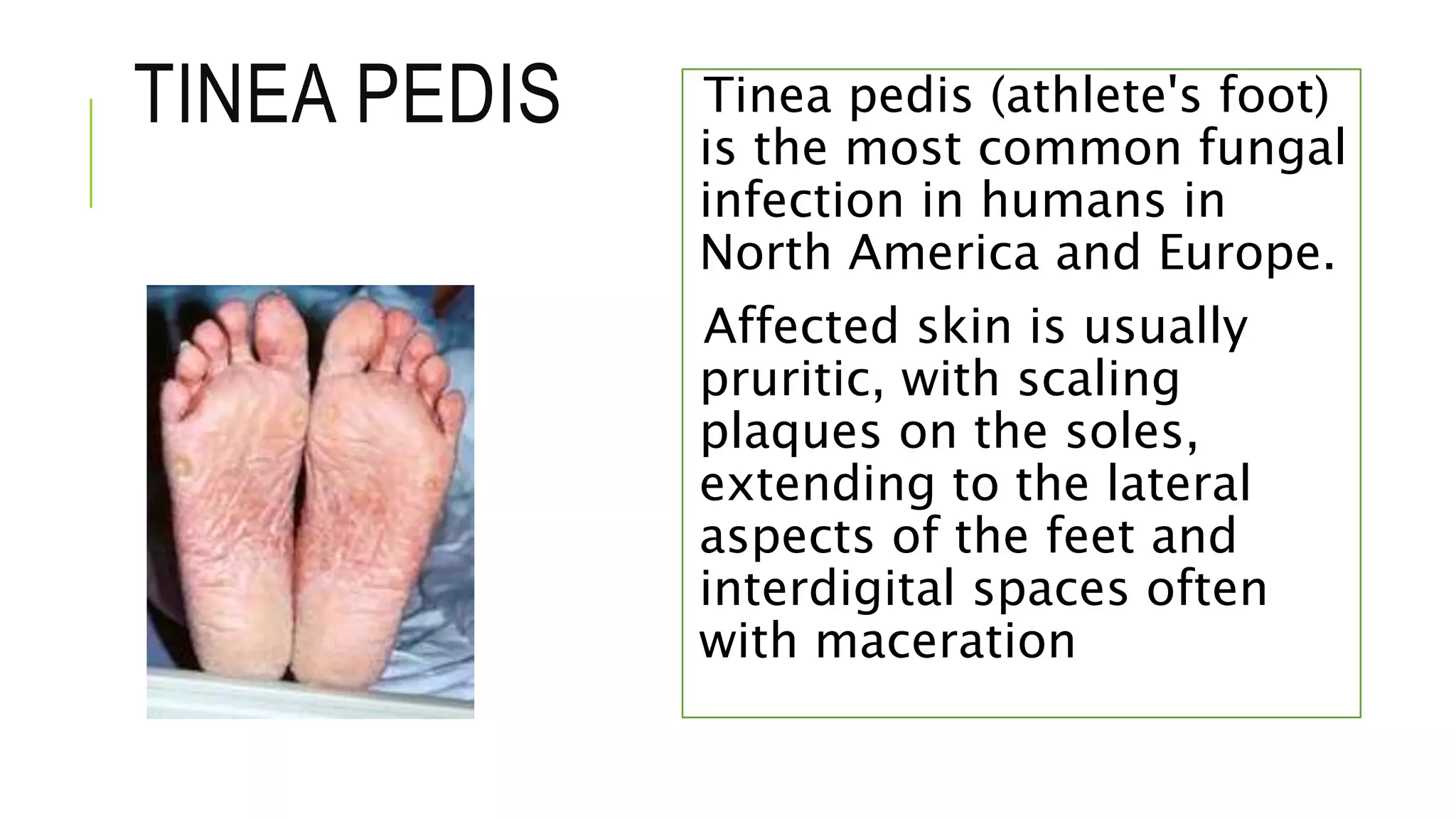
Tinea pedis (athlete's foot)
is the most common fungal
infection in humans in
North America and Europe.
Affected skin is usually
pruritic, with scaling
plaques on the soles,
extending to the lateral
aspects of the feet and
interdigital spaces often
with maceration
TINEA PEDIS
TINEA
CRURIS
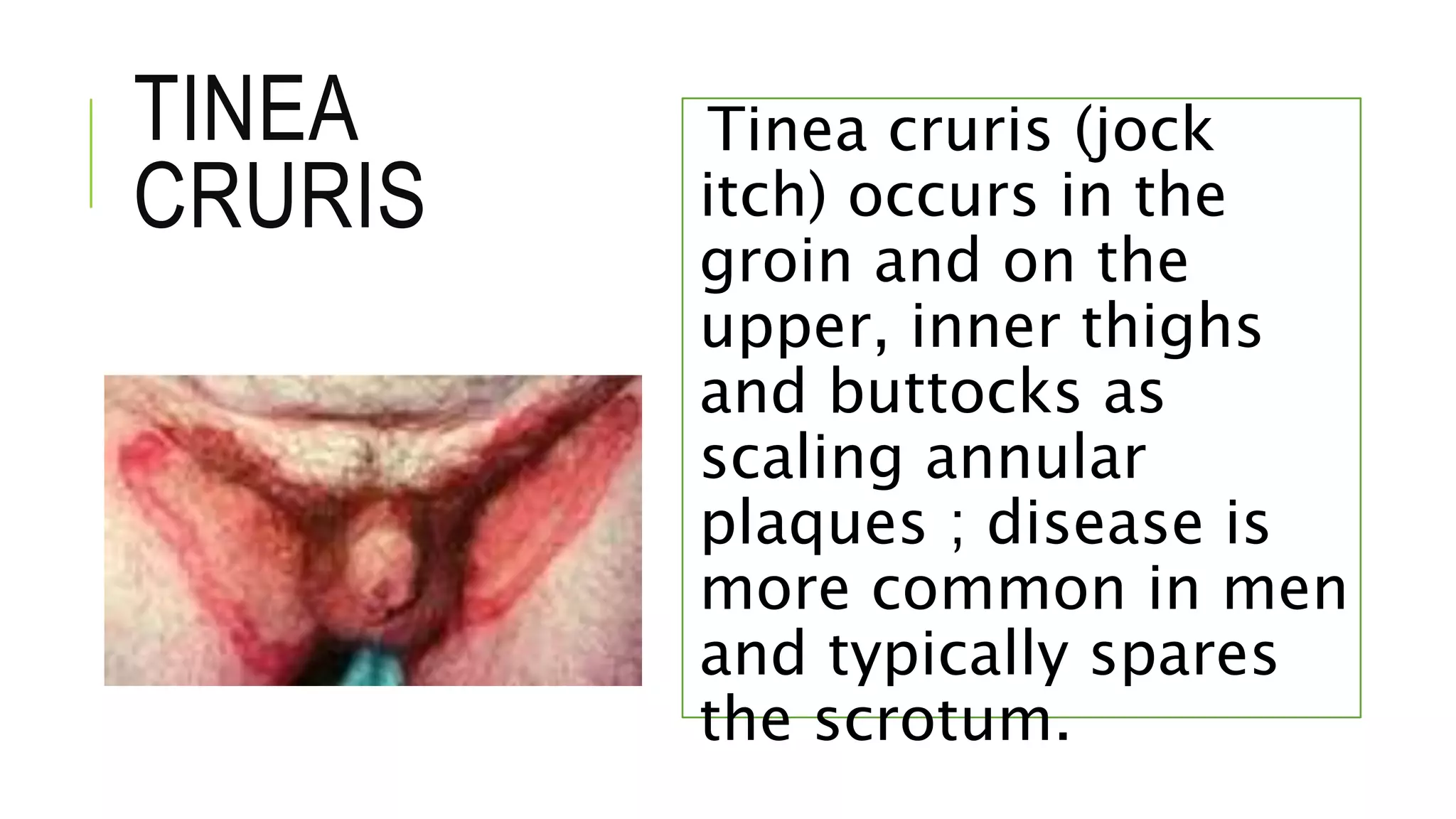
Tinea cruris (jock
itch) occurs in the
groin and on the
upper, inner thighs
and buttocks as
scaling annular
plaques ; disease is
more common in men
and typically spares
the scrotum.
TINEA
CORPORIS
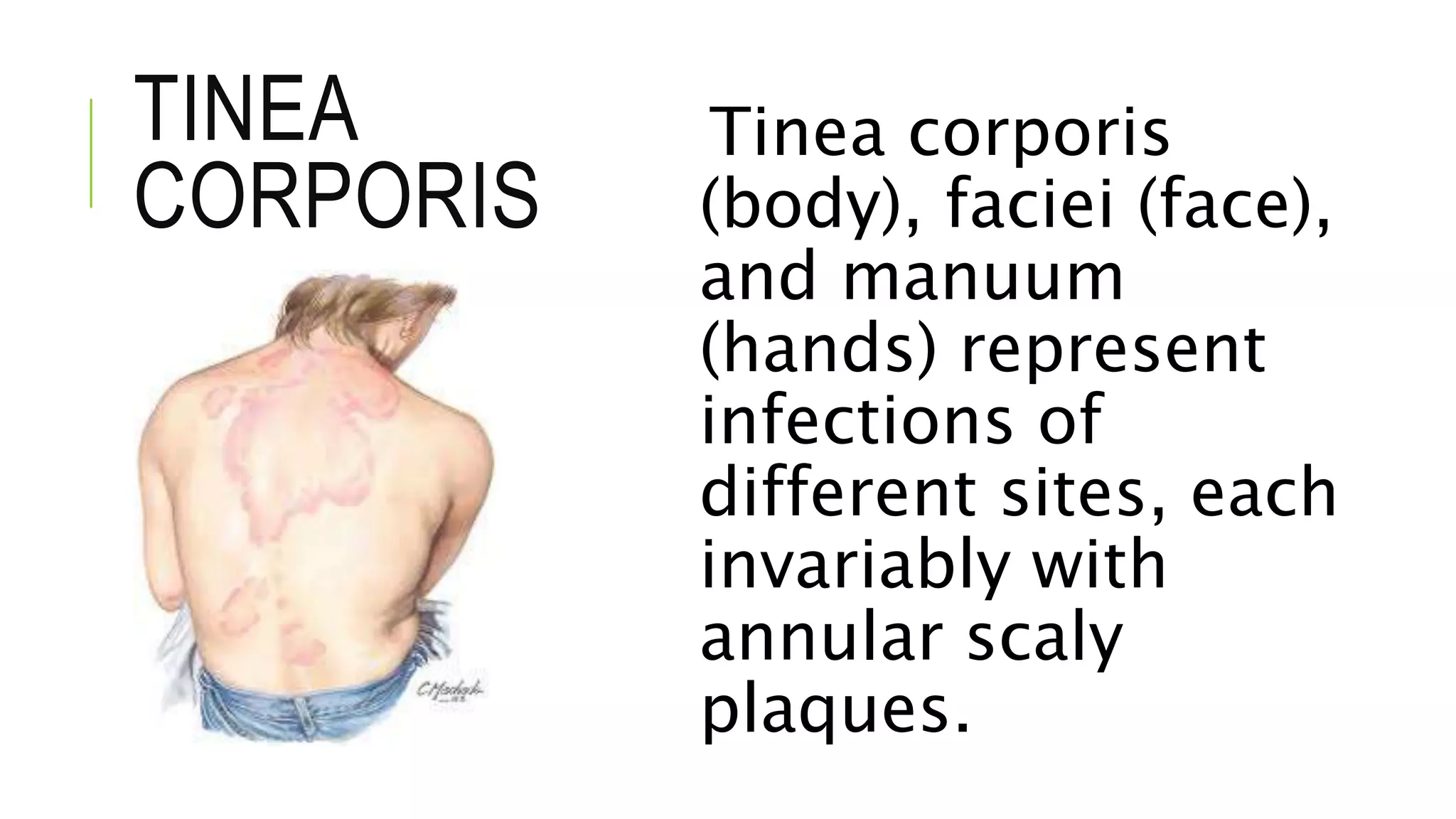
Tinea corporis
(body), faciei (face),
and manuum
(hands) represent
infections of
different sites, each
invariably with
annular scaly
plaques.
TINEA
UNGUIUM Tinea unguium
(onychomycosis)
is fungal nail
disease,
characterized by
thickened yellow
nails and
subungual debris
.
TINEA
CAPITIS
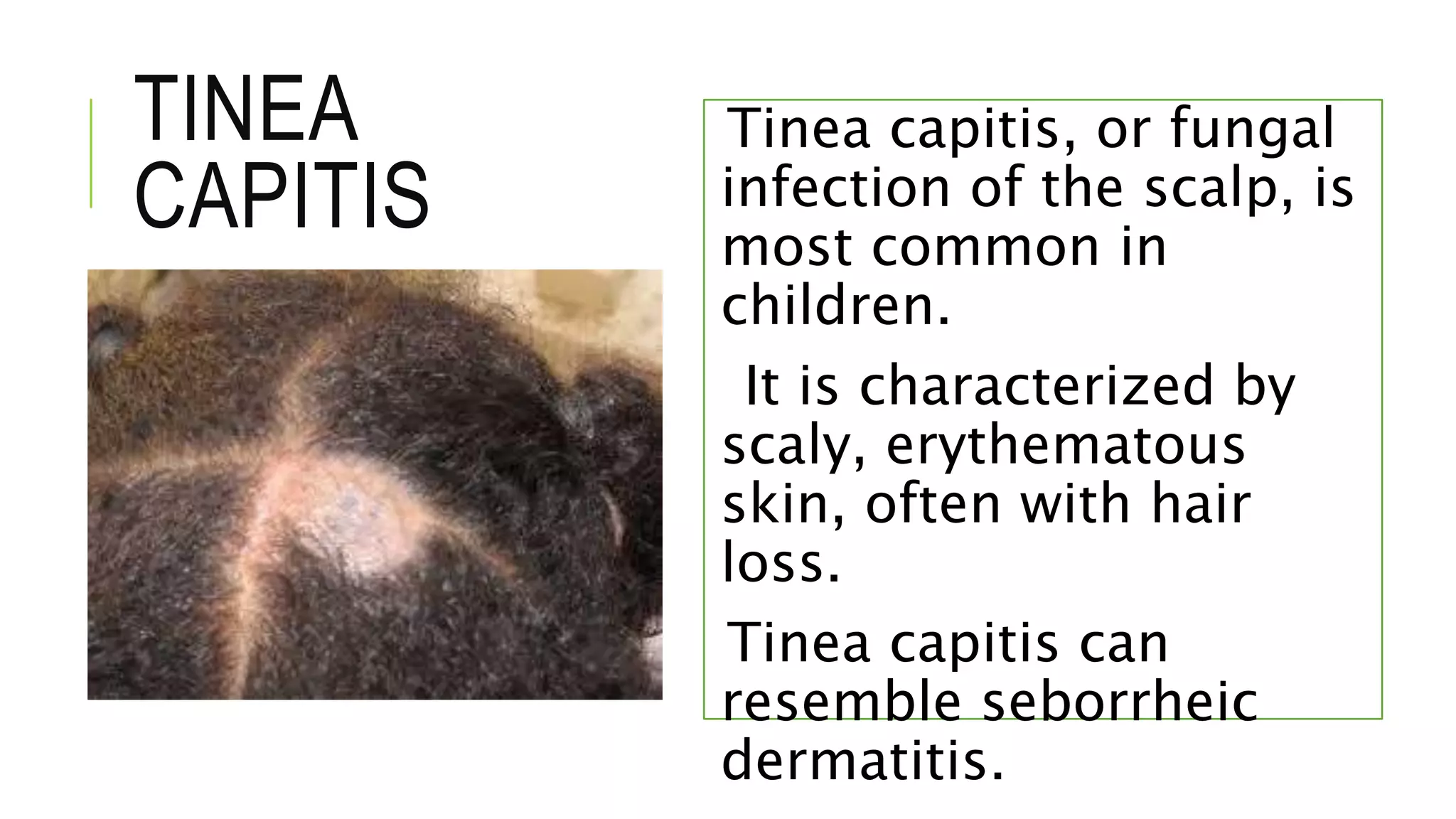
Tinea capitis, or fungal
infection of the scalp, is
most common in
children.
It is characterized by
scaly, erythematous
skin, often with hair
loss.
Tinea capitis can
resemble seborrheic
dermatitis.
2-CANDIDIASIS
Candidiasis refers to a diverse group of
infections caused by Candida albicans
or by other members of the genus
Candida. These organisms typically
infect the skin, nails, mucous
membranes, and gastrointestinal tract,
but they also cause systemic disease.
Prevalence and Risk Factors
Infection is common in
immunocompromised patients,
diabetics, the elderly, and patients
receiving antibiotics.
Treatmnet: For candidal intertrigo and
balanitis, topical antifungal agents such
as clotrimazole, terbinafine, or
econazole cream, applied twice daily for
6 to 8 weeks, is usually curative when
coupled with aeration and compresses.
Systemic antifungal drugs, such as
fluconazole 100 to 200 mg/day or
itraconazole 100 to 200 mg/day, for 5
to 10 days may be necessary for severe
or extensive disease.
2-CANDIDIASIS
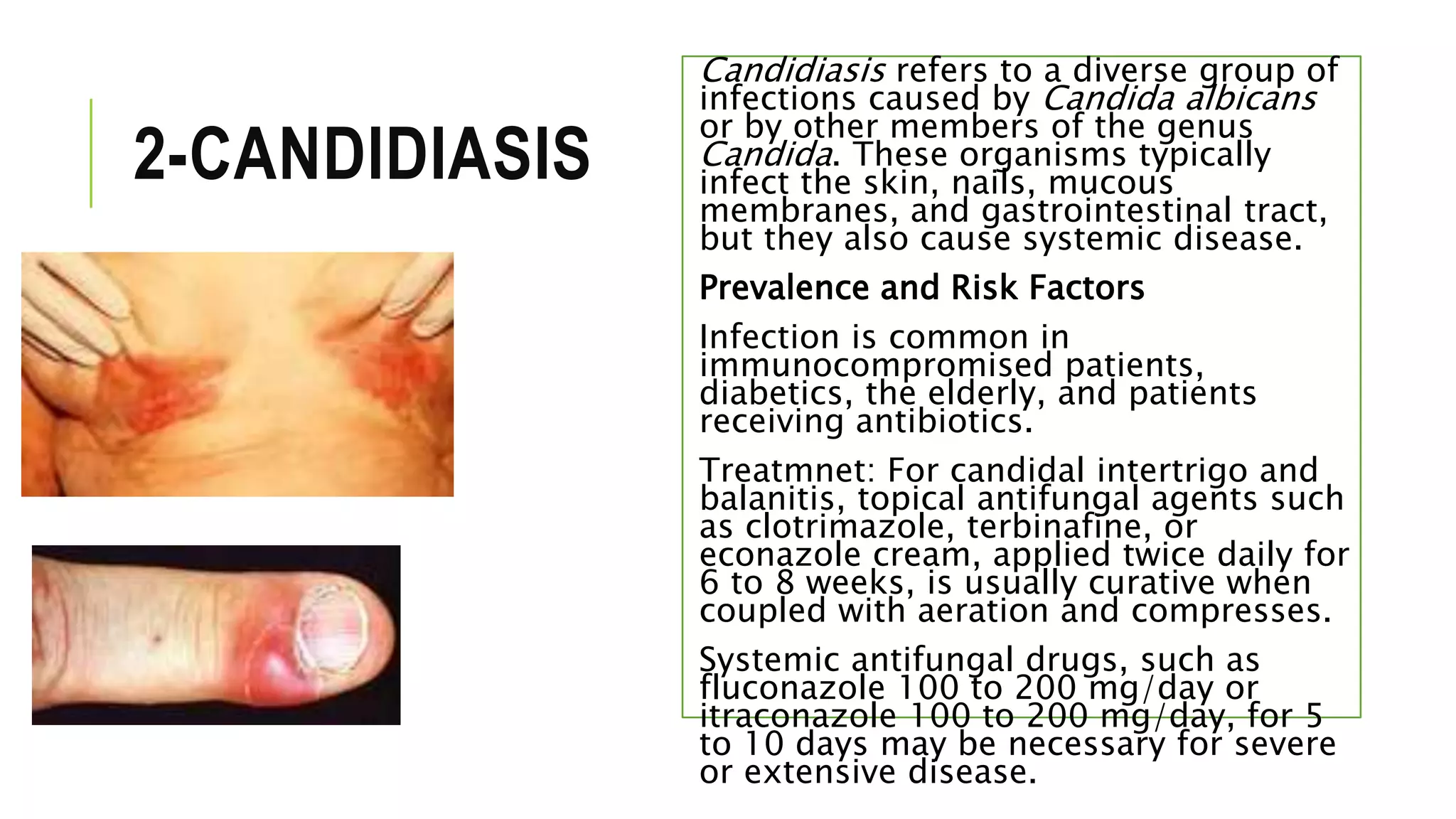
Candidal intertrigo is a
specific infection of the
skin folds (axillae, groin),
characterized by reddened
plaques, often with
satellite pustules .
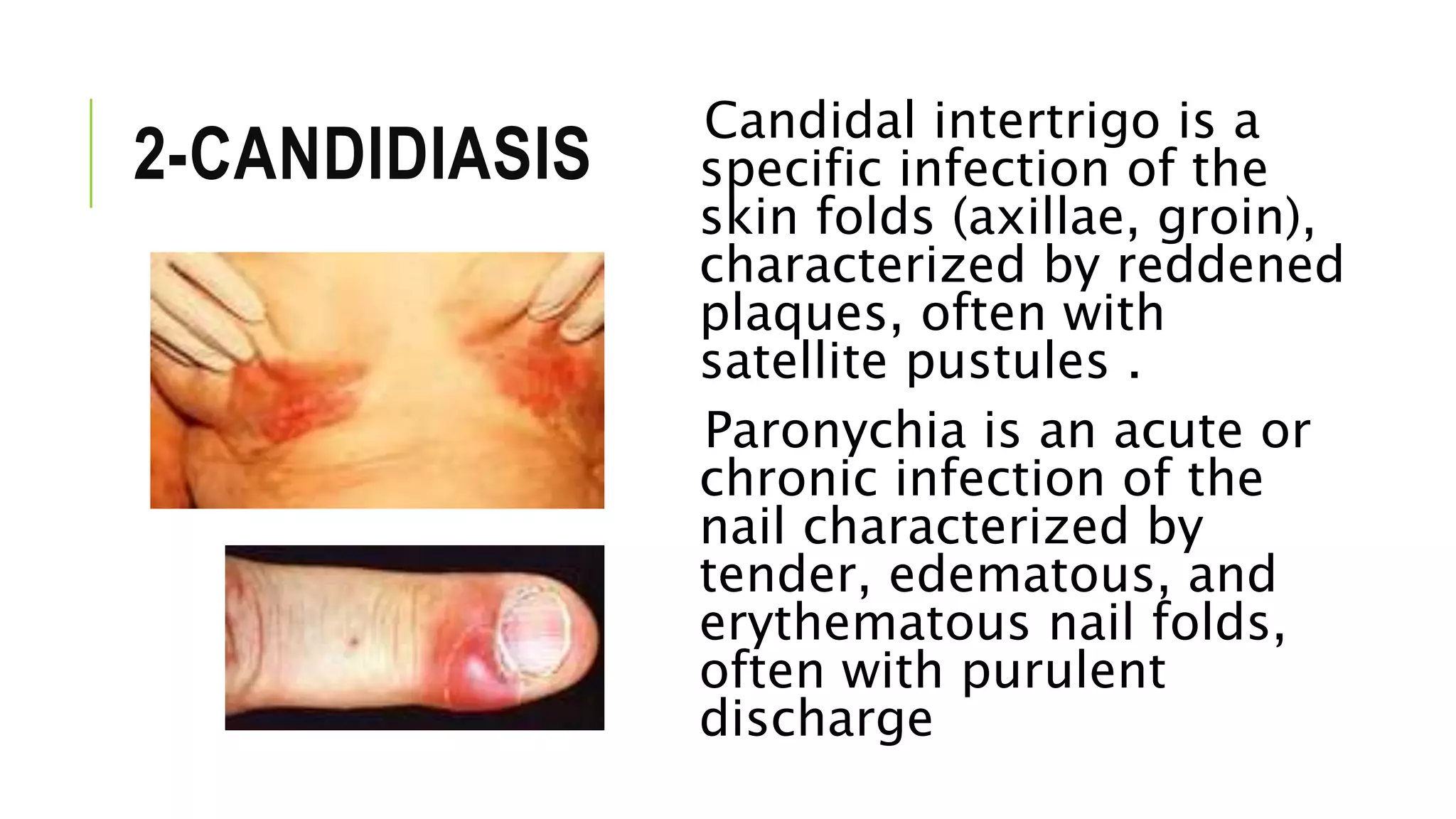
Paronychia is an acute or
chronic infection of the
nail characterized by
tender, edematous, and
erythematous nail folds,
often with purulent
discharge
2-CANDIDIASIS
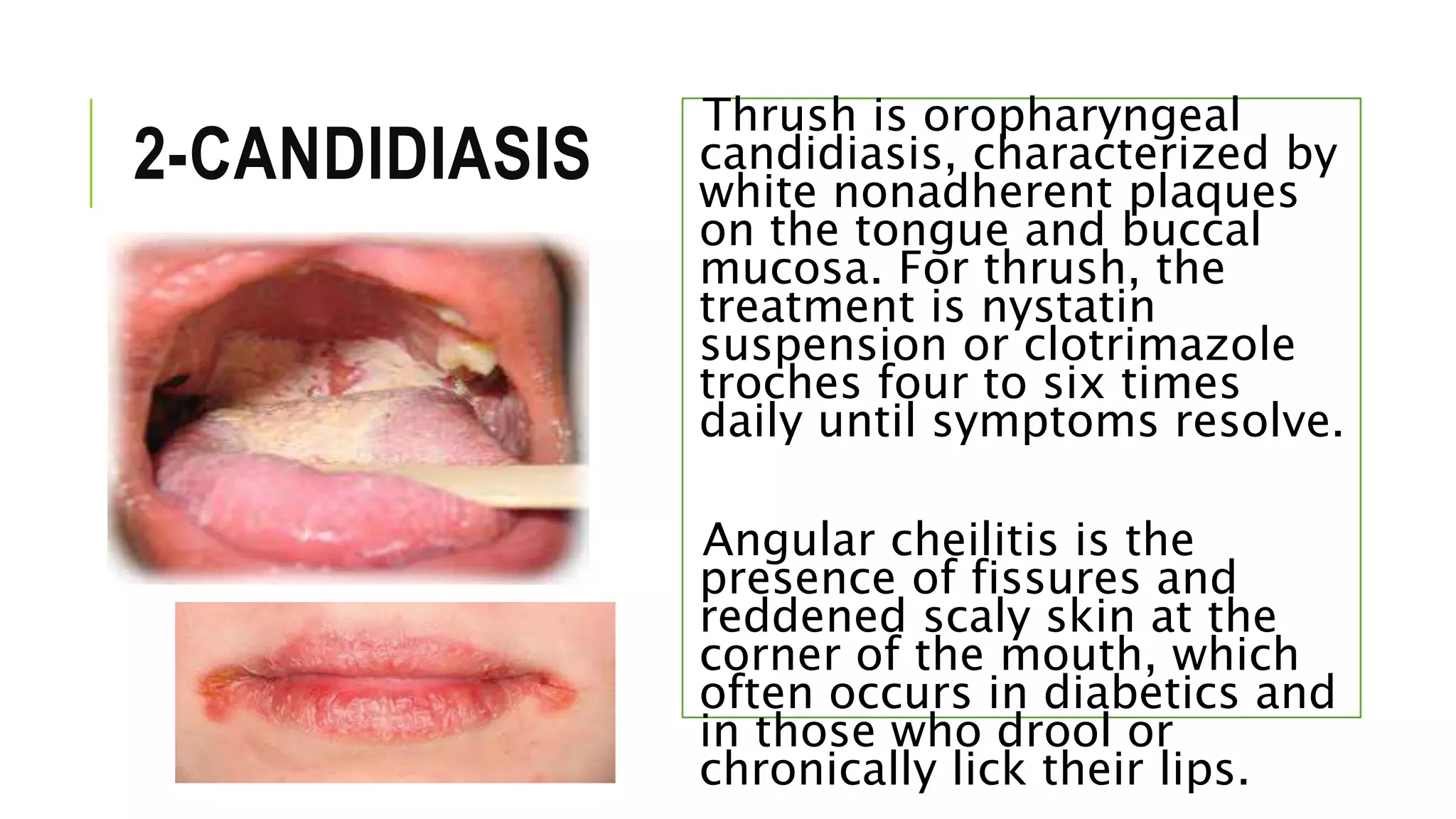
Thrush is oropharyngeal
candidiasis, characterized by
white nonadherent plaques
on the tongue and buccal
mucosa. For thrush, the
treatment is nystatin
suspension or clotrimazole
troches four to six times
daily until symptoms resolve.
Angular cheilitis is the
presence of fissures and
reddened scaly skin at the
corner of the mouth, which
often occurs in diabetics and
in those who drool or
chronically lick their lips.
2-CANDIDIASIS
Candidal vulvovaginitis is an
acute inflammation of the
perineum characterized by
itchy, reddish, scaly skin and
mucosa; creamy discharge;
and peripheral pustules. A
single 150-mg dose of
fluconazole, coupled with
aeration, is usually effective
for vulvovaginitis.
The counterpart in men is
balanitis, characterized by
shiny reddish plaques on the
glans penis, which can affect
the scrotum. Balanitis occurs
almost exclusively in
3-PITYRIASIS
VERSICOLOR
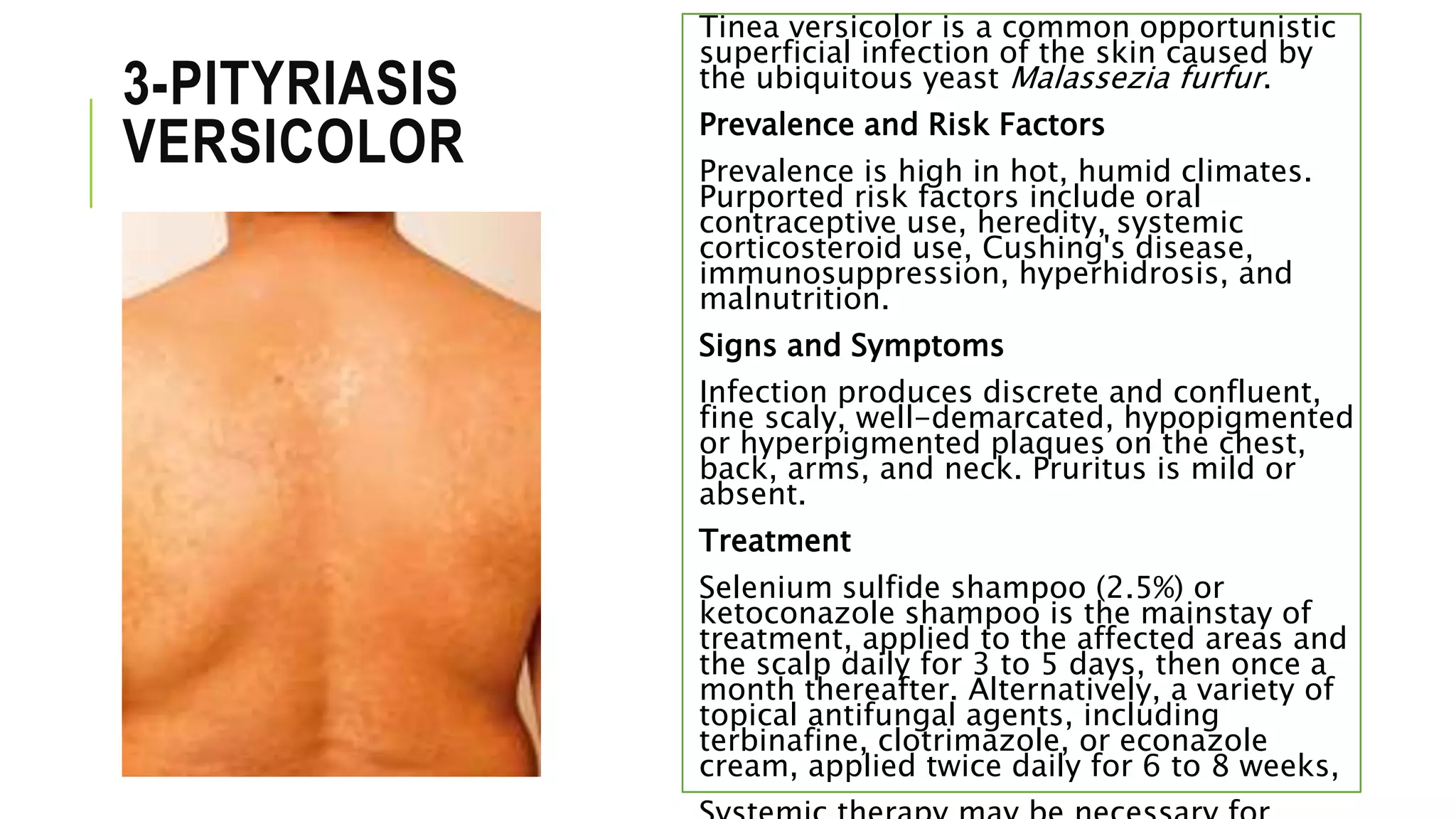
Tinea versicolor is a common opportunistic
superficial infection of the skin caused by
the ubiquitous yeast Malassezia furfur.
Prevalence and Risk Factors
Prevalence is high in hot, humid climates.
Purported risk factors include oral
contraceptive use, heredity, systemic
corticosteroid use, Cushing's disease,
immunosuppression, hyperhidrosis, and
malnutrition.
Signs and Symptoms
Infection produces discrete and confluent,
fine scaly, well-demarcated, hypopigmented
or hyperpigmented plaques on the chest,
back, arms, and neck. Pruritus is mild or
absent.
Treatment
Selenium sulfide shampoo (2.5%) or
ketoconazole shampoo is the mainstay of
treatment, applied to the affected areas and
the scalp daily for 3 to 5 days, then once a
month thereafter. Alternatively, a variety of
topical antifungal agents, including
terbinafine, clotrimazole, or econazole
cream, applied twice daily for 6 to 8 weeks,
VIRAL INFECTIONS
HERPES SIMPLEX
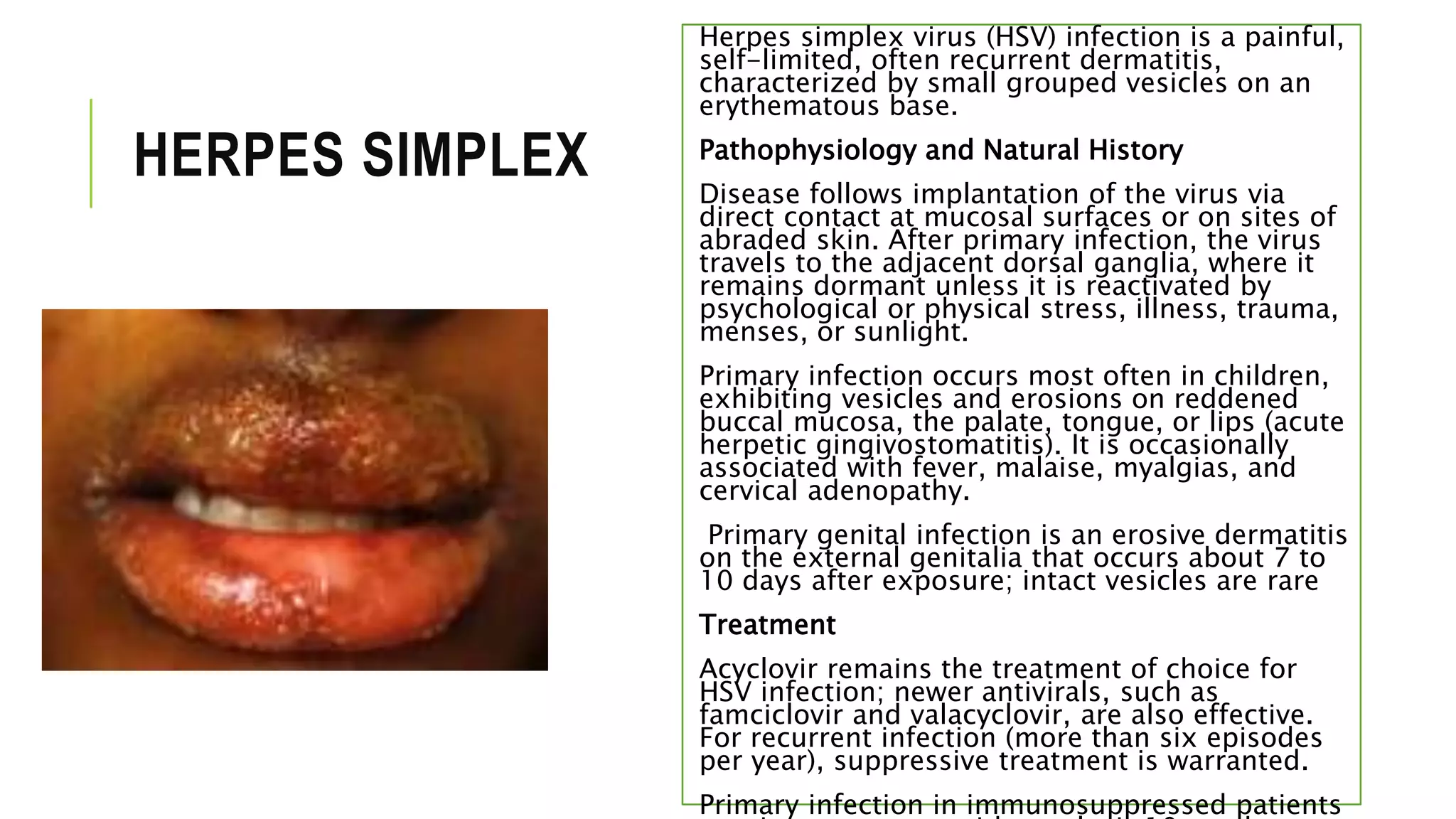
Herpes simplex virus (HSV) infection is a painful,
self-limited, often recurrent dermatitis,
characterized by small grouped vesicles on an
erythematous base.
Pathophysiology and Natural History
Disease follows implantation of the virus via
direct contact at mucosal surfaces or on sites of
abraded skin. After primary infection, the virus
travels to the adjacent dorsal ganglia, where it
remains dormant unless it is reactivated by
psychological or physical stress, illness, trauma,
menses, or sunlight.
Primary infection occurs most often in children,
exhibiting vesicles and erosions on reddened
buccal mucosa, the palate, tongue, or lips (acute
herpetic gingivostomatitis). It is occasionally
associated with fever, malaise, myalgias, and
cervical adenopathy.
Primary genital infection is an erosive dermatitis
on the external genitalia that occurs about 7 to
10 days after exposure; intact vesicles are rare
Treatment
Acyclovir remains the treatment of choice for
HSV infection; newer antivirals, such as
famciclovir and valacyclovir, are also effective.
For recurrent infection (more than six episodes
per year), suppressive treatment is warranted.
Primary infection in immunosuppressed patients
CHICKEN POX
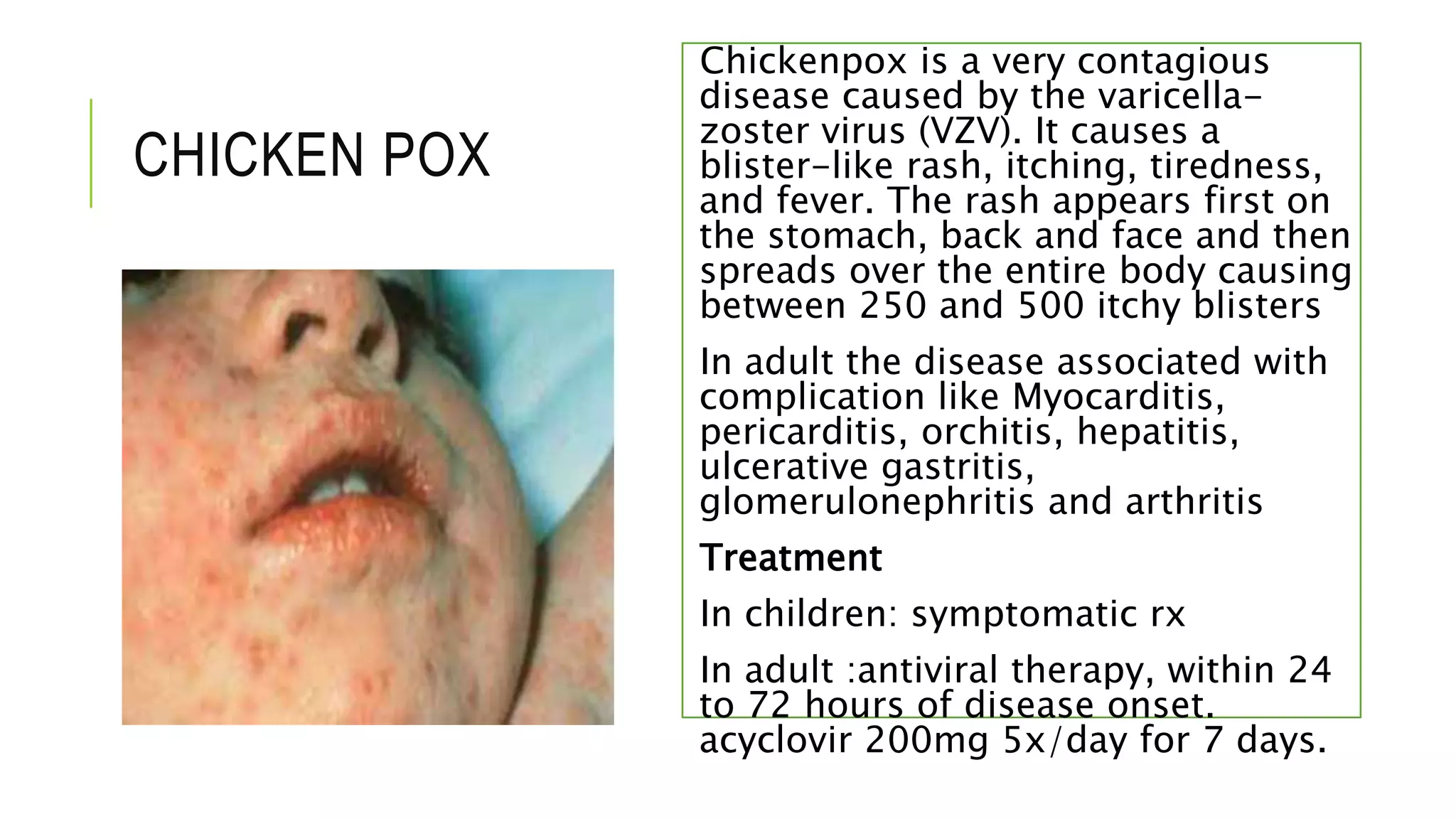
Chickenpox is a very contagious
disease caused by the varicella-
zoster virus (VZV). It causes a
blister-like rash, itching, tiredness,
and fever. The rash appears first on
the stomach, back and face and then
spreads over the entire body causing
between 250 and 500 itchy blisters
In adult the disease associated with
complication like Myocarditis,
pericarditis, orchitis, hepatitis,
ulcerative gastritis,
glomerulonephritis and arthritis
Treatment
In children: symptomatic rx
In adult :antiviral therapy, within 24
to 72 hours of disease onset.
acyclovir 200mg 5x/day for 7 days.
HERPES ZOSTER
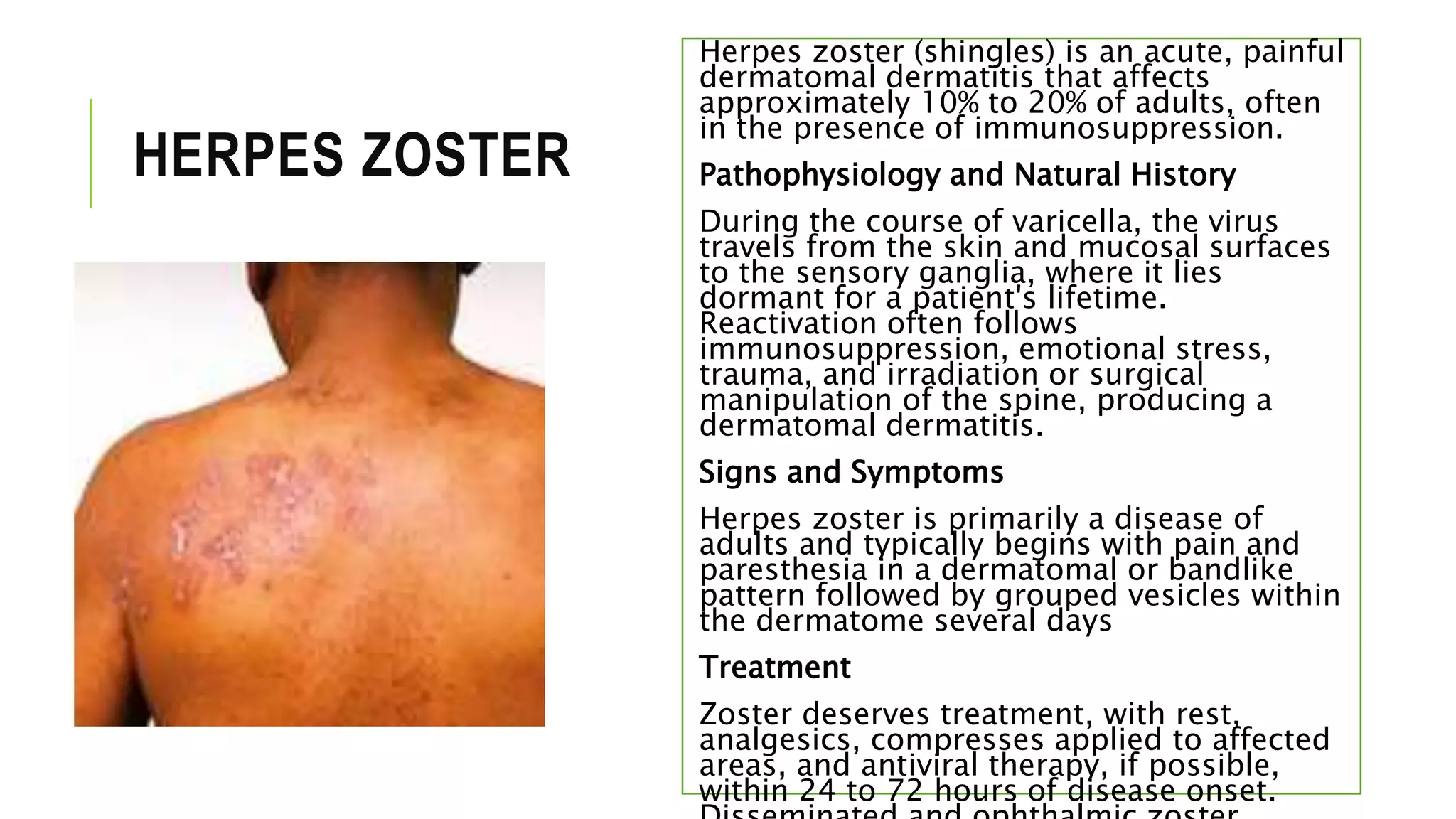
Herpes zoster (shingles) is an acute, painful
dermatomal dermatitis that affects
approximately 10% to 20% of adults, often
in the presence of immunosuppression.
Pathophysiology and Natural History
During the course of varicella, the virus
travels from the skin and mucosal surfaces
to the sensory ganglia, where it lies
dormant for a patient's lifetime.
Reactivation often follows
immunosuppression, emotional stress,
trauma, and irradiation or surgical
manipulation of the spine, producing a
dermatomal dermatitis.
Signs and Symptoms
Herpes zoster is primarily a disease of
adults and typically begins with pain and
paresthesia in a dermatomal or bandlike
pattern followed by grouped vesicles within
the dermatome several days
Treatment
Zoster deserves treatment, with rest,
analgesics, compresses applied to affected
areas, and antiviral therapy, if possible,
within 24 to 72 hours of disease onset.
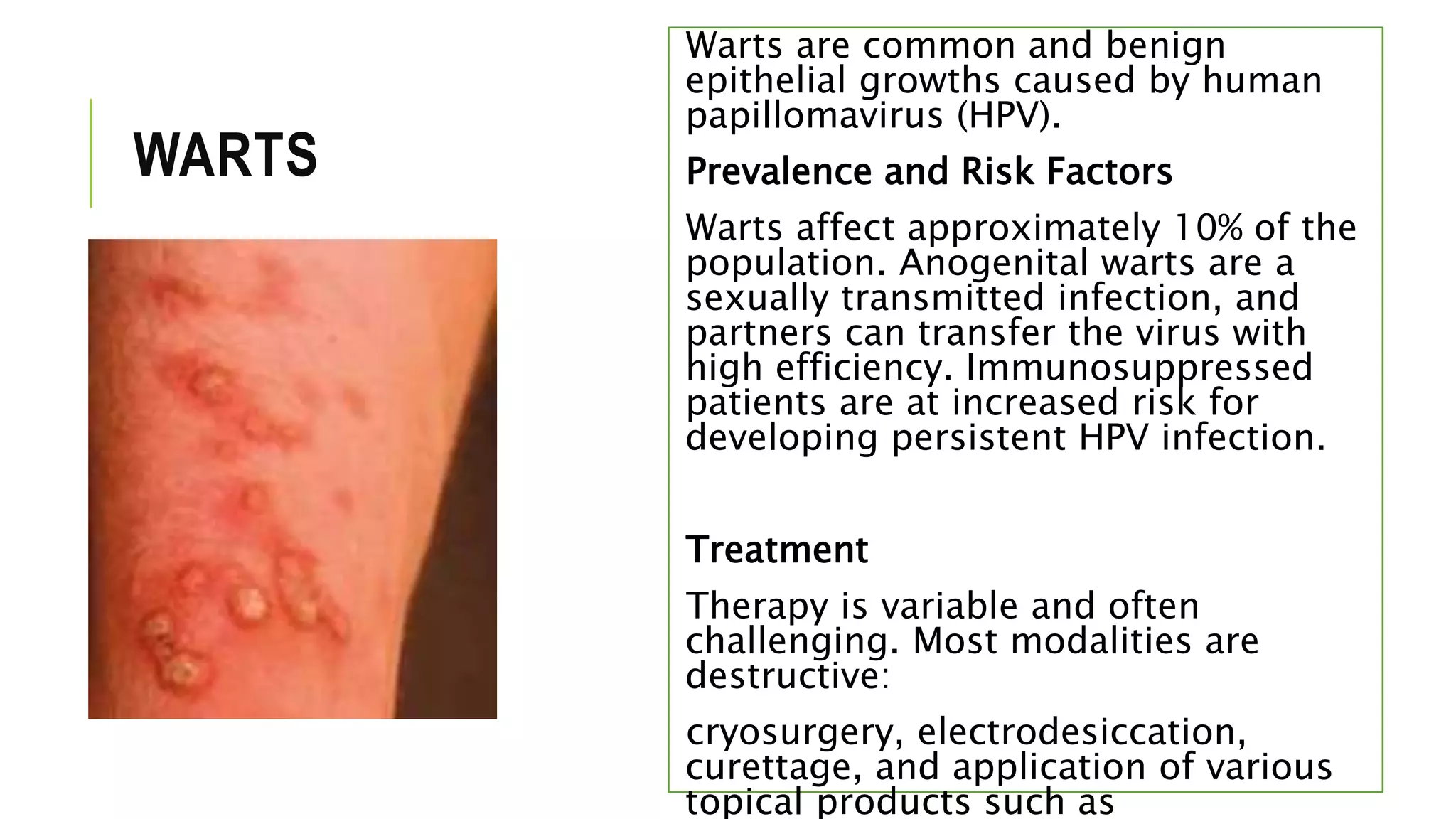
WARTS
Warts are common and benign
epithelial growths caused by human
papillomavirus (HPV).
Prevalence and Risk Factors
Warts affect approximately 10% of the
population. Anogenital warts are a
sexually transmitted infection, and
partners can transfer the virus with
high efficiency. Immunosuppressed
patients are at increased risk for
developing persistent HPV infection.
Treatment
Therapy is variable and often
challenging. Most modalities are
destructive:
cryosurgery, electrodesiccation,
curettage, and application of various
topical products such as
MOLLUSCUM
CONTAGIOSUM
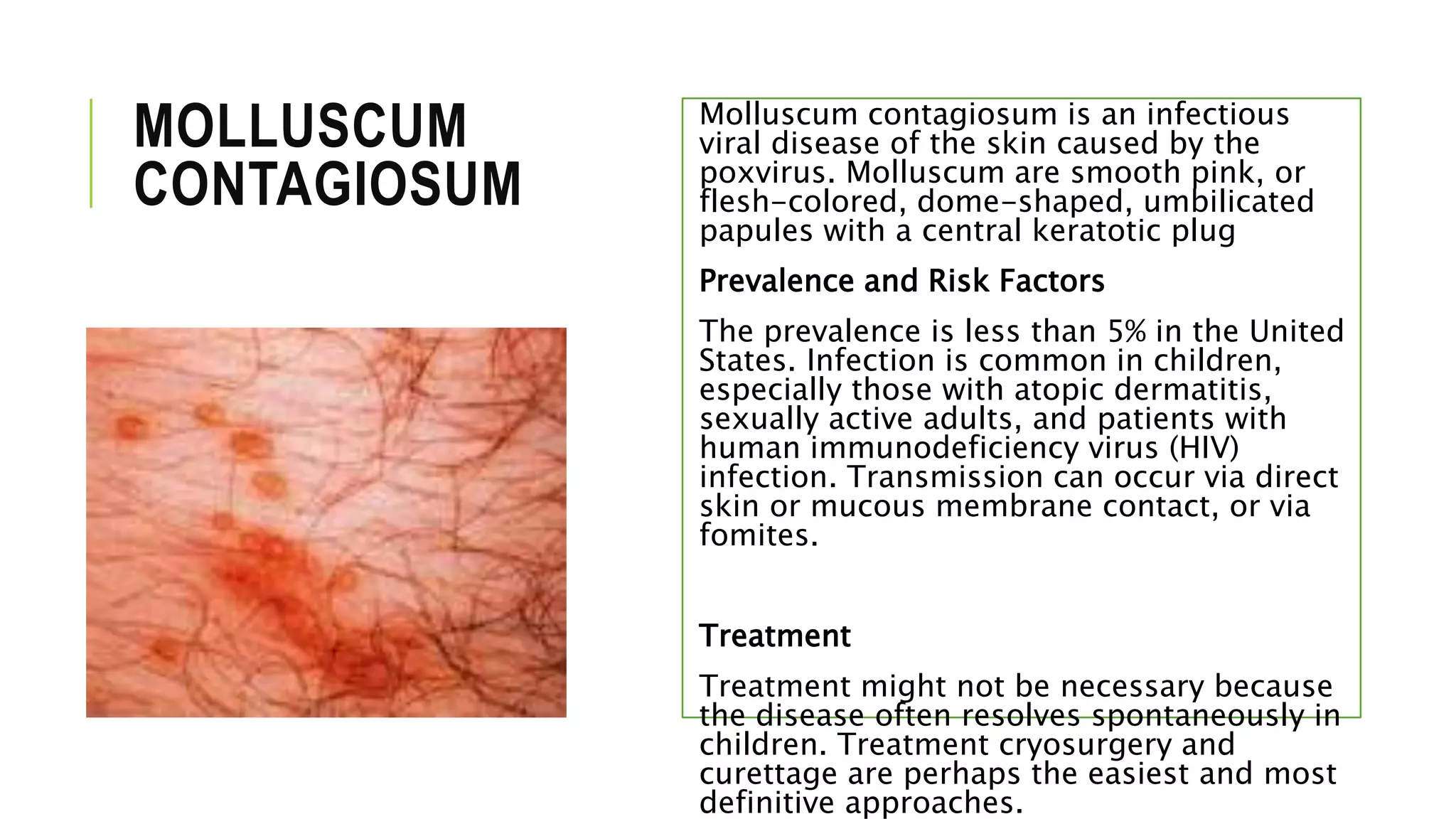
Molluscum contagiosum is an infectious
viral disease of the skin caused by the
poxvirus. Molluscum are smooth pink, or
flesh-colored, dome-shaped, umbilicated
papules with a central keratotic plug
Prevalence and Risk Factors
The prevalence is less than 5% in the United
States. Infection is common in children,
especially those with atopic dermatitis,
sexually active adults, and patients with
human immunodeficiency virus (HIV)
infection. Transmission can occur via direct
skin or mucous membrane contact, or via
fomites.
Treatment
Treatment might not be necessary because
the disease often resolves spontaneously in
children. Treatment cryosurgery and
curettage are perhaps the easiest and most
definitive approaches.
PARASITES
INFECTIONS
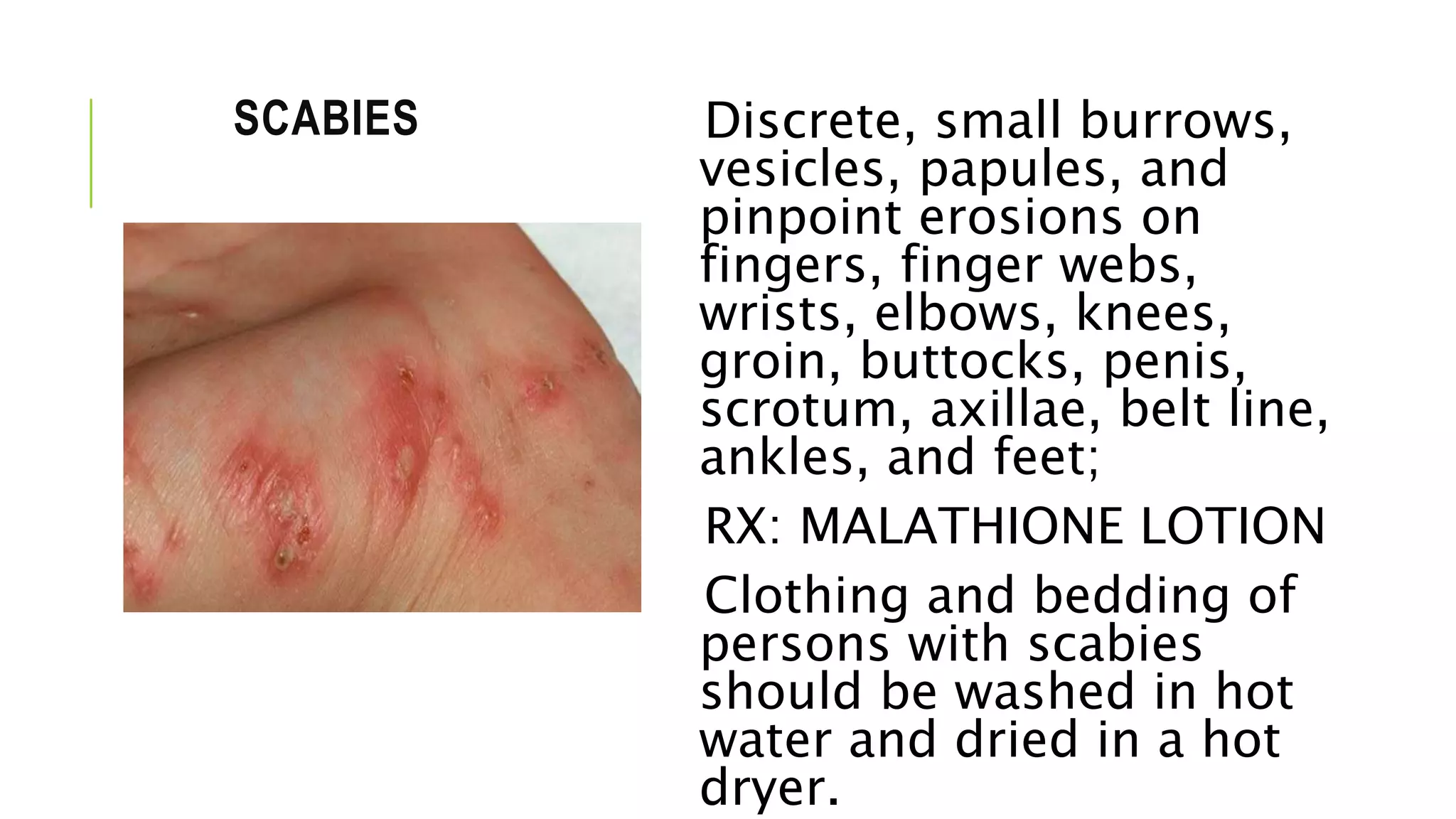
SCABIES Discrete, small burrows,
vesicles, papules, and
pinpoint erosions on
fingers, finger webs,
wrists, elbows, knees,
groin, buttocks, penis,
scrotum, axillae, belt line,
ankles, and feet;
RX: MALATHIONE LOTION
Clothing and bedding of
persons with scabies
should be washed in hot
water and dried in a hot
dryer.
HEAD LICE
Pediculosis and scabies are caused by
ectoparasites. Pruritus is the most
common presenting symptom. Head
and pubic lice infestations are
diagnosed by visualization of live lice.
Finding nits (louse egg shells) alone
indicates a historical infestation
Treatment
Wet Combing should be done every
three days for two weeks.
Delivery of hot air to kill lice by
desiccation
 Pyrethrins - Permethrin lotion, 1%;
 BOTH are safe and effective when
used as directed. Pyrethrins can only
kill live lice, not unhatched eggs
(nits).
 A second treatment is
recommended 9 to 10 days after the
first treatment to kill any newly
hatched lice before they can produce
Summary
Impetigo is a superficial skin infection usually caused by Staphylococcus aureus and occasionally
by Streptococcus pyogenes.
Folliculitis is a superficial infection of the hair follicles characterized by erythematous, follicular-
based papules and pustules.
Erysipelas is a superficial streptococcal infection of the skin.
Dermatophytosis implies infection with fungi, organisms with high affinity for keratinized tissue,
such as the skin, nails, and hair.
Cutaneous candidiasis is a yeast infection caused primarily by Candida albicans.
Tinea versicolor is a common superficial infection of the skin caused by the ubiquitous yeast
Malassezia furfur.
Herpes simplex virus infection is a painful, self-limited, often recurrent dermatitis, characterized
by small grouped vesicles on an erythematous base.
Herpes zoster (shingles) is an acute, painful dermatomal dermatitis that affects approximately
10% to 20% of adults, often in the presence of immunosuppression.
Warts are common and benign epithelial growths caused by human papillomavirus.
Molluscum contagiosum is an infectious viral disease caused by the poxvirus.
References
http://www.clevelandclinicmeded.com/medicalpubs/diseasemanage
ment/dermatology/common-skin-infections/#f0075
https://www.msdmanuals.com/home/skin-disorders/bacterial-skin-
infections/overview-of-bacterial-skin-infections
https://medlineplus.gov/skininfections.html
http://www.aafp.org/afp/2012/0915/p535.html

Skin infections

  • 1.
    SKIN INFECTIONS Dr BadriyaAl- Mahrouqi Family physician 26/11/2017
  • 2.
    OBJECTIVES By the endof this presentation the participants will be able to: Illustrate Structure Of Skin List The Most Common Causes Of Skin Infection Diagnose The Most Common Presentation Of Skin Infection Manage The Most Common Causes Of Skin Infection
  • 3.
    CAUSES OF SKININFECTION Bacterial: Cellulitis, Abscess and impetigo Viral: Shingles, warts, and herpes simplex Fungal: Athlete's foot and yeast infections
  • 4.
  • 5.
    FOLLICULITIS, FURUNCULOSIS, AND CARBUNCULOSIS Folliculitis isa superficial infection of the hair follicles characterized by erythematous, follicular-based papules and pustules. Furuncles are deeper infections of the hair follicle characterized by inflammatory nodules with pustular drainage, carbuncles IS GROUP OF Furuncles which can coalesce to form larger draining nodules (). Treatment folliculitis. :Topical treatment with clindamycin 1% or erythromycin 2%, applied two or three times a day to affected areas furuncles and carbuncles :Systemic antistaphylococcal antibiotics (Augmentin- fluxacilline - doxycycline) larger furuncles and carbuncles often
  • 6.
    ABSCESS Abscess: is atender, soft, swelling filled with pus, often surrounded by an area of skin coloured from pink to deep red. Risk Factors: that predispose individuals to developing an abscess include: Diabetes - Obesity - Intravenous drug abuse Weakened immune system due to underlying illness or medication Treatment: Surgical drainage & systemic antibiotics
  • 7.
    IMPETIGO Two clinical typesof impetigo exist: Nonbullous : face and extremities - , initially with vesicles or pustules on reddened skin WHICH rupture to leave the characteristic honey- colored Bullous: flaccid bullae with clear yellow fluid that rupture and leave a golden-yellow crust. Treatment For most patients topical treatment is adequate, either with bacitracin (Polysporin) or mupirocin (Bactroban), applied twice daily for 7 to 10 days. Systemic therapy may be necessary
  • 8.
    ERYSIPELAS AND CELLULITIS Erysipelas isa superficial cutaneous infection of the skin involving dermal lymphatic vessels./ young children/ is a tender, well-defined, erythematous, indurated plaque on the face or legs Cellulitis is a deeper process that extends to the subcutis./ a warm, tender, erythematous, and edematous plaque with ill-defined borders that expands rapidly Treatment Penicillin (250-500 mg, qid × 7-10 days) is the treatment of choice for erysipelas; parenteral therapy is warranted for patients with extensive disease or with systemic symptoms as well as for immunocompromised patients.
  • 9.
  • 10.
    1- DERMATOPHYTOSI S/ TINEA Dermatophytosis implies infection withfungi, organisms with high affinity for keratinized tissue, such as the skin, nails, and hair. Trichophyton rubrum is the most common dermatophyte worldwide. Fungal reservoirs for these organisms include soil, animals, and infected humans.it include : Tinea Pedis - Tinea Cruris- Tinea Corporis - Tinea capitis- Tinea unguium Treatment For most patients, topical treatment with antifungal cream applied twice daily for 6 to 8 weeks. if no improvement systemic antifungal
  • 11.
    Tinea pedis (athlete'sfoot) is the most common fungal infection in humans in North America and Europe. Affected skin is usually pruritic, with scaling plaques on the soles, extending to the lateral aspects of the feet and interdigital spaces often with maceration TINEA PEDIS
  • 12.
    TINEA CRURIS Tinea cruris (jock itch)occurs in the groin and on the upper, inner thighs and buttocks as scaling annular plaques ; disease is more common in men and typically spares the scrotum.
  • 13.
    TINEA CORPORIS Tinea corporis (body), faciei(face), and manuum (hands) represent infections of different sites, each invariably with annular scaly plaques.
  • 14.
    TINEA UNGUIUM Tinea unguium (onychomycosis) isfungal nail disease, characterized by thickened yellow nails and subungual debris .
  • 15.
    TINEA CAPITIS Tinea capitis, orfungal infection of the scalp, is most common in children. It is characterized by scaly, erythematous skin, often with hair loss. Tinea capitis can resemble seborrheic dermatitis.
  • 16.
    2-CANDIDIASIS Candidiasis refers toa diverse group of infections caused by Candida albicans or by other members of the genus Candida. These organisms typically infect the skin, nails, mucous membranes, and gastrointestinal tract, but they also cause systemic disease. Prevalence and Risk Factors Infection is common in immunocompromised patients, diabetics, the elderly, and patients receiving antibiotics. Treatmnet: For candidal intertrigo and balanitis, topical antifungal agents such as clotrimazole, terbinafine, or econazole cream, applied twice daily for 6 to 8 weeks, is usually curative when coupled with aeration and compresses. Systemic antifungal drugs, such as fluconazole 100 to 200 mg/day or itraconazole 100 to 200 mg/day, for 5 to 10 days may be necessary for severe or extensive disease.
  • 17.
    2-CANDIDIASIS Candidal intertrigo isa specific infection of the skin folds (axillae, groin), characterized by reddened plaques, often with satellite pustules . Paronychia is an acute or chronic infection of the nail characterized by tender, edematous, and erythematous nail folds, often with purulent discharge
  • 18.
    2-CANDIDIASIS Thrush is oropharyngeal candidiasis,characterized by white nonadherent plaques on the tongue and buccal mucosa. For thrush, the treatment is nystatin suspension or clotrimazole troches four to six times daily until symptoms resolve. Angular cheilitis is the presence of fissures and reddened scaly skin at the corner of the mouth, which often occurs in diabetics and in those who drool or chronically lick their lips.
  • 19.
    2-CANDIDIASIS Candidal vulvovaginitis isan acute inflammation of the perineum characterized by itchy, reddish, scaly skin and mucosa; creamy discharge; and peripheral pustules. A single 150-mg dose of fluconazole, coupled with aeration, is usually effective for vulvovaginitis. The counterpart in men is balanitis, characterized by shiny reddish plaques on the glans penis, which can affect the scrotum. Balanitis occurs almost exclusively in
  • 20.
    3-PITYRIASIS VERSICOLOR Tinea versicolor isa common opportunistic superficial infection of the skin caused by the ubiquitous yeast Malassezia furfur. Prevalence and Risk Factors Prevalence is high in hot, humid climates. Purported risk factors include oral contraceptive use, heredity, systemic corticosteroid use, Cushing's disease, immunosuppression, hyperhidrosis, and malnutrition. Signs and Symptoms Infection produces discrete and confluent, fine scaly, well-demarcated, hypopigmented or hyperpigmented plaques on the chest, back, arms, and neck. Pruritus is mild or absent. Treatment Selenium sulfide shampoo (2.5%) or ketoconazole shampoo is the mainstay of treatment, applied to the affected areas and the scalp daily for 3 to 5 days, then once a month thereafter. Alternatively, a variety of topical antifungal agents, including terbinafine, clotrimazole, or econazole cream, applied twice daily for 6 to 8 weeks,
  • 21.
  • 22.
    HERPES SIMPLEX Herpes simplexvirus (HSV) infection is a painful, self-limited, often recurrent dermatitis, characterized by small grouped vesicles on an erythematous base. Pathophysiology and Natural History Disease follows implantation of the virus via direct contact at mucosal surfaces or on sites of abraded skin. After primary infection, the virus travels to the adjacent dorsal ganglia, where it remains dormant unless it is reactivated by psychological or physical stress, illness, trauma, menses, or sunlight. Primary infection occurs most often in children, exhibiting vesicles and erosions on reddened buccal mucosa, the palate, tongue, or lips (acute herpetic gingivostomatitis). It is occasionally associated with fever, malaise, myalgias, and cervical adenopathy. Primary genital infection is an erosive dermatitis on the external genitalia that occurs about 7 to 10 days after exposure; intact vesicles are rare Treatment Acyclovir remains the treatment of choice for HSV infection; newer antivirals, such as famciclovir and valacyclovir, are also effective. For recurrent infection (more than six episodes per year), suppressive treatment is warranted. Primary infection in immunosuppressed patients
  • 23.
    CHICKEN POX Chickenpox isa very contagious disease caused by the varicella- zoster virus (VZV). It causes a blister-like rash, itching, tiredness, and fever. The rash appears first on the stomach, back and face and then spreads over the entire body causing between 250 and 500 itchy blisters In adult the disease associated with complication like Myocarditis, pericarditis, orchitis, hepatitis, ulcerative gastritis, glomerulonephritis and arthritis Treatment In children: symptomatic rx In adult :antiviral therapy, within 24 to 72 hours of disease onset. acyclovir 200mg 5x/day for 7 days.
  • 24.
    HERPES ZOSTER Herpes zoster(shingles) is an acute, painful dermatomal dermatitis that affects approximately 10% to 20% of adults, often in the presence of immunosuppression. Pathophysiology and Natural History During the course of varicella, the virus travels from the skin and mucosal surfaces to the sensory ganglia, where it lies dormant for a patient's lifetime. Reactivation often follows immunosuppression, emotional stress, trauma, and irradiation or surgical manipulation of the spine, producing a dermatomal dermatitis. Signs and Symptoms Herpes zoster is primarily a disease of adults and typically begins with pain and paresthesia in a dermatomal or bandlike pattern followed by grouped vesicles within the dermatome several days Treatment Zoster deserves treatment, with rest, analgesics, compresses applied to affected areas, and antiviral therapy, if possible, within 24 to 72 hours of disease onset.
  • 25.
    WARTS Warts are commonand benign epithelial growths caused by human papillomavirus (HPV). Prevalence and Risk Factors Warts affect approximately 10% of the population. Anogenital warts are a sexually transmitted infection, and partners can transfer the virus with high efficiency. Immunosuppressed patients are at increased risk for developing persistent HPV infection. Treatment Therapy is variable and often challenging. Most modalities are destructive: cryosurgery, electrodesiccation, curettage, and application of various topical products such as
  • 26.
    MOLLUSCUM CONTAGIOSUM Molluscum contagiosum isan infectious viral disease of the skin caused by the poxvirus. Molluscum are smooth pink, or flesh-colored, dome-shaped, umbilicated papules with a central keratotic plug Prevalence and Risk Factors The prevalence is less than 5% in the United States. Infection is common in children, especially those with atopic dermatitis, sexually active adults, and patients with human immunodeficiency virus (HIV) infection. Transmission can occur via direct skin or mucous membrane contact, or via fomites. Treatment Treatment might not be necessary because the disease often resolves spontaneously in children. Treatment cryosurgery and curettage are perhaps the easiest and most definitive approaches.
  • 27.
  • 28.
    SCABIES Discrete, smallburrows, vesicles, papules, and pinpoint erosions on fingers, finger webs, wrists, elbows, knees, groin, buttocks, penis, scrotum, axillae, belt line, ankles, and feet; RX: MALATHIONE LOTION Clothing and bedding of persons with scabies should be washed in hot water and dried in a hot dryer.
  • 29.
    HEAD LICE Pediculosis andscabies are caused by ectoparasites. Pruritus is the most common presenting symptom. Head and pubic lice infestations are diagnosed by visualization of live lice. Finding nits (louse egg shells) alone indicates a historical infestation Treatment Wet Combing should be done every three days for two weeks. Delivery of hot air to kill lice by desiccation  Pyrethrins - Permethrin lotion, 1%;  BOTH are safe and effective when used as directed. Pyrethrins can only kill live lice, not unhatched eggs (nits).  A second treatment is recommended 9 to 10 days after the first treatment to kill any newly hatched lice before they can produce
  • 30.
    Summary Impetigo is asuperficial skin infection usually caused by Staphylococcus aureus and occasionally by Streptococcus pyogenes. Folliculitis is a superficial infection of the hair follicles characterized by erythematous, follicular- based papules and pustules. Erysipelas is a superficial streptococcal infection of the skin. Dermatophytosis implies infection with fungi, organisms with high affinity for keratinized tissue, such as the skin, nails, and hair. Cutaneous candidiasis is a yeast infection caused primarily by Candida albicans. Tinea versicolor is a common superficial infection of the skin caused by the ubiquitous yeast Malassezia furfur. Herpes simplex virus infection is a painful, self-limited, often recurrent dermatitis, characterized by small grouped vesicles on an erythematous base. Herpes zoster (shingles) is an acute, painful dermatomal dermatitis that affects approximately 10% to 20% of adults, often in the presence of immunosuppression. Warts are common and benign epithelial growths caused by human papillomavirus. Molluscum contagiosum is an infectious viral disease caused by the poxvirus.
  • 31.