 What is skin infection?
 Bacterial skin disease
 Viral skin diseases
 Fungal skin diseases
 Parasitic skin disease
 Summary
 Staphylococcus , Streptococcus and
Pseudomonas are main causitive agent of
skin infections.
 They enter in skin by hair follicle, surgical
incisions, skin abrasions, Mucous
membrane ,Ear, Sebum channels.
 Transmitted by direct contact, endogenous
infection, Swimming water , hot tubes etc.
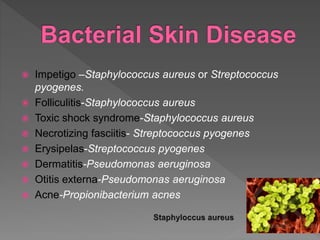
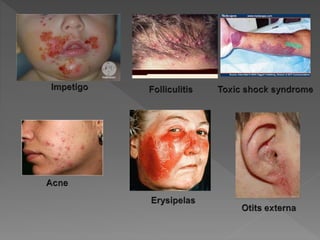
 Impetigo –Staphylococcus aureus or Streptococcus
pyogenes.
 Folliculitis-Staphylococcus aureus
 Toxic shock syndrome-Staphylococcus aureus
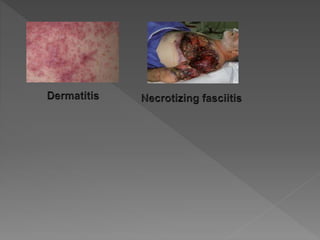
 Necrotizing fasciitis- Streptococcus pyogenes
 Erysipelas-Streptococcus pyogenes
 Dermatitis-Pseudomonas aeruginosa
 Otitis externa-Pseudomonas aeruginosa
 Acne-Propionibacterium acnes
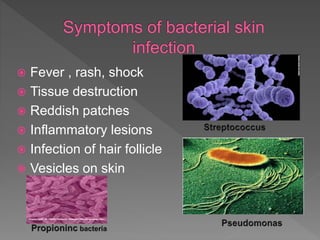
 Fever , rash, shock
 Tissue destruction
 Reddish patches
 Inflammatory lesions
 Infection of hair follicle
 Vesicles on skin
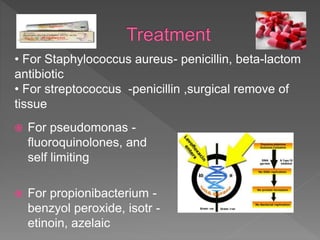
 For pseudomonas -
fluoroquinolones, and
self limiting
 For propionibacterium -
benzyol peroxide, isotr -
etinoin, azelaic
• For Staphylococcus aureus- penicillin, beta-lactom
antibiotic
• For streptococcus -penicillin ,surgical remove of
tissue
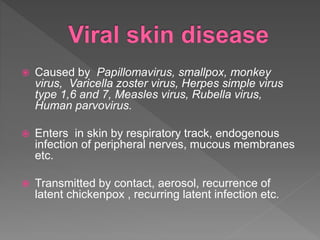
 Caused by Papillomavirus, smallpox, monkey
virus, Varicella zoster virus, Herpes simple virus
type 1,6 and 7, Measles virus, Rubella virus,
Human parvovirus.
 Enters in skin by respiratory track, endogenous
infection of peripheral nerves, mucous membranes
etc.
 Transmitted by contact, aerosol, recurrence of
latent chickenpox , recurring latent infection etc.
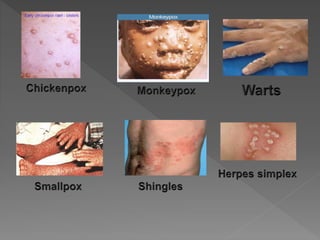
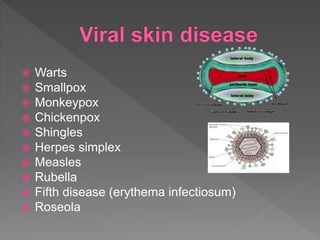
 Warts
 Smallpox
 Monkeypox
 Chickenpox
 Shingles
 Herpes simplex
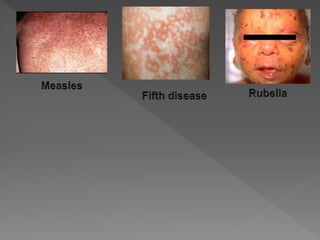
 Measles
 Rubella
 Fifth disease (erythema infectiosum)
 Roseola
 Horny projection of the skin formed by proliferation
of cell
 Pustules that may be nearly confluent on skin
 Vesicles are confined to face, throat and lower back,
waist, scalp, upper chest ,around mouth.
 skin rashes of reddish maculae's first appearing on
the face and spreading to trunk and extremities
 Mild macular disease with facial rash
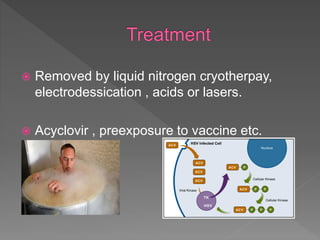
 Removed by liquid nitrogen cryotherpay,
electrodessication , acids or lasers.
 Acyclovir , preexposure to vaccine etc.
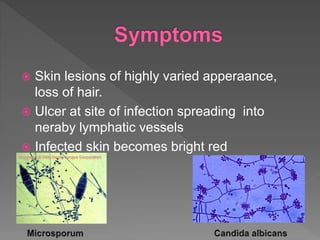
 Caused by Microsporum, Trichophyton,
epidermophyton spp, Sporothrix and
Schenckii , Candida albicans .
 Enters in by skin ,skin abrasion, mucous
membranes etc.
 Transmitted by direct contact ,soil
,endogenous infection etc.
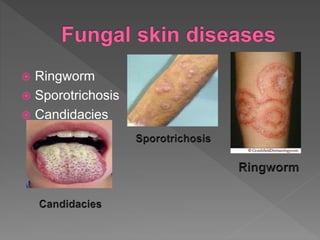
 Ringworm
 Sporotrichosis
 Candidacies
 Skin lesions of highly varied apperaance,
loss of hair.
 Ulcer at site of infection spreading into
neraby lymphatic vessels
 Infected skin becomes bright red
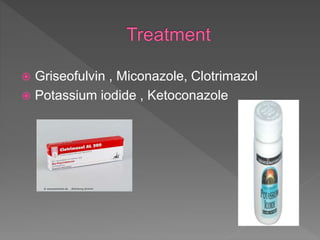
 Griseofulvin , Miconazole, Clotrimazol
 Potassium iodide , Ketoconazole
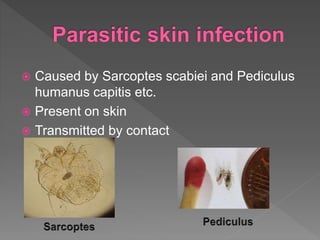
 Caused by Sarcoptes scabiei and Pediculus
humanus capitis etc.
 Present on skin
 Transmitted by contact
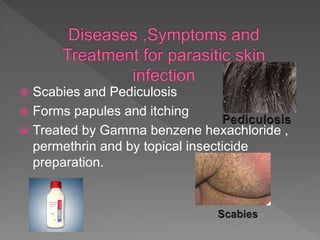
 Scabies and Pediculosis
 Forms papules and itching
 Treated by Gamma benzene hexachloride ,
permethrin and by topical insecticide
preparation.
 Types of skin infections are Bacterial, Fungal, Viral
and parasitic.
 Disease transmitted by direct contact, soil, infection
, aerosols etc.
 Portal of enrty is skin ,hair folicles, surgical incision,
ear ,sebum channel, repiratory track, endogenoous
infection, mucous membrane etc.
 Symptoms are different for different infection.
 Treatment for virus , bacteria ,fungi and parasitic is
different.
 MICROBIOLOGY AN INTRODUCTION BY
TORTORA
 www.healthline.com
 www.dermentz.com
 www.bupk.uk
Skin infection[1]

Skin infection[1]

  • 2.
     What isskin infection?  Bacterial skin disease  Viral skin diseases  Fungal skin diseases  Parasitic skin disease  Summary
  • 4.
     Staphylococcus ,Streptococcus and Pseudomonas are main causitive agent of skin infections.  They enter in skin by hair follicle, surgical incisions, skin abrasions, Mucous membrane ,Ear, Sebum channels.  Transmitted by direct contact, endogenous infection, Swimming water , hot tubes etc.
  • 5.
     Impetigo –Staphylococcusaureus or Streptococcus pyogenes.  Folliculitis-Staphylococcus aureus  Toxic shock syndrome-Staphylococcus aureus  Necrotizing fasciitis- Streptococcus pyogenes  Erysipelas-Streptococcus pyogenes  Dermatitis-Pseudomonas aeruginosa  Otitis externa-Pseudomonas aeruginosa  Acne-Propionibacterium acnes
  • 8.
     Fever ,rash, shock  Tissue destruction  Reddish patches  Inflammatory lesions  Infection of hair follicle  Vesicles on skin
  • 9.
     For pseudomonas- fluoroquinolones, and self limiting  For propionibacterium - benzyol peroxide, isotr - etinoin, azelaic • For Staphylococcus aureus- penicillin, beta-lactom antibiotic • For streptococcus -penicillin ,surgical remove of tissue
  • 10.
     Caused byPapillomavirus, smallpox, monkey virus, Varicella zoster virus, Herpes simple virus type 1,6 and 7, Measles virus, Rubella virus, Human parvovirus.  Enters in skin by respiratory track, endogenous infection of peripheral nerves, mucous membranes etc.  Transmitted by contact, aerosol, recurrence of latent chickenpox , recurring latent infection etc.
  • 13.
     Warts  Smallpox Monkeypox  Chickenpox  Shingles  Herpes simplex  Measles  Rubella  Fifth disease (erythema infectiosum)  Roseola
  • 14.
     Horny projectionof the skin formed by proliferation of cell  Pustules that may be nearly confluent on skin  Vesicles are confined to face, throat and lower back, waist, scalp, upper chest ,around mouth.  skin rashes of reddish maculae's first appearing on the face and spreading to trunk and extremities  Mild macular disease with facial rash
  • 15.
     Removed byliquid nitrogen cryotherpay, electrodessication , acids or lasers.  Acyclovir , preexposure to vaccine etc.
  • 16.
     Caused byMicrosporum, Trichophyton, epidermophyton spp, Sporothrix and Schenckii , Candida albicans .  Enters in by skin ,skin abrasion, mucous membranes etc.  Transmitted by direct contact ,soil ,endogenous infection etc.
  • 17.
  • 18.
     Skin lesionsof highly varied apperaance, loss of hair.  Ulcer at site of infection spreading into neraby lymphatic vessels  Infected skin becomes bright red
  • 19.
     Griseofulvin ,Miconazole, Clotrimazol  Potassium iodide , Ketoconazole
  • 20.
     Caused bySarcoptes scabiei and Pediculus humanus capitis etc.  Present on skin  Transmitted by contact
  • 21.
     Scabies andPediculosis  Forms papules and itching  Treated by Gamma benzene hexachloride , permethrin and by topical insecticide preparation.
  • 22.
     Types ofskin infections are Bacterial, Fungal, Viral and parasitic.  Disease transmitted by direct contact, soil, infection , aerosols etc.  Portal of enrty is skin ,hair folicles, surgical incision, ear ,sebum channel, repiratory track, endogenoous infection, mucous membrane etc.  Symptoms are different for different infection.  Treatment for virus , bacteria ,fungi and parasitic is different.
  • 23.
     MICROBIOLOGY ANINTRODUCTION BY TORTORA  www.healthline.com  www.dermentz.com  www.bupk.uk