Sociological Aspects of
Education
Dr R. S. Dodiya
Asst. Professor
HMPIETR
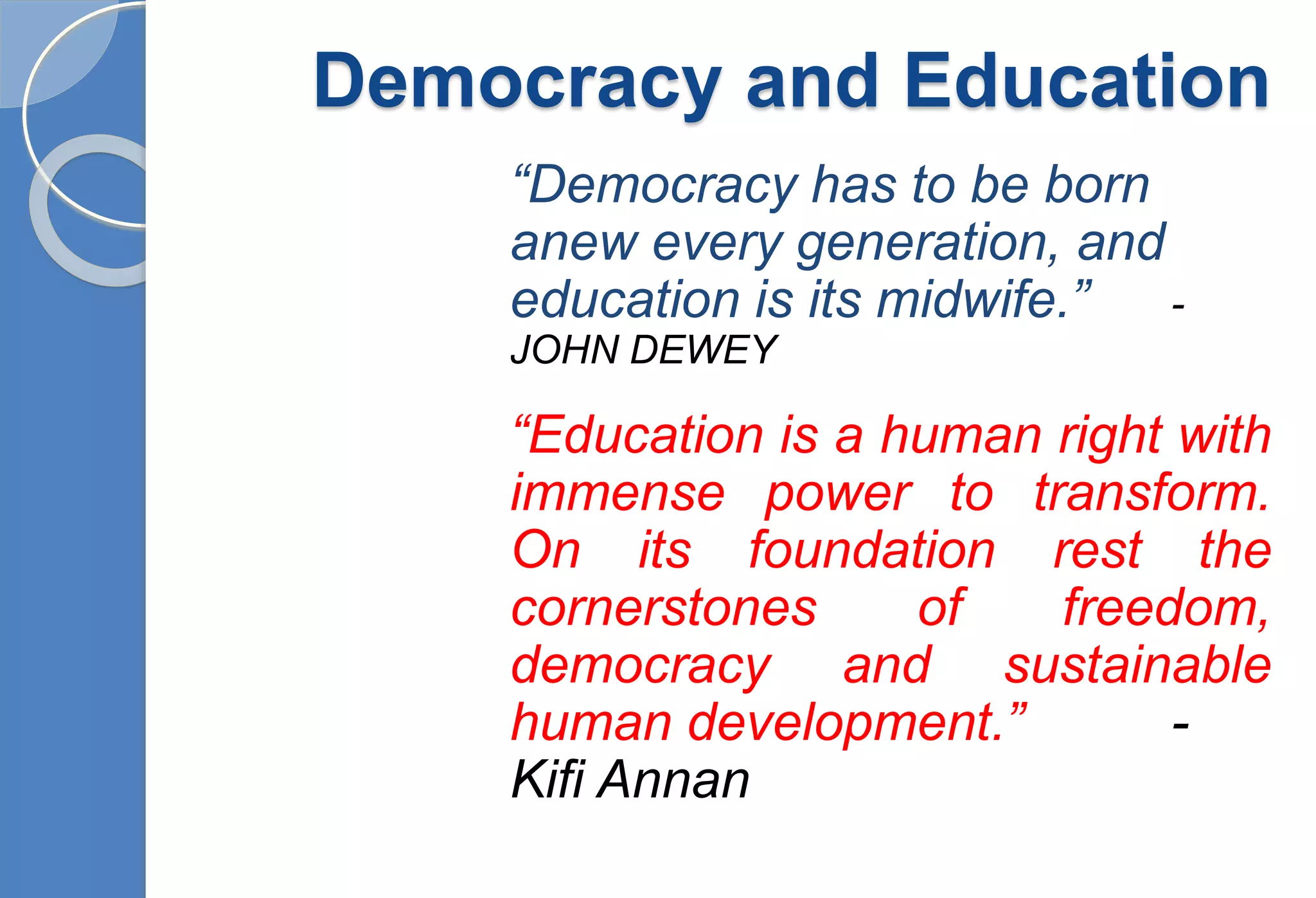
Democracy and Education
“Democracy has to be born
anew every generation, and
education is its midwife.” -
JOHN DEWEY
“Education is a human right with
immense power to transform.
On its foundation rest the
cornerstones of freedom,
democracy and sustainable
human development.” -
Kifi Annan
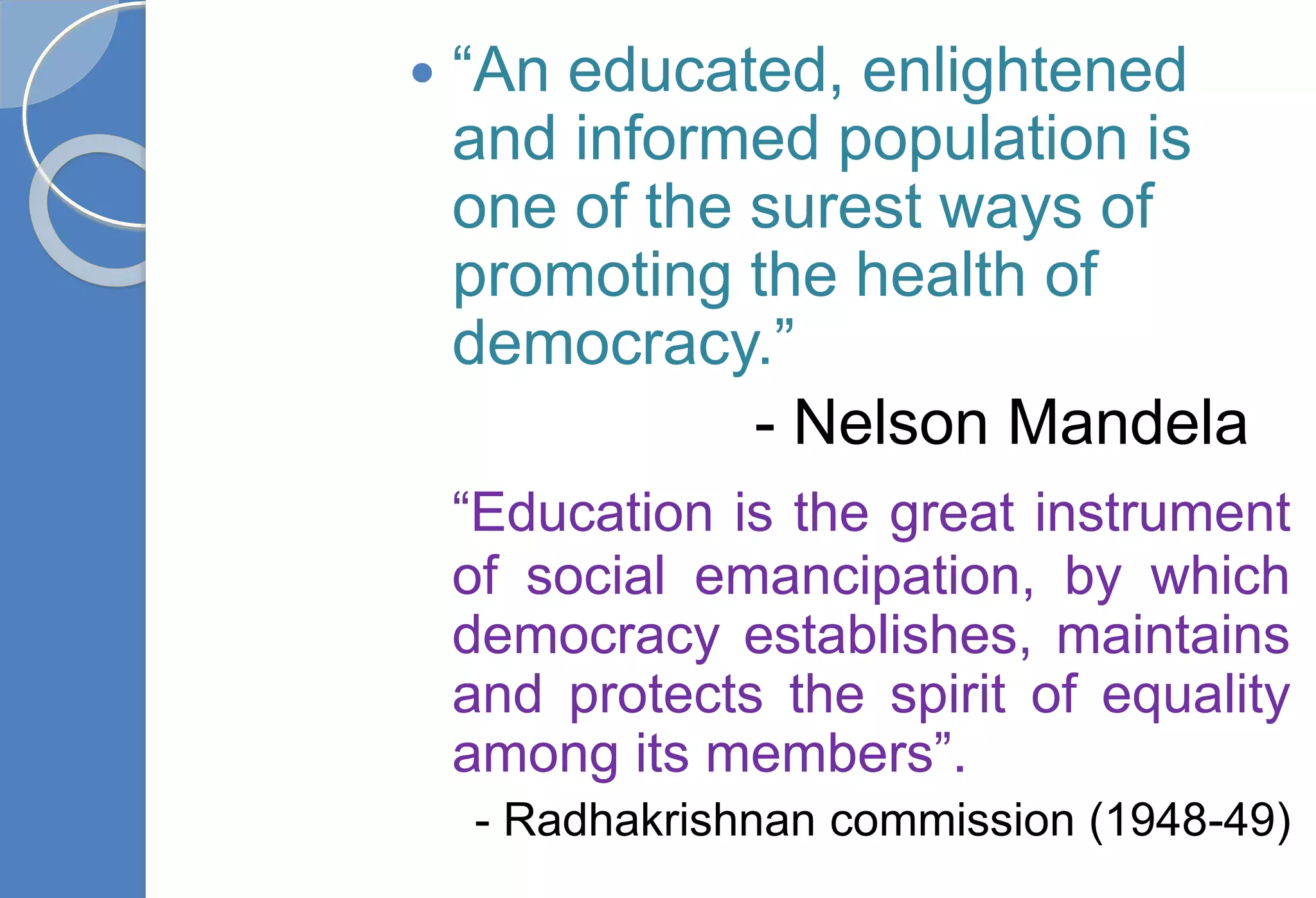
 “An educated, enlightened
and informed population is
one of the surest ways of
promoting the health of
democracy.”
- Nelson Mandela
“Education is the great instrument
of social emancipation, by which
democracy establishes, maintains
and protects the spirit of equality
among its members”.
- Radhakrishnan commission (1948-49)
 “Democracy is
essentially an attitude of
respect and reverence
towards our fellow men.”
- Dr Ambedkar
 “Democracy is not a
form of government, but
a form of social
organization.”
-Dr Ambedkar
 Education as a weapon of democracy.
One, who is educated enough, can
know about his human rights, the
common laws of the country, how to
retain his dignity with the help of law,
etc. Such a person can live with liberty
and share equal opportunities with
other people around him. So, it
becomes a powerful weapon for him
in order to achieve his place in the
society with honour.
Role of Teacher and School
 Success of democracy largely depended on
teacher – his attitude, beliefs and way of life.
 He should work as the best medium for spreading
democratic feelings and ideas
 He is an agent of change and facilitator of
democratic culture in school
 He is not a dictator or autocrat, but a friend,
philosopher, stage-setter, guide and a vigilant
supervisor. His duty is not to interfere but to co-
operate.
 He should carry no prejudices and favouritism.
 He should maintain cordial relation with the
community and practice democratic principles in
life.
 Individual Freedom, freedom of
expression and freedom for work are
the pillars of democratic system in
school
 School should provide full scale
freedom to all students to grow.
 It should act as a replica of community
where democratic ideals are
practically done.
 It should teach citizenship directly;
and everywhere there should be the
spirit of team work.
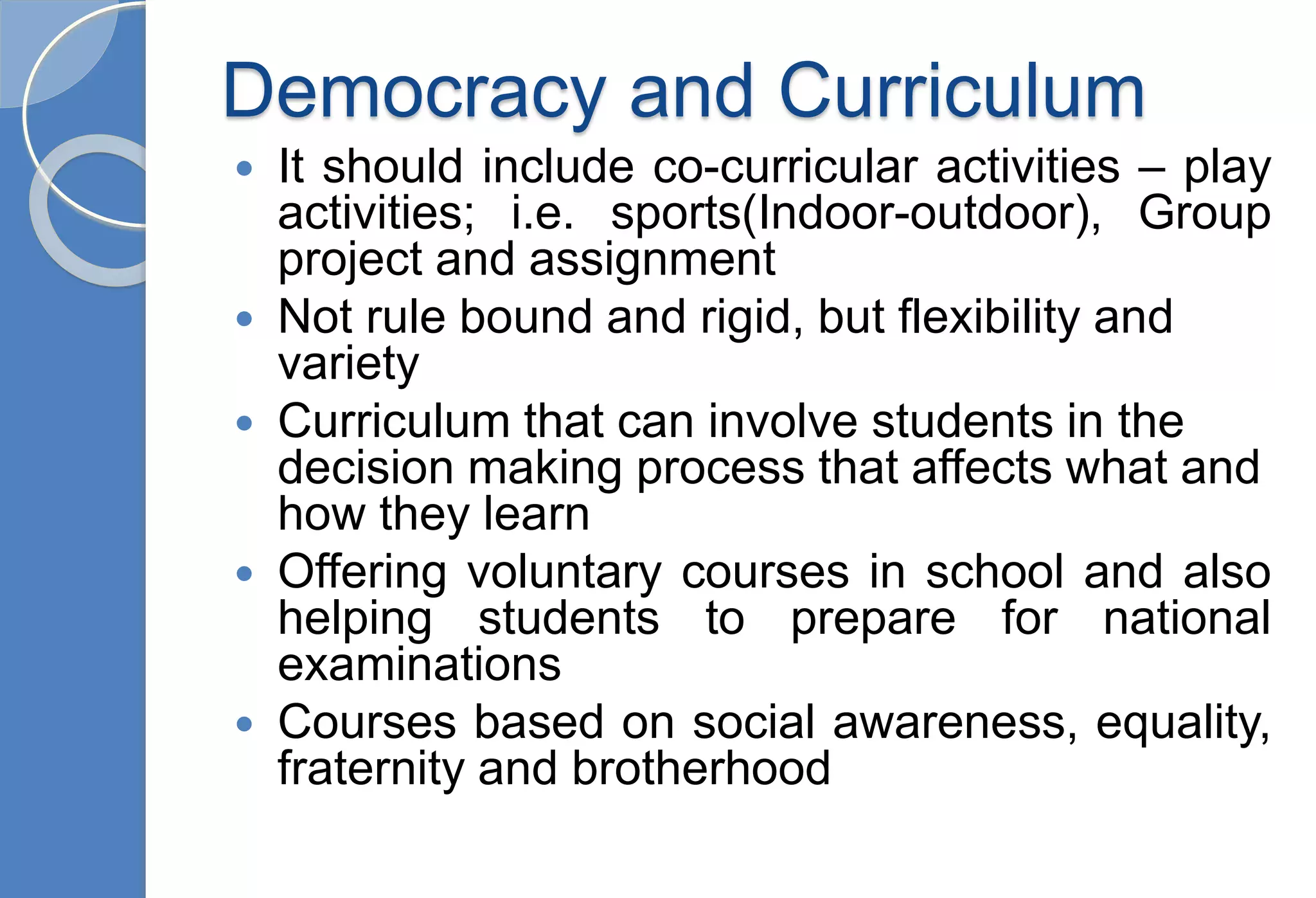
Democracy and Curriculum
 It should include co-curricular activities – play
activities; i.e. sports(Indoor-outdoor), Group
project and assignment
 Not rule bound and rigid, but flexibility and
variety
 Curriculum that can involve students in the
decision making process that affects what and
how they learn
 Offering voluntary courses in school and also
helping students to prepare for national
examinations
 Courses based on social awareness, equality,
fraternity and brotherhood
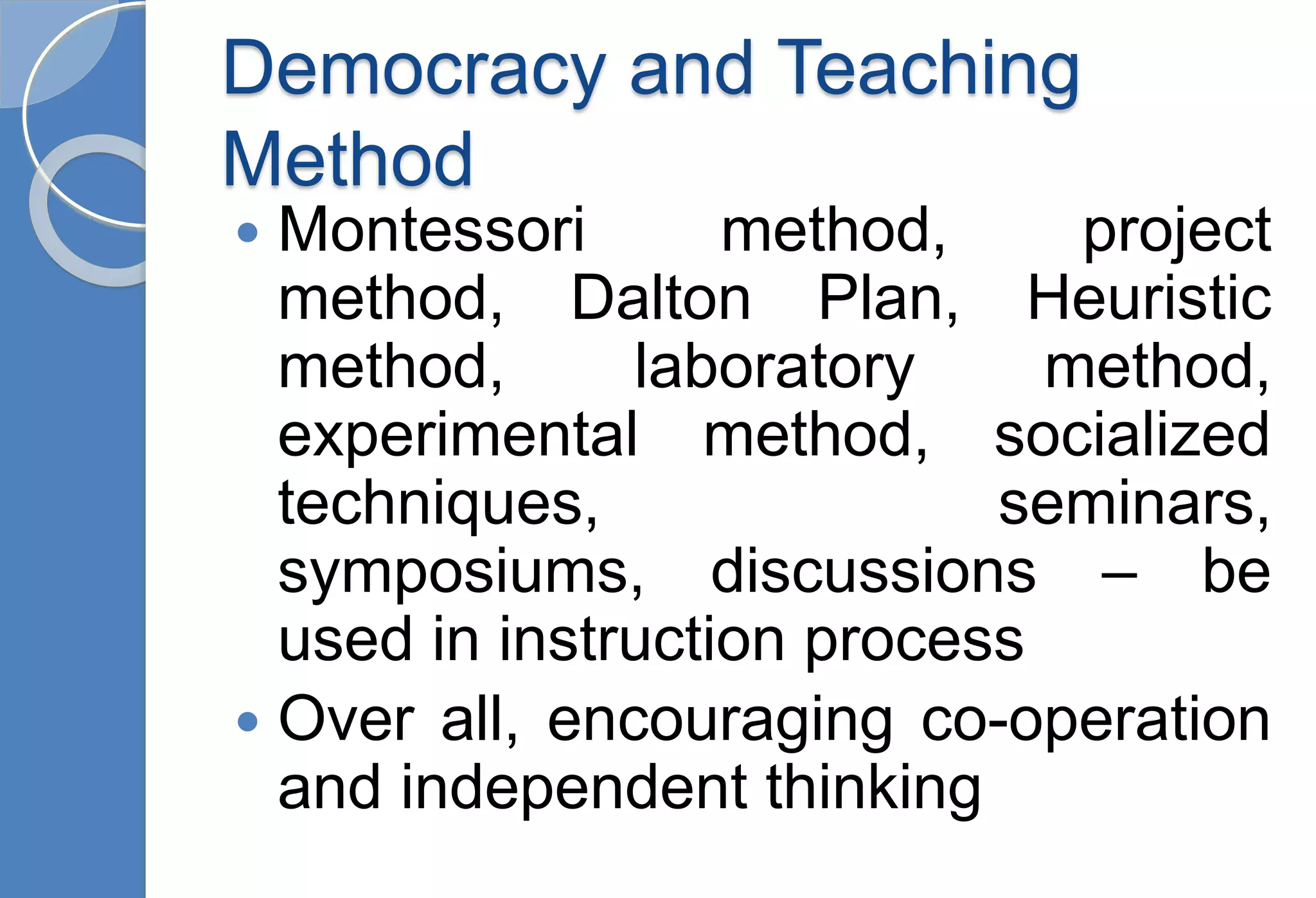
Democracy and Teaching
Method
 Montessori method, project
method, Dalton Plan, Heuristic
method, laboratory method,
experimental method, socialized
techniques, seminars,
symposiums, discussions – be
used in instruction process
 Over all, encouraging co-operation
and independent thinking
Questions
 Write any one definition of
Democracy.
 Explain the concept of democracy with
two definitions.
 Elaborate the need of democracy in
education.
 Short Note: Democracy and Education
 Explain the role of teacher in creating
democratic climate in school.

Democracy and Education

  • 1.
    Sociological Aspects of Education DrR. S. Dodiya Asst. Professor HMPIETR
  • 2.
    Democracy and Education “Democracyhas to be born anew every generation, and education is its midwife.” - JOHN DEWEY “Education is a human right with immense power to transform. On its foundation rest the cornerstones of freedom, democracy and sustainable human development.” - Kifi Annan
  • 3.
     “An educated,enlightened and informed population is one of the surest ways of promoting the health of democracy.” - Nelson Mandela “Education is the great instrument of social emancipation, by which democracy establishes, maintains and protects the spirit of equality among its members”. - Radhakrishnan commission (1948-49)
  • 4.
     “Democracy is essentiallyan attitude of respect and reverence towards our fellow men.” - Dr Ambedkar  “Democracy is not a form of government, but a form of social organization.” -Dr Ambedkar
  • 5.
     Education asa weapon of democracy. One, who is educated enough, can know about his human rights, the common laws of the country, how to retain his dignity with the help of law, etc. Such a person can live with liberty and share equal opportunities with other people around him. So, it becomes a powerful weapon for him in order to achieve his place in the society with honour.
  • 6.
    Role of Teacherand School  Success of democracy largely depended on teacher – his attitude, beliefs and way of life.  He should work as the best medium for spreading democratic feelings and ideas  He is an agent of change and facilitator of democratic culture in school  He is not a dictator or autocrat, but a friend, philosopher, stage-setter, guide and a vigilant supervisor. His duty is not to interfere but to co- operate.  He should carry no prejudices and favouritism.  He should maintain cordial relation with the community and practice democratic principles in life.
  • 7.
     Individual Freedom,freedom of expression and freedom for work are the pillars of democratic system in school  School should provide full scale freedom to all students to grow.  It should act as a replica of community where democratic ideals are practically done.  It should teach citizenship directly; and everywhere there should be the spirit of team work.
  • 8.
    Democracy and Curriculum It should include co-curricular activities – play activities; i.e. sports(Indoor-outdoor), Group project and assignment  Not rule bound and rigid, but flexibility and variety  Curriculum that can involve students in the decision making process that affects what and how they learn  Offering voluntary courses in school and also helping students to prepare for national examinations  Courses based on social awareness, equality, fraternity and brotherhood
  • 9.
    Democracy and Teaching Method Montessori method, project method, Dalton Plan, Heuristic method, laboratory method, experimental method, socialized techniques, seminars, symposiums, discussions – be used in instruction process  Over all, encouraging co-operation and independent thinking
  • 10.
    Questions  Write anyone definition of Democracy.  Explain the concept of democracy with two definitions.  Elaborate the need of democracy in education.  Short Note: Democracy and Education  Explain the role of teacher in creating democratic climate in school.