Epistemology:
Meaning and Concept
Unit-1 Epistemology and Basics of
Knowledge
BEd English Sem-II
CuS 2: Knowledge and Curriculum
Dr Rajnikant Dodiya
Asst.Professor, HMPIETR
• A brief concept of Philosophy
• Branches of Philosophy
• Epistemology as a branch of Philosophy
• Meaning and Concept of Epistemology
• Discussion and Questions
Points to be Discussed
What is Philosophy?
• Darshan Shastra (Sanskrit Word for Philosophy)
• Science of Knowledge
• Made of two Greek words – (1) Philia = to love (2) Sophia = wisdom =
“Love for Wisdom”
• Philosophy is the oldest science of the world through which we see or receive
the knowledge of reality.
• Philosophy is not merely a bookish knowledge, but the result of logical thinking
and contemplation.
• It is also a way of life.
• It is a search for truth and reality
• It is based on inquiry about life and existence
• It is an attempt to answer the ultimate question of life
• It is a conceptual rather than a practical activity
rajnikantdodiya
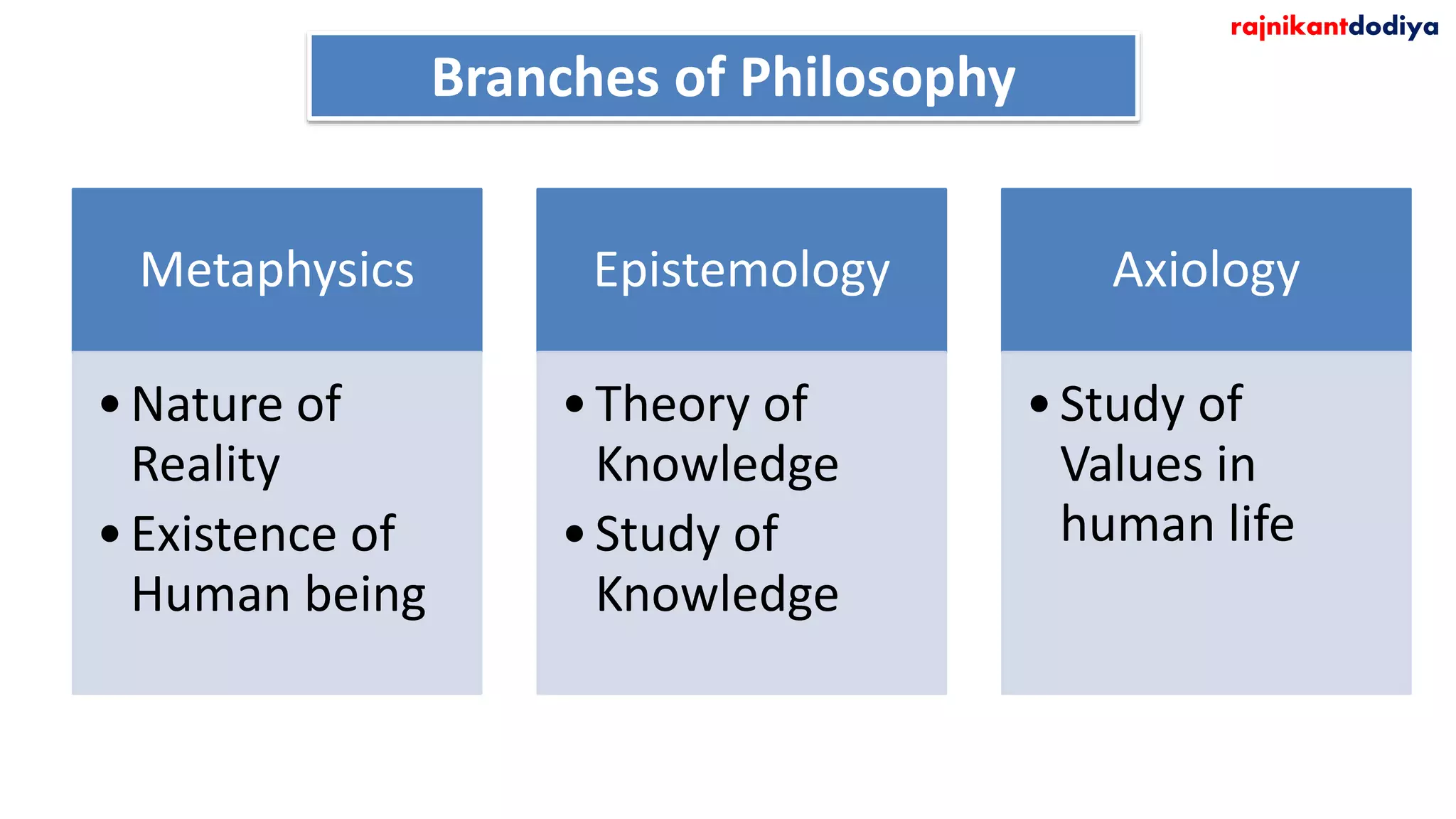
Metaphysics
•Nature of
Reality
•Existence of
Human being
Epistemology
•Theory of
Knowledge
•Study of
Knowledge
Axiology
•Study of
Values in
human life
Branches of Philosophy
rajnikantdodiya
Epistemology
rajnikantdodiya
The Study of the nature of Knowledge and how it is attained and evaluated.
• Typical Epistemological Questions:
- What if knowledge and how does it differ from belief or
opinion?
- What is truth and how can we know if a statement is true?
- What are the sources of knowledge?
Epistemology: Terminology and Meaning
rajnikantdodiya
- Derived from Greek word
‘episteme’ meaning “knowledge and understanding”
‘logos’ meaning “study of”
- It means the study of the nature, source and validity of
knowledge
- In education, it is curriculum and instruction or content and
method
Epistemology – Concept & Characteristics
rajnikantdodiya
• An Explanation of How we think
• Philosophers called it the original philosophy
• Deals with production of knowledge as well as Skepticism
• Study of Knowledge - How to acquire knowledge
• Which are the means of knowledge/information
• It includes concepts, logical reasoning, thoughts, ideas,
memories, emotions and all mental things.
• It is concerned with how our mind is related to reality and
whether this relationship is valid or invalid.
rajnikantdodiya
• Without Epistemology, we cannot think. By determining a proper
method of evaluation we determine the truth from false
• Our senses are valid and it is the only way to gain information about
the world. Reason is our only method of gaining knowledge and
acquiring understanding
• Logic is our method of maintaining consistency within our set of
knowledge.
IMP Questions
1) Define Epistemology in brief.
2) Elaborate the concept of Epistemology in
short.
rajnikantdodiya

Epistemology: Its Meaning and Concept

  • 1.
    Epistemology: Meaning and Concept Unit-1Epistemology and Basics of Knowledge BEd English Sem-II CuS 2: Knowledge and Curriculum Dr Rajnikant Dodiya Asst.Professor, HMPIETR
  • 2.
    • A briefconcept of Philosophy • Branches of Philosophy • Epistemology as a branch of Philosophy • Meaning and Concept of Epistemology • Discussion and Questions Points to be Discussed
  • 3.
    What is Philosophy? •Darshan Shastra (Sanskrit Word for Philosophy) • Science of Knowledge • Made of two Greek words – (1) Philia = to love (2) Sophia = wisdom = “Love for Wisdom” • Philosophy is the oldest science of the world through which we see or receive the knowledge of reality. • Philosophy is not merely a bookish knowledge, but the result of logical thinking and contemplation. • It is also a way of life. • It is a search for truth and reality • It is based on inquiry about life and existence • It is an attempt to answer the ultimate question of life • It is a conceptual rather than a practical activity rajnikantdodiya
  • 4.
    Metaphysics •Nature of Reality •Existence of Humanbeing Epistemology •Theory of Knowledge •Study of Knowledge Axiology •Study of Values in human life Branches of Philosophy rajnikantdodiya
  • 5.
    Epistemology rajnikantdodiya The Study ofthe nature of Knowledge and how it is attained and evaluated. • Typical Epistemological Questions: - What if knowledge and how does it differ from belief or opinion? - What is truth and how can we know if a statement is true? - What are the sources of knowledge?
  • 6.
    Epistemology: Terminology andMeaning rajnikantdodiya - Derived from Greek word ‘episteme’ meaning “knowledge and understanding” ‘logos’ meaning “study of” - It means the study of the nature, source and validity of knowledge - In education, it is curriculum and instruction or content and method
  • 7.
    Epistemology – Concept& Characteristics rajnikantdodiya • An Explanation of How we think • Philosophers called it the original philosophy • Deals with production of knowledge as well as Skepticism • Study of Knowledge - How to acquire knowledge • Which are the means of knowledge/information • It includes concepts, logical reasoning, thoughts, ideas, memories, emotions and all mental things. • It is concerned with how our mind is related to reality and whether this relationship is valid or invalid.
  • 8.
    rajnikantdodiya • Without Epistemology,we cannot think. By determining a proper method of evaluation we determine the truth from false • Our senses are valid and it is the only way to gain information about the world. Reason is our only method of gaining knowledge and acquiring understanding • Logic is our method of maintaining consistency within our set of knowledge.
  • 9.
    IMP Questions 1) DefineEpistemology in brief. 2) Elaborate the concept of Epistemology in short. rajnikantdodiya