
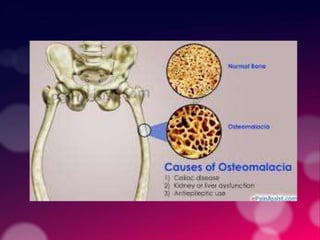
0STEOMALACIA
Ms.Shanmugapriya.S
Bsc.,Nursing
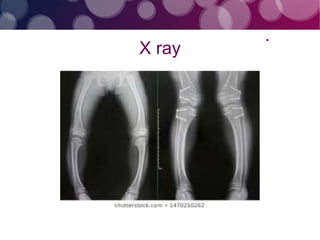
X ray
.
Introduction
 Osteomalacia also known as adult rickets,is
a disease in the bone becomes abnormally soft
because of a disturbed calcium and phosphorus
balance secondary to vit-D deficiency,resulting
in marked deformities of the weightbearing
bones and pathologic fractures.
Definition
 Osteomalacia is a metabolic bone disease
characterised by inadequate mineralisation of
bone.As a result the skeleton softens and
weakens,causing pain,tenderness to
touch,bowing of bones and pathologic fractures.
Etiological factors
 VITAMIN D DEFICIENCY:
 classical-lack of sunlight exposure
 poor diet
 gastrointestinal diseases
 FAILURE OF 125 VITAMIN D SYNTHESIS
 chronic renal failure
 vitamin d resistant rickets type 1
# VITAMIN D RECEPTOR DEFECTS:
* Vitamin D resistant rickets type 1
# DEFECTS IN PHOSPATE AND PYROPHOSPHATE
METABOLISM:
* Hypophosphatemoic rickets
* Autosomal recessive phospatemic rickets
* Autosomal dominant phosphatemic rickets
* Tumor induced hypophosphatemic
osteomalacia
# IATROGENIC AND OTHER CAUSES:
* Biphosphonate therapy
* Aluminium
* Floride
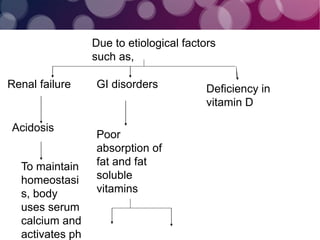
Due to etiological factors
such as,
Renal failure GI disorders Deficiency in
vitamin D
Acidosis
Poor
absorption of
fat and fat
soluble
vitamins
To maintain
homeostasi
s, body
uses serum
calcium and
activates ph
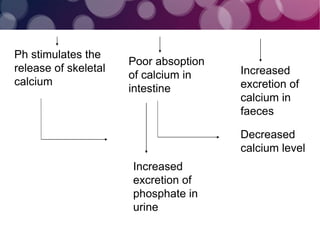
Ph stimulates the
release of skeletal
calcium
Poor absoption
of calcium in
intestine
Increased
excretion of
calcium in
faeces
Increased
excretion of
phosphate in
urine
Decreased
calcium level
Demineralisation of
bone
Bony fibrosis and
bone cyst
formation
Clinical manifestation
 Bone pain
 Tenderness
 Muscle weakness from calcium deficiency
 Waddling or limping gait
 Pathological fractures
 Softened vertebrae become
compressed,shortening patient’s trunk and
deforming thorax
 Weakness and unsteadyness,presenting risk of
falls and fractures
 Craniotabes
 Bossing of frontal and parietal bones
 Delayed anterior frontal closure
 Enlargement of epiphysis
Assesment and diagnostic findings
 X ray studies
 Study of vertebrae may show a compression
fracture with indistinct vertebral end plates
 Laboratory studies show low calcium level and
phosphorus level and a moderately elevated
ALP
 Urine excretion of calcium and creatinine is low
 Bone biopsy demonstrates an increased
amount of osteiod,a demineralised,cartilagious
bone matrix that is sometimes refered to as
prebone
 Routine biochemical screen with measurement
of serum 25(OH)D levels are low or
undetectable and PTH is elevated.
 Radiographic osteopnea is common and the
presence of vertebral crush fractures may
cause confusion with osteoporosis.
Medical management
 Dietary modifications(eg.vitamin D and calcium
supplementsetc.,)
 Exposure to sunlight may be recommended
 Diet with adequate calcium and protein is
necessary
 Long term monitering is undertaken to ensure
stabilization or reversal
Surgical management
 Orthopedic deformities may be treated with
braces or surgery-osteotomy
Nursing management
 Vitamin D administered daily until signs of
healing takes place
 Adequate intake of calciom and phosporusas
well as protein should be ensured
 Supplemental calcium in the form of lactate or
gluconate is administered
 Administration of 2000-10000IU of vit-d
cholecalciferol by orally.

Osteomalacia

  • 1.
  • 3.
  • 4.
    Introduction  Osteomalacia alsoknown as adult rickets,is a disease in the bone becomes abnormally soft because of a disturbed calcium and phosphorus balance secondary to vit-D deficiency,resulting in marked deformities of the weightbearing bones and pathologic fractures.
  • 5.
    Definition  Osteomalacia isa metabolic bone disease characterised by inadequate mineralisation of bone.As a result the skeleton softens and weakens,causing pain,tenderness to touch,bowing of bones and pathologic fractures.
  • 6.
    Etiological factors  VITAMIND DEFICIENCY:  classical-lack of sunlight exposure  poor diet  gastrointestinal diseases  FAILURE OF 125 VITAMIN D SYNTHESIS  chronic renal failure  vitamin d resistant rickets type 1
  • 7.
    # VITAMIN DRECEPTOR DEFECTS: * Vitamin D resistant rickets type 1 # DEFECTS IN PHOSPATE AND PYROPHOSPHATE METABOLISM: * Hypophosphatemoic rickets * Autosomal recessive phospatemic rickets * Autosomal dominant phosphatemic rickets * Tumor induced hypophosphatemic osteomalacia # IATROGENIC AND OTHER CAUSES: * Biphosphonate therapy * Aluminium * Floride
  • 8.
    Due to etiologicalfactors such as, Renal failure GI disorders Deficiency in vitamin D Acidosis Poor absorption of fat and fat soluble vitamins To maintain homeostasi s, body uses serum calcium and activates ph
  • 9.
    Ph stimulates the releaseof skeletal calcium Poor absoption of calcium in intestine Increased excretion of calcium in faeces Increased excretion of phosphate in urine Decreased calcium level
  • 10.
  • 11.
    Clinical manifestation  Bonepain  Tenderness  Muscle weakness from calcium deficiency  Waddling or limping gait  Pathological fractures  Softened vertebrae become compressed,shortening patient’s trunk and deforming thorax
  • 12.
     Weakness andunsteadyness,presenting risk of falls and fractures  Craniotabes  Bossing of frontal and parietal bones  Delayed anterior frontal closure  Enlargement of epiphysis
  • 13.
    Assesment and diagnosticfindings  X ray studies  Study of vertebrae may show a compression fracture with indistinct vertebral end plates  Laboratory studies show low calcium level and phosphorus level and a moderately elevated ALP  Urine excretion of calcium and creatinine is low
  • 14.
     Bone biopsydemonstrates an increased amount of osteiod,a demineralised,cartilagious bone matrix that is sometimes refered to as prebone  Routine biochemical screen with measurement of serum 25(OH)D levels are low or undetectable and PTH is elevated.  Radiographic osteopnea is common and the presence of vertebral crush fractures may cause confusion with osteoporosis.
  • 15.
    Medical management  Dietarymodifications(eg.vitamin D and calcium supplementsetc.,)  Exposure to sunlight may be recommended  Diet with adequate calcium and protein is necessary  Long term monitering is undertaken to ensure stabilization or reversal
  • 16.
    Surgical management  Orthopedicdeformities may be treated with braces or surgery-osteotomy
  • 17.
    Nursing management  VitaminD administered daily until signs of healing takes place  Adequate intake of calciom and phosporusas well as protein should be ensured  Supplemental calcium in the form of lactate or gluconate is administered  Administration of 2000-10000IU of vit-d cholecalciferol by orally.