

ASTHA K. PATEL
Introduction
• Food is prime necessity of life.
• The food we eat is digested &
assimilated in the body and used for its
maintenance & growth.
• Food also provide energy for doing
work.
ASTHA K. PATEL
Food
• Food is defined as anything solid,
liquid or semi-solid; which when
ingested putting into mouth,
digested & assimilated ,
nourishes the body
ASTHA K. PATEL
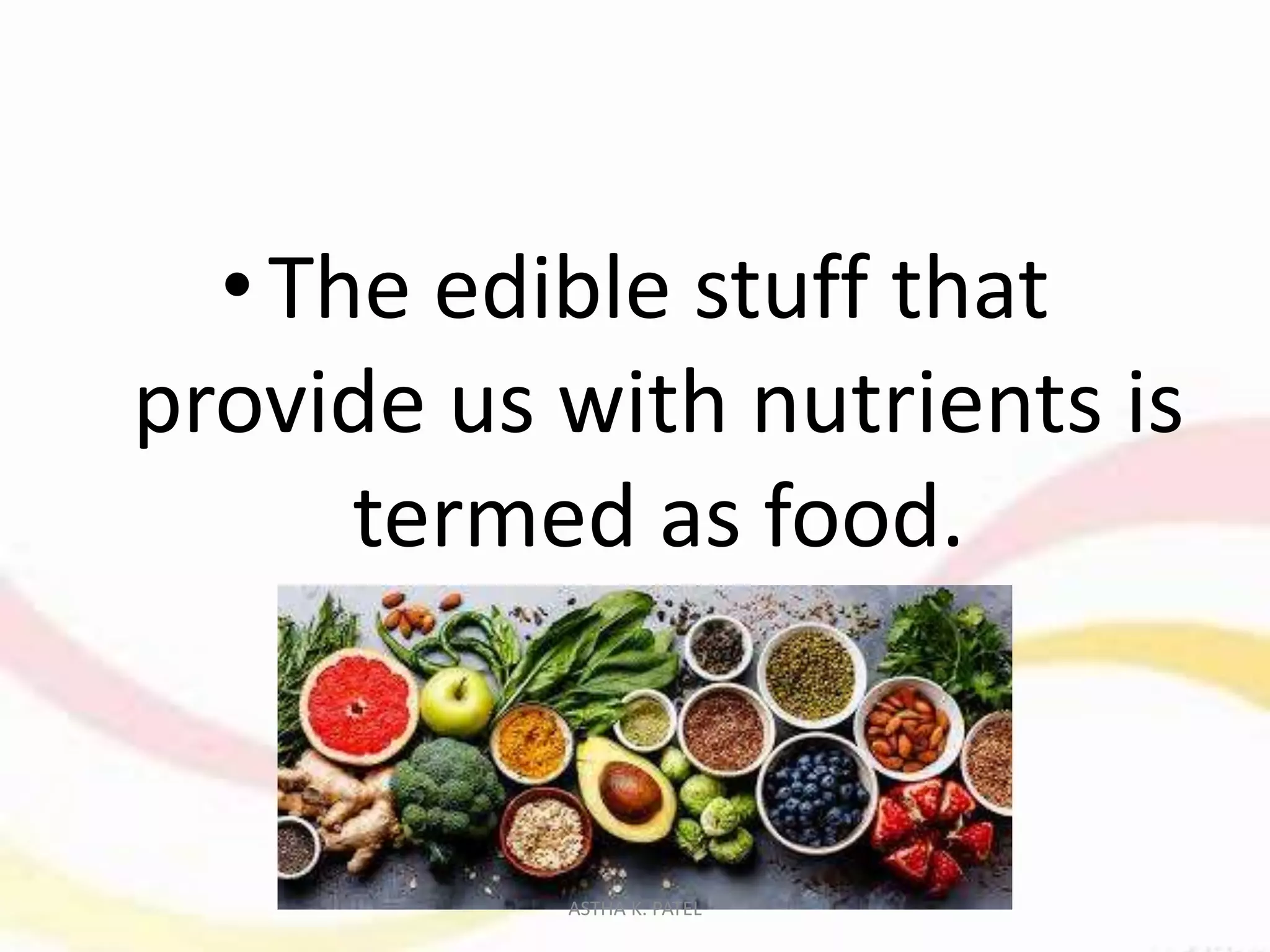
• The edible stuff that
provide us with nutrients is
termed as food.
ASTHA K. PATEL
Nutrient
• Nutrients are defined as those
chemicals substances, which are
supplied by food & are needed
as a source of energy and as a
structural material for every cell
of the body.
ASTHA K. PATEL
ASTHA K. PATEL
Definition
• It is the science of food and its
relation to health.
• Nutrition- the process by which the
body ingests, absorbs, transports
utilizes and eliminates their end
products.
ASTHA K. PATEL
• Nutrition is the science of foods , the
nutrients & other substances, there action,
interaction, balance in relationship to health
& disease.
• In addition with social , economical, cultural
& psychological implication of food & eating.
- Robinson
ASTHA K. PATEL
History of nutrition
• Nutrition plays important role in the
effective functioning of the body.
• Food with all its essential nutrients
ensures the proper functioning of the
body as a well oiled machine.
ASTHA K. PATEL
• Nutrition discovers from ancient
days and the continuous research in
its effect on health have a positive
effect on the health & well being
ASTHA K. PATEL
Some of the important dates in history
Food and the History of Healing
Through Nutrition
• 400 BC – Hippocrates said, “ lets the
food be thy medicine and medicine
be thy food”
ASTHA K. PATEL
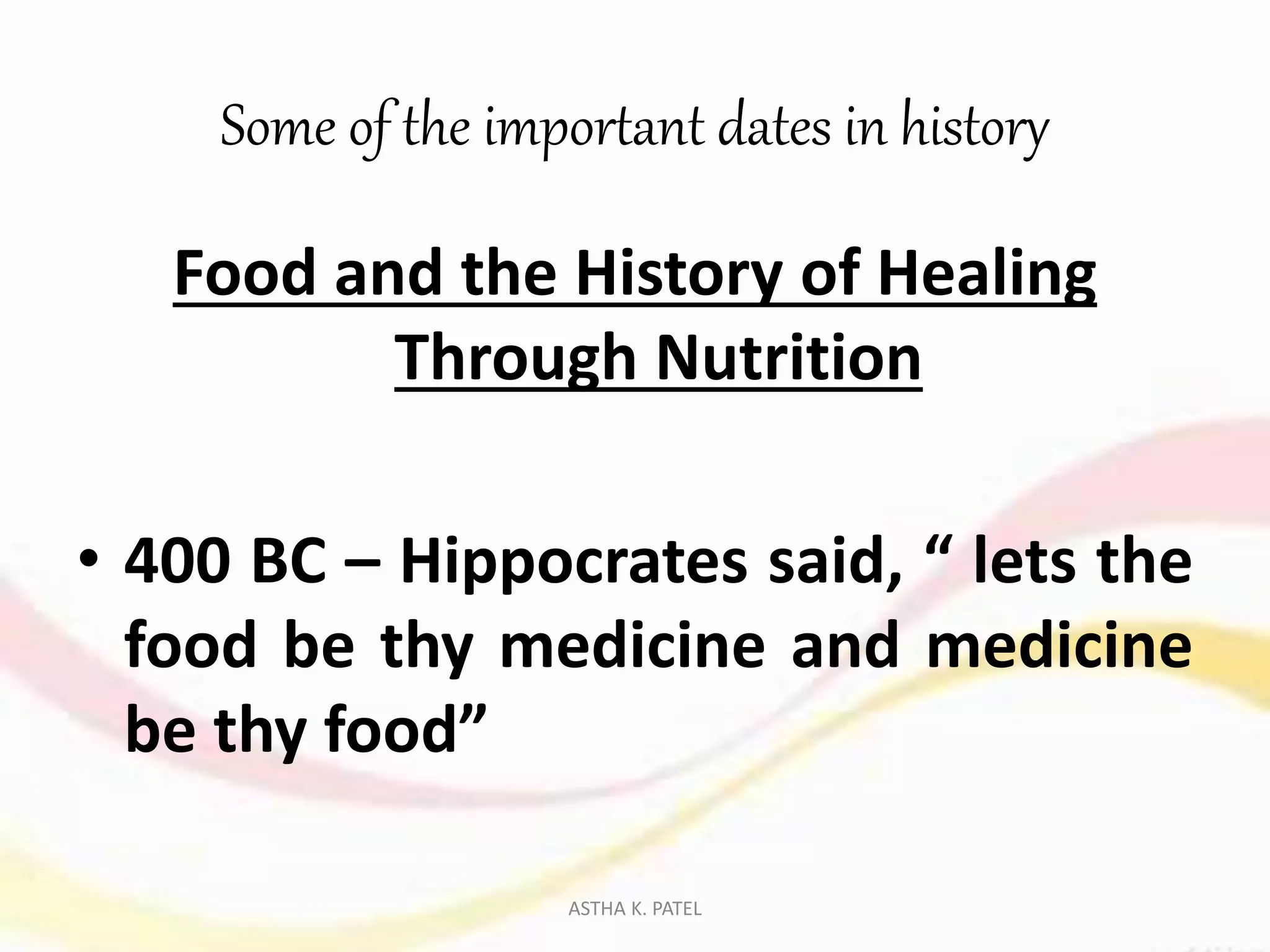
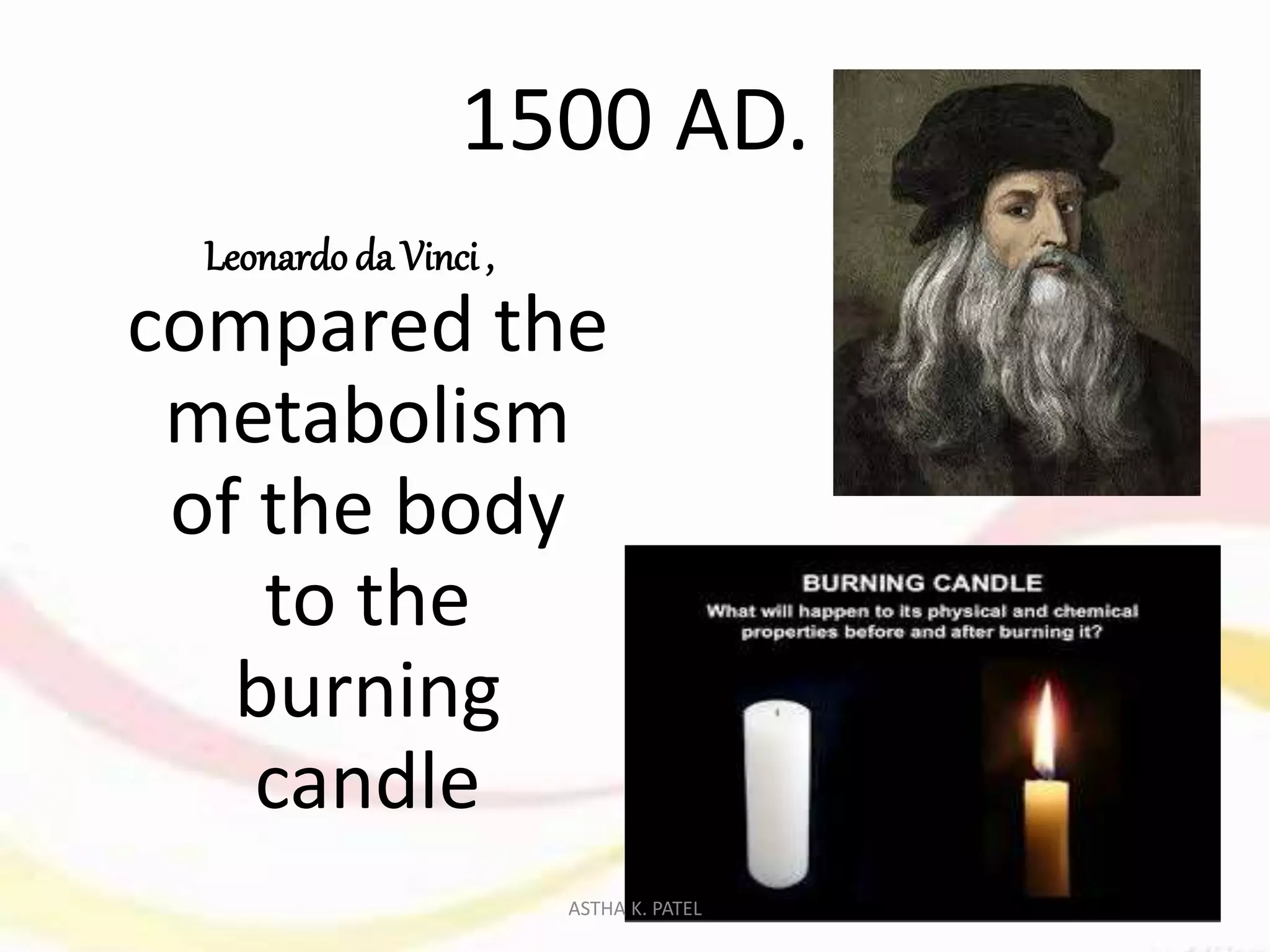
1500 AD.
Leonardo da Vinci ,
compared the
metabolism
of the body
to the
burning
candle
ASTHA K. PATEL
ASTHA K. PATEL
ASTHA K. PATEL
• 1747 AD – Dr James lind , performed first
experiment on nutrition.
• 1770 AD – discovery of process of
metabolism by Antoine Lavoisier ( father of
nutrition)
• Early 1880 – important discoveries were
made that food is composed of carbon,
hydrogen's, nitrogens, and oxygen and
methods were developed in determining
these elements.
ASTHA K. PATEL
• 1840 AD – Justus Liebig declared that CHO
were composed of sugars, fat, proteins, or
amino acids.
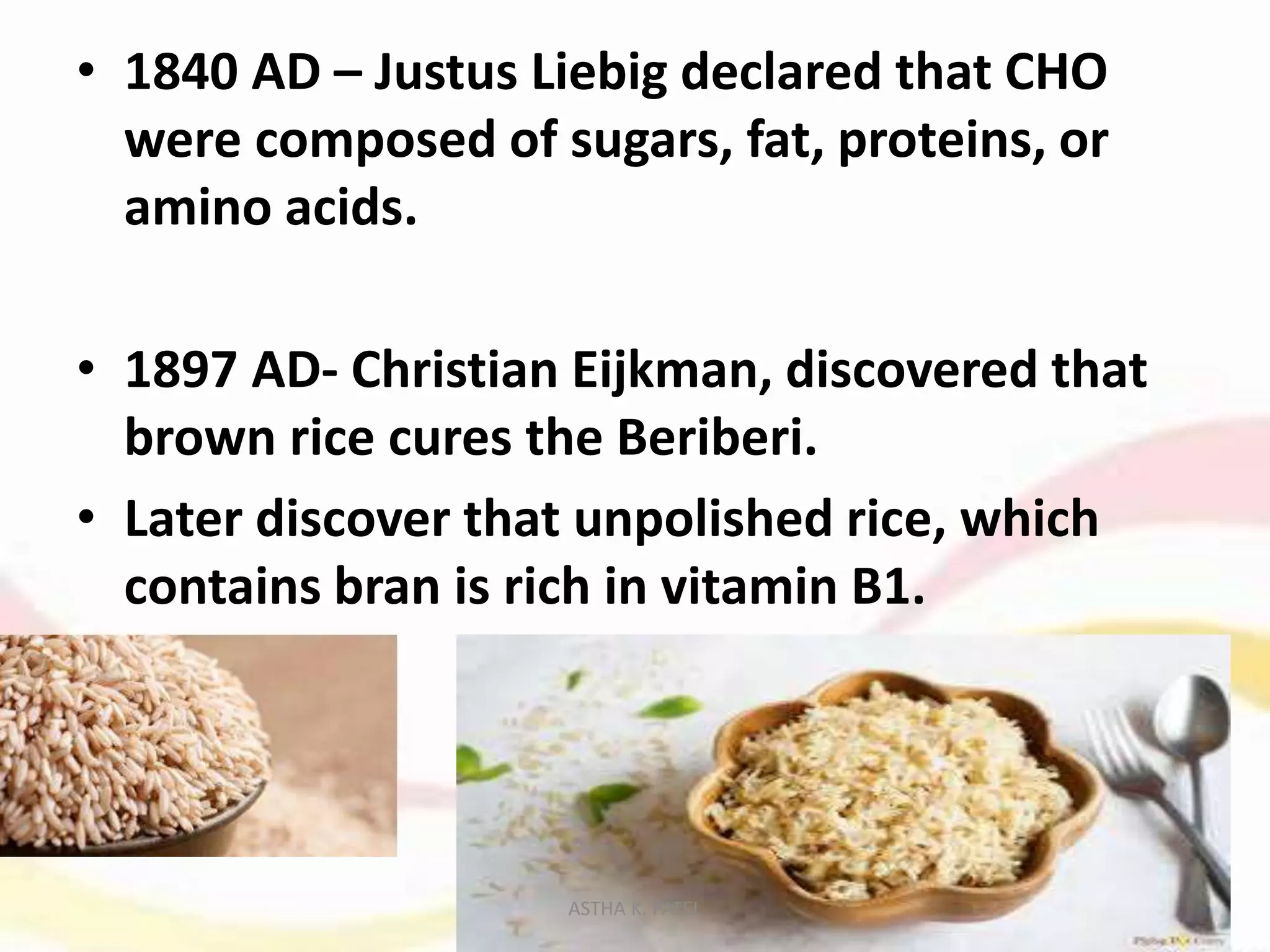
• 1897 AD- Christian Eijkman, discovered that
brown rice cures the Beriberi.
• Later discover that unpolished rice, which
contains bran is rich in vitamin B1.
ASTHA K. PATEL
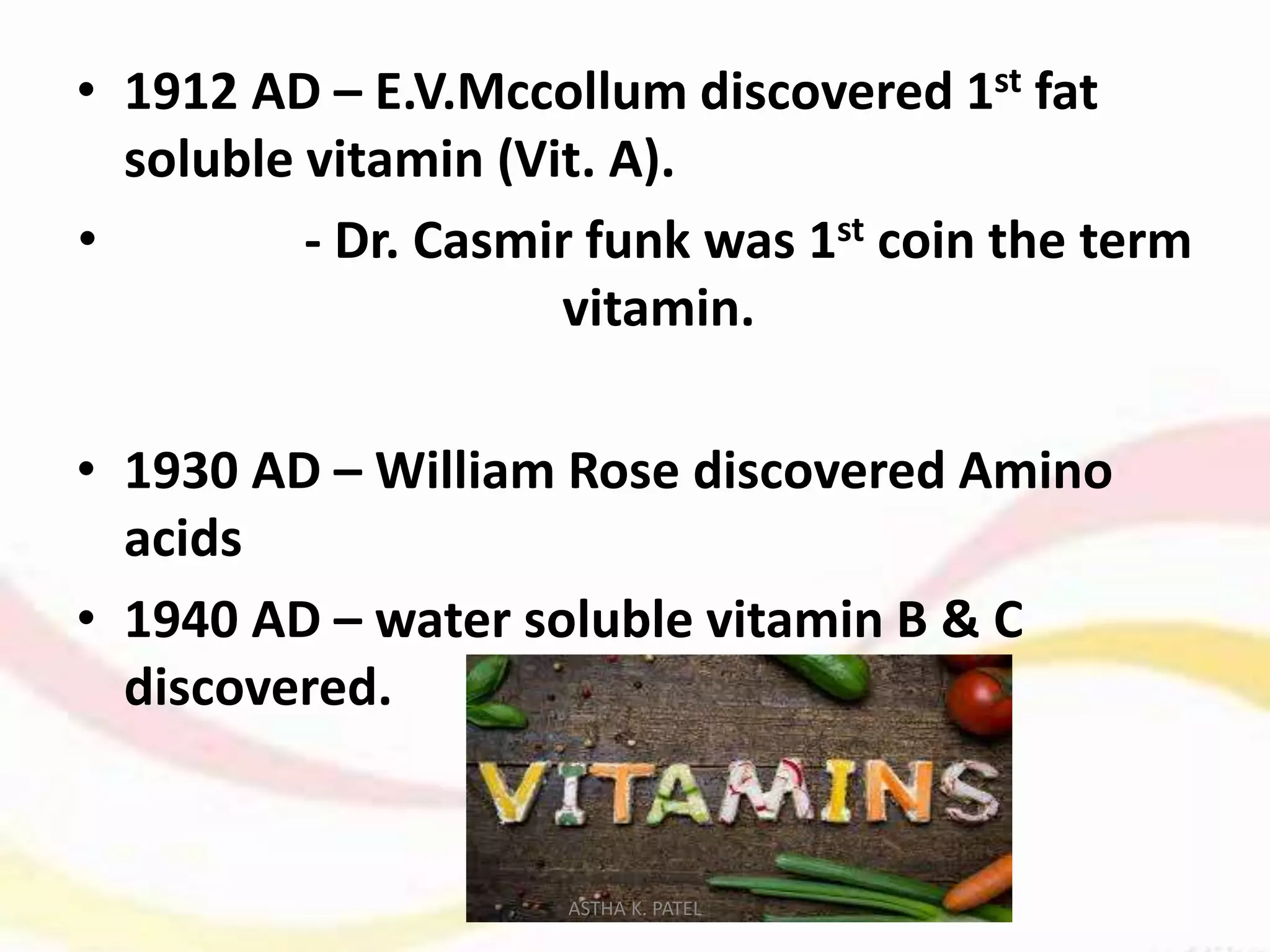
• 1912 AD – E.V.Mccollum discovered 1st fat
soluble vitamin (Vit. A).
• - Dr. Casmir funk was 1st coin the term
vitamin.
• 1930 AD – William Rose discovered Amino
acids
• 1940 AD – water soluble vitamin B & C
discovered.
ASTHA K. PATEL
• 1950 – Role of vitamin and minerals as a
components of enzyme and hormones
in effective functioning of the body
were discovered
• 1968 AD – Linus Pauling created the
term orthomolecular nutrition.
ASTHA K. PATEL
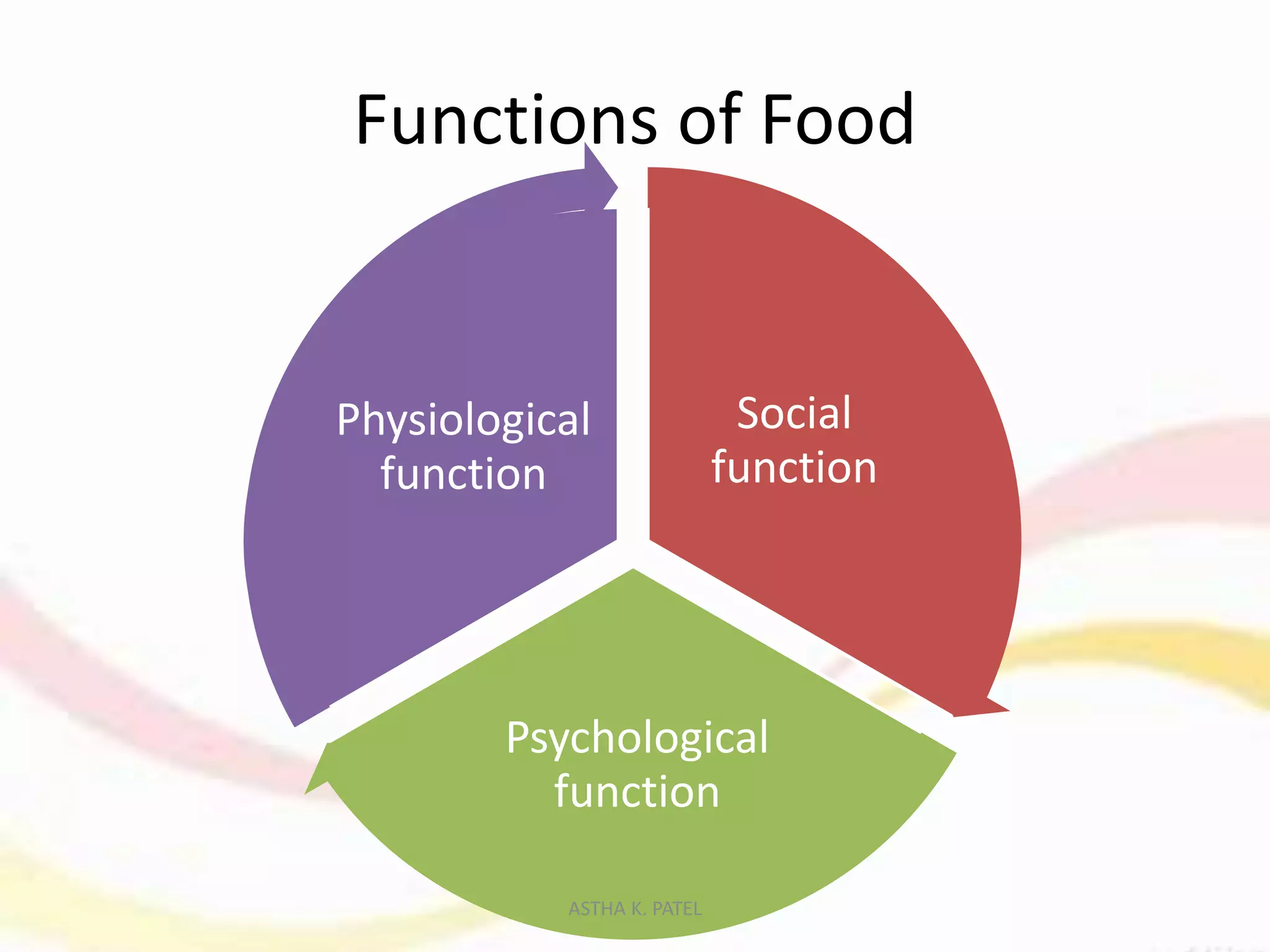
Functions of Food
Social
function
Psychological
function
Physiological
function
ASTHA K. PATEL
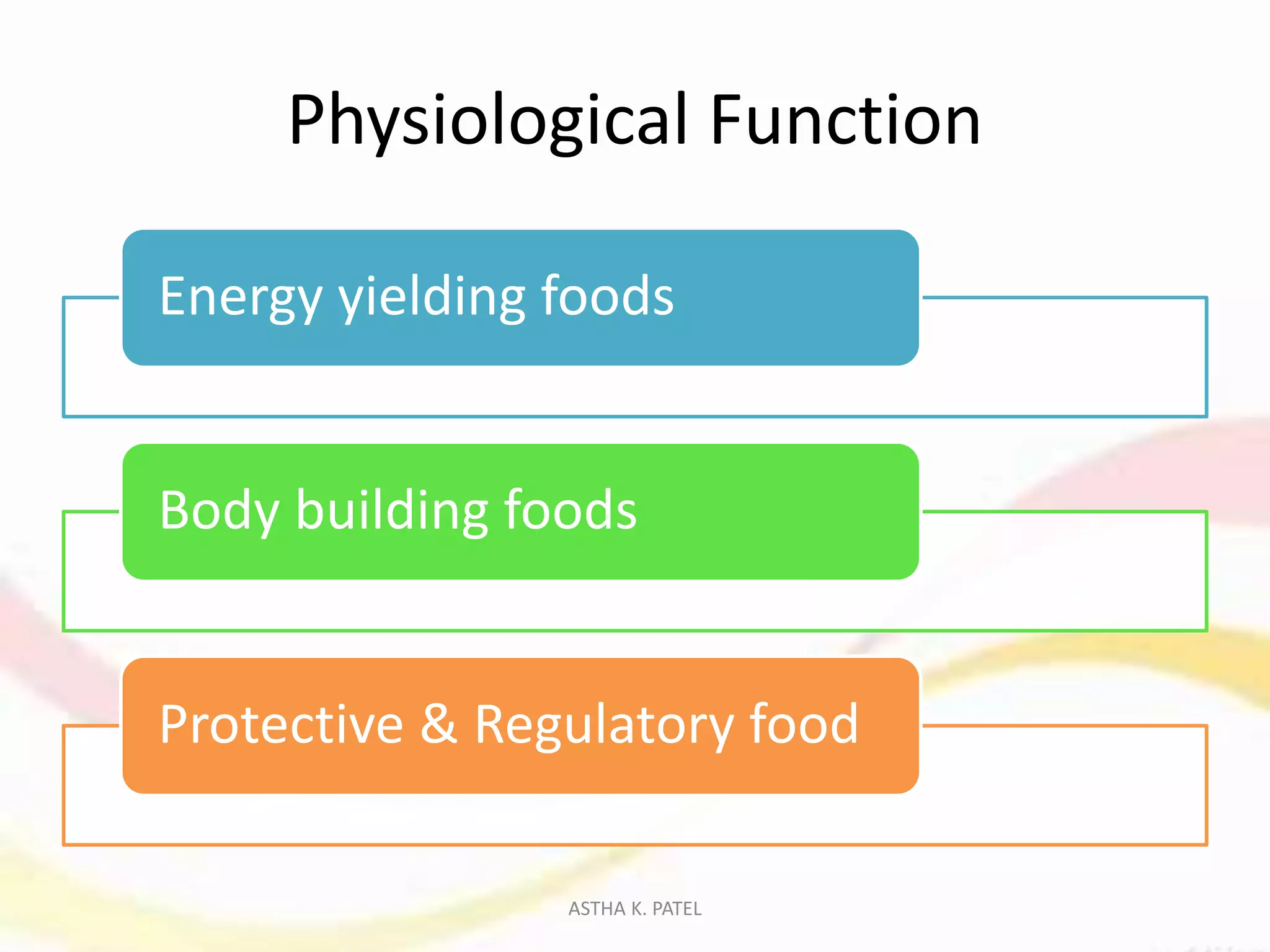
Physiological Function
Energy yielding foods
Body building foods
Protective & Regulatory food
ASTHA K. PATEL
Energy yielding foods
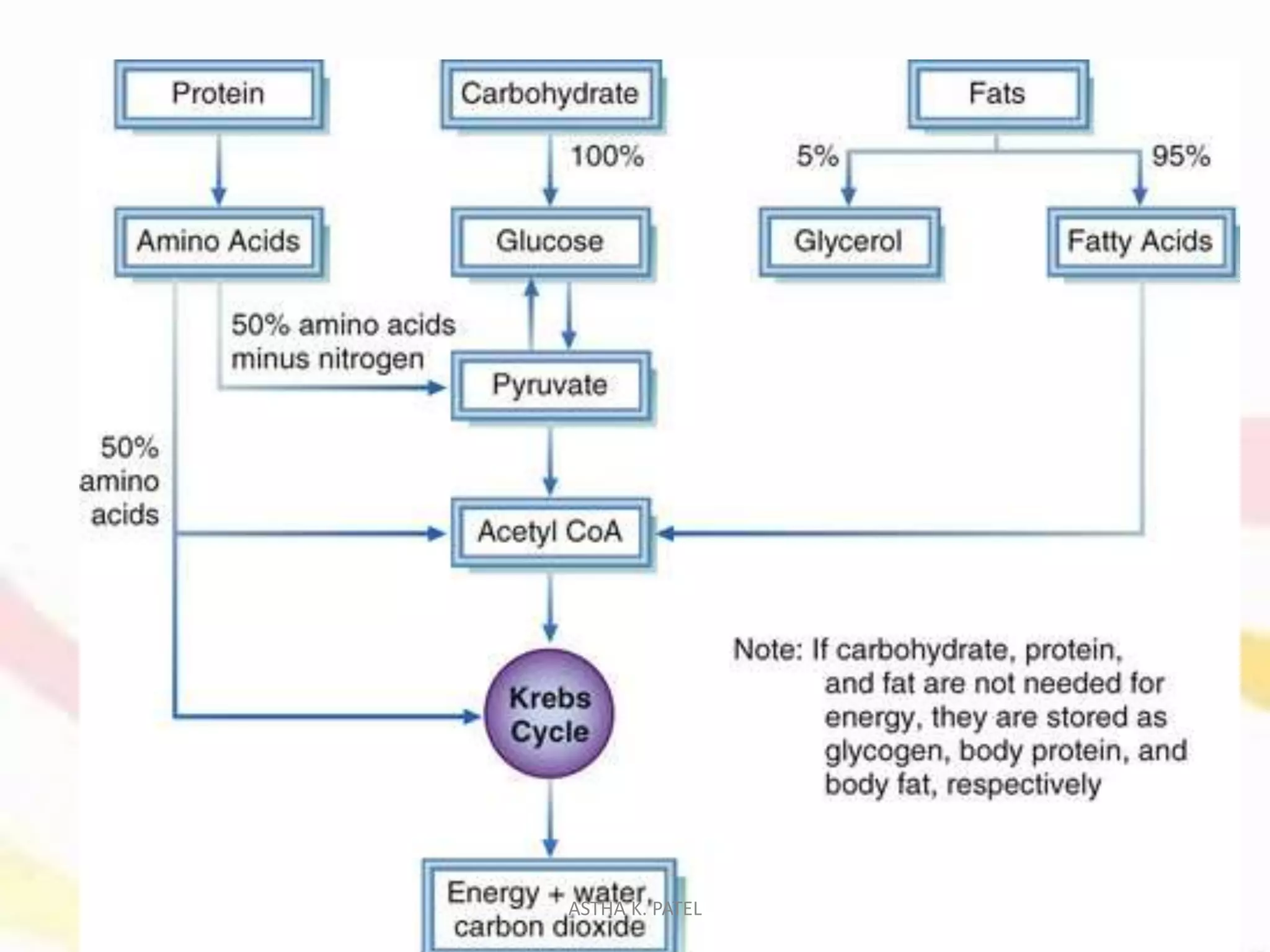
• Foods rich in CHO & fats are called energy yielding
foods.
• They provide energy to sustain the involuntary
process essential for continuance of life.
• The energy needed is supplied by oxidation of
foods consumed.
• Cereals, roots & tubers, dried fruits, oil, butter 7
ghee are all good source of energy.
ASTHA K. PATEL
• They provide energy to sustain the involuntary
processes essential for continuance of life, to
carry out various professional , household &
recreational activities.
ASTHA K. PATEL
Body building food
• Food rich in protein are called body building
foods.
• These food help to maintain life and promote
growth
• The main function of protein is to build and
repair tissue.
ASTHA K. PATEL
• Source of protein –
• Milk, meat, eggs & fish, pulses & nuts
ASTHA K. PATEL
Protective & Regulatory food
• Food rich in protein, minerals & vitamins are
known as protective & Regulatory Food.
• They are essential for health & regulate
activities such as ----
Maintenance of body temp.
Muscle contraction
Control of water balance
ASTHA K. PATEL
Clotting of blood
Maintaining heart beat.
Ex. - milk, egg, fruits & vegetables are
protective food.
ASTHA K. PATEL
Social function
• Food has always been he central part of our
community, social , cultural & religious life.
• It has been as expression of get to gather.
• Food is served at many social events like teas,
breakfast, lunch, dinner & meeting of all sorts.
ASTHA K. PATEL
• On all these occasions, food indirectly serves
as an instrument to develop social support.
ASTHA K. PATEL
Psychological Function
• Besides other function, food satisfy certain
emotional needs also.
• People often find it difficult to get adjusted to
unfamiliar food.
• These also include a sense of security, love &
acceptance.
• Preparation of delicious foods for family
members is a token of love & affection.
ASTHA K. PATEL
Other function
• Food supplies heat & energy for work and play
• Food supplies materials for growth and repair
of the body
• Regulation or control of body process
• Protection of body
ASTHA K. PATEL
ASTHA K. PATEL

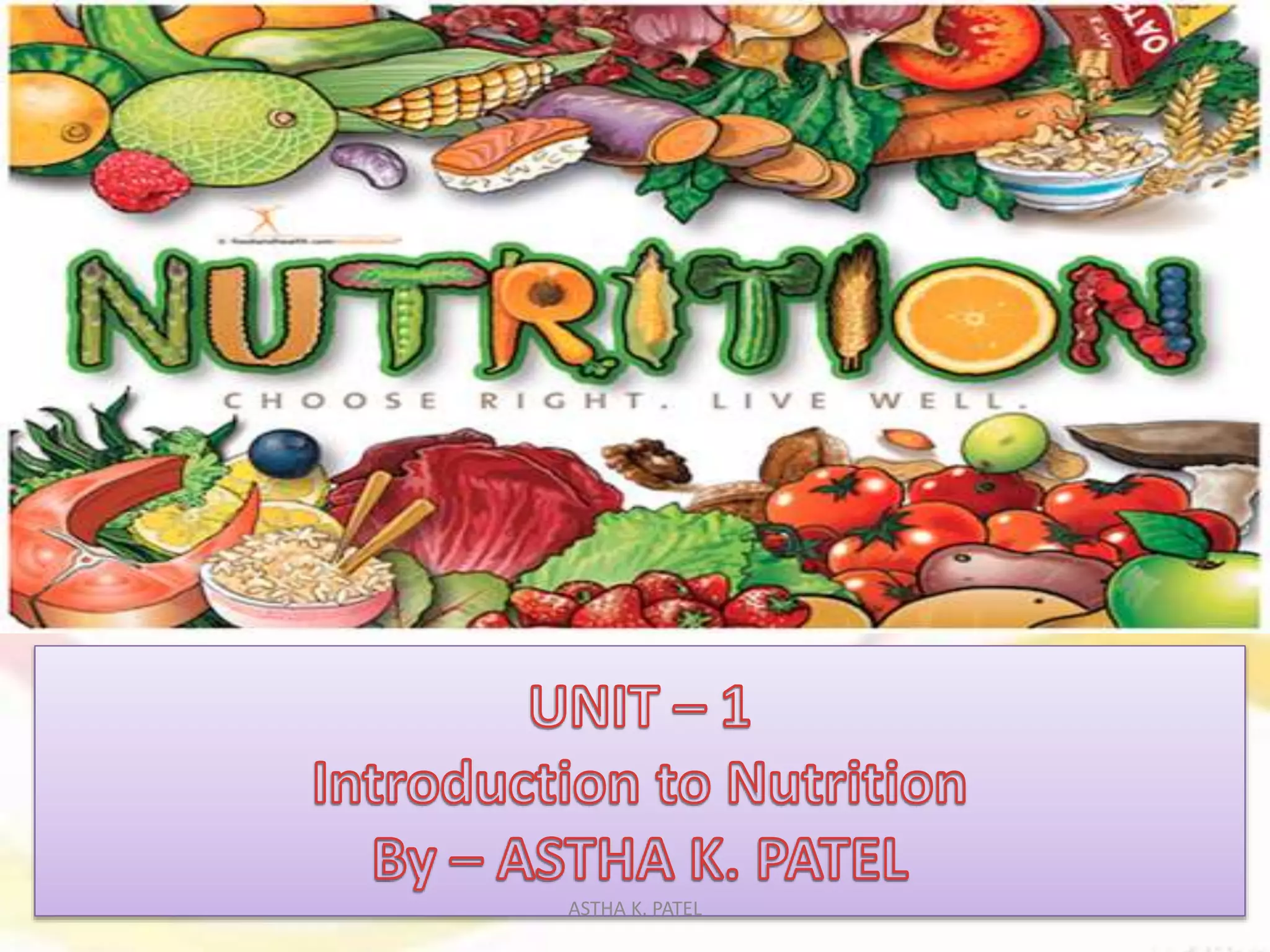
Introduction to Nutrition

  • 1.
  • 2.
    Introduction • Food isprime necessity of life. • The food we eat is digested & assimilated in the body and used for its maintenance & growth. • Food also provide energy for doing work. ASTHA K. PATEL
  • 3.
    Food • Food isdefined as anything solid, liquid or semi-solid; which when ingested putting into mouth, digested & assimilated , nourishes the body ASTHA K. PATEL
  • 4.
    • The ediblestuff that provide us with nutrients is termed as food. ASTHA K. PATEL
  • 5.
    Nutrient • Nutrients aredefined as those chemicals substances, which are supplied by food & are needed as a source of energy and as a structural material for every cell of the body. ASTHA K. PATEL
  • 6.
  • 7.
    Definition • It isthe science of food and its relation to health. • Nutrition- the process by which the body ingests, absorbs, transports utilizes and eliminates their end products. ASTHA K. PATEL
  • 8.
    • Nutrition isthe science of foods , the nutrients & other substances, there action, interaction, balance in relationship to health & disease. • In addition with social , economical, cultural & psychological implication of food & eating. - Robinson ASTHA K. PATEL
  • 9.
    History of nutrition •Nutrition plays important role in the effective functioning of the body. • Food with all its essential nutrients ensures the proper functioning of the body as a well oiled machine. ASTHA K. PATEL
  • 10.
    • Nutrition discoversfrom ancient days and the continuous research in its effect on health have a positive effect on the health & well being ASTHA K. PATEL
  • 11.
    Some of theimportant dates in history Food and the History of Healing Through Nutrition • 400 BC – Hippocrates said, “ lets the food be thy medicine and medicine be thy food” ASTHA K. PATEL
  • 12.
    1500 AD. Leonardo daVinci , compared the metabolism of the body to the burning candle ASTHA K. PATEL
  • 13.
  • 14.
  • 15.
    • 1747 AD– Dr James lind , performed first experiment on nutrition. • 1770 AD – discovery of process of metabolism by Antoine Lavoisier ( father of nutrition) • Early 1880 – important discoveries were made that food is composed of carbon, hydrogen's, nitrogens, and oxygen and methods were developed in determining these elements. ASTHA K. PATEL
  • 16.
    • 1840 AD– Justus Liebig declared that CHO were composed of sugars, fat, proteins, or amino acids. • 1897 AD- Christian Eijkman, discovered that brown rice cures the Beriberi. • Later discover that unpolished rice, which contains bran is rich in vitamin B1. ASTHA K. PATEL
  • 17.
    • 1912 AD– E.V.Mccollum discovered 1st fat soluble vitamin (Vit. A). • - Dr. Casmir funk was 1st coin the term vitamin. • 1930 AD – William Rose discovered Amino acids • 1940 AD – water soluble vitamin B & C discovered. ASTHA K. PATEL
  • 18.
    • 1950 –Role of vitamin and minerals as a components of enzyme and hormones in effective functioning of the body were discovered • 1968 AD – Linus Pauling created the term orthomolecular nutrition. ASTHA K. PATEL
  • 19.
  • 20.
    Physiological Function Energy yieldingfoods Body building foods Protective & Regulatory food ASTHA K. PATEL
  • 21.
    Energy yielding foods •Foods rich in CHO & fats are called energy yielding foods. • They provide energy to sustain the involuntary process essential for continuance of life. • The energy needed is supplied by oxidation of foods consumed. • Cereals, roots & tubers, dried fruits, oil, butter 7 ghee are all good source of energy. ASTHA K. PATEL
  • 22.
    • They provideenergy to sustain the involuntary processes essential for continuance of life, to carry out various professional , household & recreational activities. ASTHA K. PATEL
  • 23.
    Body building food •Food rich in protein are called body building foods. • These food help to maintain life and promote growth • The main function of protein is to build and repair tissue. ASTHA K. PATEL
  • 24.
    • Source ofprotein – • Milk, meat, eggs & fish, pulses & nuts ASTHA K. PATEL
  • 25.
    Protective & Regulatoryfood • Food rich in protein, minerals & vitamins are known as protective & Regulatory Food. • They are essential for health & regulate activities such as ---- Maintenance of body temp. Muscle contraction Control of water balance ASTHA K. PATEL
  • 26.
    Clotting of blood Maintainingheart beat. Ex. - milk, egg, fruits & vegetables are protective food. ASTHA K. PATEL
  • 27.
    Social function • Foodhas always been he central part of our community, social , cultural & religious life. • It has been as expression of get to gather. • Food is served at many social events like teas, breakfast, lunch, dinner & meeting of all sorts. ASTHA K. PATEL
  • 28.
    • On allthese occasions, food indirectly serves as an instrument to develop social support. ASTHA K. PATEL
  • 29.
    Psychological Function • Besidesother function, food satisfy certain emotional needs also. • People often find it difficult to get adjusted to unfamiliar food. • These also include a sense of security, love & acceptance. • Preparation of delicious foods for family members is a token of love & affection. ASTHA K. PATEL
  • 30.
    Other function • Foodsupplies heat & energy for work and play • Food supplies materials for growth and repair of the body • Regulation or control of body process • Protection of body ASTHA K. PATEL
  • 31.