Situational Leadership
Bespoke Leadership
From Nelson Mandela and Winston Churchill , to Martin Luther King Jr &
Steve Jobs there are as many approaches to Leaderships as there are
Leaders
… As there is no ONE SIZE FITS ALL approach in Leadership
& it applies to both LEADERS & FOLLOWERS
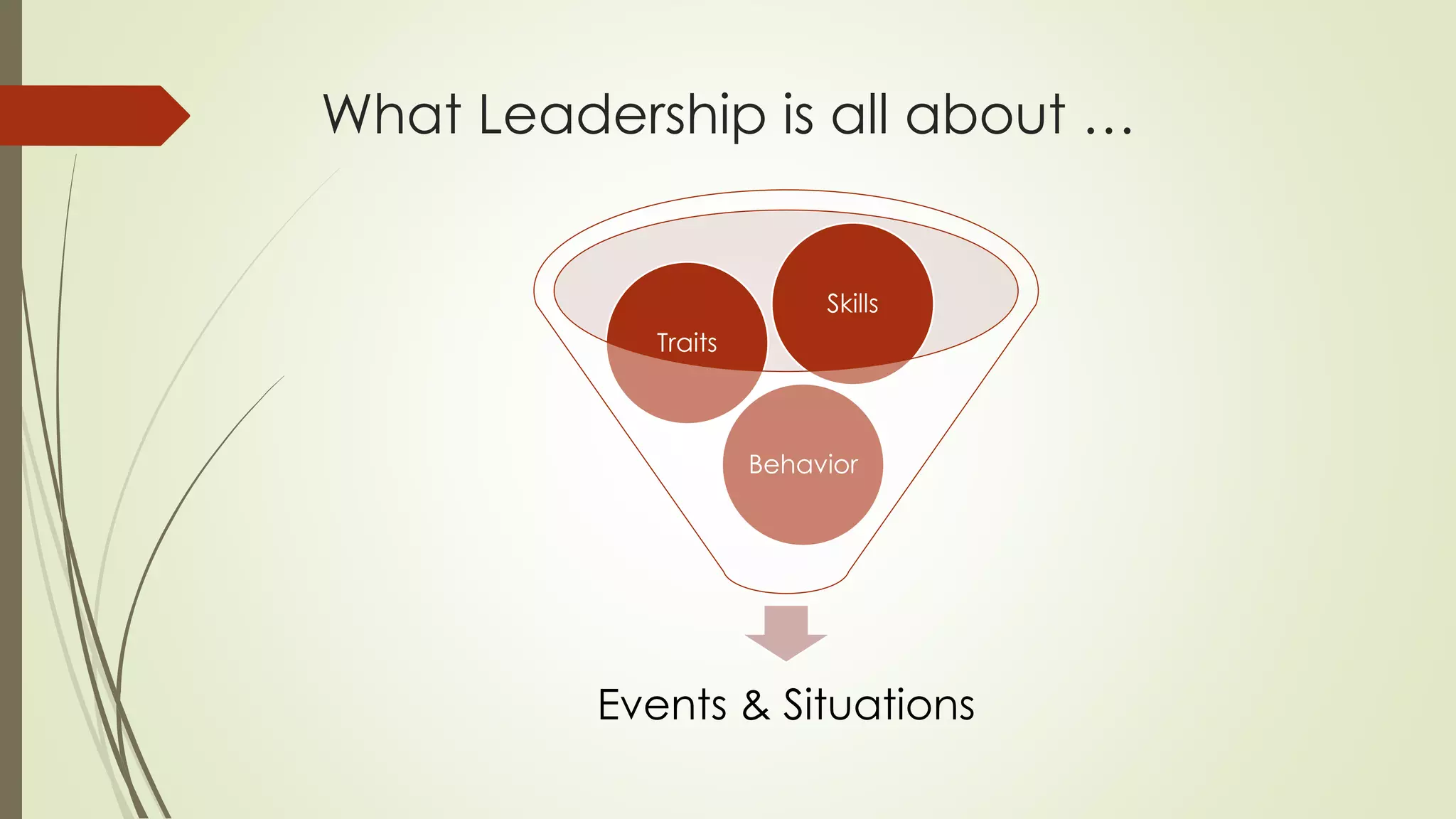
What Leadership is all about …
Events & Situations
Behavior
Traits
Skills
Leadership Theories have evolved
overtime…
1930
•Kurt Lewin: Leadership Styles : Autocratic, Democratic ,Participative
1957
•McGregor’s Theory X and Y : Willingness or unwillingness to work
1964
• Blake & Mouton Leadership Grid: Task vs People concern
1971
•Path-Goal Theory: Followers needs, Environment, Leadership style
1977
Leadership Grid
“A situational leader is
anybody anywhere who
recognizes that
influencing behavior is not
an event but a process.”
– Dr. Paul Hersey
Why Situational Leadership ?
The Situational Leadership® Model provides leaders
with an understanding of the relationship between
an effective style of leadership and the level of
readiness followers exhibit for a specific task.
Leadership is a process …
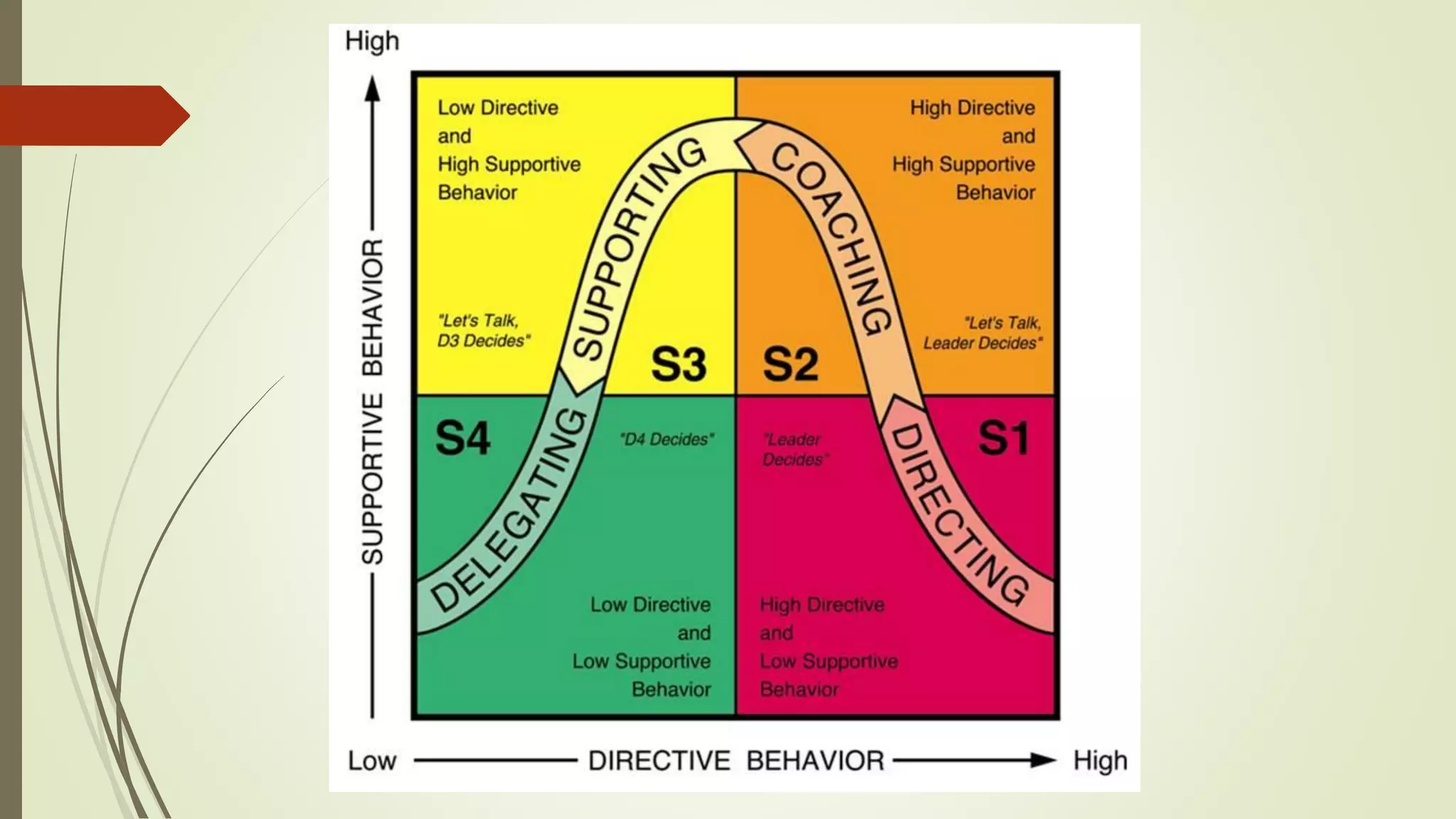
The Situational Leadership® Model
utilizes a repeatable process that
leaders can leverage to effectively
influence the behavior of others
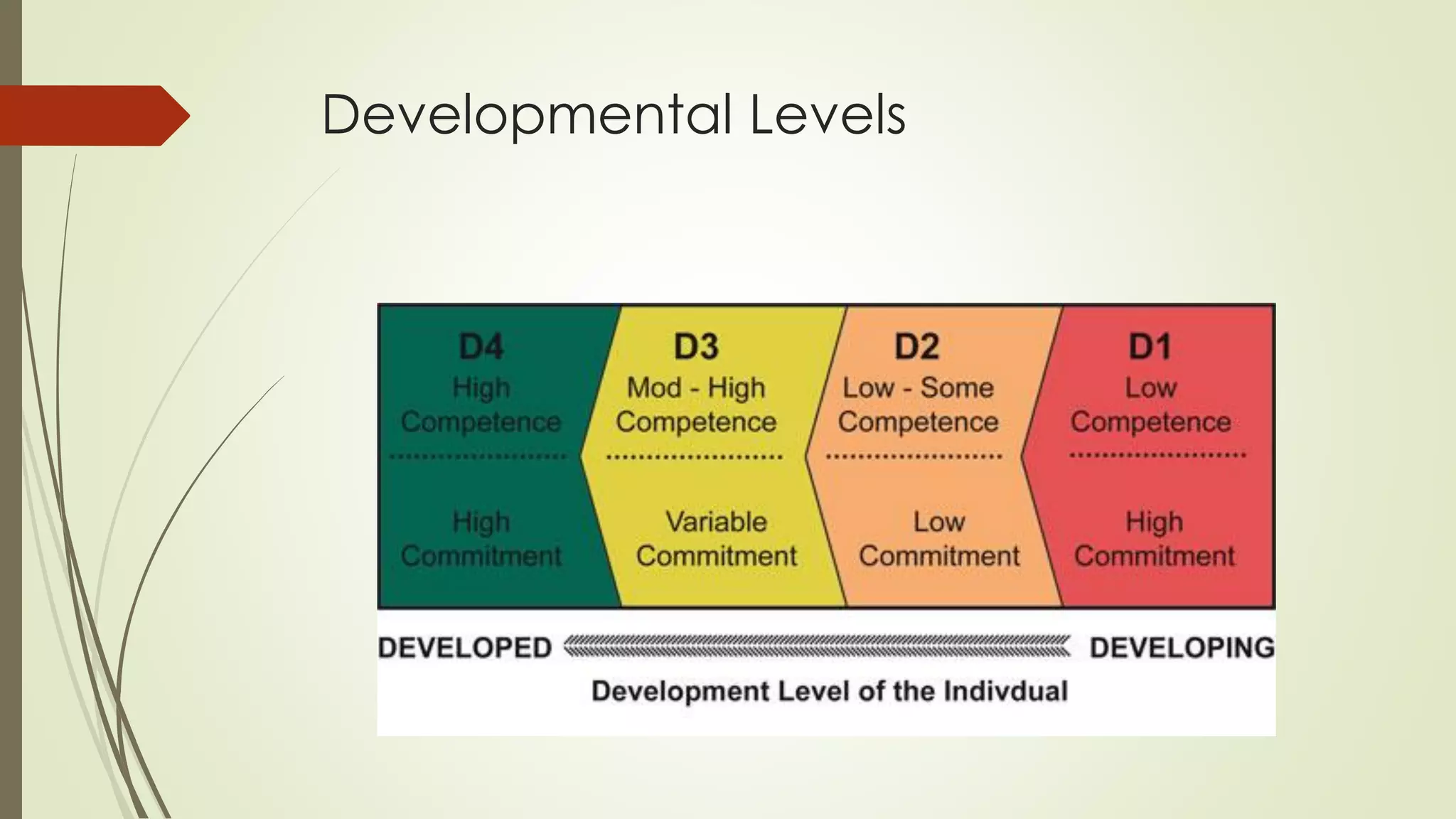
Developmental Levels
Maturity Levels
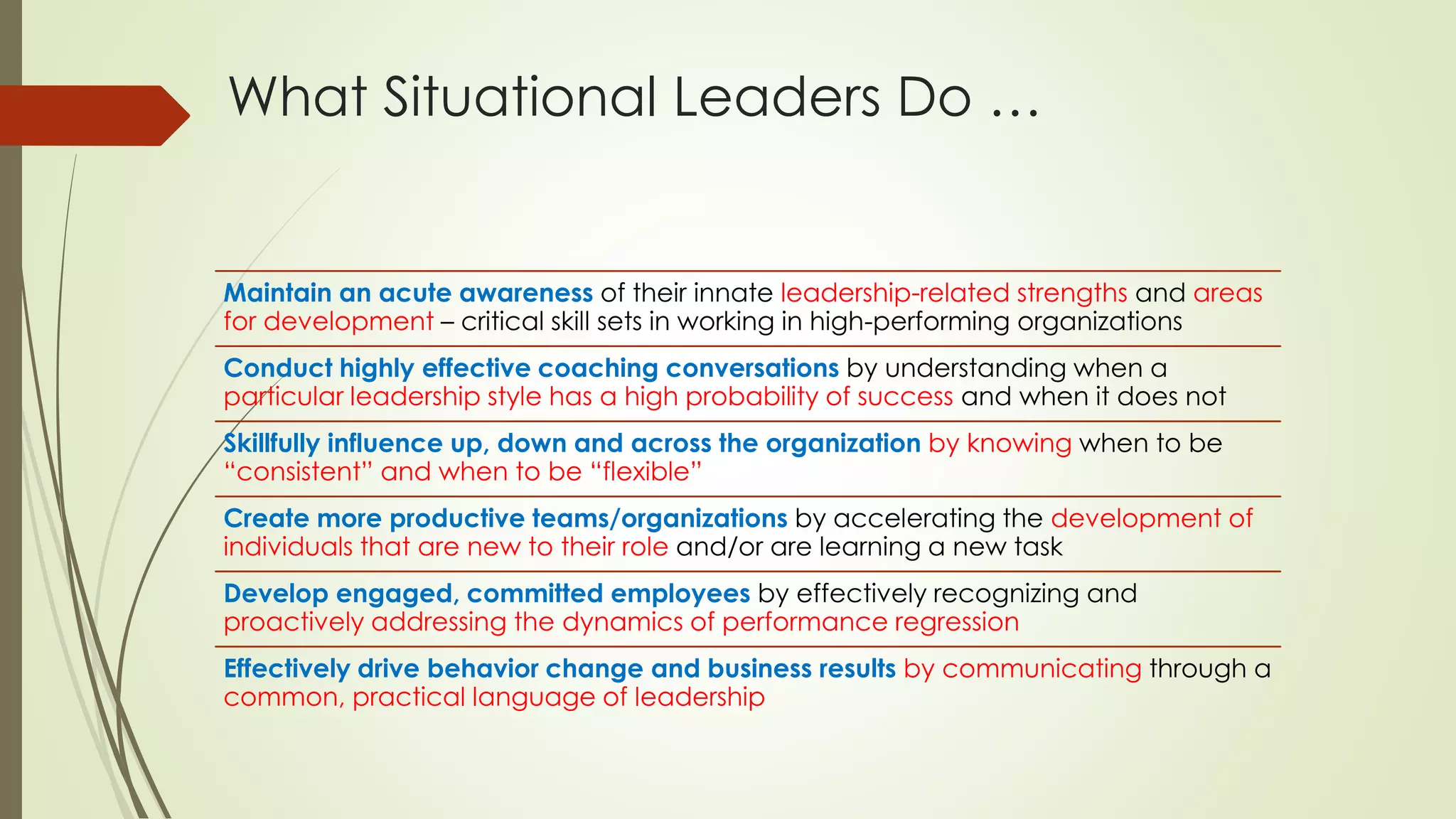
What Situational Leaders Do …
Maintain an acute awareness of their innate leadership-related strengths and areas
for development – critical skill sets in working in high-performing organizations
Conduct highly effective coaching conversations by understanding when a
particular leadership style has a high probability of success and when it does not
Skillfully influence up, down and across the organization by knowing when to be
“consistent” and when to be “flexible”
Create more productive teams/organizations by accelerating the development of
individuals that are new to their role and/or are learning a new task
Develop engaged, committed employees by effectively recognizing and
proactively addressing the dynamics of performance regression
Effectively drive behavior change and business results by communicating through a
common, practical language of leadership
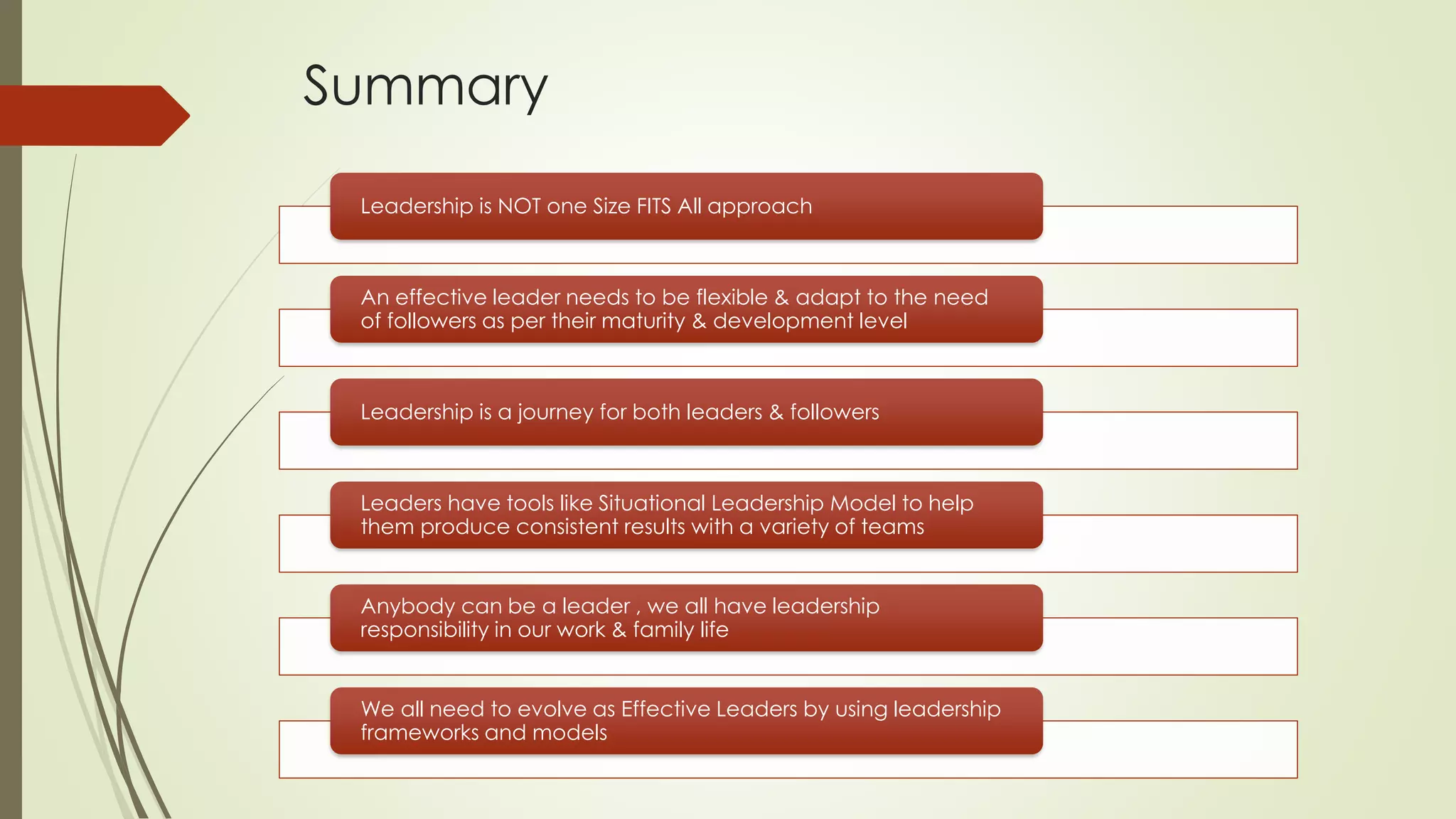
Summary
Leadership is NOT one Size FITS All approach
An effective leader needs to be flexible & adapt to the need
of followers as per their maturity & development level
Leadership is a journey for both leaders & followers
Leaders have tools like Situational Leadership Model to help
them produce consistent results with a variety of teams
Anybody can be a leader , we all have leadership
responsibility in our work & family life
We all need to evolve as Effective Leaders by using leadership
frameworks and models
Situational leadership

Situational leadership

  • 1.
  • 2.
    From Nelson Mandelaand Winston Churchill , to Martin Luther King Jr & Steve Jobs there are as many approaches to Leaderships as there are Leaders … As there is no ONE SIZE FITS ALL approach in Leadership & it applies to both LEADERS & FOLLOWERS
  • 3.
    What Leadership isall about … Events & Situations Behavior Traits Skills
  • 4.
    Leadership Theories haveevolved overtime… 1930 •Kurt Lewin: Leadership Styles : Autocratic, Democratic ,Participative 1957 •McGregor’s Theory X and Y : Willingness or unwillingness to work 1964 • Blake & Mouton Leadership Grid: Task vs People concern 1971 •Path-Goal Theory: Followers needs, Environment, Leadership style 1977
  • 5.
  • 6.
    “A situational leaderis anybody anywhere who recognizes that influencing behavior is not an event but a process.” – Dr. Paul Hersey
  • 8.
    Why Situational Leadership? The Situational Leadership® Model provides leaders with an understanding of the relationship between an effective style of leadership and the level of readiness followers exhibit for a specific task.
  • 9.
    Leadership is aprocess … The Situational Leadership® Model utilizes a repeatable process that leaders can leverage to effectively influence the behavior of others
  • 11.
  • 12.
  • 13.
    What Situational LeadersDo … Maintain an acute awareness of their innate leadership-related strengths and areas for development – critical skill sets in working in high-performing organizations Conduct highly effective coaching conversations by understanding when a particular leadership style has a high probability of success and when it does not Skillfully influence up, down and across the organization by knowing when to be “consistent” and when to be “flexible” Create more productive teams/organizations by accelerating the development of individuals that are new to their role and/or are learning a new task Develop engaged, committed employees by effectively recognizing and proactively addressing the dynamics of performance regression Effectively drive behavior change and business results by communicating through a common, practical language of leadership
  • 14.
    Summary Leadership is NOTone Size FITS All approach An effective leader needs to be flexible & adapt to the need of followers as per their maturity & development level Leadership is a journey for both leaders & followers Leaders have tools like Situational Leadership Model to help them produce consistent results with a variety of teams Anybody can be a leader , we all have leadership responsibility in our work & family life We all need to evolve as Effective Leaders by using leadership frameworks and models