Downloaded 29 times



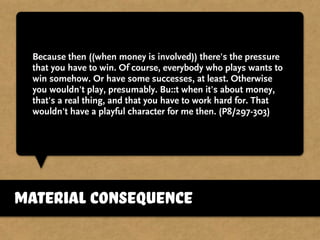
![P3: And as a reviewer you have to look: How does an, an adventure
like Heavy Rain, which plays a lot with the freedom to act, and
suggests it, there you have to- as a normal, contemplative player you
just play it through, and afterwards you think: ‘Maybe I’ll do it again.’
And here you indeed have to play the same scenes immediately again
and look, how, what is different, so. [That is]
Interviewer: [That is,] you have to actually exhaust the possibility
space?
P3: Exactly, yes. Yes, yes. You are forced to do it, it’s no longer an
optional possibility. Whenever you’re forced to do something, then in
becomes more work. (P3-2/669-672)
game features and context interact](https://image.slidesharecdn.com/vortragicapreconfautonomyv1sde130611-130620062003-phpapp01/85/Situational-Autonomy-Support-in-Video-Game-Play-An-Exploratory-Study-21-320.jpg)
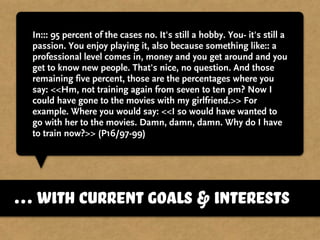
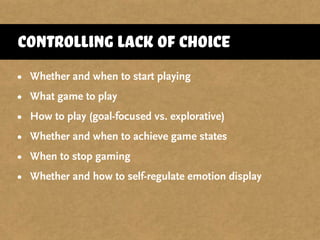
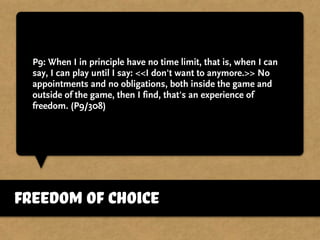
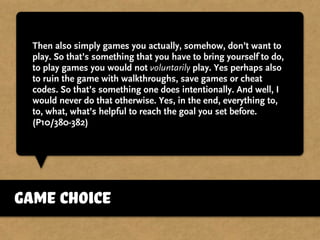
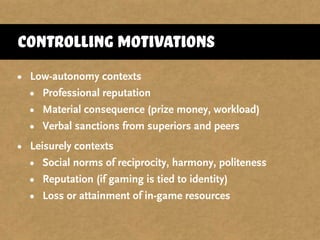
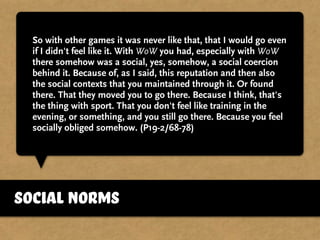
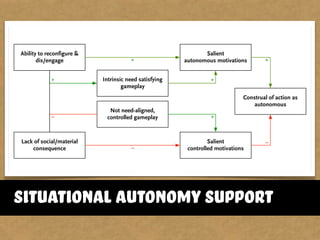
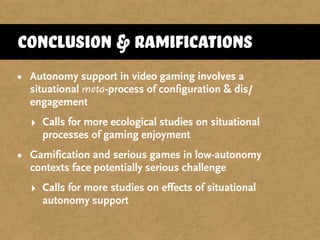
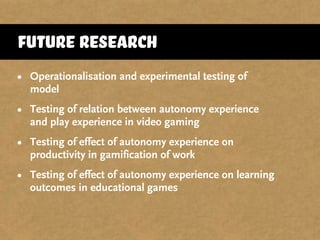

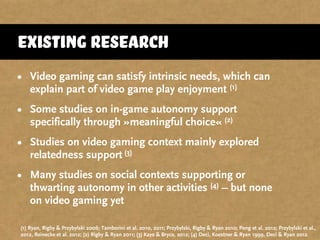
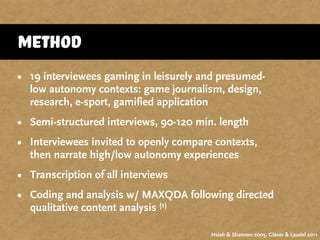
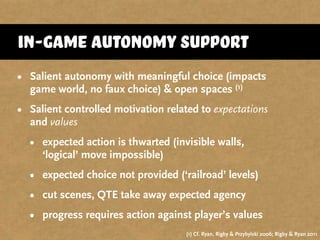
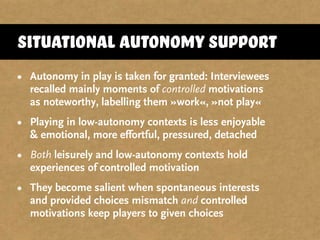
This document summarizes an exploratory study on how social contexts can affect autonomy experience in video game play. The study found that video game play in both leisurely and low-autonomy contexts (such as for work) can involve experiences of controlled motivation when player choices and interests do not align with external expectations or consequences. A lack of choice over aspects of gameplay such as when and how long to play, game selection, and ability to disengage reduced experienced autonomy. The study suggests more research is needed on implementing situational autonomy support to improve enjoyment and outcomes of gamification and serious games used in controlled contexts.


