the mechanic is not
the (whole) message

Procedural Rhetoric Meets Framing
in Train and Playing History 2
Sebastian Deterding (@dingstweets)
Digital Creativity Labs, University of York
DiGRA/FDG 2016, August 3, 2016
c b
<0>
introduction
“Procedural rhetoric is the practice of using processes
persuasively …. Each unit operation in a procedural
representation is a claim about how part of the system
it represents does, should, or could function.”
ian bogost, persuasive games, 2007, 28, 36
“Rules control the meaning of the game, and players, by
following rules, create the meaning that is already
predetermined by the designer(s). For the proceduralists, a
game means what the rules mean… Players are important, but
only as activators of the process that sets the meanings
contained in the game in motion.”
miguel sicart, against procedurality, 2011
“Videogames represent in the gap between procedural representation and
individual subjectivity. The disparity between the simulation and the player’s
understanding of the source system it models creates a crisis in the player. I
named this crisis simulation fever, a madness through which an interrogation of
the rules that drive both systems begins. Procedural rhetoric also produces
simulation fever. It motivates a player to address the logic of a situation in
general ... Players are persuaded when they enter a crisis in relation to this logic.”
ian bogost, persuasive games, 2007, 332-333
“Rather than producing assent, ... the game [Howard Dean
for Iowa] produces deliberation, which implies neither
immediate assent nor dissent. Like literature, poetry, and
art, videogames cannot necessarily know their effects on
individual players.”
ian bogost, persuasive games, 2007, 329, 339
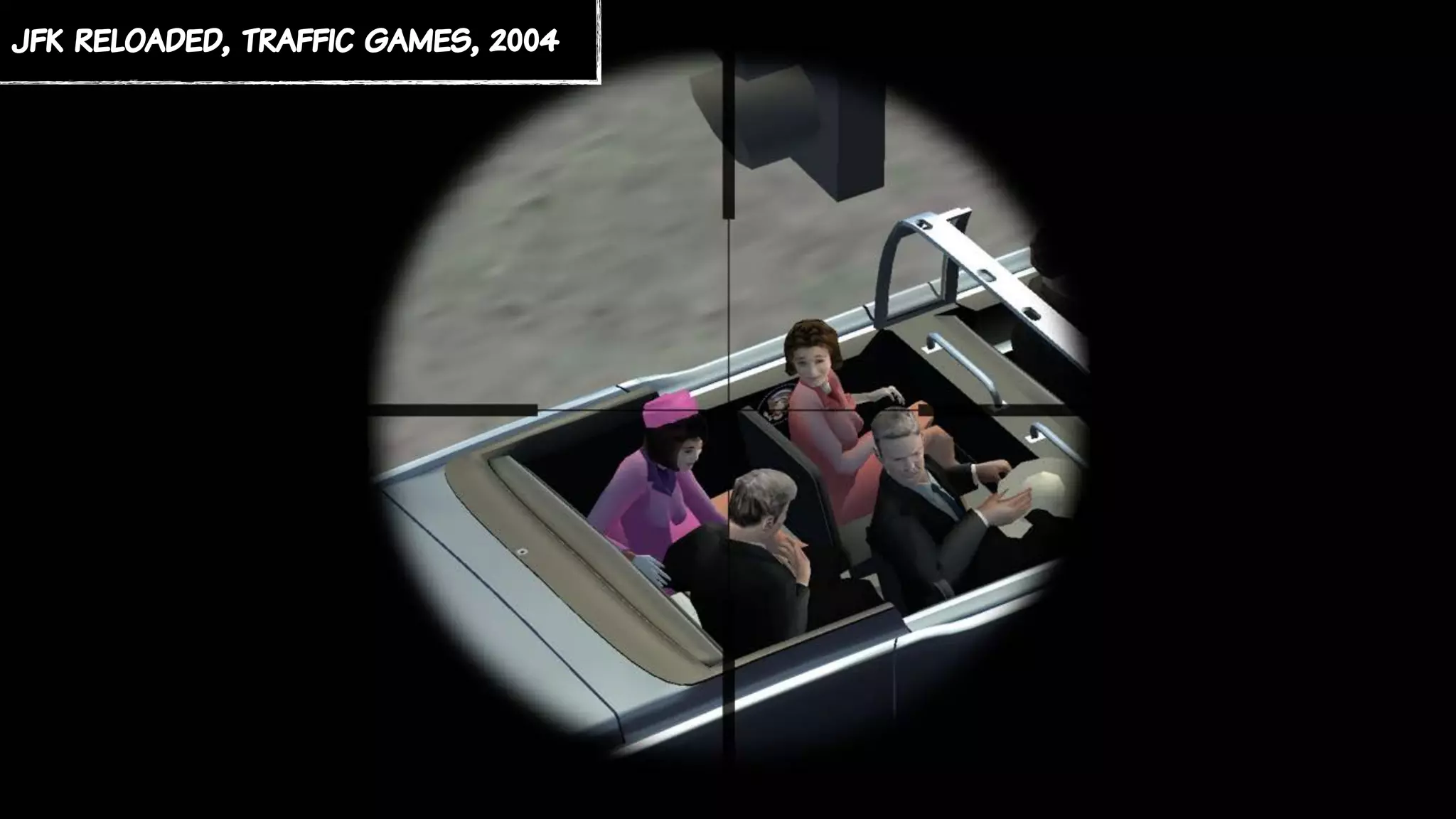
jfk reloaded, traffic games, 2004
“Although the designers encourage player’s to re-create the assassination as
realistically as possible, no player was able to re-create the event successfully
within the constraints of reported history. Given that JFK Reloaded had an
explicit persuasive goal – to affirm the Warren Commission report and
disprove conspiracy theories – it would appear to be a retorical failure. But
emergent features in the game’s design facilitate other interpretations,
suggesting that the developer’s stated goal was a ruse meant to inspire new
perspectives on the historical event itself.”
ian bogost, persuasive games, 2007, 133-134
How and why do different players
come to different understandings
of the same procedural rhetoric?
research question
Blindly focusing on outcomes and
following rules (as in gameplay)
leads you to dehumanise the
people affected by your actions.
the (meta-)mechanical message
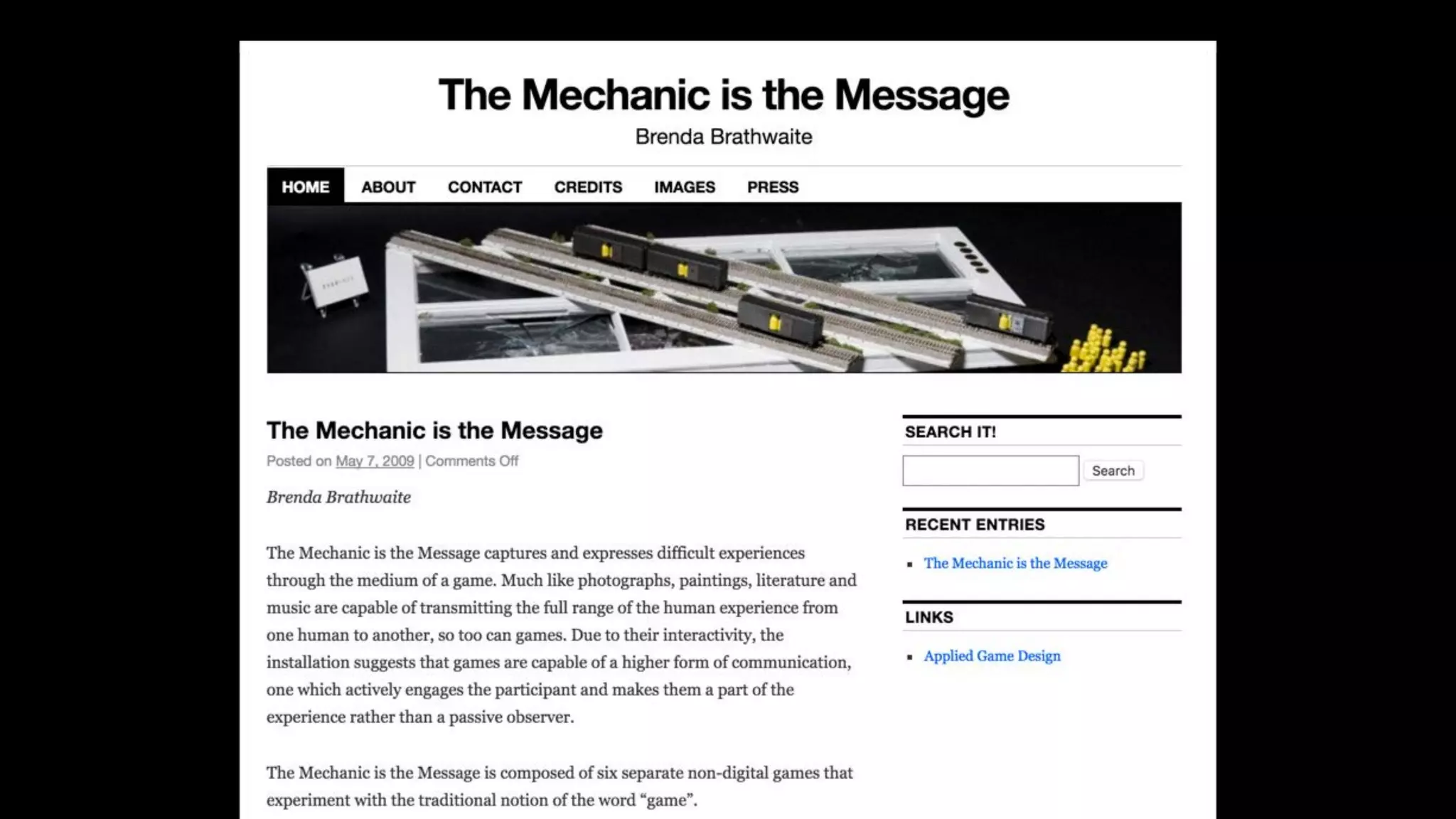
game no. 1: train, brenda brathwaite, 2009
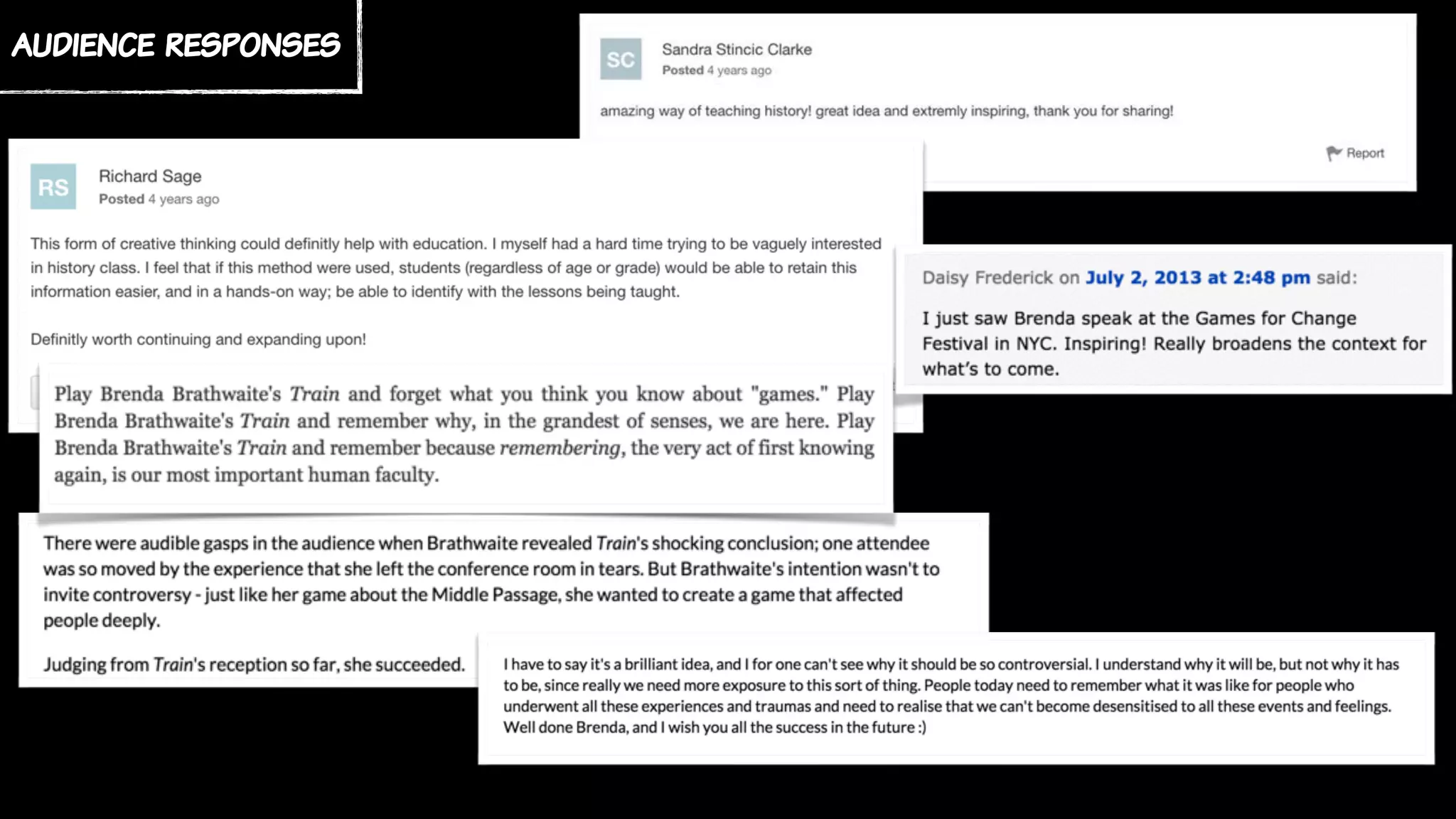
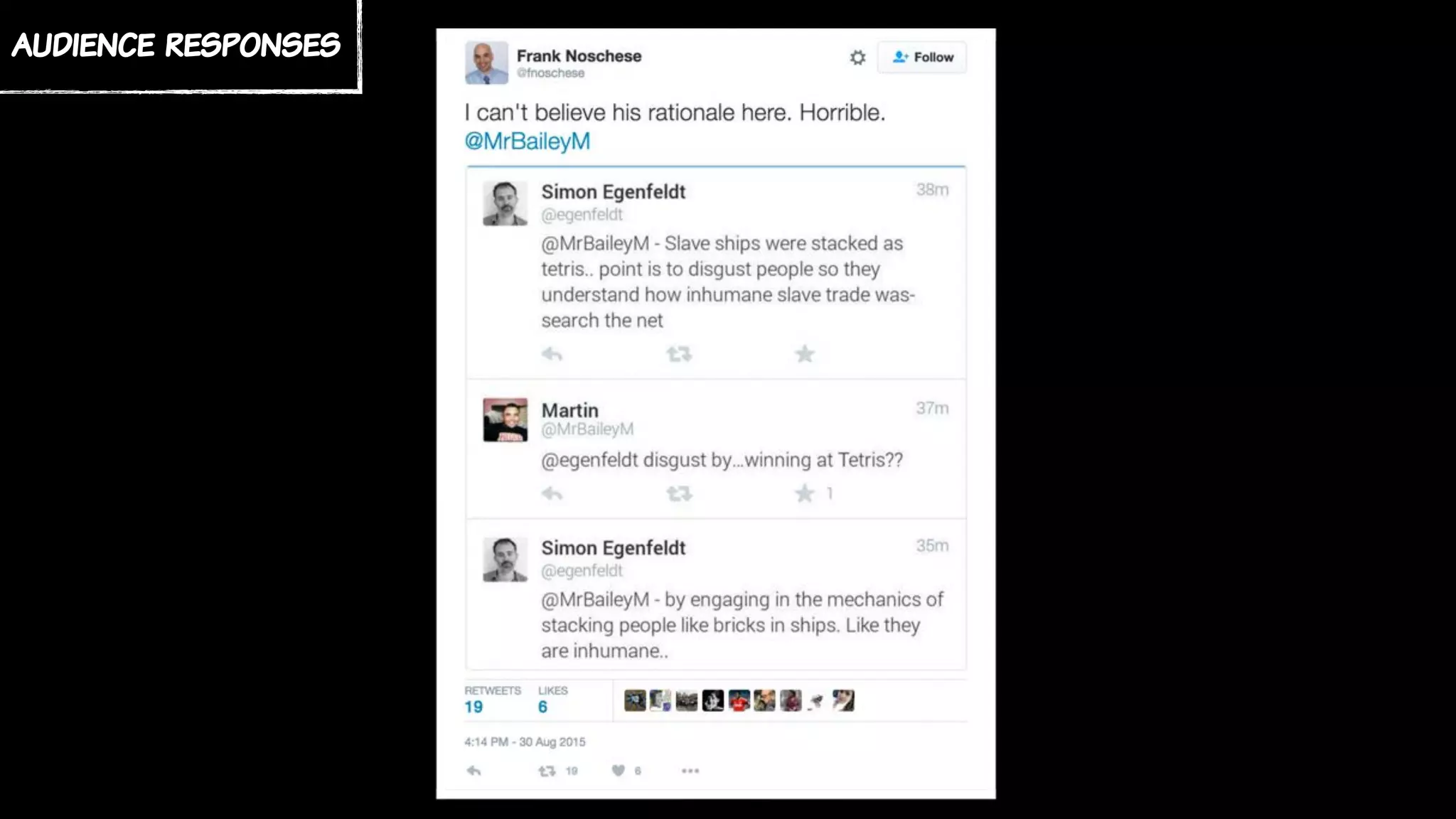
audience responses
media responses
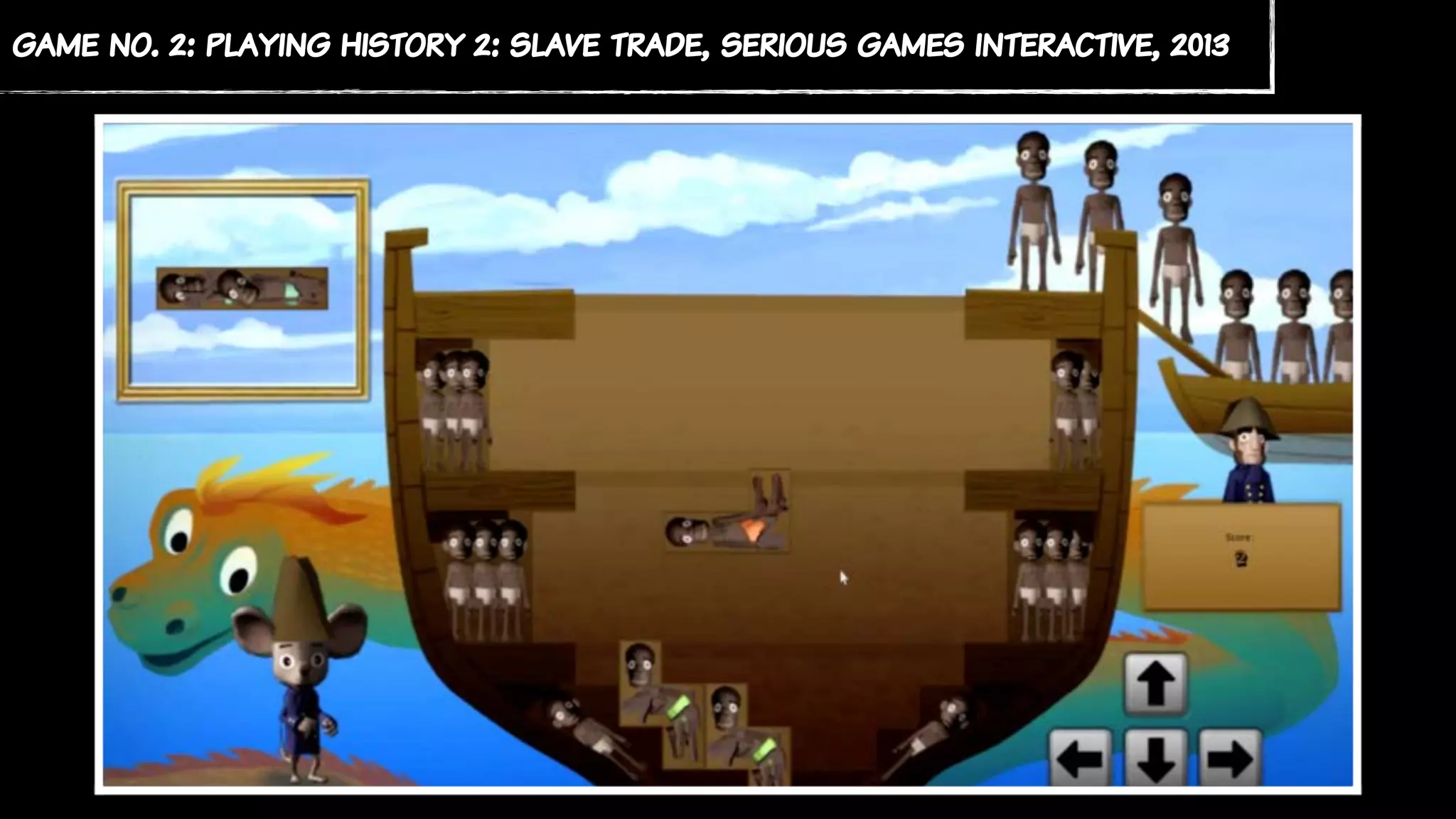
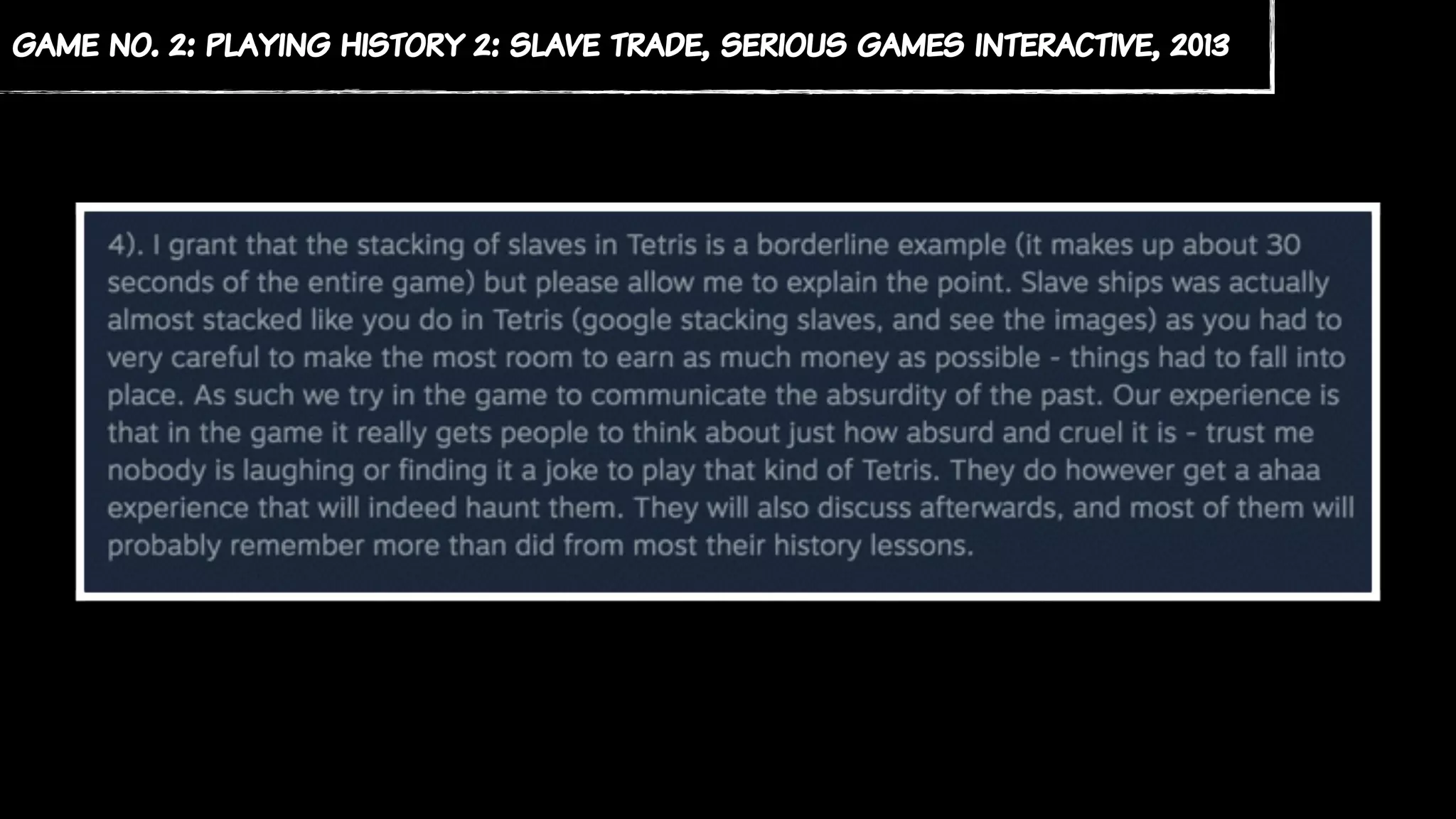
game no. 2: playing history 2: slave trade, serious games interactive, 2013
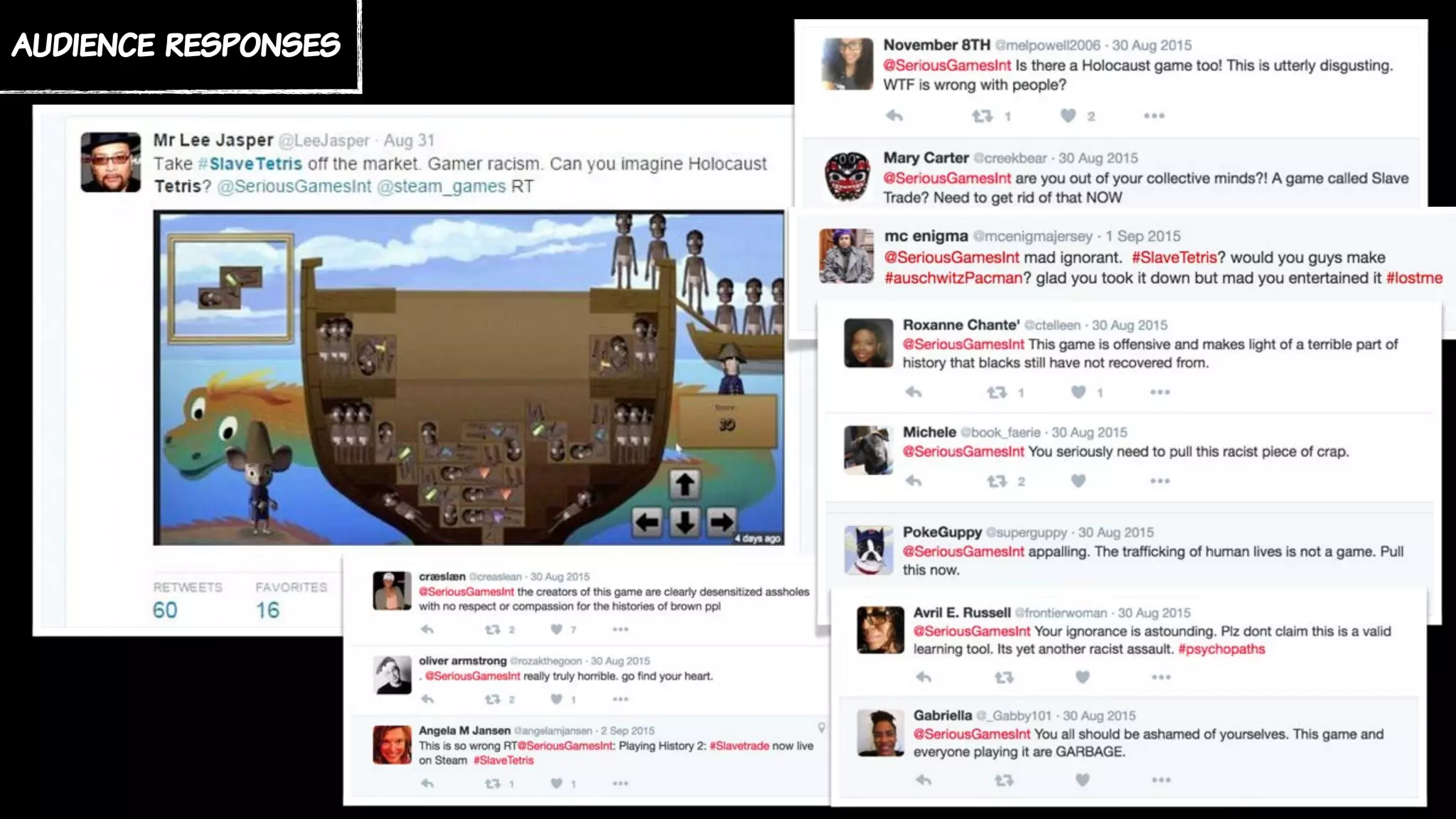
audience responses
audience responses
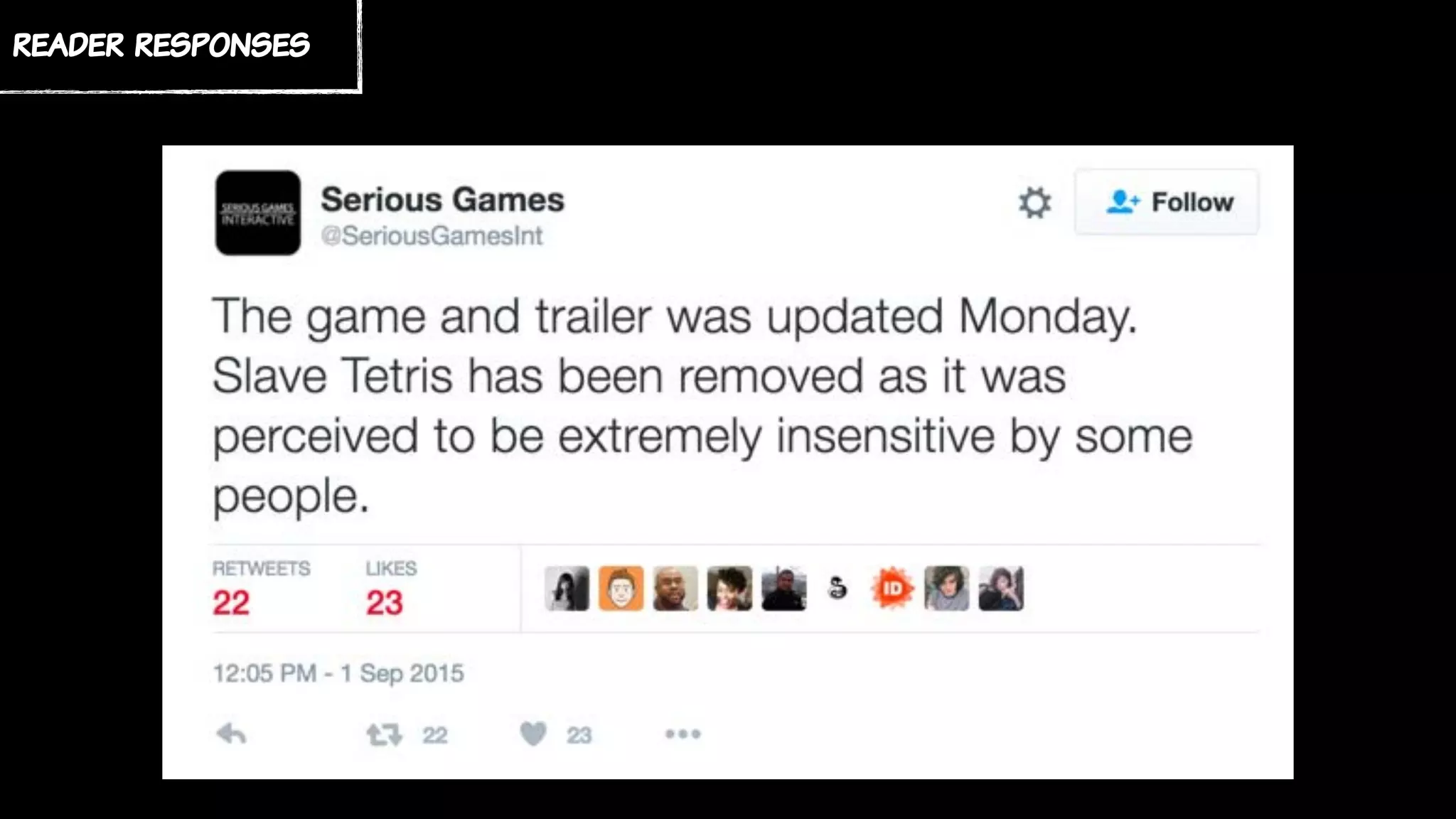
reader responses
WHY?
same rhetoric, opposite reaction
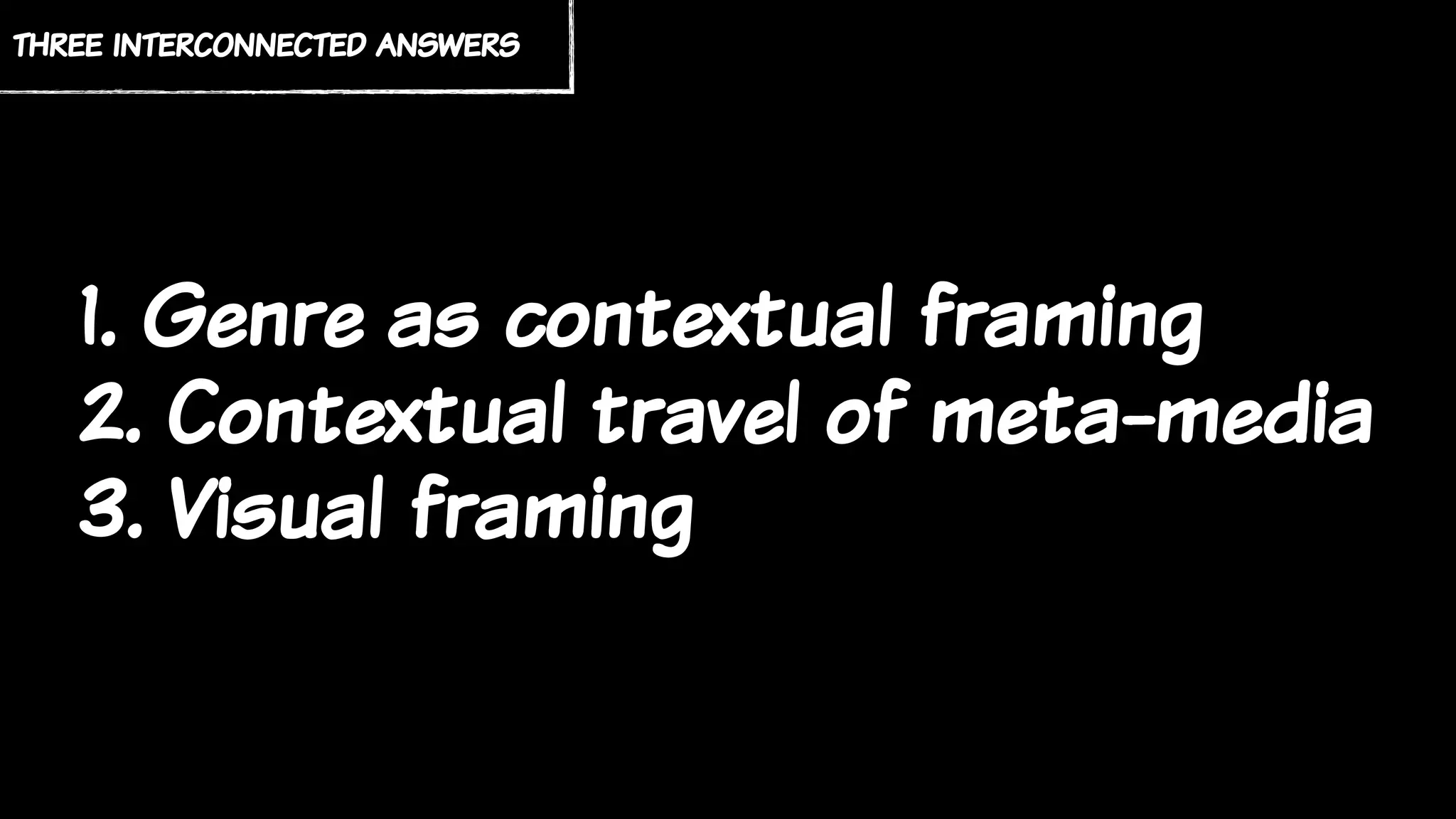
1. Genre as contextual framing
2. Contextual travel of meta-media
3. Visual framing
three interconnected answers
<1>
contextual framing
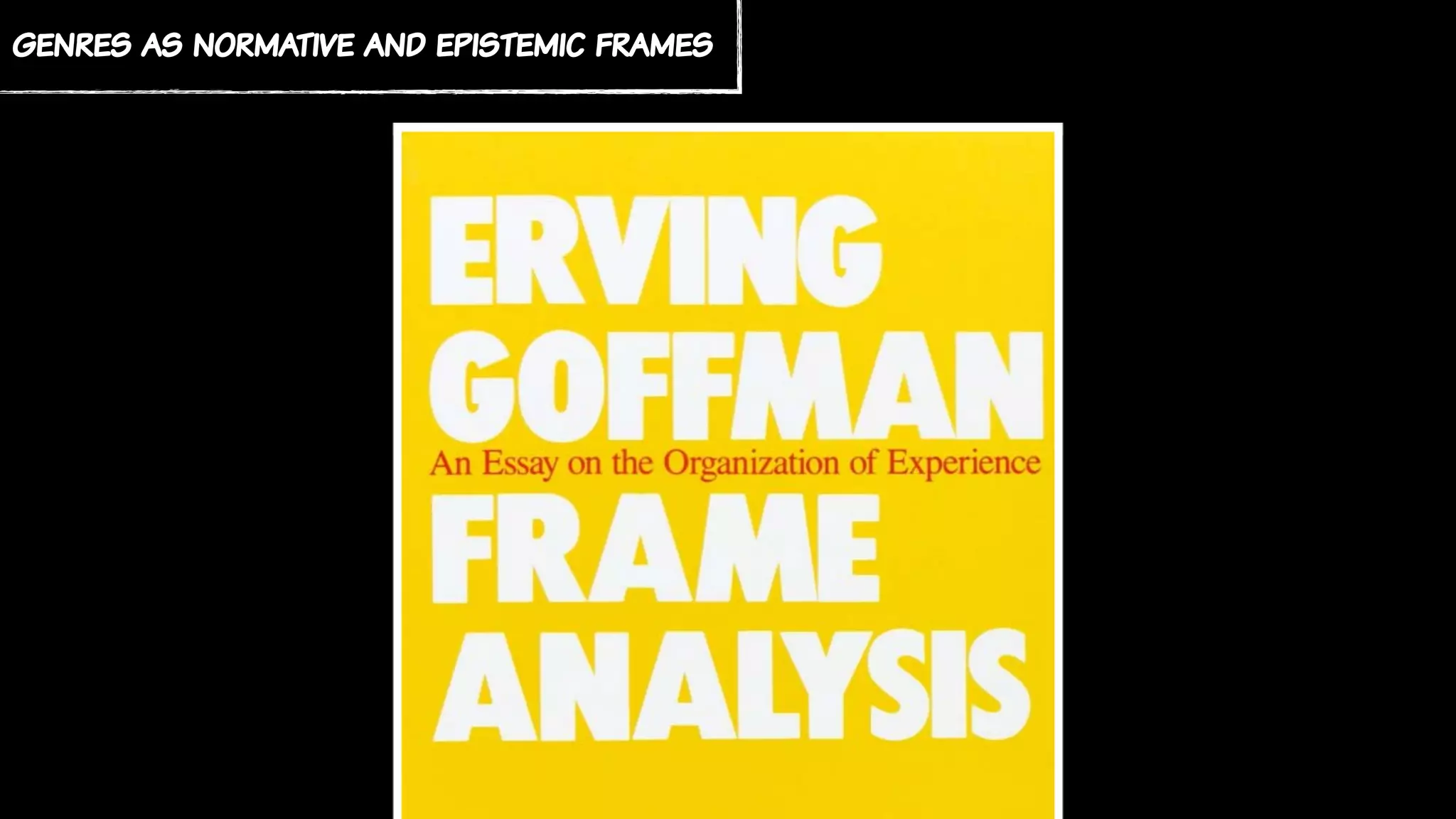
genres as normative and epistemic frames
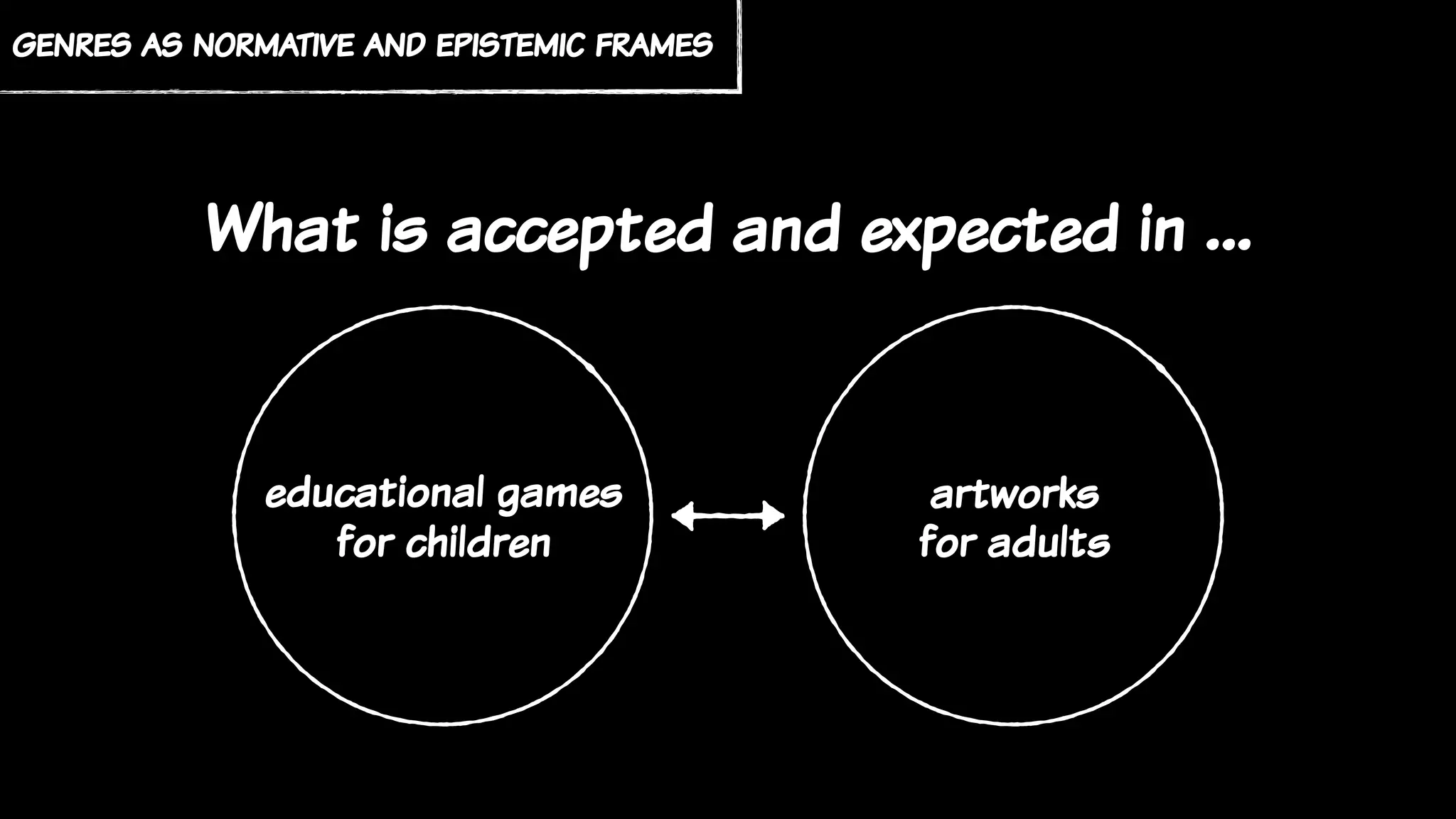
What is accepted and expected in …
genres as normative and epistemic frames
educational games
for children
artworks
for adults
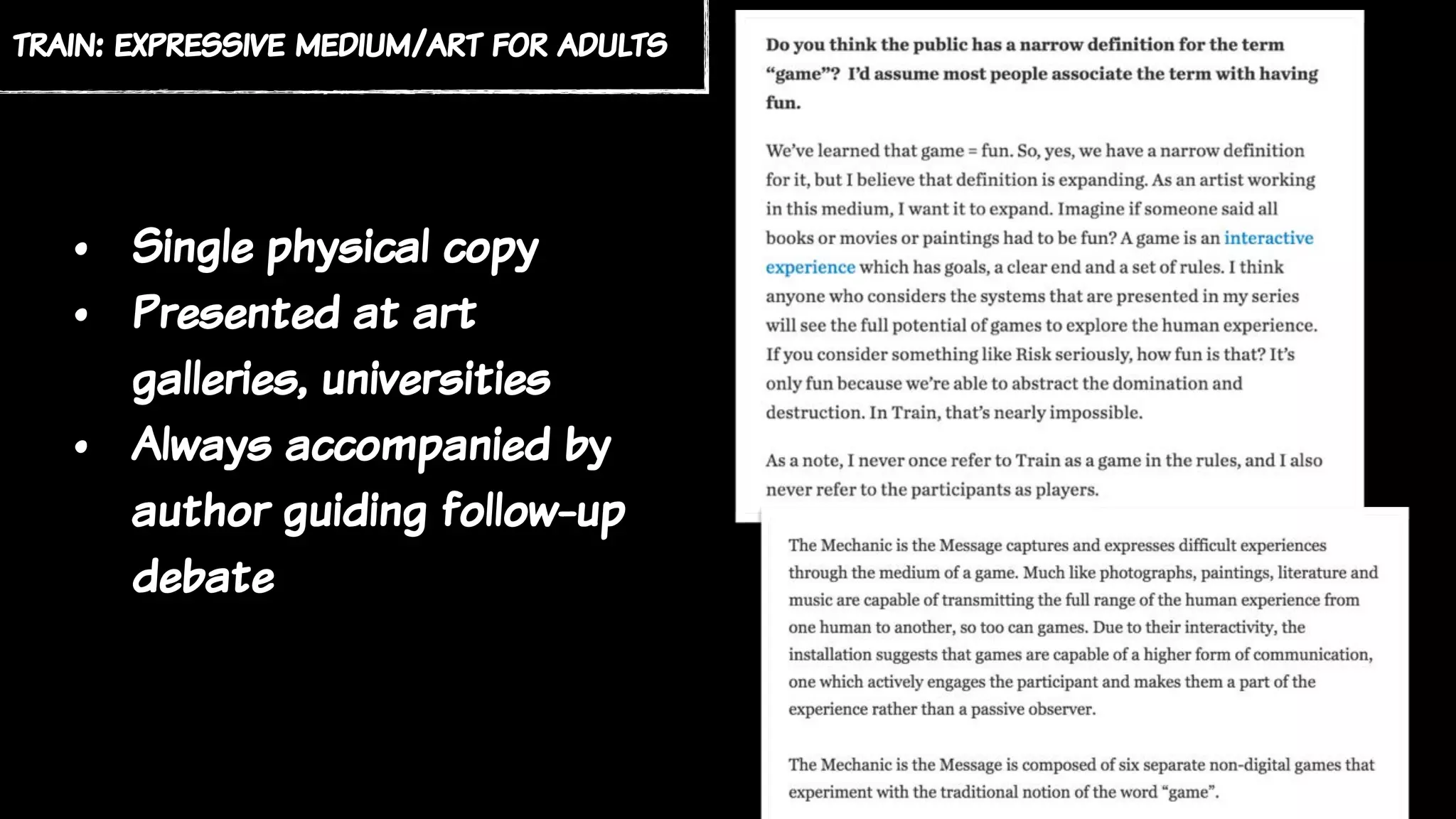
train: expressive medium/art for adults
• Single physical copy
• Presented at art
galleries, universities
• Always accompanied by
author guiding follow-up
debate
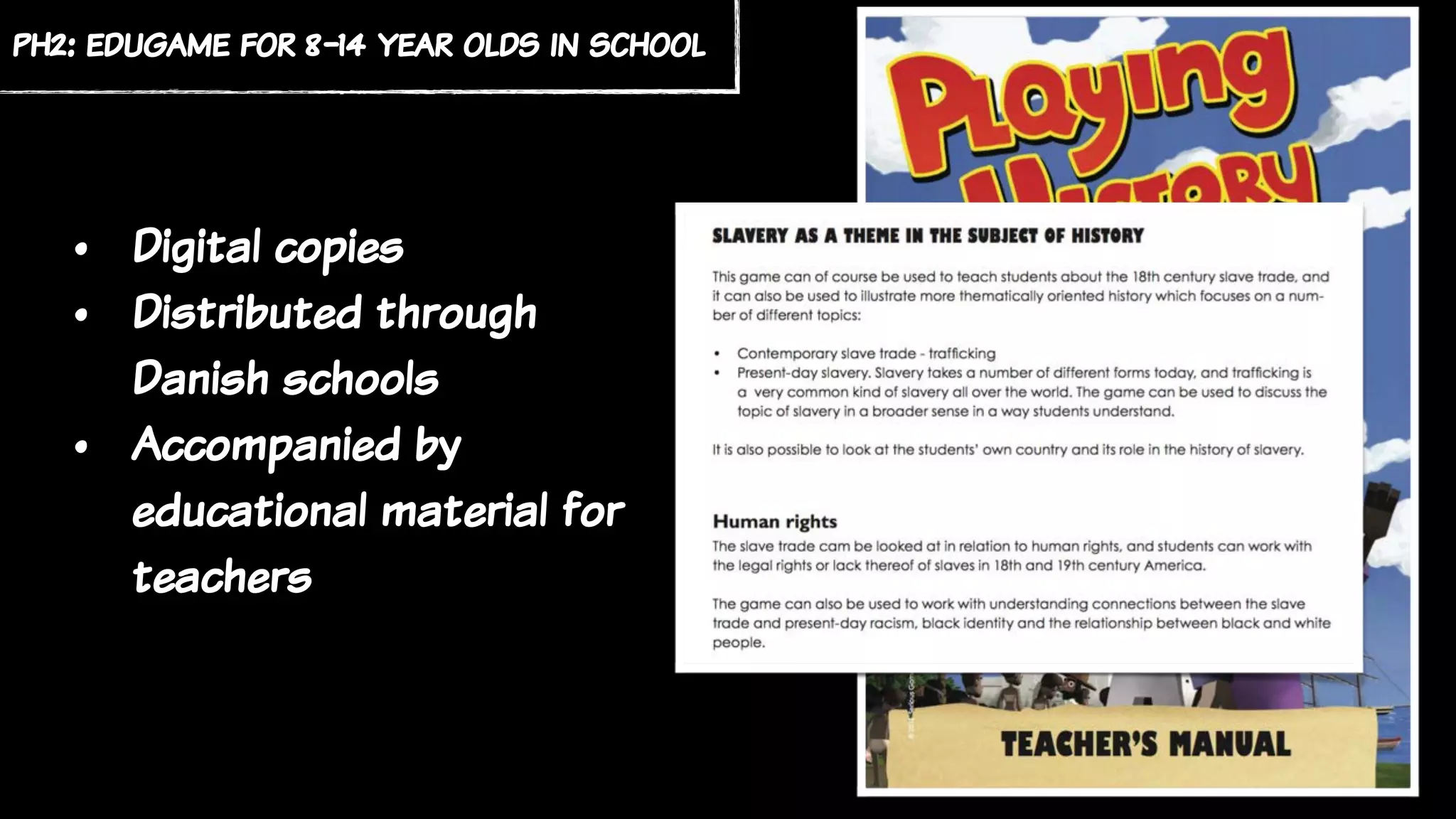
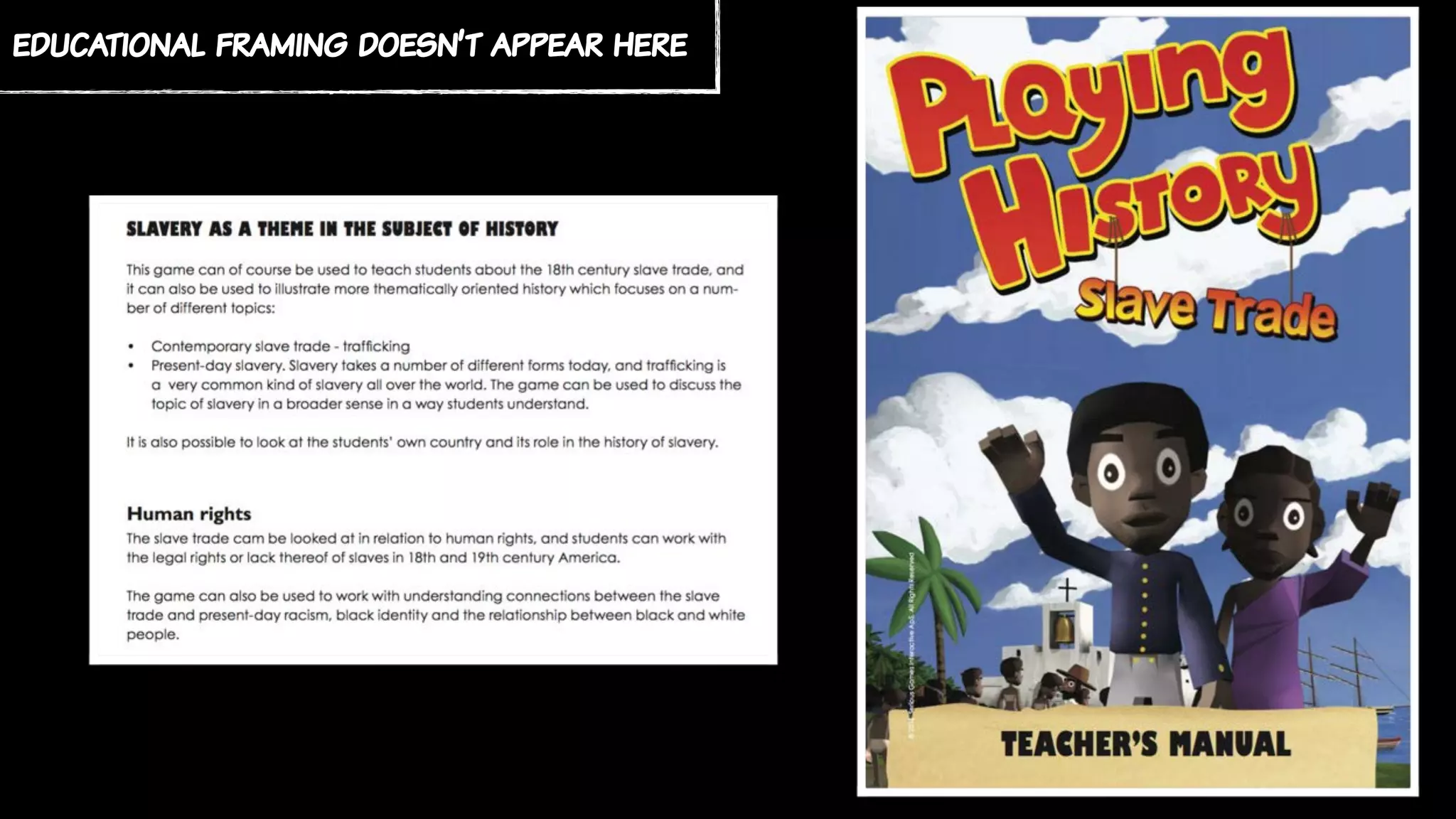
ph2: edugame for 8-14 year olds in school
• Digital copies
• Distributed through
Danish schools
• Accompanied by
educational material for
teachers
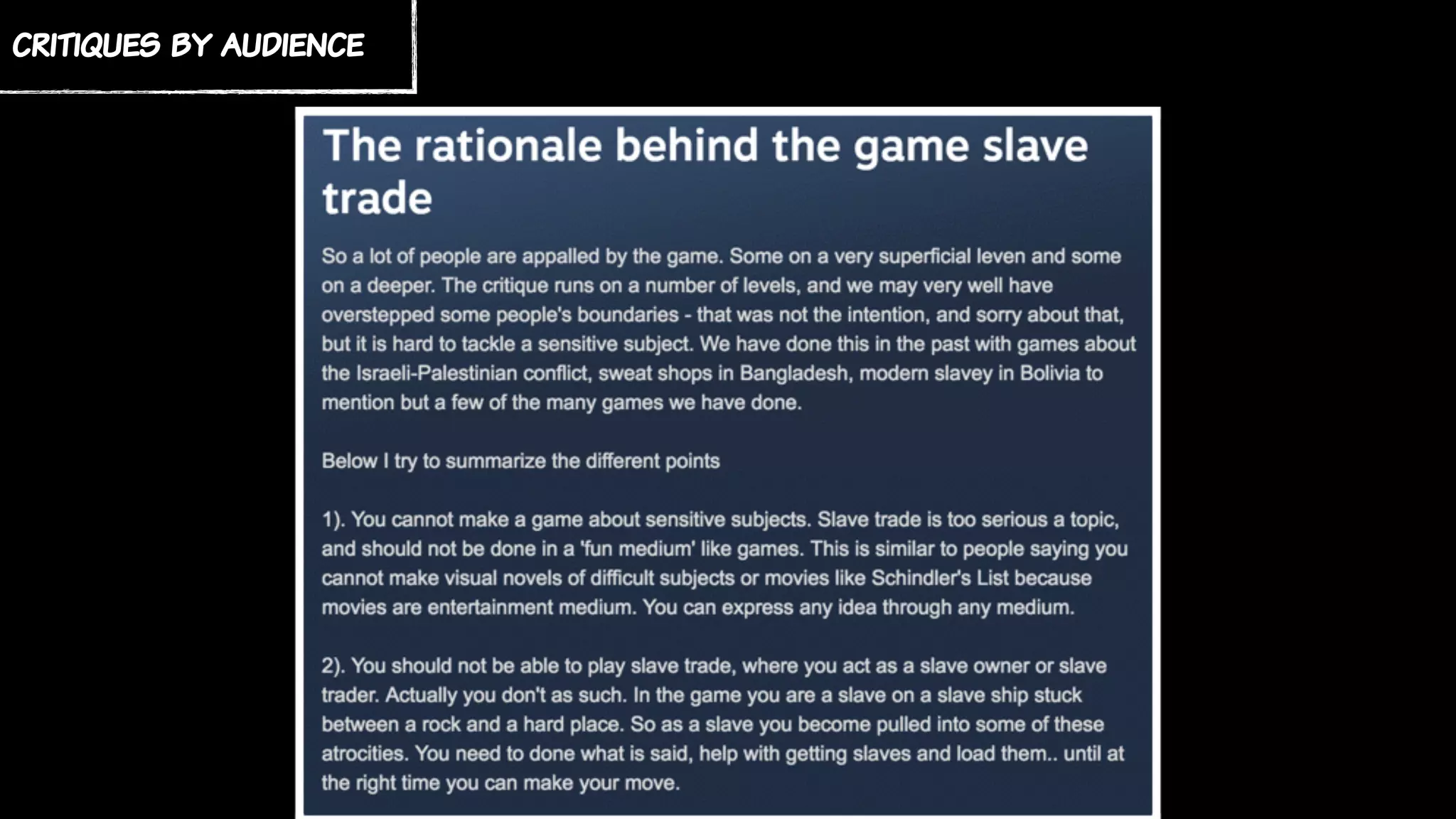
critiques by audience
controversional topics: known and expected … in art
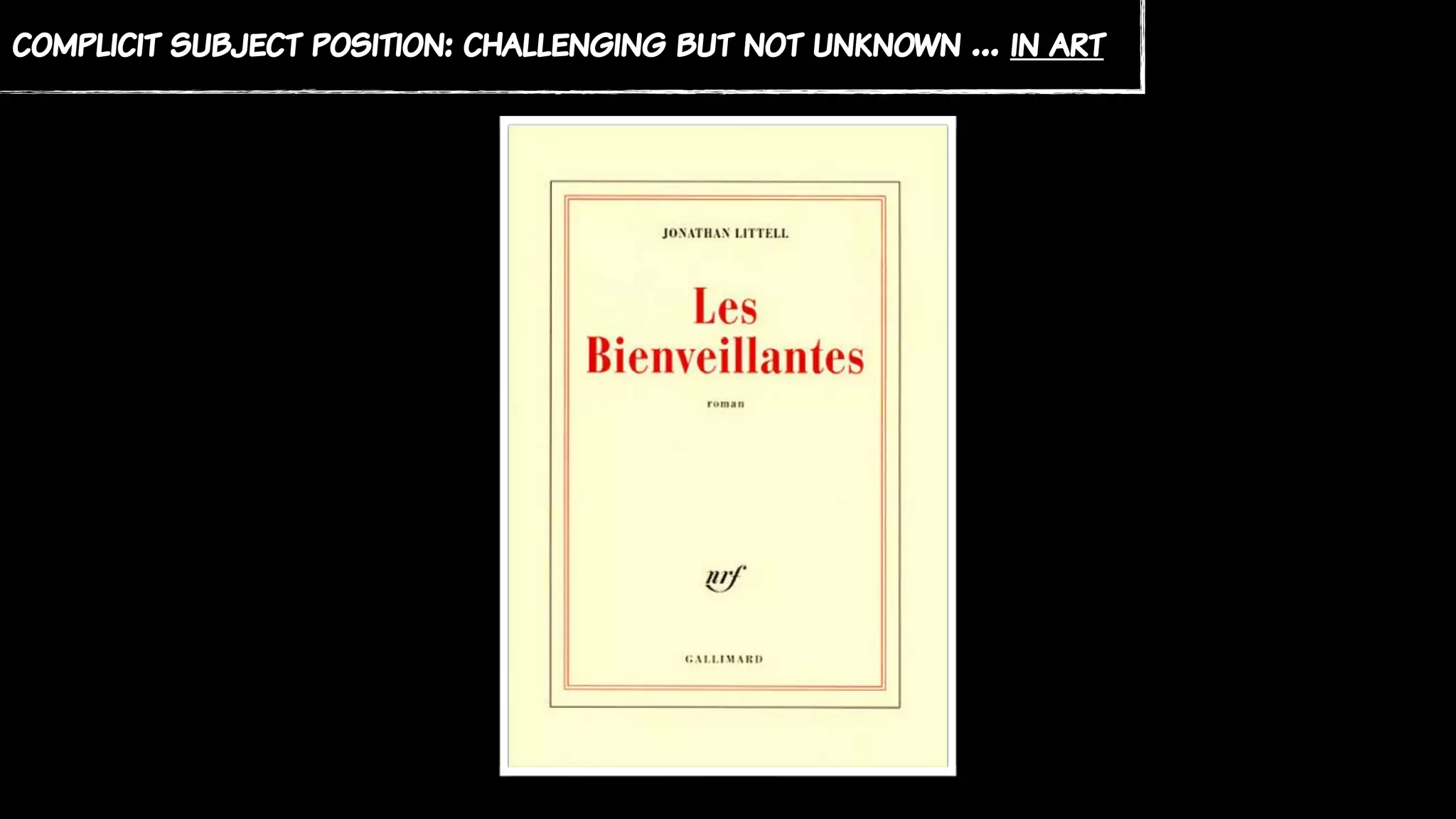
complicit subject position: challenging but not unknown … in art
<2>
contextual travel of
meta-media
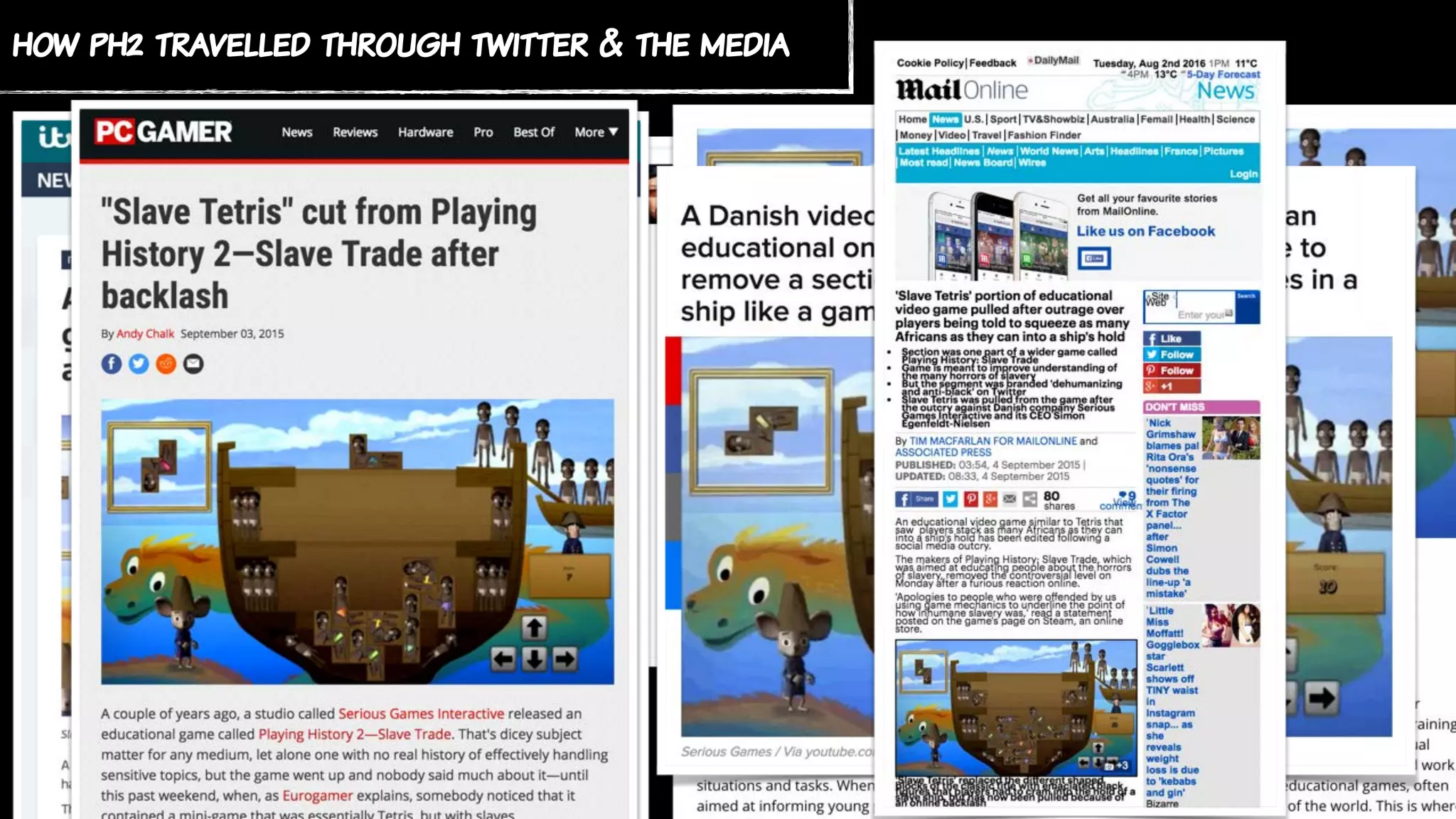
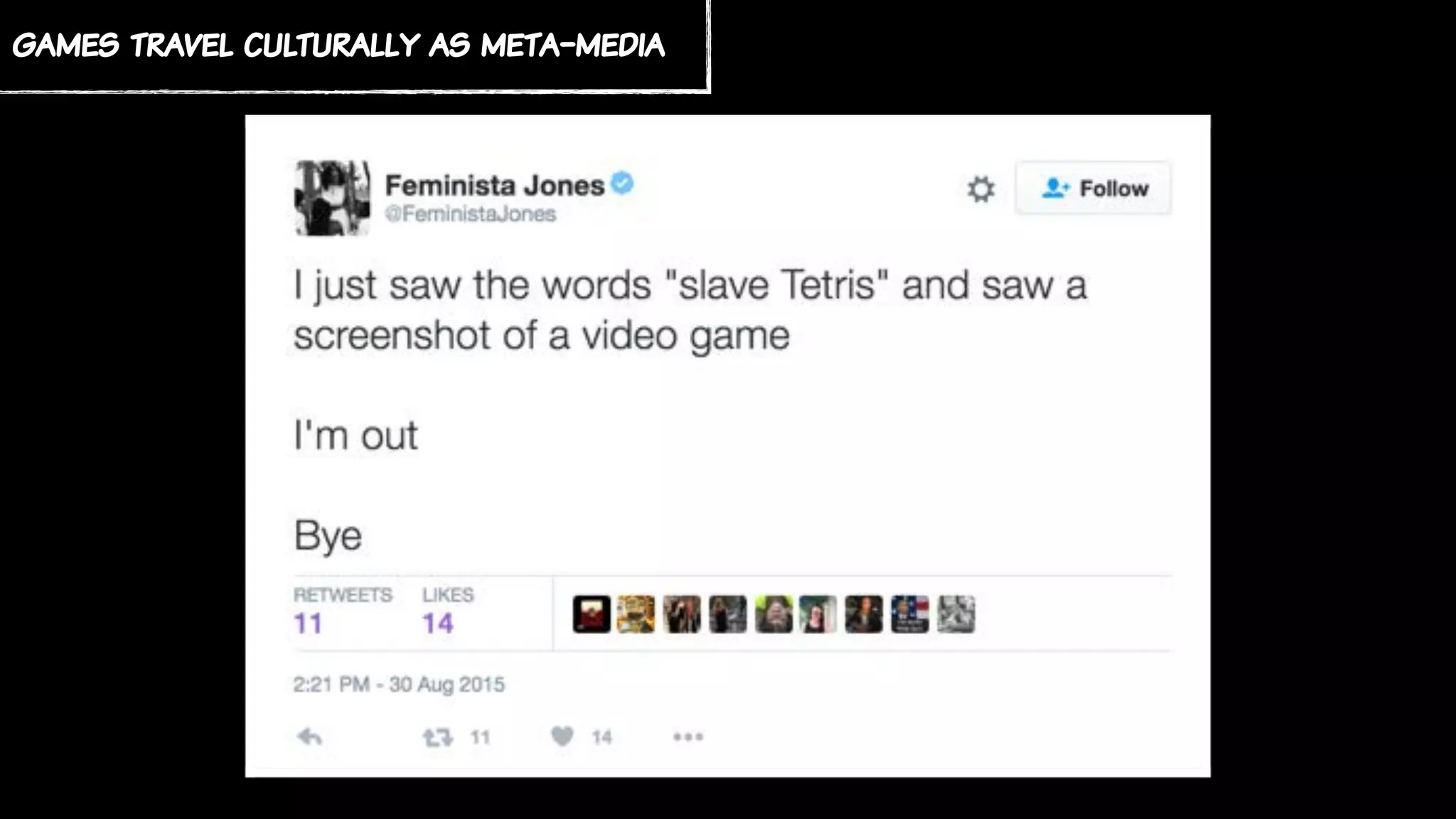
released & announced on steam/twitter outside educational context
educational framing doesn’t appear here
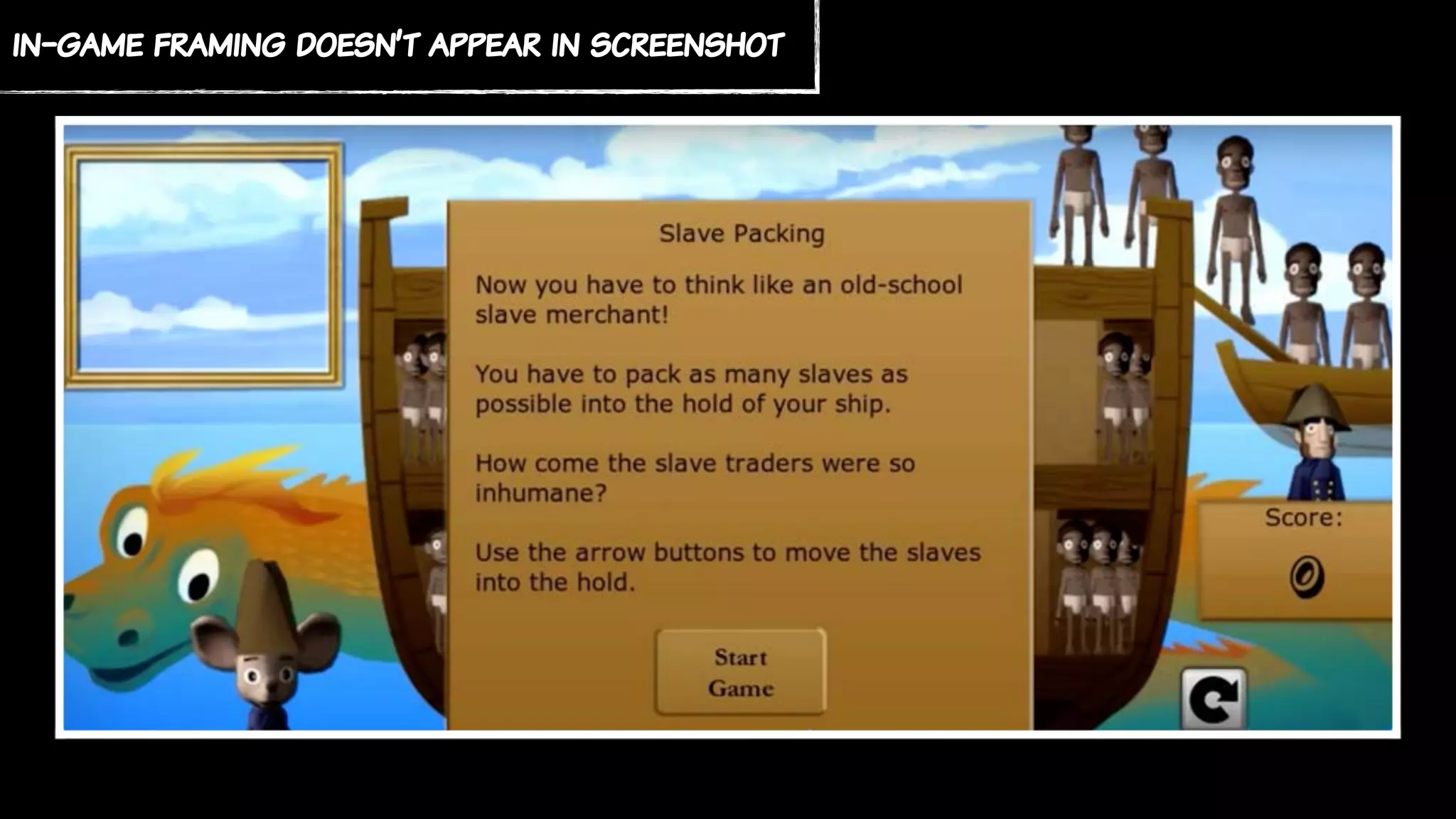
in-game framing doesn’t appear in screenshot
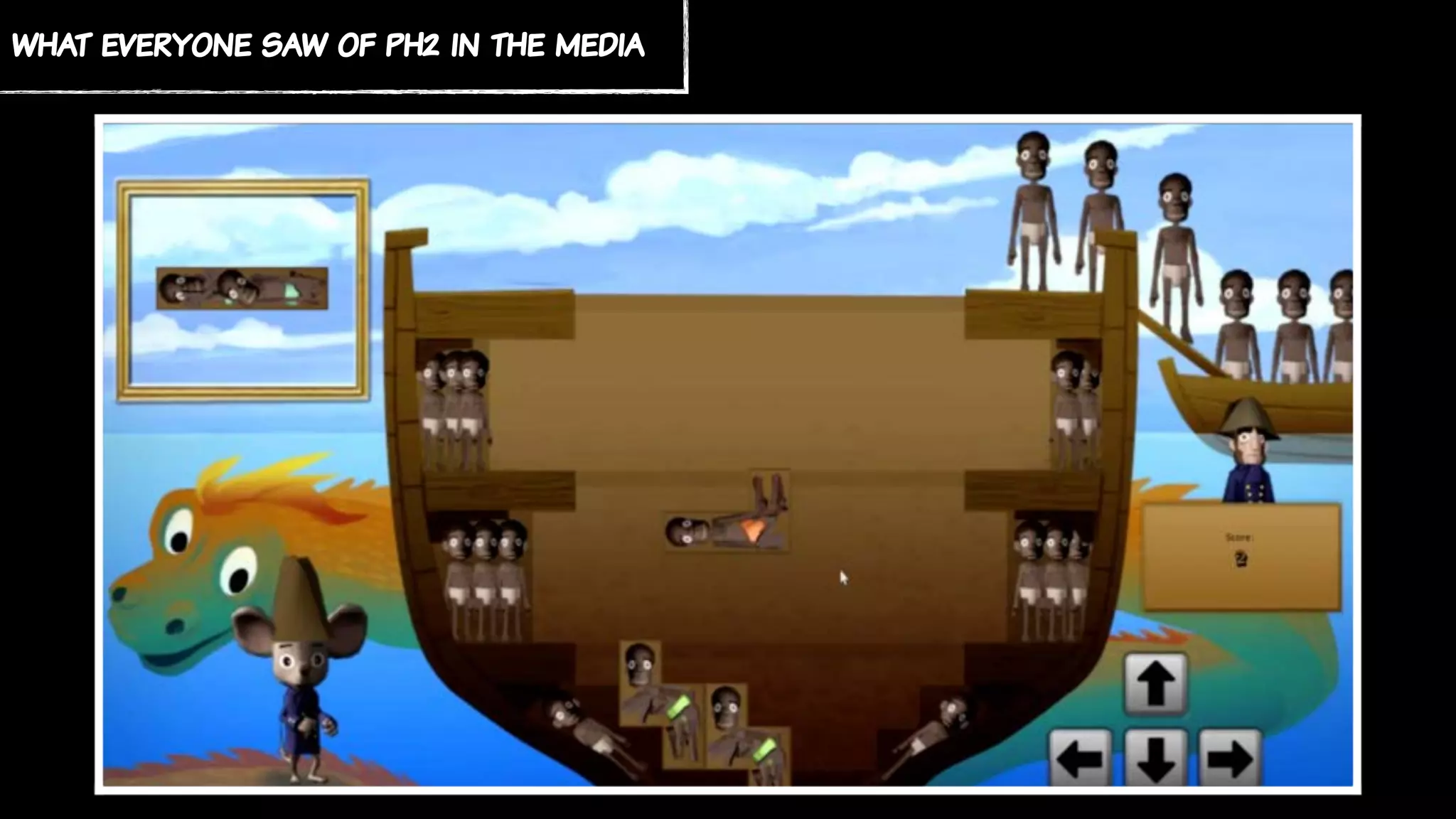
how ph2 travelled through twitter & the media
games travel culturally as meta-media
<3>
visual framing
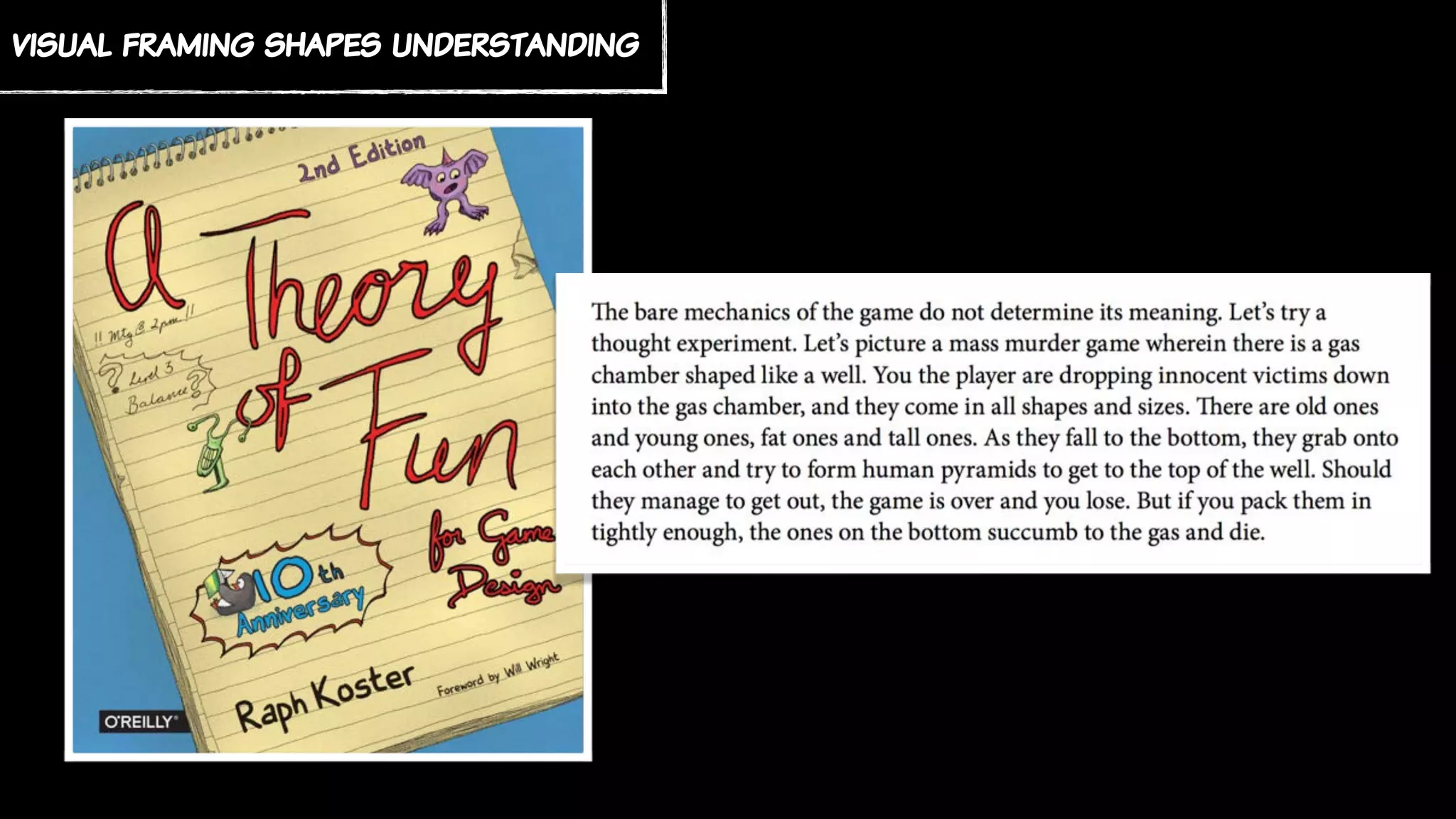
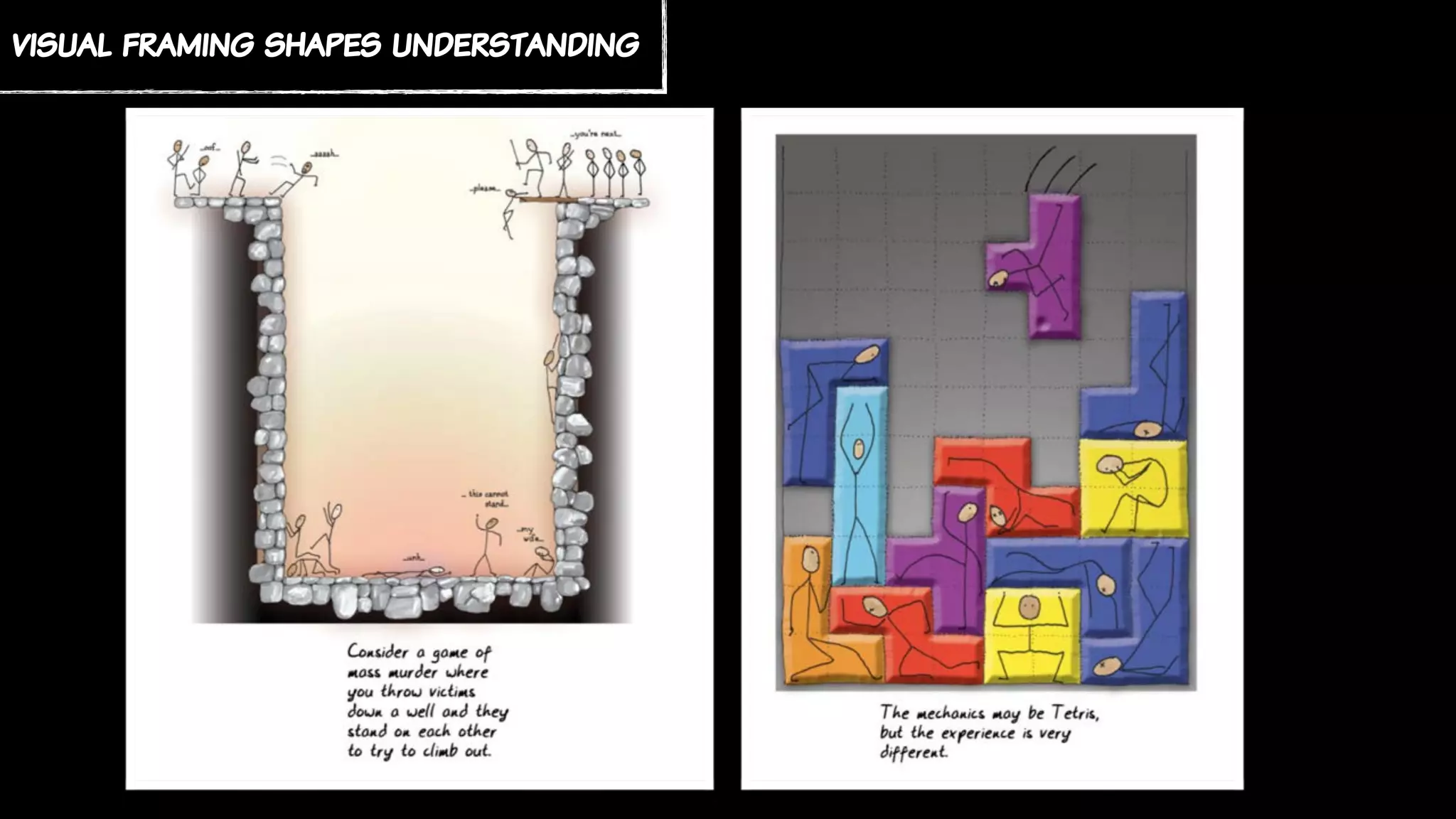
visual framing shapes understanding
what everyone saw of ph2 in the media
how train travelled through the media
what everyobody saw of train in the media
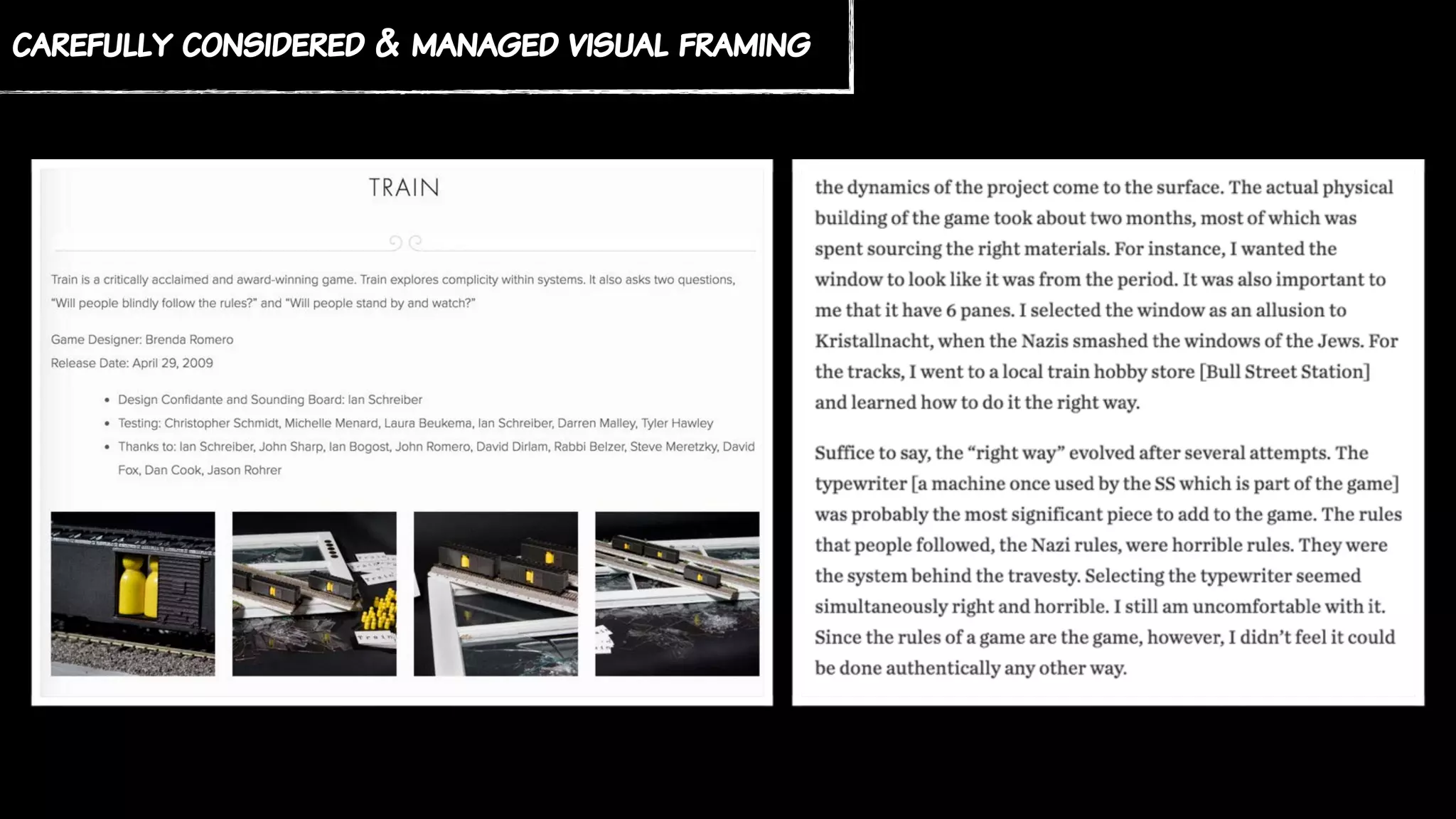
carefully considered & managed visual framing
summary
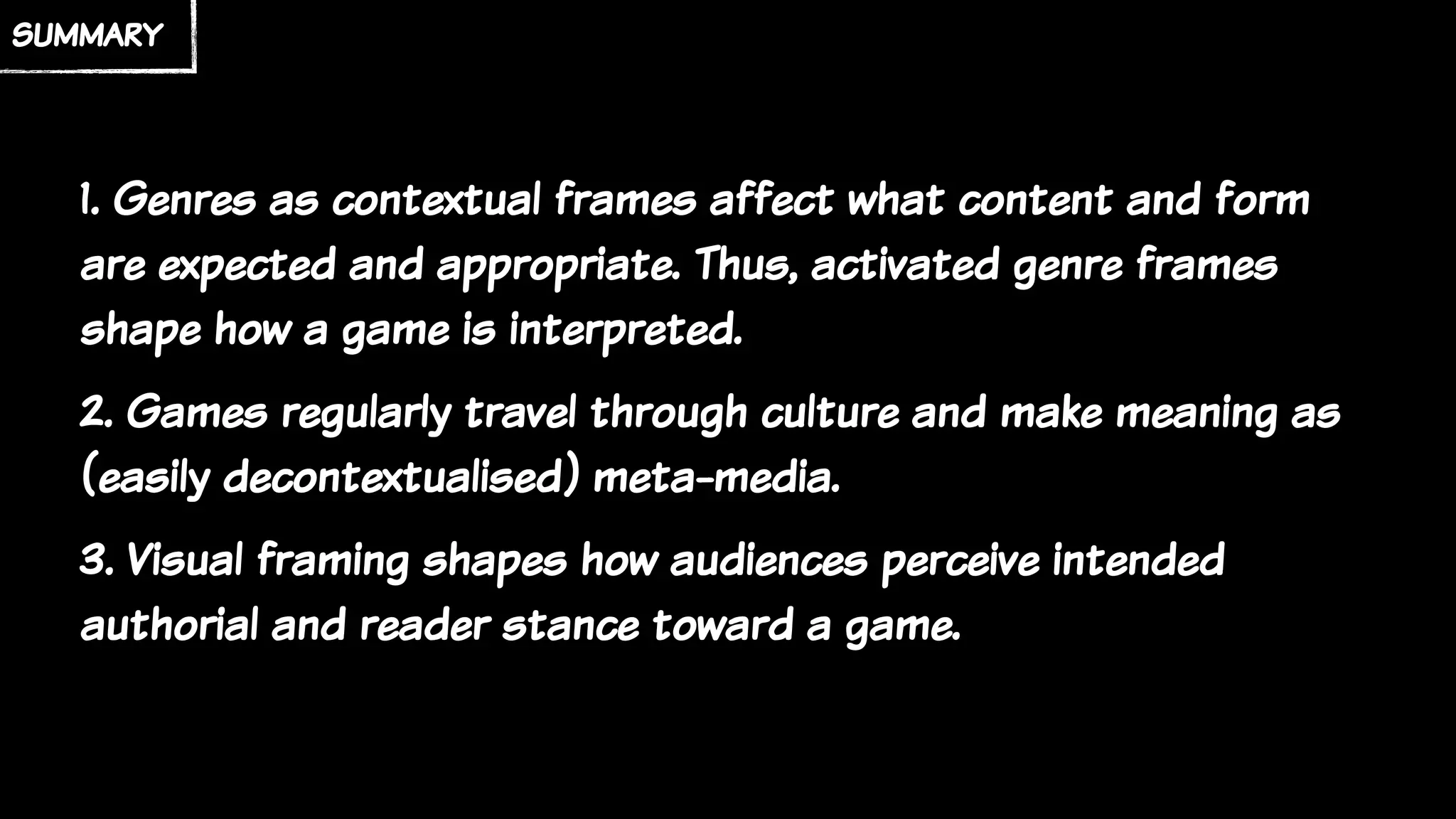
1. Genres as contextual frames affect what content and form
are expected and appropriate. Thus, activated genre frames
shape how a game is interpreted.
2. Games regularly travel through culture and make meaning as
(easily decontextualised) meta-media.
3. Visual framing shapes how audiences perceive intended
authorial and reader stance toward a game.
sebastian@codingconduct.cc
@dingstweets
codingconduct.cc
thank you.

The Mechanic is not the (whole) message: Procedural rhetoric meets framing in Train and Playing History 2

  • 1.
    the mechanic isnot the (whole) message Procedural Rhetoric Meets Framing in Train and Playing History 2 Sebastian Deterding (@dingstweets) Digital Creativity Labs, University of York DiGRA/FDG 2016, August 3, 2016 c b
  • 2.
  • 4.
    “Procedural rhetoric isthe practice of using processes persuasively …. Each unit operation in a procedural representation is a claim about how part of the system it represents does, should, or could function.” ian bogost, persuasive games, 2007, 28, 36
  • 5.
    “Rules control themeaning of the game, and players, by following rules, create the meaning that is already predetermined by the designer(s). For the proceduralists, a game means what the rules mean… Players are important, but only as activators of the process that sets the meanings contained in the game in motion.” miguel sicart, against procedurality, 2011
  • 6.
    “Videogames represent inthe gap between procedural representation and individual subjectivity. The disparity between the simulation and the player’s understanding of the source system it models creates a crisis in the player. I named this crisis simulation fever, a madness through which an interrogation of the rules that drive both systems begins. Procedural rhetoric also produces simulation fever. It motivates a player to address the logic of a situation in general ... Players are persuaded when they enter a crisis in relation to this logic.” ian bogost, persuasive games, 2007, 332-333
  • 7.
    “Rather than producingassent, ... the game [Howard Dean for Iowa] produces deliberation, which implies neither immediate assent nor dissent. Like literature, poetry, and art, videogames cannot necessarily know their effects on individual players.” ian bogost, persuasive games, 2007, 329, 339
  • 8.
  • 9.
    “Although the designersencourage player’s to re-create the assassination as realistically as possible, no player was able to re-create the event successfully within the constraints of reported history. Given that JFK Reloaded had an explicit persuasive goal – to affirm the Warren Commission report and disprove conspiracy theories – it would appear to be a retorical failure. But emergent features in the game’s design facilitate other interpretations, suggesting that the developer’s stated goal was a ruse meant to inspire new perspectives on the historical event itself.” ian bogost, persuasive games, 2007, 133-134
  • 10.
    How and whydo different players come to different understandings of the same procedural rhetoric? research question
  • 11.
    Blindly focusing onoutcomes and following rules (as in gameplay) leads you to dehumanise the people affected by your actions. the (meta-)mechanical message
  • 12.
    game no. 1:train, brenda brathwaite, 2009
  • 13.
    game no. 1:train, brenda brathwaite, 2009
  • 14.
  • 15.
  • 16.
    game no. 2:playing history 2: slave trade, serious games interactive, 2013
  • 17.
    game no. 2:playing history 2: slave trade, serious games interactive, 2013
  • 18.
    game no. 2:playing history 2: slave trade, serious games interactive, 2013
  • 19.
  • 20.
  • 21.
  • 22.
  • 23.
    1. Genre ascontextual framing 2. Contextual travel of meta-media 3. Visual framing three interconnected answers
  • 24.
  • 25.
    genres as normativeand epistemic frames
  • 26.
    What is acceptedand expected in … genres as normative and epistemic frames educational games for children artworks for adults
  • 27.
    train: expressive medium/artfor adults • Single physical copy • Presented at art galleries, universities • Always accompanied by author guiding follow-up debate
  • 28.
    ph2: edugame for8-14 year olds in school • Digital copies • Distributed through Danish schools • Accompanied by educational material for teachers
  • 29.
  • 30.
    controversional topics: knownand expected … in art
  • 31.
    complicit subject position:challenging but not unknown … in art
  • 32.
  • 33.
    released & announcedon steam/twitter outside educational context
  • 34.
  • 35.
    in-game framing doesn’tappear in screenshot
  • 36.
    how ph2 travelledthrough twitter & the media
  • 37.
  • 38.
  • 39.
    visual framing shapesunderstanding
  • 40.
    visual framing shapesunderstanding
  • 41.
    what everyone sawof ph2 in the media
  • 42.
    how train travelledthrough the media
  • 43.
    what everyobody sawof train in the media
  • 44.
    carefully considered &managed visual framing
  • 45.
    summary 1. Genres ascontextual frames affect what content and form are expected and appropriate. Thus, activated genre frames shape how a game is interpreted. 2. Games regularly travel through culture and make meaning as (easily decontextualised) meta-media. 3. Visual framing shapes how audiences perceive intended authorial and reader stance toward a game.
  • 46.