gameful design
for learningSebastian Deterding / @dingstweets
Digital Creativity Labs, University of York
February 15, 2017
c b
<1>
introduction
we are all
game designers
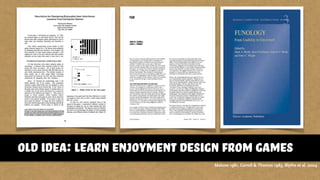
old idea: learn enjoyment design from games
Malone 1981, Carroll & Thomas 1983, Blythe et al. 2004
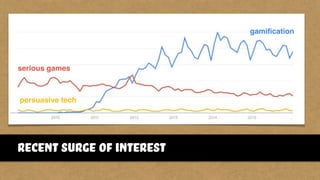
recent surge of interest
gamification
serious games
persuasive tech
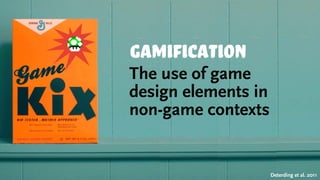
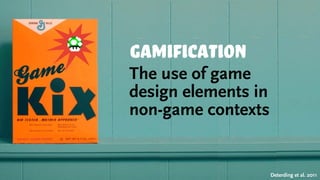
gaMification
The use of game
design elements in
non-game contexts
Deterding et al. 2011
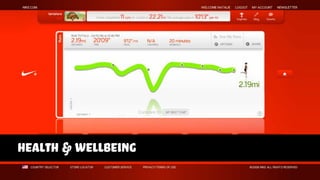
health & wellbeing
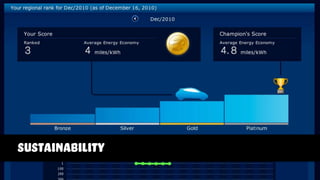
sustainability
the pursuit of happiness
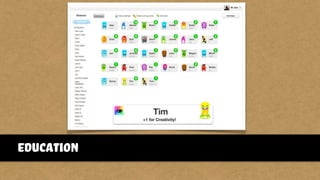
education
in the public
mind
moocs!
with badges!
= Khan academy!
delicious scalability and analytics!
very, very old wine …
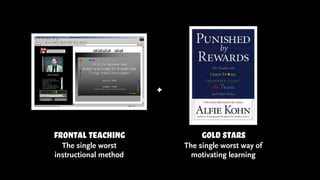
Gold Stars
The single worst way of
motivating learning
+
frontal teaching
The single worst
instructional method
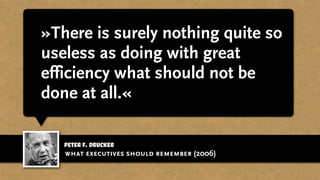
peter f. drucker
»There is surely nothing quite so
useless as doing with great
efficiency what should not be
done at all.«
what executives should remember (2006)
gamification’s unwitting figureheard
two
conflicting
theories of fun
<2>
what is fun?
(baby don’t hurt me)
(a)
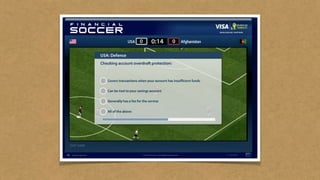
“just a spoonful of sugar helps the medicine go down”
aka fun as additive substance
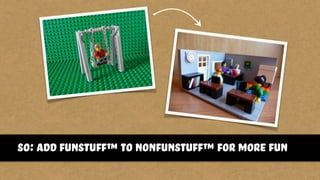
some things are inherently fun
and some things are not
so: add funstuff™ to nonfunstuff™ for more fun
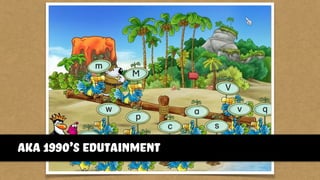
aka 1990’s edutainment
a
resounding
failure …
Squire 2006, Egenfeldt-Nielsen 2007
Bruckman 1999
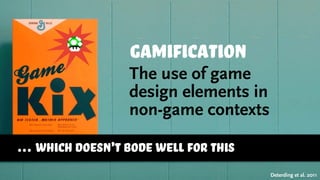
gaMification
The use of game
design elements in
non-game contexts
Deterding et al. 2011
… which doesn’t bode well for this
(b)
“in every job that must be done, there is an element of fun”
aka fun as emergent systemic quality
Every activity can become fun, interesting
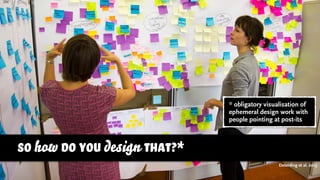
so how do you design that?*
Deterding et al. 2013
* obligatory visualisation of
ephemeral design work with
people pointing at post-its
<3>
gameful design
for learning
gaMification
The use of game
design elements in
non-game contexts
Deterding et al. 2011
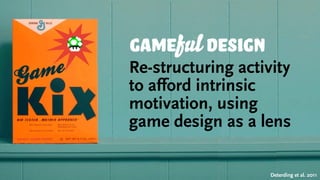
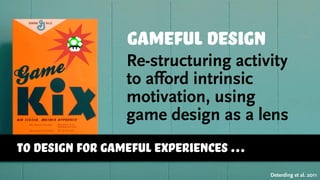
gameful design
Re-structuring activity
to afford intrinsic
motivation, using
game design as a lens
Deterding et al. 2011
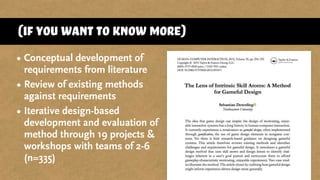
(if you want to know more)
• Conceptual development of
requirements from literature
• Review of existing methods
against requirements
• Iterative design-based
development and evaluation of
method through 19 projects &
workshops with teams of 2-6
(n=335)
guiding questions
1. What are the motivating experiences
characteristic for gameplay?
2. What game structures afford these experiences?
3. How can we integrate this into design methods
for learning?
raph koster
»Fun is just another
word for learning.«
a theory of fun for game design (2004)
#1
raph koster
»Fun from games arises out of mastery.
It arises out of comprehension. It is the
act of solving puzzles that makes
games fun.«
a theory of fun for game design (2004)
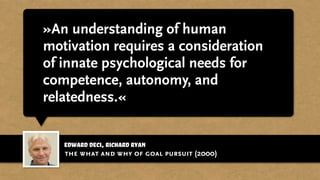
edward deci, richard ryan
»An understanding of human
motivation requires a consideration
of innate psychological needs for
competence, autonomy, and
relatedness.«
the what and why of goal pursuit (2000)
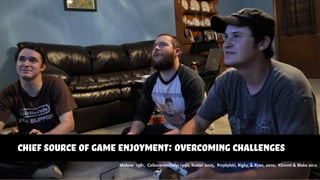
chief source of game enjoyment: overcoming challenges
Malone 1981, Csikszentmihalyi 1990, Koster 2005, Przybylski, Rigby, & Ryan, 2010, Klimmt & Blake 2012
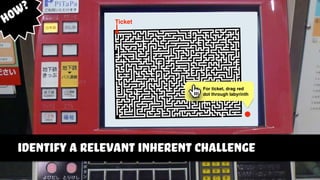
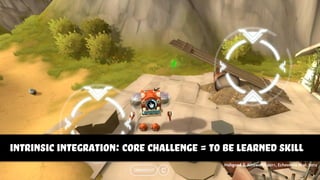
intrinsic integration: restructure inherent learnable challenge
For ticket, drag red
dot through labyrinth
Ticket
identify a relevant inherent challenge
How?
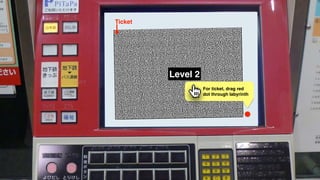
Level 2
For ticket, drag red
dot through labyrinth
Ticket
intrinsic integration: core challenge = to be learned skill
Habgood & Ainsworth 2011, Echeverría et al. 2012
Mihaly Csikszentmihalyi
»Mowing the lawn or waiting in a dentist’s
office can become enjoyable provided one
restructures the activity by providing goals,
rules, and the other elements of enjoyment
to be reviewed below.«
flow (1990: 51)
#2
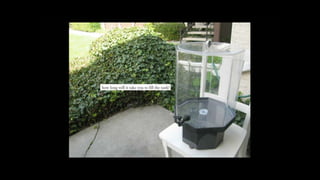
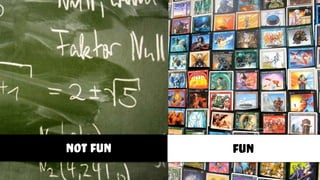
Not fun Fun
http://www.flickr.com/photos/sulamith/1342528771/sizes/o/
http://www.flickr.com/photos/photonquantique/3364593945/sizes/l/
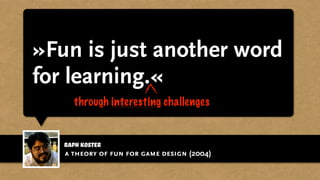
raph koster
»Fun is just another word
for learning.«
a theory of fun for game design (2004)
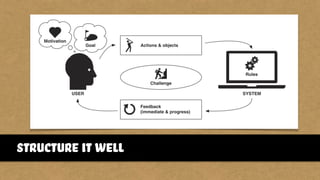
through interesting challenges
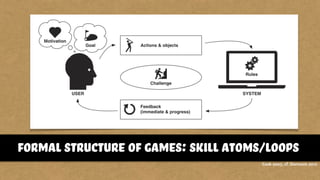
goals …
+ rules …
constraining actions …
= interesting challenges
+ feedback …
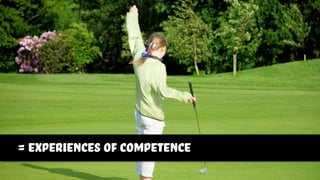
= experiences of competence
formal structure of games: skill atoms/loops
Cook 2007, cf. Dormans 2012
http://www.flickr.com/photos/mike52ad/4675696269
How?
look at your activity system as a game atom
http://www.flickr.com/photos/mike52ad/4675696269
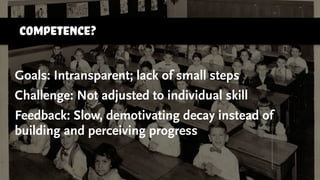
Goals: Intransparent; lack of small steps
Challenge: Not adjusted to individual skill
Feedback: Slow, demotivating decay instead of
building and perceiving progress
competence?
http://www.flickr.com/photos/mike52ad/4675696269
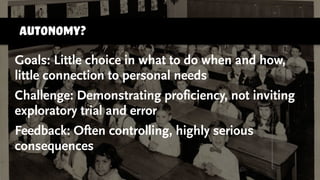
Goals: Little choice in what to do when and how,
little connection to personal needs
Challenge: Demonstrating proficiency, not inviting
exploratory trial and error
Feedback: Often controlling, highly serious
consequences
autonomy?
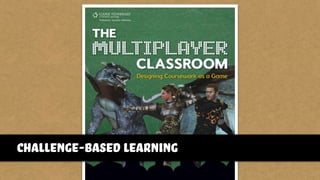
challenge-based learning
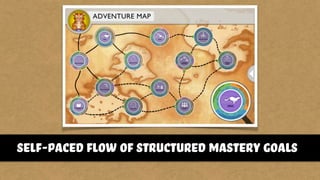
self-paced flow of structured mastery goals
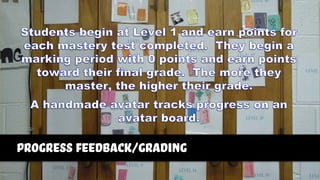
progress feedback/grading
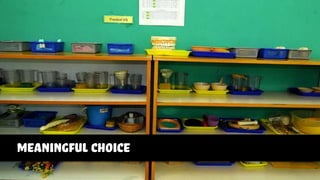
meaningful choice
safe failure & unlimited redoing
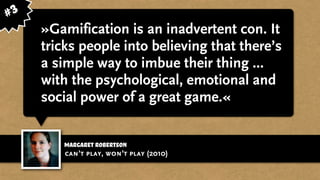
Margaret robertson
»Gamification is an inadvertent con. It
tricks people into believing that there’s
a simple way to imbue their thing ...
with the psychological, emotional and
social power of a great game.«
can’t play, won’t play (2010)
#3
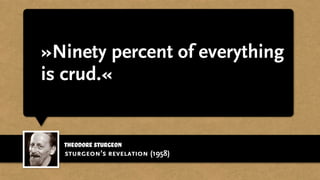
theodore sturgeon
»Ninety percent of everything
is crud.«
sturgeon’s revelation (1958)
Games are not fun
because they are games, but
when they are well-designed.
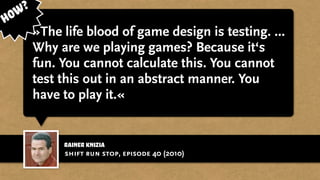
Rainer Knizia
»The life blood of game design is testing. ...
Why are we playing games? Because it‘s
fun. You cannot calculate this. You cannot
test this out in an abstract manner. You
have to play it.«
shift run stop, episode 40 (2010)
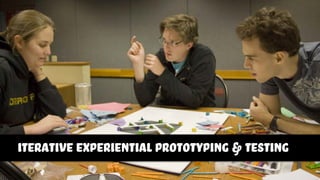
How?
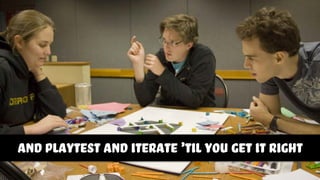
iterative experiential prototyping & testing
<4>
summary
Deterding et al. 2011
TO DESIGN FOR GAMEFUL EXPERIENCES …
gameful design
Re-structuring activity
to afford intrinsic
motivation, using
game design as a lens
Bruckman 1999
don’t sugarcoat nonfunstuff™
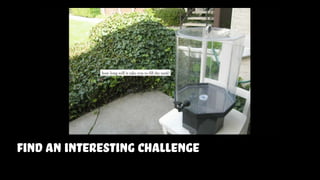
FIND AN INTERESTING CHALLENGE
STRUCTURE IT WELL
AND playtest and iterate ’TIL YOU GET IT RIGHT
sebastian@codingconduct.cc
@dingstweets
codingconduct.cc
thank you

Gameful Design for Learning