Sebastian Deterding (@dingstweets)
Digital Creativity Labs, University of York
DiGRA/FDG 2016, August 3, 2016
progress wars
Idle Games and the Demarcation
of “Real Games”
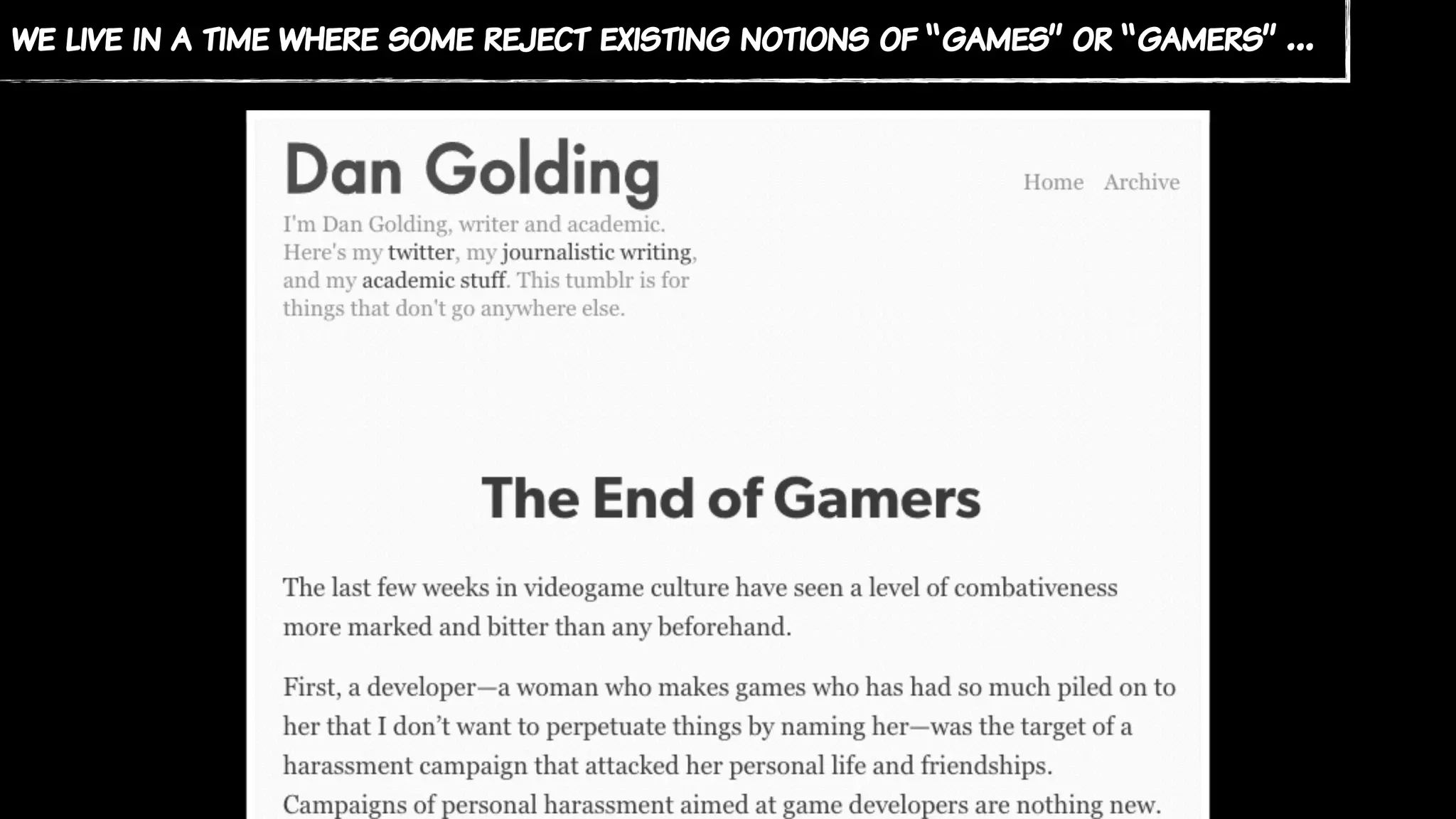
we live in a time where some reject existing notions of “games” or “gamers” …
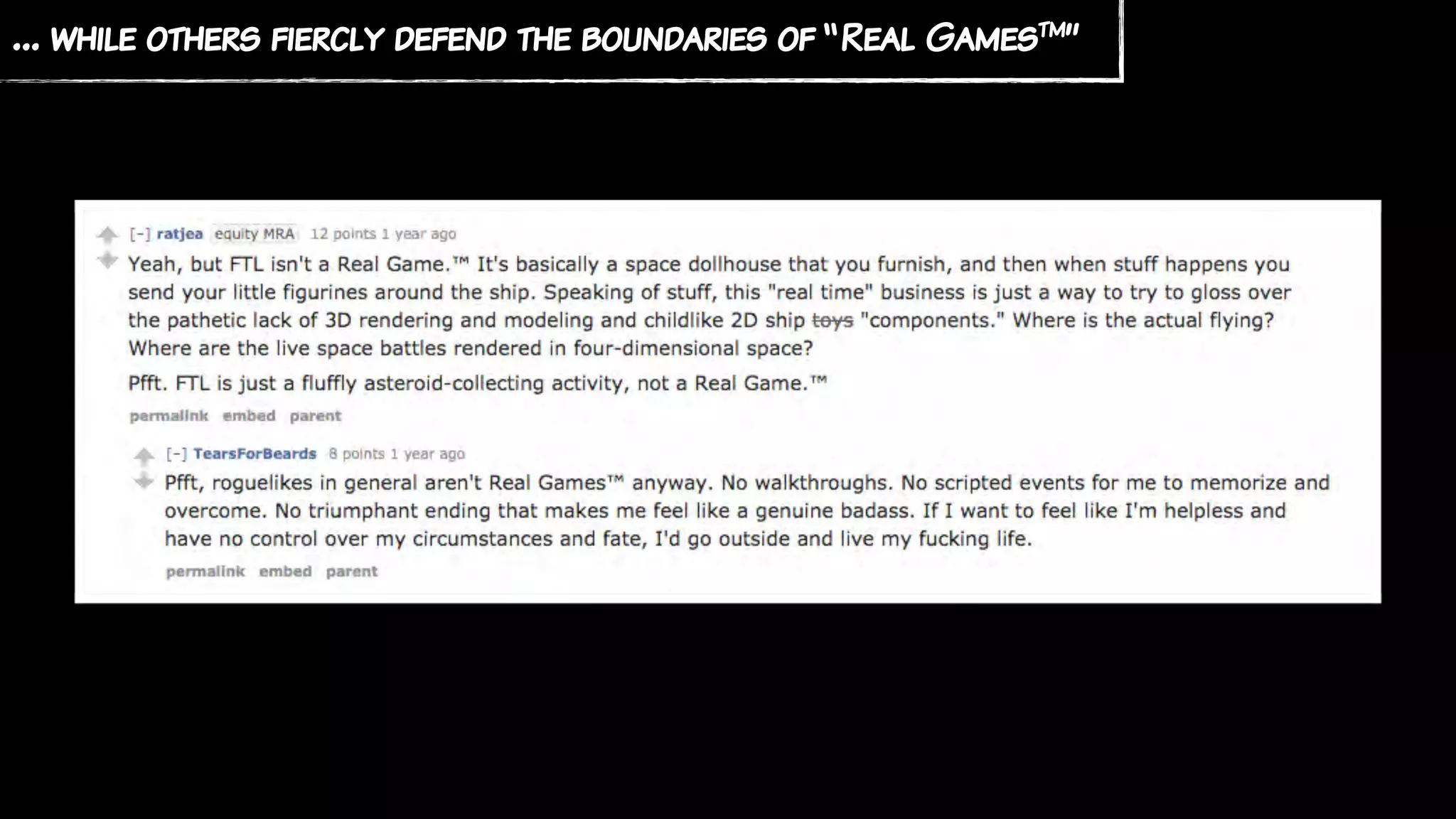
… while others fiercly defend the boundaries of “Real Gamestm”
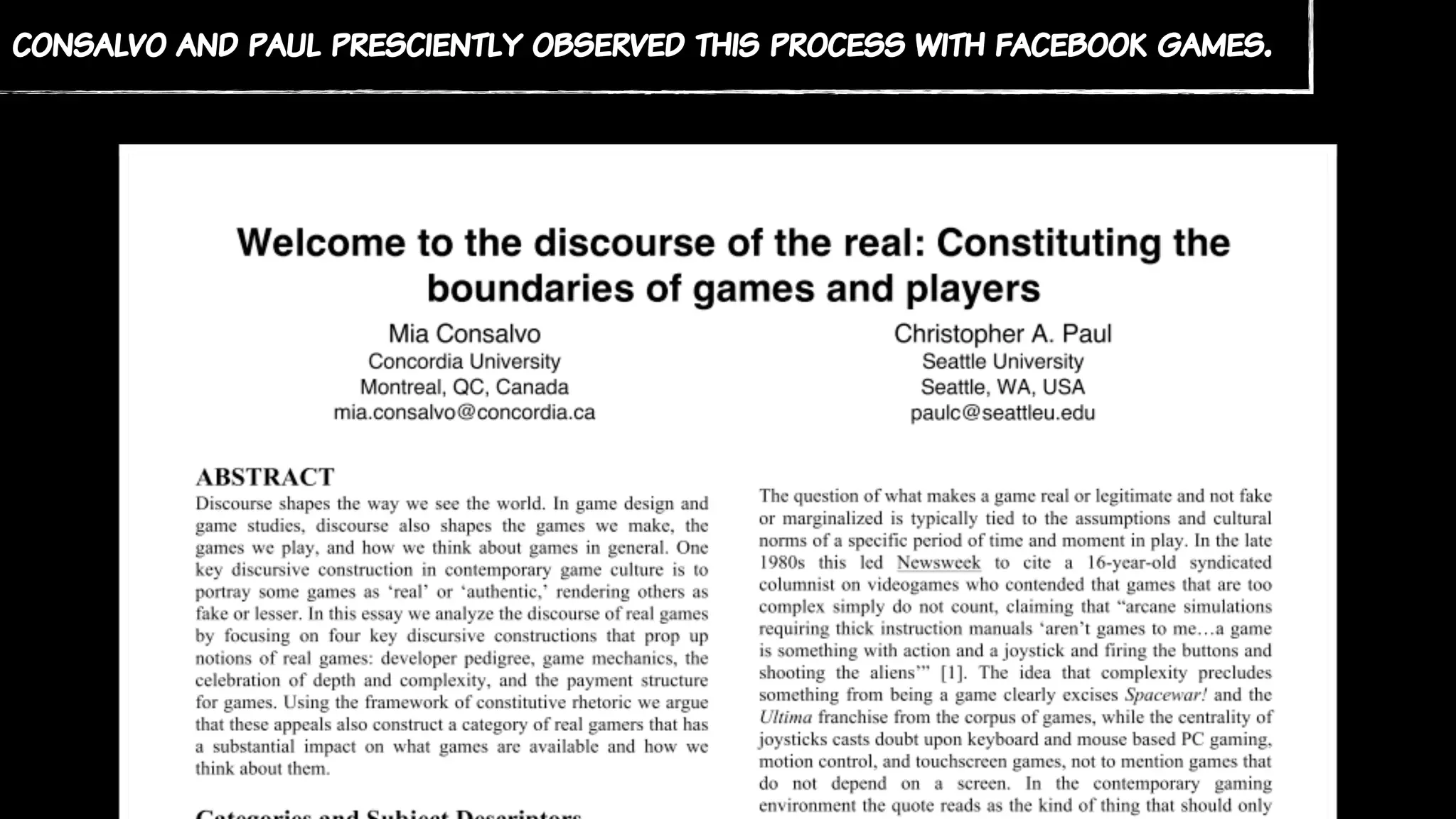
consalvo and paul presciently observed this process with facebook games.
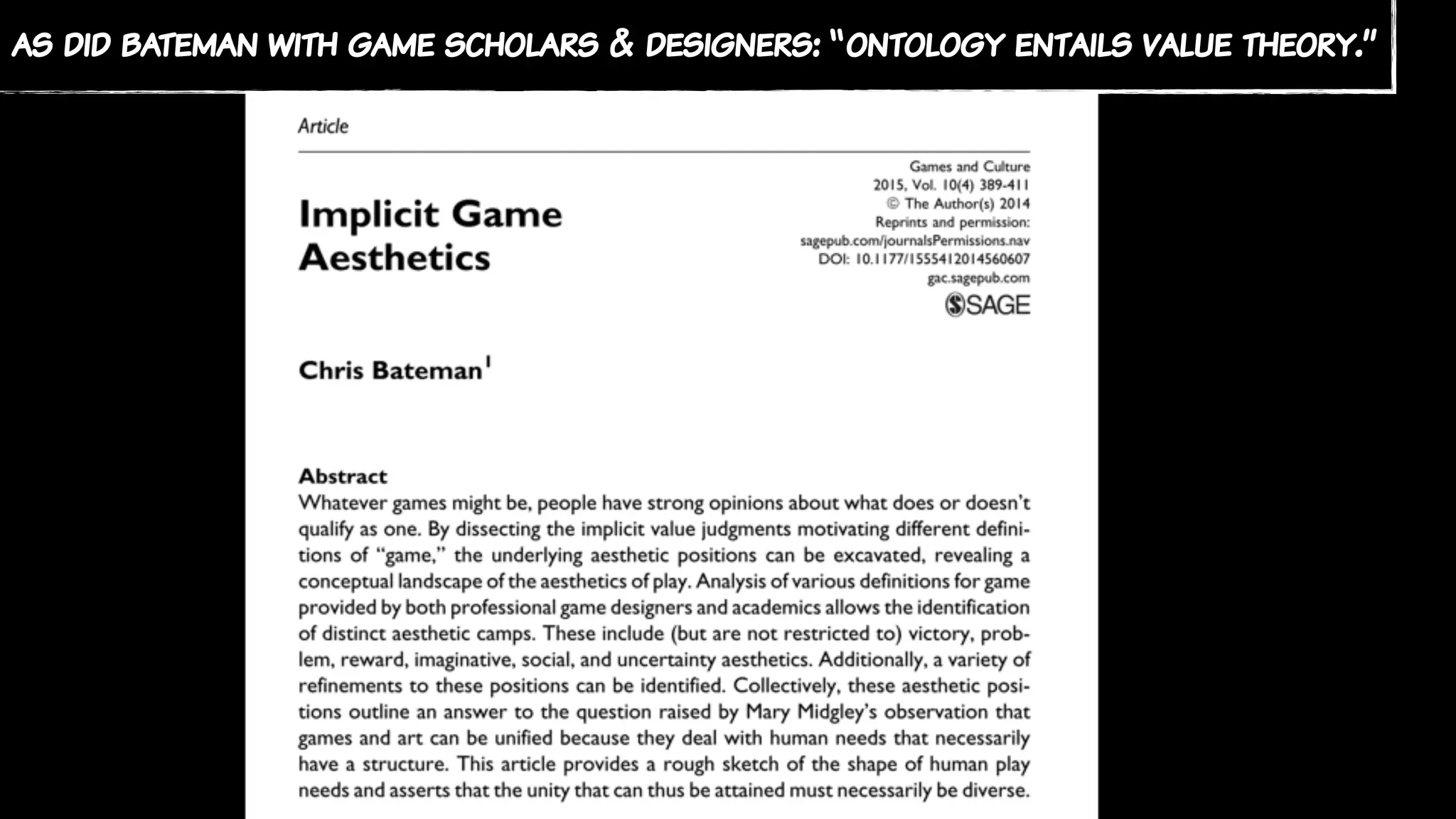
as did bateman with game scholars & designers: “ontology entails value theory.”
notably, they don’t talk about “them.”
#GG
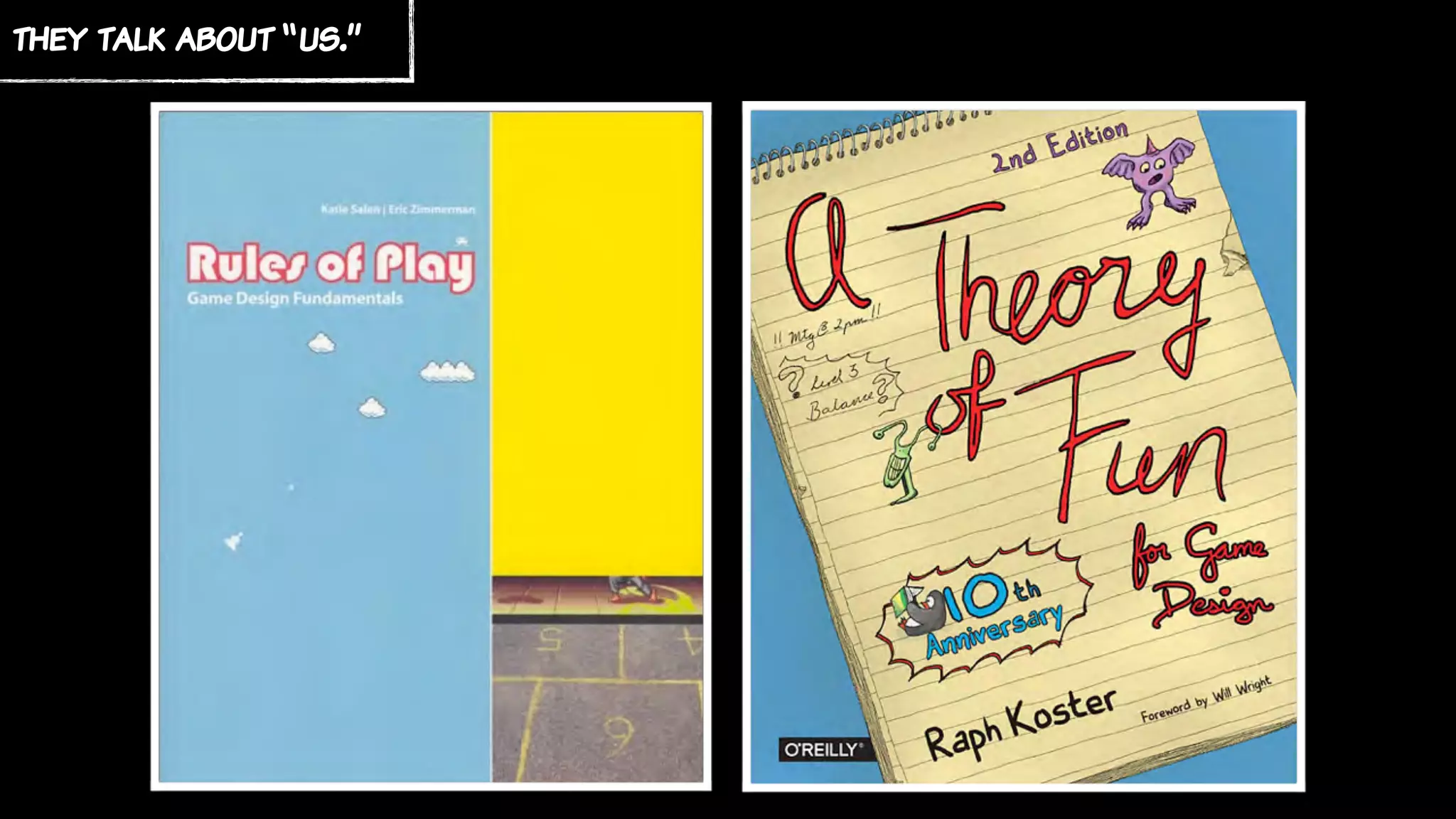
they talk about “us.”
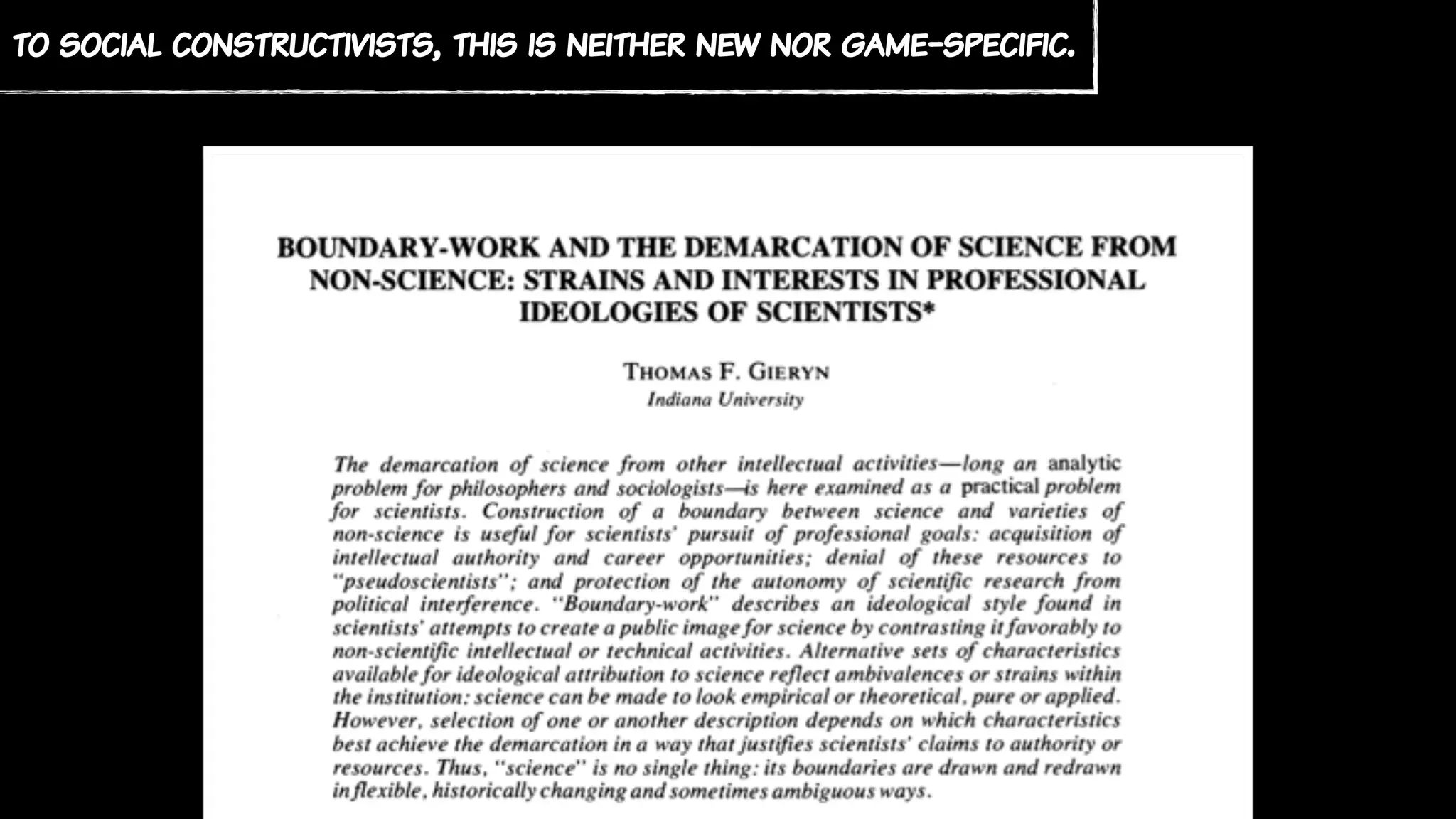
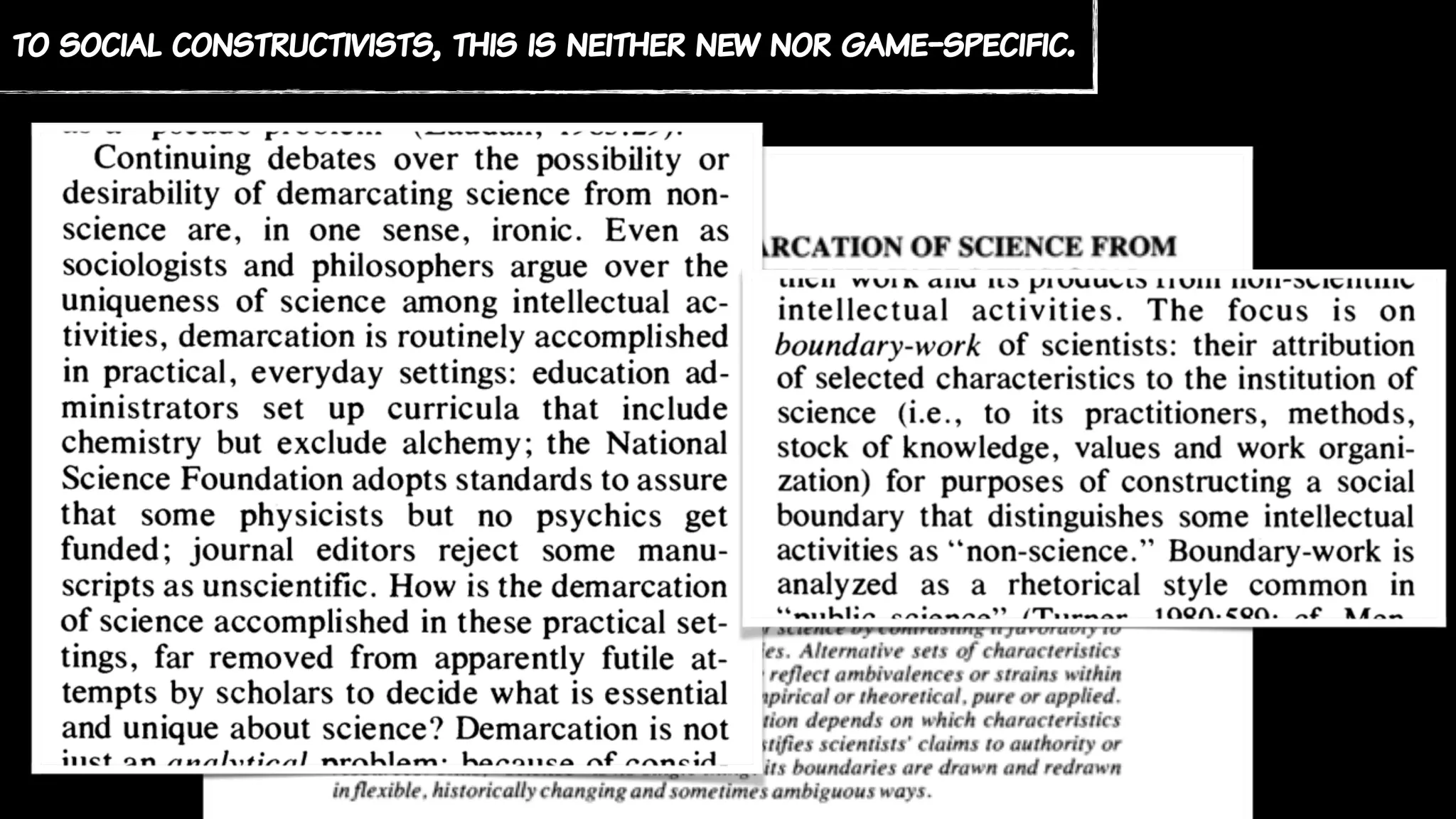
to social constructivists, this is neither new nor game-specific.
How – through what practical and
rhetorical work – do game makers
and scholars maintain or extend
the boundary of “games”?
research question
How – through what practical and
rhetorical boundary work – do
game makers maintain or extend
the boundary of “games”?
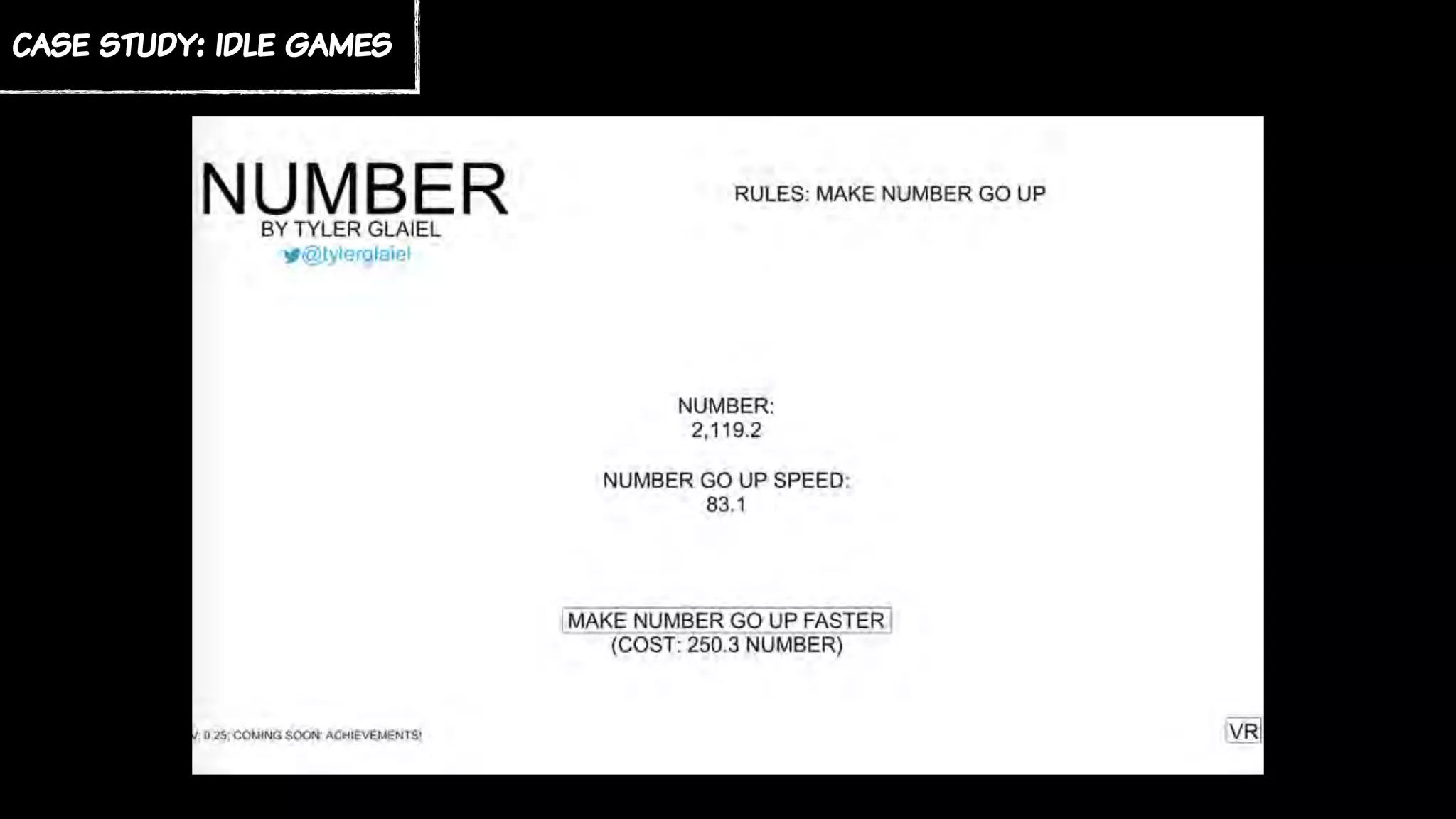
case study: idle games
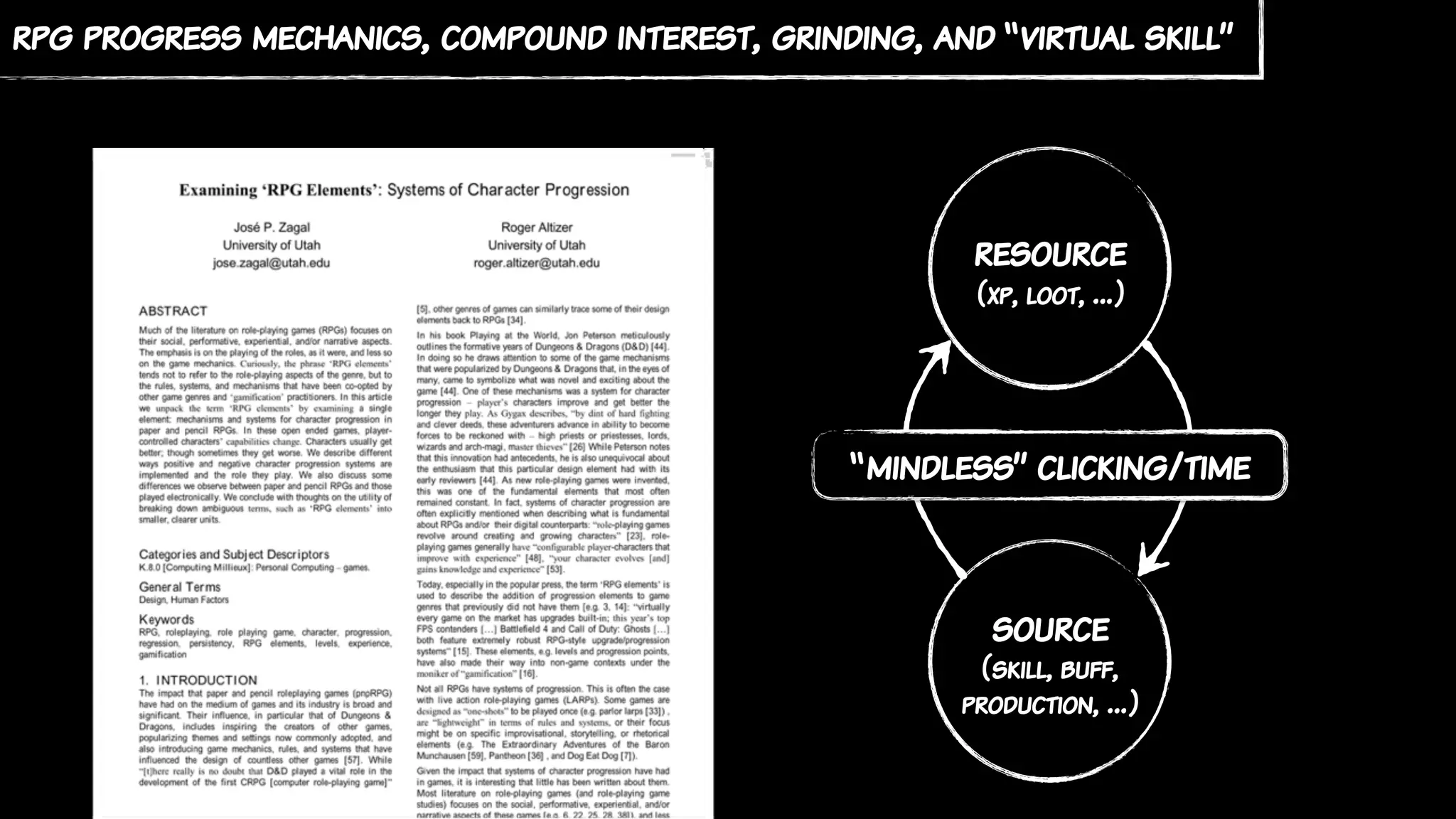
rpg progress mechanics, compound interest, grinding, and “virtual skill”
resource
(xp, loot, …)
source
(skill, buff,
production, …)
“mindless” clicking/time
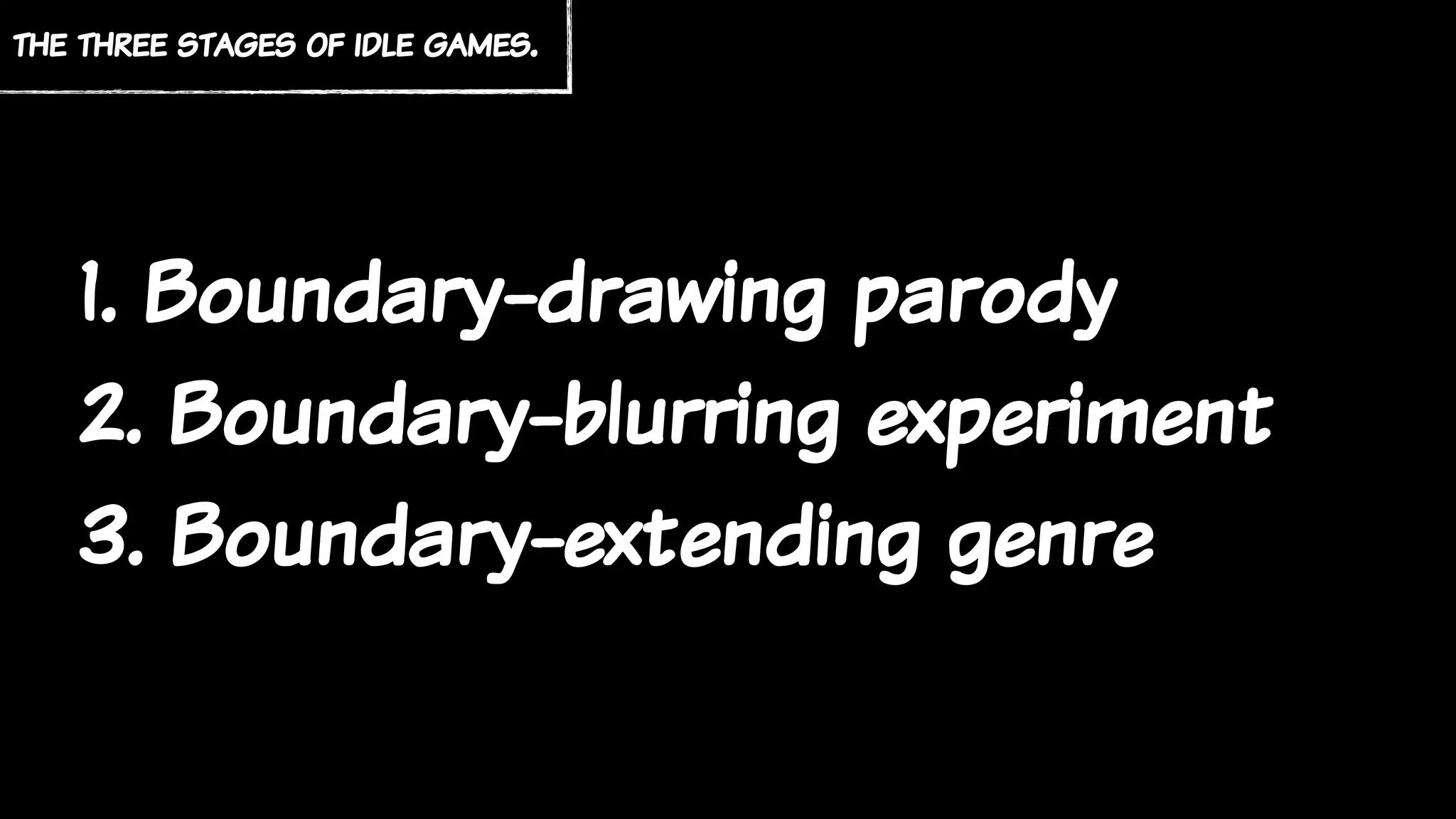
the three stages of idle games.
1. Boundary-drawing parody
2. Boundary-blurring experiment
3. Boundary-extending genre
<1>
boundary-drawing
parody
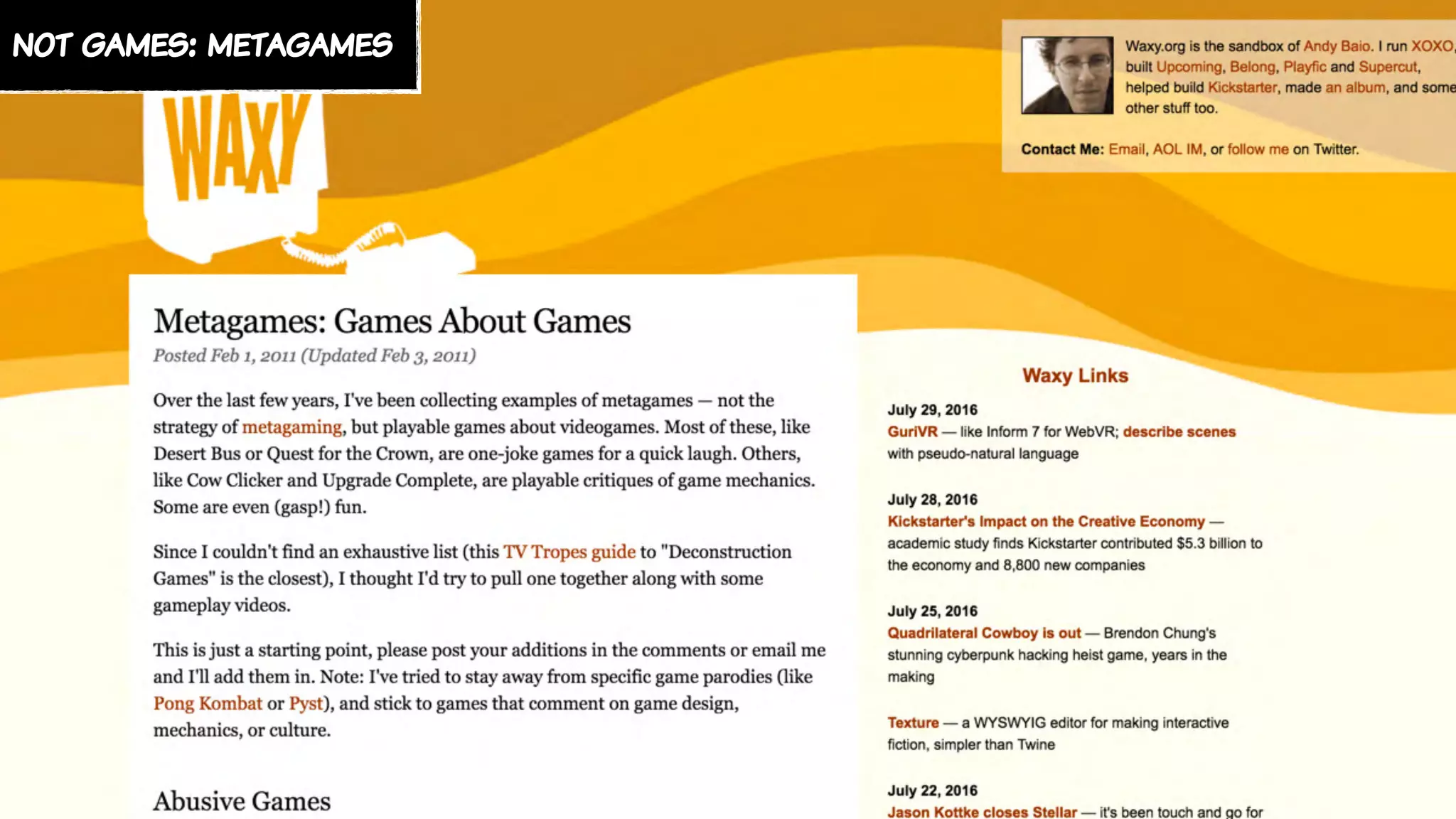
not games: metagames
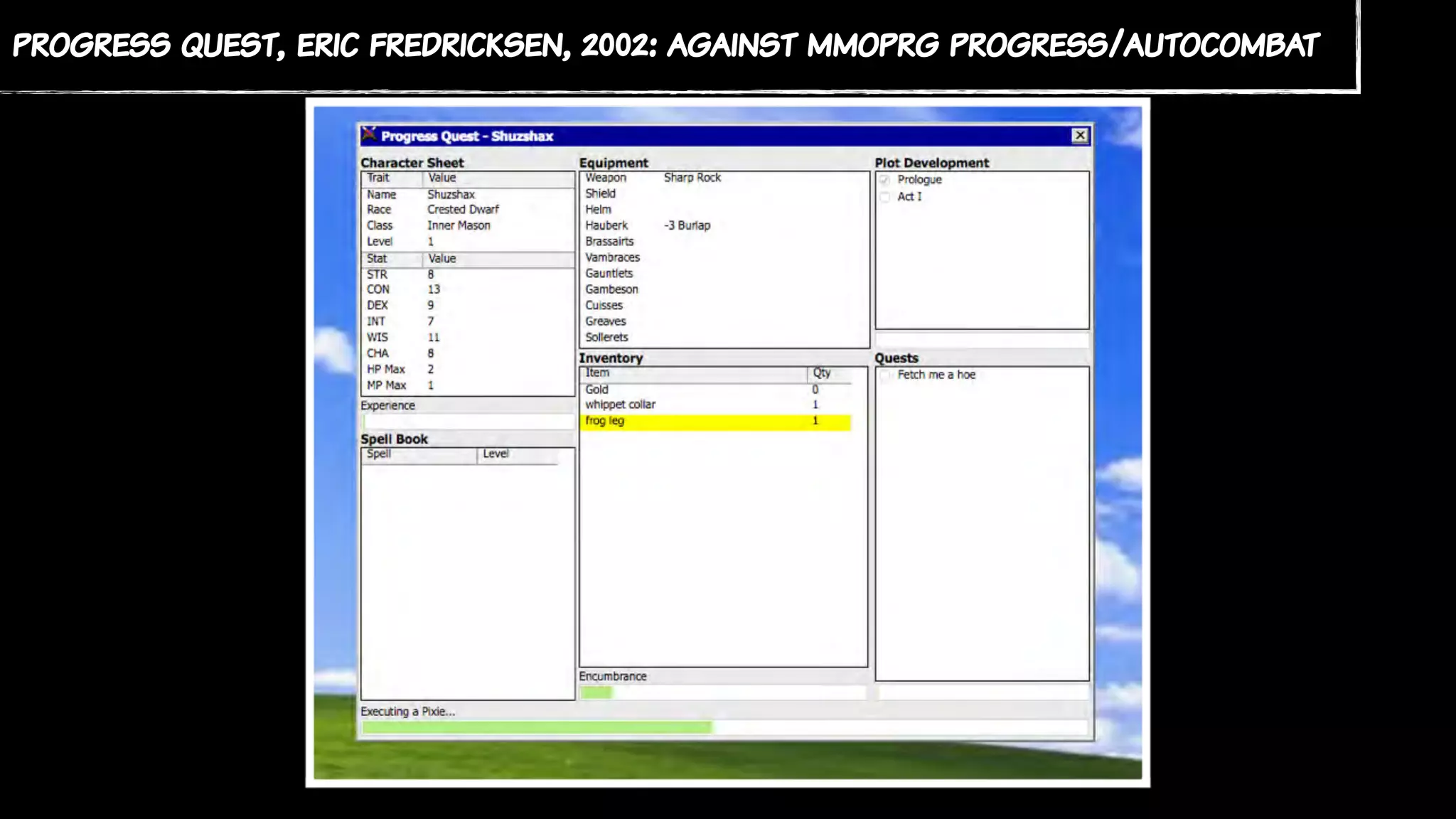
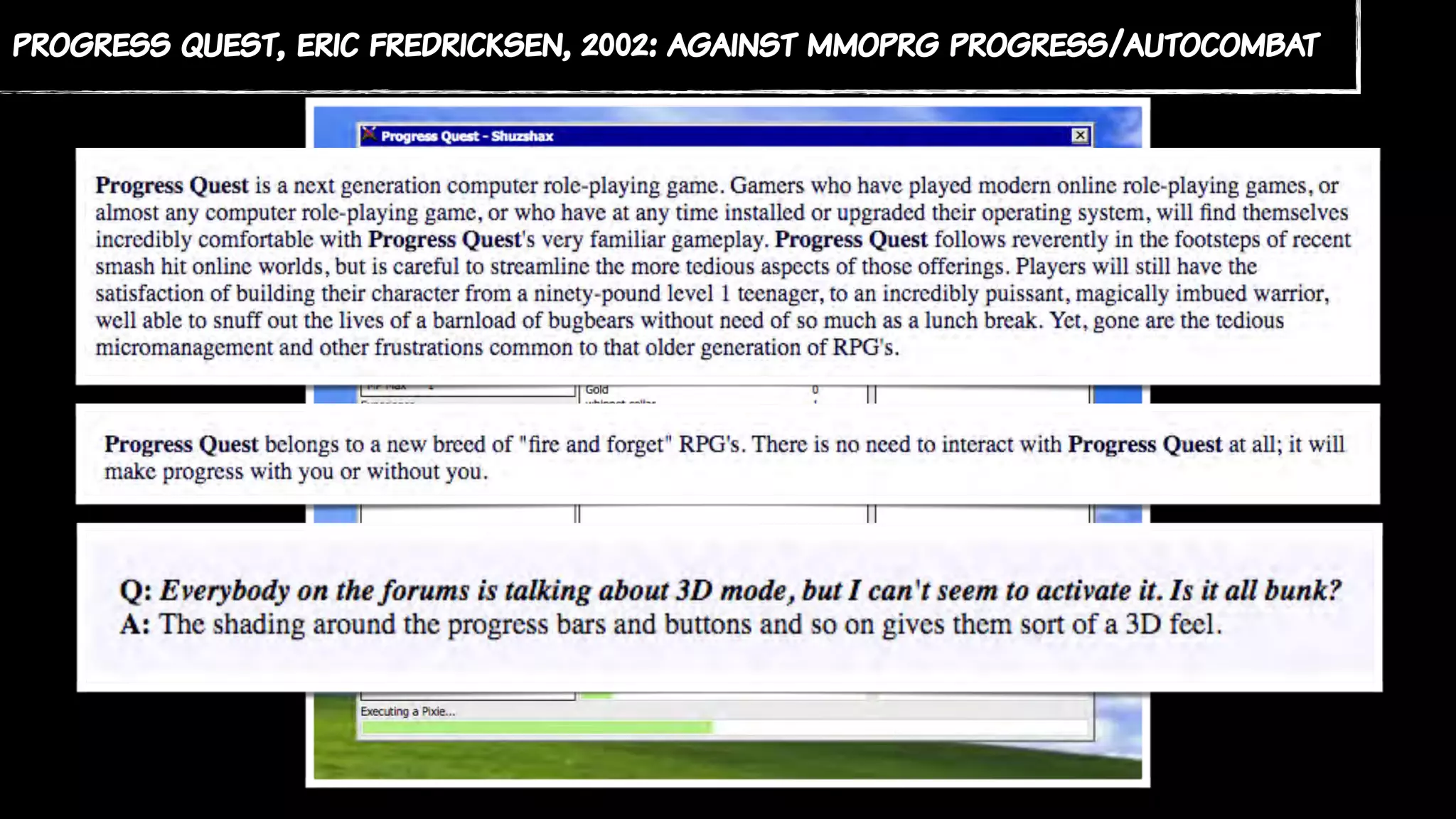
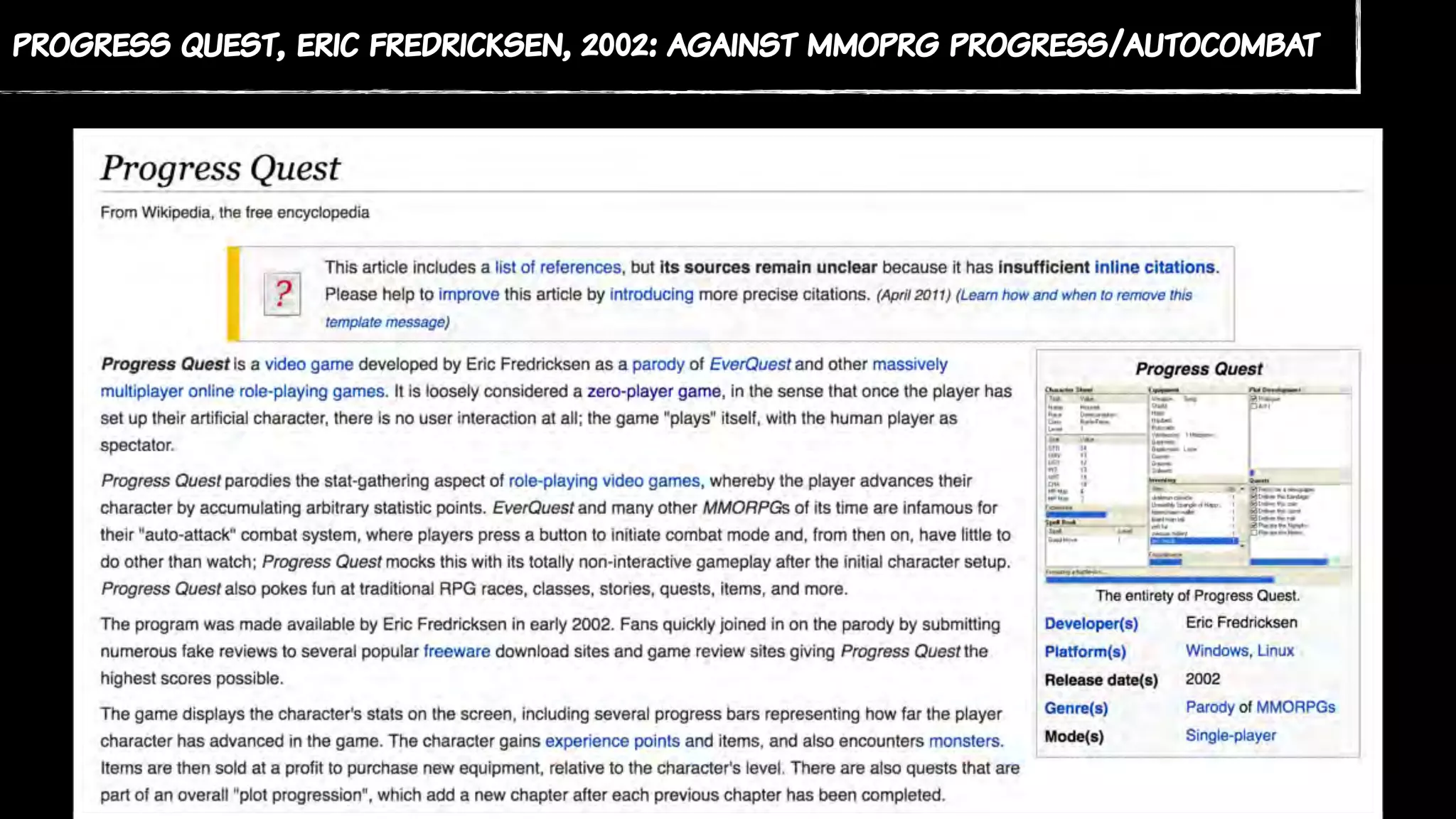
progress quest, eric fredricksen, 2002: against mmoprg progress/autocombat
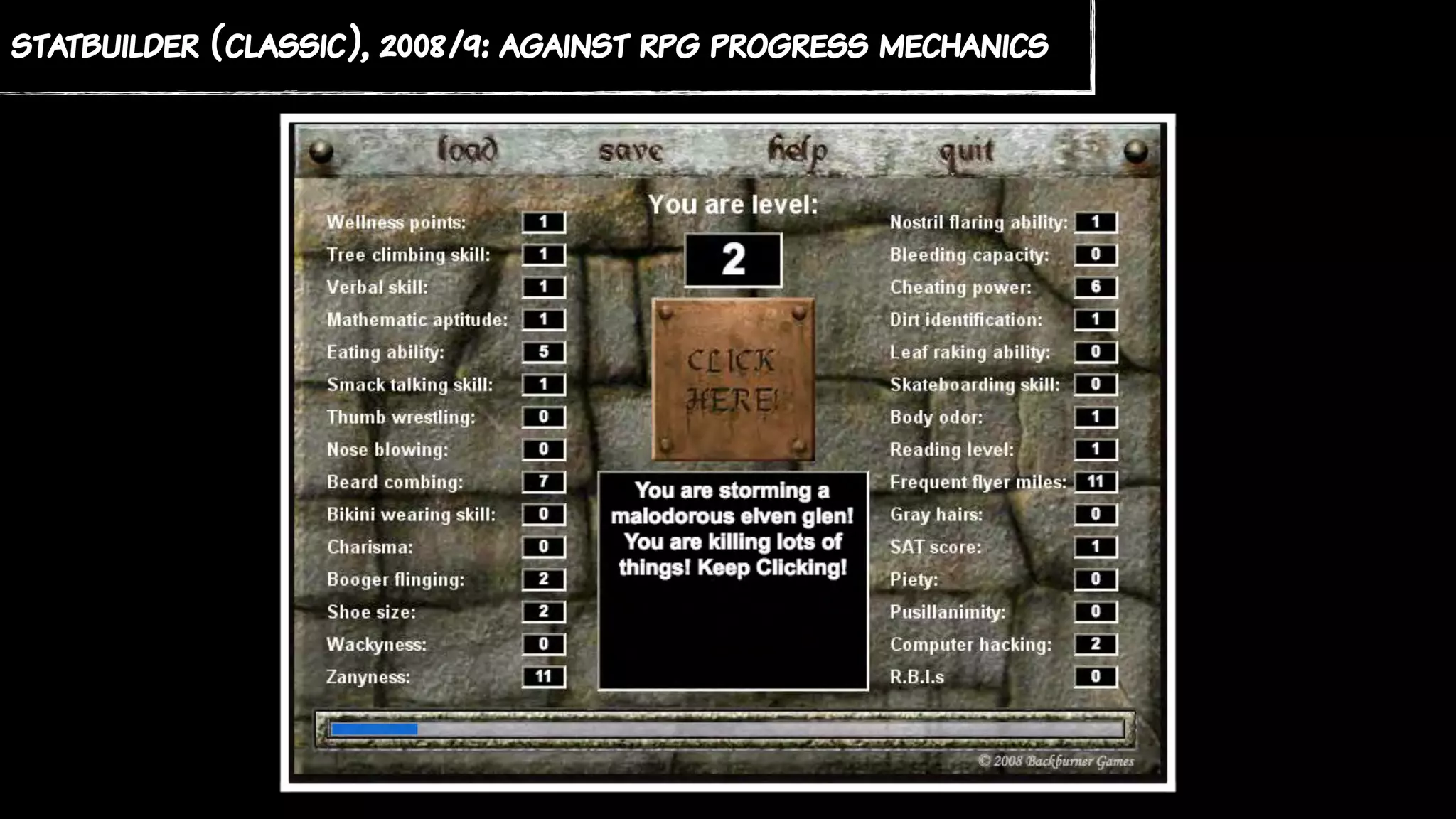
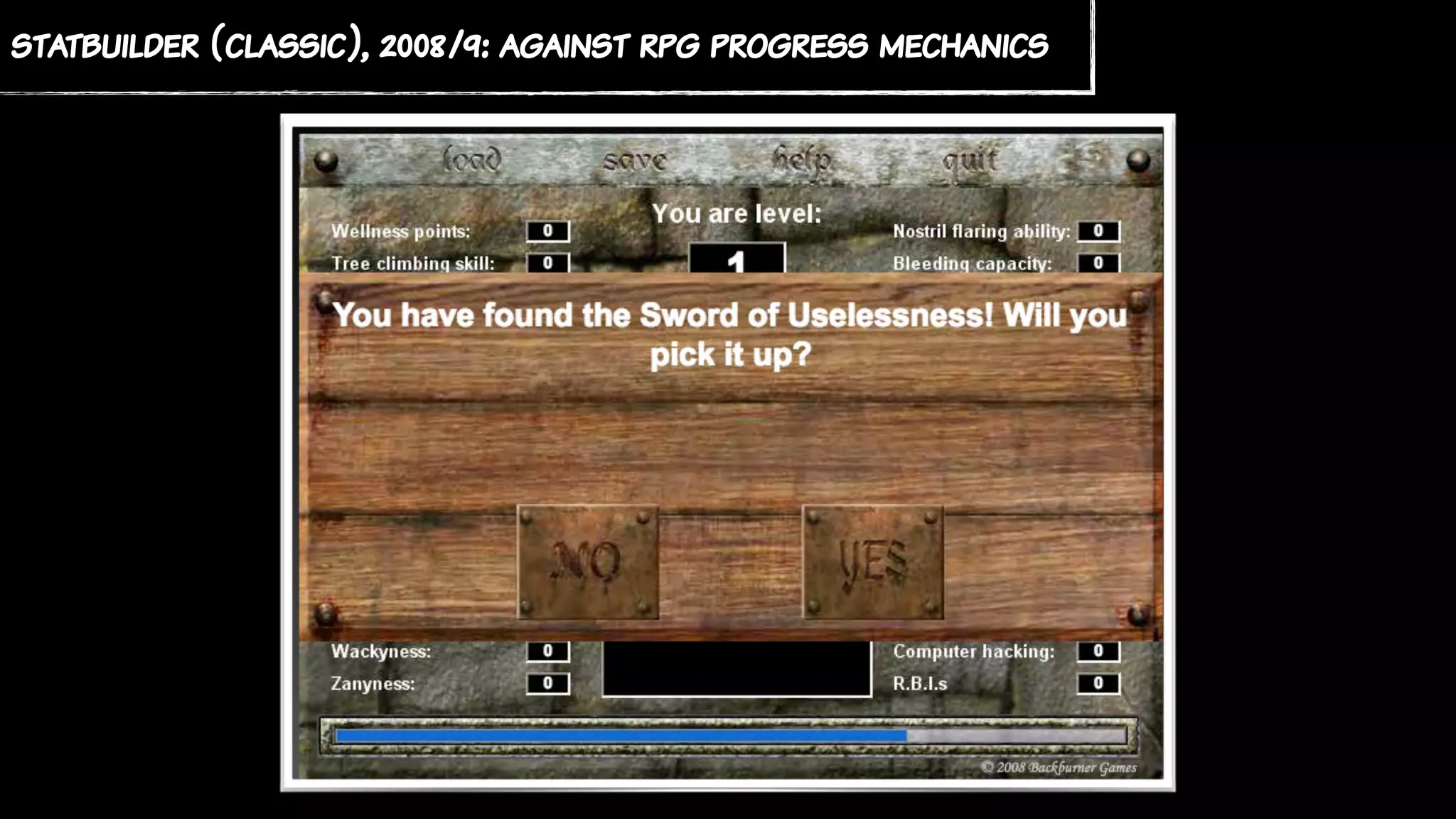
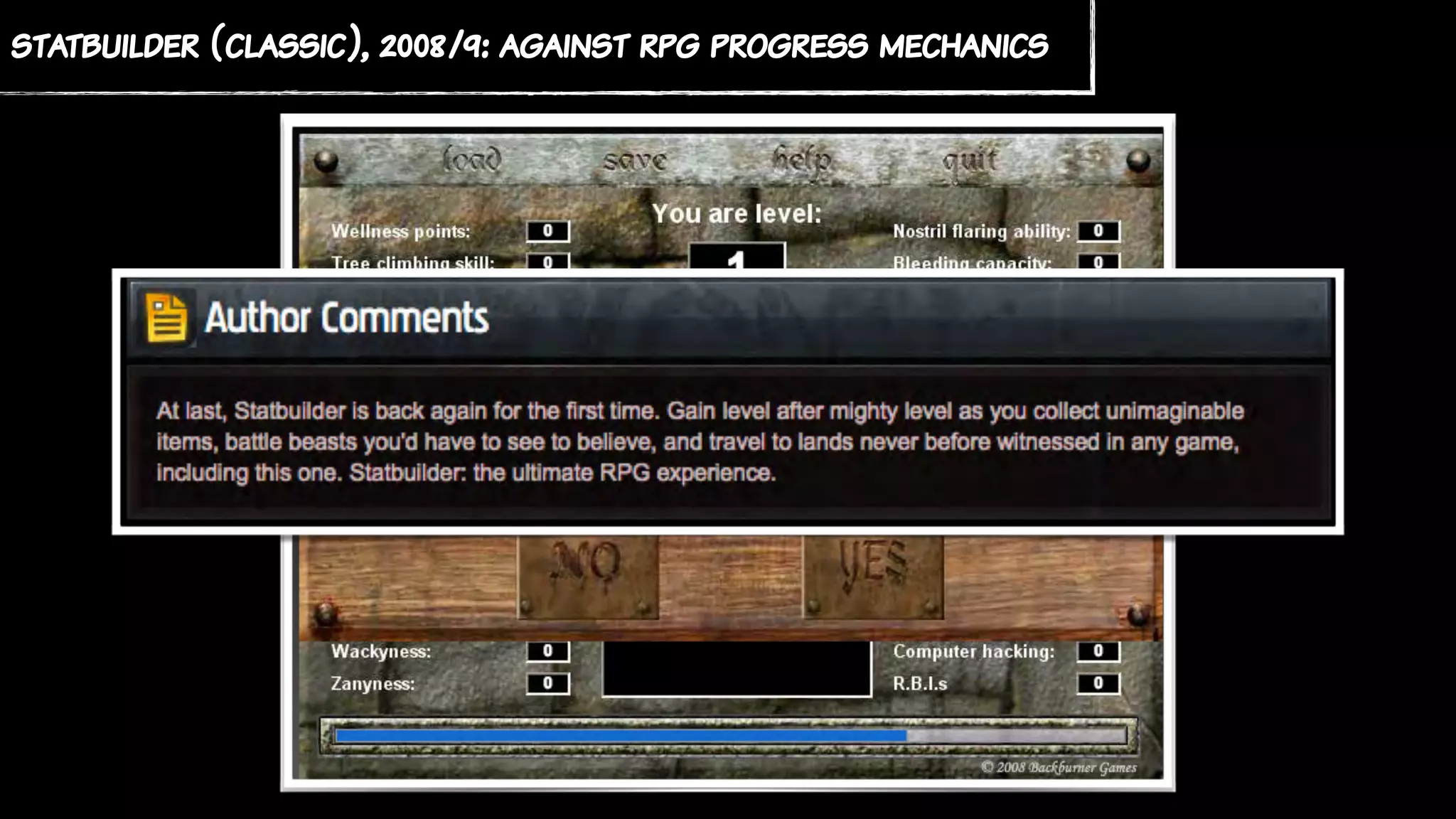
statbuilder (classic), 2008/9: against rpg progress mechanics
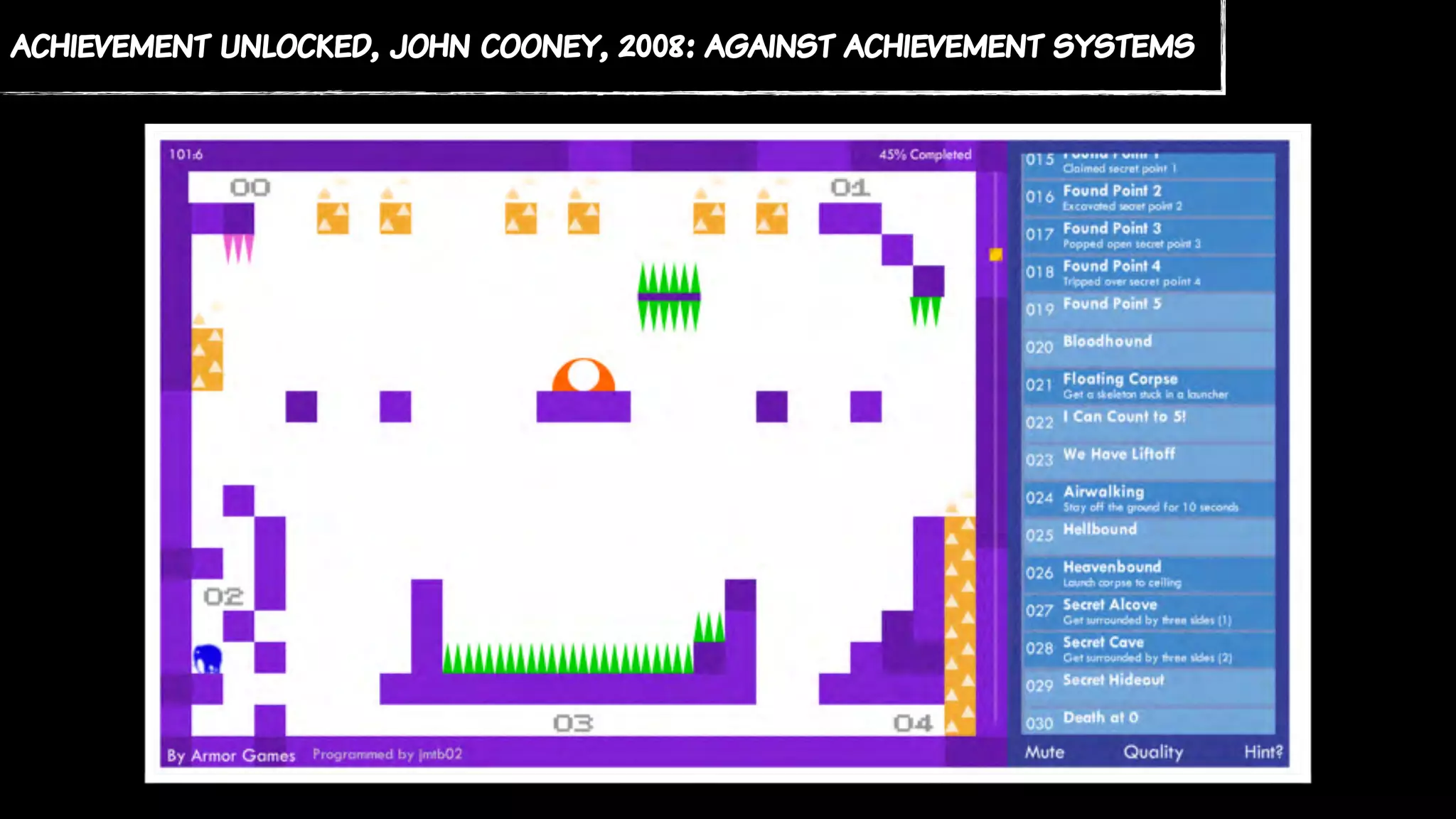
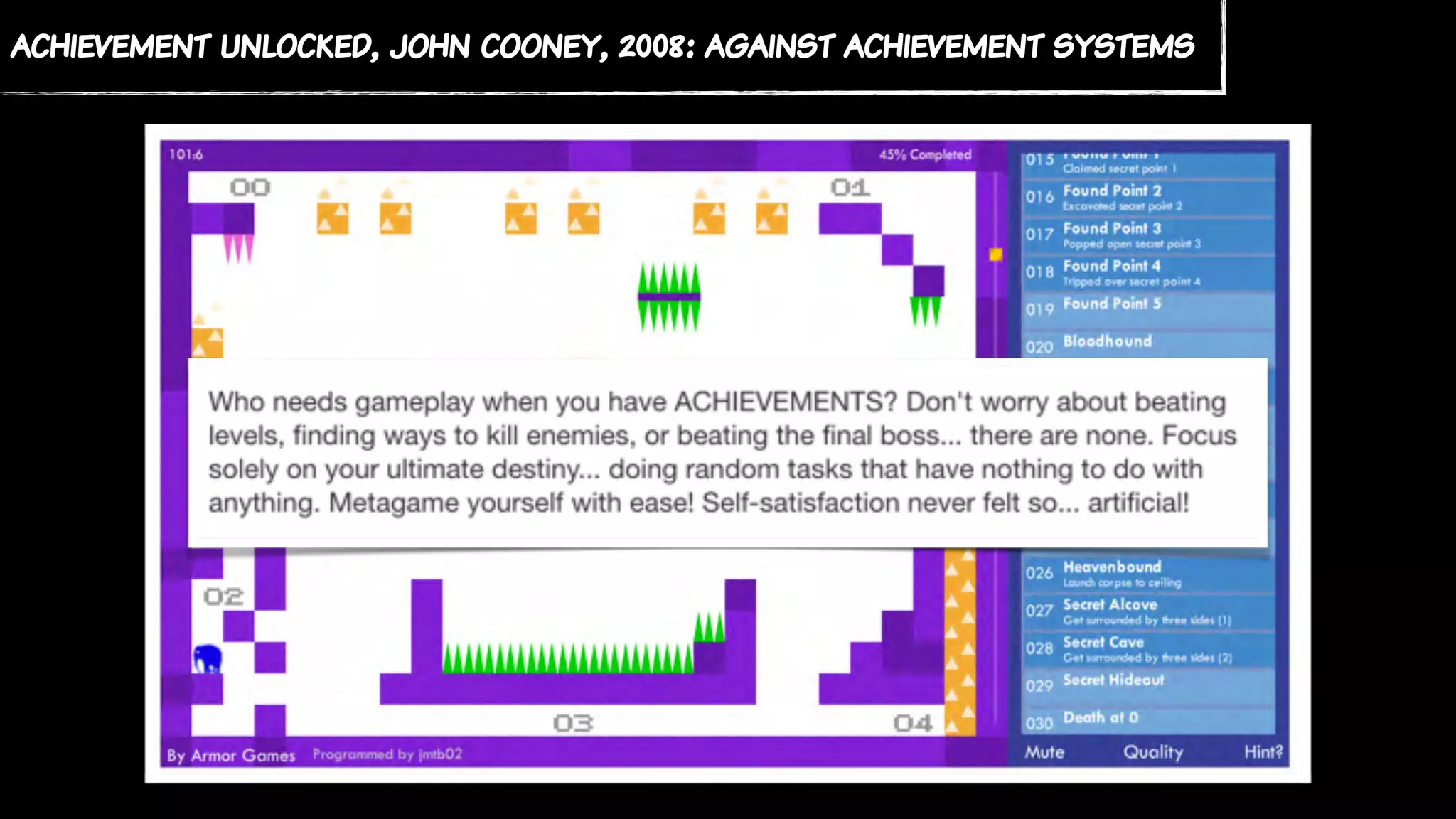
achievement unlocked, john cooney, 2008: against achievement systems
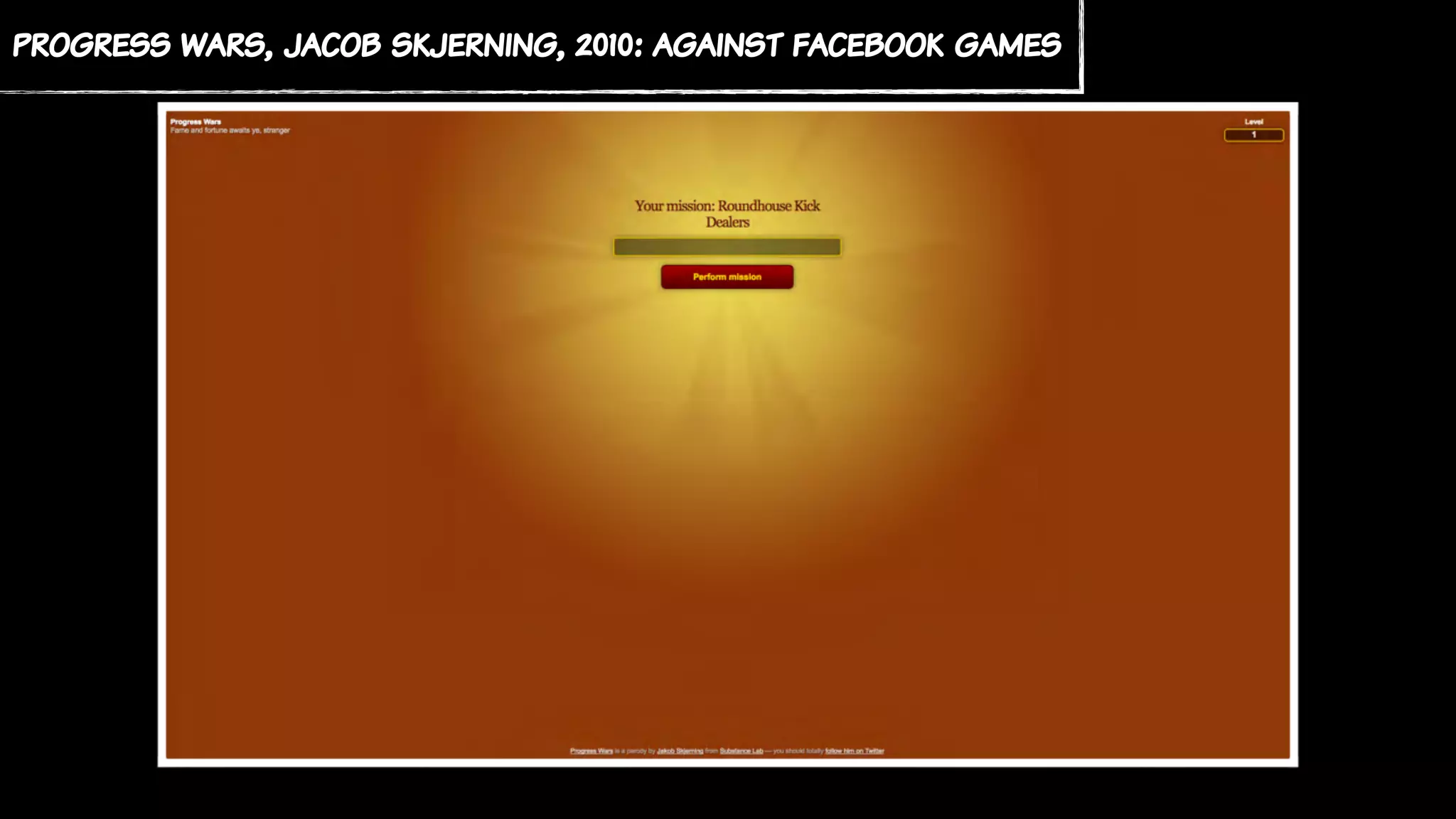
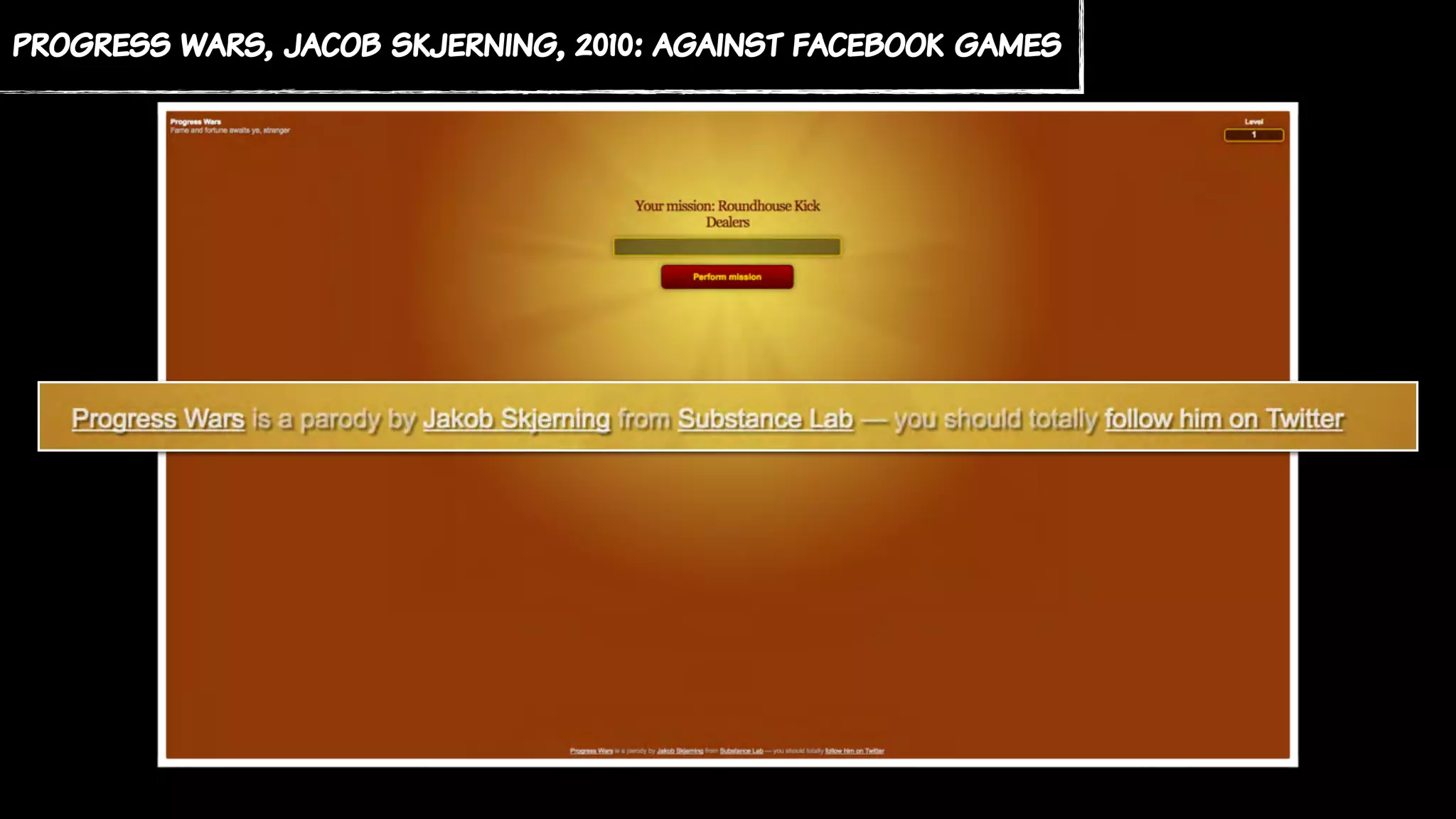
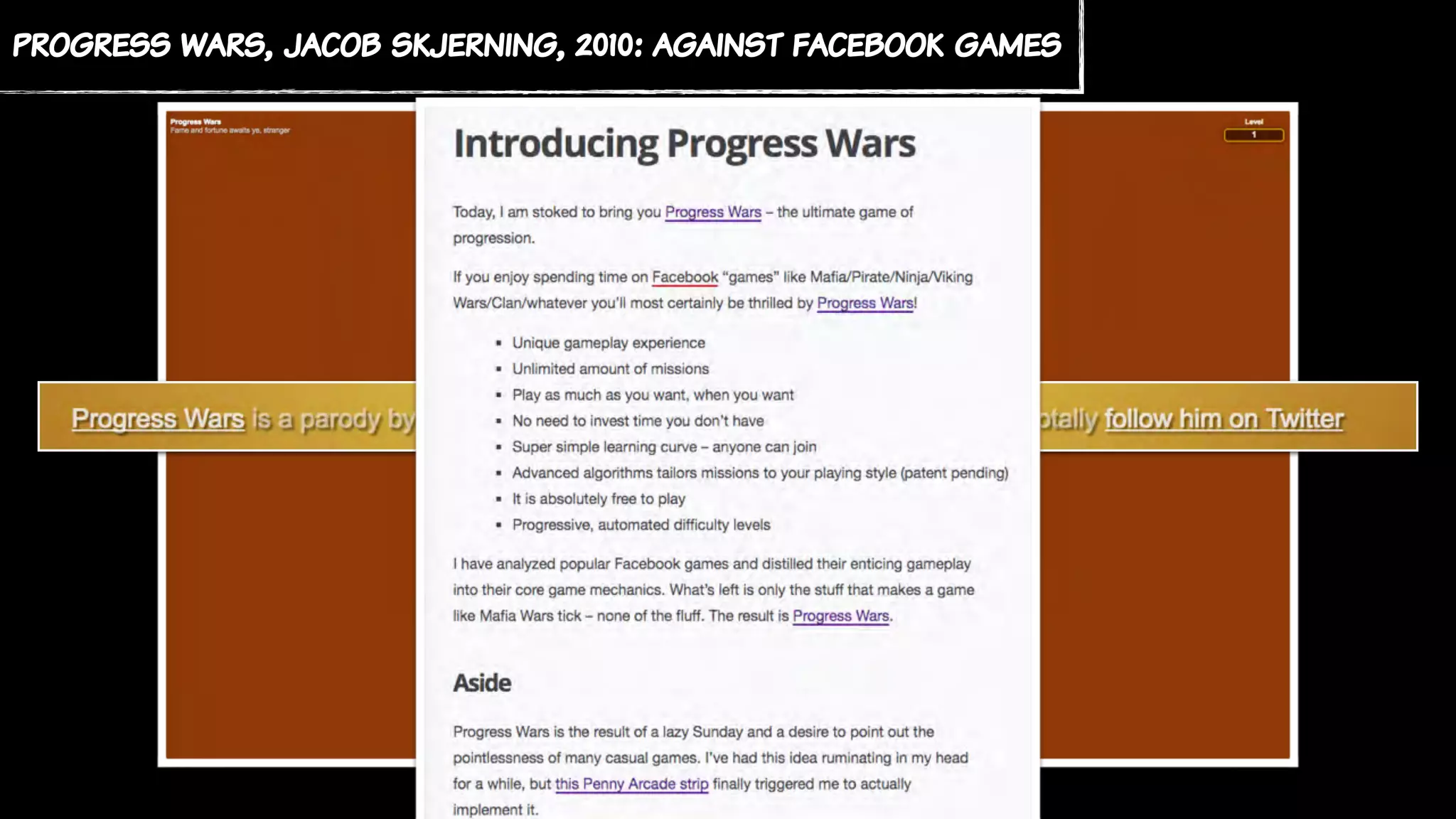
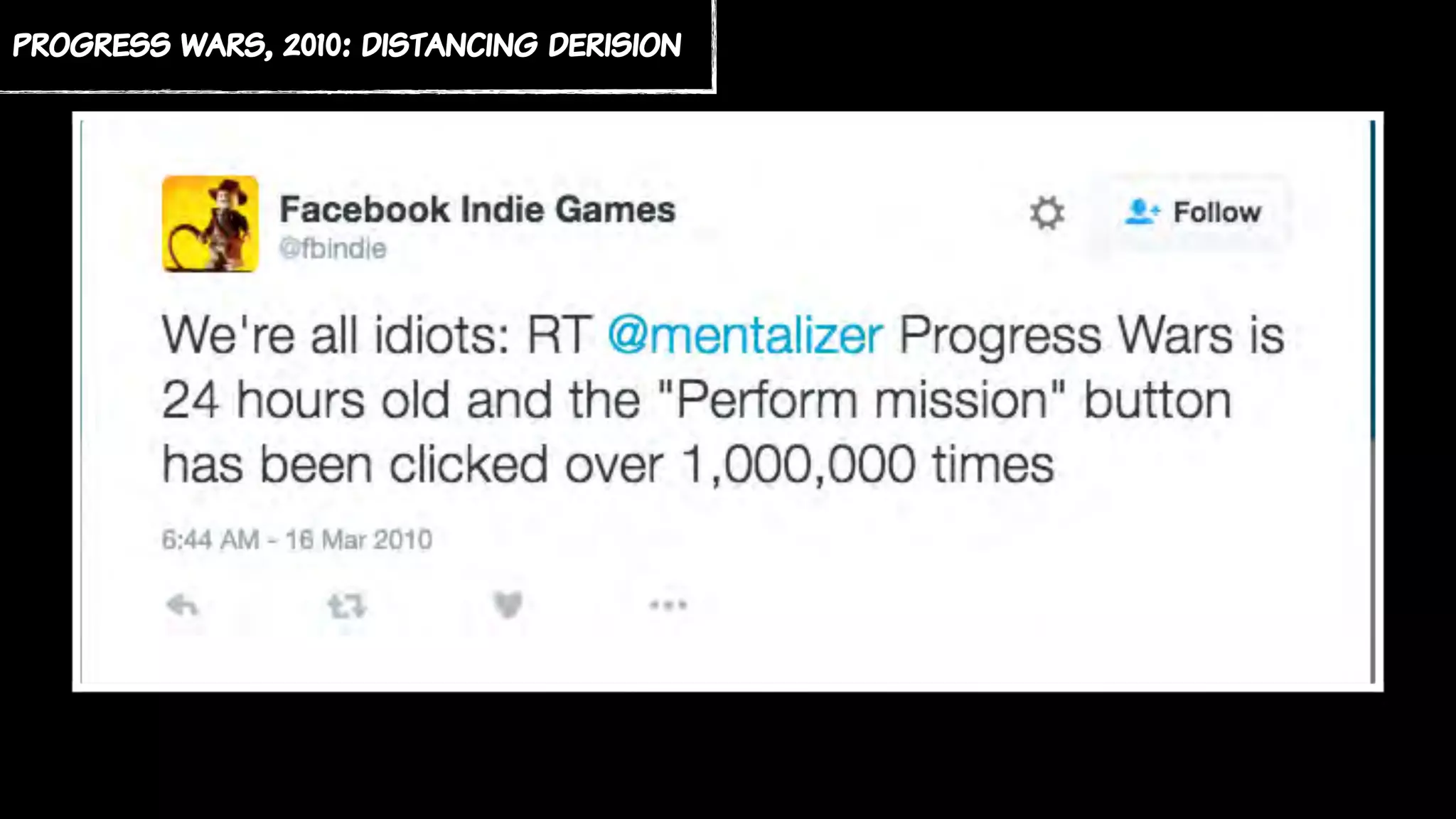
progress wars, jacob skjerning, 2010: against facebook games
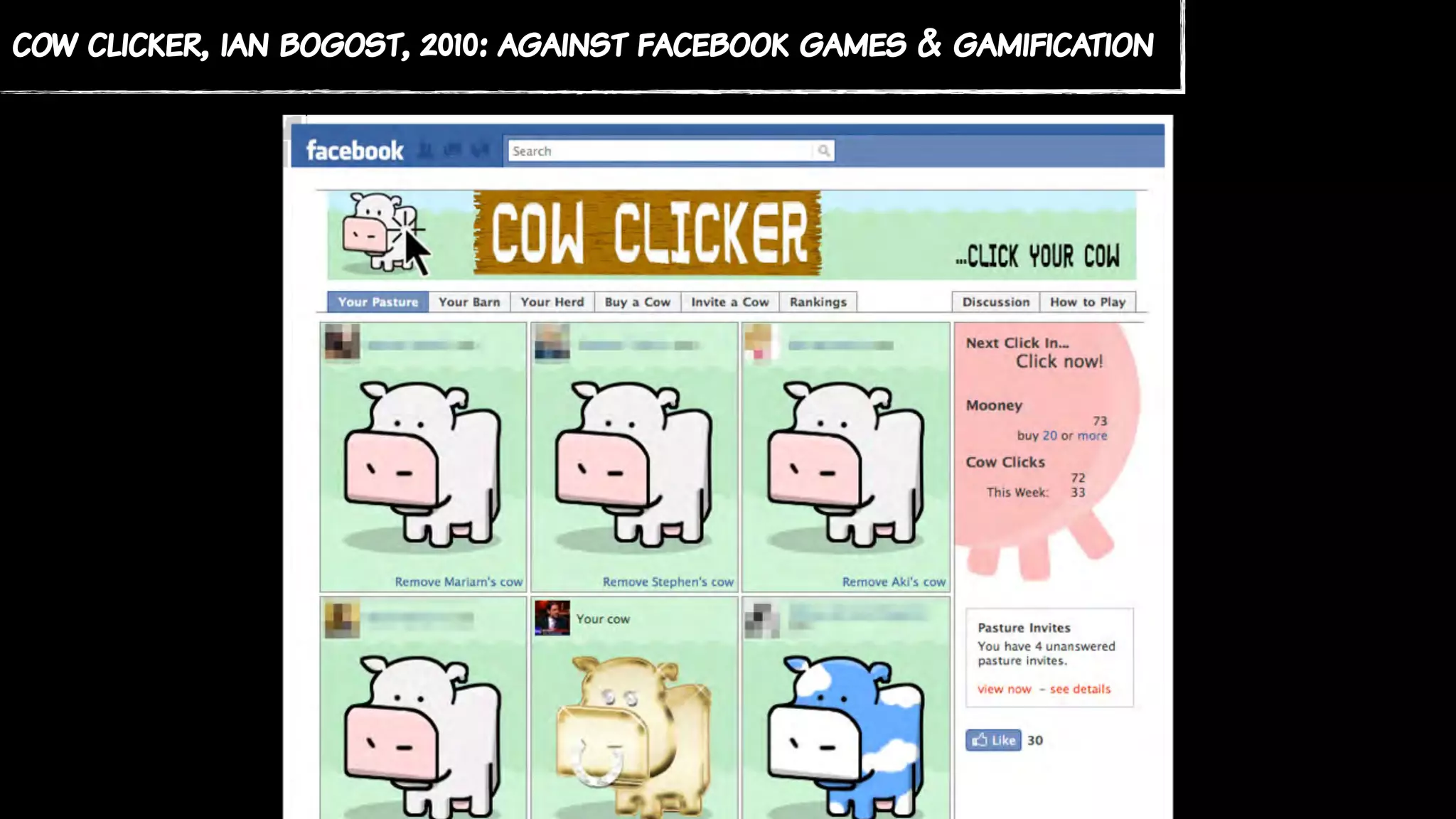
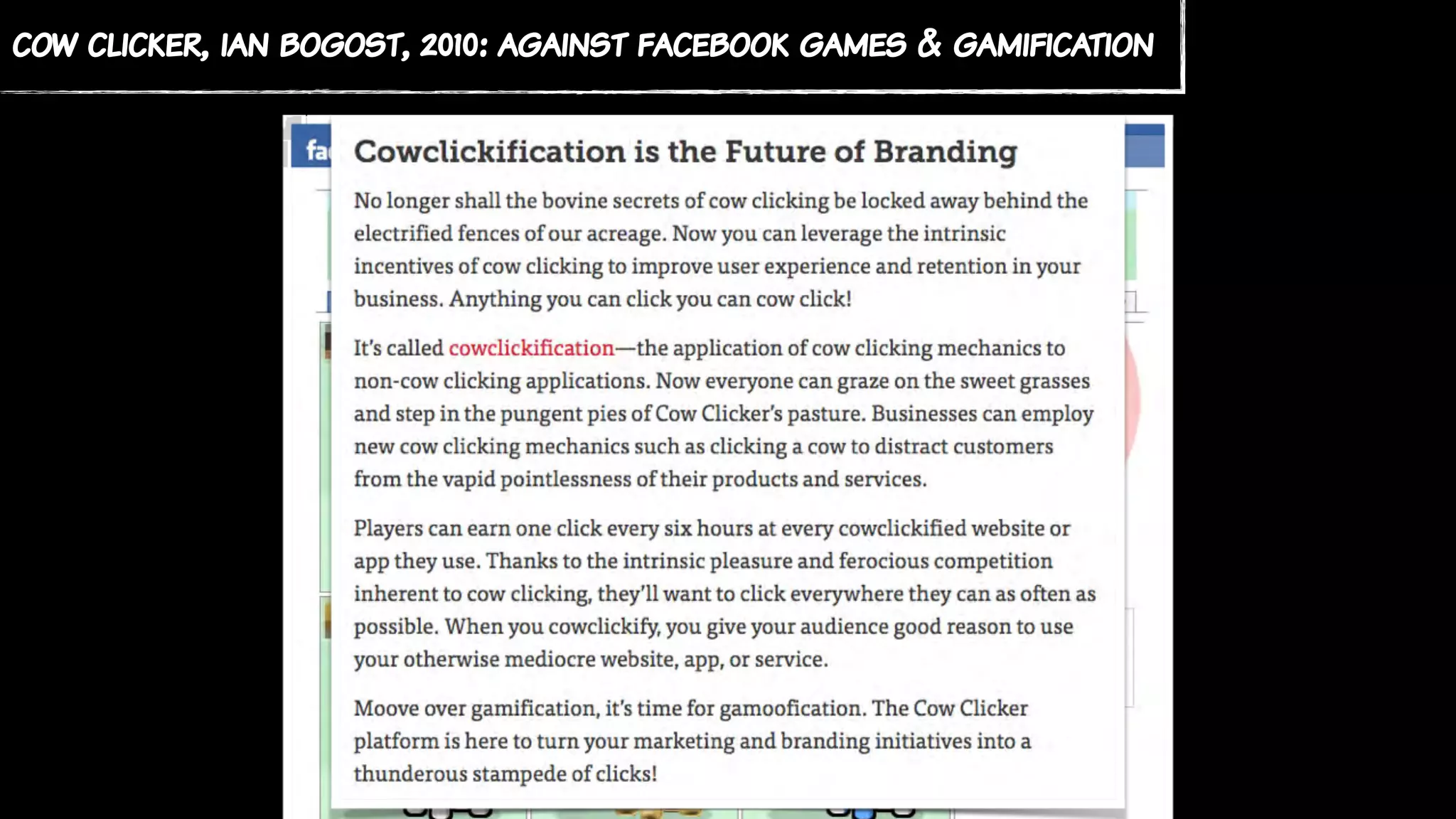
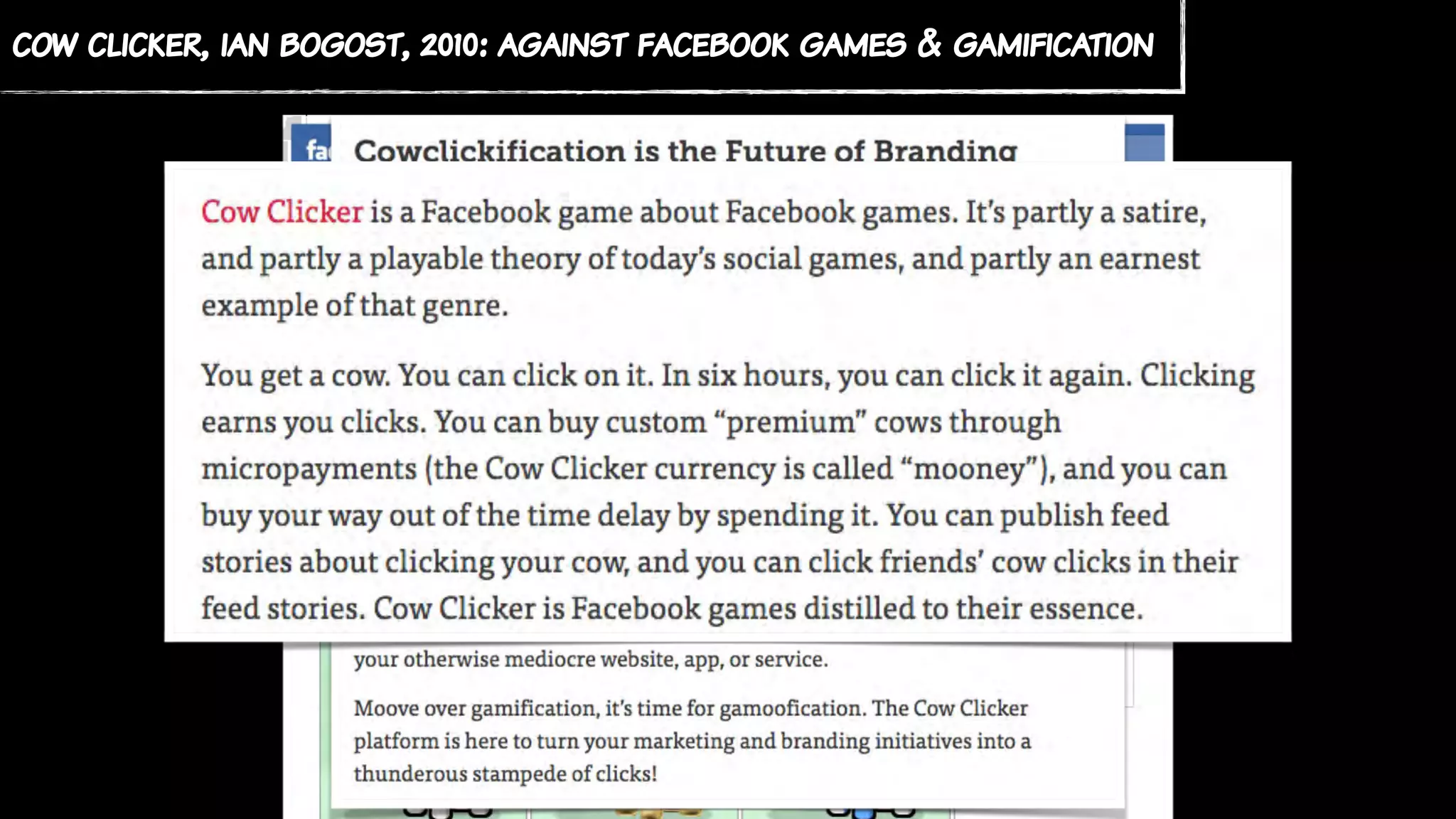
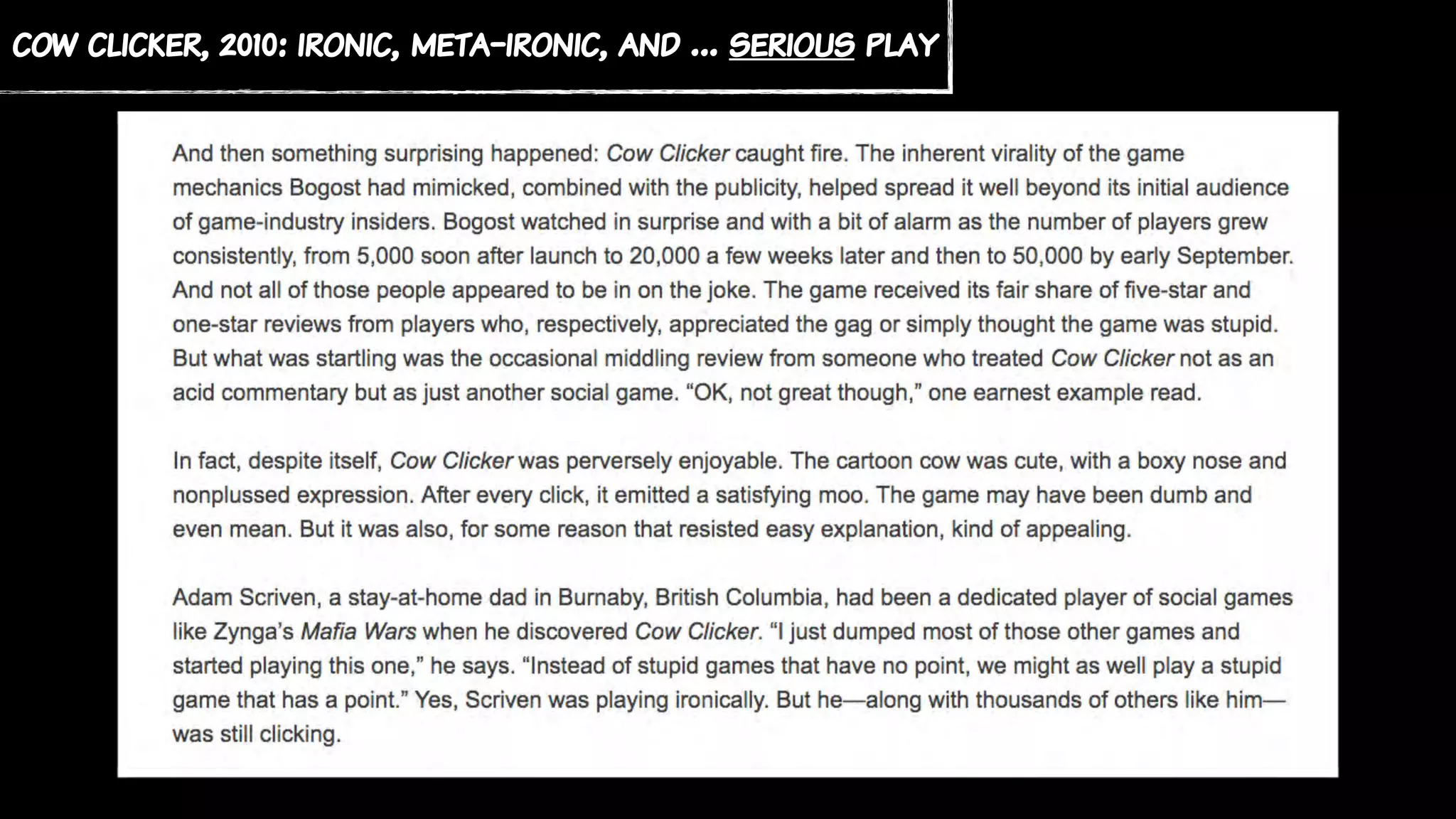
cow clicker, ian bogost, 2010: against facebook games & gamification
the obdurate
audience
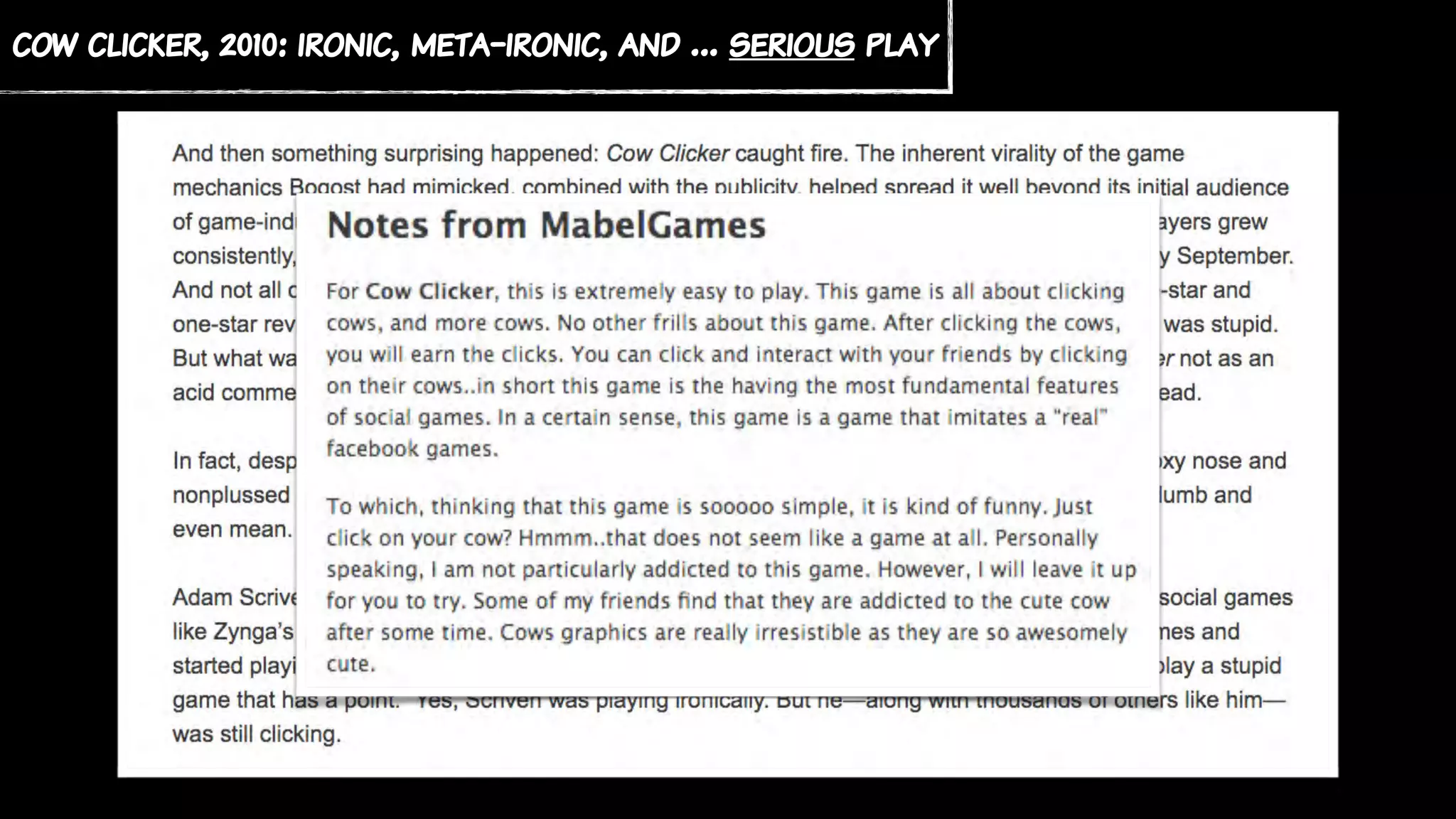
cow clicker, 2010: ironic, meta-ironic, and … serious play
progress wars, 2010: distancing derision
<2>
boundary-blurring
experiment
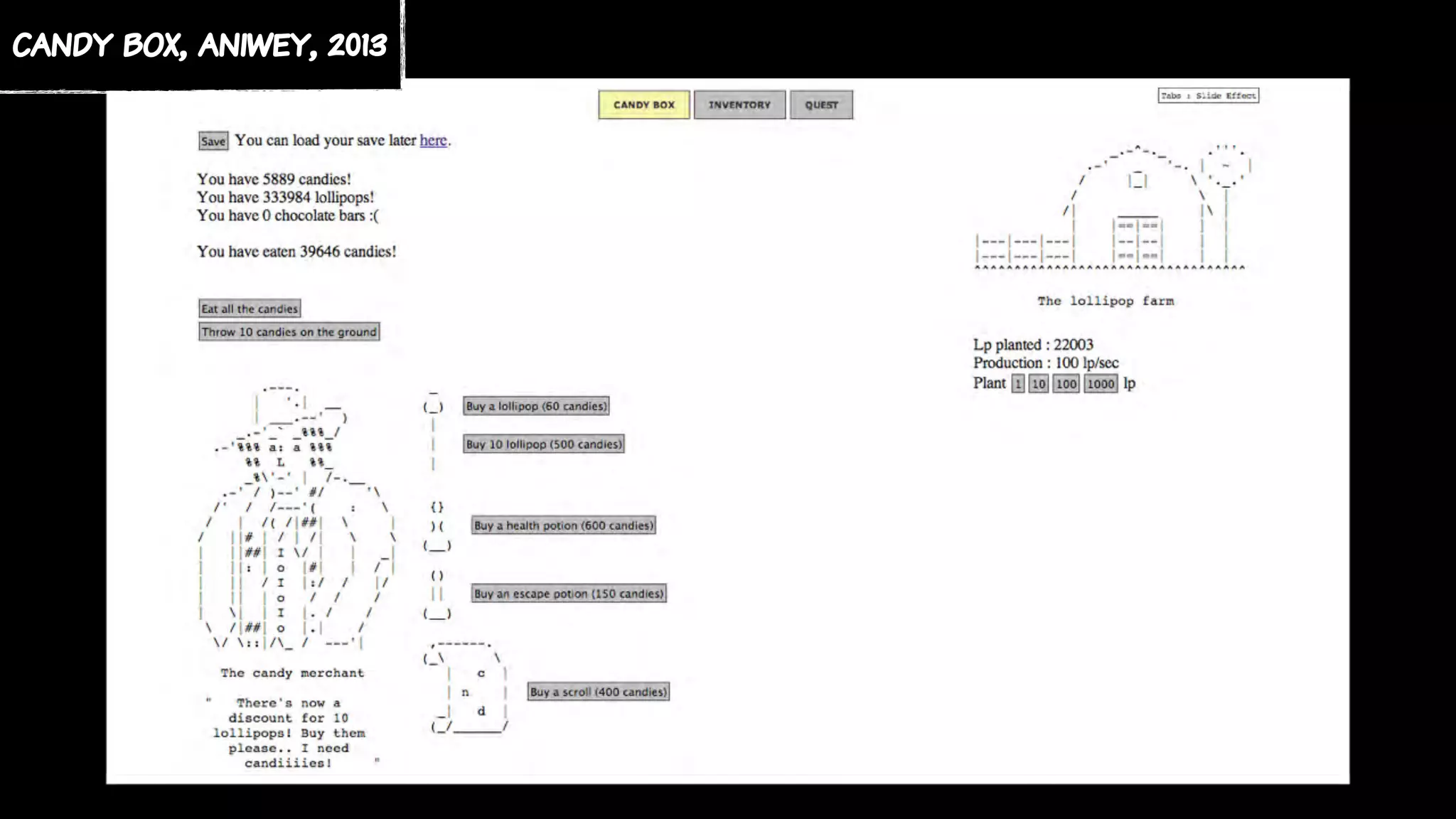
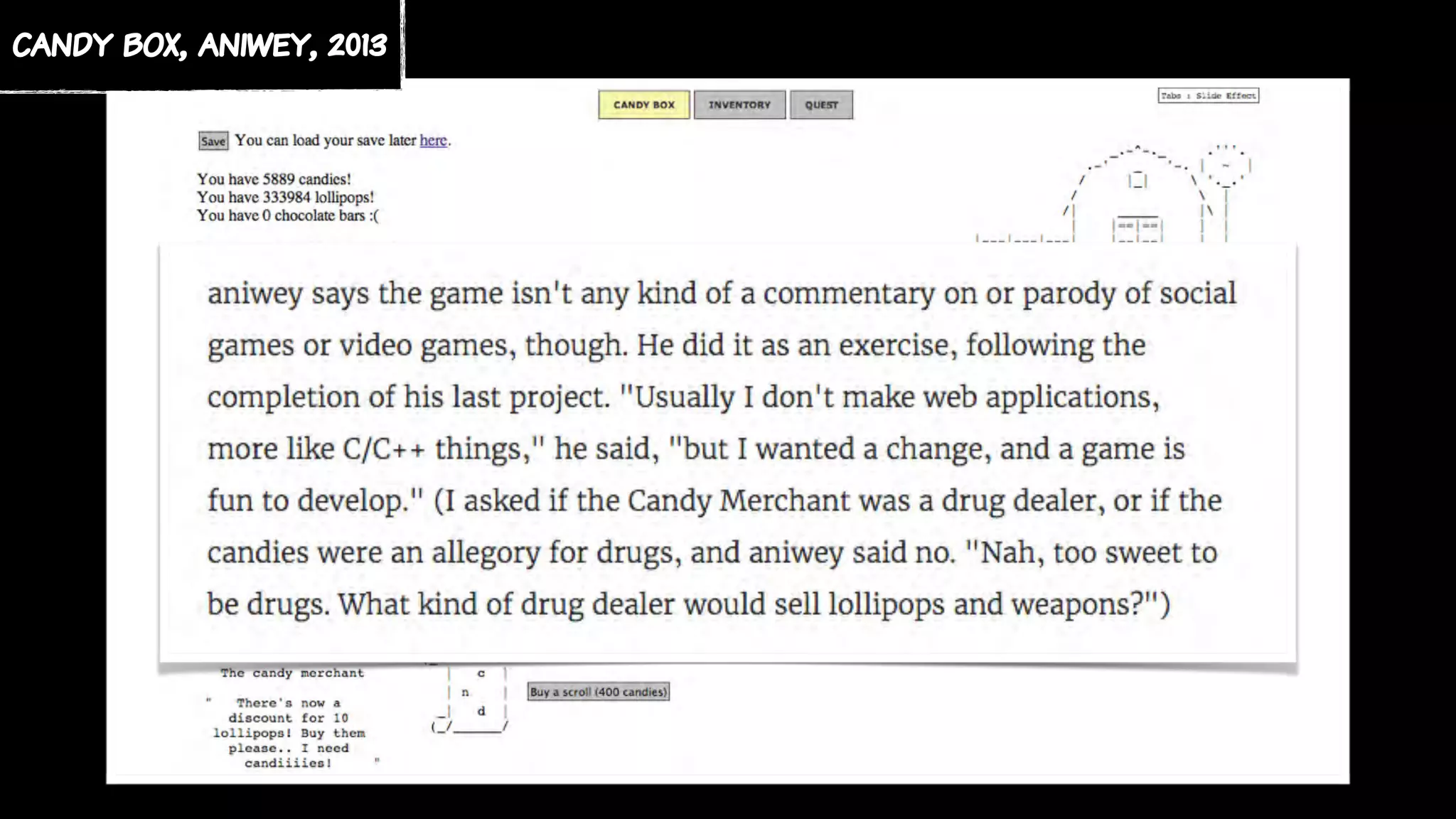
candy box, aniwey, 2013
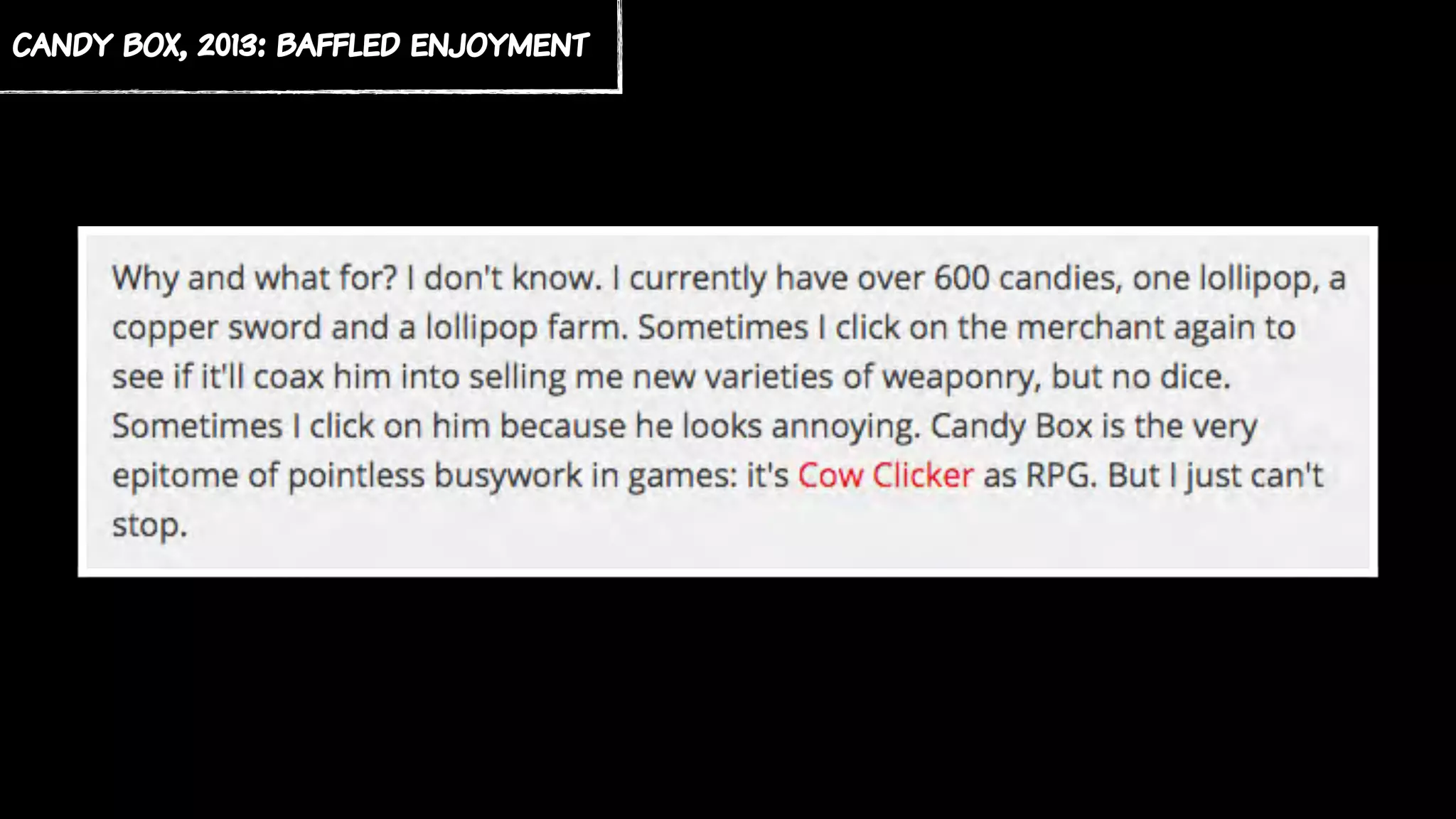
candy box, 2013: baffled enjoyment
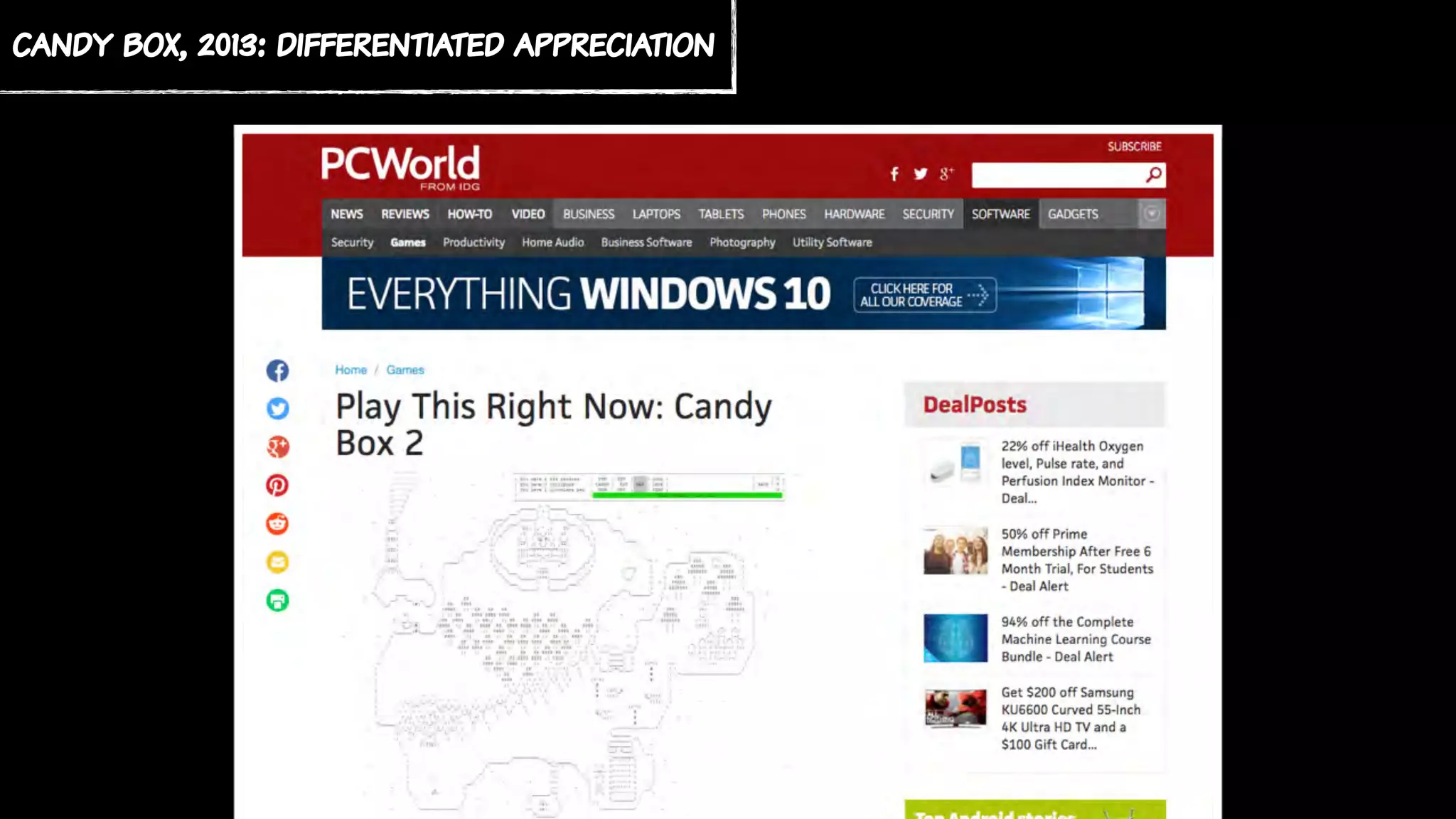
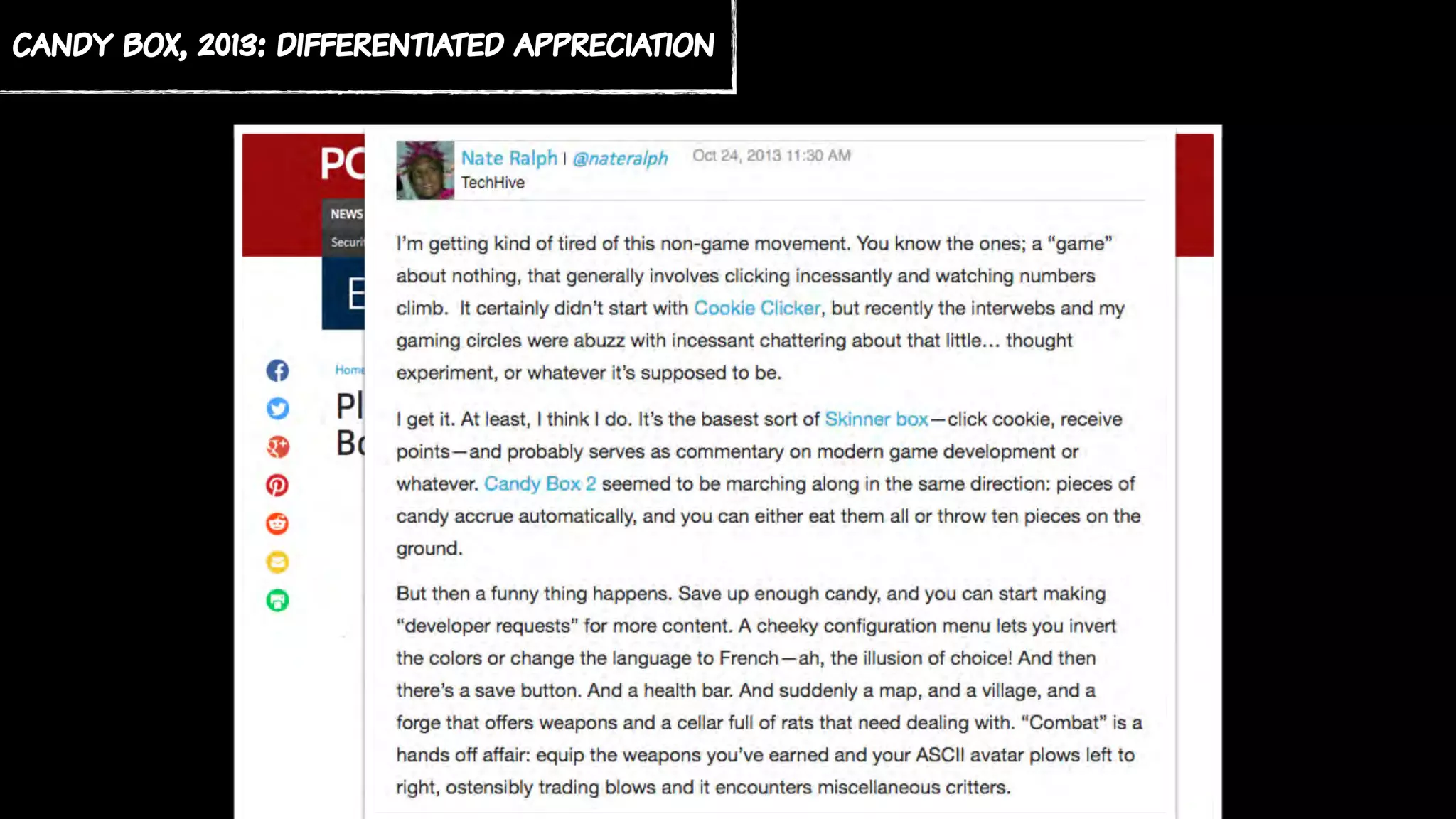
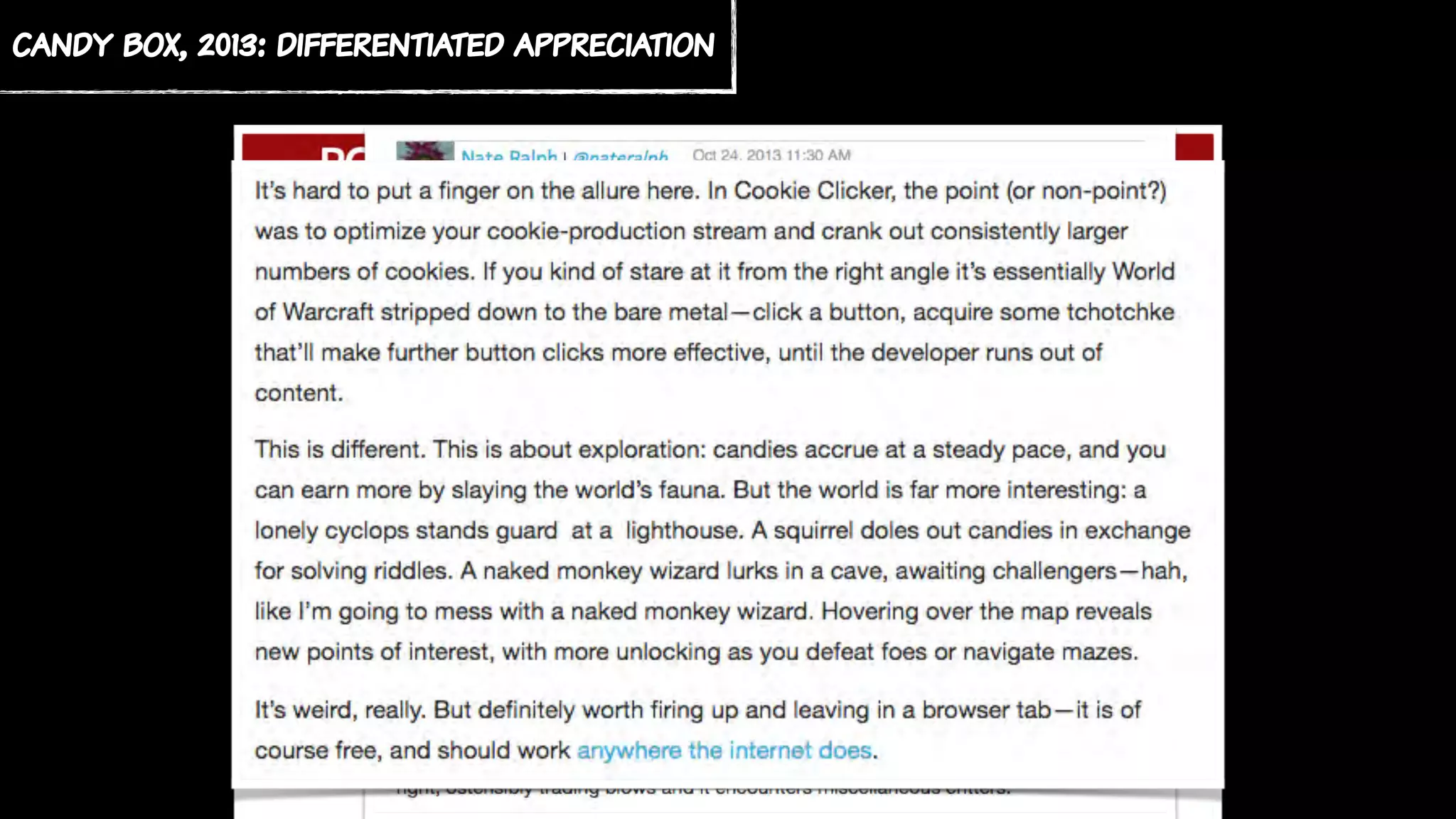
candy box, 2013: differentiated appreciation
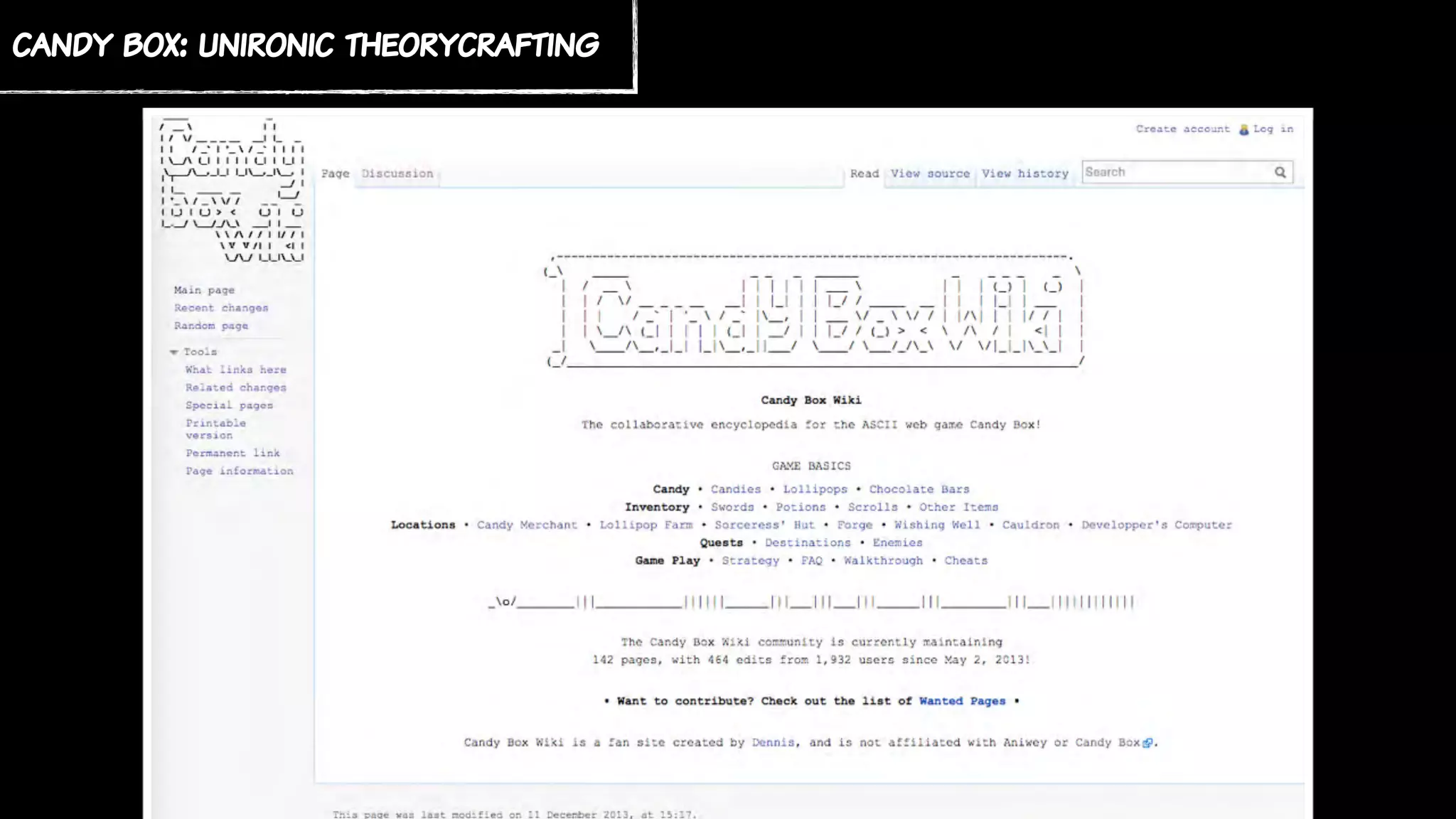
candy box: unironic theorycrafting
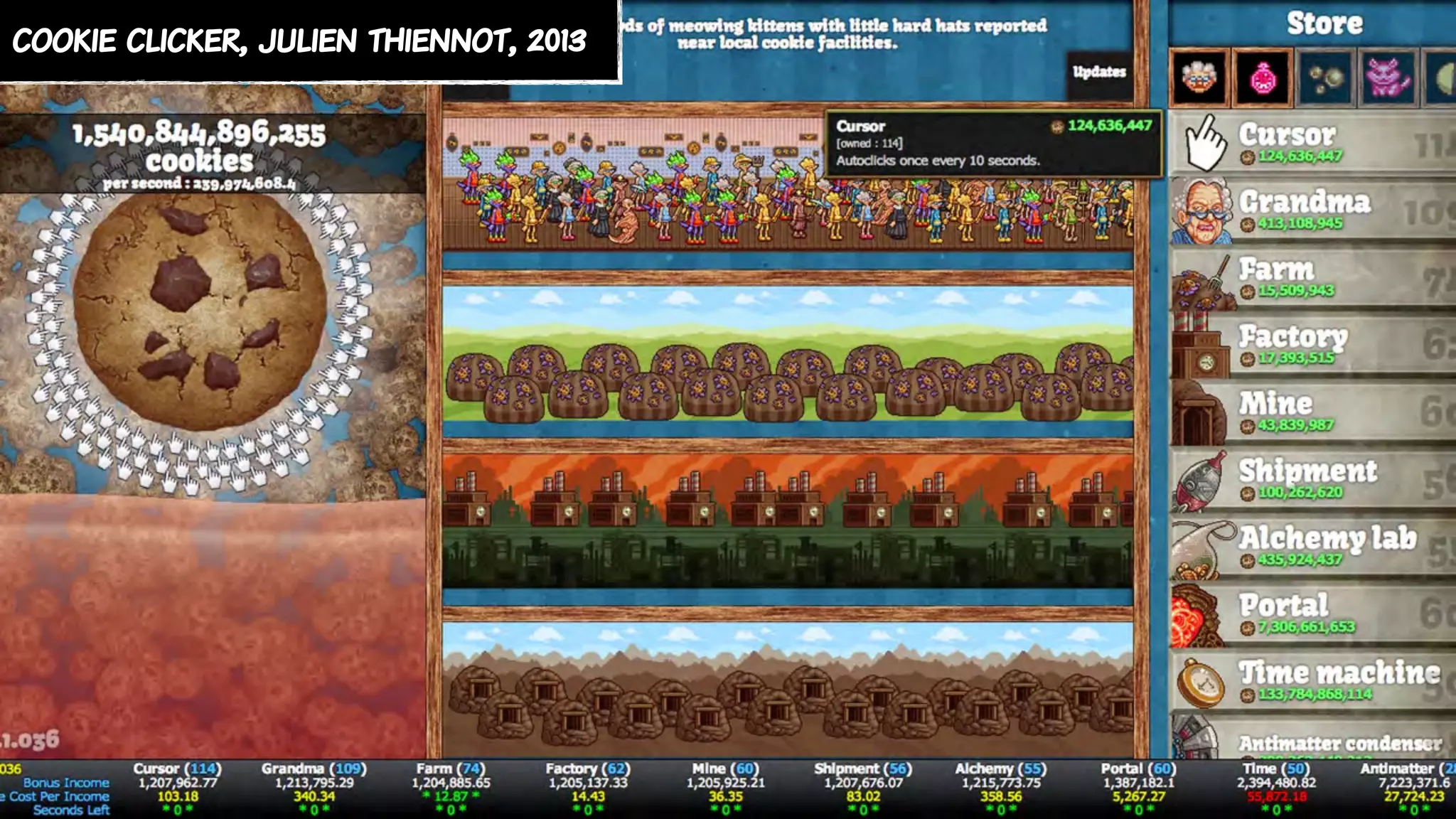
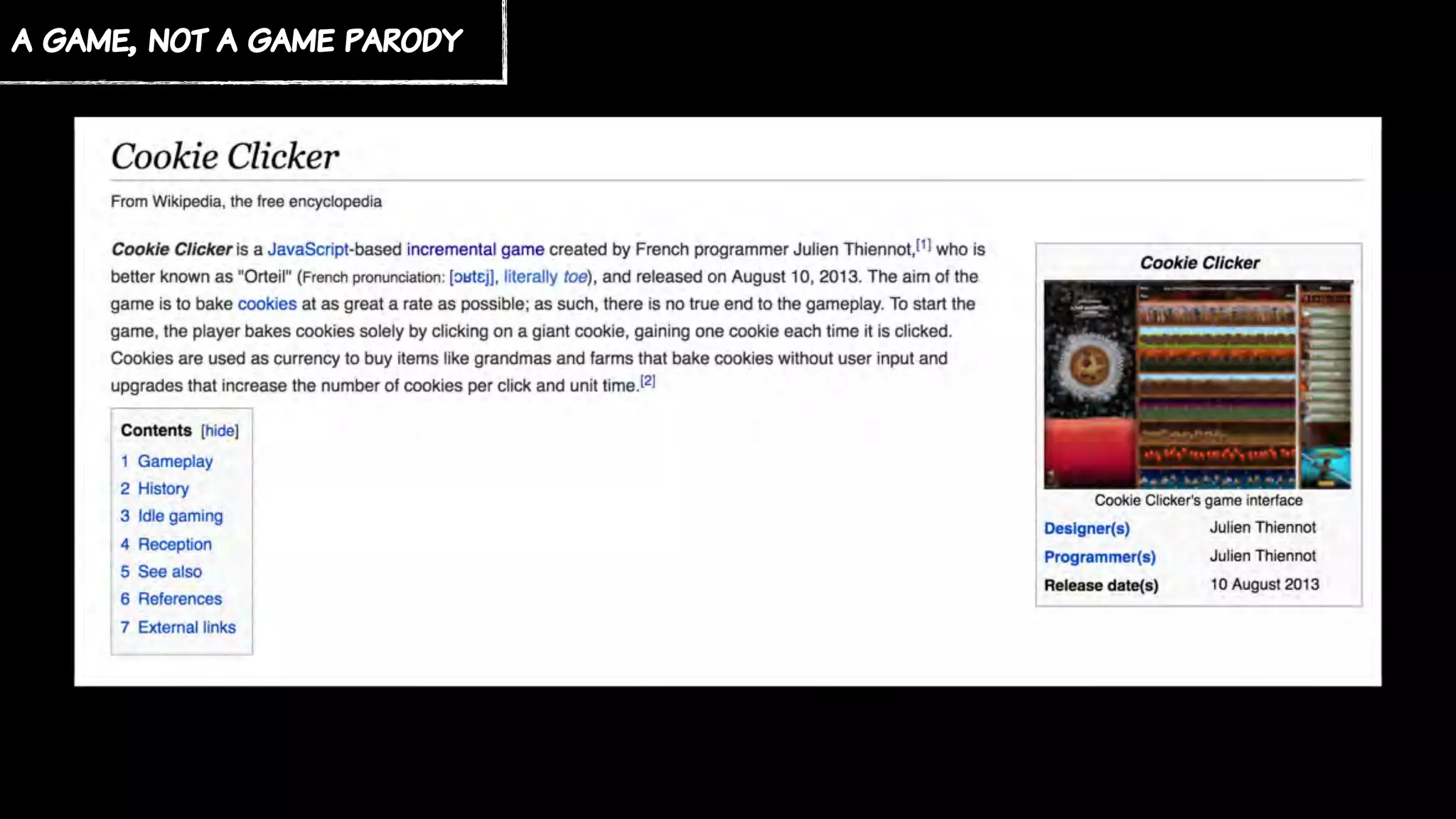
cookie clicker, julien thiennot, 2013
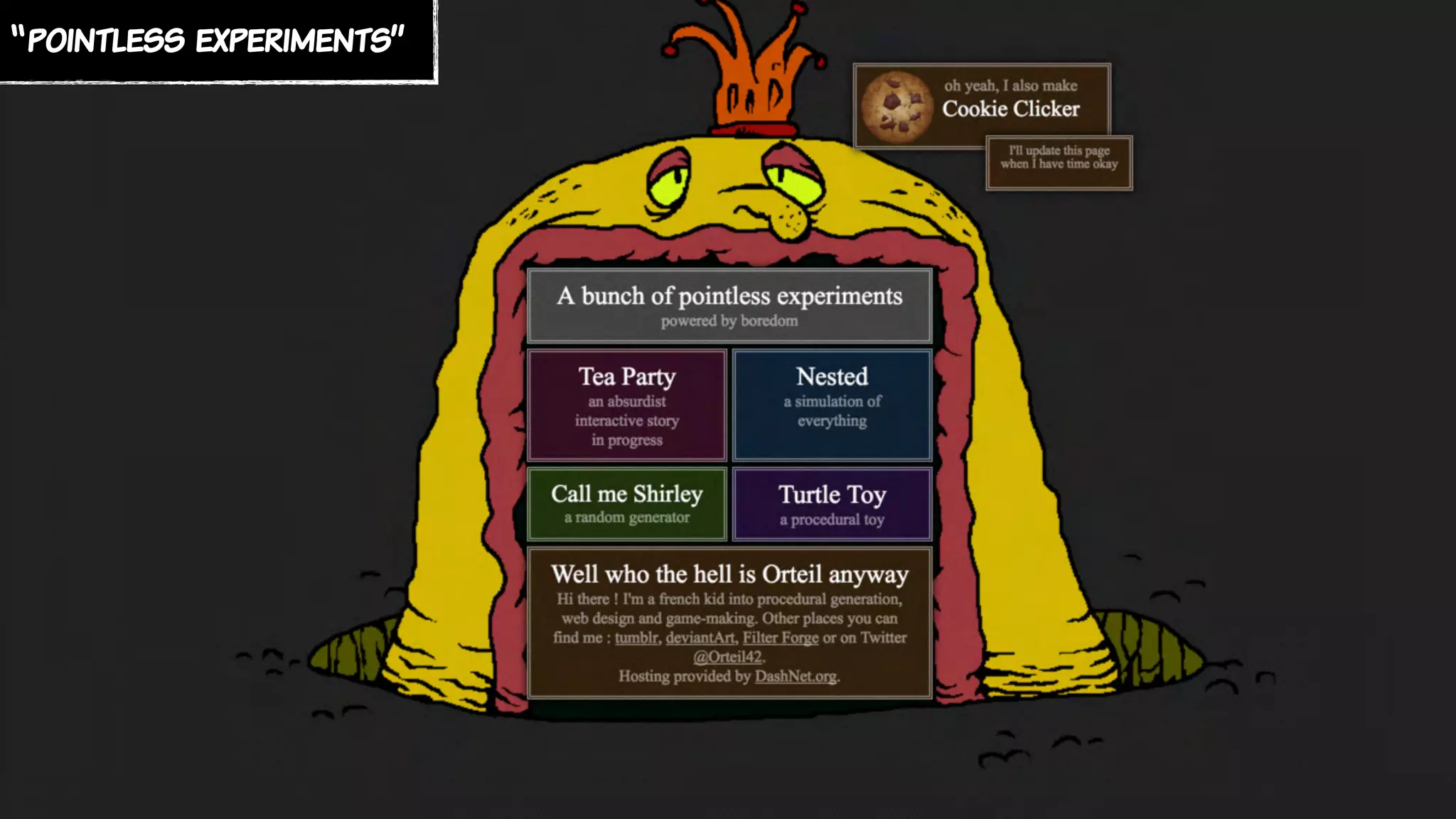
“pointless experiments”
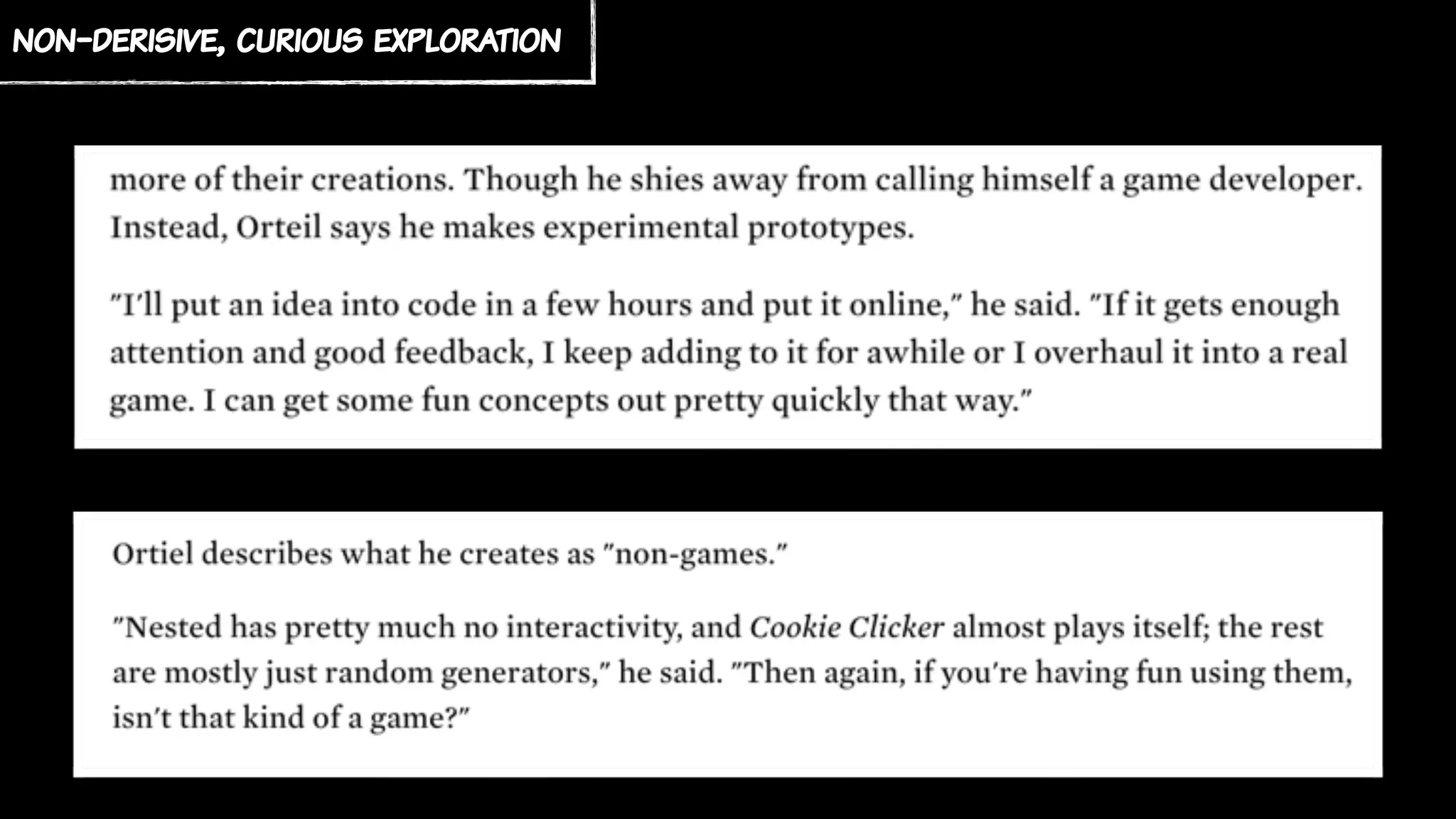
non-derisive, curious exploration
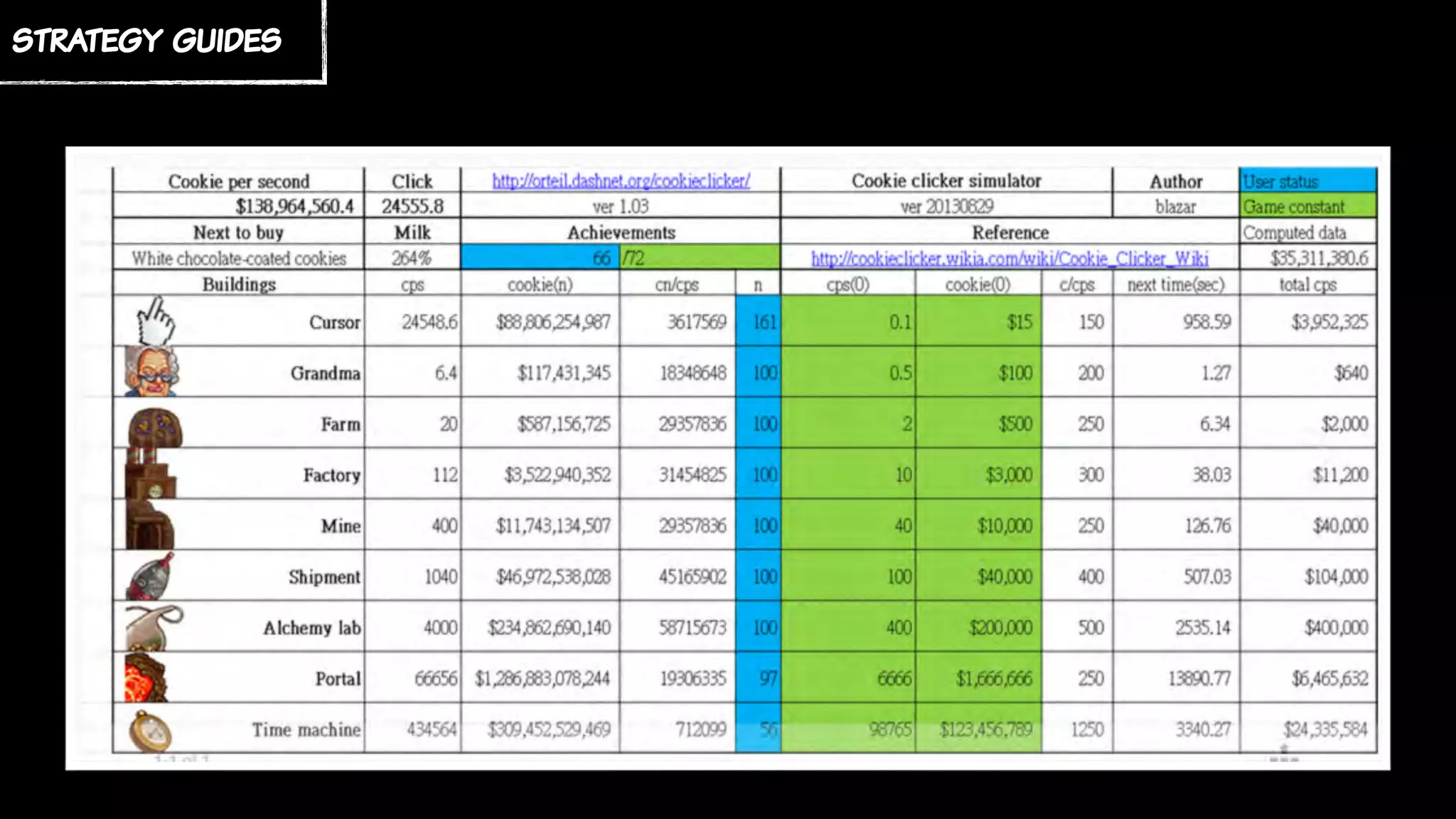
strategy guides
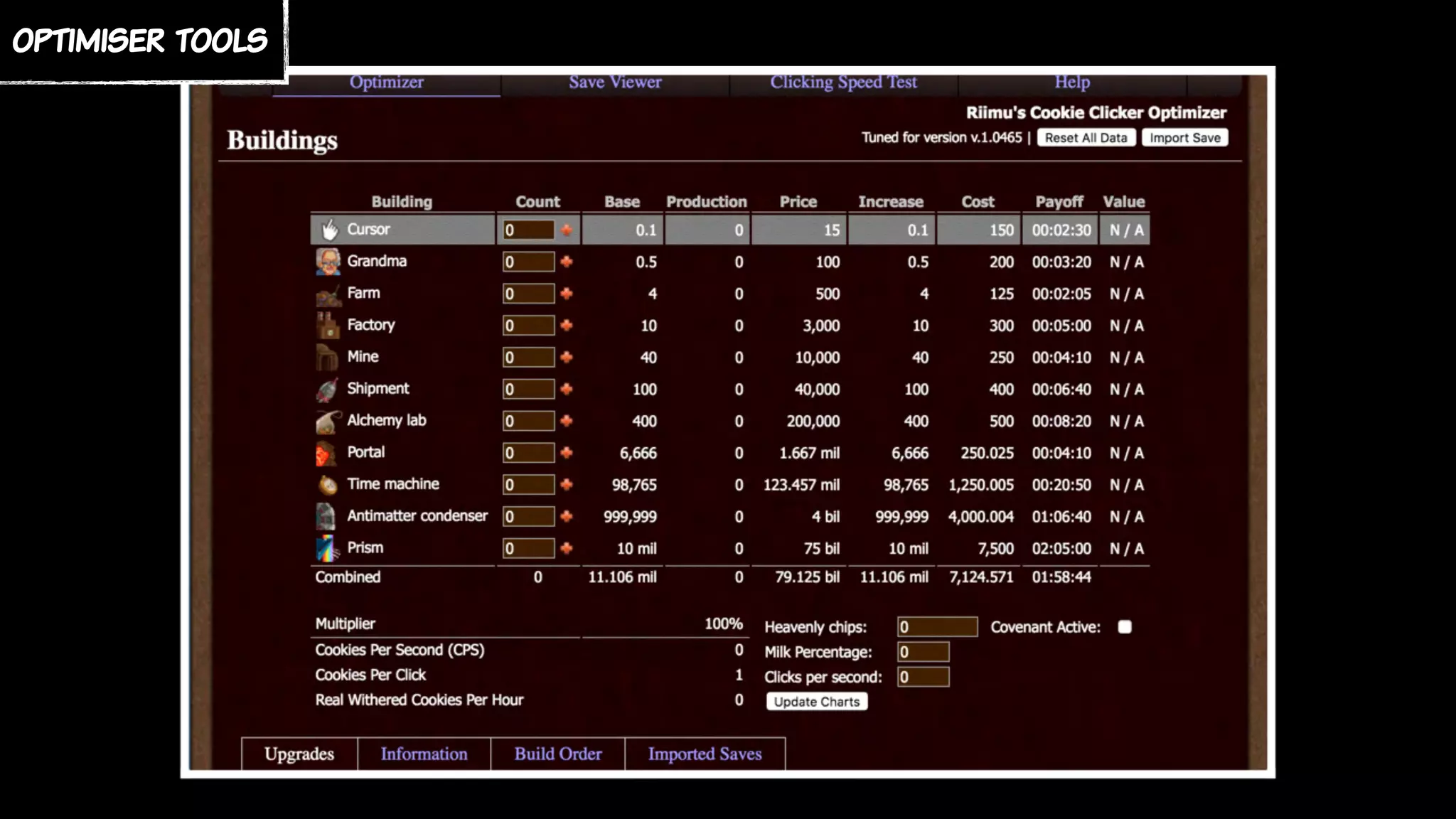
optimiser tools
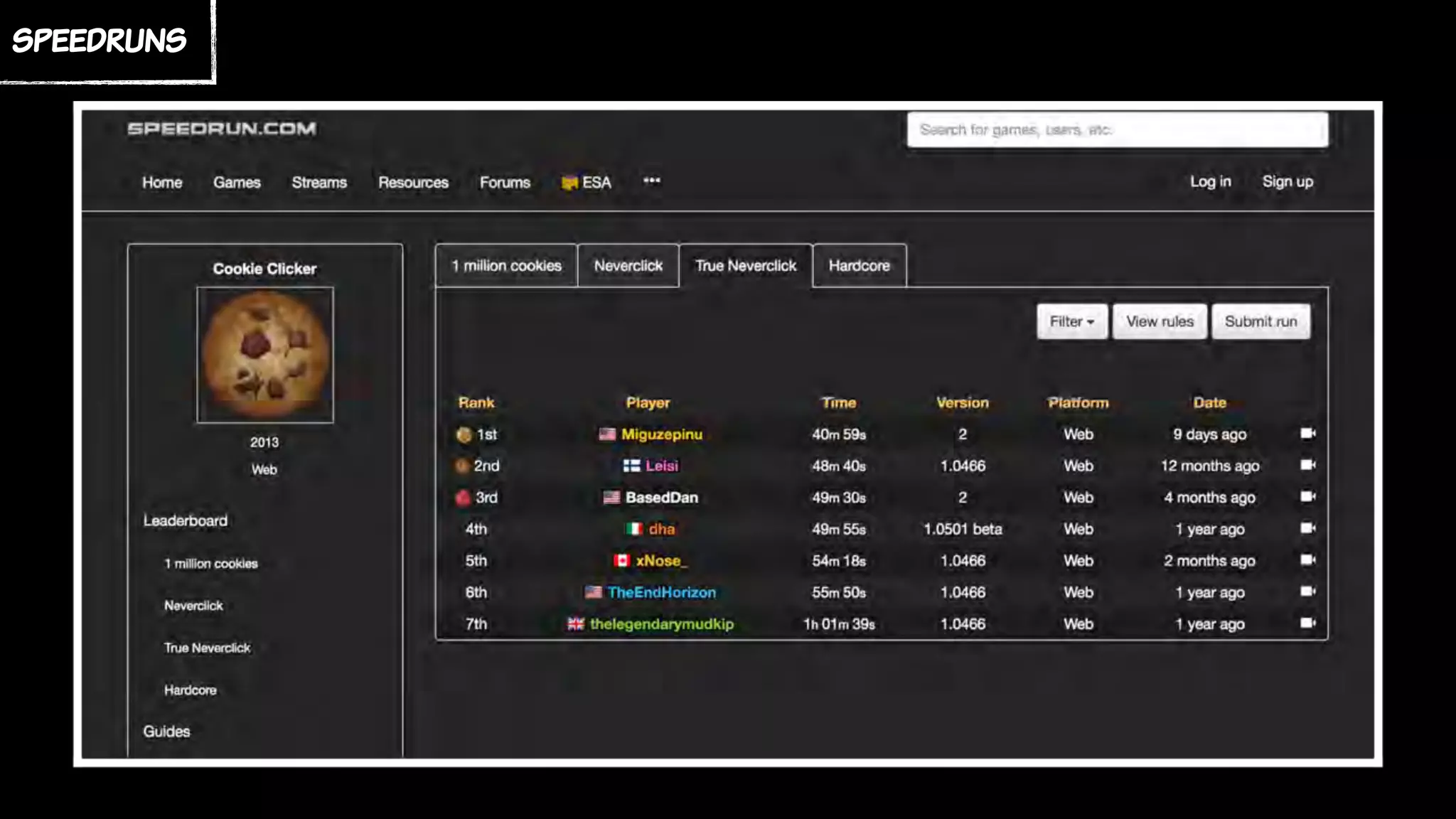
speedruns
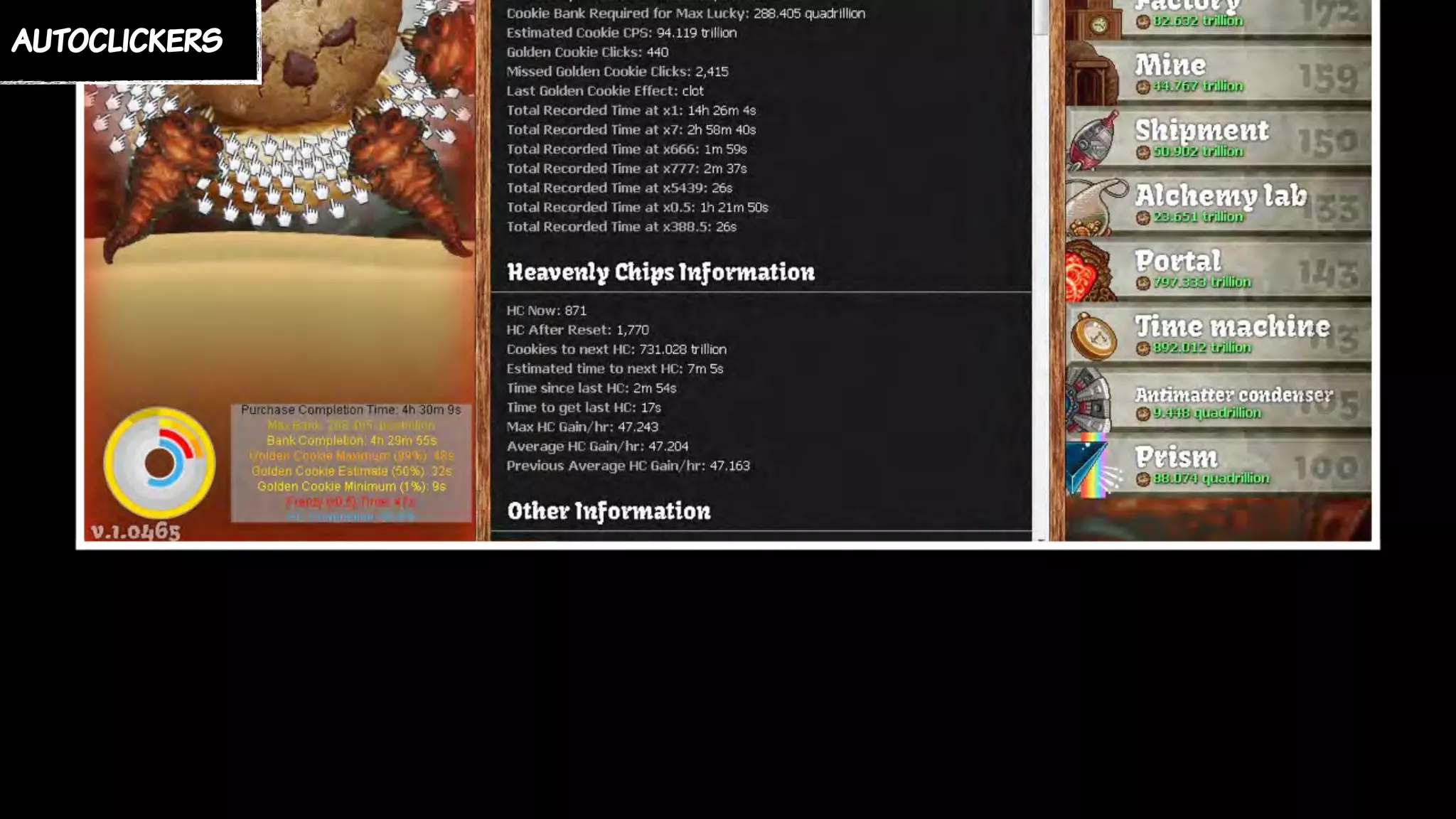
autoclickers
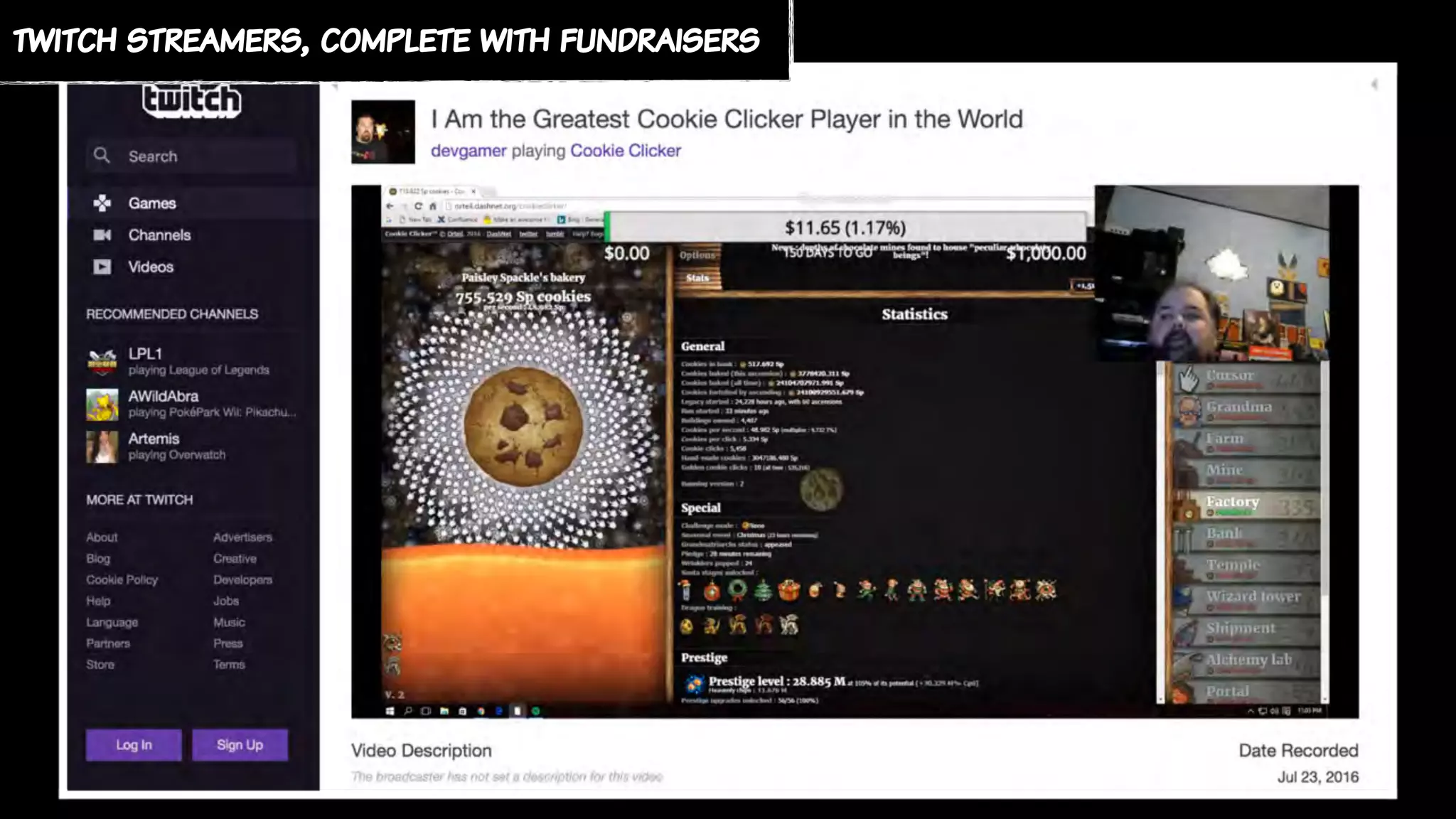
twitch streamers, complete with fundraisers
a game, not a game parody
<3>
boundary-extending
genre
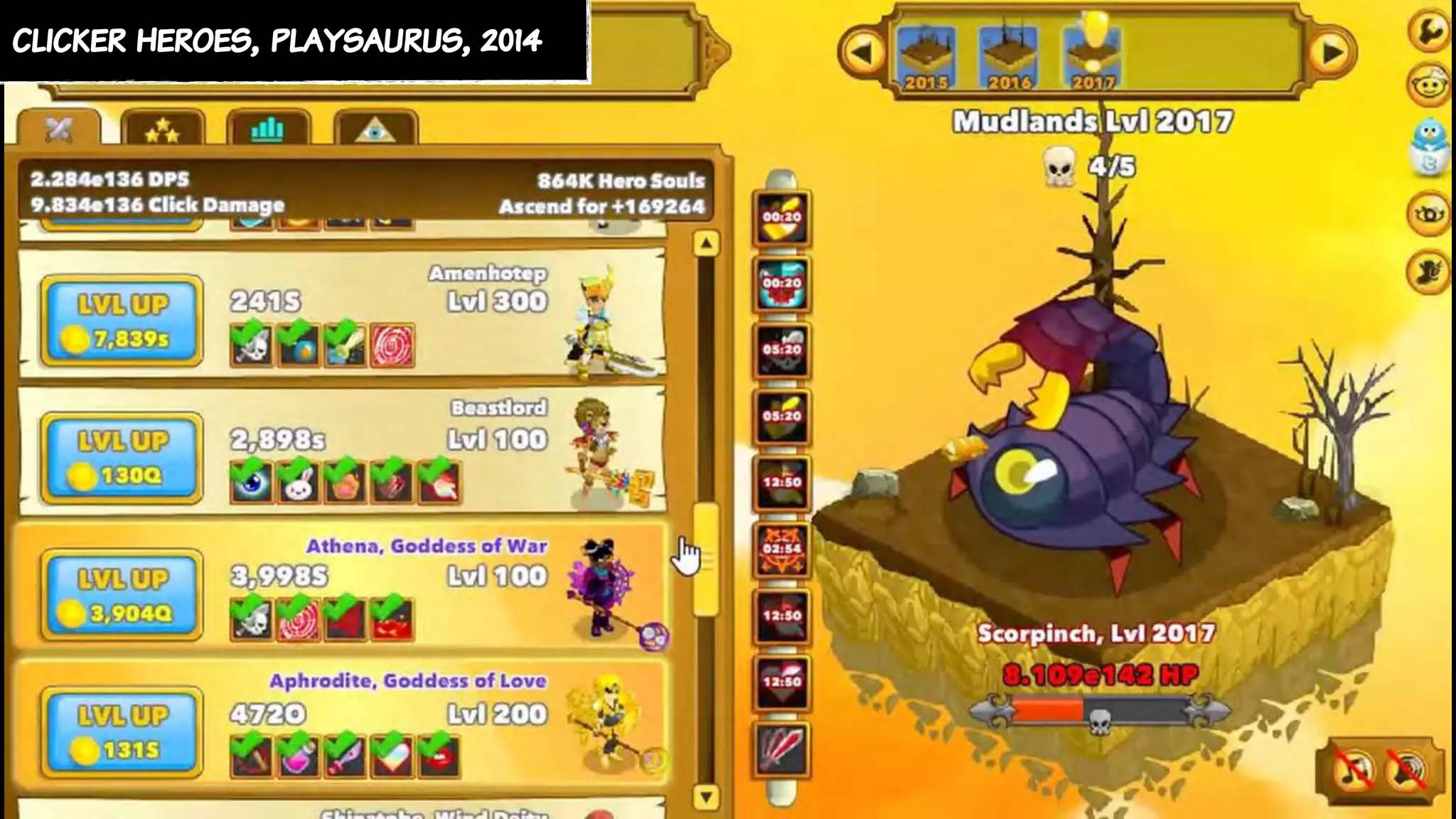
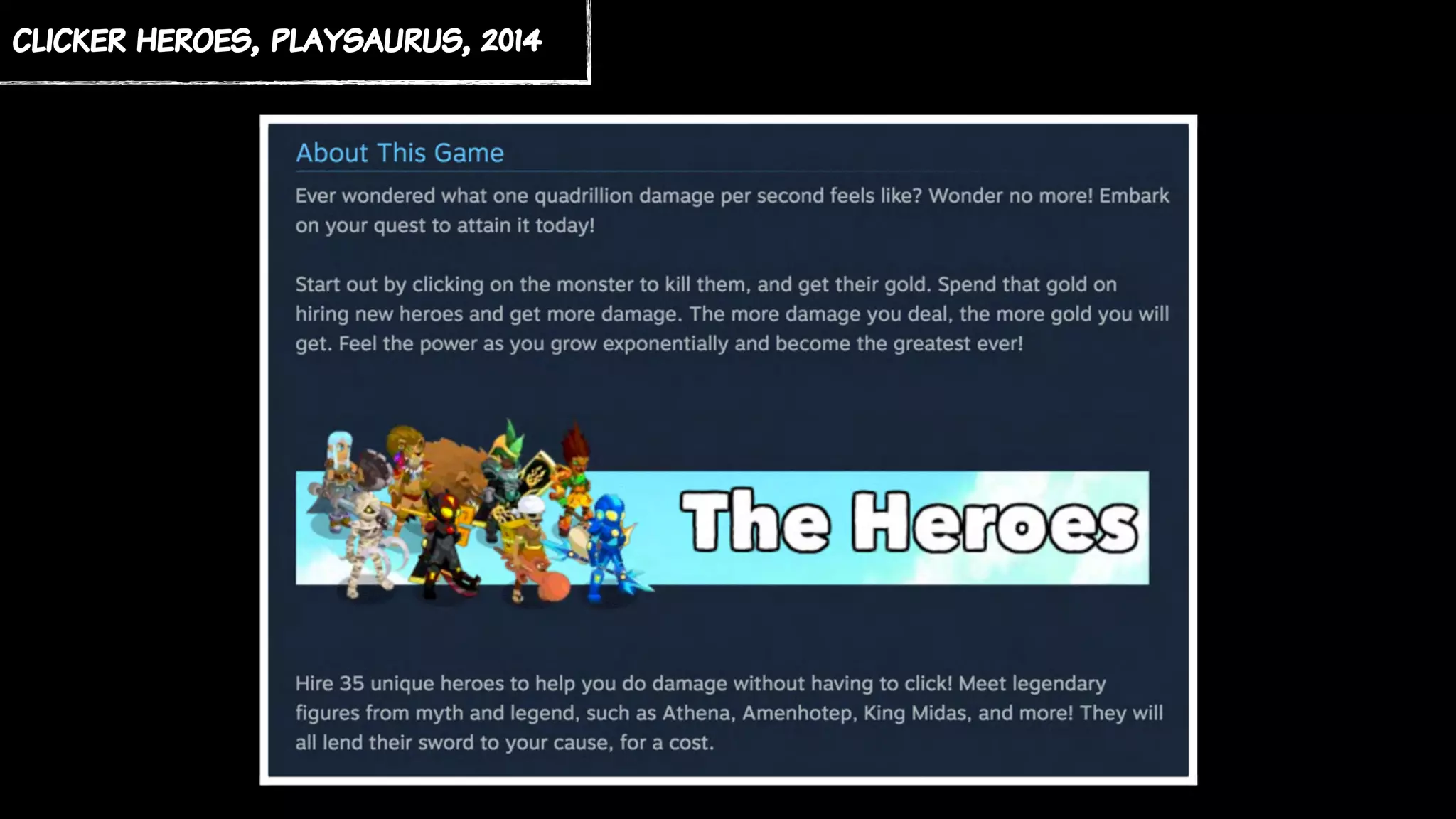
clicker heroes, playsaurus, 2014
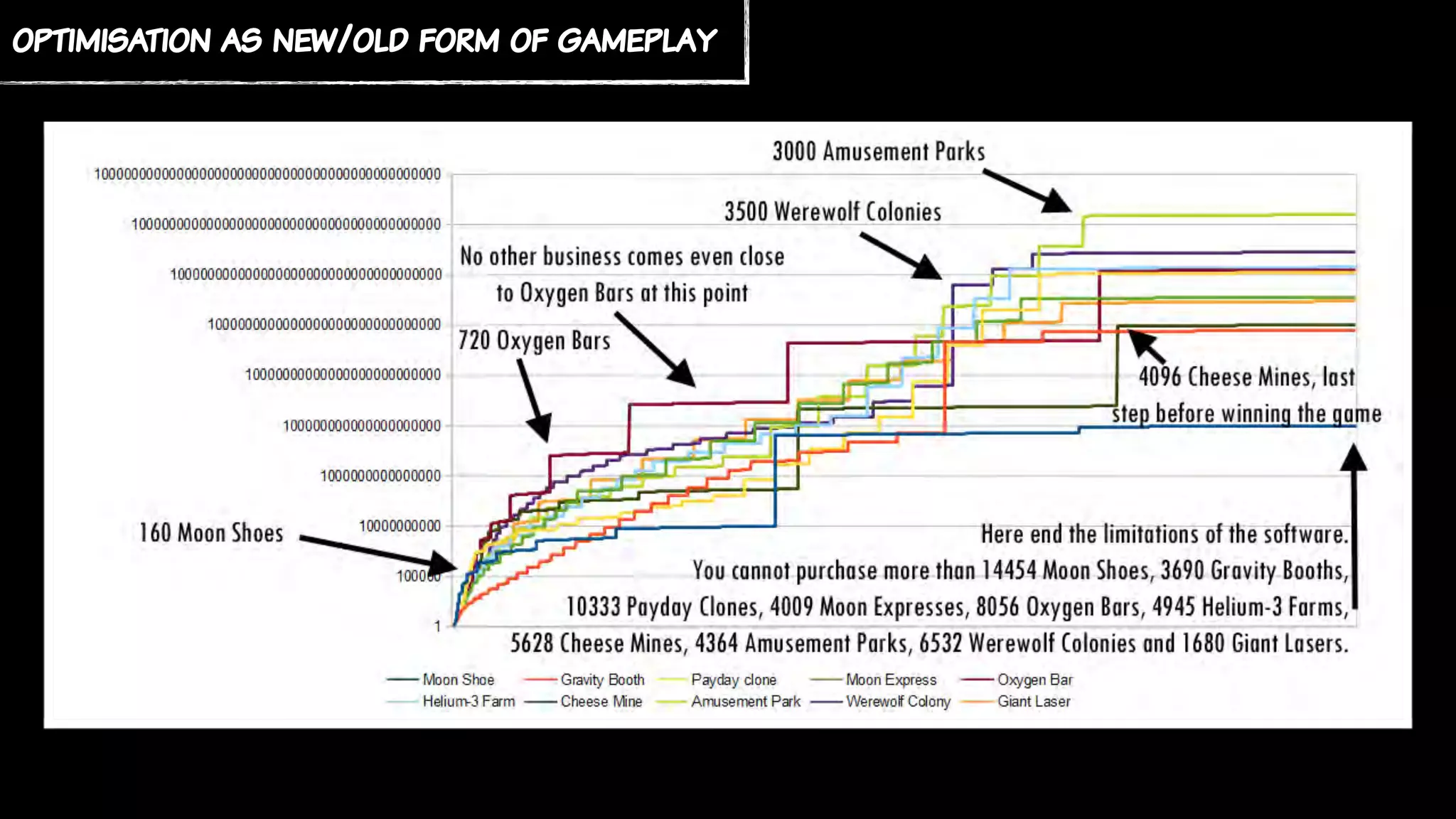
optimisation as new/old form of gameplay
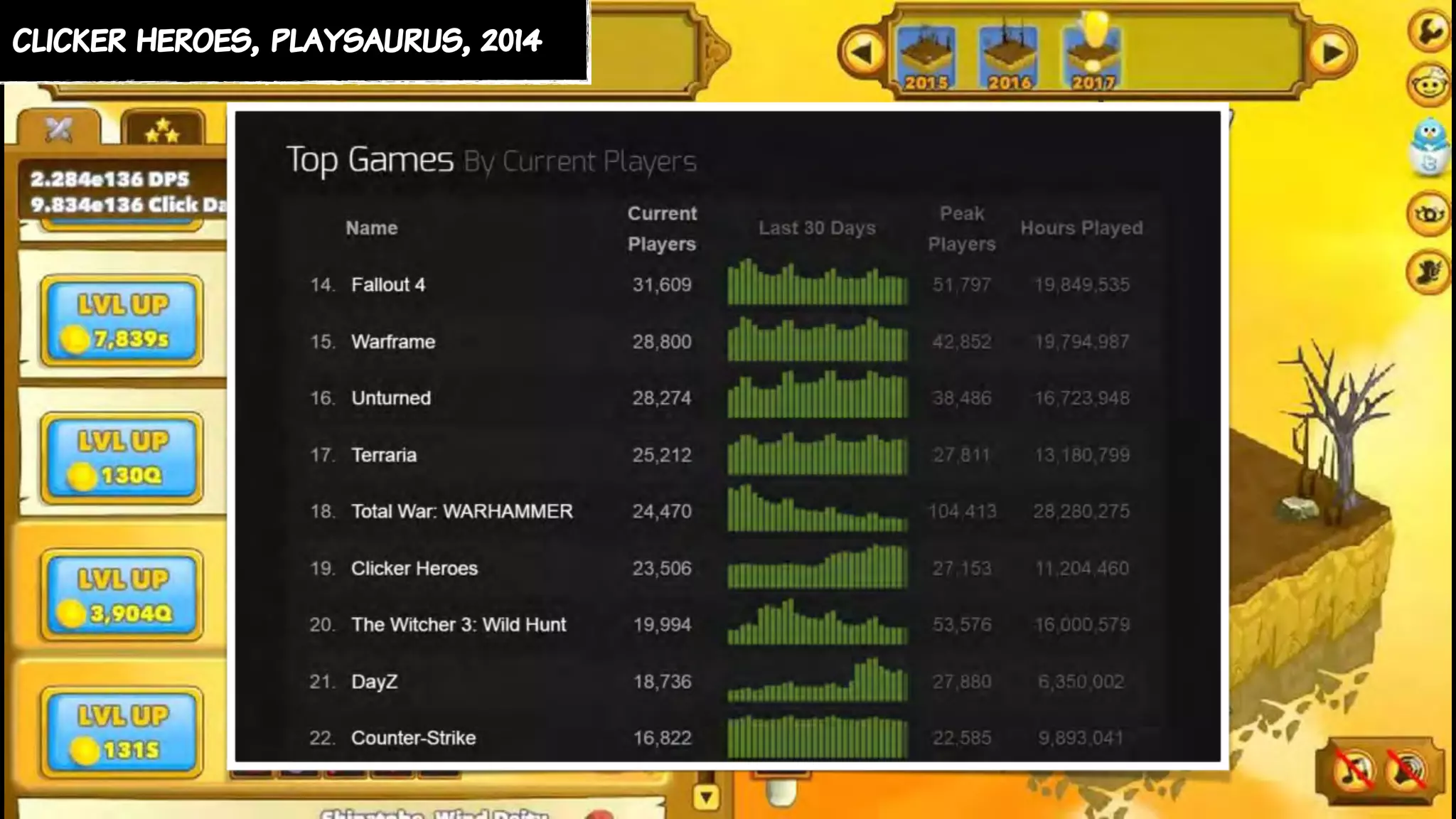
clicker heroes, playsaurus, 2014
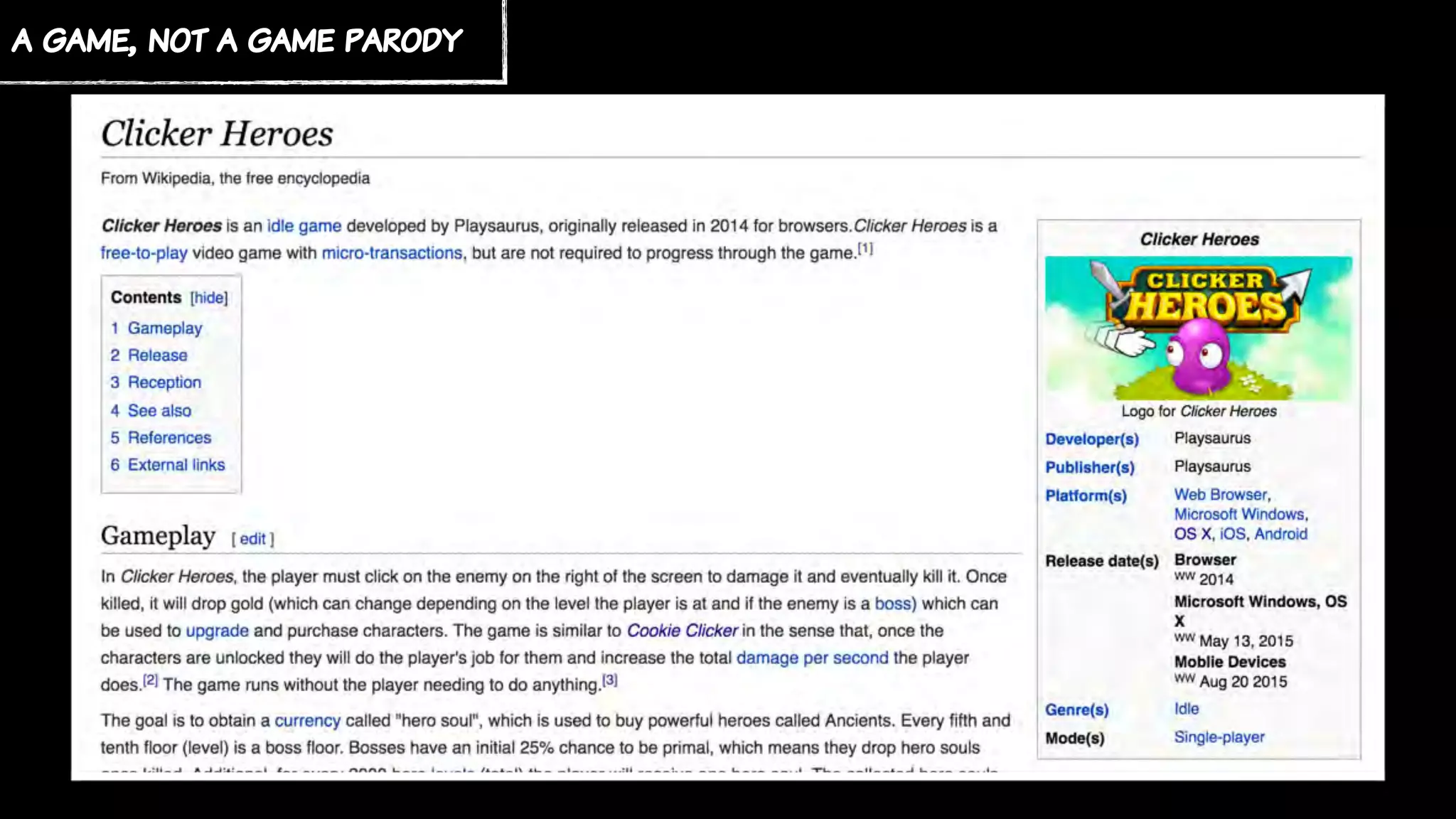
a game, not a game parody
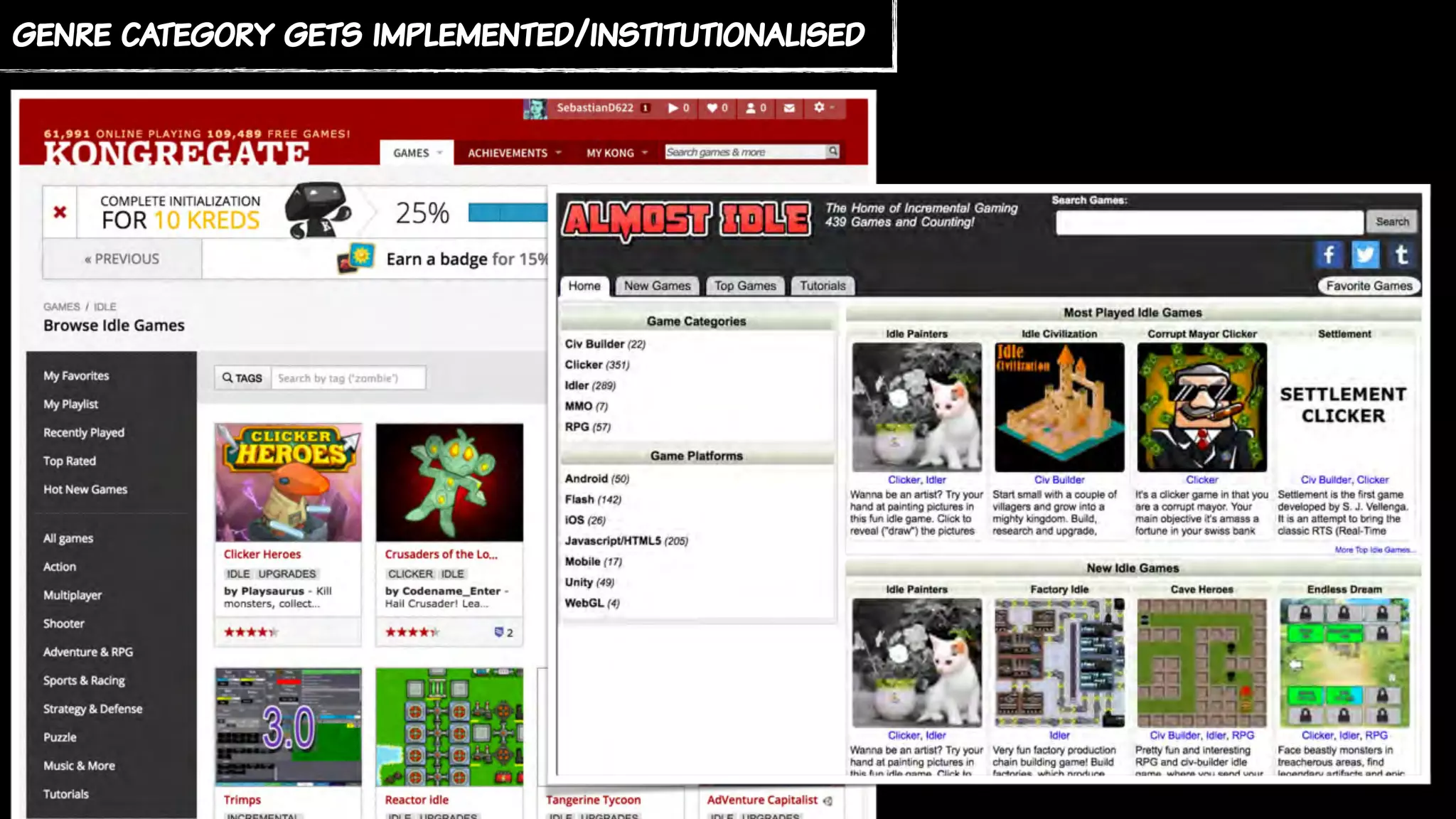
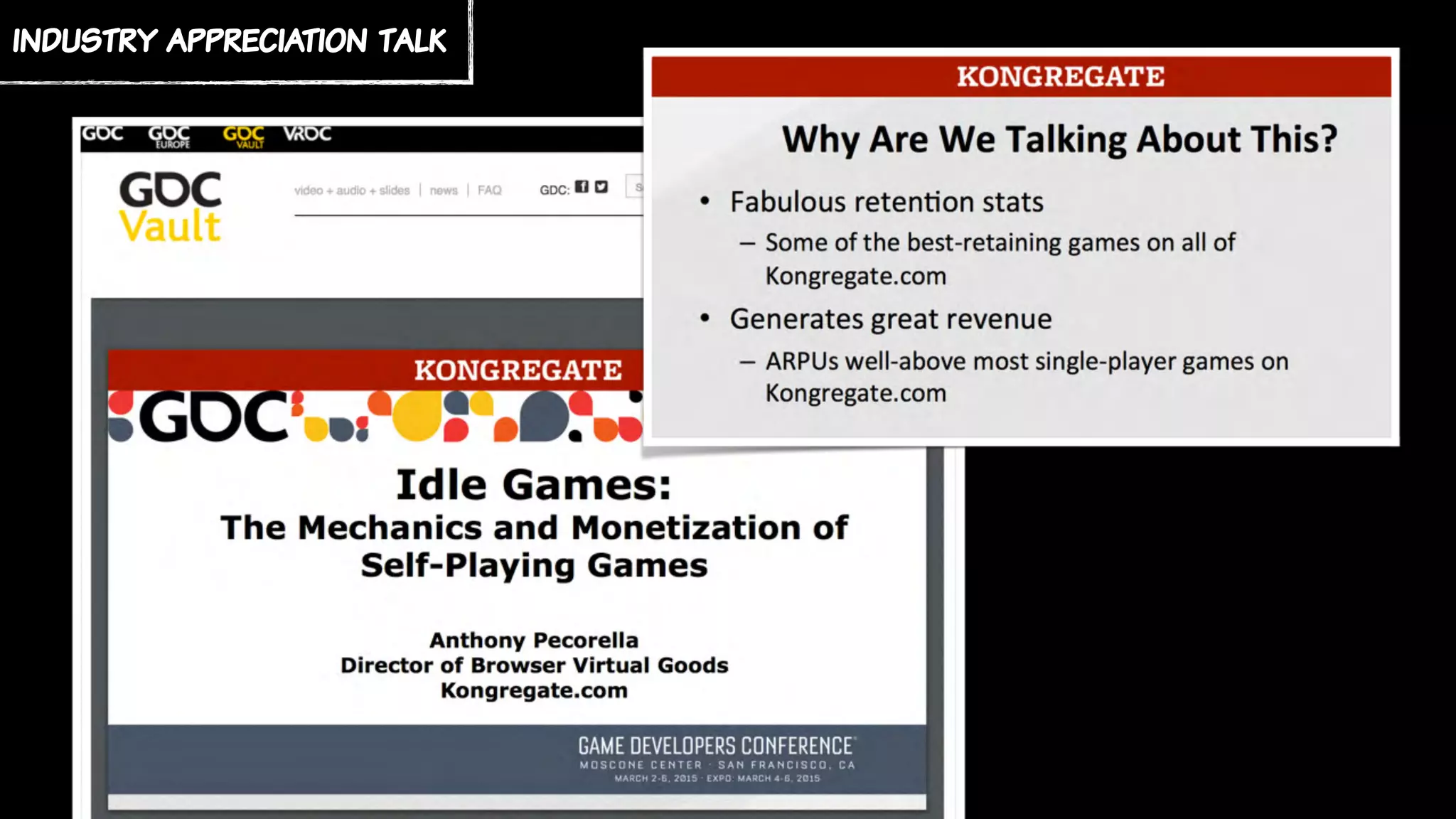
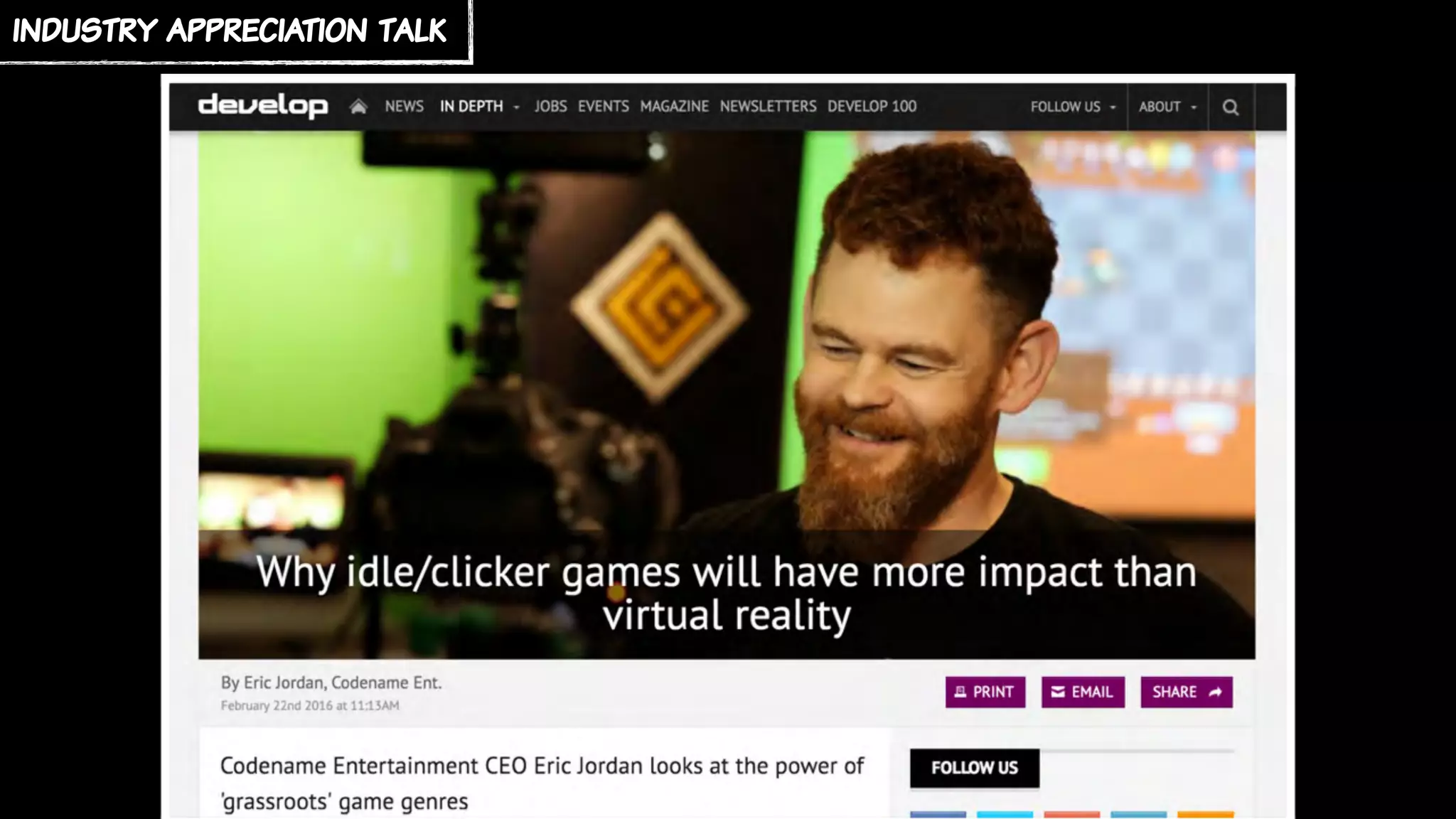
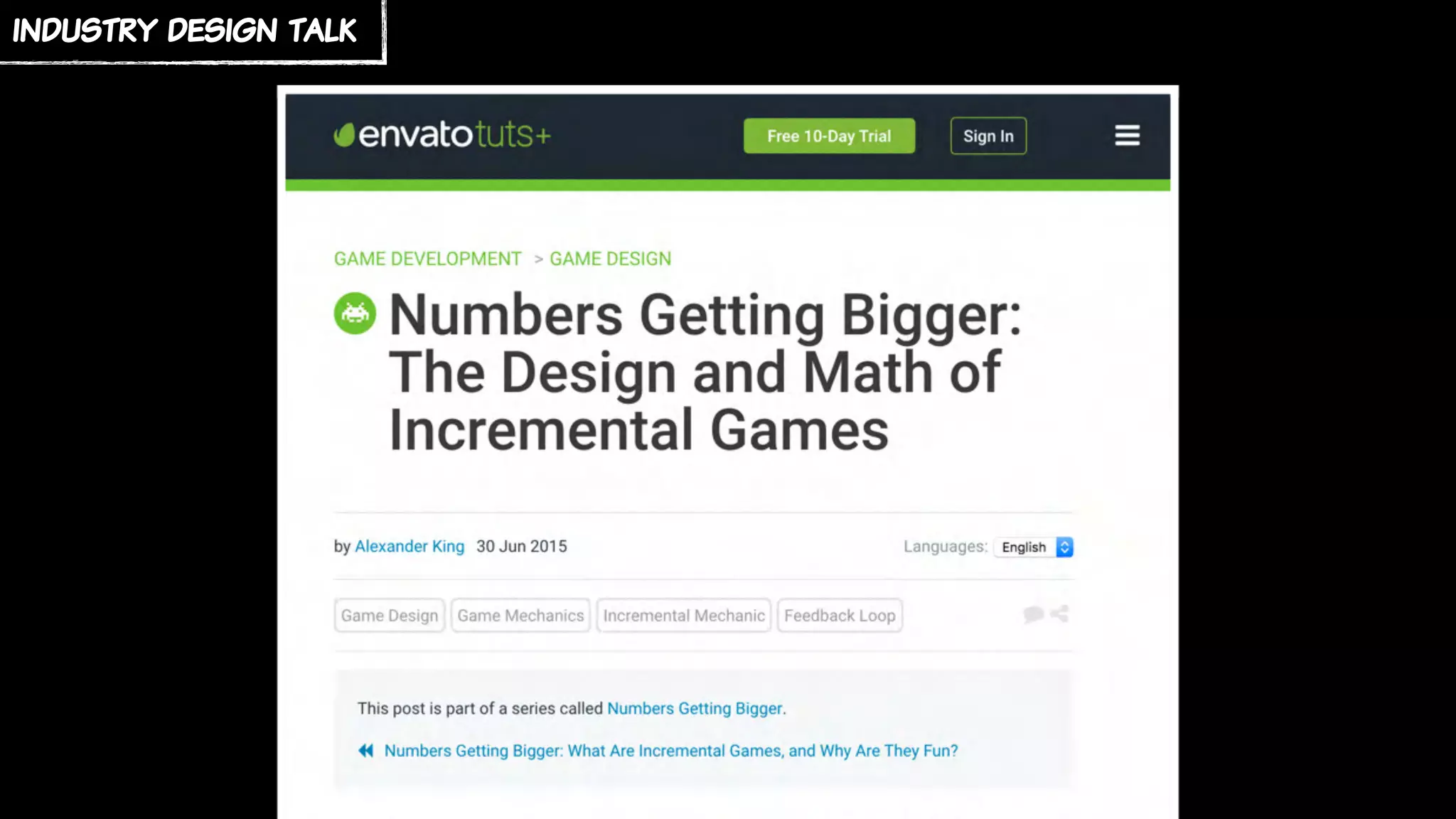
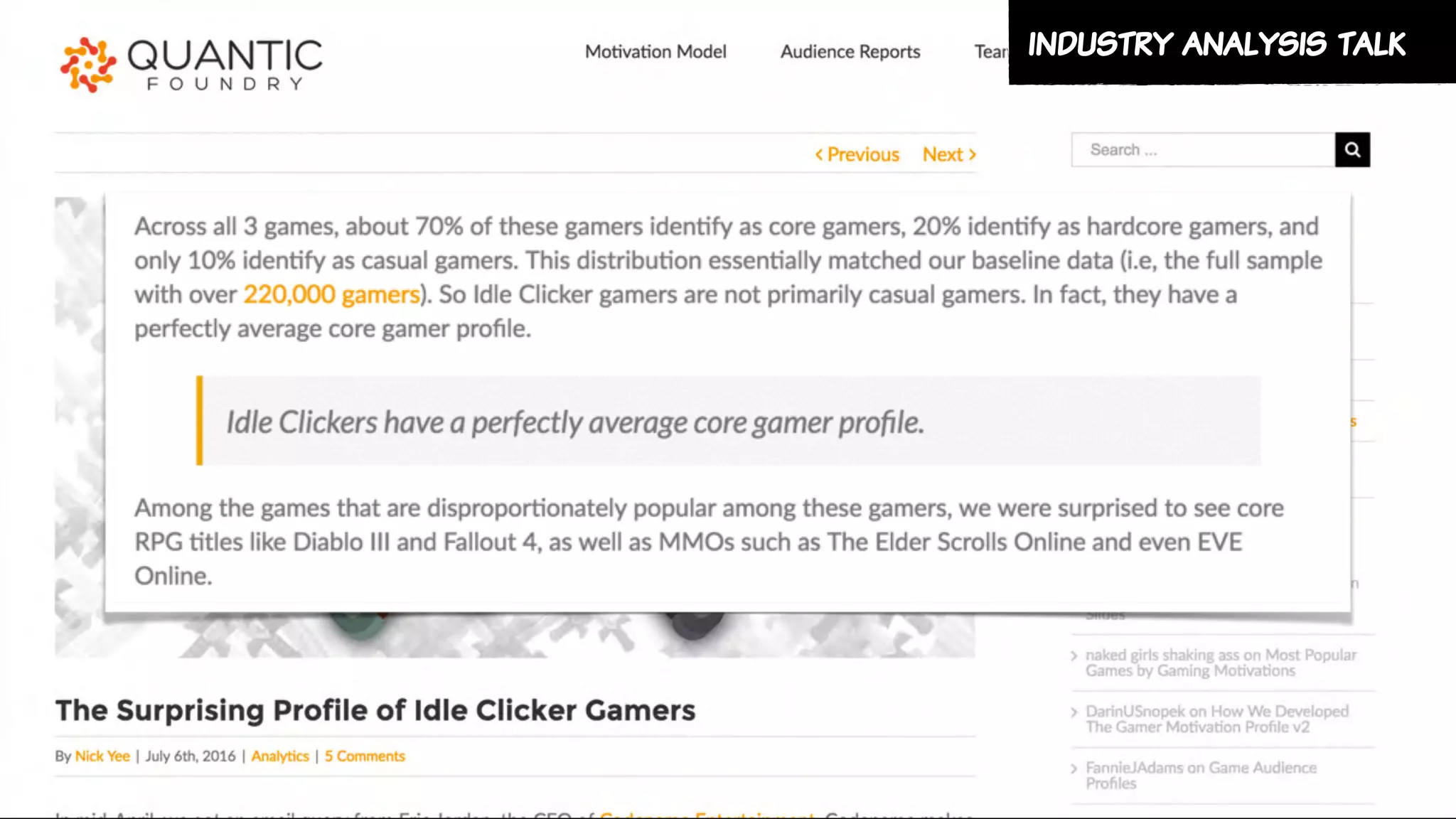
genre category gets implemented/institutionalised
industry appreciation talk
industry design talk
industry analysis talk
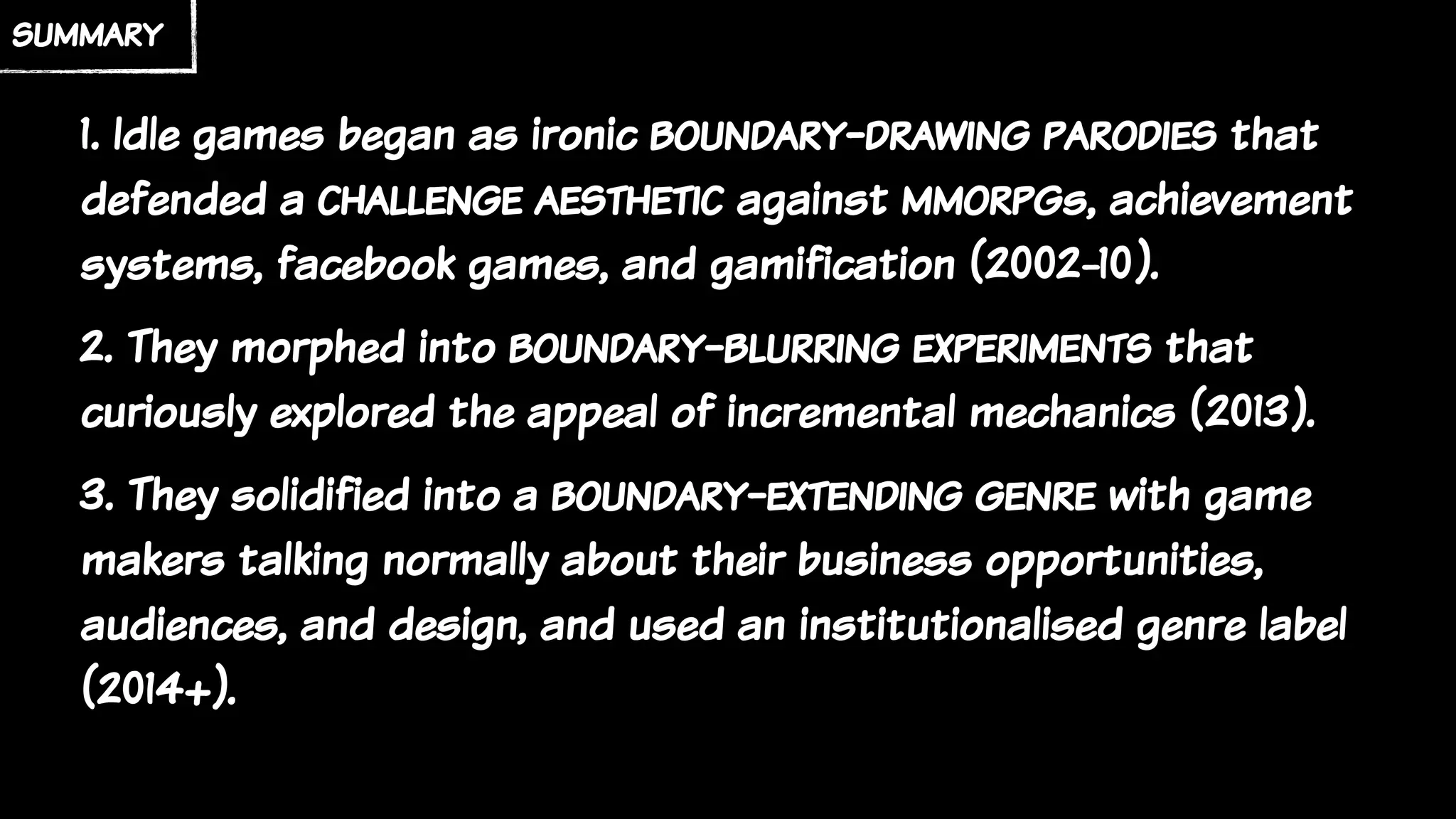
summary
1. Idle games began as ironic boundary-drawing parodies that
defended a challenge aesthetic against mmorpgs, achievement
systems, facebook games, and gamification (2002-10).
2. They morphed into boundary-blurring experiments that
curiously explored the appeal of incremental mechanics (2013).
3. They solidified into a boundary-extending genre with game
makers talking normally about their business opportunities,
audiences, and design, and used an institutionalised genre label
(2014+).
sebastian@codingconduct.cc
@dingstweets
codingconduct.cc
thank you.

Progress Wars: Idle Games and the Demarcation of "Real Games"