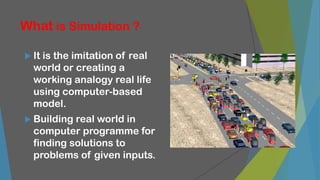
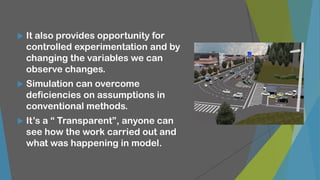
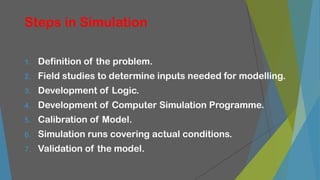
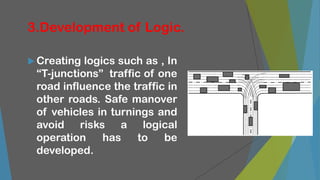
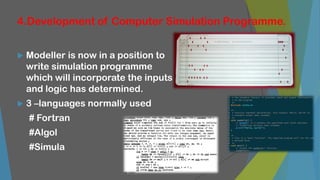
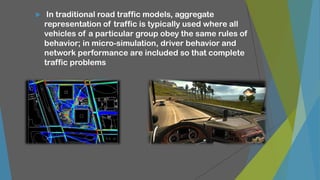
This document discusses simulation techniques for traffic engineering. It defines simulation as creating a computer-based model of the real world to solve problems. The key steps in simulation are defining the problem, collecting field data, developing the logic, programming the simulation, calibrating the model, running simulations, and validating results. Simulation has advantages over real-world testing as it is cheaper, allows testing alternatives, and provides insight into traffic behavior and interactions. Applications of traffic simulation include evaluating development patterns, improving signal timing, and analyzing highway and road networks.