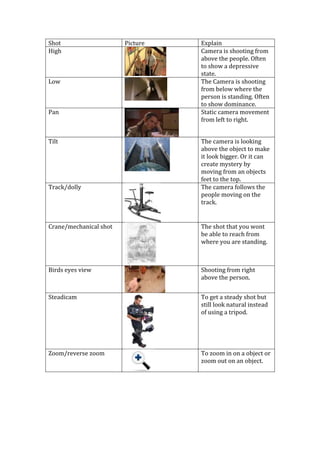
Shot Picture Explain 
High 
Camera is shooting from 
above the people. Often 
to show a depressive 
state. 
Low 
The Camera is shooting 
from below where the 
person is standing. Often 
to show dominance. 
Pan 
Static camera movement 
from left to right. 
Tilt 
The camera is looking 
above the object to make 
it look bigger. Or it can 
create mystery by 
moving from an objects 
feet to the top. 
Track/dolly 
The camera follows the 
people moving on the 
track. 
Crane/mechanical shot 
The shot that you wont 
be able to reach from 
where you are standing. 
Birds eyes view 
Shooting from right 
above the person. 
Steadicam 
To get a steady shot but 
still look natural instead 
of using a tripod. 
Zoom/reverse zoom 
To zoom in on a object or 
zoom out on an object.
Hand held 
To give a shaky feel to 
the scene. 
Deep focus 
To show all the 
characters on the scene 
because all of them show 
importance. 
Shallow focus 
To show one important 
character. 
Rule of thirds 
To draw attention to a 
character they put them 
in the middle square of 
the 9 squares. 
Eyeline match 
Shows they are looking 
at each other but their 
eyes are in the same 
position. 
Long shot 
Shows the whole object 
to show the style or the 
way they stand. 
Close up 
Close up to see the face. 
To show what their 
expression is more 
clearly. 
Pull focus 
Shifts focus of shot. To 
show whom the person is 
and then to show what 
they are looking at. 
Aerial shot 
Place setting. 
Medium close up 
Shot from shoulders up. 
They may be holding 
something in their hands 
up to their face. 
Medium shot 
From waist up. To show 
what they are doing with 
their upper body.
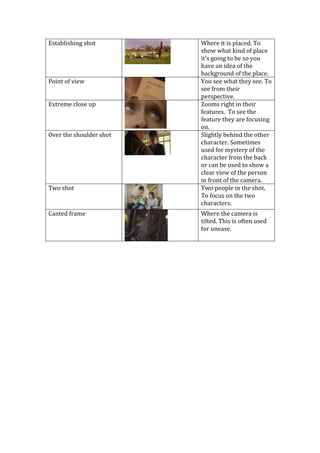
Establishing shot 
Where it is placed. To 
show what kind of place 
it’s going to be so you 
have an idea of the 
background of the place. 
Point of view 
You see what they see. To 
see from their 
perspective. 
Extreme close up 
Zooms right in their 
features. To see the 
feature they are focusing 
on. 
Over the shoulder shot 
Slightly behind the other 
character. Sometimes 
used for mystery of the 
character from the back 
or can be used to show a 
clear view of the person 
in front of the camera. 
Two shot 
Two people in the shot. 
To focus on the two 
characters. 
Canted frame 
Where the camera is 
tilted. This is often used 
for unease.

Shot

  • 1.
    Shot Picture Explain High Camera is shooting from above the people. Often to show a depressive state. Low The Camera is shooting from below where the person is standing. Often to show dominance. Pan Static camera movement from left to right. Tilt The camera is looking above the object to make it look bigger. Or it can create mystery by moving from an objects feet to the top. Track/dolly The camera follows the people moving on the track. Crane/mechanical shot The shot that you wont be able to reach from where you are standing. Birds eyes view Shooting from right above the person. Steadicam To get a steady shot but still look natural instead of using a tripod. Zoom/reverse zoom To zoom in on a object or zoom out on an object.
  • 2.
    Hand held Togive a shaky feel to the scene. Deep focus To show all the characters on the scene because all of them show importance. Shallow focus To show one important character. Rule of thirds To draw attention to a character they put them in the middle square of the 9 squares. Eyeline match Shows they are looking at each other but their eyes are in the same position. Long shot Shows the whole object to show the style or the way they stand. Close up Close up to see the face. To show what their expression is more clearly. Pull focus Shifts focus of shot. To show whom the person is and then to show what they are looking at. Aerial shot Place setting. Medium close up Shot from shoulders up. They may be holding something in their hands up to their face. Medium shot From waist up. To show what they are doing with their upper body.
  • 3.
    Establishing shot Whereit is placed. To show what kind of place it’s going to be so you have an idea of the background of the place. Point of view You see what they see. To see from their perspective. Extreme close up Zooms right in their features. To see the feature they are focusing on. Over the shoulder shot Slightly behind the other character. Sometimes used for mystery of the character from the back or can be used to show a clear view of the person in front of the camera. Two shot Two people in the shot. To focus on the two characters. Canted frame Where the camera is tilted. This is often used for unease.