Shoreline & Their Engineering Consideration
Submitted By:
Jatin Pant
Bsc (Hons.)
Geology 4th
Sem
[212038]
Submitted To:
Dr. Priyanka Singh
Resource Person
BBAU, Lko
Department Of Geology, BABASAHEB BHIMRAO
AMBEDKAR UNIVERSITY LUCKNOW
Introduction To Shoreline
Engineering
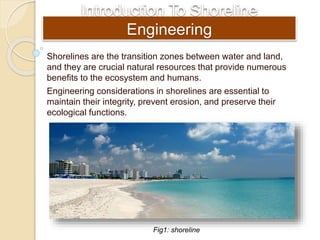
Shorelines are the transition zones between water and land,
and they are crucial natural resources that provide numerous
benefits to the ecosystem and humans.
Engineering considerations in shorelines are essential to
maintain their integrity, prevent erosion, and preserve their
ecological functions.
Fig1: shoreline
What Is Shoreline Engineering?
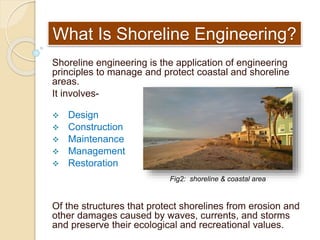
Shoreline engineering is the application of engineering
principles to manage and protect coastal and shoreline
areas.
It involves-
 Design
 Construction
 Maintenance
 Management
 Restoration
Of the structures that protect shorelines from erosion and
other damages caused by waves, currents, and storms
and preserve their ecological and recreational values.
Fig2: shoreline & coastal area
Shoreline Protection Techniques
Groynes, Gabions, Concrete Walls, and Sand Dunes are common structures
used in shoreline engineering to protect shorelines from erosion and other
damages caused by coastal processes.
 Groynes
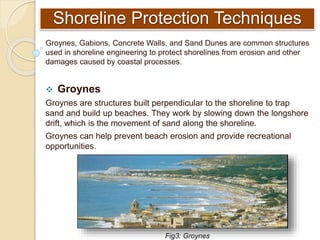
Groynes are structures built perpendicular to the shoreline to trap
sand and build up beaches. They work by slowing down the longshore
drift, which is the movement of sand along the shoreline.
Groynes can help prevent beach erosion and provide recreational
opportunities.
Fig3: Groynes
 Gabion
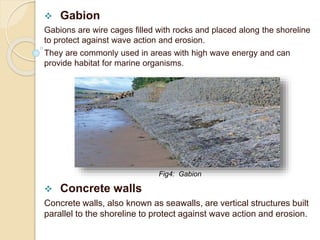
Gabions are wire cages filled with rocks and placed along the shoreline
to protect against wave action and erosion.
They are commonly used in areas with high wave energy and can
provide habitat for marine organisms.
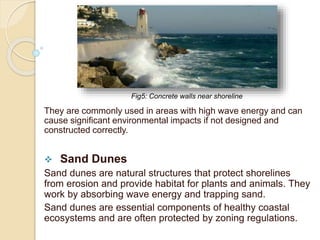
 Concrete walls
Concrete walls, also known as seawalls, are vertical structures built
parallel to the shoreline to protect against wave action and erosion.
Fig4: Gabion
They are commonly used in areas with high wave energy and can
cause significant environmental impacts if not designed and
constructed correctly.
 Sand Dunes
Sand dunes are natural structures that protect shorelines
from erosion and provide habitat for plants and animals. They
work by absorbing wave energy and trapping sand.
Sand dunes are essential components of healthy coastal
ecosystems and are often protected by zoning regulations.
Fig5: Concrete walls near shoreline
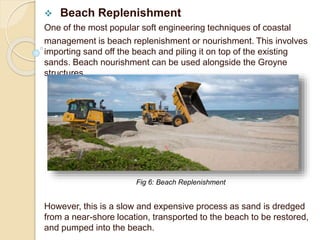
 Beach Replenishment
One of the most popular soft engineering techniques of coastal
management is beach replenishment or nourishment. This involves
importing sand off the beach and piling it on top of the existing
sands. Beach nourishment can be used alongside the Groyne
structures.
However, this is a slow and expensive process as sand is dredged
from a near-shore location, transported to the beach to be restored,
and pumped into the beach.
Fig 6: Beach Replenishment
Shoreline Engineering
Considerations
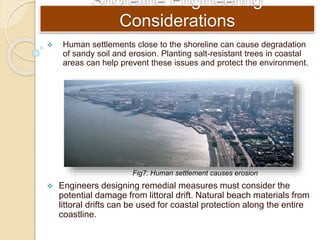
 Human settlements close to the shoreline can cause degradation
of sandy soil and erosion. Planting salt-resistant trees in coastal
areas can help prevent these issues and protect the environment.
 Engineers designing remedial measures must consider the
potential damage from littoral drift. Natural beach materials from
littoral drifts can be used for coastal protection along the entire
coastline.
Fig7: Human settlement causes erosion
 Using natural sand and shingle formations to create walls is a
cost-effective way to absorb wave energy and protect a vulnerable
coastline. This option is worth considering for coastal protection,
along with readily available materials like clay, sand, and shingles.
However, concrete is the most reliable material for retaining walls
in coastal protection.
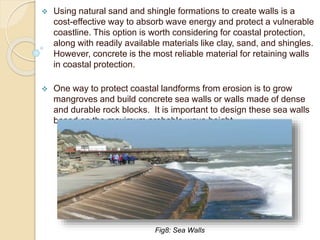
 One way to protect coastal landforms from erosion is to grow
mangroves and build concrete sea walls or walls made of dense
and durable rock blocks. It is important to design these sea walls
based on the maximum probable wave height.
Fig8: Sea Walls
 Modern shoreline erosion prevention practices often involve the
use of groynes, which are built perpendicular to the storm waves'
breaking crest and anchored to a suitable bedrock. Bedrock
anchoring is required to place groynes at the proper angle to the
coastline.
 To prevent the effects of tidal action or inundation, it is important
to enforce laws prohibiting the construction of houses or human
habitation encroaching on vulnerable coastal areas.
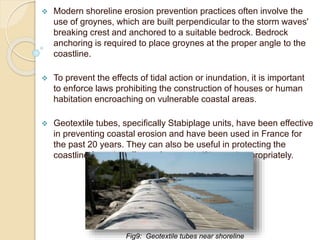
 Geotextile tubes, specifically Stabiplage units, have been effective
in preventing coastal erosion and have been used in France for
the past 20 years. They can also be useful in protecting the
coastline from the effects of tsunamis if located appropriately.
Fig9: Geotextile tubes near shoreline
References
 Engineering Geology by Subinoy
Gangopadhyay
Shoreline Engineering and their consideration.pptx

Shoreline Engineering and their consideration.pptx

  • 1.
    Shoreline & TheirEngineering Consideration Submitted By: Jatin Pant Bsc (Hons.) Geology 4th Sem [212038] Submitted To: Dr. Priyanka Singh Resource Person BBAU, Lko Department Of Geology, BABASAHEB BHIMRAO AMBEDKAR UNIVERSITY LUCKNOW
  • 2.
    Introduction To Shoreline Engineering Shorelinesare the transition zones between water and land, and they are crucial natural resources that provide numerous benefits to the ecosystem and humans. Engineering considerations in shorelines are essential to maintain their integrity, prevent erosion, and preserve their ecological functions. Fig1: shoreline
  • 3.
    What Is ShorelineEngineering? Shoreline engineering is the application of engineering principles to manage and protect coastal and shoreline areas. It involves-  Design  Construction  Maintenance  Management  Restoration Of the structures that protect shorelines from erosion and other damages caused by waves, currents, and storms and preserve their ecological and recreational values. Fig2: shoreline & coastal area
  • 4.
    Shoreline Protection Techniques Groynes,Gabions, Concrete Walls, and Sand Dunes are common structures used in shoreline engineering to protect shorelines from erosion and other damages caused by coastal processes.  Groynes Groynes are structures built perpendicular to the shoreline to trap sand and build up beaches. They work by slowing down the longshore drift, which is the movement of sand along the shoreline. Groynes can help prevent beach erosion and provide recreational opportunities. Fig3: Groynes
  • 5.
     Gabion Gabions arewire cages filled with rocks and placed along the shoreline to protect against wave action and erosion. They are commonly used in areas with high wave energy and can provide habitat for marine organisms.  Concrete walls Concrete walls, also known as seawalls, are vertical structures built parallel to the shoreline to protect against wave action and erosion. Fig4: Gabion
  • 6.
    They are commonlyused in areas with high wave energy and can cause significant environmental impacts if not designed and constructed correctly.  Sand Dunes Sand dunes are natural structures that protect shorelines from erosion and provide habitat for plants and animals. They work by absorbing wave energy and trapping sand. Sand dunes are essential components of healthy coastal ecosystems and are often protected by zoning regulations. Fig5: Concrete walls near shoreline
  • 7.
     Beach Replenishment Oneof the most popular soft engineering techniques of coastal management is beach replenishment or nourishment. This involves importing sand off the beach and piling it on top of the existing sands. Beach nourishment can be used alongside the Groyne structures. However, this is a slow and expensive process as sand is dredged from a near-shore location, transported to the beach to be restored, and pumped into the beach. Fig 6: Beach Replenishment
  • 8.
    Shoreline Engineering Considerations  Humansettlements close to the shoreline can cause degradation of sandy soil and erosion. Planting salt-resistant trees in coastal areas can help prevent these issues and protect the environment.  Engineers designing remedial measures must consider the potential damage from littoral drift. Natural beach materials from littoral drifts can be used for coastal protection along the entire coastline. Fig7: Human settlement causes erosion
  • 9.
     Using naturalsand and shingle formations to create walls is a cost-effective way to absorb wave energy and protect a vulnerable coastline. This option is worth considering for coastal protection, along with readily available materials like clay, sand, and shingles. However, concrete is the most reliable material for retaining walls in coastal protection.  One way to protect coastal landforms from erosion is to grow mangroves and build concrete sea walls or walls made of dense and durable rock blocks. It is important to design these sea walls based on the maximum probable wave height. Fig8: Sea Walls
  • 10.
     Modern shorelineerosion prevention practices often involve the use of groynes, which are built perpendicular to the storm waves' breaking crest and anchored to a suitable bedrock. Bedrock anchoring is required to place groynes at the proper angle to the coastline.  To prevent the effects of tidal action or inundation, it is important to enforce laws prohibiting the construction of houses or human habitation encroaching on vulnerable coastal areas.  Geotextile tubes, specifically Stabiplage units, have been effective in preventing coastal erosion and have been used in France for the past 20 years. They can also be useful in protecting the coastline from the effects of tsunamis if located appropriately. Fig9: Geotextile tubes near shoreline
  • 11.
    References  Engineering Geologyby Subinoy Gangopadhyay