SHOCK
Dr. Salman Ansari
Dept. of Pathology
Kanachur Institute of Medical Sciences
Contents
● Definition
● Types of shock with examples
● Hypovolemic shock
● Cardiogenic shock
● Septic shock
● Stages of shock: non-progressive, progressive and
irreversible
Shock
Definition: pathological process characterised by
intense failure of the circulatory system to maintain
an appropriate blood supply to the microcirculation
● This results in life-threatening hypoperfusion to
vital organs
Types of shock
1. Cardiogenic
2. Hypovolemic
3. Septic
4. Less common types: neurogenic shock,
anaphylactic shock
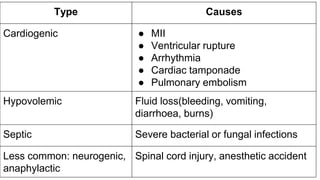
Type Causes
Cardiogenic ● MII
● Ventricular rupture
● Arrhythmia
● Cardiac tamponade
● Pulmonary embolism
Hypovolemic Fluid loss(bleeding, vomiting,
diarrhoea, burns)
Septic Severe bacterial or fungal infections
Less common: neurogenic,
anaphylactic
Spinal cord injury, anesthetic accident
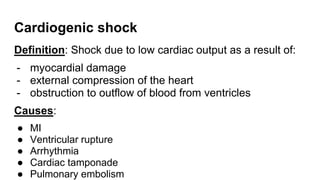
Cardiogenic shock
Definition: Shock due to low cardiac output as a result of:
- myocardial damage
- external compression of the heart
- obstruction to outflow of blood from ventricles
Causes:
● MI
● Ventricular rupture
● Arrhythmia
● Cardiac tamponade
● Pulmonary embolism
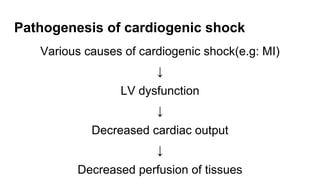
Pathogenesis of cardiogenic shock
Various causes of cardiogenic shock(e.g: MI)
↓
LV dysfunction
↓
Decreased cardiac output
↓
Decreased perfusion of tissues
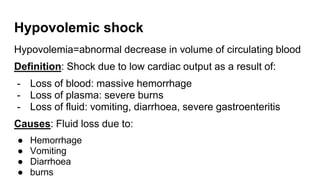
Hypovolemic shock
Hypovolemia=abnormal decrease in volume of circulating blood
Definition: Shock due to low cardiac output as a result of:
- Loss of blood: massive hemorrhage
- Loss of plasma: severe burns
- Loss of fluid: vomiting, diarrhoea, severe gastroenteritis
Causes: Fluid loss due to:
● Hemorrhage
● Vomiting
● Diarrhoea
● burns
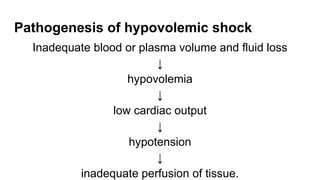
Pathogenesis of hypovolemic shock
Inadequate blood or plasma volume and fluid loss
↓
hypovolemia
↓
low cardiac output
↓
hypotension
↓
inadequate perfusion of tissue.
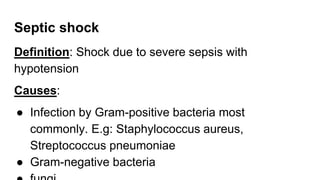
Septic shock
Definition: Shock due to severe sepsis with
hypotension
Causes:
● Infection by Gram-positive bacteria most
commonly. E.g: Staphylococcus aureus,
Streptococcus pneumoniae
● Gram-negative bacteria
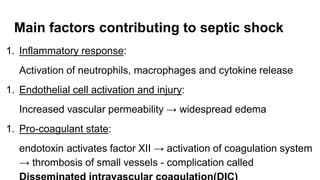
Main factors contributing to septic shock
1. Inflammatory response:
Activation of neutrophils, macrophages and cytokine release
1. Endothelial cell activation and injury:
Increased vascular permeability → widespread edema
1. Pro-coagulant state:
endotoxin activates factor XII → activation of coagulation system
→ thrombosis of small vessels - complication called
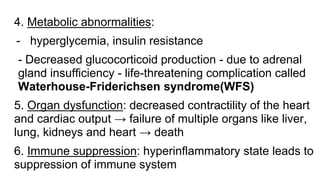
4. Metabolic abnormalities:
- hyperglycemia, insulin resistance
- Decreased glucocorticoid production - due to adrenal
gland insufficiency - life-threatening complication called
Waterhouse-Friderichsen syndrome(WFS)
5. Organ dysfunction: decreased contractility of the heart
and cardiac output → failure of multiple organs like liver,
lung, kidneys and heart → death
6. Immune suppression: hyperinflammatory state leads to
suppression of immune system
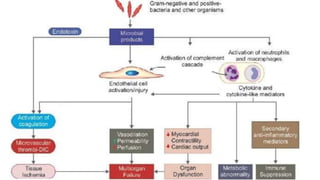
Pathogenesis of septic shock(short version)
Major factors contributing to septic shock are:
1. Inflammatory response: Activation of neutrophils,
macrophages and cytokine release
2. Endothelial cell activation and injury: Increased
vascular permeability → widespread edema
3. Pro-coagulant state: endotoxin causes activation of
coagulation system → Disseminated intravascular
coagulation(DIC)
4. Metabolic abnormalities: hyperglycemia, insulin
resistance, adrenal gland insufficiency
5. Organ dysfunction: decreased cardiac output → failure
of multiple organs like liver, lung, kidneys and heart →
death
6. Immune suppression
Activation of host’s immune system:
neutrophils and cytokines released
Endothelial cell injury
Vasodilation and pooling of blood in
peripheries
↑ permeability: widespread edema
Decreased tissue perfusion
Multi-organ failure
Endotoxin
Activation of coagulation
Micro-thrombi - Disseminated
intravascular coagulation(DIC)
Tissue ischemia
Microbial products
Stages of shock
3 phases
1. Non-progressive (compensated/reversible) phase
2. Progressive phase
3. Irreversible phase
1. Nonprogressive/compensated/reversible
phase
- Various compensatory mechanisms are activated
- Blood is redistributed to maintain perfusion to vital
organs
2. Progressive phase
- If the underlying cause of shock is not corrected,
shocks passes into the progressive phase
- Widespread tissue hypoperfusion, hypoxia and
blood pools in the microcirculation
- Cardiac output worsens and there will be
widespread hypoxic damage to vital organs and
they begin to fail
3. Irreversible phase
- If there is no intervention, shock enters into irreversible
stage
- Widespread cell injury further worsens shock
- Acute renal failure
- Death
Morphology
- Kidney: acute tubular necrosis(acute renal failure)
- Lungs: diffuse alveolar damage - acute respiratory
distress - “shock lung”
- Disseminated intravascular coagulation(DIC): widespread
deposition of micro-thrombi, especially in brain, heart,
lungs, kidney, adrenal glands and GI tract
Prognosis
- Hypovolemic shock: can survive with appropriate
management
- Septic shock, cardiogenic shock with massive MI:
poorer prognosis
References:
● Ramadas Nayak - Textbook of Pathology for Allied Health
Sciences
Questions:
salman.s.ansari92@gmail.com

Shock - Pathology - Allied health sciences

  • 1.
    SHOCK Dr. Salman Ansari Dept.of Pathology Kanachur Institute of Medical Sciences
  • 2.
    Contents ● Definition ● Typesof shock with examples ● Hypovolemic shock ● Cardiogenic shock ● Septic shock ● Stages of shock: non-progressive, progressive and irreversible
  • 3.
    Shock Definition: pathological processcharacterised by intense failure of the circulatory system to maintain an appropriate blood supply to the microcirculation ● This results in life-threatening hypoperfusion to vital organs
  • 4.
    Types of shock 1.Cardiogenic 2. Hypovolemic 3. Septic 4. Less common types: neurogenic shock, anaphylactic shock
  • 5.
    Type Causes Cardiogenic ●MII ● Ventricular rupture ● Arrhythmia ● Cardiac tamponade ● Pulmonary embolism Hypovolemic Fluid loss(bleeding, vomiting, diarrhoea, burns) Septic Severe bacterial or fungal infections Less common: neurogenic, anaphylactic Spinal cord injury, anesthetic accident
  • 6.
    Cardiogenic shock Definition: Shockdue to low cardiac output as a result of: - myocardial damage - external compression of the heart - obstruction to outflow of blood from ventricles Causes: ● MI ● Ventricular rupture ● Arrhythmia ● Cardiac tamponade ● Pulmonary embolism
  • 7.
    Pathogenesis of cardiogenicshock Various causes of cardiogenic shock(e.g: MI) ↓ LV dysfunction ↓ Decreased cardiac output ↓ Decreased perfusion of tissues
  • 8.
    Hypovolemic shock Hypovolemia=abnormal decreasein volume of circulating blood Definition: Shock due to low cardiac output as a result of: - Loss of blood: massive hemorrhage - Loss of plasma: severe burns - Loss of fluid: vomiting, diarrhoea, severe gastroenteritis Causes: Fluid loss due to: ● Hemorrhage ● Vomiting ● Diarrhoea ● burns
  • 9.
    Pathogenesis of hypovolemicshock Inadequate blood or plasma volume and fluid loss ↓ hypovolemia ↓ low cardiac output ↓ hypotension ↓ inadequate perfusion of tissue.
  • 10.
    Septic shock Definition: Shockdue to severe sepsis with hypotension Causes: ● Infection by Gram-positive bacteria most commonly. E.g: Staphylococcus aureus, Streptococcus pneumoniae ● Gram-negative bacteria
  • 11.
    Main factors contributingto septic shock 1. Inflammatory response: Activation of neutrophils, macrophages and cytokine release 1. Endothelial cell activation and injury: Increased vascular permeability → widespread edema 1. Pro-coagulant state: endotoxin activates factor XII → activation of coagulation system → thrombosis of small vessels - complication called
  • 12.
    4. Metabolic abnormalities: -hyperglycemia, insulin resistance - Decreased glucocorticoid production - due to adrenal gland insufficiency - life-threatening complication called Waterhouse-Friderichsen syndrome(WFS) 5. Organ dysfunction: decreased contractility of the heart and cardiac output → failure of multiple organs like liver, lung, kidneys and heart → death 6. Immune suppression: hyperinflammatory state leads to suppression of immune system
  • 14.
    Pathogenesis of septicshock(short version) Major factors contributing to septic shock are: 1. Inflammatory response: Activation of neutrophils, macrophages and cytokine release 2. Endothelial cell activation and injury: Increased vascular permeability → widespread edema 3. Pro-coagulant state: endotoxin causes activation of coagulation system → Disseminated intravascular coagulation(DIC)
  • 15.
    4. Metabolic abnormalities:hyperglycemia, insulin resistance, adrenal gland insufficiency 5. Organ dysfunction: decreased cardiac output → failure of multiple organs like liver, lung, kidneys and heart → death 6. Immune suppression
  • 16.
    Activation of host’simmune system: neutrophils and cytokines released Endothelial cell injury Vasodilation and pooling of blood in peripheries ↑ permeability: widespread edema Decreased tissue perfusion Multi-organ failure Endotoxin Activation of coagulation Micro-thrombi - Disseminated intravascular coagulation(DIC) Tissue ischemia Microbial products
  • 17.
    Stages of shock 3phases 1. Non-progressive (compensated/reversible) phase 2. Progressive phase 3. Irreversible phase
  • 18.
    1. Nonprogressive/compensated/reversible phase - Variouscompensatory mechanisms are activated - Blood is redistributed to maintain perfusion to vital organs
  • 19.
    2. Progressive phase -If the underlying cause of shock is not corrected, shocks passes into the progressive phase - Widespread tissue hypoperfusion, hypoxia and blood pools in the microcirculation - Cardiac output worsens and there will be widespread hypoxic damage to vital organs and they begin to fail
  • 20.
    3. Irreversible phase -If there is no intervention, shock enters into irreversible stage - Widespread cell injury further worsens shock - Acute renal failure - Death
  • 21.
    Morphology - Kidney: acutetubular necrosis(acute renal failure) - Lungs: diffuse alveolar damage - acute respiratory distress - “shock lung” - Disseminated intravascular coagulation(DIC): widespread deposition of micro-thrombi, especially in brain, heart, lungs, kidney, adrenal glands and GI tract
  • 22.
    Prognosis - Hypovolemic shock:can survive with appropriate management - Septic shock, cardiogenic shock with massive MI: poorer prognosis
  • 23.
    References: ● Ramadas Nayak- Textbook of Pathology for Allied Health Sciences Questions: salman.s.ansari92@gmail.com