SHOCK
PATHOPHYSIOLOGY
AND TYPES
ARYA SATHEESH (31)
WHAT IS SHOCK?
 Shock is a state of complex acute systemic circulatory failure
that impairs tissue perfusion and leads to cellular hypoxia.
 It may be initiated by trauma, acute blood loss, depletion of
body fluids, severe infection or acute myocardial dysfunction.
 The clinical picture of shock is variable but generally consists of
pallor, sweating, cold extremities, rapid and thready pulse and
air hunger.
WHAT IS SHOCK?
 Characterised by an acute reduction of effective circulating
blood volume (hypotension); an inadequate perfusion of cells
and tissues (hypoperfusion)
 “true (or secondary) shock” is a circulatory imbalance between
oxygen supply and oxygen requirements at the cellular level,
and is also called as circulatory shock and is the type which is
commonly referred to as ‘shock’
WHAT IS SHOCK?
 “Initial (or primary) shock” is used for transient and usually a
benign vasovagal attack resulting from sudden reduction of
venous return to the heart caused by neurogenic
vasodilatation and consequent peripheral pooling of blood e.g.
immediately following trauma, severe pain or emotional
overreaction such as due to fear, sorrow or surprise.
PATHOGENESIS
OF SHOCK
A GENERAL OVERVIEW
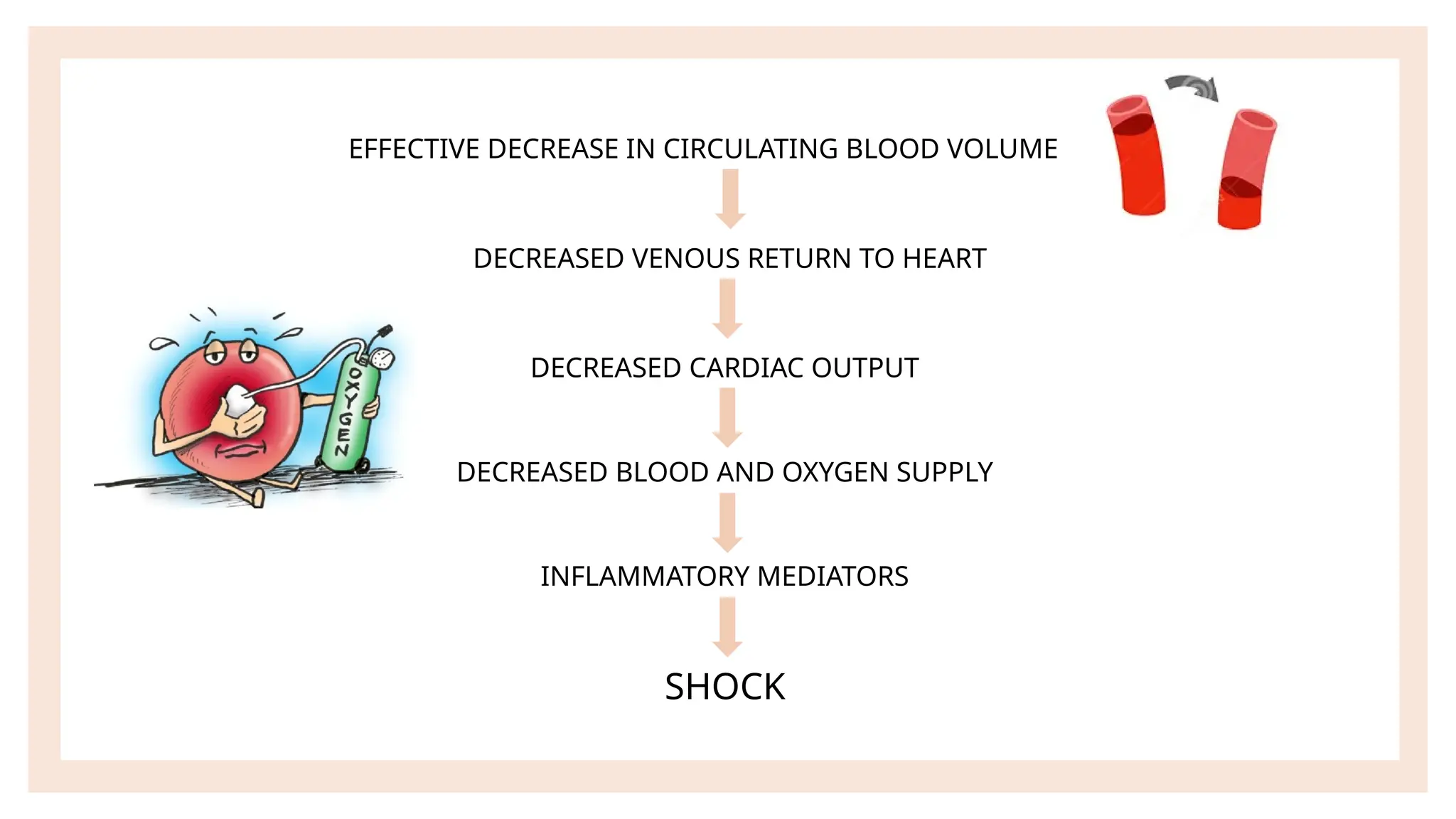
EFFECTIVE DECREASE IN CIRCULATING BLOOD VOLUME
DECREASED VENOUS RETURN TO HEART
DECREASED CARDIAC OUTPUT
DECREASED BLOOD AND OXYGEN SUPPLY
INFLAMMATORY MEDIATORS
SHOCK
EFFECTIVE DECREASE IN CIRCULATING BLOOD VOLUME
DECREASED VENOUS RETURN TO HEART
DECREASED CARDIAC OUTPUT
DECREASED BLOOD AND OXYGEN SUPPLY
INFLAMMATORY MEDIATORS
SHOCK
EFFECTIVE DECREASE IN CIRCULATING BLOOD VOLUME
DECREASED VENOUS RETURN TO HEART
DECREASED CARDIAC OUTPUT
DECREASED BLOOD AND OXYGEN SUPPLY
INFLAMMATORY MEDIATORS
SHOCK
EFFECTIVE DECREASE IN CIRCULATING BLOOD VOLUME
DECREASED VENOUS RETURN TO HEART
DECREASED CARDIAC OUTPUT
DECREASED BLOOD AND OXYGEN SUPPLY
INFLAMMATORY MEDIATORS
SHOCK
TYPES OF SHOCK
AN OVERVIEW
TYPES OF
SHOCK
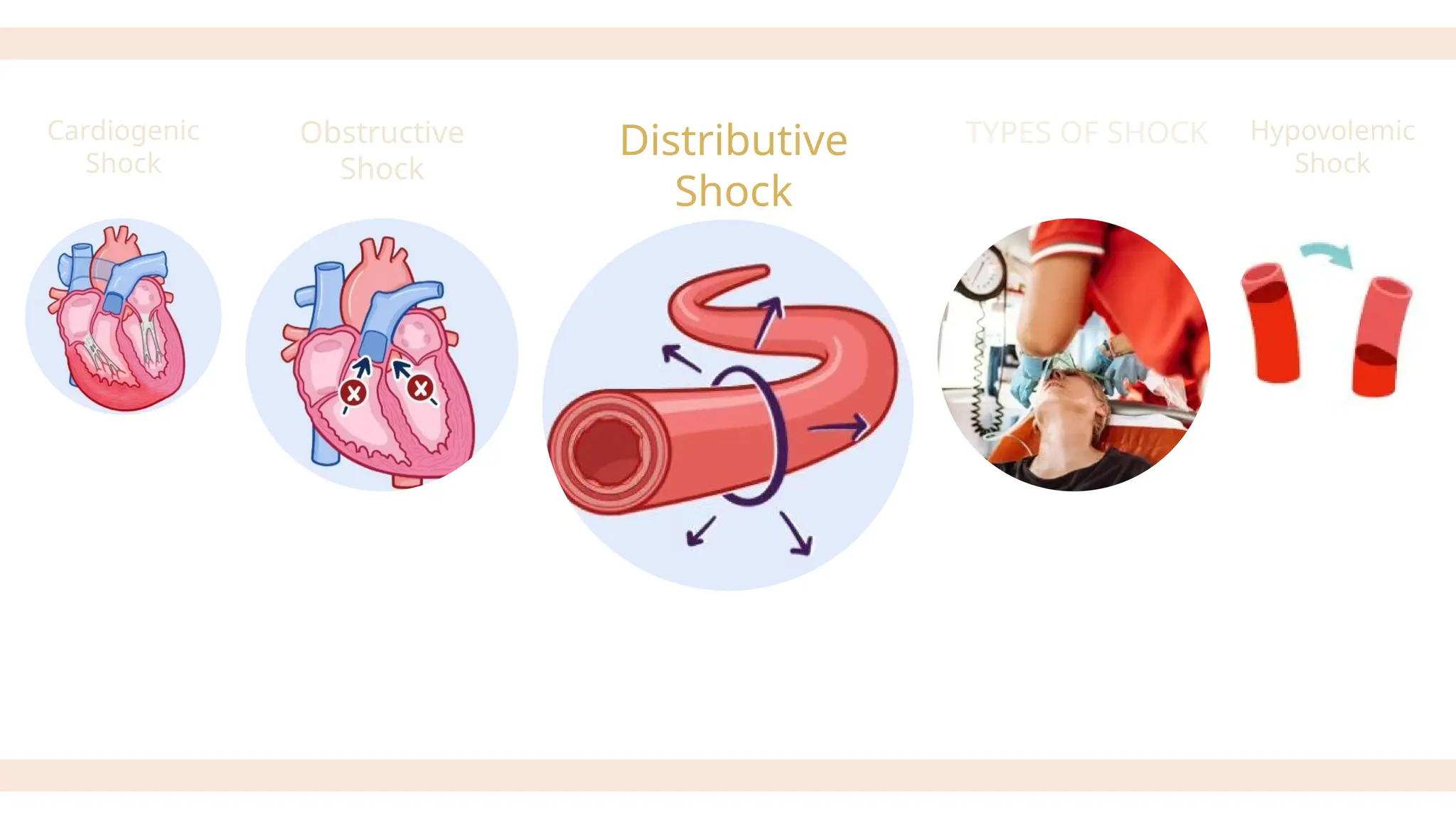
Distributive
Shock
Obstructive
Shock
Hypovolemic
Shock
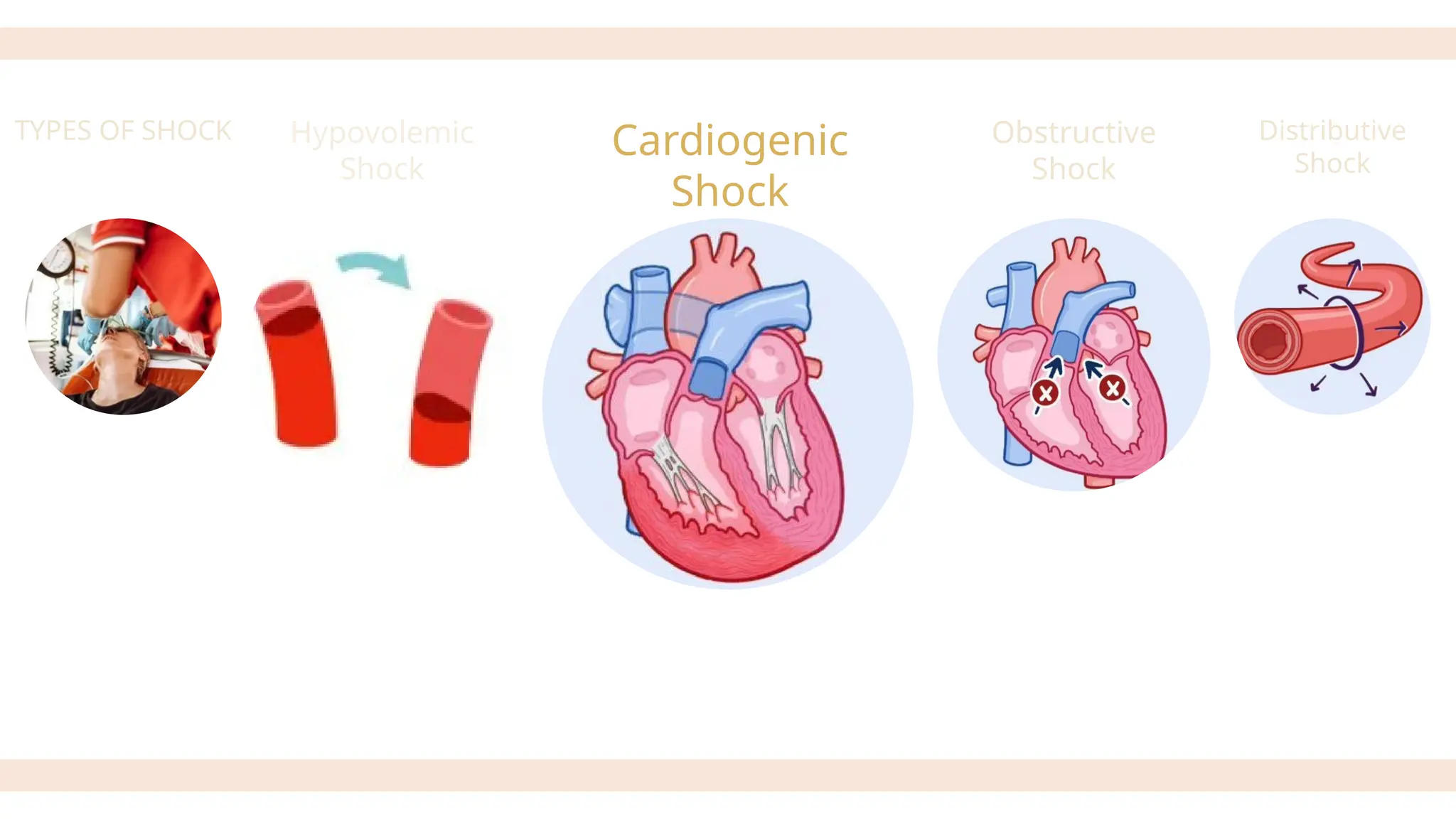
Cardiogenic
Shock
Hypovolemic
Shock
TYPES OF SHOCK
Distributive
Shock
Cardiogenic
Shock
Obstructive
Shock
Cardiogenic
Shock
Hypovolemic
Shock
TYPES OF SHOCK Obstructive
Shock
Distributive
Shock
Obstructive
Shock
Cardiogenic
Shock
Hypovolemic
Shock
Distributive
Shock
TYPES OF SHOCK
Distributive
Shock
Obstructive
Shock
Cardiogenic
Shock
TYPES OF SHOCK Hypovolemic
Shock
HYPOVOLEMIC
SHOCK
PATHOGENESIS AND
FEATURES
 Most common type of shock
 HYPOVOLEMIC SHOCK OCCURS DUE TO REDUCTION IN
THE TOTAL CIRCULATING BLOOD VOLUME, and can arise
in many different ways:
 HEMORRHAGIC CAUSES:
Loss of blood (massive hemorrhage in RTA, post-
partum bleeding, aneurysm rupture, GI bleeding, etc.)
 NON-HEMORRHAGIC CAUSES:
Plasma loss in severe burns, fluid and electrolyte loss
in excessive vomiting, diarrhoea, severe
gastroenteritis, acute pancreatitis, etc.
DECREASE IN BLOOD/FLUID VOLUME
HYPOTENSION
BARORECEPTORS - COMPENSATORY
NEUROHUMORAL MECHANISMS
(SYMPATHOADRENAL DISCHARGE)
TACHYCARDIA AND PERIPHERAL
VASOCONSTRICTION – BP GOOD FOR THE
TIME BEING
LONG TERM: SLUGGISH BLOOD FLOW, LOW
OXYGENATION, TISSUE HYPOXIA
ACIDOSIS AND INFLAMMATORY
MEDIATORS
ALPHA AND BETA
ADRENERGIC RECEPTORS
Vasoconstriction is responsible for many of the clinical manifestations of
shock:
 Inadequate cerebral blood flow causes mental changes
 Microcirculatory changes in the lungs lead to pulmonary oedema
(shock lung)
 Neurogenic and mechanical factors leading to ventilatory failure (air
hunger) and multiorgan dysfunction
 Oligemic acute renal shut down completes the devastating picture
 Cold, clammy extremities – mottled skin
 Tachycardia and Tachypnoea
CARDIOGENIC
SHOCK
PATHOGENESIS AND
FEATURES
 ACUTE CIRCULATORY FAILURE WITH SUDDEN FALL IN CARDIAC
OUTPUT FROM ACUTE DISEASES OF THE HEART WITHOUT ACTUAL
REDUCTION OF BLOOD VOLUME (NORMO-VOLAEMIA) RESULTS IN
CARDIOGENIC SHOCK.
 This is due to failure of the heart as a pump as in acute myocardial
infarction (MI). Rarely, in some cases, there is complete failure of
the compensatory sympathoadrenal discharge.
 Defective Emptying in: a) Myocardial infarction b)
Cardiomyopathies c) Rupture of the heart, ventricle or papillary
muscle c) Cardiac arrhythmias
 Deficient filling in: Cardiac tamponade from hemo-pericardium
OBSTRUCTIVE
SHOCK
PATHOGENESIS AND
FEATURES
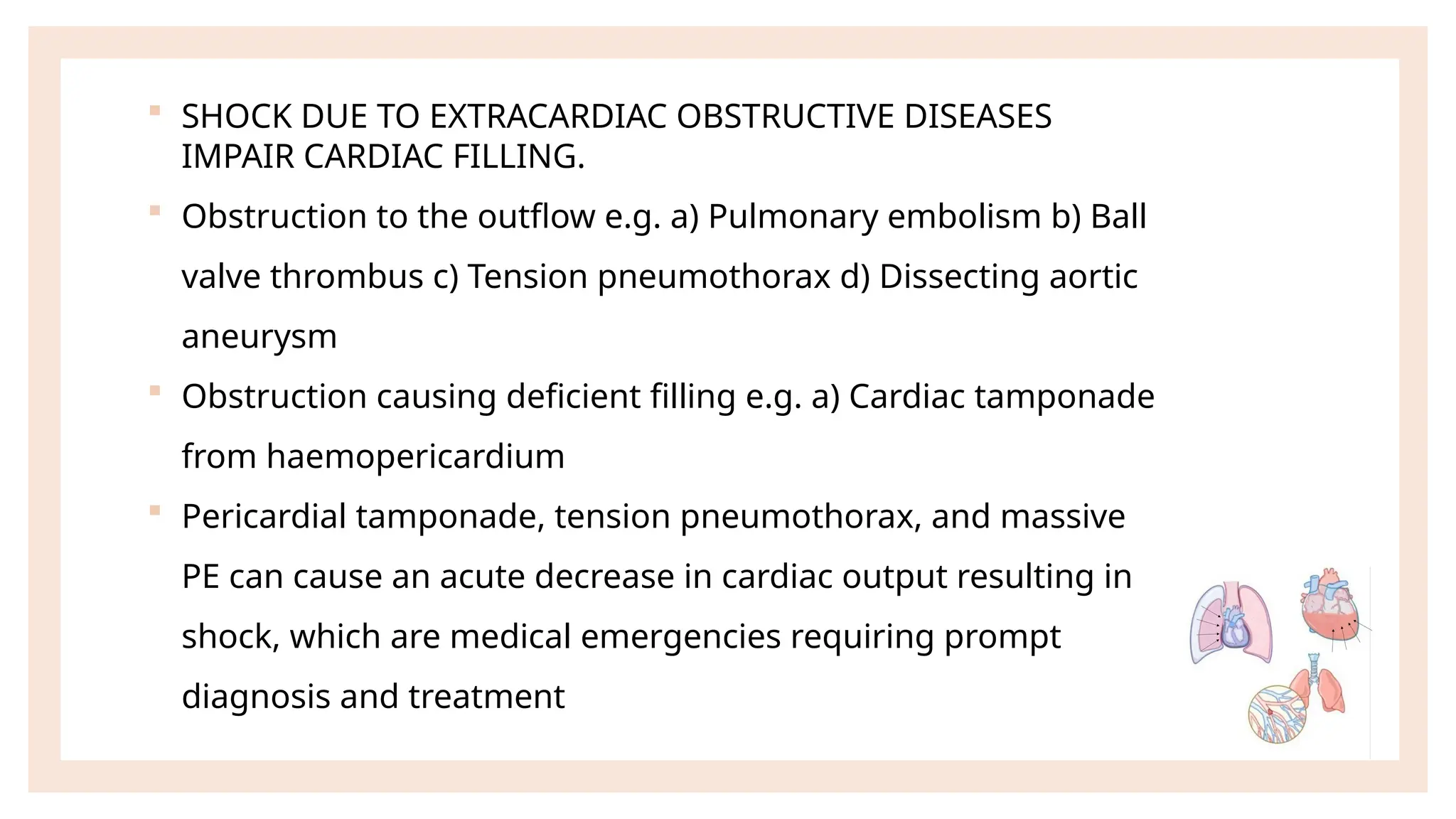
 SHOCK DUE TO EXTRACARDIAC OBSTRUCTIVE DISEASES
IMPAIR CARDIAC FILLING.
 Obstruction to the outflow e.g. a) Pulmonary embolism b) Ball
valve thrombus c) Tension pneumothorax d) Dissecting aortic
aneurysm
 Obstruction causing deficient filling e.g. a) Cardiac tamponade
from haemopericardium
 Pericardial tamponade, tension pneumothorax, and massive
PE can cause an acute decrease in cardiac output resulting in
shock, which are medical emergencies requiring prompt
diagnosis and treatment
COMMON
PATHOPHYSIOLOGY
HYPOVOLEMIC VS
CARDIOGENIC
/OBSTRUCTIVE
HYPOVOLEMIC SHOCK
LOSS OF BLOOD/ PLASMA/ FLUIDS
DECREASED / INADEQUATE CIRCULATING
BLOOD
LOW OR DECREASED CARDIAC OUTPUT AND HYPOTENSION
LOW PERFUSION, TISSUE HYPOXIA
SHOCK
CARDIOGENIC/ OBSTRUCTIVE SHOCK
SHOCK
MYOCARDIAL DAMAGE, MECHANICAL
ABNORMALITIES, OBSTRUCTION
DECREASED / INADEQUATE FILLING
AND/OR EJECTION
HYPOVOLEMIC SHOCK
LOSS OF BLOOD/ PLASMA/ FLUIDS
DECREASED / INADEQUATE CIRCULATING
BLOOD
LOW OR DECREASED CARDIAC OUTPUT AND HYPOTENSION
LOW PERFUSION, TISSUE HYPOXIA
SHOCK
CARDIOGENIC/ OBSTRUCTIVE SHOCK
SHOCK
MYOCARDIAL DAMAGE, MECHANICAL
ABNORMALITIES, OBSTRUCTION
DECREASED / INADEQUATE FILLING
AND/OR EJECTION
DISTRIBUTIVE
SHOCK
PATHOGENESIS AND
FEATURES
 DISTRIBUTIVE OR VASODILATORY SHOCK has many causes including
sepsis, anaphylaxis, traumatic spinal cord injury, or acute adrenal
insufficiency.
 The reduction in systemic vascular resistance results in inadequate cardiac
output and tissue hypoperfusion despite normal circulatory volume.
 TYPES:
1.SEPTIC SHOCK
2.ANAPHYLACTIC SHOCK
3.NEUROGENIC SHOCK
4.Drug-induced vasodilation
5.Adrenal insufficiency
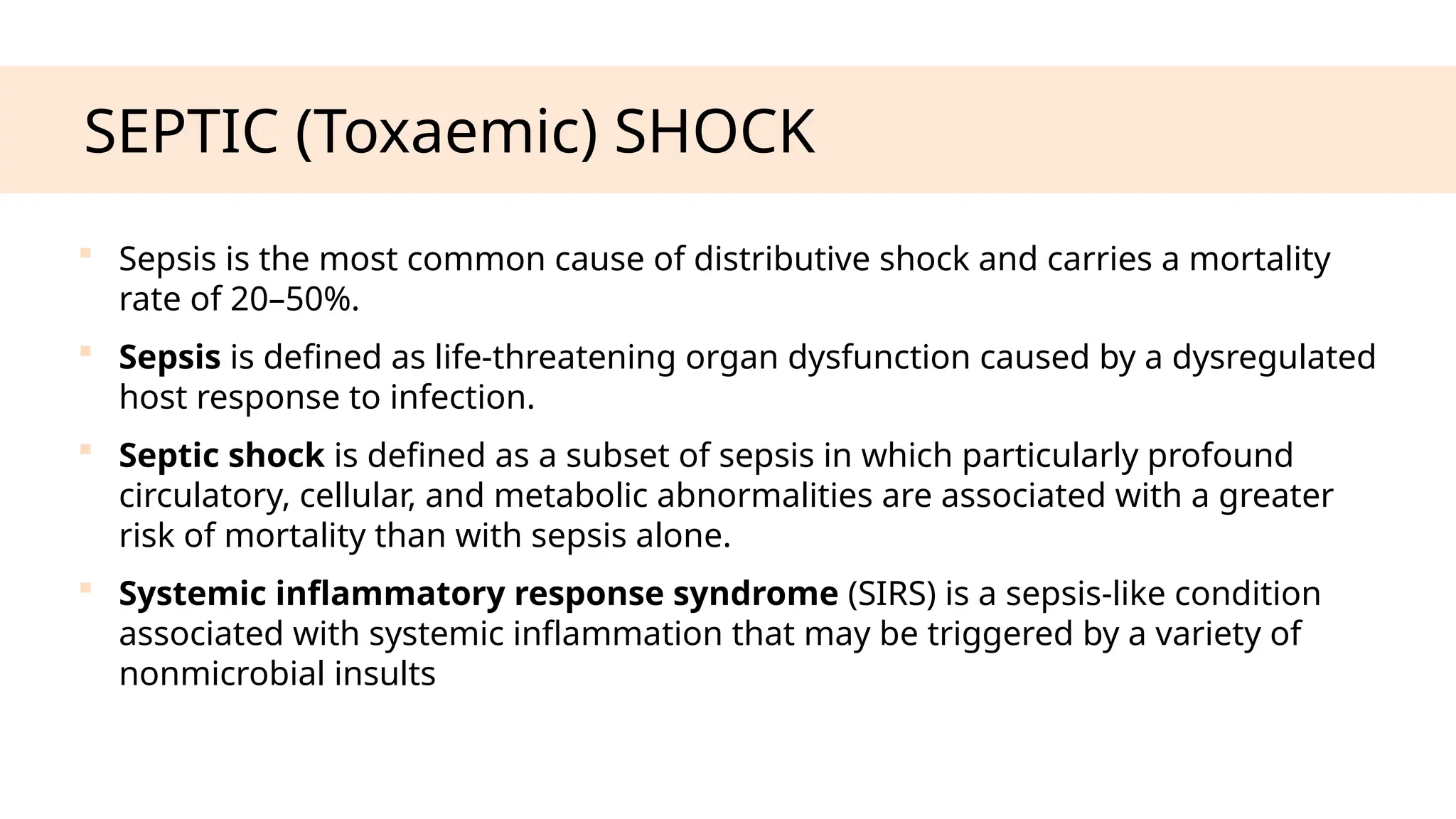
SEPTIC (Toxaemic) SHOCK
 Sepsis is the most common cause of distributive shock and carries a mortality
rate of 20–50%.
 Sepsis is defined as life-threatening organ dysfunction caused by a dysregulated
host response to infection.
 Septic shock is defined as a subset of sepsis in which particularly profound
circulatory, cellular, and metabolic abnormalities are associated with a greater
risk of mortality than with sepsis alone.
 Systemic inflammatory response syndrome (SIRS) is a sepsis-like condition
associated with systemic inflammation that may be triggered by a variety of
nonmicrobial insults
SEPTIC (Toxaemic) SHOCK
 SEPTIC SHOCK IS DEFINED AS SHOCK DUE TO SEVERE SEPSIS
WITH HYPOTENSION, WHICH CANNOT BE CORRECTED BY
INFUSING FLUIDS.
 Septic shock results from vasodilation and peripheral
pooling of blood and is associated with dysfunction of
multiple organs distant from the site of infection.
 The septic shock is initiated by the toxins released by the
micro-organisms: exotoxins (as in the case of Toxic Shock
Syndrome (TSS) due to staphylococci or streptococci); or
endotoxins (as with Gram-negative bacilli).
MICROBIAL INFECTION (ENDOTHELIAL
INJURY – INFLAMMATORY RESPONSES)
MASSIVE OUTPOURING OF INFLAMMATORY
MEDIATORS (TNF ALPHA, IL 1 BETA, PAF,
ETC.) FROM IMMUNE CELLS OF INNATE
AND ADAPTIVE IMMUNITY
PERIPHERAL ARTERIAL VASODILATION,
VASCULAR LEAKAGE, VENOUS BLOOD
POOLING
TISSUE HYPOPERFUSION, CELLULAR HYPOXIA,
METABOLIC DERANGEMENTS, DIC
ORGAN FAILURE AND DEATH IF PERSISTANT
ANAPHYLACTIC SHOCK
 It is a type of severe hypersensitivity or allergic
reaction.
 Its causes include allergy to insect stings, medicines
or foods (nuts, berries, sea foods) etc.
 It is caused by a severe reaction to an allergen,
leading to the release of histamine that causes
widespread vasodilation and hypotension
NEUROGENIC SHOCK
 Neurogenic shock is caused by traumatic spinal cord
injury or effects of an epidural or spinal anesthetic.
 This results in loss of sympathetic tone with a
reduction in systemic vascular resistance and
hypotension without a compensatory tachycardia.
 Reflex vagal parasympathetic stimulation evoked by
pain, gastric dilation, or fright may simulate this shock,
producing hypotension and syncope.
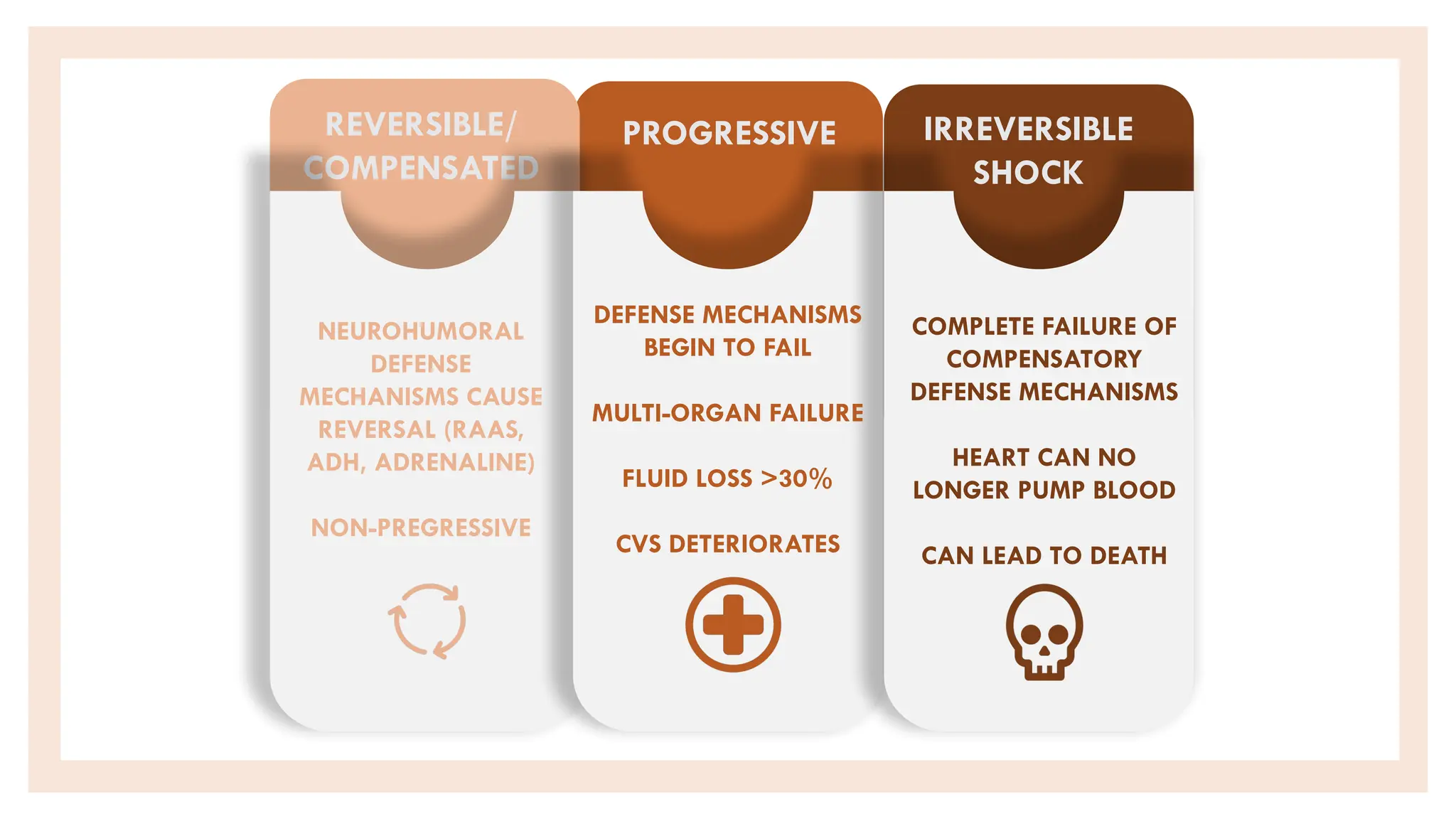
STAGES OF SHOCK
PATHOPHYSIOLOGY
OF SHOCK
IRREVERSIBLE
SHOCK
PROGRESSIVE
REVERSIBLE/
COMPENSATED
NEUROHUMORAL
DEFENSE
MECHANISMS CAUSE
REVERSAL (RAAS,
ADH, ADRENALINE)
NON-PREGRESSIVE
DEFENSE MECHANISMS
BEGIN TO FAIL
MULTI-ORGAN FAILURE
FLUID LOSS >30%
CVS DETERIORATES
COMPLETE FAILURE OF
COMPENSATORY
DEFENSE MECHANISMS
HEART CAN NO
LONGER PUMP BLOOD
CAN LEAD TO DEATH
TREATMENT OF
SHOCK
A BRIEF NOTE
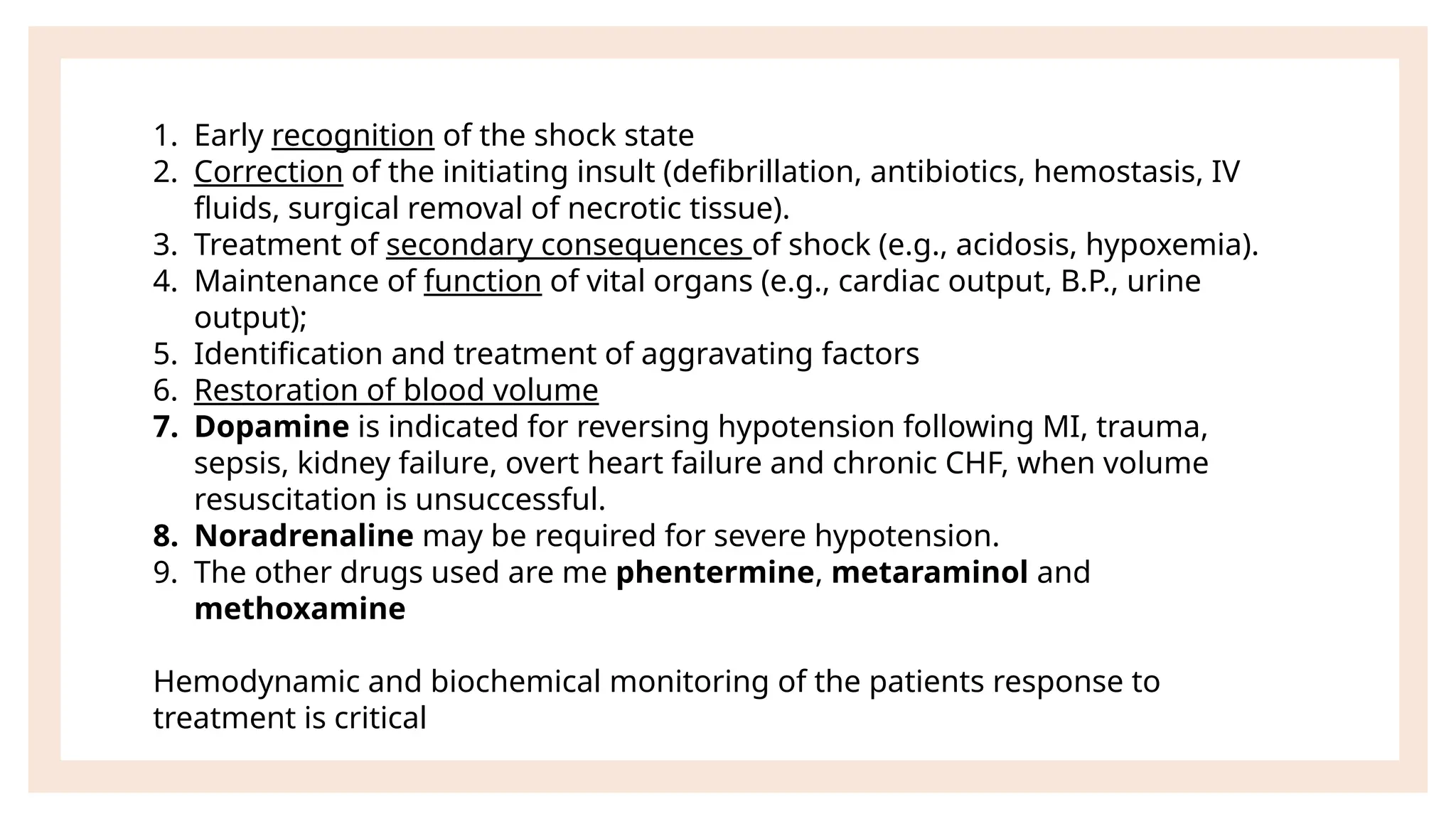
1. Early recognition of the shock state
2. Correction of the initiating insult (defibrillation, antibiotics, hemostasis, IV
fluids, surgical removal of necrotic tissue).
3. Treatment of secondary consequences of shock (e.g., acidosis, hypoxemia).
4. Maintenance of function of vital organs (e.g., cardiac output, B.P., urine
output);
5. Identification and treatment of aggravating factors
6. Restoration of blood volume
7. Dopamine is indicated for reversing hypotension following MI, trauma,
sepsis, kidney failure, overt heart failure and chronic CHF, when volume
resuscitation is unsuccessful.
8. Noradrenaline may be required for severe hypotension.
9. The other drugs used are me phentermine, metaraminol and
methoxamine
Hemodynamic and biochemical monitoring of the patients response to
treatment is critical
LET’S REVISE
DIRECTION OF FLOW
NORMAL
BLOOD
FLOW
DIRECTION OF
FLOW
DIRECTION OF FLOW
Hypovole
mic
shock
Loss of blood
Blood volume is
decreased
DIRECTION OF FLOW
DIRECTION OF FLOW
Cardiogen
ic
Shock
Reduced
pumping of
heart
DIRECTION OF FLOW
DIRECTION OF FLOW
OBSTRUCTI
VE
Shock
Clot obstructing
blood flow
Reduced blood
flow
DIRECTION OF FLOW
DIRECTION OF FLOW
OBSTRUCTI
VE
Shock
Conditions
preventing
proper filling of
heart
(Cardiac
DIRECTION OF FLOW
DIRECTION OF FLOW
Septic
Shock
Dilation of blood
vessels
THANK YO
ANY DOUBTS?

PATHOPHYSIOLOGY AND TYPES OF SHOCK - MBBS.pptx

  • 2.
  • 3.
    WHAT IS SHOCK? Shock is a state of complex acute systemic circulatory failure that impairs tissue perfusion and leads to cellular hypoxia.  It may be initiated by trauma, acute blood loss, depletion of body fluids, severe infection or acute myocardial dysfunction.  The clinical picture of shock is variable but generally consists of pallor, sweating, cold extremities, rapid and thready pulse and air hunger.
  • 4.
    WHAT IS SHOCK? Characterised by an acute reduction of effective circulating blood volume (hypotension); an inadequate perfusion of cells and tissues (hypoperfusion)  “true (or secondary) shock” is a circulatory imbalance between oxygen supply and oxygen requirements at the cellular level, and is also called as circulatory shock and is the type which is commonly referred to as ‘shock’
  • 5.
    WHAT IS SHOCK? “Initial (or primary) shock” is used for transient and usually a benign vasovagal attack resulting from sudden reduction of venous return to the heart caused by neurogenic vasodilatation and consequent peripheral pooling of blood e.g. immediately following trauma, severe pain or emotional overreaction such as due to fear, sorrow or surprise.
  • 6.
  • 7.
    EFFECTIVE DECREASE INCIRCULATING BLOOD VOLUME DECREASED VENOUS RETURN TO HEART DECREASED CARDIAC OUTPUT DECREASED BLOOD AND OXYGEN SUPPLY INFLAMMATORY MEDIATORS SHOCK
  • 8.
    EFFECTIVE DECREASE INCIRCULATING BLOOD VOLUME DECREASED VENOUS RETURN TO HEART DECREASED CARDIAC OUTPUT DECREASED BLOOD AND OXYGEN SUPPLY INFLAMMATORY MEDIATORS SHOCK
  • 9.
    EFFECTIVE DECREASE INCIRCULATING BLOOD VOLUME DECREASED VENOUS RETURN TO HEART DECREASED CARDIAC OUTPUT DECREASED BLOOD AND OXYGEN SUPPLY INFLAMMATORY MEDIATORS SHOCK
  • 10.
    EFFECTIVE DECREASE INCIRCULATING BLOOD VOLUME DECREASED VENOUS RETURN TO HEART DECREASED CARDIAC OUTPUT DECREASED BLOOD AND OXYGEN SUPPLY INFLAMMATORY MEDIATORS SHOCK
  • 11.
  • 12.
  • 13.
  • 14.
    Cardiogenic Shock Hypovolemic Shock TYPES OF SHOCKObstructive Shock Distributive Shock
  • 15.
  • 16.
  • 17.
  • 18.
     Most commontype of shock  HYPOVOLEMIC SHOCK OCCURS DUE TO REDUCTION IN THE TOTAL CIRCULATING BLOOD VOLUME, and can arise in many different ways:  HEMORRHAGIC CAUSES: Loss of blood (massive hemorrhage in RTA, post- partum bleeding, aneurysm rupture, GI bleeding, etc.)  NON-HEMORRHAGIC CAUSES: Plasma loss in severe burns, fluid and electrolyte loss in excessive vomiting, diarrhoea, severe gastroenteritis, acute pancreatitis, etc.
  • 20.
    DECREASE IN BLOOD/FLUIDVOLUME HYPOTENSION BARORECEPTORS - COMPENSATORY NEUROHUMORAL MECHANISMS (SYMPATHOADRENAL DISCHARGE) TACHYCARDIA AND PERIPHERAL VASOCONSTRICTION – BP GOOD FOR THE TIME BEING LONG TERM: SLUGGISH BLOOD FLOW, LOW OXYGENATION, TISSUE HYPOXIA ACIDOSIS AND INFLAMMATORY MEDIATORS
  • 22.
  • 23.
    Vasoconstriction is responsiblefor many of the clinical manifestations of shock:  Inadequate cerebral blood flow causes mental changes  Microcirculatory changes in the lungs lead to pulmonary oedema (shock lung)  Neurogenic and mechanical factors leading to ventilatory failure (air hunger) and multiorgan dysfunction  Oligemic acute renal shut down completes the devastating picture  Cold, clammy extremities – mottled skin  Tachycardia and Tachypnoea
  • 25.
  • 26.
     ACUTE CIRCULATORYFAILURE WITH SUDDEN FALL IN CARDIAC OUTPUT FROM ACUTE DISEASES OF THE HEART WITHOUT ACTUAL REDUCTION OF BLOOD VOLUME (NORMO-VOLAEMIA) RESULTS IN CARDIOGENIC SHOCK.  This is due to failure of the heart as a pump as in acute myocardial infarction (MI). Rarely, in some cases, there is complete failure of the compensatory sympathoadrenal discharge.  Defective Emptying in: a) Myocardial infarction b) Cardiomyopathies c) Rupture of the heart, ventricle or papillary muscle c) Cardiac arrhythmias  Deficient filling in: Cardiac tamponade from hemo-pericardium
  • 28.
  • 29.
     SHOCK DUETO EXTRACARDIAC OBSTRUCTIVE DISEASES IMPAIR CARDIAC FILLING.  Obstruction to the outflow e.g. a) Pulmonary embolism b) Ball valve thrombus c) Tension pneumothorax d) Dissecting aortic aneurysm  Obstruction causing deficient filling e.g. a) Cardiac tamponade from haemopericardium  Pericardial tamponade, tension pneumothorax, and massive PE can cause an acute decrease in cardiac output resulting in shock, which are medical emergencies requiring prompt diagnosis and treatment
  • 31.
  • 32.
    HYPOVOLEMIC SHOCK LOSS OFBLOOD/ PLASMA/ FLUIDS DECREASED / INADEQUATE CIRCULATING BLOOD LOW OR DECREASED CARDIAC OUTPUT AND HYPOTENSION LOW PERFUSION, TISSUE HYPOXIA SHOCK CARDIOGENIC/ OBSTRUCTIVE SHOCK SHOCK MYOCARDIAL DAMAGE, MECHANICAL ABNORMALITIES, OBSTRUCTION DECREASED / INADEQUATE FILLING AND/OR EJECTION
  • 33.
    HYPOVOLEMIC SHOCK LOSS OFBLOOD/ PLASMA/ FLUIDS DECREASED / INADEQUATE CIRCULATING BLOOD LOW OR DECREASED CARDIAC OUTPUT AND HYPOTENSION LOW PERFUSION, TISSUE HYPOXIA SHOCK CARDIOGENIC/ OBSTRUCTIVE SHOCK SHOCK MYOCARDIAL DAMAGE, MECHANICAL ABNORMALITIES, OBSTRUCTION DECREASED / INADEQUATE FILLING AND/OR EJECTION
  • 34.
  • 35.
     DISTRIBUTIVE ORVASODILATORY SHOCK has many causes including sepsis, anaphylaxis, traumatic spinal cord injury, or acute adrenal insufficiency.  The reduction in systemic vascular resistance results in inadequate cardiac output and tissue hypoperfusion despite normal circulatory volume.  TYPES: 1.SEPTIC SHOCK 2.ANAPHYLACTIC SHOCK 3.NEUROGENIC SHOCK 4.Drug-induced vasodilation 5.Adrenal insufficiency
  • 36.
    SEPTIC (Toxaemic) SHOCK Sepsis is the most common cause of distributive shock and carries a mortality rate of 20–50%.  Sepsis is defined as life-threatening organ dysfunction caused by a dysregulated host response to infection.  Septic shock is defined as a subset of sepsis in which particularly profound circulatory, cellular, and metabolic abnormalities are associated with a greater risk of mortality than with sepsis alone.  Systemic inflammatory response syndrome (SIRS) is a sepsis-like condition associated with systemic inflammation that may be triggered by a variety of nonmicrobial insults
  • 37.
    SEPTIC (Toxaemic) SHOCK SEPTIC SHOCK IS DEFINED AS SHOCK DUE TO SEVERE SEPSIS WITH HYPOTENSION, WHICH CANNOT BE CORRECTED BY INFUSING FLUIDS.  Septic shock results from vasodilation and peripheral pooling of blood and is associated with dysfunction of multiple organs distant from the site of infection.  The septic shock is initiated by the toxins released by the micro-organisms: exotoxins (as in the case of Toxic Shock Syndrome (TSS) due to staphylococci or streptococci); or endotoxins (as with Gram-negative bacilli).
  • 39.
    MICROBIAL INFECTION (ENDOTHELIAL INJURY– INFLAMMATORY RESPONSES) MASSIVE OUTPOURING OF INFLAMMATORY MEDIATORS (TNF ALPHA, IL 1 BETA, PAF, ETC.) FROM IMMUNE CELLS OF INNATE AND ADAPTIVE IMMUNITY PERIPHERAL ARTERIAL VASODILATION, VASCULAR LEAKAGE, VENOUS BLOOD POOLING TISSUE HYPOPERFUSION, CELLULAR HYPOXIA, METABOLIC DERANGEMENTS, DIC ORGAN FAILURE AND DEATH IF PERSISTANT
  • 40.
    ANAPHYLACTIC SHOCK  Itis a type of severe hypersensitivity or allergic reaction.  Its causes include allergy to insect stings, medicines or foods (nuts, berries, sea foods) etc.  It is caused by a severe reaction to an allergen, leading to the release of histamine that causes widespread vasodilation and hypotension
  • 43.
    NEUROGENIC SHOCK  Neurogenicshock is caused by traumatic spinal cord injury or effects of an epidural or spinal anesthetic.  This results in loss of sympathetic tone with a reduction in systemic vascular resistance and hypotension without a compensatory tachycardia.  Reflex vagal parasympathetic stimulation evoked by pain, gastric dilation, or fright may simulate this shock, producing hypotension and syncope.
  • 46.
  • 47.
    IRREVERSIBLE SHOCK PROGRESSIVE REVERSIBLE/ COMPENSATED NEUROHUMORAL DEFENSE MECHANISMS CAUSE REVERSAL (RAAS, ADH,ADRENALINE) NON-PREGRESSIVE DEFENSE MECHANISMS BEGIN TO FAIL MULTI-ORGAN FAILURE FLUID LOSS >30% CVS DETERIORATES COMPLETE FAILURE OF COMPENSATORY DEFENSE MECHANISMS HEART CAN NO LONGER PUMP BLOOD CAN LEAD TO DEATH
  • 48.
  • 49.
    1. Early recognitionof the shock state 2. Correction of the initiating insult (defibrillation, antibiotics, hemostasis, IV fluids, surgical removal of necrotic tissue). 3. Treatment of secondary consequences of shock (e.g., acidosis, hypoxemia). 4. Maintenance of function of vital organs (e.g., cardiac output, B.P., urine output); 5. Identification and treatment of aggravating factors 6. Restoration of blood volume 7. Dopamine is indicated for reversing hypotension following MI, trauma, sepsis, kidney failure, overt heart failure and chronic CHF, when volume resuscitation is unsuccessful. 8. Noradrenaline may be required for severe hypotension. 9. The other drugs used are me phentermine, metaraminol and methoxamine Hemodynamic and biochemical monitoring of the patients response to treatment is critical
  • 50.
  • 51.
  • 52.
    DIRECTION OF FLOW DIRECTION OFFLOW Hypovole mic shock Loss of blood Blood volume is decreased
  • 53.
    DIRECTION OF FLOW DIRECTIONOF FLOW Cardiogen ic Shock Reduced pumping of heart
  • 54.
    DIRECTION OF FLOW DIRECTIONOF FLOW OBSTRUCTI VE Shock Clot obstructing blood flow Reduced blood flow
  • 55.
    DIRECTION OF FLOW DIRECTIONOF FLOW OBSTRUCTI VE Shock Conditions preventing proper filling of heart (Cardiac
  • 56.
    DIRECTION OF FLOW DIRECTIONOF FLOW Septic Shock Dilation of blood vessels
  • 57.