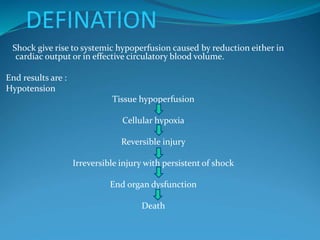
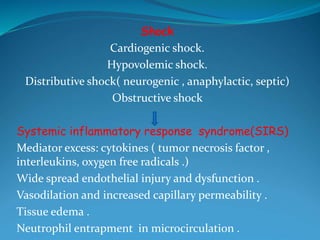
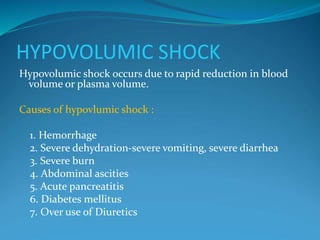
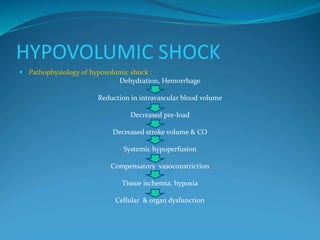
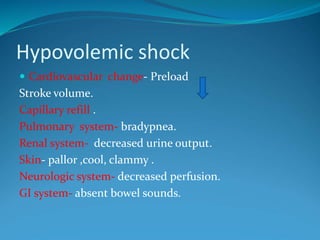
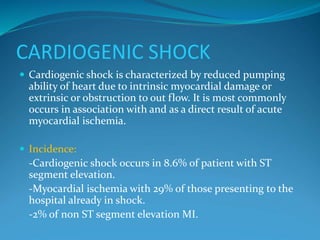
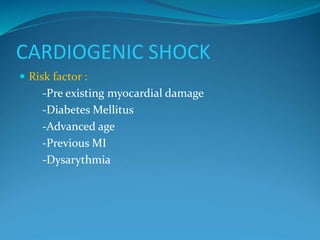
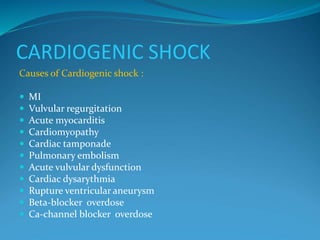
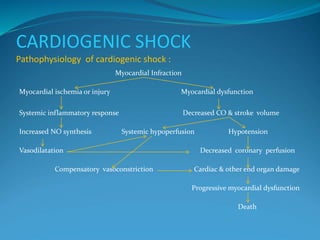
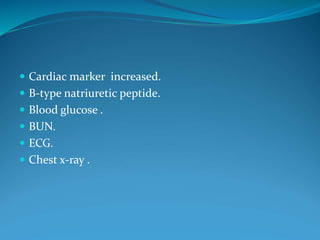
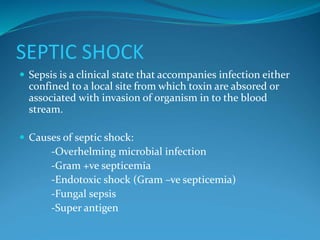
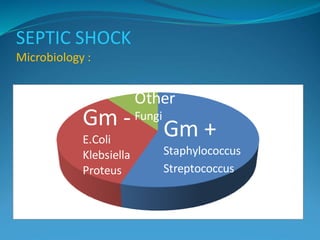
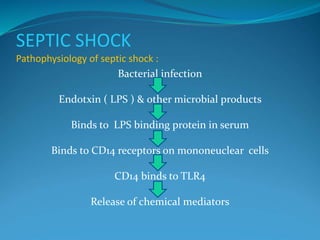
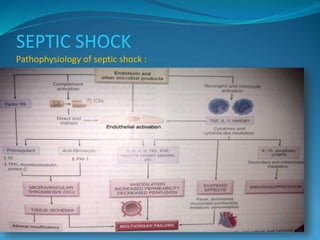
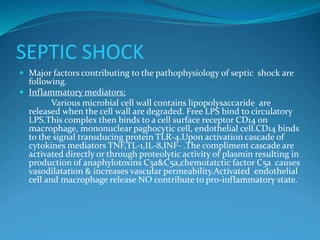
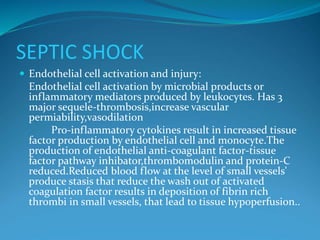
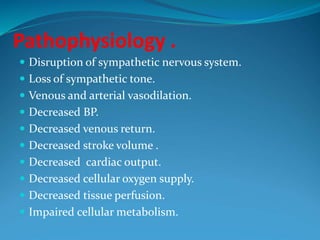
The document discusses various types of shock, including hypovolemic, cardiogenic, septic, anaphylactic, and neurogenic shock, detailing their causes, pathophysiology, and clinical presentations. It emphasizes critical mechanisms necessary for maintaining circulatory homeostasis and the progression from initial compensatory phases to irreversible stages of shock. Management strategies are outlined, highlighting the importance of timely intervention and the varying prognoses based on the type and duration of shock.








![BIOMEDICAL_WASTE_MANAGEMENT[1].pptx 22222.pptx](https://cdn.slidesharecdn.com/ss_thumbnails/biomedicalwastemanagement1-240420050706-3b1ae262-thumbnail.jpg?width=640&height=640&fit=bounds)


