Aransi Rilwan A.
 Introduction
 Classification
 Types
 Causes
 Pathophysiology
 Clinical features
 Management
 Complications
 Shock is the most common and most
important cause of death in surgical patients
 Shock is the clinical manifestation of failure
of cellular function due to inadequate
tissue perfusion and consequent cellular
hypoxia resulting from a reduction in the
effective circulating blood volume.
 Tissue oxidation depends on adequate
pulmonary function together with adequate
perfusion to deliver and release oxygen to the
tissues.
 Oxygen consumption (OC) in an average adult
is 3ml/kg/min
 And oxygen delivery (OD) from arterial blood
= 1000ml/min.
OD:OC = 5 : 1
 If ratio is 2:1, tissue hypoxia results in tissue injury
and/or cell damage/death.
 This causes an inflammatory response with the
production of cytokines and secondary mediators.
These may contribute to the development of the
(SIRS)
 If overwhelming or the treatment is late or
ineffective, (MODS) occurs.
 Fortunately, the body has several compensatory
mechanisms which sustain adequate organ perfusion
and lower the risk.
 1 . Reduction in Blood Volume
It may result from:
a)Acute Haemorrhage (Haemorrhagic Shock):
It is the commonest cause of shock
May be; internal or external
b) Loss of plasma
c) Loss of Extracellular Fluid
2. Failure of the Cardiac Pump (Cardiogenic
Shock)
3. Obstuctive shock
Reduction in preload from mechanical
obstruction of cardiac filling
4. Distributive shock
This is a pattern of response that characterise
conditions including septic, anaphylactic, and
neurogenic shock
 Endocrine shock
Present as a combination of hypovolemic,
cardiogenic, and distributive shock
Causes include hypo and hyper thyroidism and
adrenal insufficiency.
Hypothyroidism
Shock state similar to neurogenic shocck
Disordered vascular and cardiac responsivenes to
circulation catecholaniines +/_ cardiomyopathy
 Adrenal insufficiency
 Poor respose to circulating and exogenous
catecholamines.
 Cellular
 In the presence of oxygen, glucose is
 metabolized to pyruvate, water and ca rbon
dioxide with
 production of high energy in form of ATP
 As perfusion is reduced, cells are deprived of
o2 and swithc to anaerobic respiration
 The product of anaerobic respiration is lactic
acid
 Accumulation produces systemic metabolic
acidosis
 As glucose is exausted, anaerobic
respiaration increases and their is failure of
the na/k pumps in the cell memb and
intracellular organelles.
 Lysosomes release autodigestive enzymes
and the cell lysis
 Intracellular contents are released into the
bloodstream
 Microvascular
 As tissues ischaemia progresses, changes in
the local milieu result in activation of the
immune and coagulation systems. Hypoxia
and acidosis activate the complement and
prime neutrophils
 Generation of o2 free radicals and cytokine
release
 This mechanism lead to injury of the capillary
endothelial cells.
 Further activation of the immune and
coagulation systems.
 Damaged endothelium loses its integrity and
becomes leaky
 Fluid leaks out and tissue oedema occurs,
exacerbation cellular hypoxia
 Systemic
 Cardiovascular
 As preload and afterloas decrases, there is a
compensatory baroreceptorResponse
 Increased sympathetic activity and release of
catecholamines
 Resulting in tachicarida and systemic
vasoconstriction( except in septic shock)
 Respiratory
 Metabolic acidosis and icreased sympathetic
response result in an increased respiratory
rate and minite ventilation
 Increase in co2 excretion (compensatory
respiratory alkalosis)
 Renal
 Decresed perfusion leads to reduced filtration
and a decrease urine output
 The RAS is stimulated resulting in further
vasicinstricrion and increased sodium and
water reabsorbtuon
Endocrine
ADH is released from the hypothalamus in
respone to decreseed preload, results in
vasoconstriction and reabsorption of water.
Cortisol from the adrenal cortex, contributing
to na and water reabsorptrion and sensitizing
the cells to cathecolamines
 Ischaemia-reperdusion syndrome
 During hypoperfusion, direct hypoxia and
local activation of inflammation causes
prograssive cellular and organ damage
 Further injury occurs when normal circulation
is restored.
 Acid and potassium leads to direct
myocardial depression, vasodilatation and
further hypotension.
 Cellular and humoral elements activated by
hypoxia and flushed back in to circulation.
 This xause further endothelial in jury to
organs such as lungs, kidnit.
 This can be attenuated by reducing the extent
and duration of hypoperfusion.
 Compensated shock
 Cardiovascular and endocrine compensatory
resposes reduced flow to non-essential
organs
 Their is adequate compensation to maintain
central blood volume and preservation of flow
to the brain, kidneys, and lungs.
 Tachycardia and cool peripheries may be the
only clinical signs.
 Decompensation
 Loss of around 15% of circulationg blood
volume is within mormal compensatory
mechanism
 Blood pressure is usually maintained and falls
after about 30-40% has been lost.
 decompensation progresses from mild, to
moderate to severe which is an irreversible
state.
compensated Mild Moderate severe
Level of
consiousness
Normal Mild anxiety Drowsy comatose
Blood
pressure
Normal Normal Mild
hypotension
Severe
hypotension
Pulse rate Mild increase Increased Increased Increased
Respiratory
rate
Normal Increased Increased laboured
Urine output Normal Normal Reduced Anuric
Lactic acidosis + ++ ++ +++
 Pitfalls in cardiovascular resposes
 It is important to recorgnise patients who are in
shock despit the absence of clinical signs.
 Capillar refill
 Most patient in hypovolaemic shock will have
cool, pale peripheries with prolonged capillary
refill times.
 This however varies in adults as it is not a
specifec marker in shock.
 Indistributive shock, peripheries are warm and
capillary refill will be brisk despite profound
shock.
 Tachycardia
 Patients who are on b- blockers or who have
implanted pacemakers are unable to mount a
tachycardia.
 A pulse rate of 90 in a young fit man who
normally has a pulse of 50 is very abnormal.
 Blood pressure
 It is important to note that hypotension is
one of the last signs of shock.
 Children and fit young adults ate able to
maintain blood pressure untill the final stages
of shock by dramatec increase in stroke
volume and peripheral vasoconstiction
 Elderly who are normally hypertensive may
present with a presumably normal BP for the
general population.
 Thus, the diagnosis of shock may be difficult
unless one is alert to these pitfalls.
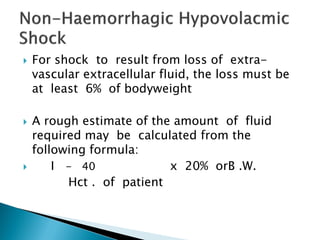
 For shock to result from loss of extra-
vascular extracellular fluid, the loss must be
at least 6% of bodyweight
 A rough estimate of the amount of fluid
required may be calculated from the
following formula:
 I - 40 x 20% orB .W.
Hct . of patient
 It is a syndrome characterized by two or more
of the following clinical criteria:
 1. Temperature >38°C or <36°c (rectal)
 2. Heart rate >90 beats per min.
 3. Respiratory rate> 20breaths/min
 4. WBC > 12,000mm3 or > 10 % immature
bandforms.
 The causes include infections ( bacteria,
viruses, fungi, protozoa)
 non-infectious conditions (acute
pancreatitis, burns, trauma, hypovolaemic
shock.
 Gram-negative bacteria account for 50-60%
an d Gram-positives for 35-40%.
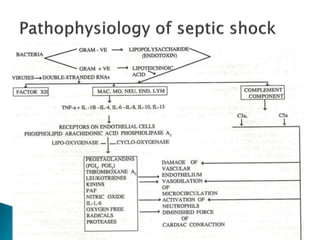
 Following tissue injury by microbial, mechanical,
chemical or thermal stimuli, there is a local
inflammatory reaction
during which humoral and cellular responses are
activated to localize the infection/tissue
damage.
The PAMPof the organisms activate the
local monocytes, macrophages, neutrophils and
endothelial cells to produce the release the
pro-inflammatory cytokines TNF-a and IL-l B
 These cytokines stimulate the macrophages and
moncytes etc to produce the other pro-
inflammatory cytokines such as lL-6 and secondary
mediators
 These cytokines act in paracrine and aulocrine
fashion.
Their production may be overwhelming and lead to
their spilling over into the general circulation.
They then stimulate secondary mediators from
arachidonic acid metabolites e.g .
 prostaglandins,PAF,thromboxane A2etc.
 This may lead to SlRS.
 Progression of the process leads to the
septic shock which may result in the
dysfunction of several organs –MODS,which
has a high mortality
 Septic shock is shock resulting from
moderate to severe sepsis or tissue damage;
it is a progression of SIRS.
 It is caused by microorganisms
 gram-negative in nearly two-thirds of cases
and gram positive in one-third
 Also by; viruses, fungi and parasites in a few.
 Of the gram-negative organisms, E. coli is
 the commonest.
 Others are Klebsiella, Enterobacter, Proteus
mirabilis/vulgaris, Pseudomonas and
Bacteroides.
 Gram-positive organisms that may cause
shock are Streptococci, Staphylococci,
Clostridia and Pneumococci.
 Some predisposing conditions are;
 Gut- Obstruction, Gangrene, Inflammation,
Perforation, surgery.
 Peritoneum- Peritonitis, Abscess
 Biliary tract- Cholecystitis,cholangitis
 Urinary tract-
Infection,obstruclion,Instrumentation , surgery
 Female genltal- Abortion, Post partum
sepsis, PlD
 Respiratory- Pneumonia, Mediastinitis
 Vascular system- Venous cuts , Indwelling
catheters
 Others-Haemorrhagic or hypvolaemic shock,
Burns, Severe injuries etc
 It is a hypersensivity reaction occurring within
seconds of injection of animal serum or drugs
including antibiotics.
 The generalized vasodilation of peripheral vessels,
increased capillary permeability.
 constriction of bronchioles and oedema of Larynx
 Caused by leukotrienes C4, D4 and E4, histamine,
bradykinin and prostaglandins released from mast
cells in the antigen-antibody reaction.
 It occurs as a result sudden loss of
sympathetic tone to the arterioles and
venules resulting in vasdilation of arterioles
and venules of muscles
 This occurs following sudden exposure to
unpleasant events such as pain or fright,
prolonged standing, spinal anaesthesia or
haemorrhage.
 Hypovolaemic shock
 Haemorrhage is classified into 4 stages by
the ACS.
 Class I haemorrhage:- up to 15% volume of
blood loss.
 minimal tachycardia occurs with no changes
in respiratory rate or blood pressure.
 Class II hemorrhage:15 % to 30% blood volume
loss.
 Increased sympathetic output leads to increased
heart rate and vascular tone.
 This leads to tachycardia (> 100) and narrowed
pulse pressure rather than a drop in blood
pressure.
 There are associated CNS changes like anxiety
and fright.
 Urine output remains at about 30-50ml and
hour.
 Class III haemorrhage : 30% - 40% blood
loss.
 By the time blood loss is over 2L , patients
present with the classical signs of shock.
Marked tachycardia (weak, thready pulse),
tachypnoea and mental changes occur.
 The systolic blood pressure falls and the
patient almost always requires transfusion.
 Class IV hemorrhage:- More than 40%
blood loss.
The patient is now nearing irreversible shock
with low or unrecordable blood pressure,
barely palpable pulse and negligible urine
output.
 In severe degrees of shock the following are
observed
 Pulse and Blood Pressure
 Rapid pulse which because of poor filling of
the vessel with blood is also WEAK and
THREADY and may even be imperceptible.

 Blood pressure, is LOW and may be
UNRECORDABLE especially in the terminal
stages
 Skin and Mucous Membranes:
cold, clammy
The Peripheral Veins are collapsed
Respiratory System: rapid and deep
respiration (air hunger).
CNS: confusion, restlessness,
apathetic or comatose, vision is blurred.
 Urinary System low urinary output or even
anuria in very severe cases.
 The temperature may be subnormal
 All organs may fail in the end (MODS).
 In the early stages of septic shock that is not
associated with hypovolaemia;
 the patient Starts with shivering and malaise
and has warm, dry , flushed skin, moderate
hypotension, hyperventilation,rapid but
bounding pulse
 fever ranging from 38.3° to 41 ° C.
 Sudden circulatory collapse or restlessness,
apprehension and confusion may be the
initial manifestation.
 As the condition progresses, the patient may
become semicomatose with cold clammy skin.
 collapsed superficial veins, pale mucosa with a
tinge of cyanosis, rapid and feeble
 pulse, severe hypotension and oliguria.
 With pre-existing hypovolaemia, the clinical
features are those of hypovolemic shock with
superimposed sepsis.
 include choking sensation, wheezing, cough,
urticaria, oedema,
 loss of consciousness, severe hypotension
and faint pulse.
 There may be pruritus.
 Management of shock is tailored towards the
cause.
 However, The patient is assessed and the
following observations are quickly made;
 I. Respiration:· The rate and depth of
respiration
If a patient is in coma, respiratory obstruction
must be looked for.
 2. Presence of bleeding external wounds
requiring urgent attention, and possible
fractures in cases of trauma .
 4. Skin: moist or dry, cool or warm.
 5. State of the veins especially those on the
dorsum of the
 feel: filled or collapsed.
 6. general condition: coma, restlessness, anxiety
or apathy.
 7. Pulse rate and volume, blood pressure and
tempera-
 ture.
 Treatment depends on the cause.
 Aims is to;
 I. expand vascular and interstitial fluid
volumes and so improve tissue perfusion,
 2 increase oxygen delivery and
consumption, and
 3. support vital functions.
• Control of ongoing haemorrhage-Direct
pressure over the site of haemorrhage
• Adequate airway is secured
• Breathing is maintained
• legs are elevated to increase venous return.
• Wide bore IV access to infuse fluid
• choice of fliud
 Bld samples are simultaneously collected for
PCV
Grouping & cross matching
Serum electrolytes urea & creatinine
Serum for bld gases
 Oxygen is administered via a passtic nasal
catheter or oxygen mask to increase the
oxygen saturation of the blood.
 Urethral catheter to monitor tissue perfusion
& urinary output
 Drugs:
 (i) Morphine : if the patient is in pain, morphine I0mg
may be given l.V.
 (ii) Hydrocortisone: It is not of proven value in
haemorrhagic shock. But it may prevent the onset of
septic shock.
 (iv) Naloxone: It is an opiate antagonist and raises
the B. P.
 It is given intravenously to patients with persistent
hypotension in spite of adequate treatment.
 (v) Mannitol: It should not be used to
promote diuresis except in crush injuries
 (vi) Alkalis: The use of sodium bicarbonate
to correct the metabolic acidosis is not
advocated
 Gold standard in monitoring: A warm, well
perfused patient with a normal mean arterial
pressure and adequate urine output (>
30ml/h)
 Frequent observation and assessment are
essential.
 I. Clinical Signs:
 2. Urine Output
 3. Pulse and Blood Pressure:
 4. Central Venous Pressure :
 5. Lungs and Jugular Veins: The lungs are
auscultated frequently for any evidence of
overloading.
 The external jugular veins are similarly
watched for raised pressure
 6. Blood po2, pC02, HCO3/anion gap, lactic
acid level ,pH and bloodsugar and pH :
pO2, pC0 2 and pH of the blood
 are estimated frequently and appropriate
measures taken. pO2 of80mm and pc0 2
of 40mmHg indicate adequate oxygenation.
 Management is as for haemorrhagic shock
but it is crystalloids that are needed
urgently, not blood.
 The type of electrolyte solution given
depends on the serum electrolytes and pH.
 (i) Adrenaline is most
 (ii). Antihistamine is added if response to
adrenaline is not rapid.
 (iii) Hydrocortisone l00-250mg is also
administered .
 (iv) Aminophylline 0.25-0.5mg in I0ml of
saline is given intravenously slowly to relieve
bronchospasm.
 (v) Adequate airway must be provided and
intravenous fluids administered rapidly.
 A complete clinical examination is done to
detect any focus of sepsis e.g PID,
cholecystitis, empyema, pneumonia.
mastoiditis, cerebral abscess.
 Investigations
 FBC
 Culture of blood , urine or any exudate
 Imaging (Ultrasound, CT Scan)
 Treatment
 The aims are;
 to improve the haemodynamic state,
 restore tissue
 administer oxygen
 combat the bacteria and cytokine and
eliminate the septic focus.
• 1. Volume replacement: There should be
rapid infusion of colloids, albumin containing
solutions or, if these are not available,
crystalloids ·- Ringer's lactate or
dextrose/saline to fill up the vasculature and
improve the haemodynamic state.
• 2. Oxygen is administered via an oxygen
mask to increase oxygen saturation.
 3. Antibiotics: Antibiotics are given in large
doses IV to combat infection as soon as the
intravenous infusion has been set up and
blood taken for culture and sensitivity. A
combn of gentamicin 80mg with clindamycin
600mg may be used.Polymyxin E can absorb
the endotoxins.
 4. Corticosteroids: Hydrocortisone 2-6g daily
for 2 days is beneficial if given at the onset
Steroids inhibit conversion of membrane
phospholipids to arachidonic acid thereby
inhibiting further release of prostaglandins,
prostacyclin, Thromboxane A, and
leukotrienes. They also inhibit further TNF-
synthesis and release.
 5 Ibuprofen It inhibits COX.Hence it blocks
synthesis of PGs & TX.It prevents neutrophil
activation & aggregation,decreases prodn of
superoxide radicals from activated
neutrophils, & stabilises lysosomal membrane
& enzs.
 7. Prevention of further coagulopathy. AT III
may prevent further coagulopathy and help
organ function. Protein C is anti-
thrombotic,Profibrinolytic and
antiinflammatory.
 8 Naloxone: It raises the blood pressure.
 9. Inotropic agents: lf the heart fails, digitalis
or low doses of dopamine or dobutamine may
be administered to improve myocardial
contractility.
 10. Insulin therapy: If hyperglycaemia occurs ,
there should be intensive therapy to maintain
the blood glucose level between the reference
value.
 12. Surgery: If a septic focus , e.g.
gangrenous bowel, is responsible for the
shock, then it must be dealt with as soon as
practicable especially if response to shock
therapy is poor.
 1 Pulmonary insufficiency
 2. Cardiac failure/arrest
 3. Cerebral failure
 4. Pre-renal failure/ATN
 5. Metabolic acidosis
 6. Sepsis/SIRS
 7. Liver failure
 8. Failure of coagulation and immune
systems.
 9. Multiple Org an Dysfunction Syndrome
 Principles and Practice of Surgical Practice(
Badoe)

Shock

  • 1.
  • 2.
     Introduction  Classification Types  Causes  Pathophysiology  Clinical features  Management  Complications
  • 3.
     Shock isthe most common and most important cause of death in surgical patients
  • 4.
     Shock isthe clinical manifestation of failure of cellular function due to inadequate tissue perfusion and consequent cellular hypoxia resulting from a reduction in the effective circulating blood volume.
  • 5.
     Tissue oxidationdepends on adequate pulmonary function together with adequate perfusion to deliver and release oxygen to the tissues.  Oxygen consumption (OC) in an average adult is 3ml/kg/min  And oxygen delivery (OD) from arterial blood = 1000ml/min. OD:OC = 5 : 1
  • 6.
     If ratiois 2:1, tissue hypoxia results in tissue injury and/or cell damage/death.  This causes an inflammatory response with the production of cytokines and secondary mediators. These may contribute to the development of the (SIRS)  If overwhelming or the treatment is late or ineffective, (MODS) occurs.  Fortunately, the body has several compensatory mechanisms which sustain adequate organ perfusion and lower the risk.
  • 7.
     1 .Reduction in Blood Volume It may result from: a)Acute Haemorrhage (Haemorrhagic Shock): It is the commonest cause of shock May be; internal or external b) Loss of plasma c) Loss of Extracellular Fluid
  • 8.
    2. Failure ofthe Cardiac Pump (Cardiogenic Shock) 3. Obstuctive shock Reduction in preload from mechanical obstruction of cardiac filling 4. Distributive shock This is a pattern of response that characterise conditions including septic, anaphylactic, and neurogenic shock
  • 9.
     Endocrine shock Presentas a combination of hypovolemic, cardiogenic, and distributive shock Causes include hypo and hyper thyroidism and adrenal insufficiency. Hypothyroidism Shock state similar to neurogenic shocck Disordered vascular and cardiac responsivenes to circulation catecholaniines +/_ cardiomyopathy
  • 10.
     Adrenal insufficiency Poor respose to circulating and exogenous catecholamines.
  • 11.
     Cellular  Inthe presence of oxygen, glucose is  metabolized to pyruvate, water and ca rbon dioxide with  production of high energy in form of ATP  As perfusion is reduced, cells are deprived of o2 and swithc to anaerobic respiration  The product of anaerobic respiration is lactic acid  Accumulation produces systemic metabolic acidosis
  • 12.
     As glucoseis exausted, anaerobic respiaration increases and their is failure of the na/k pumps in the cell memb and intracellular organelles.  Lysosomes release autodigestive enzymes and the cell lysis  Intracellular contents are released into the bloodstream
  • 13.
     Microvascular  Astissues ischaemia progresses, changes in the local milieu result in activation of the immune and coagulation systems. Hypoxia and acidosis activate the complement and prime neutrophils  Generation of o2 free radicals and cytokine release  This mechanism lead to injury of the capillary endothelial cells.
  • 14.
     Further activationof the immune and coagulation systems.  Damaged endothelium loses its integrity and becomes leaky  Fluid leaks out and tissue oedema occurs, exacerbation cellular hypoxia
  • 15.
     Systemic  Cardiovascular As preload and afterloas decrases, there is a compensatory baroreceptorResponse  Increased sympathetic activity and release of catecholamines  Resulting in tachicarida and systemic vasoconstriction( except in septic shock)
  • 16.
     Respiratory  Metabolicacidosis and icreased sympathetic response result in an increased respiratory rate and minite ventilation  Increase in co2 excretion (compensatory respiratory alkalosis)
  • 17.
     Renal  Decresedperfusion leads to reduced filtration and a decrease urine output  The RAS is stimulated resulting in further vasicinstricrion and increased sodium and water reabsorbtuon
  • 18.
    Endocrine ADH is releasedfrom the hypothalamus in respone to decreseed preload, results in vasoconstriction and reabsorption of water. Cortisol from the adrenal cortex, contributing to na and water reabsorptrion and sensitizing the cells to cathecolamines
  • 19.
     Ischaemia-reperdusion syndrome During hypoperfusion, direct hypoxia and local activation of inflammation causes prograssive cellular and organ damage  Further injury occurs when normal circulation is restored.  Acid and potassium leads to direct myocardial depression, vasodilatation and further hypotension.
  • 20.
     Cellular andhumoral elements activated by hypoxia and flushed back in to circulation.  This xause further endothelial in jury to organs such as lungs, kidnit.  This can be attenuated by reducing the extent and duration of hypoperfusion.
  • 21.
     Compensated shock Cardiovascular and endocrine compensatory resposes reduced flow to non-essential organs  Their is adequate compensation to maintain central blood volume and preservation of flow to the brain, kidneys, and lungs.  Tachycardia and cool peripheries may be the only clinical signs.
  • 22.
     Decompensation  Lossof around 15% of circulationg blood volume is within mormal compensatory mechanism  Blood pressure is usually maintained and falls after about 30-40% has been lost.  decompensation progresses from mild, to moderate to severe which is an irreversible state.
  • 23.
    compensated Mild Moderatesevere Level of consiousness Normal Mild anxiety Drowsy comatose Blood pressure Normal Normal Mild hypotension Severe hypotension Pulse rate Mild increase Increased Increased Increased Respiratory rate Normal Increased Increased laboured Urine output Normal Normal Reduced Anuric Lactic acidosis + ++ ++ +++
  • 25.
     Pitfalls incardiovascular resposes  It is important to recorgnise patients who are in shock despit the absence of clinical signs.  Capillar refill  Most patient in hypovolaemic shock will have cool, pale peripheries with prolonged capillary refill times.  This however varies in adults as it is not a specifec marker in shock.  Indistributive shock, peripheries are warm and capillary refill will be brisk despite profound shock.
  • 26.
     Tachycardia  Patientswho are on b- blockers or who have implanted pacemakers are unable to mount a tachycardia.  A pulse rate of 90 in a young fit man who normally has a pulse of 50 is very abnormal.
  • 27.
     Blood pressure It is important to note that hypotension is one of the last signs of shock.  Children and fit young adults ate able to maintain blood pressure untill the final stages of shock by dramatec increase in stroke volume and peripheral vasoconstiction  Elderly who are normally hypertensive may present with a presumably normal BP for the general population.
  • 28.
     Thus, thediagnosis of shock may be difficult unless one is alert to these pitfalls.
  • 29.
     For shockto result from loss of extra- vascular extracellular fluid, the loss must be at least 6% of bodyweight  A rough estimate of the amount of fluid required may be calculated from the following formula:  I - 40 x 20% orB .W. Hct . of patient
  • 30.
     It isa syndrome characterized by two or more of the following clinical criteria:  1. Temperature >38°C or <36°c (rectal)  2. Heart rate >90 beats per min.  3. Respiratory rate> 20breaths/min  4. WBC > 12,000mm3 or > 10 % immature bandforms.
  • 31.
     The causesinclude infections ( bacteria, viruses, fungi, protozoa)  non-infectious conditions (acute pancreatitis, burns, trauma, hypovolaemic shock.  Gram-negative bacteria account for 50-60% an d Gram-positives for 35-40%.
  • 32.
     Following tissueinjury by microbial, mechanical, chemical or thermal stimuli, there is a local inflammatory reaction during which humoral and cellular responses are activated to localize the infection/tissue damage. The PAMPof the organisms activate the local monocytes, macrophages, neutrophils and endothelial cells to produce the release the pro-inflammatory cytokines TNF-a and IL-l B
  • 33.
     These cytokinesstimulate the macrophages and moncytes etc to produce the other pro- inflammatory cytokines such as lL-6 and secondary mediators  These cytokines act in paracrine and aulocrine fashion. Their production may be overwhelming and lead to their spilling over into the general circulation. They then stimulate secondary mediators from arachidonic acid metabolites e.g .  prostaglandins,PAF,thromboxane A2etc.
  • 34.
     This maylead to SlRS.  Progression of the process leads to the septic shock which may result in the dysfunction of several organs –MODS,which has a high mortality
  • 35.
     Septic shockis shock resulting from moderate to severe sepsis or tissue damage; it is a progression of SIRS.  It is caused by microorganisms  gram-negative in nearly two-thirds of cases and gram positive in one-third  Also by; viruses, fungi and parasites in a few.
  • 36.
     Of thegram-negative organisms, E. coli is  the commonest.  Others are Klebsiella, Enterobacter, Proteus mirabilis/vulgaris, Pseudomonas and Bacteroides.  Gram-positive organisms that may cause shock are Streptococci, Staphylococci, Clostridia and Pneumococci.
  • 37.
     Some predisposingconditions are;  Gut- Obstruction, Gangrene, Inflammation, Perforation, surgery.  Peritoneum- Peritonitis, Abscess  Biliary tract- Cholecystitis,cholangitis  Urinary tract- Infection,obstruclion,Instrumentation , surgery
  • 38.
     Female genltal-Abortion, Post partum sepsis, PlD  Respiratory- Pneumonia, Mediastinitis  Vascular system- Venous cuts , Indwelling catheters  Others-Haemorrhagic or hypvolaemic shock, Burns, Severe injuries etc
  • 40.
     It isa hypersensivity reaction occurring within seconds of injection of animal serum or drugs including antibiotics.  The generalized vasodilation of peripheral vessels, increased capillary permeability.  constriction of bronchioles and oedema of Larynx  Caused by leukotrienes C4, D4 and E4, histamine, bradykinin and prostaglandins released from mast cells in the antigen-antibody reaction.
  • 41.
     It occursas a result sudden loss of sympathetic tone to the arterioles and venules resulting in vasdilation of arterioles and venules of muscles  This occurs following sudden exposure to unpleasant events such as pain or fright, prolonged standing, spinal anaesthesia or haemorrhage.
  • 42.
     Hypovolaemic shock Haemorrhage is classified into 4 stages by the ACS.  Class I haemorrhage:- up to 15% volume of blood loss.  minimal tachycardia occurs with no changes in respiratory rate or blood pressure.
  • 43.
     Class IIhemorrhage:15 % to 30% blood volume loss.  Increased sympathetic output leads to increased heart rate and vascular tone.  This leads to tachycardia (> 100) and narrowed pulse pressure rather than a drop in blood pressure.  There are associated CNS changes like anxiety and fright.  Urine output remains at about 30-50ml and hour.
  • 44.
     Class IIIhaemorrhage : 30% - 40% blood loss.  By the time blood loss is over 2L , patients present with the classical signs of shock. Marked tachycardia (weak, thready pulse), tachypnoea and mental changes occur.  The systolic blood pressure falls and the patient almost always requires transfusion.
  • 45.
     Class IVhemorrhage:- More than 40% blood loss. The patient is now nearing irreversible shock with low or unrecordable blood pressure, barely palpable pulse and negligible urine output.
  • 46.
     In severedegrees of shock the following are observed  Pulse and Blood Pressure  Rapid pulse which because of poor filling of the vessel with blood is also WEAK and THREADY and may even be imperceptible.   Blood pressure, is LOW and may be UNRECORDABLE especially in the terminal stages
  • 47.
     Skin andMucous Membranes: cold, clammy The Peripheral Veins are collapsed Respiratory System: rapid and deep respiration (air hunger). CNS: confusion, restlessness, apathetic or comatose, vision is blurred.
  • 48.
     Urinary Systemlow urinary output or even anuria in very severe cases.  The temperature may be subnormal  All organs may fail in the end (MODS).
  • 49.
     In theearly stages of septic shock that is not associated with hypovolaemia;  the patient Starts with shivering and malaise and has warm, dry , flushed skin, moderate hypotension, hyperventilation,rapid but bounding pulse  fever ranging from 38.3° to 41 ° C.  Sudden circulatory collapse or restlessness, apprehension and confusion may be the initial manifestation.
  • 50.
     As thecondition progresses, the patient may become semicomatose with cold clammy skin.  collapsed superficial veins, pale mucosa with a tinge of cyanosis, rapid and feeble  pulse, severe hypotension and oliguria.  With pre-existing hypovolaemia, the clinical features are those of hypovolemic shock with superimposed sepsis.
  • 51.
     include chokingsensation, wheezing, cough, urticaria, oedema,  loss of consciousness, severe hypotension and faint pulse.  There may be pruritus.
  • 52.
     Management ofshock is tailored towards the cause.  However, The patient is assessed and the following observations are quickly made;  I. Respiration:· The rate and depth of respiration If a patient is in coma, respiratory obstruction must be looked for.  2. Presence of bleeding external wounds requiring urgent attention, and possible fractures in cases of trauma .
  • 53.
     4. Skin:moist or dry, cool or warm.  5. State of the veins especially those on the dorsum of the  feel: filled or collapsed.  6. general condition: coma, restlessness, anxiety or apathy.  7. Pulse rate and volume, blood pressure and tempera-  ture.
  • 54.
     Treatment dependson the cause.  Aims is to;  I. expand vascular and interstitial fluid volumes and so improve tissue perfusion,  2 increase oxygen delivery and consumption, and  3. support vital functions.
  • 55.
    • Control ofongoing haemorrhage-Direct pressure over the site of haemorrhage • Adequate airway is secured • Breathing is maintained • legs are elevated to increase venous return. • Wide bore IV access to infuse fluid • choice of fliud
  • 56.
     Bld samplesare simultaneously collected for PCV Grouping & cross matching Serum electrolytes urea & creatinine Serum for bld gases
  • 57.
     Oxygen isadministered via a passtic nasal catheter or oxygen mask to increase the oxygen saturation of the blood.  Urethral catheter to monitor tissue perfusion & urinary output
  • 58.
     Drugs:  (i)Morphine : if the patient is in pain, morphine I0mg may be given l.V.  (ii) Hydrocortisone: It is not of proven value in haemorrhagic shock. But it may prevent the onset of septic shock.  (iv) Naloxone: It is an opiate antagonist and raises the B. P.  It is given intravenously to patients with persistent hypotension in spite of adequate treatment.
  • 59.
     (v) Mannitol:It should not be used to promote diuresis except in crush injuries  (vi) Alkalis: The use of sodium bicarbonate to correct the metabolic acidosis is not advocated
  • 60.
     Gold standardin monitoring: A warm, well perfused patient with a normal mean arterial pressure and adequate urine output (> 30ml/h)  Frequent observation and assessment are essential.  I. Clinical Signs:  2. Urine Output  3. Pulse and Blood Pressure:  4. Central Venous Pressure :
  • 61.
     5. Lungsand Jugular Veins: The lungs are auscultated frequently for any evidence of overloading.  The external jugular veins are similarly watched for raised pressure
  • 62.
     6. Bloodpo2, pC02, HCO3/anion gap, lactic acid level ,pH and bloodsugar and pH : pO2, pC0 2 and pH of the blood  are estimated frequently and appropriate measures taken. pO2 of80mm and pc0 2 of 40mmHg indicate adequate oxygenation.
  • 63.
     Management isas for haemorrhagic shock but it is crystalloids that are needed urgently, not blood.  The type of electrolyte solution given depends on the serum electrolytes and pH.
  • 64.
     (i) Adrenalineis most  (ii). Antihistamine is added if response to adrenaline is not rapid.  (iii) Hydrocortisone l00-250mg is also administered .  (iv) Aminophylline 0.25-0.5mg in I0ml of saline is given intravenously slowly to relieve bronchospasm.  (v) Adequate airway must be provided and intravenous fluids administered rapidly.
  • 65.
     A completeclinical examination is done to detect any focus of sepsis e.g PID, cholecystitis, empyema, pneumonia. mastoiditis, cerebral abscess.  Investigations  FBC  Culture of blood , urine or any exudate  Imaging (Ultrasound, CT Scan)
  • 66.
     Treatment  Theaims are;  to improve the haemodynamic state,  restore tissue  administer oxygen  combat the bacteria and cytokine and eliminate the septic focus.
  • 67.
    • 1. Volumereplacement: There should be rapid infusion of colloids, albumin containing solutions or, if these are not available, crystalloids ·- Ringer's lactate or dextrose/saline to fill up the vasculature and improve the haemodynamic state. • 2. Oxygen is administered via an oxygen mask to increase oxygen saturation.
  • 68.
     3. Antibiotics:Antibiotics are given in large doses IV to combat infection as soon as the intravenous infusion has been set up and blood taken for culture and sensitivity. A combn of gentamicin 80mg with clindamycin 600mg may be used.Polymyxin E can absorb the endotoxins.
  • 69.
     4. Corticosteroids:Hydrocortisone 2-6g daily for 2 days is beneficial if given at the onset Steroids inhibit conversion of membrane phospholipids to arachidonic acid thereby inhibiting further release of prostaglandins, prostacyclin, Thromboxane A, and leukotrienes. They also inhibit further TNF- synthesis and release.
  • 70.
     5 IbuprofenIt inhibits COX.Hence it blocks synthesis of PGs & TX.It prevents neutrophil activation & aggregation,decreases prodn of superoxide radicals from activated neutrophils, & stabilises lysosomal membrane & enzs.
  • 71.
     7. Preventionof further coagulopathy. AT III may prevent further coagulopathy and help organ function. Protein C is anti- thrombotic,Profibrinolytic and antiinflammatory.
  • 72.
     8 Naloxone:It raises the blood pressure.  9. Inotropic agents: lf the heart fails, digitalis or low doses of dopamine or dobutamine may be administered to improve myocardial contractility.
  • 73.
     10. Insulintherapy: If hyperglycaemia occurs , there should be intensive therapy to maintain the blood glucose level between the reference value.  12. Surgery: If a septic focus , e.g. gangrenous bowel, is responsible for the shock, then it must be dealt with as soon as practicable especially if response to shock therapy is poor.
  • 74.
     1 Pulmonaryinsufficiency  2. Cardiac failure/arrest  3. Cerebral failure  4. Pre-renal failure/ATN  5. Metabolic acidosis  6. Sepsis/SIRS  7. Liver failure  8. Failure of coagulation and immune systems.  9. Multiple Org an Dysfunction Syndrome
  • 77.
     Principles andPractice of Surgical Practice( Badoe)