Shock
Physiology Team 436 – Cardiovascular Block Lecture 11
Red: very important.
Green: Doctor’s notes.
Pink: formulas.
Yellow: numbers.
Gray: notes and explanation.
Lecture: If work is intended for initial studying.
Review: If work is intended for revision.
1
Objectives
2
} Types and causes of shock.
} Define circulatory shock.
} Mechanisms responsible for the irreversible phase of hemorrhagic shock.
} Body compensatory mechanisms during reversible phases of hemorrhagic shock.
} Define shock and state the pathophysiological classification of shock.
} Describe the pathways leading to shock and decreased tissue perfusion.
} Discuss the stages of a hypovolemic shock.
} Explain how stage III hypovolemic shock might result in major organs failure.
} Discuss the different compensatory mechanisms during a hypovolemic shock.
} Describe the positive feedback mechanisms in the irreversible stage of a hypovolemic shock.
Study Smart: focus on mutual topics.
The cell is the basic unit of life and it needs oxygen to produce
energy.
No oxygen à No energy à No life
Circulatory shock: When the circulatory system is unable to
provide adequate circulation & tissue perfusion à decreased
availability of oxygen and nutrients à failure to deliver oxygen
to the tissues & vital body organs relative to its metabolic
requirement à cellular hypoxia and energy deficit .
Result: organ dysfunction and cellular damage. (not death)
If not quickly corrected: whole body failure à leads to
irreversible shock and death.
Shock
3
ONLY IN MALES’ SLIDES
Shock may be defined as a
pathophysiological state in
which there is :
1-widespread
2- serious reduction of tissue
perfusion
which if prolonged :leads to
generalized impairment of
cellular function.
Video of (Shock)
Duration: (9;10 mins)
Video of (Shock)
Duration: (16:28 mins)
4
ONLY IN MALES’ SLIDES
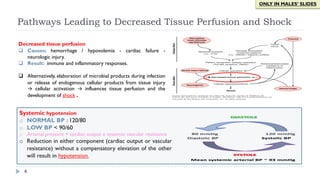
Pathways Leading to Decreased Tissue Perfusion and Shock
Decreased tissue perfusion
q Causes: hemorrhage / hypovolemia - cardiac failure -
neurologic injury.
q Result: immune and inflammatory responses.
q Alternatively, elaboration of microbial products during infection
or release of endogenous cellular products from tissue injury
→ cellular activation → influences tissue perfusion and the
development of shock .
Systemic hypotension
o NORMAL BP : 120/80
o LOW BP < 90/60
o Arterial pressure = cardiac output x systemic vascular resistance
o Reduction in either component (cardiac output or vascular
resistance) without a compensatory elevation of the other
will result in hypotension.
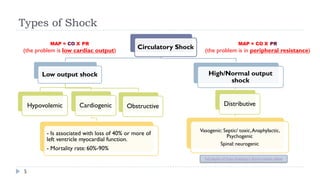
Types of Shock
5
Circulatory Shock
Low output shock
Hypovolemic Cardiogenic
- Is associated with loss of 40% or more of
left ventricle myocardial function.
- Mortality rate: 60%-90%
Obstructive
High/Normal output
shock
Distributive
Vasogenic: Septic/ toxic,Anaphylactic,
Psychogenic
Spinal: neurogenic
MAP = CO X PR
(the problem is low cardiac output)
MAP = CO X PR
(the problem is in peripheral resistance)
Full playlist of Khan Academy’s Shock-related videos
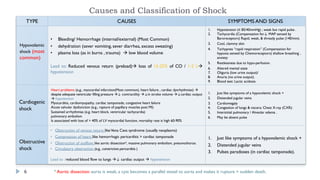
Causes and Classification of Shock
6
TYPE CAUSES SYMPTOMS AND SIGNS
Hypovolemic
shock (most
common)
• Bleeding/ Hemorrhage (internal/external) (Most Common)
• dehydration (sever vomiting, sever diarrhea, excess sweating)
• plasma loss (as in burns , trauma) à low blood volume
Lead to: Reduced venous return (preload)à loss of 15-25% of CO / 1-2 Là
hypotension
1. Hypotension (≤ 85/40mmHg) ; weak but rapid pulse .
2. Tachycardia (Compensation for↓ MAP sensed by
Baroreceptors) Rapid, weak, & thready pulse (140/min).
3. Cool, clammy skin
4. Tachypnea “rapid respiration” (Compensation for
hypoxia sensed by Chemoreceptors) shallow breathing ,
anxiety
5. Restlessness due to hypo-perfusion.
6. Altered mental state
7. Oliguria (low urine output)/
8. Anuria (no urine output).
9. Blood test: Lactic acidosis.
Cardiogenic
shock
Heart problems (e.g., myocardial infarction(Most common), heart failure , cardiac dysrhythmias) à
despite adequate ventricular filling pressure à↓ contractility à↓in stroke volume à↓cardiac output
à hypotension
Myocarditis, cardiomyopathy, cardiac tamponade, congestive heart failure
Acute valvular dysfunction (e.g., rapture of papillary muscles post MI)
Sustained arrhythmias (e.g. heart block, ventricular tachycardia)
pulmonary embolism
Is associated with loss of > 40% of LV myocardial function, mortality rate is high 60-90%
1. Just like symptoms of a hypovolemic shock +
2. Distended jugular veins
3. Cardiomegaly
4. Congestion of lungs & viscera: Chest X-ray (CXR):
5. Interstitial pulmonary / Alveolar edema .
6. May be absent pulse
Obstructive
shock
• Obstruction of venous return: likeVena Cava syndrome (usually neoplasms)
• Compression of heart: like hemorrhagic pericarditis > cardiac tamponade
• Obstruction of outflow: like aortic dissection*, massive pulmonary embolism, pneumothorax.
• Circulatory obstruction (e.g., constrictive pericarditis )
Lead to : reduced blood flow to lungs à↓ cardiac output à hypotension
1. Just like symptoms of a hypovolemic shock +
2. Distended jugular veins
3. Pulses paradoxes (in cardiac tamponade).
* Aortic dissection: aorta is weak, a cyst becomes a parallel vessel to aorta and makes it rupture > sudden death.
Causes and Classification of Shock
7
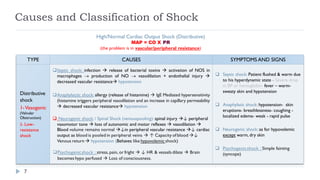
TYPE CAUSES SYMPTOMS AND SIGNS
Distributive
shock
1-Vasogenic
(Valvular
Obstruction)
2- Low-
resistance
shock
qSeptic shock: infection à release of bacterial toxins à activation of NOS in
macrophages ® production of NO ® vasodilation + endothelial injury à
decreased vascular resistanceà hypotension
qAnaphylactic shock: allergy (release of histamine) à IgE Mediated hypersensitivity
(histamine triggers peripheral vasodilation and an increase in capillary permeability
à decreased vascular resistanceà hypotension
q Neurogenic shock: / Spinal Shock (venouspooling): spinal injury à↓ peripheral
vasomotor tone à loss of autonomic and motor reflexes à vasodilation à
Blood volume remains normal à↓in peripheral vascular resistance à↓ cardiac
output as blood is pooled in peripheral veins à ↑ Capacity of blood à↓
Venous return à hypotension (Behaves like hypovolemic shock)
qPsychogenicshock : stress, pain, or fright à ↓ HR & vessels dilate à Brain
becomes hypo perfused à Loss of consciousness.
q Septic shock: Patient flushed & warm due
to his hyperdynamic state - Severe drop
in BP or hemoglobin- fever – warm-
sweaty skin and hypotension
q Anaphylatic shock: hypotension- skin
eruptions- breathlessness- coughing -
localized edema- weak - rapid pulse
q Neurogenic shock: as for hypovolemic
except warm, dry skin
q Psychogenicshock : Simple fainting
(syncope)
High/Normal Cardiac Output Shock (Distributive)
MAP = CO X PR
(the problem is in vascular/peripheral resistance)
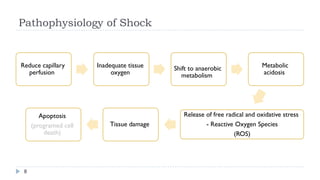
Pathophysiology of Shock
8
Reduce capillary
perfusion
Inadequate tissue
oxygen
Shift to anaerobic
metabolism
Metabolic
acidosis
Release of free radical and oxidative stress
- Reactive Oxygen Species
(ROS)
Tissue damage
Apoptosis
(programed cell
death)
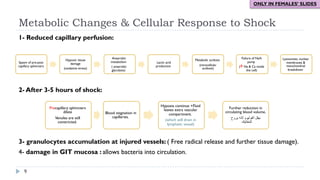
Metabolic Changes & Cellular Response to Shock
9
1- Reduced capillary perfusion:
2- After 3-5 hours of shock:
3- granulocytes accumulation at injured vessels: ( Free radical release and further tissue damage).
4- damage in GIT mucosa : allows bacteria into circulation.
Spasm of pre-post
capillary sphincters
Hypoxic tissue
damage
(oxidative stress)
Anaerobic
metabolism
( anaerobic
glycolysis)
Lactic acid
production
Metabolic acidosis
(intracellular
acidosis)
Failure of Na/k
pump
( Na & Ca inside
the cell)
Lysosomes, nuclear
membranes &
mitochondrial
breakdown
ONLY IN FEMALES’ SLIDES
Precapillary sphincters
dilate
Venules are still
constricted.
Blood stagnation in
capillaries.
Hypoxia continue +Fluid
leaves extra vascular
compartment.
(which will drain in
lymphatic vessel)
Further reduction in
circulating blood volume.
‫ﺑﯾﻘل‬
‫اﻟﻔوﻟﯾوم‬
‫ﻻﻧﮫ‬
‫ﯾروح‬
‫ﻟﻠﻣﻔﺎﺗﯾك‬
10
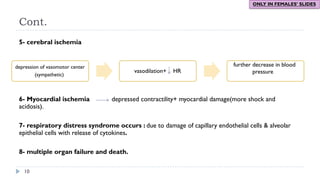
5- cerebral ischemia
6- Myocardial ischemia depressed contractility+ myocardial damage(more shock and
acidosis).
7- respiratory distress syndrome occurs : due to damage of capillary endothelial cells & alveolar
epithelial cells with release of cytokines.
8- multiple organ failure and death.
Cont.
ONLY IN FEMALES’ SLIDES
depression of vasomotor center
(sympathetic)
vasodilation+ HR
further decrease in blood
pressure
11
Regulation
of BP
Short term
mechanisms
Baroreceptor
reflex
Chemoreceptor
reflex
CNS ischemic
response
Atrial reflexes
Intermediate and
long term
mechanisms
Hormonal
Catecholamines ADH
Renal
Other
Capillary shift
Increased 2,3
DPG
Restoration of
plasma volume
Restoration of
plasma proteins
Restoration of
RBCs
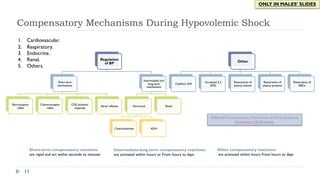
Short-term compensatory reactions:
are rapid and act within seconds to minutes
Intermediate-long term compensatory reactions:
are activated within hours or From hours to days
Compensatory Mechanisms During Hypovolemic Shock
Other compensatory reactions:
are activated within hours From hours to days
ONLY IN MALES’ SLIDES
1. Cardiovascular.
2. Respiratory.
3. Endocrine.
4. Renal.
5. Others.
Video of (Compensatory Mechanisms of (Medical) Shock)
Duration: (18:48 mins)
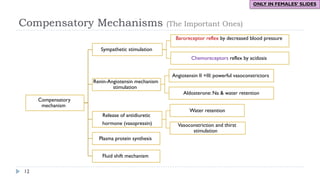
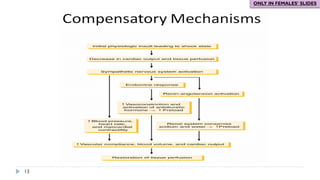
Compensatory Mechanisms (The Important Ones)
12
Compensatory
mechanism
Sympathetic stimulation
Baroreceptor reflex by decreased blood pressure
Chemoreceptors reflex by acidosis
Renin-Angiotensin mechanism
stimulation
Angiotensin II +III: powerful vasoconstrictors
Aldosterone: Na & water retention
Release of antidiuretic
hormone (vasopressin)
Water retention
Vasoconstriction and thirst
stimulation
Plasma protein synthesis
Fluid shift mechanism
ONLY IN FEMALES’ SLIDES
13
ONLY IN FEMALES’ SLIDES
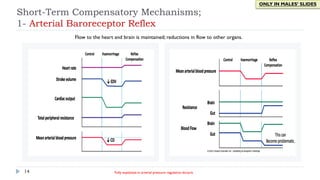
Short-Term Compensatory Mechanisms;
1- Arterial Baroreceptor Reflex
14
Flow to the heart and brain is maintained; reductions in flow to other organs.
ONLY IN MALES’ SLIDES
Fully explained in arterial pressure regulation lecture.
15
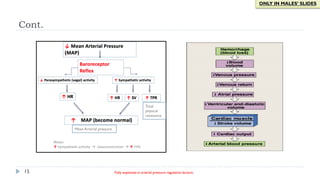
Cont.
ONLY IN MALES’ SLIDES
Total
physical
resistance
Mean Arterial pressure
Fully explained in arterial pressure regulation lecture.
16
} Reductions in mean arterial blood pressure (MAP) below 60:
1. do not evoke any additional responses through the baroreceptor reflex.
2. stimulates peripheral chemoreceptors (aortic bodies, carotid bodies, heart) that sense changes in pO2, pCO2, and
pH through tissue hypoxia and lactacidosis.
} This results in:
q Enhancement of the existing tachycardia and vasoconstriction
q Respiratory stimulation → tachypnea
ONLY IN MALES’ SLIDES
Short Term Compensatory Mechanisms;
2- Arterial Chemoreceptor Reflex
Fully explained in arterial pressure regulation lecture.
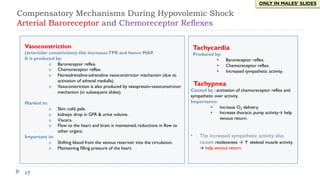
Vasoconstriction
(arteriolar constriction): this increasesTPR and hence MAP.
It is produced by:
o Baroreceptor reflex.
o Chemoreceptor reflex.
o Noreadrenaline-adrenaline vasoconstrictor mechanism (due to
activation of adrenal medulla).
o Vasoconstriction is also produced by vasopressin-vasoconstrictor
mechanism (in subsequent slides).
Marked in:
o Skin: cold, pale.
o kidneys: drop in GFR & urine volume.
o Viscera.
o Flow to the heart and brain is maintained; reductions in flow to
other organs.
Important in:
o Shifting blood from the venous reservoir into the circulation.
o Maintaining filling pressure of the heart.
Tachycardia
Produced by:
• Baroreceptor reflex.
• Chemoreceptor reflex.
• Increased sympathetic activity.
Tachypnea
Caused by : activation of chemoreceptor reflex and
sympathetic over activity.
Importance:
• Increase O2 delivery.
• Increase thoracic pump activity→ help
venous return.
• The increased sympathetic activity also
causes restlessness → ↑ skeletal muscle activity
→ help venous return.
17
Compensatory Mechanisms During Hypovolemic Shock
Arterial Baroreceptor and Chemoreceptor Reflexes
ONLY IN MALES’ SLIDES
Compensatory Mechanisms During Hypovolemic Shock;
Endocrine and Renal
18
ONLY IN MALES’ SLIDES
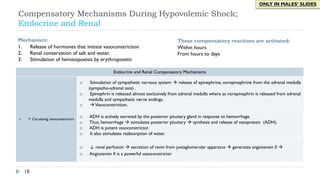
Mechanism:
1. Release of hormones that initiate vasoconstriction.
2. Renal conservation of salt and water.
3. Stimulation of hematopoeisis by erythropoietin
These compensatory reactions are activated:
Within hours
From hours to days
Endocrine and Renal Compensatory Mechanisms
o ↑ Circulating vasoconstrictors
o Stimulation of sympathetic nervous system à release of epinephrine, norepinephrine from the adrenal medulla
(sympatho-adrenal axis) .
o Epinephrin is released almost exclusively from adrenal medulla where as norepinephrin is released from adrenal
medulla and sympathetic nerve endings.
o àVasoconstriction.
o ADH is actively secreted by the posterior pituitary gland in response to hemorrhage.
o Thus, hemorrhage à stimulates posterior pituitary à synthesis and release of vasopressin (ADH).
o ADH is potent vasoconstrictor.
o It also stimulates reabsorption of water.
o ↓ renal perfusion à secretion of renin from juxtaglomerular apparatus à generates angiotensin II à
o Angiotensin II is a powerful vasoconstrictor
19
Endocrine and Renal Compensatory Mechanisms
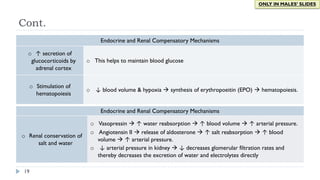
o ↑ secretion of
glucocorticoids by
adrenal cortex
o This helps to maintain blood glucose
o Stimulation of
hematopoiesis
o ↓ blood volume & hypoxia à synthesis of erythropoeitin (EPO) à hematopoiesis.
Endocrine and Renal Compensatory Mechanisms
o Renal conservation of
salt and water
o Vasopressin à ↑ water reabsorption à ↑ blood volume à ↑ arterial pressure.
o Angiotensin II à release of aldosterone à ↑ salt reabsorption à ↑ blood
volume à ↑ arterial pressure.
o ↓ arterial pressure in kidney à ↓ decreases glomerular filtration rates and
thereby decreases the excretion of water and electrolytes directly
ONLY IN MALES’ SLIDES
Cont.
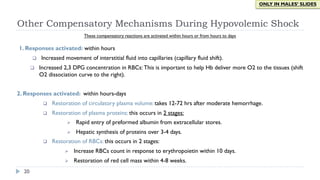
1. Responses activated: within hours
q Increased movement of interstitial fluid into capillaries (capillary fluid shift).
q Increased 2,3 DPG concentration in RBCs: This is important to help Hb deliver more O2 to the tissues (shift
O2 dissociation curve to the right).
2. Responses activated: within hours-days
q Restoration of circulatory plasma volume: takes 12-72 hrs after moderate hemorrhage.
q Restoration of plasma proteins: this occurs in 2 stages:
Ø Rapid entry of preformed albumin from extracellular stores.
Ø Hepatic synthesis of proteins over 3-4 days.
q Restoration of RBCs: this occurs in 2 stages:
Ø Increase RBCs count in response to erythropoietin within 10 days.
Ø Restoration of red cell mass within 4-8 weeks.
Other Compensatory Mechanisms During Hypovolemic Shock
20
These compensatory reactions are activated within hours or from hours to days
ONLY IN MALES’ SLIDES
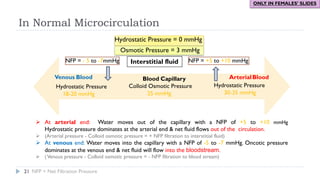
In Normal Microcirculation
21
Interstitial Fluid NFP = +5 to +10 mmHg
NFP = - 5 to -7mmHg
Hydrostatic Pressure = 0 mmHg
Osmotic Pressure = 3 mmHg
Blood Capillary
Venous Blood
Hydrostatic Pressure
30-35 mmHg
Hydrostatic Pressure
18-20 mmHg
Colloid Osmotic Pressure
25 mmHg
ArterialBlood
Ø At arterial end: Water moves out of the capillary with a NFP of +5 to +10 mmHg
Hydrostatic pressure dominates at the arterial end & net fluid flows out of the circulation.
Ø (Arterial pressure - Colloid osmotic pressure = + NFP filtration to interstitial fluid)
Ø At venous end: Water moves into the capillary with a NFP of -5 to -7 mmHg. Oncotic pressure
dominates at the venous end & net fluid will flow into the bloodstream.
Ø (Venous pressure - Colloid osmotic pressure = - NFP filtration to blood stream)
NFP = Net Filtration Pressure
ONLY IN FEMALES’ SLIDES
Interstitial fluid
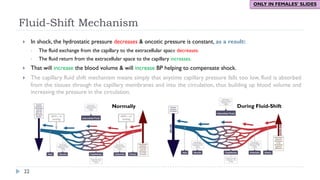
Fluid-Shift Mechanism
22
} In shock, the hydrostatic pressure decreases & oncotic pressure is constant, as a result:
• The fluid exchange from the capillary to the extracellular space decreases.
• The fluid return from the extracellular space to the capillary increases.
} That will increase the blood volume & will increase BP helping to compensate shock.
} The capillary fluid shift mechanism means simply that anytime capillary pressure falls too low, fluid is absorbed
from the tissues through the capillary membranes and into the circulation, thus building up blood volume and
increasing the pressure in the circulation.
Normally During Fluid-Shift
ONLY IN FEMALES’ SLIDES
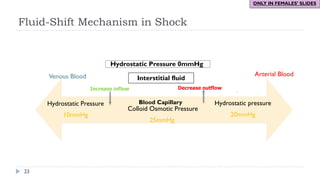
Fluid-Shift Mechanism in Shock
23
Hydrostatic Pressure
10mmHg
Colloid Osmotic Pressure
25mmHg
Hydrostatic pressure
20mmHg
Hydrostatic Pressure 0mmHg
Decrease outflow
Increase inflow
ONLY IN FEMALES’ SLIDES
Interstitial fluid
Venous Blood Arterial Blood
Blood Capillary
24
ONLY IN MALES’ SLIDES
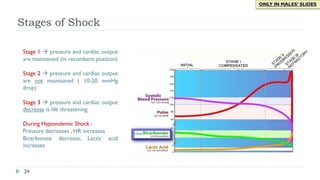
Stages of Shock
Stage 1 à pressure and cardiac output
are maintained (in recumbent position)
Stage 2 à pressure and cardiac output
are not maintained ( 10-20 mmHg
drop)
Stage 3 à pressure and cardiac output
decrease is life threatening
During Hypovolemic Shock :
Pressure decreases , HR increases
Bicarbonate decrease, Lactic acid
increases
25
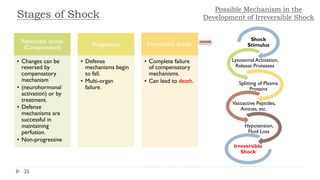
Stages of Shock
Reversible shock:
(Compensated)
• Changes can be
reversed by
compensatory
mechanism
• (neurohormonal
activation) or by
treatment.
• Defense
mechanisms are
successful in
maintaining
perfusion.
• Non-progressive
Progressive
• Defense
mechanisms begin
to fall.
• Multi-organ
failure.
Irreversible shock:
• Complete failure
of compensatory
mechanisms.
• Can lead to death.
Shock
Stimulus
Lysosomal Activation,
Release Proteases
Splitting of Plasma
Proteins
Vasoactive Peptides,
Amines, etc.
Hypotension,
Fluid Loss
Irreversible
Shock
Possible Mechanism in the
Development of Irreversible Shock
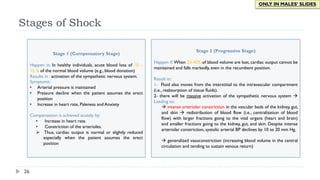
Stage 2 (Progressive Stage)
Happen if: When 20-40% of blood volume are lost, cardiac output cannot be
maintained and falls markedly, even in the recumbent position.
Result in:
1- Fluid also moves from the interstitial to the intravascular compartment
(i.e., reabsorption of tissue fluids).
2- there will be massive activation of the sympathetic nervous system à
Leading to:
à intense arteriolar constriction in the vascular beds of the kidney, gut,
and skin à redistribution of blood flow (i.e., centralization of blood
flow) with larger fractions going to the vital organs (heart and brain)
and smaller fractions going to the kidney, gut, and skin. Despite intense
arteriolar constriction, systolic arterial BP declines by 10 to 20 mm Hg.
à generalized vasoconstriction (increasing blood volume in the central
circulation and tending to sustain venous return)
Stage 1 (Compensatory Stage)
Happen in: In healthy individuals, acute blood loss of 10 –
15 % of the normal blood volume (e.g., blood donation)
Results in : activation of the sympathetic nervous system.
Symptoms:
• Arterial pressure is maintained
• Pressure decline when the patient assumes the erect
position
• Increase in heart rate, Paleness and Anxiety
Compensation is achieved acutely by:
• Increase in heart rate.
• Constriction of the arterioles.
Ø Thus, cardiac output is normal or slightly reduced
especially when the patient assumes the erect
position
Stages of Shock
26
ONLY IN MALES’ SLIDES
27
Cont.
Stage 3
The compensatory mechanisms are maximally mobilized
in stage II.Thus,
Happen during : small additional losses of blood (>40 %)
can result in life-threatening reduction in cardiac output,
BP and tissue perfusion.
Ø Blood flow to heart, brain and kidney is further
reduced à severe ischemia and irreversible tissue
damage à this may result in impaired organ function
and death.
Ø The severe vasoconstriction may itself become a
complicating factor and initiate a vicious cycle
The factors that determine the ultimate outcome include:
• Duration of stage III.
• Severity of tissue anoxia.
• Age and condition of the patient.
ONLY IN MALES’ SLIDES
Stage 2
(maximal mobilization of compensatory mechanisms)
Symptoms, signs and complications:
Ø Systolic arterial blood pressure declines by 10-20 mmHg
Ø Tachycardia (heart rate increases and pulse is thready and
weak)
Ø Skin is pale and cool (peripheral pallor is common)
Ø Deterioration of the mental state because the brain is getting
less oxygen. Patient looks weak, tired and drowsy. Patient may
show anxiety, aggressiveness, and restlessness.
Ø Thirst.
Ø Oliguria (urine output is decreased).
Ø Angina may occur in patients who have intrinsic coronary
vascular disease.
Ø pH drops and metabolic acidosis develops due to increased
anaerobic glycolysis
Generalized cellular deterioration:
• ↓ Mitochondrial activity inside the cells →↓ in ATP.
• ↓ of cellular metabolism, especially glucose →↓ in ATP.
• ↓ in active transport of Na+ and K+ across the cell → Na+ accumulation inside the cell.
• Rupture of many lysosomes.
28
ONLY IN MALES’ SLIDES
Irreversible Stage of Hypovolemic Shock (Stage 3)
Mechanism In the irreversible stage of hypovolemic shock, a series of positive feed back mechanisms take place, leading to à
1- further deterioration in cardiac output and MAP
2- more tissue hypoxia
Depending on: the amount of blood lost
How : When blood loss is excessive and not immediately replaced, and proper treatment is delayed, this stage is reached and the patient dies.
In this stage, there is also failure of compensatory mechanisms.
The severe vasoconstriction may itself become a complicating factor and initiate a vicious cycle. It could happen also during irreversible stage
of hypovolemic shock
Mechanism:
1- Impaired coronary perfusion à cardiac ischemia à depression of cardiac function à further lowering of cardiac output.
2- Reduced blood flow to the vasomoter centers in the medulla depresses the activity of compensatory reflexes à vasomotor failure à depression
of the activity of compensatory reflex à depression of cardiac function à further lowering of cardiac output.
3- Prolonged renal ischemia à acute tubular necrosis à may lead to prolonged post-shock renal insufficiency.
4- Bowel ischemia à breakdown of the mucosal barrier . This may lead to entry of bacteria and toxins into the circulation à depression of cardiac
function à further lowering of cardiac output
Link to Editing File
(Please be sure to check this file frequently for any edits or updates on all of our lectures.)
29
References:
• Girls’ and boys’ slides.
• Guyton and Hall Textbook of Medical Physiology (Thirteenth Edition.)
Quiz
} https://www.onlineexambuilder.com/shock/exam-142187
Thank you!
Contact us:
Physiology436@gmail.com
@Physiology436
The Physiology 436Team:
Team Leaders:
Qaiss Almuhaideb
Lulwah Alshiha
30
‫ﻋﻣﻼ‬ ‫أﺣﺳن‬ ‫ﻣن‬ ‫أﺟر‬ ‫ﯾﺿﯾﻊ‬ ‫ﻻ‬ ‫ﷲ‬ ‫أن‬ ‫ﺗﻌﻠم‬ ‫أﻧت‬ ‫و‬ ‫اﻋﻣل‬ ،‫دﻣﻌﺔ‬ ‫ﻟﺗﻣﺳﺢ‬ ‫اﻋﻣل‬ ،‫ﺑﺳﻣﺔ‬ ‫ﻟﺗرﺳم‬ ‫اﻋﻣل‬
.
Male Members:
Faris Alnafeesah
Nasser Abu-dujeen
Female Members:
Rana Barasain
Ashwaq Almajed
Amal AlQarni
Reema Alotaibi
Leena Alwakeel
Hayfaa Alshaalan

11- Shock.pdf

  • 1.
    Shock Physiology Team 436– Cardiovascular Block Lecture 11 Red: very important. Green: Doctor’s notes. Pink: formulas. Yellow: numbers. Gray: notes and explanation. Lecture: If work is intended for initial studying. Review: If work is intended for revision. 1
  • 2.
    Objectives 2 } Types andcauses of shock. } Define circulatory shock. } Mechanisms responsible for the irreversible phase of hemorrhagic shock. } Body compensatory mechanisms during reversible phases of hemorrhagic shock. } Define shock and state the pathophysiological classification of shock. } Describe the pathways leading to shock and decreased tissue perfusion. } Discuss the stages of a hypovolemic shock. } Explain how stage III hypovolemic shock might result in major organs failure. } Discuss the different compensatory mechanisms during a hypovolemic shock. } Describe the positive feedback mechanisms in the irreversible stage of a hypovolemic shock. Study Smart: focus on mutual topics.
  • 3.
    The cell isthe basic unit of life and it needs oxygen to produce energy. No oxygen à No energy à No life Circulatory shock: When the circulatory system is unable to provide adequate circulation & tissue perfusion à decreased availability of oxygen and nutrients à failure to deliver oxygen to the tissues & vital body organs relative to its metabolic requirement à cellular hypoxia and energy deficit . Result: organ dysfunction and cellular damage. (not death) If not quickly corrected: whole body failure à leads to irreversible shock and death. Shock 3 ONLY IN MALES’ SLIDES Shock may be defined as a pathophysiological state in which there is : 1-widespread 2- serious reduction of tissue perfusion which if prolonged :leads to generalized impairment of cellular function. Video of (Shock) Duration: (9;10 mins) Video of (Shock) Duration: (16:28 mins)
  • 4.
    4 ONLY IN MALES’SLIDES Pathways Leading to Decreased Tissue Perfusion and Shock Decreased tissue perfusion q Causes: hemorrhage / hypovolemia - cardiac failure - neurologic injury. q Result: immune and inflammatory responses. q Alternatively, elaboration of microbial products during infection or release of endogenous cellular products from tissue injury → cellular activation → influences tissue perfusion and the development of shock . Systemic hypotension o NORMAL BP : 120/80 o LOW BP < 90/60 o Arterial pressure = cardiac output x systemic vascular resistance o Reduction in either component (cardiac output or vascular resistance) without a compensatory elevation of the other will result in hypotension.
  • 5.
    Types of Shock 5 CirculatoryShock Low output shock Hypovolemic Cardiogenic - Is associated with loss of 40% or more of left ventricle myocardial function. - Mortality rate: 60%-90% Obstructive High/Normal output shock Distributive Vasogenic: Septic/ toxic,Anaphylactic, Psychogenic Spinal: neurogenic MAP = CO X PR (the problem is low cardiac output) MAP = CO X PR (the problem is in peripheral resistance) Full playlist of Khan Academy’s Shock-related videos
  • 6.
    Causes and Classificationof Shock 6 TYPE CAUSES SYMPTOMS AND SIGNS Hypovolemic shock (most common) • Bleeding/ Hemorrhage (internal/external) (Most Common) • dehydration (sever vomiting, sever diarrhea, excess sweating) • plasma loss (as in burns , trauma) à low blood volume Lead to: Reduced venous return (preload)à loss of 15-25% of CO / 1-2 Là hypotension 1. Hypotension (≤ 85/40mmHg) ; weak but rapid pulse . 2. Tachycardia (Compensation for↓ MAP sensed by Baroreceptors) Rapid, weak, & thready pulse (140/min). 3. Cool, clammy skin 4. Tachypnea “rapid respiration” (Compensation for hypoxia sensed by Chemoreceptors) shallow breathing , anxiety 5. Restlessness due to hypo-perfusion. 6. Altered mental state 7. Oliguria (low urine output)/ 8. Anuria (no urine output). 9. Blood test: Lactic acidosis. Cardiogenic shock Heart problems (e.g., myocardial infarction(Most common), heart failure , cardiac dysrhythmias) à despite adequate ventricular filling pressure à↓ contractility à↓in stroke volume à↓cardiac output à hypotension Myocarditis, cardiomyopathy, cardiac tamponade, congestive heart failure Acute valvular dysfunction (e.g., rapture of papillary muscles post MI) Sustained arrhythmias (e.g. heart block, ventricular tachycardia) pulmonary embolism Is associated with loss of > 40% of LV myocardial function, mortality rate is high 60-90% 1. Just like symptoms of a hypovolemic shock + 2. Distended jugular veins 3. Cardiomegaly 4. Congestion of lungs & viscera: Chest X-ray (CXR): 5. Interstitial pulmonary / Alveolar edema . 6. May be absent pulse Obstructive shock • Obstruction of venous return: likeVena Cava syndrome (usually neoplasms) • Compression of heart: like hemorrhagic pericarditis > cardiac tamponade • Obstruction of outflow: like aortic dissection*, massive pulmonary embolism, pneumothorax. • Circulatory obstruction (e.g., constrictive pericarditis ) Lead to : reduced blood flow to lungs à↓ cardiac output à hypotension 1. Just like symptoms of a hypovolemic shock + 2. Distended jugular veins 3. Pulses paradoxes (in cardiac tamponade). * Aortic dissection: aorta is weak, a cyst becomes a parallel vessel to aorta and makes it rupture > sudden death.
  • 7.
    Causes and Classificationof Shock 7 TYPE CAUSES SYMPTOMS AND SIGNS Distributive shock 1-Vasogenic (Valvular Obstruction) 2- Low- resistance shock qSeptic shock: infection à release of bacterial toxins à activation of NOS in macrophages ® production of NO ® vasodilation + endothelial injury à decreased vascular resistanceà hypotension qAnaphylactic shock: allergy (release of histamine) à IgE Mediated hypersensitivity (histamine triggers peripheral vasodilation and an increase in capillary permeability à decreased vascular resistanceà hypotension q Neurogenic shock: / Spinal Shock (venouspooling): spinal injury à↓ peripheral vasomotor tone à loss of autonomic and motor reflexes à vasodilation à Blood volume remains normal à↓in peripheral vascular resistance à↓ cardiac output as blood is pooled in peripheral veins à ↑ Capacity of blood à↓ Venous return à hypotension (Behaves like hypovolemic shock) qPsychogenicshock : stress, pain, or fright à ↓ HR & vessels dilate à Brain becomes hypo perfused à Loss of consciousness. q Septic shock: Patient flushed & warm due to his hyperdynamic state - Severe drop in BP or hemoglobin- fever – warm- sweaty skin and hypotension q Anaphylatic shock: hypotension- skin eruptions- breathlessness- coughing - localized edema- weak - rapid pulse q Neurogenic shock: as for hypovolemic except warm, dry skin q Psychogenicshock : Simple fainting (syncope) High/Normal Cardiac Output Shock (Distributive) MAP = CO X PR (the problem is in vascular/peripheral resistance)
  • 8.
    Pathophysiology of Shock 8 Reducecapillary perfusion Inadequate tissue oxygen Shift to anaerobic metabolism Metabolic acidosis Release of free radical and oxidative stress - Reactive Oxygen Species (ROS) Tissue damage Apoptosis (programed cell death)
  • 9.
    Metabolic Changes &Cellular Response to Shock 9 1- Reduced capillary perfusion: 2- After 3-5 hours of shock: 3- granulocytes accumulation at injured vessels: ( Free radical release and further tissue damage). 4- damage in GIT mucosa : allows bacteria into circulation. Spasm of pre-post capillary sphincters Hypoxic tissue damage (oxidative stress) Anaerobic metabolism ( anaerobic glycolysis) Lactic acid production Metabolic acidosis (intracellular acidosis) Failure of Na/k pump ( Na & Ca inside the cell) Lysosomes, nuclear membranes & mitochondrial breakdown ONLY IN FEMALES’ SLIDES Precapillary sphincters dilate Venules are still constricted. Blood stagnation in capillaries. Hypoxia continue +Fluid leaves extra vascular compartment. (which will drain in lymphatic vessel) Further reduction in circulating blood volume. ‫ﺑﯾﻘل‬ ‫اﻟﻔوﻟﯾوم‬ ‫ﻻﻧﮫ‬ ‫ﯾروح‬ ‫ﻟﻠﻣﻔﺎﺗﯾك‬
  • 10.
    10 5- cerebral ischemia 6-Myocardial ischemia depressed contractility+ myocardial damage(more shock and acidosis). 7- respiratory distress syndrome occurs : due to damage of capillary endothelial cells & alveolar epithelial cells with release of cytokines. 8- multiple organ failure and death. Cont. ONLY IN FEMALES’ SLIDES depression of vasomotor center (sympathetic) vasodilation+ HR further decrease in blood pressure
  • 11.
    11 Regulation of BP Short term mechanisms Baroreceptor reflex Chemoreceptor reflex CNSischemic response Atrial reflexes Intermediate and long term mechanisms Hormonal Catecholamines ADH Renal Other Capillary shift Increased 2,3 DPG Restoration of plasma volume Restoration of plasma proteins Restoration of RBCs Short-term compensatory reactions: are rapid and act within seconds to minutes Intermediate-long term compensatory reactions: are activated within hours or From hours to days Compensatory Mechanisms During Hypovolemic Shock Other compensatory reactions: are activated within hours From hours to days ONLY IN MALES’ SLIDES 1. Cardiovascular. 2. Respiratory. 3. Endocrine. 4. Renal. 5. Others. Video of (Compensatory Mechanisms of (Medical) Shock) Duration: (18:48 mins)
  • 12.
    Compensatory Mechanisms (TheImportant Ones) 12 Compensatory mechanism Sympathetic stimulation Baroreceptor reflex by decreased blood pressure Chemoreceptors reflex by acidosis Renin-Angiotensin mechanism stimulation Angiotensin II +III: powerful vasoconstrictors Aldosterone: Na & water retention Release of antidiuretic hormone (vasopressin) Water retention Vasoconstriction and thirst stimulation Plasma protein synthesis Fluid shift mechanism ONLY IN FEMALES’ SLIDES
  • 13.
  • 14.
    Short-Term Compensatory Mechanisms; 1-Arterial Baroreceptor Reflex 14 Flow to the heart and brain is maintained; reductions in flow to other organs. ONLY IN MALES’ SLIDES Fully explained in arterial pressure regulation lecture.
  • 15.
    15 Cont. ONLY IN MALES’SLIDES Total physical resistance Mean Arterial pressure Fully explained in arterial pressure regulation lecture.
  • 16.
    16 } Reductions inmean arterial blood pressure (MAP) below 60: 1. do not evoke any additional responses through the baroreceptor reflex. 2. stimulates peripheral chemoreceptors (aortic bodies, carotid bodies, heart) that sense changes in pO2, pCO2, and pH through tissue hypoxia and lactacidosis. } This results in: q Enhancement of the existing tachycardia and vasoconstriction q Respiratory stimulation → tachypnea ONLY IN MALES’ SLIDES Short Term Compensatory Mechanisms; 2- Arterial Chemoreceptor Reflex Fully explained in arterial pressure regulation lecture.
  • 17.
    Vasoconstriction (arteriolar constriction): thisincreasesTPR and hence MAP. It is produced by: o Baroreceptor reflex. o Chemoreceptor reflex. o Noreadrenaline-adrenaline vasoconstrictor mechanism (due to activation of adrenal medulla). o Vasoconstriction is also produced by vasopressin-vasoconstrictor mechanism (in subsequent slides). Marked in: o Skin: cold, pale. o kidneys: drop in GFR & urine volume. o Viscera. o Flow to the heart and brain is maintained; reductions in flow to other organs. Important in: o Shifting blood from the venous reservoir into the circulation. o Maintaining filling pressure of the heart. Tachycardia Produced by: • Baroreceptor reflex. • Chemoreceptor reflex. • Increased sympathetic activity. Tachypnea Caused by : activation of chemoreceptor reflex and sympathetic over activity. Importance: • Increase O2 delivery. • Increase thoracic pump activity→ help venous return. • The increased sympathetic activity also causes restlessness → ↑ skeletal muscle activity → help venous return. 17 Compensatory Mechanisms During Hypovolemic Shock Arterial Baroreceptor and Chemoreceptor Reflexes ONLY IN MALES’ SLIDES
  • 18.
    Compensatory Mechanisms DuringHypovolemic Shock; Endocrine and Renal 18 ONLY IN MALES’ SLIDES Mechanism: 1. Release of hormones that initiate vasoconstriction. 2. Renal conservation of salt and water. 3. Stimulation of hematopoeisis by erythropoietin These compensatory reactions are activated: Within hours From hours to days Endocrine and Renal Compensatory Mechanisms o ↑ Circulating vasoconstrictors o Stimulation of sympathetic nervous system à release of epinephrine, norepinephrine from the adrenal medulla (sympatho-adrenal axis) . o Epinephrin is released almost exclusively from adrenal medulla where as norepinephrin is released from adrenal medulla and sympathetic nerve endings. o àVasoconstriction. o ADH is actively secreted by the posterior pituitary gland in response to hemorrhage. o Thus, hemorrhage à stimulates posterior pituitary à synthesis and release of vasopressin (ADH). o ADH is potent vasoconstrictor. o It also stimulates reabsorption of water. o ↓ renal perfusion à secretion of renin from juxtaglomerular apparatus à generates angiotensin II à o Angiotensin II is a powerful vasoconstrictor
  • 19.
    19 Endocrine and RenalCompensatory Mechanisms o ↑ secretion of glucocorticoids by adrenal cortex o This helps to maintain blood glucose o Stimulation of hematopoiesis o ↓ blood volume & hypoxia à synthesis of erythropoeitin (EPO) à hematopoiesis. Endocrine and Renal Compensatory Mechanisms o Renal conservation of salt and water o Vasopressin à ↑ water reabsorption à ↑ blood volume à ↑ arterial pressure. o Angiotensin II à release of aldosterone à ↑ salt reabsorption à ↑ blood volume à ↑ arterial pressure. o ↓ arterial pressure in kidney à ↓ decreases glomerular filtration rates and thereby decreases the excretion of water and electrolytes directly ONLY IN MALES’ SLIDES Cont.
  • 20.
    1. Responses activated:within hours q Increased movement of interstitial fluid into capillaries (capillary fluid shift). q Increased 2,3 DPG concentration in RBCs: This is important to help Hb deliver more O2 to the tissues (shift O2 dissociation curve to the right). 2. Responses activated: within hours-days q Restoration of circulatory plasma volume: takes 12-72 hrs after moderate hemorrhage. q Restoration of plasma proteins: this occurs in 2 stages: Ø Rapid entry of preformed albumin from extracellular stores. Ø Hepatic synthesis of proteins over 3-4 days. q Restoration of RBCs: this occurs in 2 stages: Ø Increase RBCs count in response to erythropoietin within 10 days. Ø Restoration of red cell mass within 4-8 weeks. Other Compensatory Mechanisms During Hypovolemic Shock 20 These compensatory reactions are activated within hours or from hours to days ONLY IN MALES’ SLIDES
  • 21.
    In Normal Microcirculation 21 InterstitialFluid NFP = +5 to +10 mmHg NFP = - 5 to -7mmHg Hydrostatic Pressure = 0 mmHg Osmotic Pressure = 3 mmHg Blood Capillary Venous Blood Hydrostatic Pressure 30-35 mmHg Hydrostatic Pressure 18-20 mmHg Colloid Osmotic Pressure 25 mmHg ArterialBlood Ø At arterial end: Water moves out of the capillary with a NFP of +5 to +10 mmHg Hydrostatic pressure dominates at the arterial end & net fluid flows out of the circulation. Ø (Arterial pressure - Colloid osmotic pressure = + NFP filtration to interstitial fluid) Ø At venous end: Water moves into the capillary with a NFP of -5 to -7 mmHg. Oncotic pressure dominates at the venous end & net fluid will flow into the bloodstream. Ø (Venous pressure - Colloid osmotic pressure = - NFP filtration to blood stream) NFP = Net Filtration Pressure ONLY IN FEMALES’ SLIDES Interstitial fluid
  • 22.
    Fluid-Shift Mechanism 22 } Inshock, the hydrostatic pressure decreases & oncotic pressure is constant, as a result: • The fluid exchange from the capillary to the extracellular space decreases. • The fluid return from the extracellular space to the capillary increases. } That will increase the blood volume & will increase BP helping to compensate shock. } The capillary fluid shift mechanism means simply that anytime capillary pressure falls too low, fluid is absorbed from the tissues through the capillary membranes and into the circulation, thus building up blood volume and increasing the pressure in the circulation. Normally During Fluid-Shift ONLY IN FEMALES’ SLIDES
  • 23.
    Fluid-Shift Mechanism inShock 23 Hydrostatic Pressure 10mmHg Colloid Osmotic Pressure 25mmHg Hydrostatic pressure 20mmHg Hydrostatic Pressure 0mmHg Decrease outflow Increase inflow ONLY IN FEMALES’ SLIDES Interstitial fluid Venous Blood Arterial Blood Blood Capillary
  • 24.
    24 ONLY IN MALES’SLIDES Stages of Shock Stage 1 à pressure and cardiac output are maintained (in recumbent position) Stage 2 à pressure and cardiac output are not maintained ( 10-20 mmHg drop) Stage 3 à pressure and cardiac output decrease is life threatening During Hypovolemic Shock : Pressure decreases , HR increases Bicarbonate decrease, Lactic acid increases
  • 25.
    25 Stages of Shock Reversibleshock: (Compensated) • Changes can be reversed by compensatory mechanism • (neurohormonal activation) or by treatment. • Defense mechanisms are successful in maintaining perfusion. • Non-progressive Progressive • Defense mechanisms begin to fall. • Multi-organ failure. Irreversible shock: • Complete failure of compensatory mechanisms. • Can lead to death. Shock Stimulus Lysosomal Activation, Release Proteases Splitting of Plasma Proteins Vasoactive Peptides, Amines, etc. Hypotension, Fluid Loss Irreversible Shock Possible Mechanism in the Development of Irreversible Shock
  • 26.
    Stage 2 (ProgressiveStage) Happen if: When 20-40% of blood volume are lost, cardiac output cannot be maintained and falls markedly, even in the recumbent position. Result in: 1- Fluid also moves from the interstitial to the intravascular compartment (i.e., reabsorption of tissue fluids). 2- there will be massive activation of the sympathetic nervous system à Leading to: à intense arteriolar constriction in the vascular beds of the kidney, gut, and skin à redistribution of blood flow (i.e., centralization of blood flow) with larger fractions going to the vital organs (heart and brain) and smaller fractions going to the kidney, gut, and skin. Despite intense arteriolar constriction, systolic arterial BP declines by 10 to 20 mm Hg. à generalized vasoconstriction (increasing blood volume in the central circulation and tending to sustain venous return) Stage 1 (Compensatory Stage) Happen in: In healthy individuals, acute blood loss of 10 – 15 % of the normal blood volume (e.g., blood donation) Results in : activation of the sympathetic nervous system. Symptoms: • Arterial pressure is maintained • Pressure decline when the patient assumes the erect position • Increase in heart rate, Paleness and Anxiety Compensation is achieved acutely by: • Increase in heart rate. • Constriction of the arterioles. Ø Thus, cardiac output is normal or slightly reduced especially when the patient assumes the erect position Stages of Shock 26 ONLY IN MALES’ SLIDES
  • 27.
    27 Cont. Stage 3 The compensatorymechanisms are maximally mobilized in stage II.Thus, Happen during : small additional losses of blood (>40 %) can result in life-threatening reduction in cardiac output, BP and tissue perfusion. Ø Blood flow to heart, brain and kidney is further reduced à severe ischemia and irreversible tissue damage à this may result in impaired organ function and death. Ø The severe vasoconstriction may itself become a complicating factor and initiate a vicious cycle The factors that determine the ultimate outcome include: • Duration of stage III. • Severity of tissue anoxia. • Age and condition of the patient. ONLY IN MALES’ SLIDES Stage 2 (maximal mobilization of compensatory mechanisms) Symptoms, signs and complications: Ø Systolic arterial blood pressure declines by 10-20 mmHg Ø Tachycardia (heart rate increases and pulse is thready and weak) Ø Skin is pale and cool (peripheral pallor is common) Ø Deterioration of the mental state because the brain is getting less oxygen. Patient looks weak, tired and drowsy. Patient may show anxiety, aggressiveness, and restlessness. Ø Thirst. Ø Oliguria (urine output is decreased). Ø Angina may occur in patients who have intrinsic coronary vascular disease. Ø pH drops and metabolic acidosis develops due to increased anaerobic glycolysis
  • 28.
    Generalized cellular deterioration: •↓ Mitochondrial activity inside the cells →↓ in ATP. • ↓ of cellular metabolism, especially glucose →↓ in ATP. • ↓ in active transport of Na+ and K+ across the cell → Na+ accumulation inside the cell. • Rupture of many lysosomes. 28 ONLY IN MALES’ SLIDES Irreversible Stage of Hypovolemic Shock (Stage 3) Mechanism In the irreversible stage of hypovolemic shock, a series of positive feed back mechanisms take place, leading to à 1- further deterioration in cardiac output and MAP 2- more tissue hypoxia Depending on: the amount of blood lost How : When blood loss is excessive and not immediately replaced, and proper treatment is delayed, this stage is reached and the patient dies. In this stage, there is also failure of compensatory mechanisms. The severe vasoconstriction may itself become a complicating factor and initiate a vicious cycle. It could happen also during irreversible stage of hypovolemic shock Mechanism: 1- Impaired coronary perfusion à cardiac ischemia à depression of cardiac function à further lowering of cardiac output. 2- Reduced blood flow to the vasomoter centers in the medulla depresses the activity of compensatory reflexes à vasomotor failure à depression of the activity of compensatory reflex à depression of cardiac function à further lowering of cardiac output. 3- Prolonged renal ischemia à acute tubular necrosis à may lead to prolonged post-shock renal insufficiency. 4- Bowel ischemia à breakdown of the mucosal barrier . This may lead to entry of bacteria and toxins into the circulation à depression of cardiac function à further lowering of cardiac output
  • 29.
    Link to EditingFile (Please be sure to check this file frequently for any edits or updates on all of our lectures.) 29 References: • Girls’ and boys’ slides. • Guyton and Hall Textbook of Medical Physiology (Thirteenth Edition.) Quiz } https://www.onlineexambuilder.com/shock/exam-142187
  • 30.
    Thank you! Contact us: Physiology436@gmail.com @Physiology436 ThePhysiology 436Team: Team Leaders: Qaiss Almuhaideb Lulwah Alshiha 30 ‫ﻋﻣﻼ‬ ‫أﺣﺳن‬ ‫ﻣن‬ ‫أﺟر‬ ‫ﯾﺿﯾﻊ‬ ‫ﻻ‬ ‫ﷲ‬ ‫أن‬ ‫ﺗﻌﻠم‬ ‫أﻧت‬ ‫و‬ ‫اﻋﻣل‬ ،‫دﻣﻌﺔ‬ ‫ﻟﺗﻣﺳﺢ‬ ‫اﻋﻣل‬ ،‫ﺑﺳﻣﺔ‬ ‫ﻟﺗرﺳم‬ ‫اﻋﻣل‬ . Male Members: Faris Alnafeesah Nasser Abu-dujeen Female Members: Rana Barasain Ashwaq Almajed Amal AlQarni Reema Alotaibi Leena Alwakeel Hayfaa Alshaalan