G . P. C H A K R AVA RT H Y
M O D E R AT O R - D R . R A N J I T H M . S
PATHOPHYSIOLOGY OF
SHOCK
INTRODUCTION
• Definition :
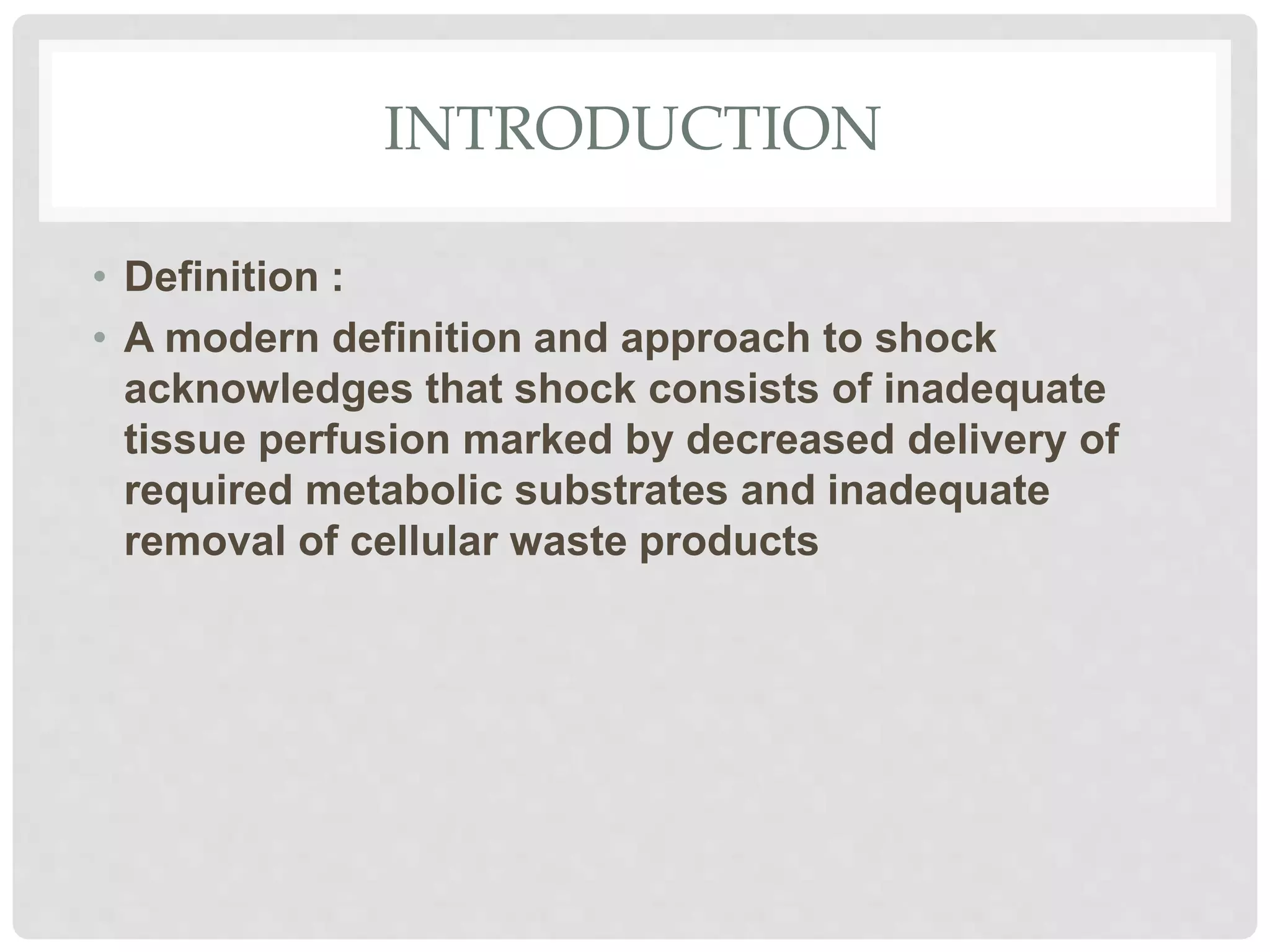
• A modern definition and approach to shock
acknowledges that shock consists of inadequate
tissue perfusion marked by decreased delivery of
required metabolic substrates and inadequate
removal of cellular waste products
TYPES OF SHOCK
• Hypovolemic
• Distributive (septic,neurogenic,anaphylactic)
• Cardiogenic
• Obstructive
HYPOVOLAEMIC SHOCK
• Due to loss of blood , plasma ,body water and
electrolytes
• Often due to haemorrhage,vomitings,diarrhoea
• Characteristics :
• decreased systemic arterial pressure(low bp)
• tachycardia, increased vascular resistance(cold clammy
extrimities)
PATHOPHYSIOLOGY
Hemorrhage /capillary leakage
Decreased filling of rt heart
Decreased filling of lt atrium & ventricle
Drop in SV & arterial BP
PATHOPHYSIOLOGY
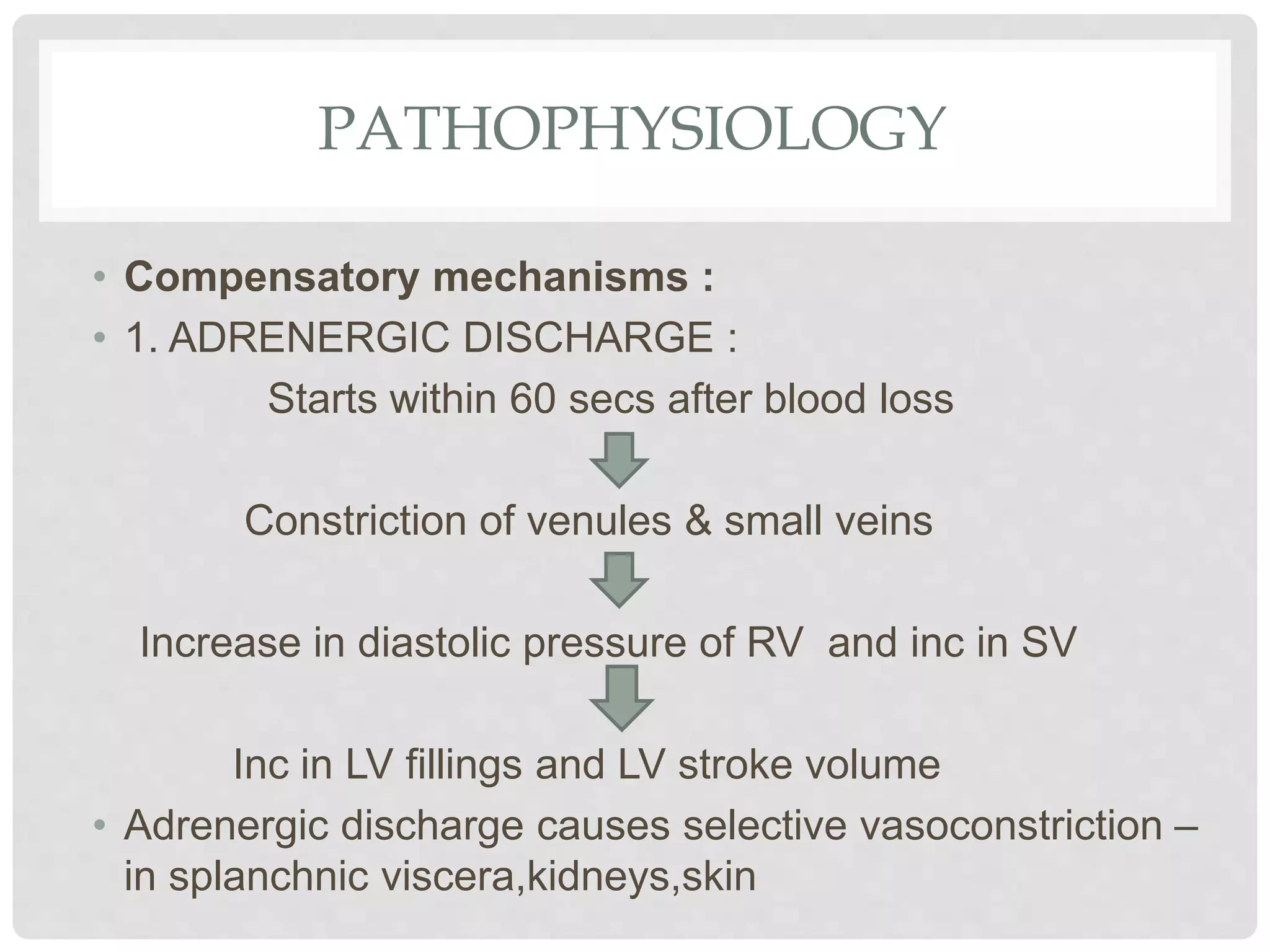
• Compensatory mechanisms :
• 1. ADRENERGIC DISCHARGE :
Starts within 60 secs after blood loss
Constriction of venules & small veins
Increase in diastolic pressure of RV and inc in SV
Inc in LV fillings and LV stroke volume
• Adrenergic discharge causes selective vasoconstriction –
in splanchnic viscera,kidneys,skin
PATHOPHYSIOLOGY
• Compensatory mechanisms:
• 2.HYPERVENTILATION :
Shortly after hemorrhage there will be
met.acidemia
Spont. Deep breathing sucks blood into heart & lungs
Increase in stroke volume of LV
• Hyperventilation occurs within 60 secs
PATHOPHYSIOLOGY
• Compensatory mechanisms:
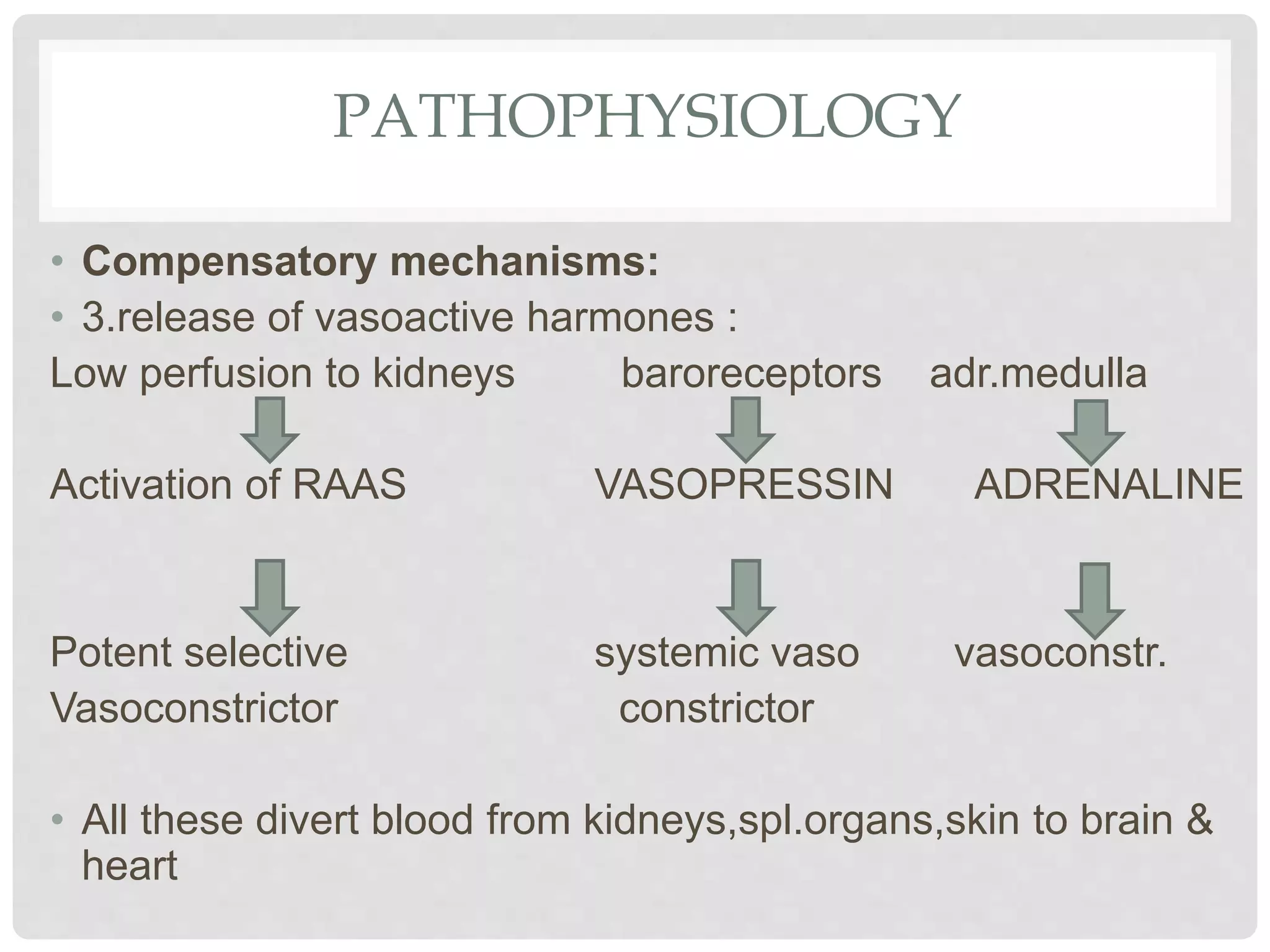
• 3.release of vasoactive harmones :
Low perfusion to kidneys baroreceptors adr.medulla
Activation of RAAS VASOPRESSIN ADRENALINE
Potent selective systemic vaso vasoconstr.
Vasoconstrictor constrictor
• All these divert blood from kidneys,spl.organs,skin to brain &
heart
PATHOPHYSIOLOGY
• Compensatory mechanisms:
• 4.collapse :
Assumption of recumbent posture displaces blood from lower
ext. to heart – increases C.O
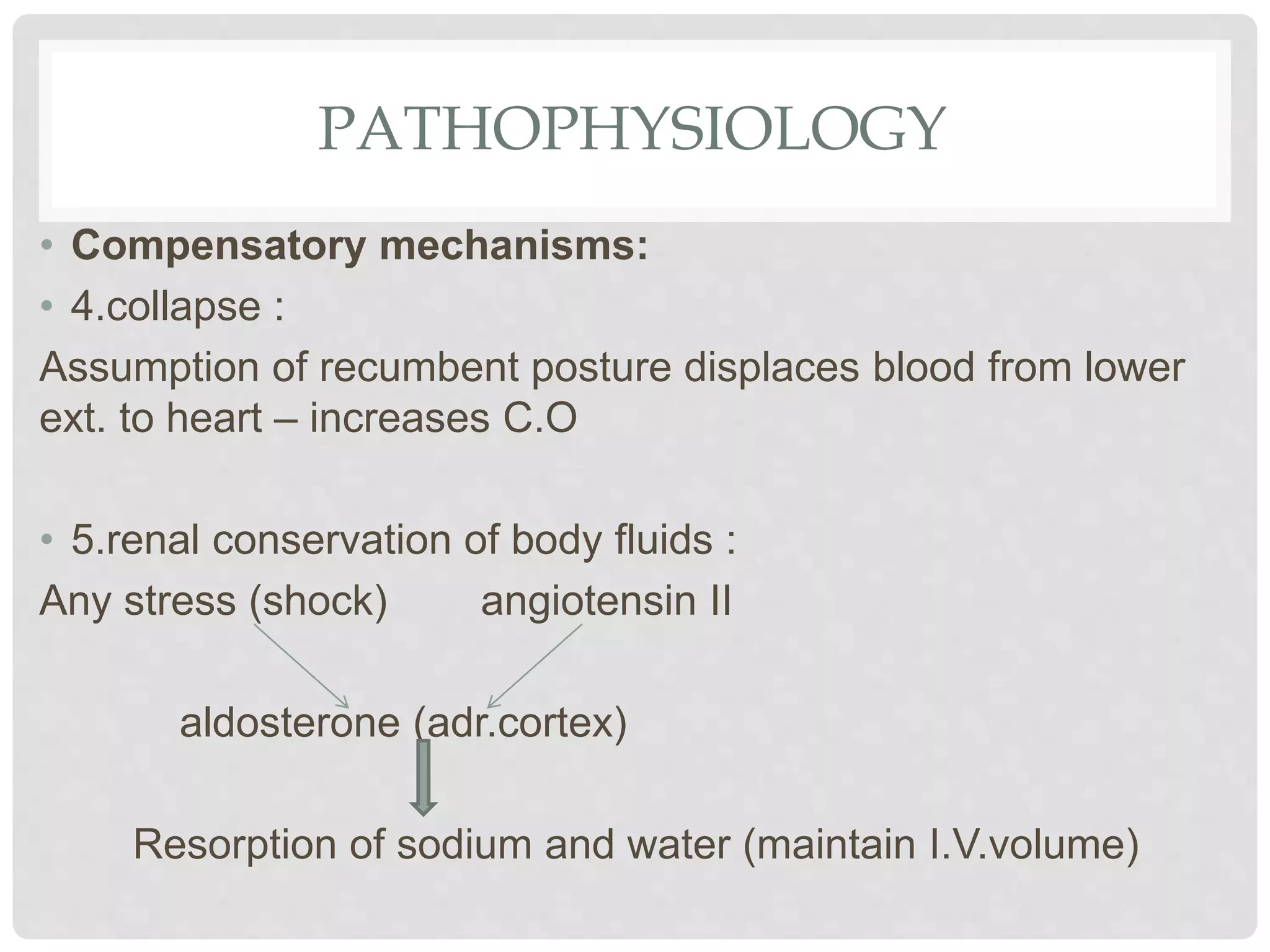
• 5.renal conservation of body fluids :
Any stress (shock) angiotensin II
aldosterone (adr.cortex)
Resorption of sodium and water (maintain I.V.volume)
PATHOPHYSIOLOGY
• Compensatory mechanisms :
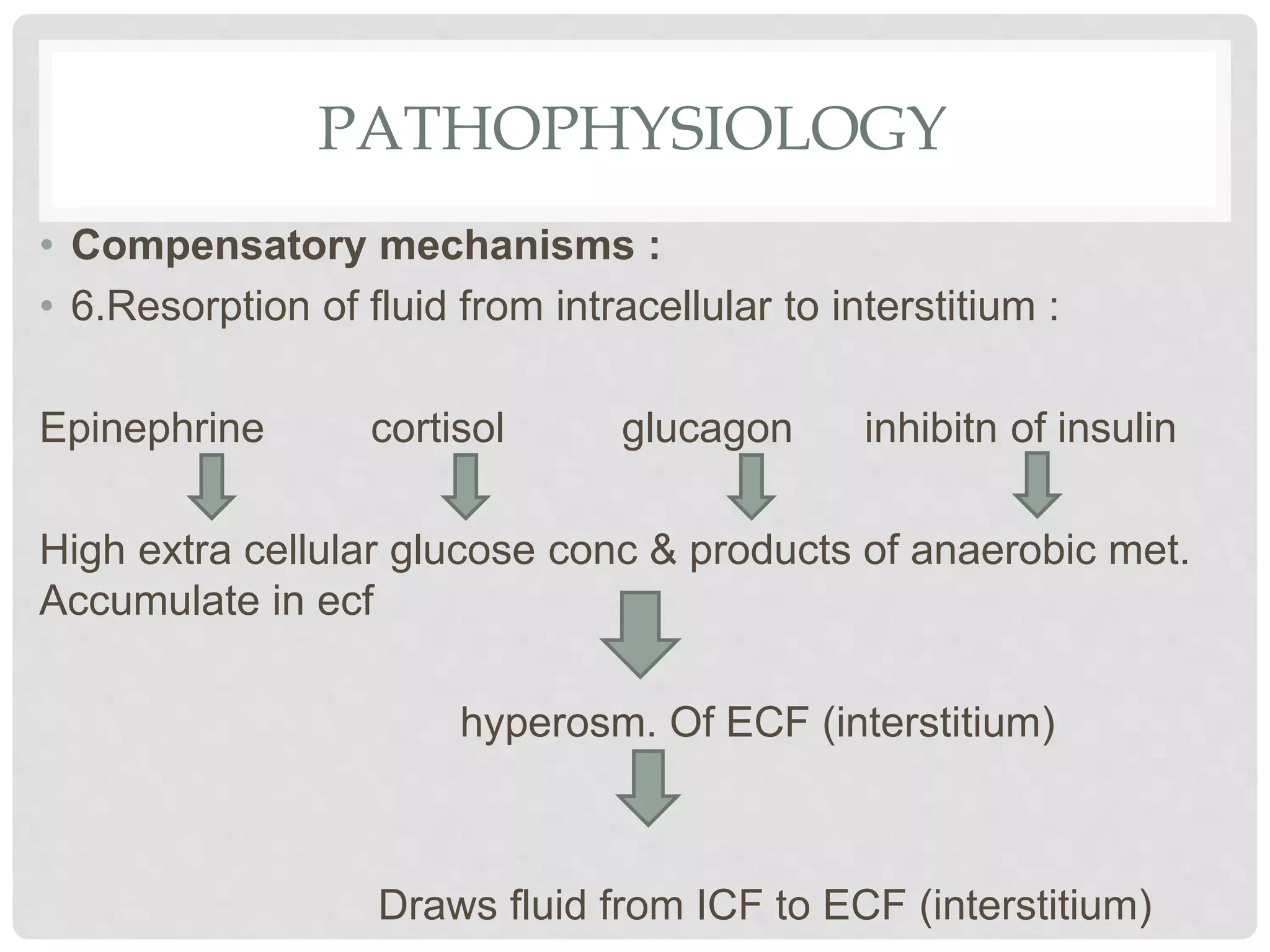
• 6.Resorption of fluid from intracellular to interstitium :
Epinephrine cortisol glucagon inhibitn of insulin
High extra cellular glucose conc & products of anaerobic met.
Accumulate in ecf
hyperosm. Of ECF (interstitium)
Draws fluid from ICF to ECF (interstitium)
PATHOPHYSIOLOGY
• Compensatory mechanisms :
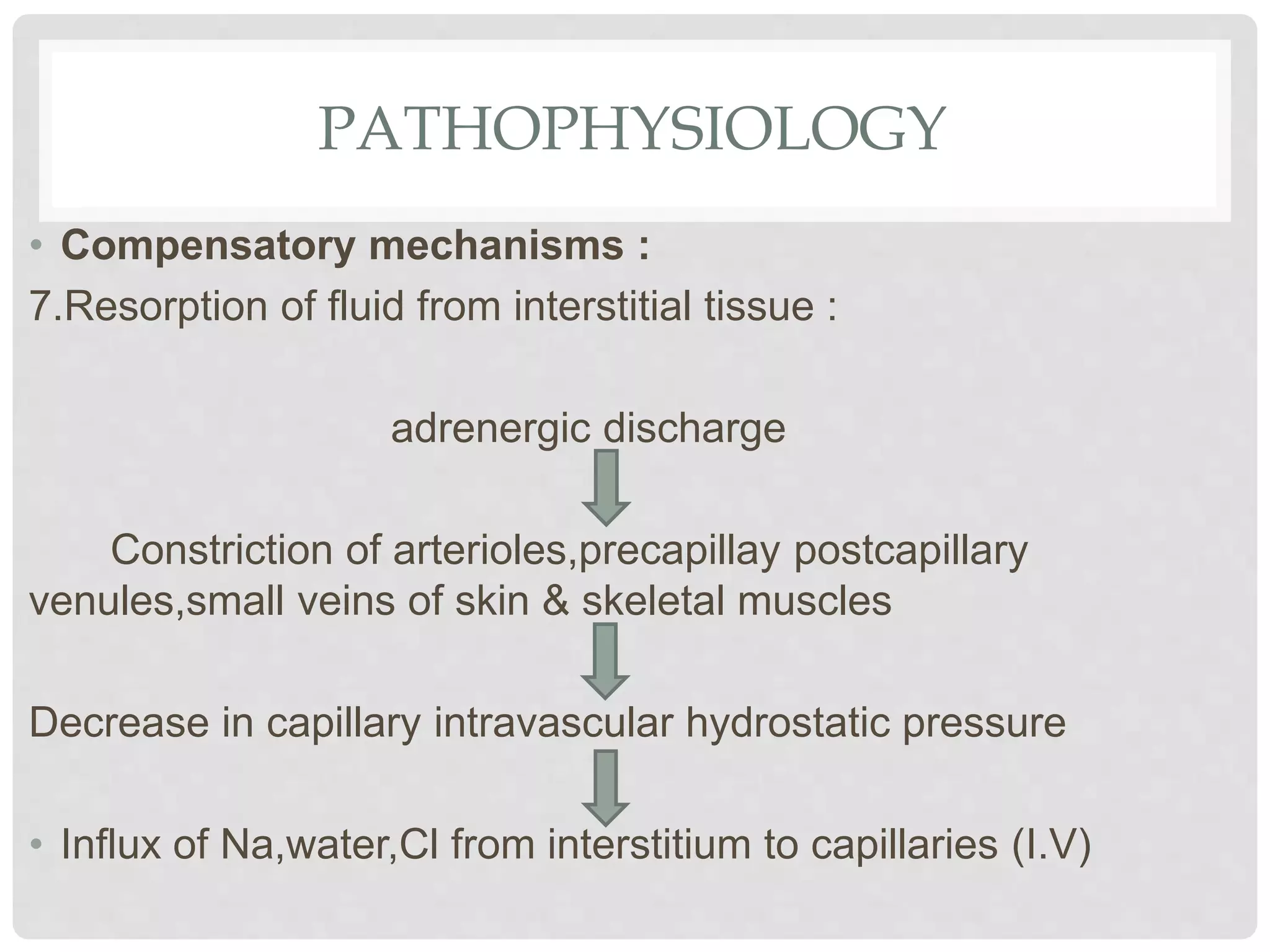
7.Resorption of fluid from interstitial tissue :
adrenergic discharge
Constriction of arterioles,precapillay postcapillary
venules,small veins of skin & skeletal muscles
Decrease in capillary intravascular hydrostatic pressure
• Influx of Na,water,Cl from interstitium to capillaries (I.V)
COMPENSATORY MECHANISMS
PATHOPHYSIOLOGY
PATHOPHYSIOLOGY
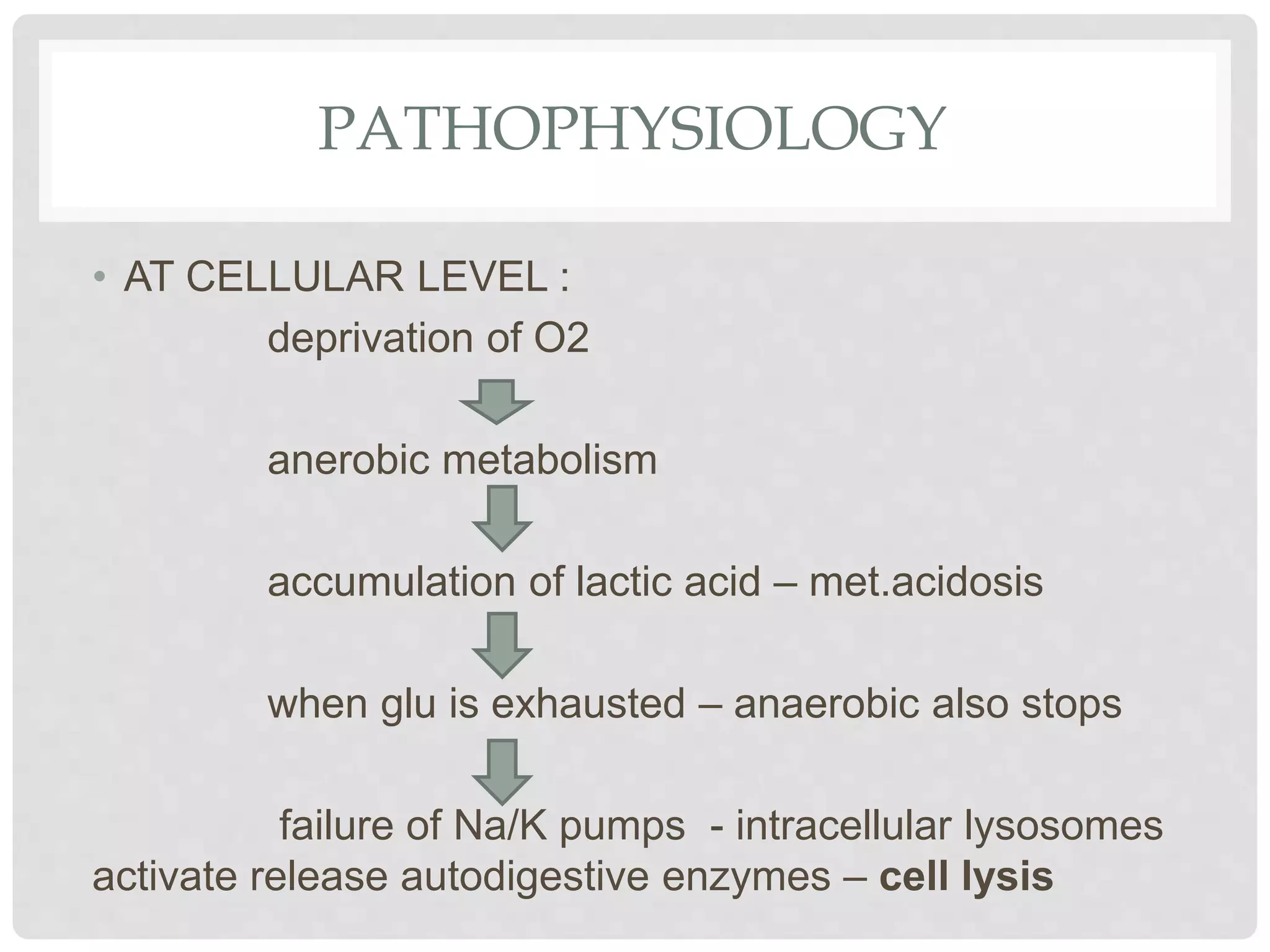
• AT CELLULAR LEVEL :
deprivation of O2
anerobic metabolism
accumulation of lactic acid – met.acidosis
when glu is exhausted – anaerobic also stops
failure of Na/K pumps - intracellular lysosomes
activate release autodigestive enzymes – cell lysis
STAGES/SEVERITY OF SHOCK
• Compensated shock :
• In compensated shock, there is adequate compensation to
maintain central blood volume and preserve flow to the
kidneys, lungs and brain.
• tachycardia and cool peripheries
• there may be no other clinical signs
• There is a systemic metabolic acidosis within the
underperfused organs.
• Although clinically occult, this state will lead to multiple
organ failure and death if prolonged
STAGES/SEVERITY OF SHOCK
• Decompensated shock :
• Further loss of circulating volume overloads the body’s
compensatory mechanisms and there is progressive
renal, respiratory and cardiovascular decompensation.
STAGES/SEVERITY OF SHOCK
SEPTIC SHOCK
• May be due to gram
positive(clostridium,staph,strept,pneumo),gram negative
(e.coli,klebsiella,proteus),fungi,viruses
• Gram negative septic shock is also referred as endotoxic
shock
• Typically it is vasodilatory shock causing hypotension –
resistant to vasopressors
• Because endotoxin induces release of isoform of NO
synthetase which causes sustained prolonged release of
NO
SEPTIC SHOCK
• Pathophysiology :
endotoxin & other microbial products
Complement neutrophil&macrophage
Activation endothelial cell activation
activation (cytokines,free radicals)
Procoagulants NO,IL, reactive o2 species systemic effects
Microvascular vasodiation,inc permeability met.abnormalities
Thrombosis(DIC) decreased perfusion
Tissue ischemia MULTI ORGAN FAILURE
SEPTIC SHOCK
• Stages
• 1.hyperdynamic shock (reversible stage):
Fever,tachycardia,tachypnoea
Pyrogenic response is still intact
• 2.hypodynamic shock (irreversible):
Pyrogenic response is lost
Decompensated shock
Present with MODS with anuria,cyanosis (respiratory
failure),pulmonary edema,liver failure (jaundice),cardiac
depresion
• Eventually coma and death
NEUROGENIC SHOCK
Diminished tissue perfusion as a result of loss of
vasomotor tone to peripheral arterial beds.
Causes of neurogenic shock :
Spinal cord trauma
Spinal cord neoplasm
Spinal/epidural anesthetic
NEUROGENIC SHOCK
• Sympathetic input to the heart, which normally increases
heart rate & cardiac contractility,
• Input to the adrenal medulla, which increases
catecholamine release, may also be disrupted,
preventing the typical reflex tachycardia that
occurs with hypovolemia
NEUROGENIC SHOCK
Acute spinal cord injury results in activation of multiple
secondary injury mechanisms:
(a) vascular compromise to the spinal cord
with loss of autoregulation, vasospasm, and thrombosis
(b) loss of cellular membrane integrity and impaired energy
metabolism
(c) neurotransmitter accumulation and release of free
radicals.
Importantly, hypotension leads to further reduction in
blood flow to spinal cord worsening acute spinal cord
injury
NEUROGENIC SHOCK
The classic description of neurogenic shock consists of
1. Decreased blood pressure associated with bradycardia
(absence of reflexive tachycardia due to disrupted
sympathetic discharge)
2. Warm extremities (loss of peripheral vasoconstriction),
3. motor and sensory deficits indicative of a spinal cord injury,
4. Radiographic evidence of a vertebral column fracture
CARDIOGENIC SHOCK
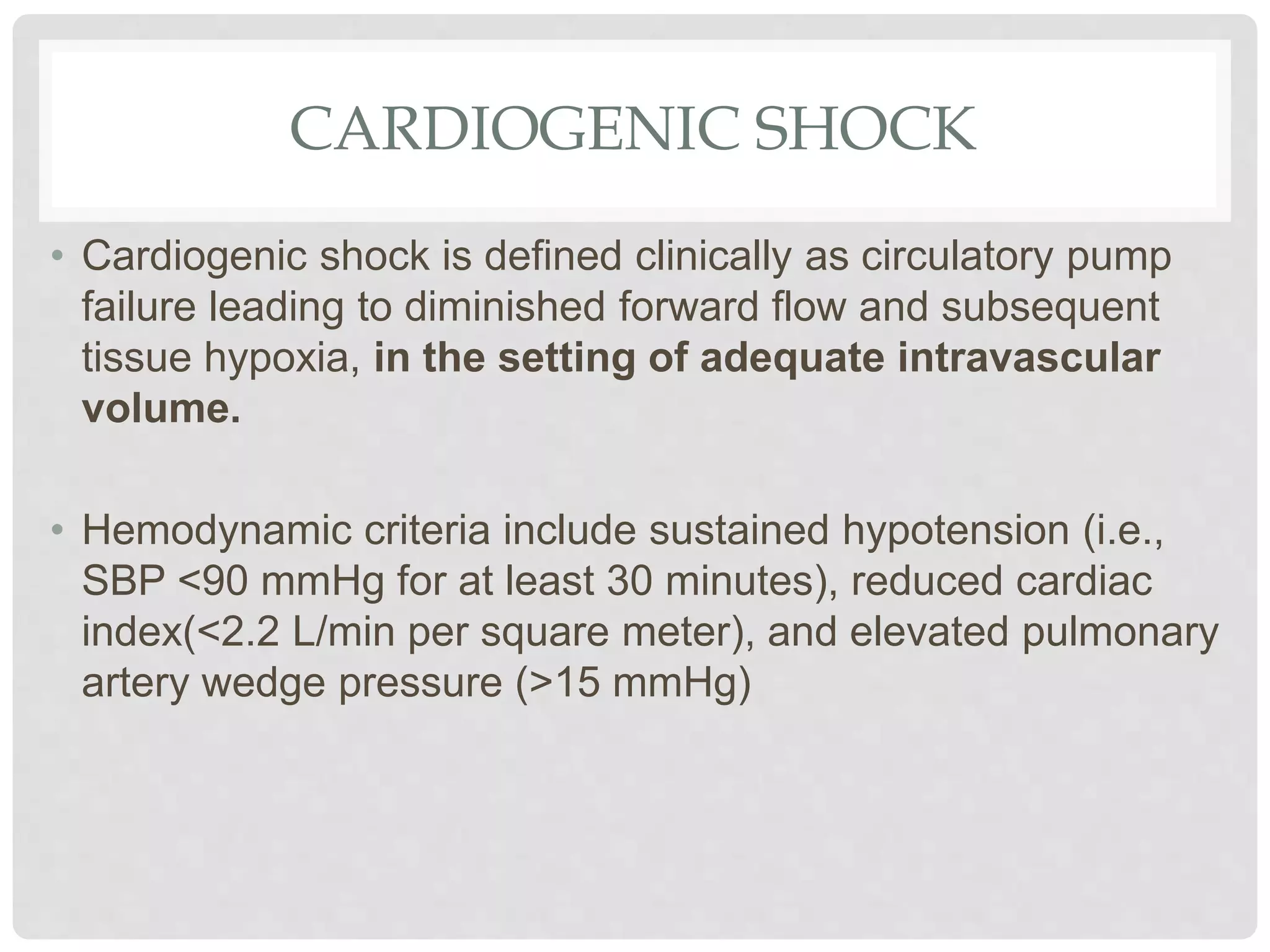
• Cardiogenic shock is defined clinically as circulatory pump
failure leading to diminished forward flow and subsequent
tissue hypoxia, in the setting of adequate intravascular
volume.
• Hemodynamic criteria include sustained hypotension (i.e.,
SBP <90 mmHg for at least 30 minutes), reduced cardiac
index(<2.2 L/min per square meter), and elevated pulmonary
artery wedge pressure (>15 mmHg)
CARDIOGENIC SHOCK
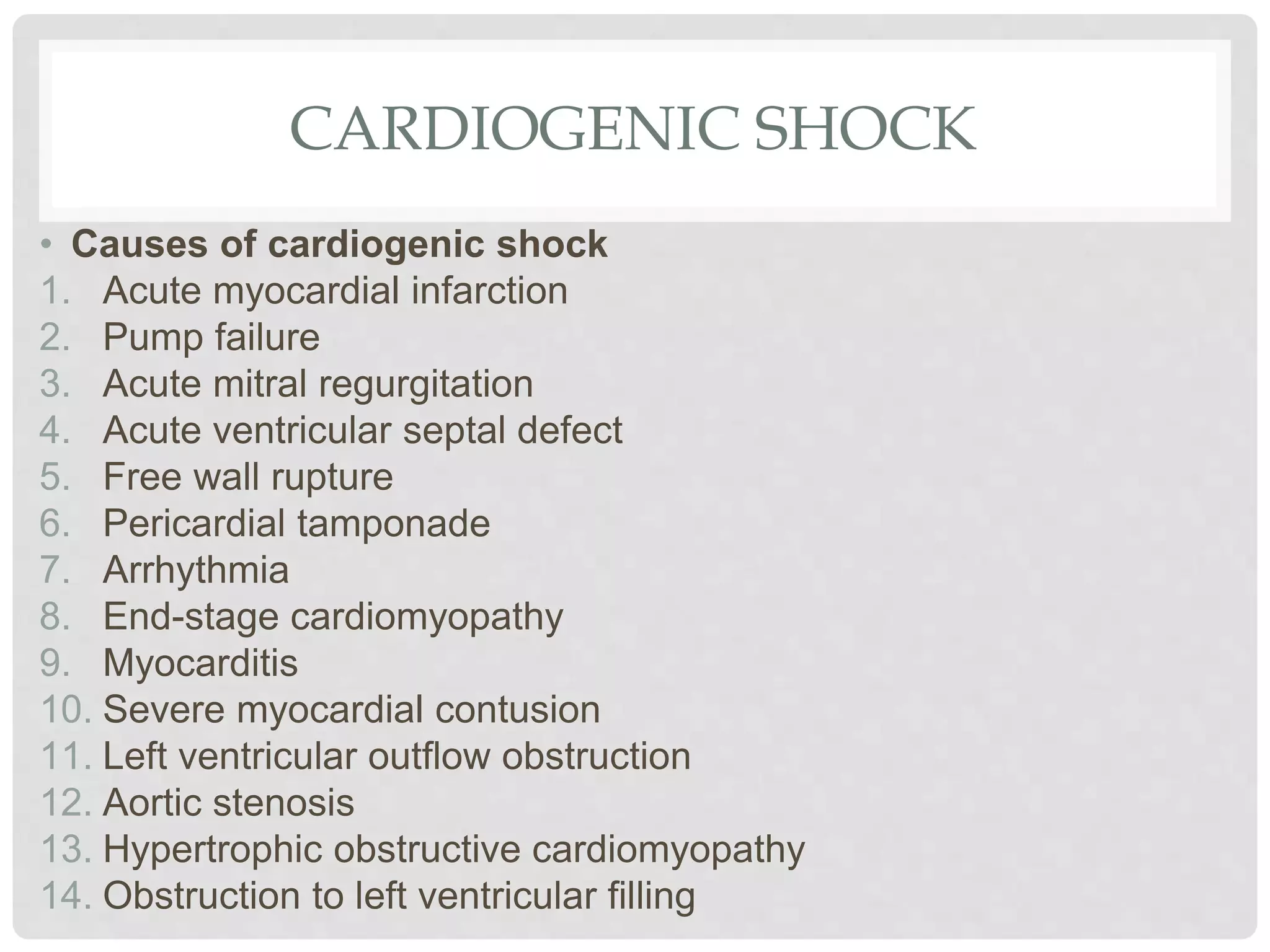
• Causes of cardiogenic shock
1. Acute myocardial infarction
2. Pump failure
3. Acute mitral regurgitation
4. Acute ventricular septal defect
5. Free wall rupture
6. Pericardial tamponade
7. Arrhythmia
8. End-stage cardiomyopathy
9. Myocarditis
10. Severe myocardial contusion
11. Left ventricular outflow obstruction
12. Aortic stenosis
13. Hypertrophic obstructive cardiomyopathy
14. Obstruction to left ventricular filling
CARDIOGENIC SHOCK
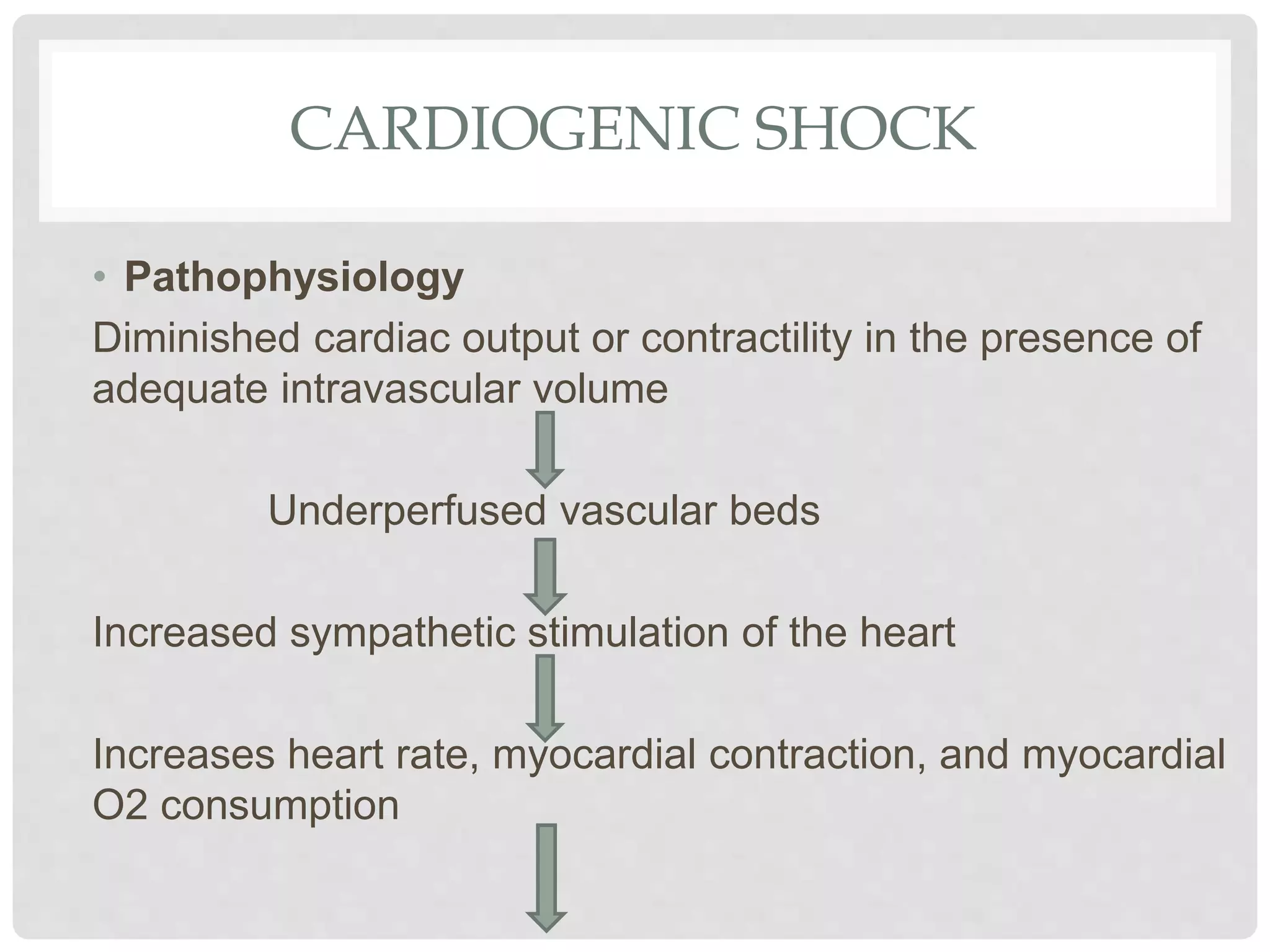
• Pathophysiology
Diminished cardiac output or contractility in the presence of
adequate intravascular volume
Underperfused vascular beds
Increased sympathetic stimulation of the heart
Increases heart rate, myocardial contraction, and myocardial
O2 consumption
CARDIOGENIC SHOCK
• Pathophysiology
coronary artery blood flow is not increased in patients with fixed
stenosis of the coronary arteries.
resulting in a scenario of increased myocardial O2 demand
Results in Acute heart failure
fluid accumulation in the pulmonary microcirculatory bed,
decreasing myocardial O2 delivery even further.
Resulting in cardiogenic shock
OBSTRUCTIVE SHOCK
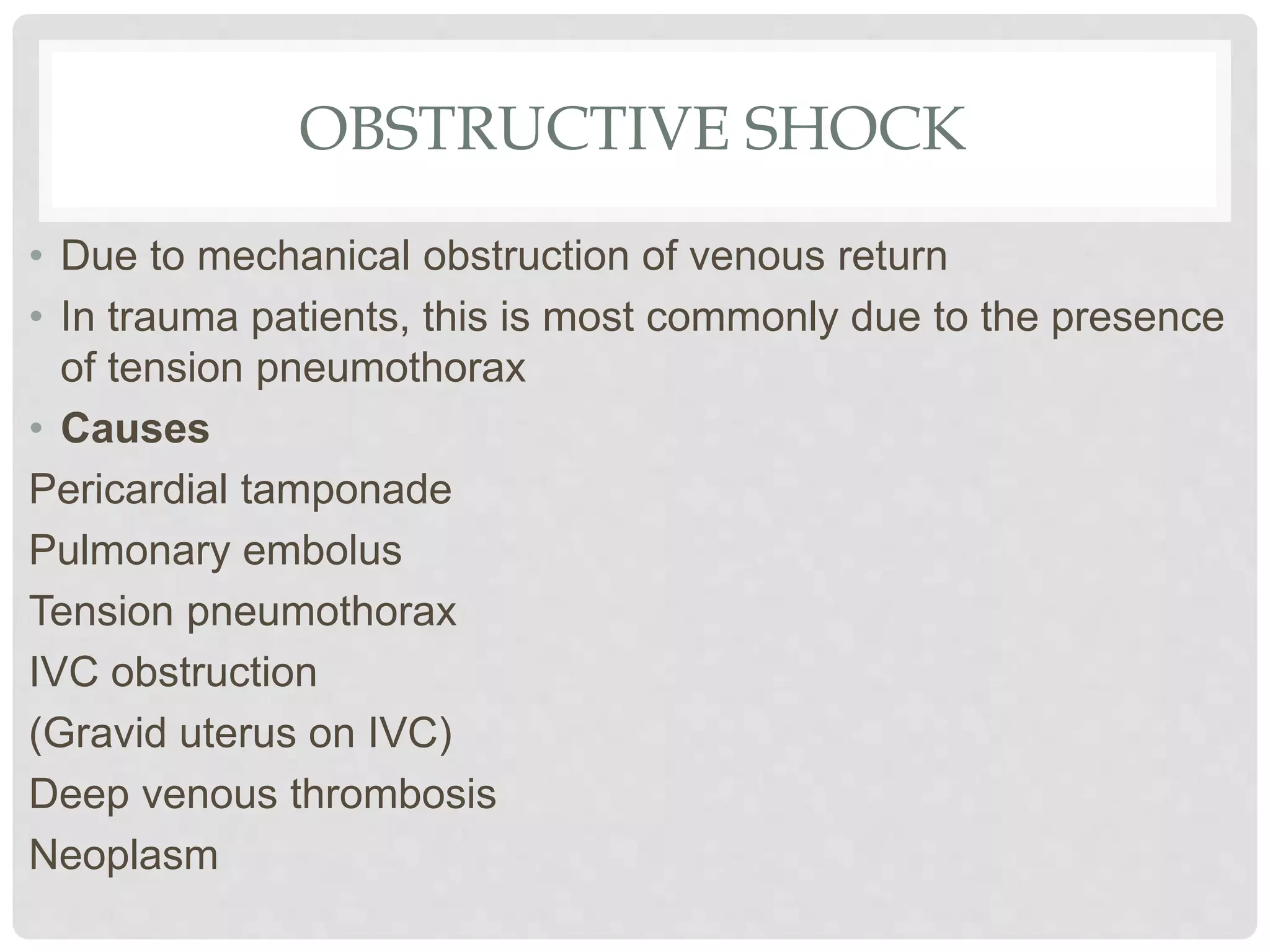
• Due to mechanical obstruction of venous return
• In trauma patients, this is most commonly due to the presence
of tension pneumothorax
• Causes
Pericardial tamponade
Pulmonary embolus
Tension pneumothorax
IVC obstruction
(Gravid uterus on IVC)
Deep venous thrombosis
Neoplasm
DIFFERENTIATION
THANK YOU

Pathophysiology of shock

  • 1.
    G . P.C H A K R AVA RT H Y M O D E R AT O R - D R . R A N J I T H M . S PATHOPHYSIOLOGY OF SHOCK
  • 2.
    INTRODUCTION • Definition : •A modern definition and approach to shock acknowledges that shock consists of inadequate tissue perfusion marked by decreased delivery of required metabolic substrates and inadequate removal of cellular waste products
  • 3.
    TYPES OF SHOCK •Hypovolemic • Distributive (septic,neurogenic,anaphylactic) • Cardiogenic • Obstructive
  • 4.
    HYPOVOLAEMIC SHOCK • Dueto loss of blood , plasma ,body water and electrolytes • Often due to haemorrhage,vomitings,diarrhoea • Characteristics : • decreased systemic arterial pressure(low bp) • tachycardia, increased vascular resistance(cold clammy extrimities)
  • 5.
    PATHOPHYSIOLOGY Hemorrhage /capillary leakage Decreasedfilling of rt heart Decreased filling of lt atrium & ventricle Drop in SV & arterial BP
  • 6.
    PATHOPHYSIOLOGY • Compensatory mechanisms: • 1. ADRENERGIC DISCHARGE : Starts within 60 secs after blood loss Constriction of venules & small veins Increase in diastolic pressure of RV and inc in SV Inc in LV fillings and LV stroke volume • Adrenergic discharge causes selective vasoconstriction – in splanchnic viscera,kidneys,skin
  • 7.
    PATHOPHYSIOLOGY • Compensatory mechanisms: •2.HYPERVENTILATION : Shortly after hemorrhage there will be met.acidemia Spont. Deep breathing sucks blood into heart & lungs Increase in stroke volume of LV • Hyperventilation occurs within 60 secs
  • 8.
    PATHOPHYSIOLOGY • Compensatory mechanisms: •3.release of vasoactive harmones : Low perfusion to kidneys baroreceptors adr.medulla Activation of RAAS VASOPRESSIN ADRENALINE Potent selective systemic vaso vasoconstr. Vasoconstrictor constrictor • All these divert blood from kidneys,spl.organs,skin to brain & heart
  • 9.
    PATHOPHYSIOLOGY • Compensatory mechanisms: •4.collapse : Assumption of recumbent posture displaces blood from lower ext. to heart – increases C.O • 5.renal conservation of body fluids : Any stress (shock) angiotensin II aldosterone (adr.cortex) Resorption of sodium and water (maintain I.V.volume)
  • 10.
    PATHOPHYSIOLOGY • Compensatory mechanisms: • 6.Resorption of fluid from intracellular to interstitium : Epinephrine cortisol glucagon inhibitn of insulin High extra cellular glucose conc & products of anaerobic met. Accumulate in ecf hyperosm. Of ECF (interstitium) Draws fluid from ICF to ECF (interstitium)
  • 11.
    PATHOPHYSIOLOGY • Compensatory mechanisms: 7.Resorption of fluid from interstitial tissue : adrenergic discharge Constriction of arterioles,precapillay postcapillary venules,small veins of skin & skeletal muscles Decrease in capillary intravascular hydrostatic pressure • Influx of Na,water,Cl from interstitium to capillaries (I.V)
  • 12.
  • 13.
  • 14.
    PATHOPHYSIOLOGY • AT CELLULARLEVEL : deprivation of O2 anerobic metabolism accumulation of lactic acid – met.acidosis when glu is exhausted – anaerobic also stops failure of Na/K pumps - intracellular lysosomes activate release autodigestive enzymes – cell lysis
  • 15.
    STAGES/SEVERITY OF SHOCK •Compensated shock : • In compensated shock, there is adequate compensation to maintain central blood volume and preserve flow to the kidneys, lungs and brain. • tachycardia and cool peripheries • there may be no other clinical signs • There is a systemic metabolic acidosis within the underperfused organs. • Although clinically occult, this state will lead to multiple organ failure and death if prolonged
  • 16.
    STAGES/SEVERITY OF SHOCK •Decompensated shock : • Further loss of circulating volume overloads the body’s compensatory mechanisms and there is progressive renal, respiratory and cardiovascular decompensation.
  • 17.
  • 18.
    SEPTIC SHOCK • Maybe due to gram positive(clostridium,staph,strept,pneumo),gram negative (e.coli,klebsiella,proteus),fungi,viruses • Gram negative septic shock is also referred as endotoxic shock • Typically it is vasodilatory shock causing hypotension – resistant to vasopressors • Because endotoxin induces release of isoform of NO synthetase which causes sustained prolonged release of NO
  • 19.
    SEPTIC SHOCK • Pathophysiology: endotoxin & other microbial products Complement neutrophil&macrophage Activation endothelial cell activation activation (cytokines,free radicals) Procoagulants NO,IL, reactive o2 species systemic effects Microvascular vasodiation,inc permeability met.abnormalities Thrombosis(DIC) decreased perfusion Tissue ischemia MULTI ORGAN FAILURE
  • 20.
    SEPTIC SHOCK • Stages •1.hyperdynamic shock (reversible stage): Fever,tachycardia,tachypnoea Pyrogenic response is still intact • 2.hypodynamic shock (irreversible): Pyrogenic response is lost Decompensated shock Present with MODS with anuria,cyanosis (respiratory failure),pulmonary edema,liver failure (jaundice),cardiac depresion • Eventually coma and death
  • 21.
    NEUROGENIC SHOCK Diminished tissueperfusion as a result of loss of vasomotor tone to peripheral arterial beds. Causes of neurogenic shock : Spinal cord trauma Spinal cord neoplasm Spinal/epidural anesthetic
  • 22.
    NEUROGENIC SHOCK • Sympatheticinput to the heart, which normally increases heart rate & cardiac contractility, • Input to the adrenal medulla, which increases catecholamine release, may also be disrupted, preventing the typical reflex tachycardia that occurs with hypovolemia
  • 23.
    NEUROGENIC SHOCK Acute spinalcord injury results in activation of multiple secondary injury mechanisms: (a) vascular compromise to the spinal cord with loss of autoregulation, vasospasm, and thrombosis (b) loss of cellular membrane integrity and impaired energy metabolism (c) neurotransmitter accumulation and release of free radicals. Importantly, hypotension leads to further reduction in blood flow to spinal cord worsening acute spinal cord injury
  • 24.
    NEUROGENIC SHOCK The classicdescription of neurogenic shock consists of 1. Decreased blood pressure associated with bradycardia (absence of reflexive tachycardia due to disrupted sympathetic discharge) 2. Warm extremities (loss of peripheral vasoconstriction), 3. motor and sensory deficits indicative of a spinal cord injury, 4. Radiographic evidence of a vertebral column fracture
  • 25.
    CARDIOGENIC SHOCK • Cardiogenicshock is defined clinically as circulatory pump failure leading to diminished forward flow and subsequent tissue hypoxia, in the setting of adequate intravascular volume. • Hemodynamic criteria include sustained hypotension (i.e., SBP <90 mmHg for at least 30 minutes), reduced cardiac index(<2.2 L/min per square meter), and elevated pulmonary artery wedge pressure (>15 mmHg)
  • 26.
    CARDIOGENIC SHOCK • Causesof cardiogenic shock 1. Acute myocardial infarction 2. Pump failure 3. Acute mitral regurgitation 4. Acute ventricular septal defect 5. Free wall rupture 6. Pericardial tamponade 7. Arrhythmia 8. End-stage cardiomyopathy 9. Myocarditis 10. Severe myocardial contusion 11. Left ventricular outflow obstruction 12. Aortic stenosis 13. Hypertrophic obstructive cardiomyopathy 14. Obstruction to left ventricular filling
  • 27.
    CARDIOGENIC SHOCK • Pathophysiology Diminishedcardiac output or contractility in the presence of adequate intravascular volume Underperfused vascular beds Increased sympathetic stimulation of the heart Increases heart rate, myocardial contraction, and myocardial O2 consumption
  • 28.
    CARDIOGENIC SHOCK • Pathophysiology coronaryartery blood flow is not increased in patients with fixed stenosis of the coronary arteries. resulting in a scenario of increased myocardial O2 demand Results in Acute heart failure fluid accumulation in the pulmonary microcirculatory bed, decreasing myocardial O2 delivery even further. Resulting in cardiogenic shock
  • 29.
    OBSTRUCTIVE SHOCK • Dueto mechanical obstruction of venous return • In trauma patients, this is most commonly due to the presence of tension pneumothorax • Causes Pericardial tamponade Pulmonary embolus Tension pneumothorax IVC obstruction (Gravid uterus on IVC) Deep venous thrombosis Neoplasm
  • 30.
  • 31.