Sexually Transmitted
Infections
Prepared by:
Orlando A. Pistan, MAEd-GC
Psychology Instructor
Sexually Transmitted Infections
• Sexually transmitted diseases (STDs or STIs) are
infections transmitted from an infected person to an
uninfected person through sexual contact.
• It can be caused by bacteria, viruses or parasites.
• The genitals are generally moist and warm, ideal for the
growth of yeasts, viruses and bacteria.
Sexually Transmitted Infections
• People can transmit infections through semen, vaginal
secretions and blood during sexual intercourse.
• Individuals pass on STIs more easily when they are not
wary of their health and sexual behaviors.
• According to World Health Organization, 1 of 4 sexually
active adolescent have STI, and there are 1 million new
cases each day, all over the world.
Health Complications of STIs
• Pelvic inflammation
• Infertility
• Ectopic pregnancy
• Cervical cancer
• Congenital infections in infants
Most Common STIs
• Gonorrhea
• Chlamydia
• Syphilis
• Genital herpes
• HPV
• Chancroid
• Pubic lice
Gonorrhea
One of the oldest known
sexually transmitted
diseases (STDs), and it is
caused by the Neisseria
gonorrhoeae bacteria.
Characterized by yellowish
discharge from the genital
accompanied by itching and
burning sensation while
urinating, redness and
swelling of the genitals.
High rate in African-
Americans.
Chlamydia
A type of bacteria found in the
cervix, urethra, throat, or rectum
that acts very much
like gonorrhea. It is an infection
with the bacteria known
as Chlamydia trachomatis.
Chlamydia can also cause
inflammation of the urethra,
epididymis, and rectum in men.
Women can get chlamydia in the
cervix, rectum, or throat.
High rates in adolescents and
young old women in USA.
Syphilis
Caused by an infection with bacteria
known as Treponema pallidum.
The primary stage: This involves the
formation of the chancre- a painless
ulcer. At this stage, syphilis is
highly contagious. The disease can be
transmitted from any contact with one
of the ulcers. If the ulcer is outside of
the vagina or on the scrotum, the use
of condoms may not help in
preventing transmission. Likewise, if
the ulcer is in the mouth, merely
kissing the infected individual can
spread syphilis.
Syphilis
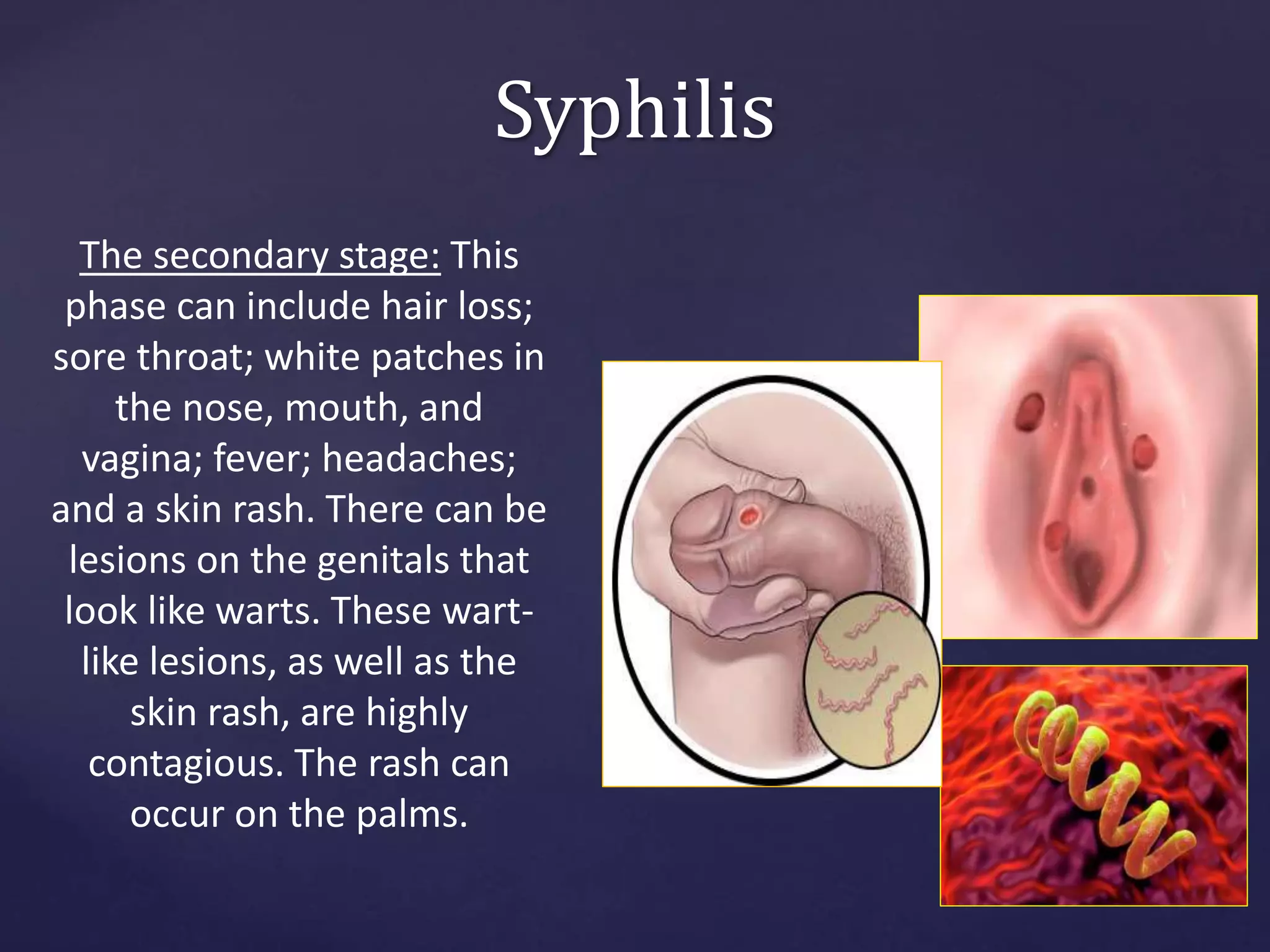
The secondary stage: This
phase can include hair loss;
sore throat; white patches in
the nose, mouth, and
vagina; fever; headaches;
and a skin rash. There can be
lesions on the genitals that
look like warts. These wart-
like lesions, as well as the
skin rash, are highly
contagious. The rash can
occur on the palms.
Syphilis
The tertiary stage: This final
stage of the disease involves
the brain and heart, and is
usually no longer contagious.
At this point, however, the
infection can cause extensive
damage to the internal organs
and the brain, and can lead to
death.
Herpes
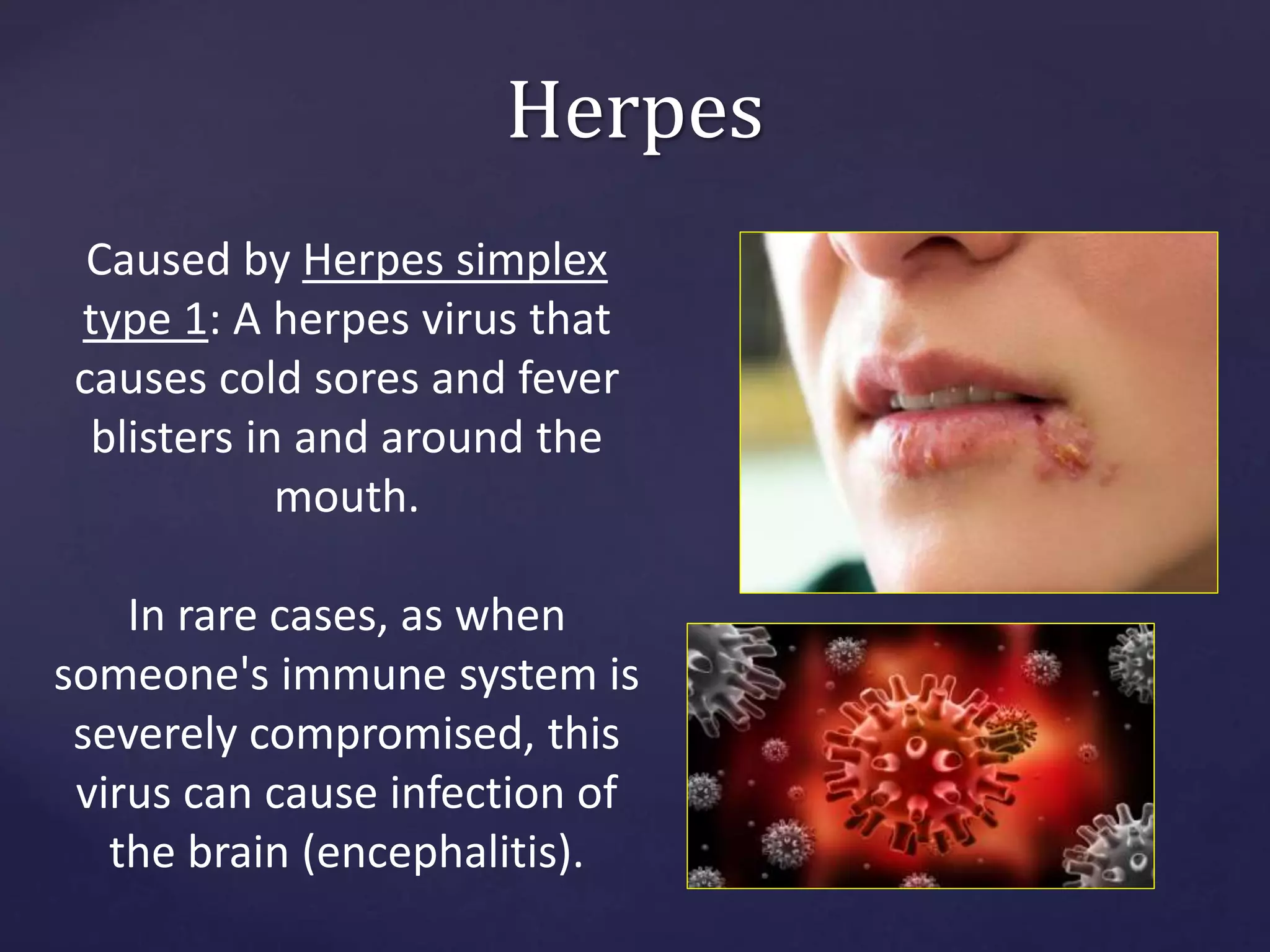
Caused by Herpes simplex
type 1: A herpes virus that
causes cold sores and fever
blisters in and around the
mouth.
In rare cases, as when
someone's immune system is
severely compromised, this
virus can cause infection of
the brain (encephalitis).
Genital Herpes
Herpes simplex type
2: A herpes virus that
causes genital herpes, which
is characterized by sores in
the genital area.
This virus, like herpes
simplex type 1, can also
cause infection of the brain
(encephalitis) if the immune
system is severely defective
or compromised.
Human Papilloma Virus (HPV)
HPV infections are benign,
causing warts on areas of the
body including the hands, feet,
and genitals.
Genital warts may appear as a
small bump, cluster of bumps,
or stem-like protrusions. They
commonly affect the vulva in
women, or possibly the cervix,
and the penis or scrotum in
men. They may also appear
around the anus and in the
groin.
Chancroid
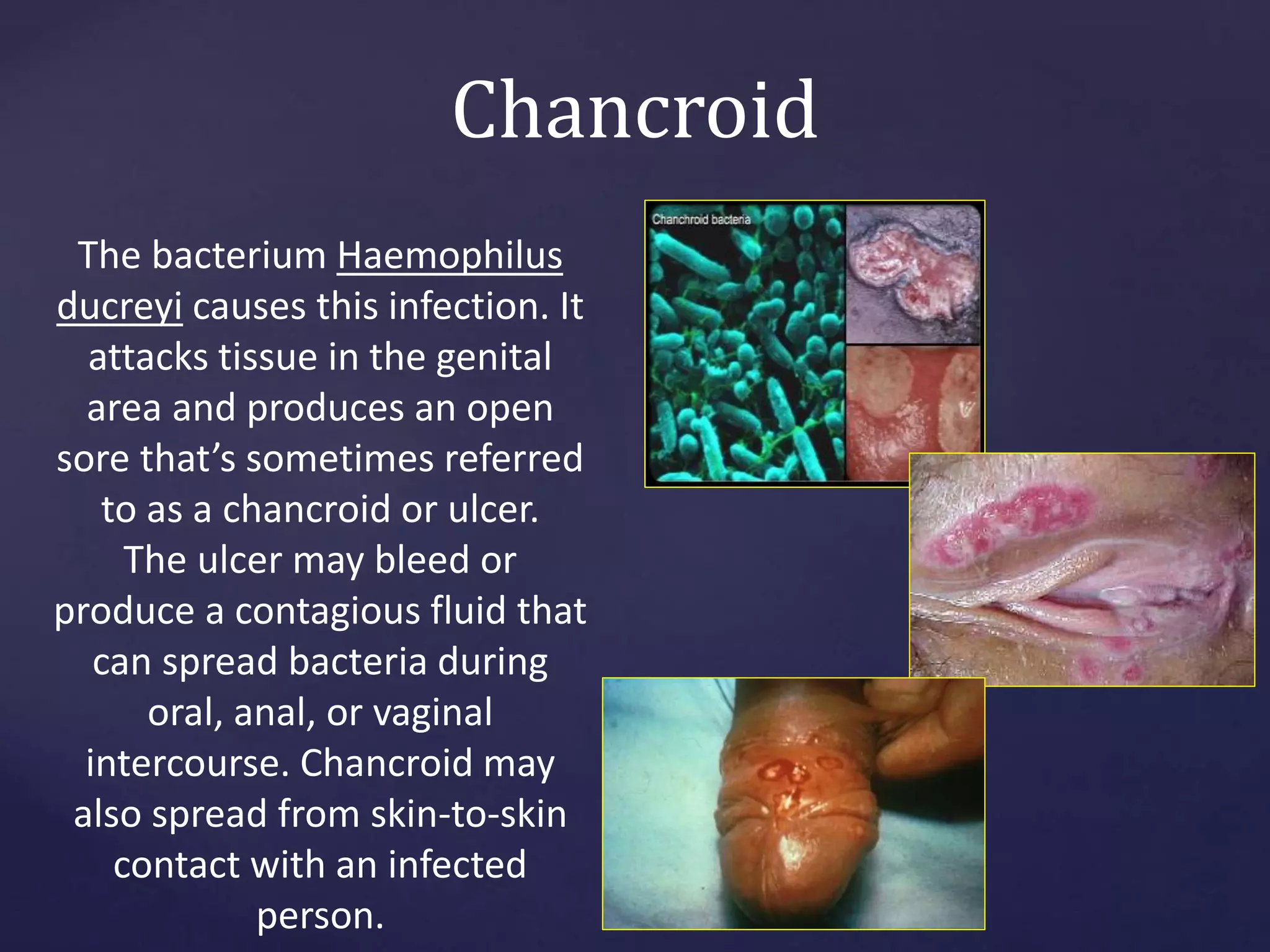
The bacterium Haemophilus
ducreyi causes this infection. It
attacks tissue in the genital
area and produces an open
sore that’s sometimes referred
to as a chancroid or ulcer.
The ulcer may bleed or
produce a contagious fluid that
can spread bacteria during
oral, anal, or vaginal
intercourse. Chancroid may
also spread from skin-to-skin
contact with an infected
person.
Pubic Lice
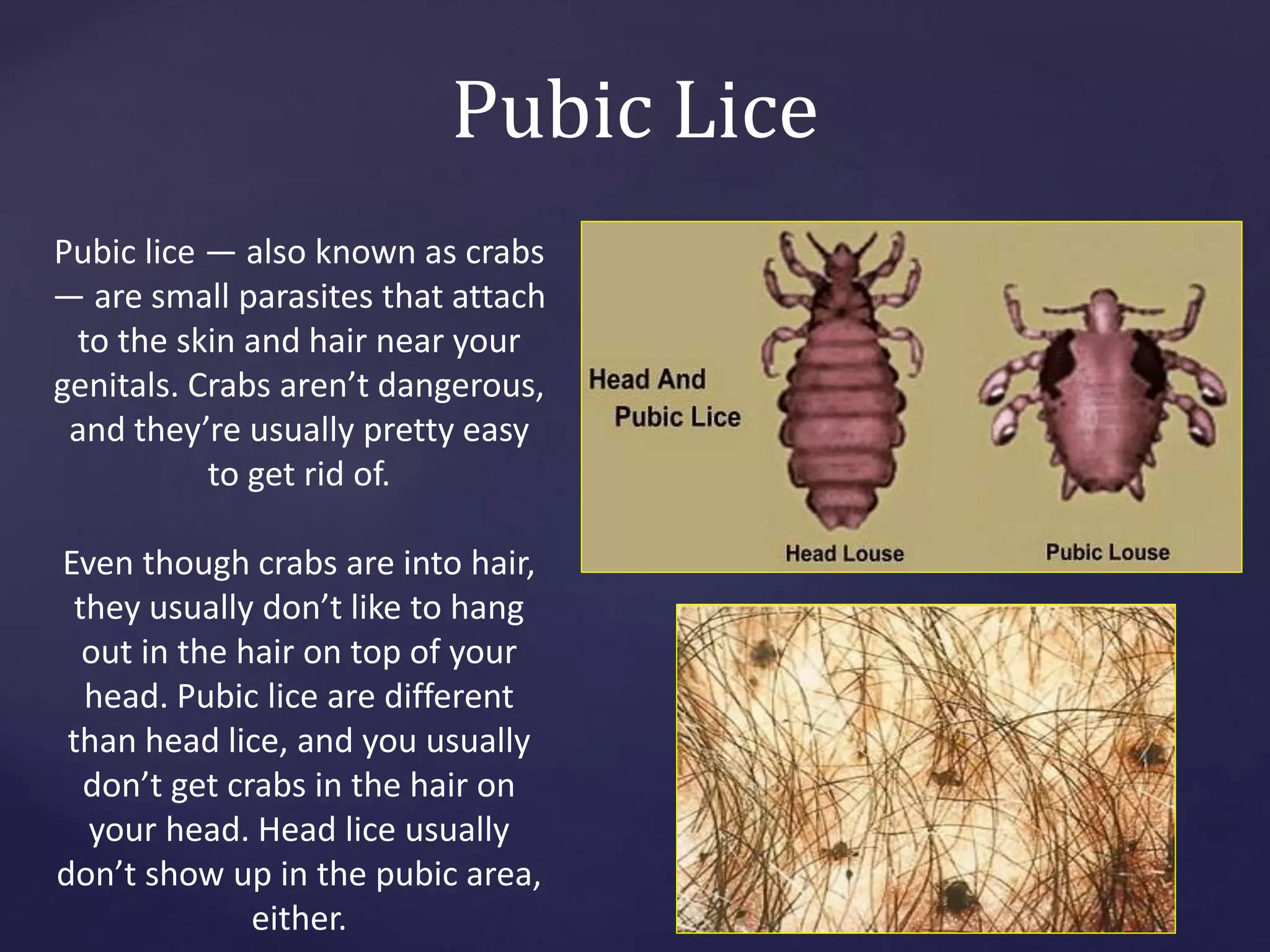
Pubic lice — also known as crabs
— are small parasites that attach
to the skin and hair near your
genitals. Crabs aren’t dangerous,
and they’re usually pretty easy
to get rid of.
Even though crabs are into hair,
they usually don’t like to hang
out in the hair on top of your
head. Pubic lice are different
than head lice, and you usually
don’t get crabs in the hair on
your head. Head lice usually
don’t show up in the pubic area,
either.
Common Treatments for STDs
Treatment usually consists of one of the following, depending on
the infection:
Antibiotics.
Often in a single dose, can cure many sexually transmitted bacterial
and parasitic infections, including gonorrhea, syphilis and
chlamydia. Typically, you'll be treated for gonorrhea and chlamydia
at the same time because the two infections often appear together.
Once you start antibiotic treatment, it's crucial to follow through. In
addition, it's important to abstain from sex until you've completed
treatment and any sores have healed.
Common Treatments for STDs
Antiviral drugs.
You'll have fewer herpes recurrences if you take daily suppressive
therapy with a prescription antiviral drug. Antiviral drugs lessen the
risk of infection, but it's still possible to give your partner herpes.
Antiviral drugs can keep HIV infection in check for many years. But
the virus persists and can still be transmitted, though the risk is
lower.
Sexually Transmitted
Infections
Thank you for
paying
attention.

Sexually Transmitted Infections

  • 1.
    Sexually Transmitted Infections Prepared by: OrlandoA. Pistan, MAEd-GC Psychology Instructor
  • 2.
    Sexually Transmitted Infections •Sexually transmitted diseases (STDs or STIs) are infections transmitted from an infected person to an uninfected person through sexual contact. • It can be caused by bacteria, viruses or parasites. • The genitals are generally moist and warm, ideal for the growth of yeasts, viruses and bacteria.
  • 4.
    Sexually Transmitted Infections •People can transmit infections through semen, vaginal secretions and blood during sexual intercourse. • Individuals pass on STIs more easily when they are not wary of their health and sexual behaviors. • According to World Health Organization, 1 of 4 sexually active adolescent have STI, and there are 1 million new cases each day, all over the world.
  • 5.
    Health Complications ofSTIs • Pelvic inflammation • Infertility • Ectopic pregnancy • Cervical cancer • Congenital infections in infants
  • 6.
    Most Common STIs •Gonorrhea • Chlamydia • Syphilis • Genital herpes • HPV • Chancroid • Pubic lice
  • 7.
    Gonorrhea One of theoldest known sexually transmitted diseases (STDs), and it is caused by the Neisseria gonorrhoeae bacteria. Characterized by yellowish discharge from the genital accompanied by itching and burning sensation while urinating, redness and swelling of the genitals. High rate in African- Americans.
  • 8.
    Chlamydia A type ofbacteria found in the cervix, urethra, throat, or rectum that acts very much like gonorrhea. It is an infection with the bacteria known as Chlamydia trachomatis. Chlamydia can also cause inflammation of the urethra, epididymis, and rectum in men. Women can get chlamydia in the cervix, rectum, or throat. High rates in adolescents and young old women in USA.
  • 9.
    Syphilis Caused by aninfection with bacteria known as Treponema pallidum. The primary stage: This involves the formation of the chancre- a painless ulcer. At this stage, syphilis is highly contagious. The disease can be transmitted from any contact with one of the ulcers. If the ulcer is outside of the vagina or on the scrotum, the use of condoms may not help in preventing transmission. Likewise, if the ulcer is in the mouth, merely kissing the infected individual can spread syphilis.
  • 10.
    Syphilis The secondary stage:This phase can include hair loss; sore throat; white patches in the nose, mouth, and vagina; fever; headaches; and a skin rash. There can be lesions on the genitals that look like warts. These wart- like lesions, as well as the skin rash, are highly contagious. The rash can occur on the palms.
  • 11.
    Syphilis The tertiary stage:This final stage of the disease involves the brain and heart, and is usually no longer contagious. At this point, however, the infection can cause extensive damage to the internal organs and the brain, and can lead to death.
  • 12.
    Herpes Caused by Herpessimplex type 1: A herpes virus that causes cold sores and fever blisters in and around the mouth. In rare cases, as when someone's immune system is severely compromised, this virus can cause infection of the brain (encephalitis).
  • 13.
    Genital Herpes Herpes simplextype 2: A herpes virus that causes genital herpes, which is characterized by sores in the genital area. This virus, like herpes simplex type 1, can also cause infection of the brain (encephalitis) if the immune system is severely defective or compromised.
  • 14.
    Human Papilloma Virus(HPV) HPV infections are benign, causing warts on areas of the body including the hands, feet, and genitals. Genital warts may appear as a small bump, cluster of bumps, or stem-like protrusions. They commonly affect the vulva in women, or possibly the cervix, and the penis or scrotum in men. They may also appear around the anus and in the groin.
  • 15.
    Chancroid The bacterium Haemophilus ducreyicauses this infection. It attacks tissue in the genital area and produces an open sore that’s sometimes referred to as a chancroid or ulcer. The ulcer may bleed or produce a contagious fluid that can spread bacteria during oral, anal, or vaginal intercourse. Chancroid may also spread from skin-to-skin contact with an infected person.
  • 16.
    Pubic Lice Pubic lice— also known as crabs — are small parasites that attach to the skin and hair near your genitals. Crabs aren’t dangerous, and they’re usually pretty easy to get rid of. Even though crabs are into hair, they usually don’t like to hang out in the hair on top of your head. Pubic lice are different than head lice, and you usually don’t get crabs in the hair on your head. Head lice usually don’t show up in the pubic area, either.
  • 17.
    Common Treatments forSTDs Treatment usually consists of one of the following, depending on the infection: Antibiotics. Often in a single dose, can cure many sexually transmitted bacterial and parasitic infections, including gonorrhea, syphilis and chlamydia. Typically, you'll be treated for gonorrhea and chlamydia at the same time because the two infections often appear together. Once you start antibiotic treatment, it's crucial to follow through. In addition, it's important to abstain from sex until you've completed treatment and any sores have healed.
  • 18.
    Common Treatments forSTDs Antiviral drugs. You'll have fewer herpes recurrences if you take daily suppressive therapy with a prescription antiviral drug. Antiviral drugs lessen the risk of infection, but it's still possible to give your partner herpes. Antiviral drugs can keep HIV infection in check for many years. But the virus persists and can still be transmitted, though the risk is lower.
  • 19.