QHSE Department
Sexually Transmitted Illness Control Program
WELCOME
Meeting for prevention of Sexually
Transmitted Diseases
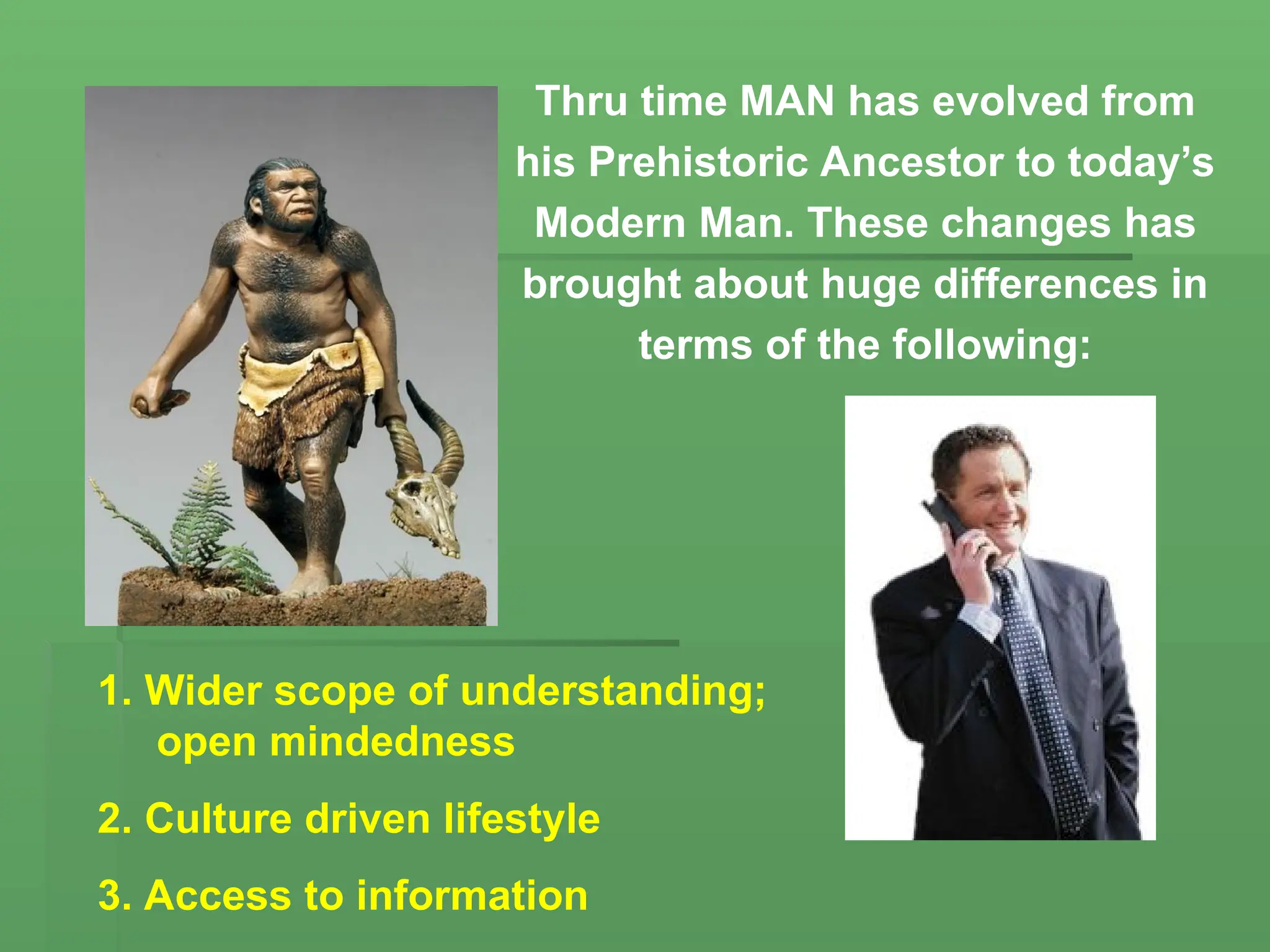
Thru time MAN has evolved from
his Prehistoric Ancestor to today’s
Modern Man. These changes has
brought about huge differences in
terms of the following:
1. Wider scope of understanding;
open mindedness
2. Culture driven lifestyle
3. Access to information
IGNORANCE
FEAR
PREJUDICE
TIMIDITY
UNINFORMED
DON’T -GIVE -A DAMN
INSECURITY
SUPERFICIALITY
CHILDISHNESS
The wall of silent conspiracy over
Sexually Transmitted Diseases
can be broken!
can be broken!
Proper educational
information
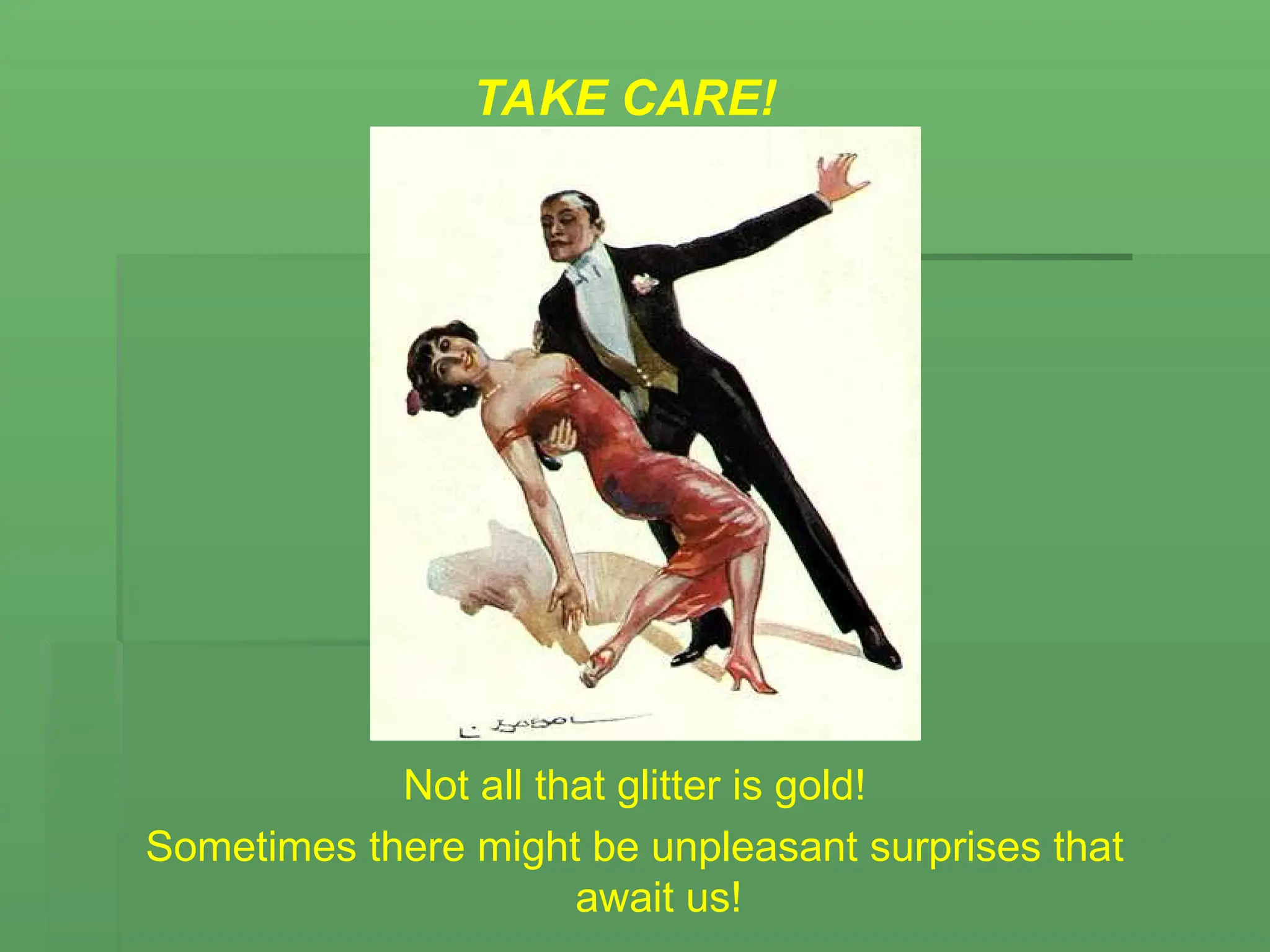
TAKE CARE!
Not all that glitter is gold!
Sometimes there might be unpleasant surprises that
await us!
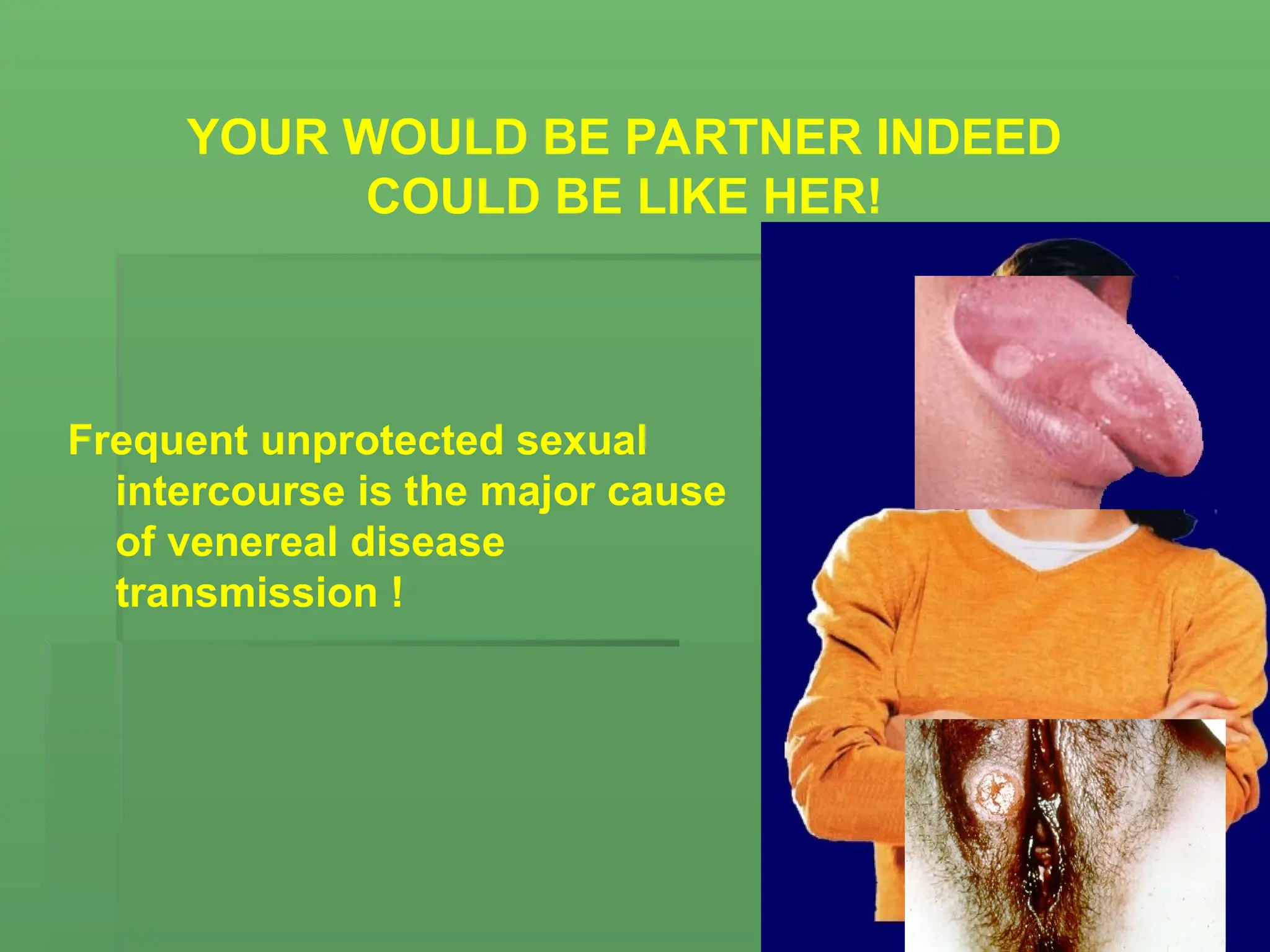
YOUR WOULD BE PARTNER INDEED
COULD BE LIKE HER!
Frequent unprotected sexual
intercourse is the major cause
of venereal disease
transmission !
WHAT ARE VENEREAL DISEASES?
Also called SEXUALLY TRANSMITTED ILLNESS - diseases transmitted
during sexual intercourse (oral, vaginal, anal).
Caused by parasite, bacteria, fungus, virus found in the sexual organs,
genital fluids, blood.
May occur simultaneously in groups - Superinfections.
Does not discriminate age, sex, race. It will infect all unprotected person
in contact with the source.
Although majority of VD’s are curable, they can lead to Post-Treatment
Complications on genitalia and other parts of the body as well.
Some VD’s can be transmitted from mother to child in pregnancy.
There is NO IMMUNITY in most VD’s. Anyone can be re-infected after
successful treatment.
Rarely recognized externally without a thorough physical examination
and laboratory confirmation.
All VD’s are PREVENTABLE thru positive behavioral practices in
life.
THE SEXUALLY TRANSMITTED ILLNESSES
ARE...
SYPHILIS-lifetime marker
GONORRHEA
GENITAL HERPES
CONDYLOMATOSIS
AIDS
TRICHOMONIASIS
INGUINAL GRANULOMA
VENEREAL ULCERS
CHLAMYDIA
CANDIDIASIS
HEPATITIS B – may
develop immunity if you
survive
NON SPECIFIC
URETHRITIS
PITHYRIASIS
SCABIES
AMOEBIASIS
SYPHILIS
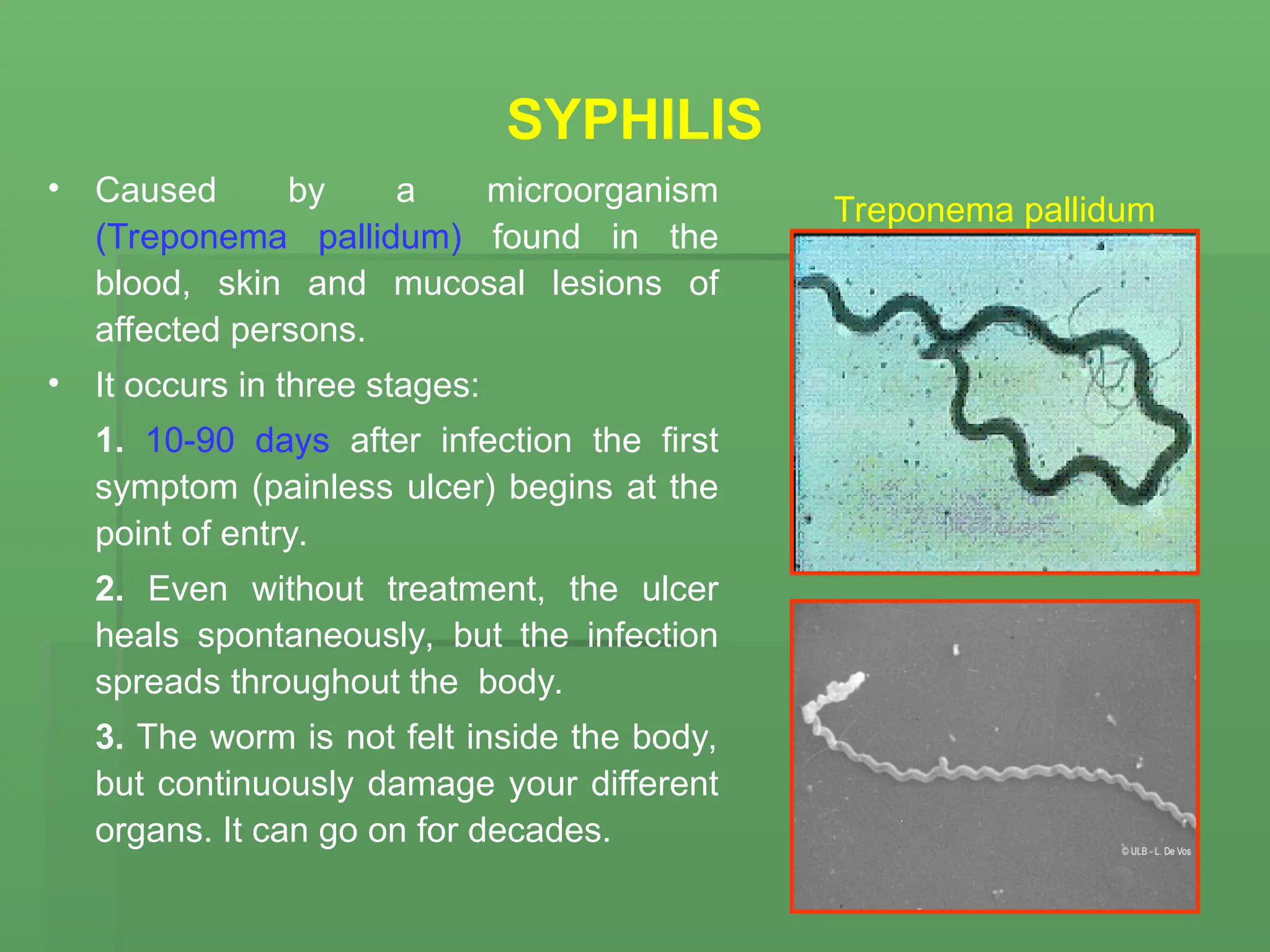
• Caused by a microorganism
(Treponema pallidum) found in the
blood, skin and mucosal lesions of
affected persons.
• It occurs in three stages:
1. 10-90 days after infection the first
symptom (painless ulcer) begins at the
point of entry.
2. Even without treatment, the ulcer
heals spontaneously, but the infection
spreads throughout the body.
3. The worm is not felt inside the body,
but continuously damage your different
organs. It can go on for decades.
Treponema pallidum
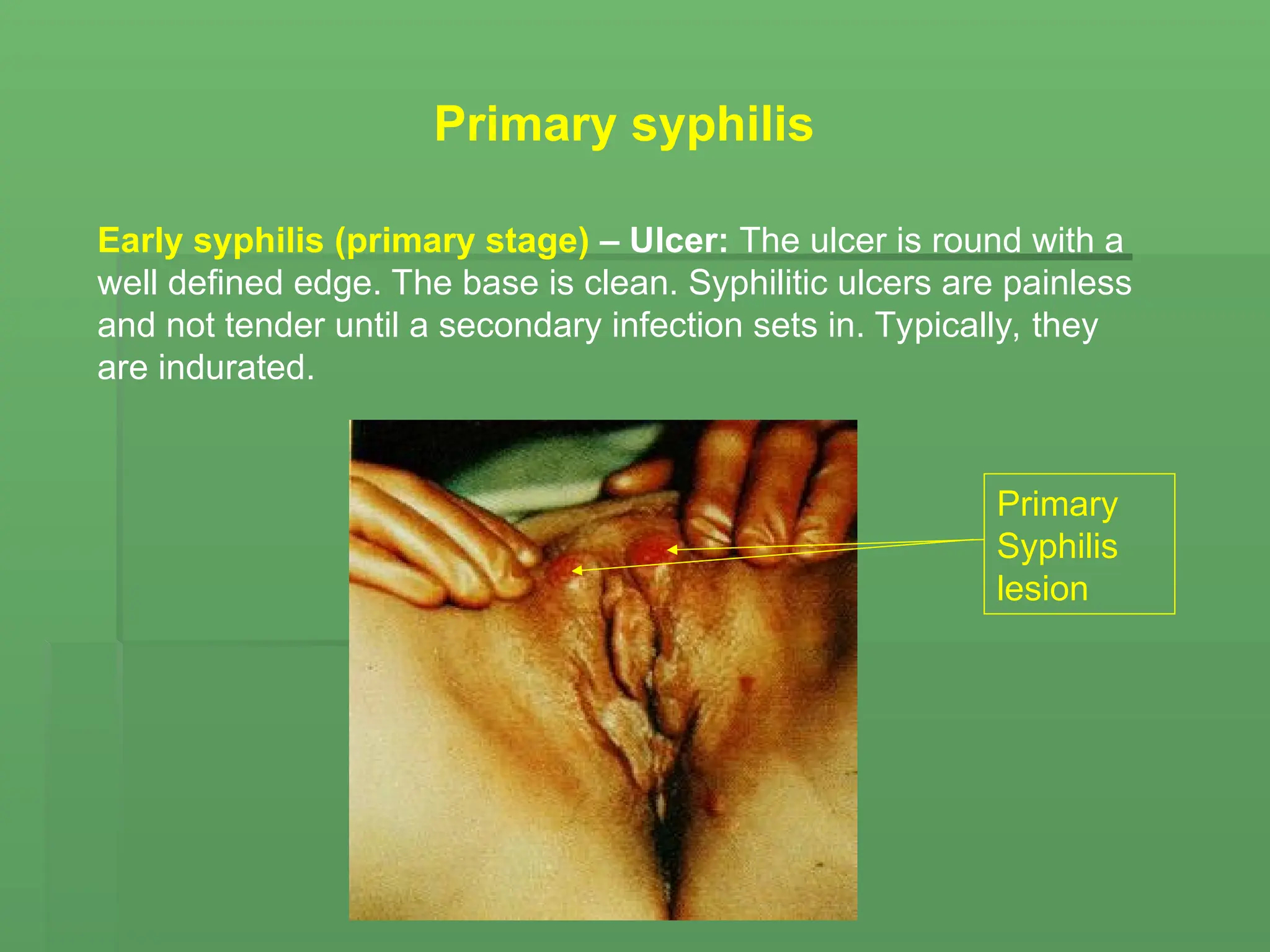
Early syphilis (primary stage) – Ulcer: The ulcer is round with a
well defined edge. The base is clean. Syphilitic ulcers are painless
and not tender until a secondary infection sets in. Typically, they
are indurated.
Primary syphilis
Primary
Syphilis
lesion
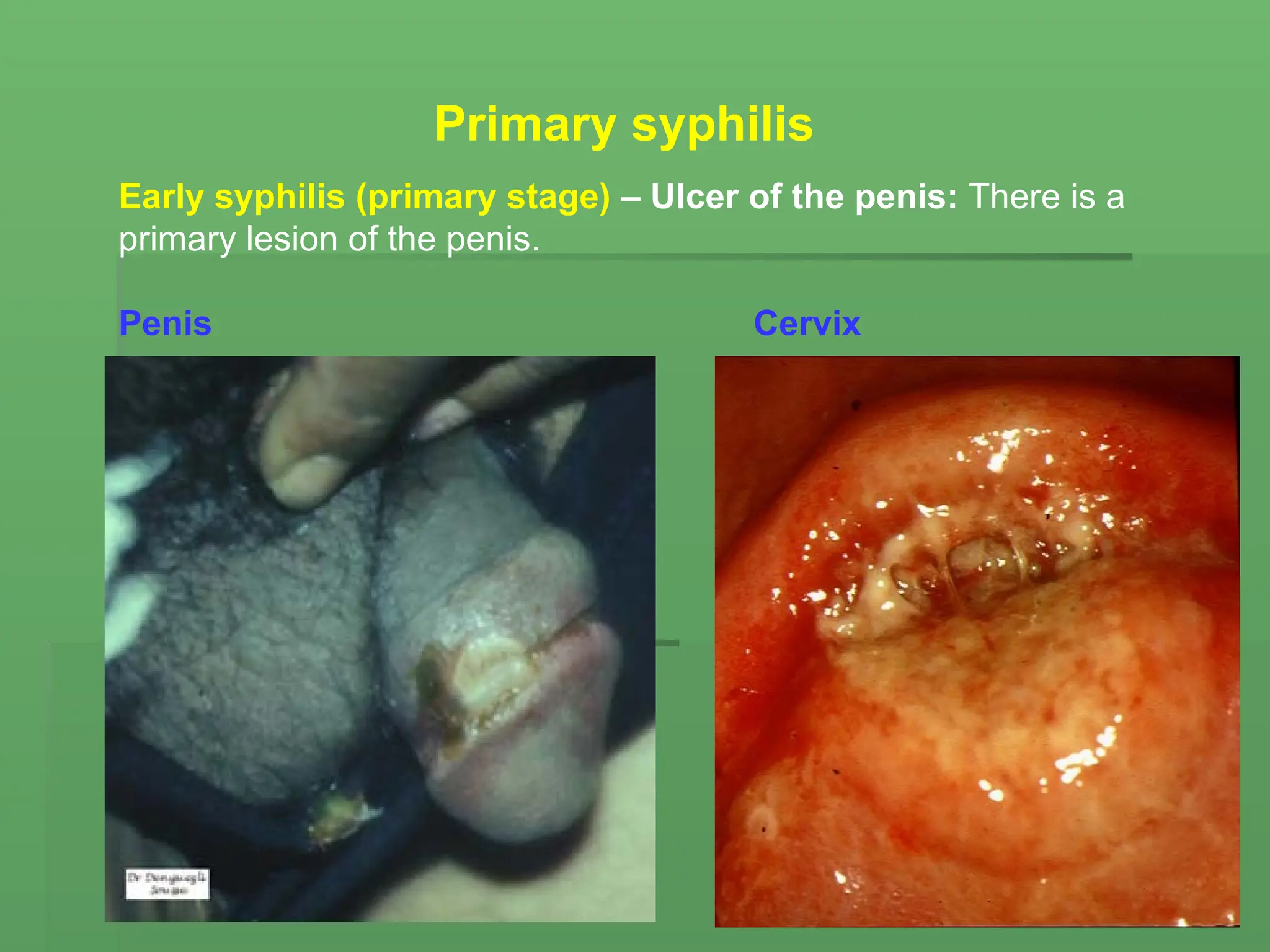
Early syphilis (primary stage) – Ulcer of the penis: There is a
primary lesion of the penis.
Penis Cervix
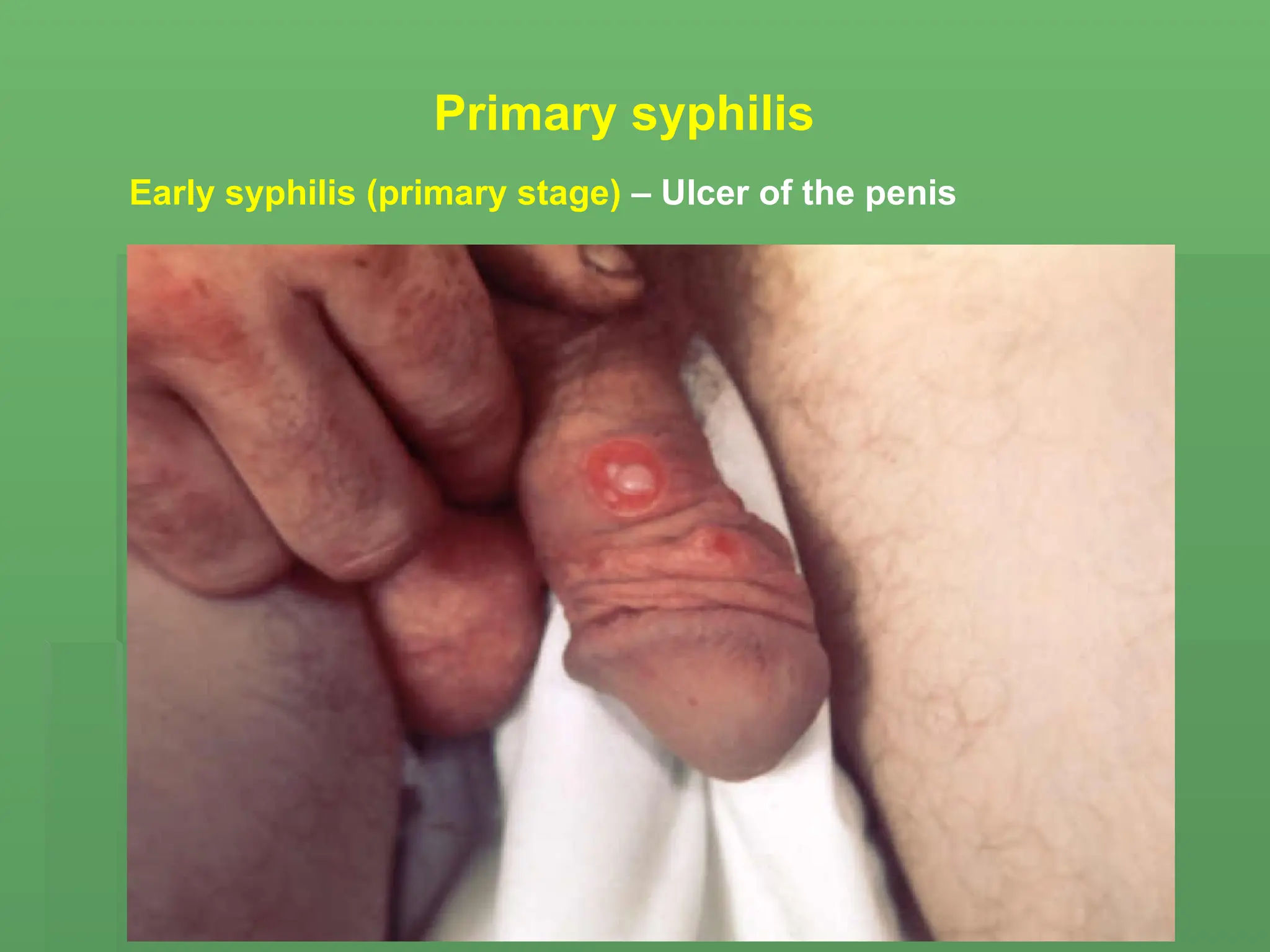
Primary syphilis
Early syphilis (primary stage) – Ulcer of the penis
Primary syphilis
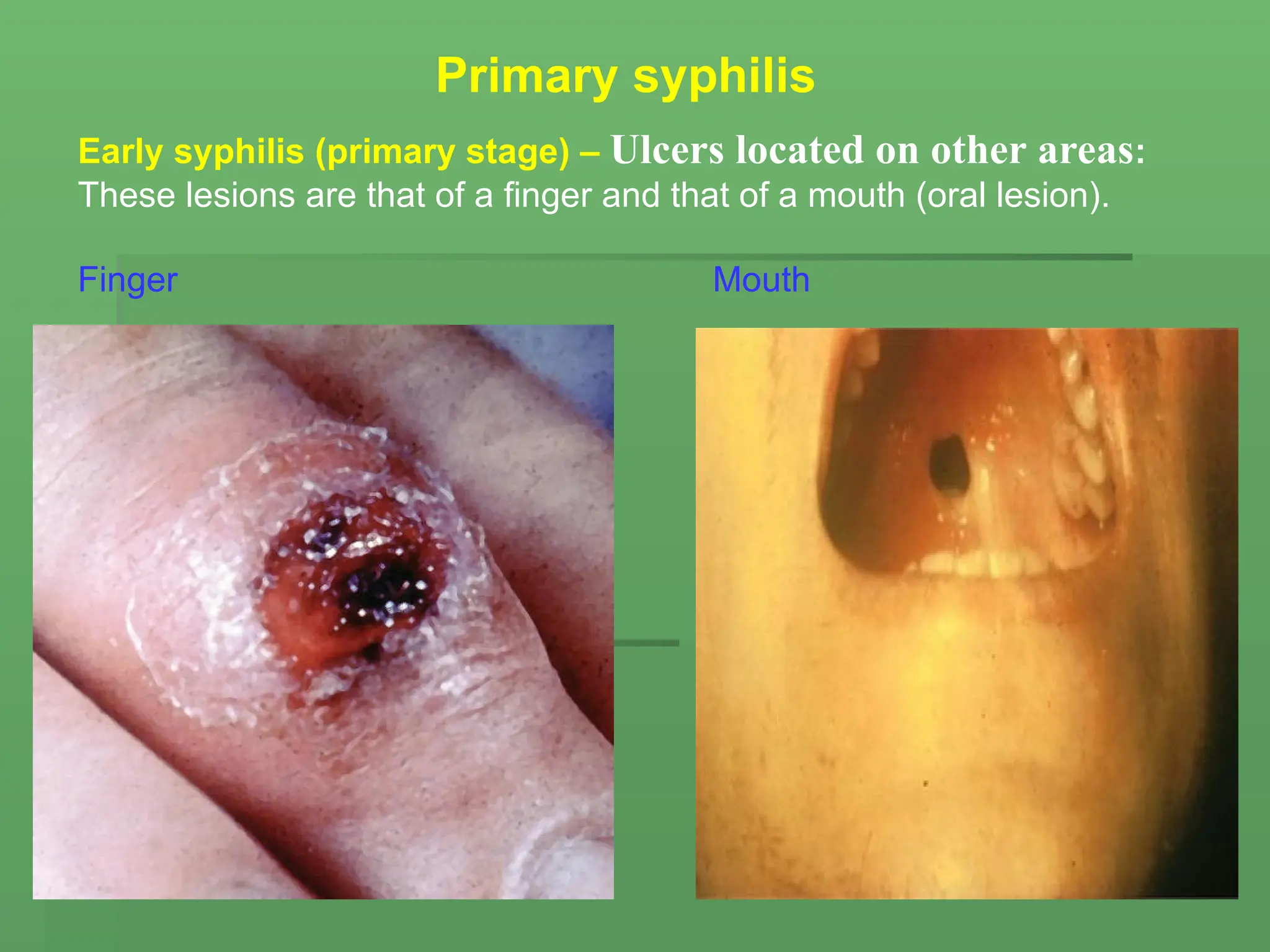
Early syphilis (primary stage) – Ulcers located on other areas:
These lesions are that of a finger and that of a mouth (oral lesion).
Finger Mouth
Primary syphilis
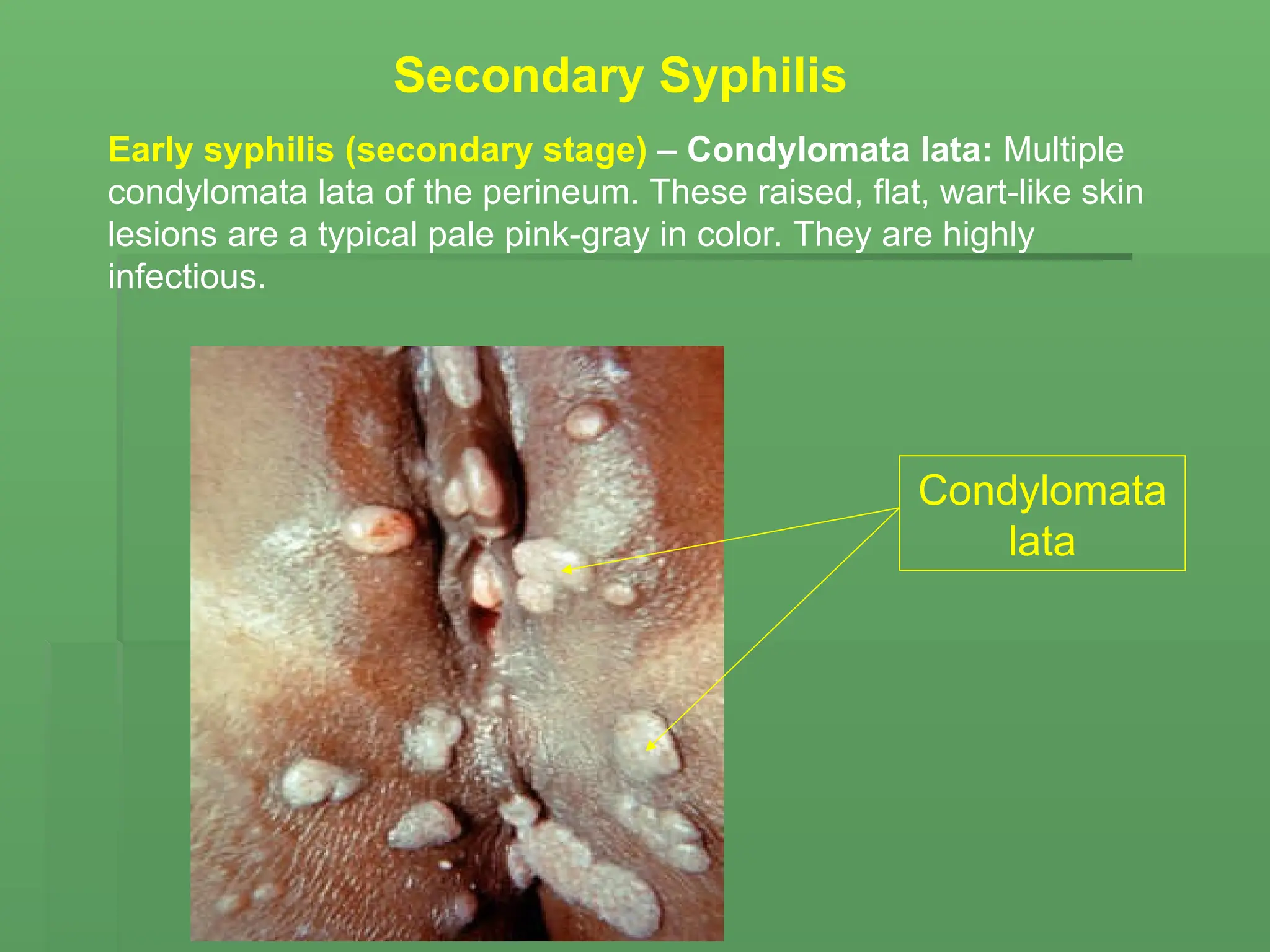
Early syphilis (secondary stage) – Condylomata lata: Multiple
condylomata lata of the perineum. These raised, flat, wart-like skin
lesions are a typical pale pink-gray in color. They are highly
infectious.
Secondary Syphilis
Condylomata
lata
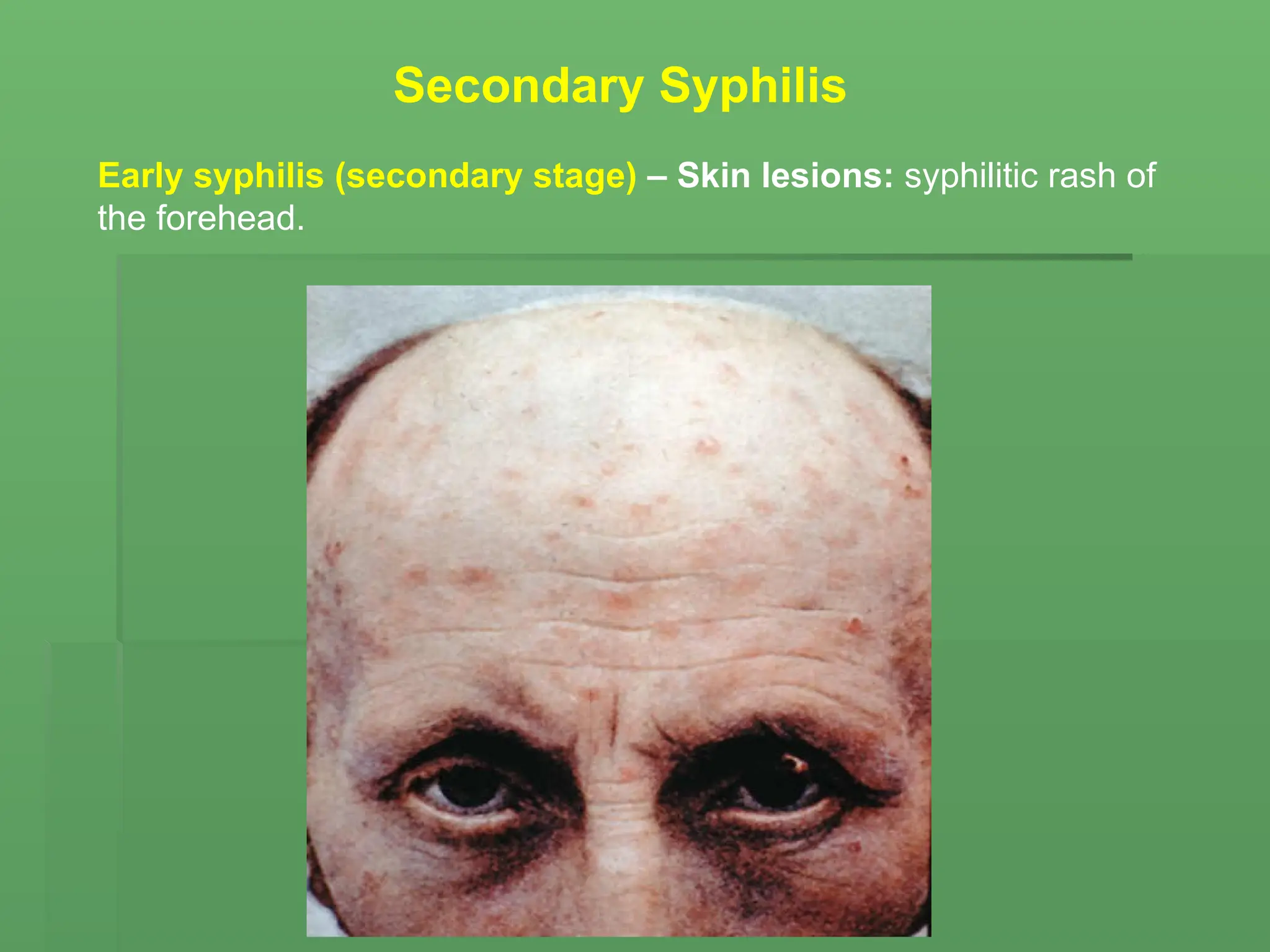
Early syphilis (secondary stage) – Skin lesions: syphilitic rash of
the forehead.
Secondary Syphilis
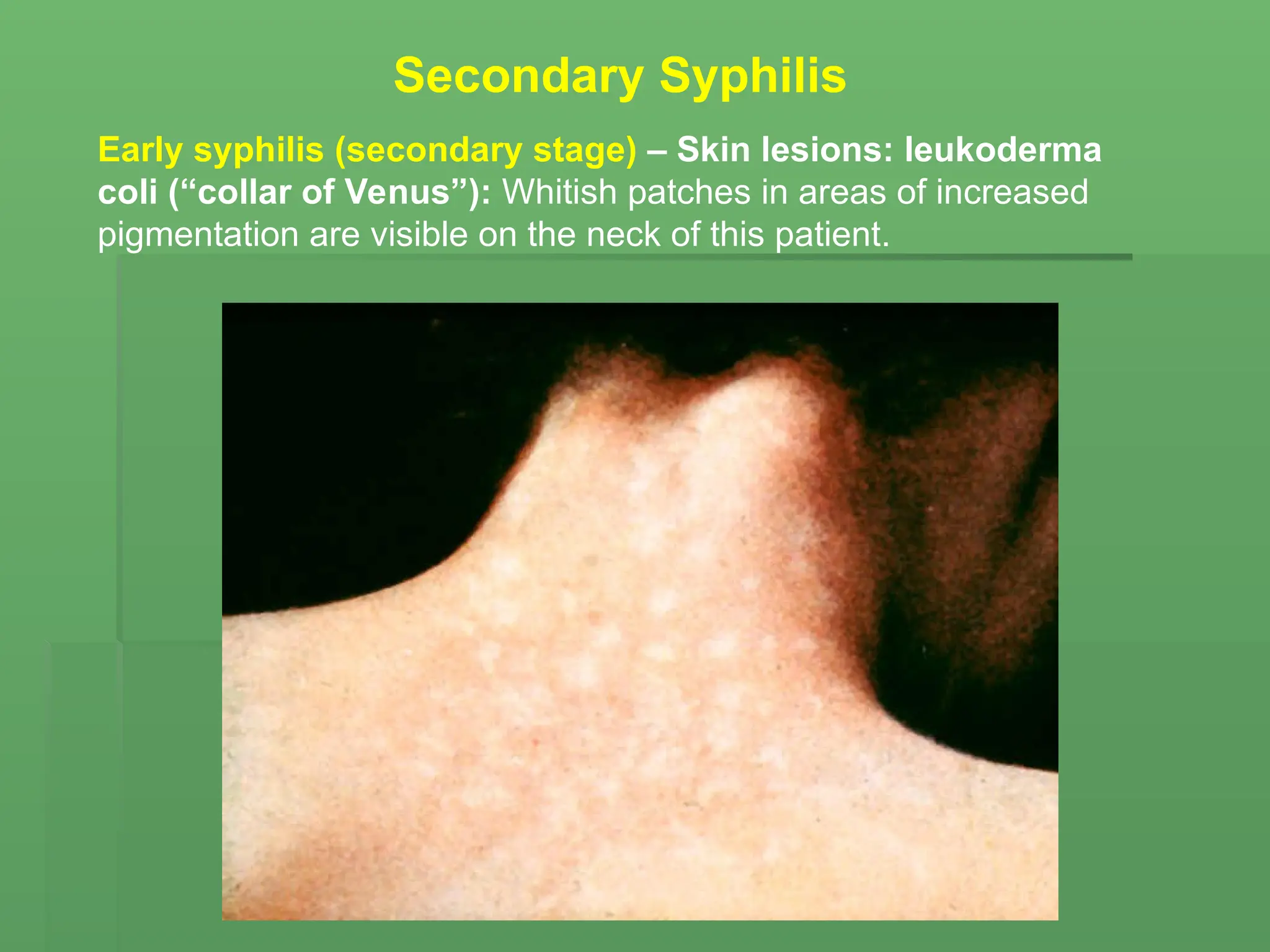
Early syphilis (secondary stage) – Skin lesions: leukoderma
coli (“collar of Venus”): Whitish patches in areas of increased
pigmentation are visible on the neck of this patient.
Secondary Syphilis
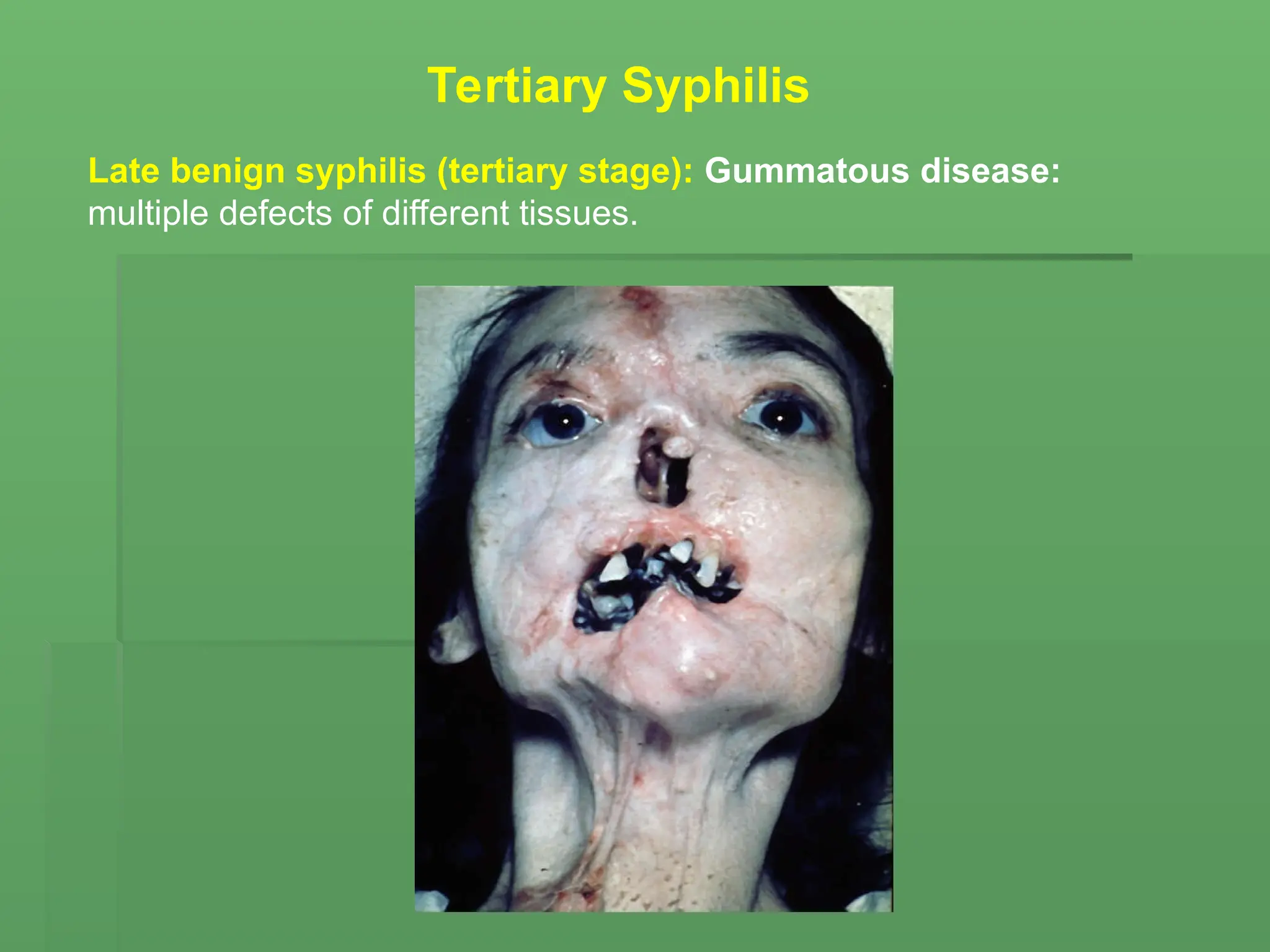
Late benign syphilis (tertiary stage): Gummatous disease:
multiple defects of different tissues.
Tertiary Syphilis
Very Curable and rarely exceeds the first stage, if treated on time.
Quickly Diagnosed by blood analysis.
No immunity and reinfection can occur.
Treponema pallidum passes thru the placenta infecting the fetus
causing congenital syphilis.
It is extremely susceptible to high temperature and common
disinfectant. Therefore it is transmitted only through direct contact
with blood or skin lesions or mucous membranes full of
spirochetes.
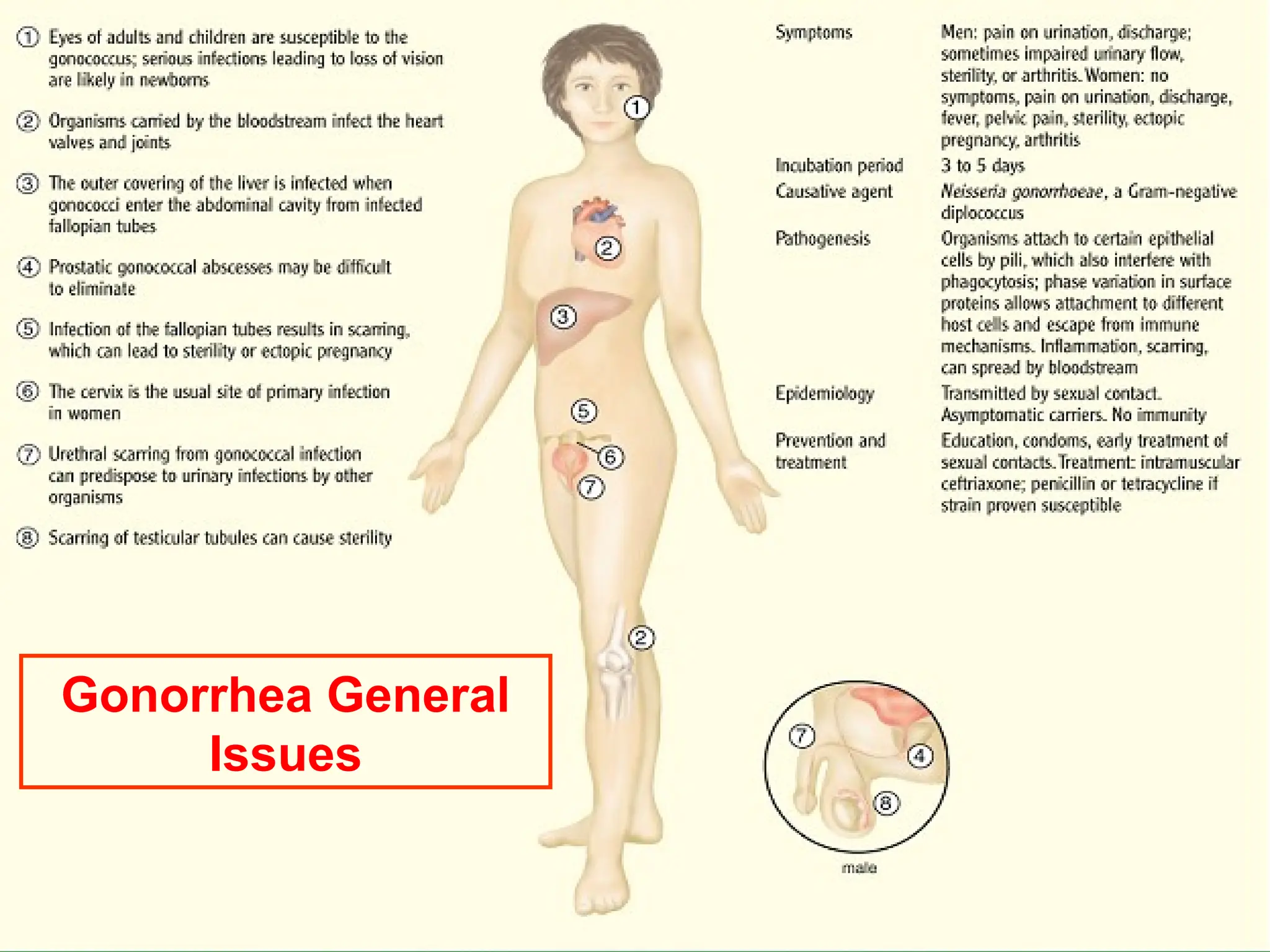
Syphilis - General Issues
GONORRHEA
First symptoms appear 3-5 days after
the infecting contact.
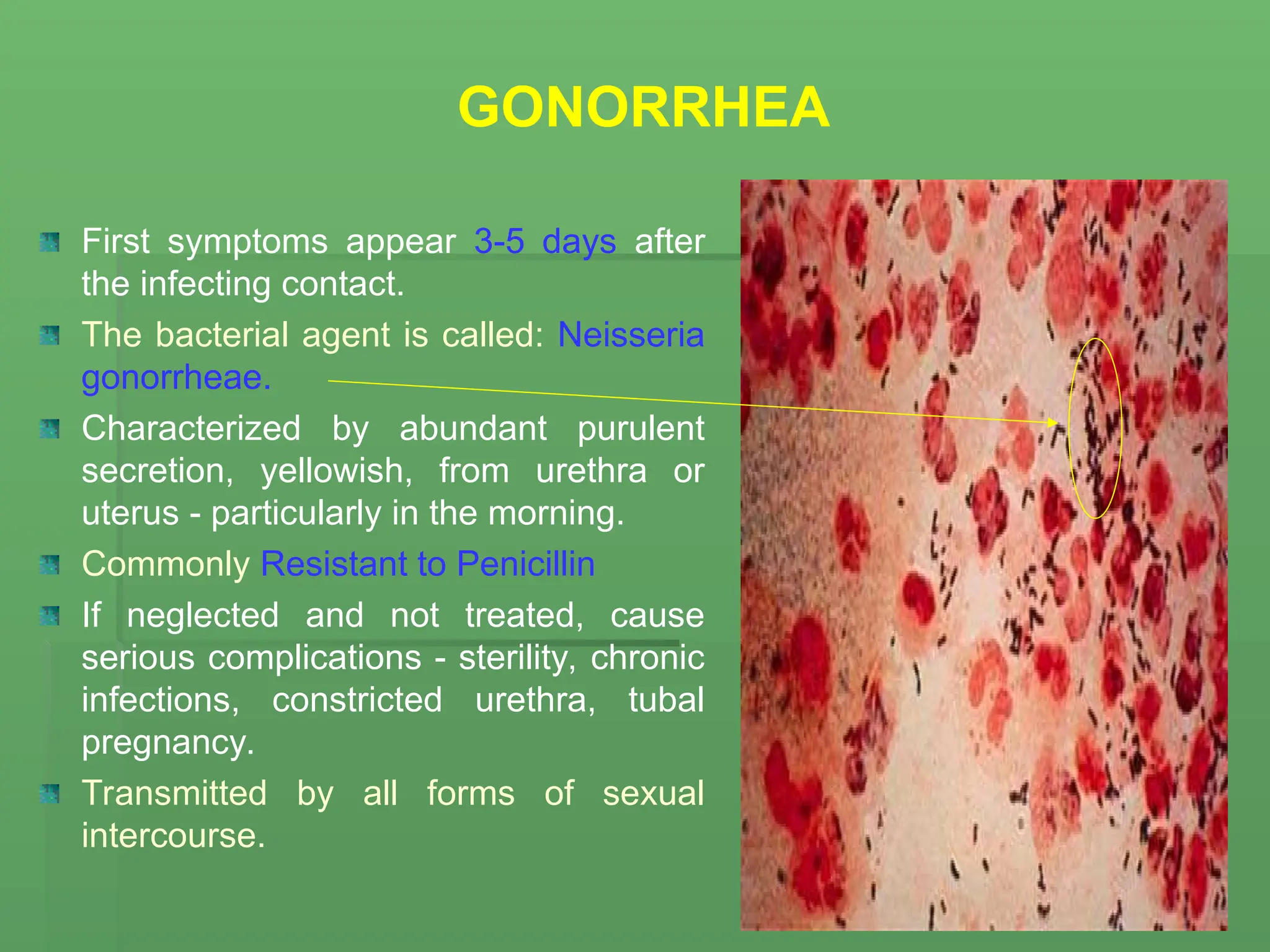
The bacterial agent is called: Neisseria
gonorrheae.
Characterized by abundant purulent
secretion, yellowish, from urethra or
uterus - particularly in the morning.
Commonly Resistant to Penicillin
If neglected and not treated, cause
serious complications - sterility, chronic
infections, constricted urethra, tubal
pregnancy.
Transmitted by all forms of sexual
intercourse.
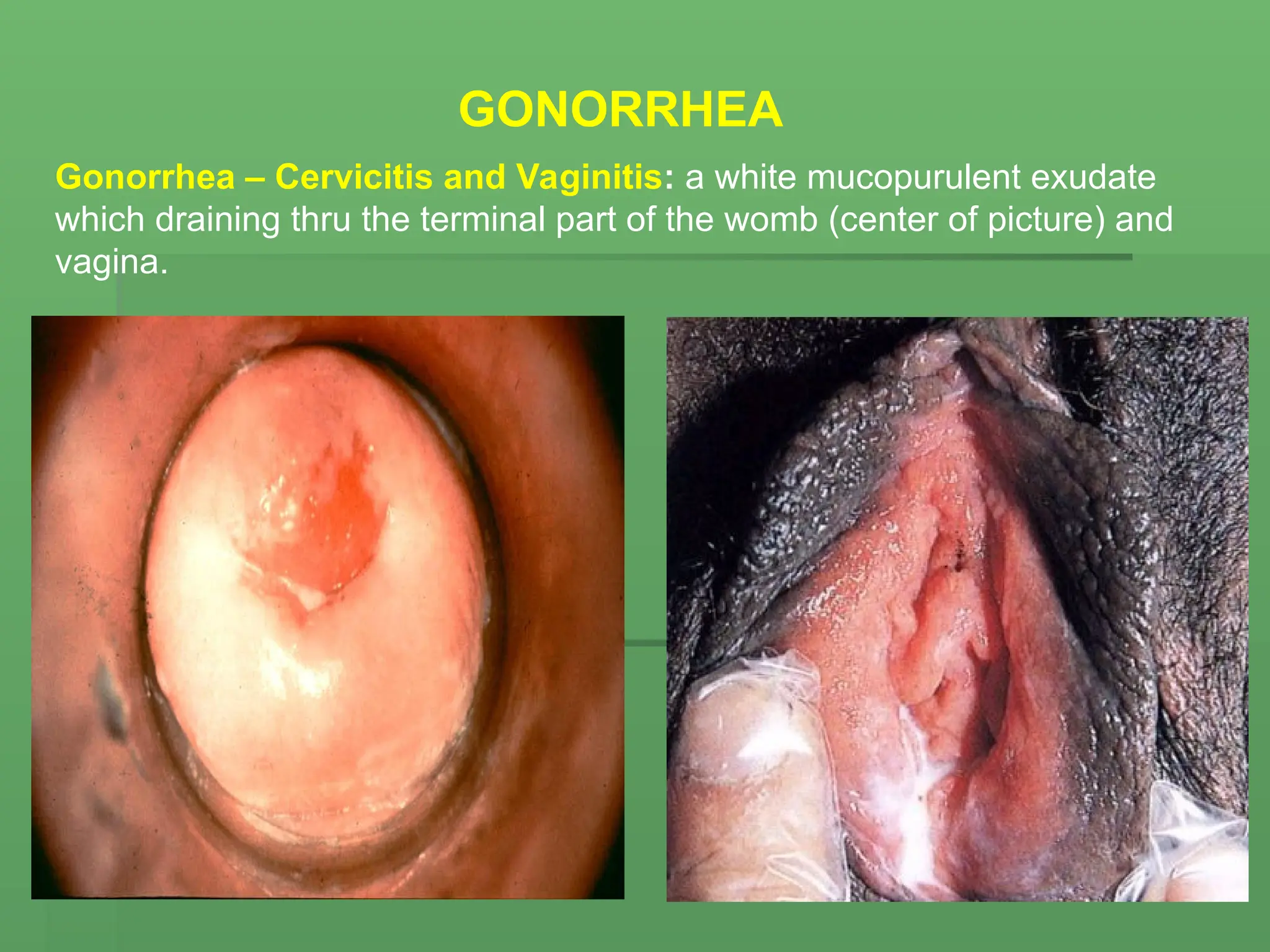
Gonorrhea – Cervicitis and Vaginitis: a white mucopurulent exudate
which draining thru the terminal part of the womb (center of picture) and
vagina.
GONORRHEA
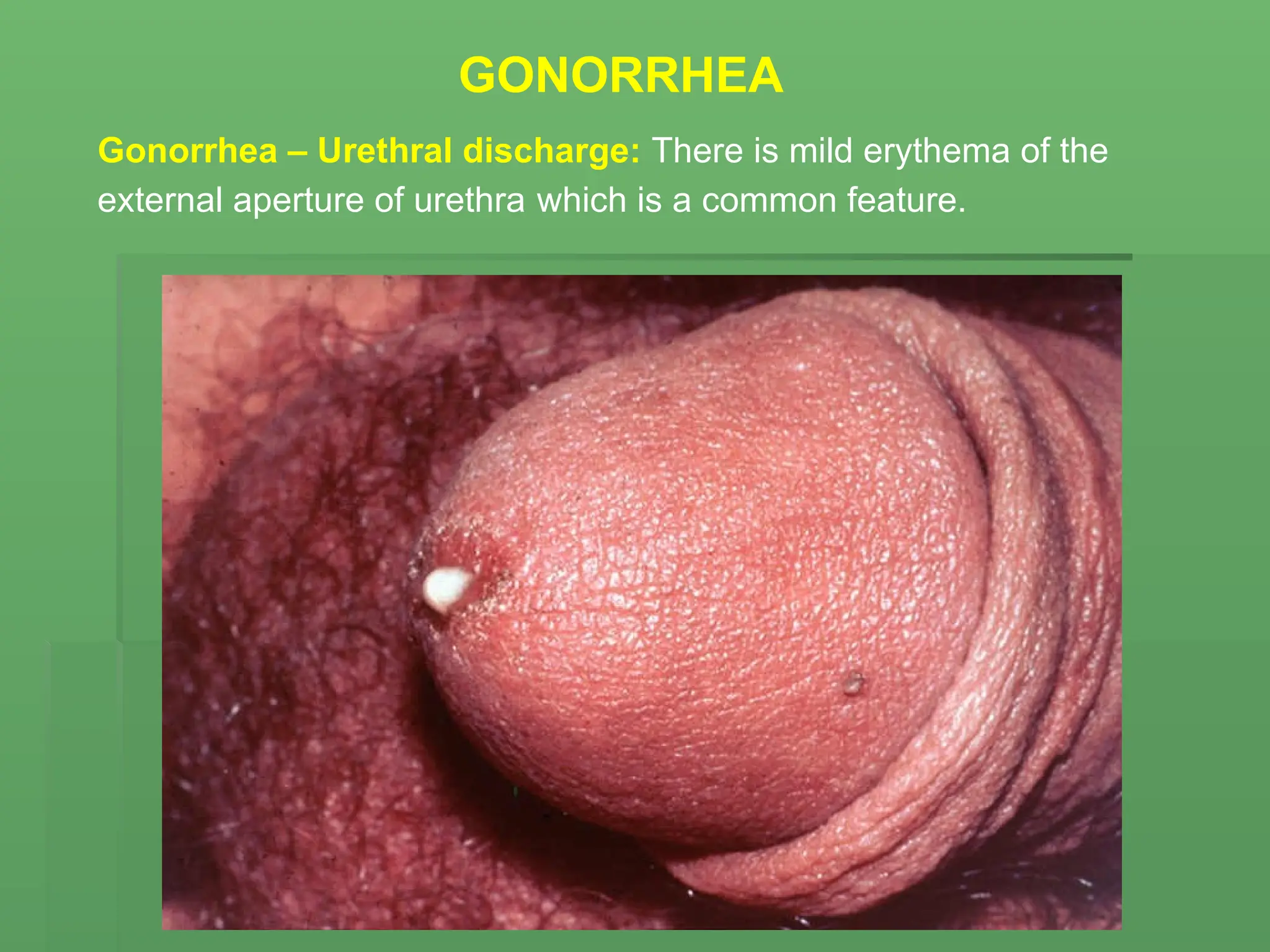
Gonorrhea – Urethral discharge: There is mild erythema of the
external aperture of urethra which is a common feature.
GONORRHEA
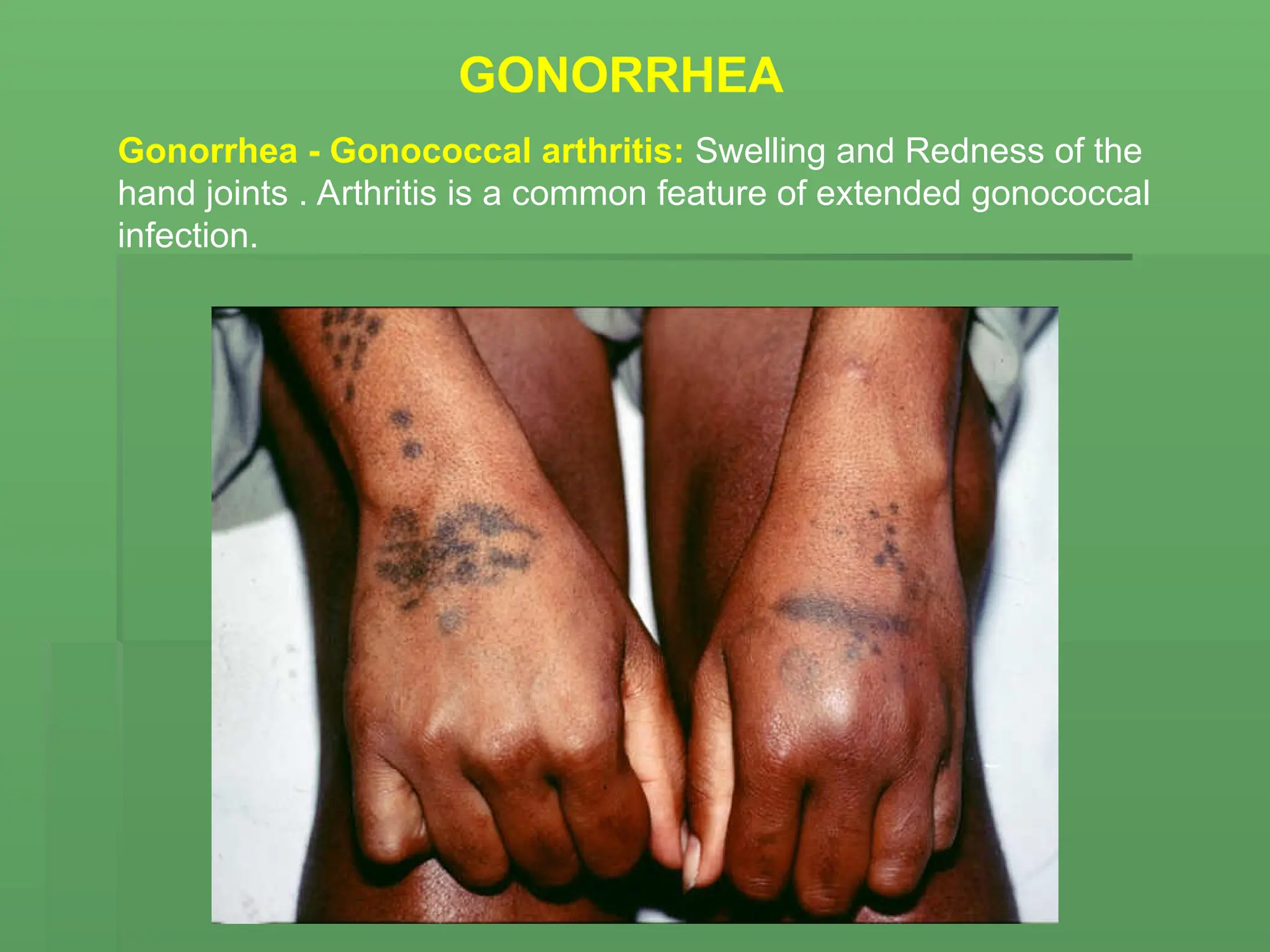
Gonorrhea - Gonococcal arthritis: Swelling and Redness of the
hand joints . Arthritis is a common feature of extended gonococcal
infection.
GONORRHEA
GONORRHEA
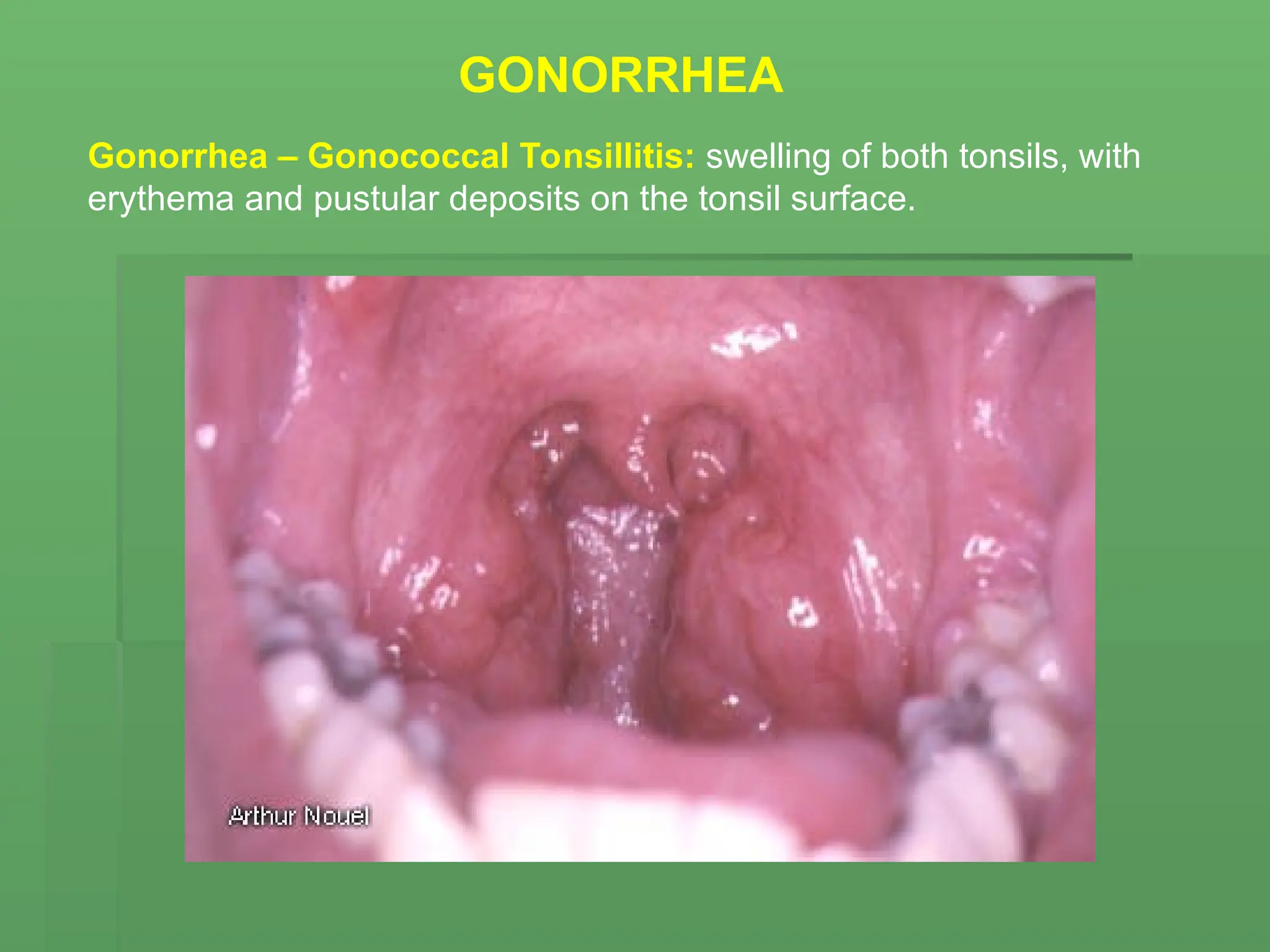
Gonorrhea – Gonococcal Tonsillitis: swelling of both tonsils, with
erythema and pustular deposits on the tonsil surface.
Gonorrhea General
Issues
INFECTIONS DUE TO CHLAMYDIA
• A very common disease and may cause sterility in men and women.
• 1 - 3 weeks after infection, symptoms appear:
IN MEN it starts with urethral inflammation, watery secretion, a
burning sensation. If left untreated, leads to testicle inflammation.
IN WOMEN it presents with prickly pain, vaginal secretion,
abdominal pain. The infection can progress to the womb and pelvic
cavity (PID) causing severe inflammation and subsequent sterility.
VENEREAL LYMPHOGRANULOMA - Another disease caused by
Chlamydia characterised by inflammation and swelling of one or
more groin lymph nodes. The symptoms begin 3-21 days after the
inoculation presenting general malaise, fever, redness of groin area
and sometimes swelling of penis. If not treated on time it causes
serious and permanent complications.
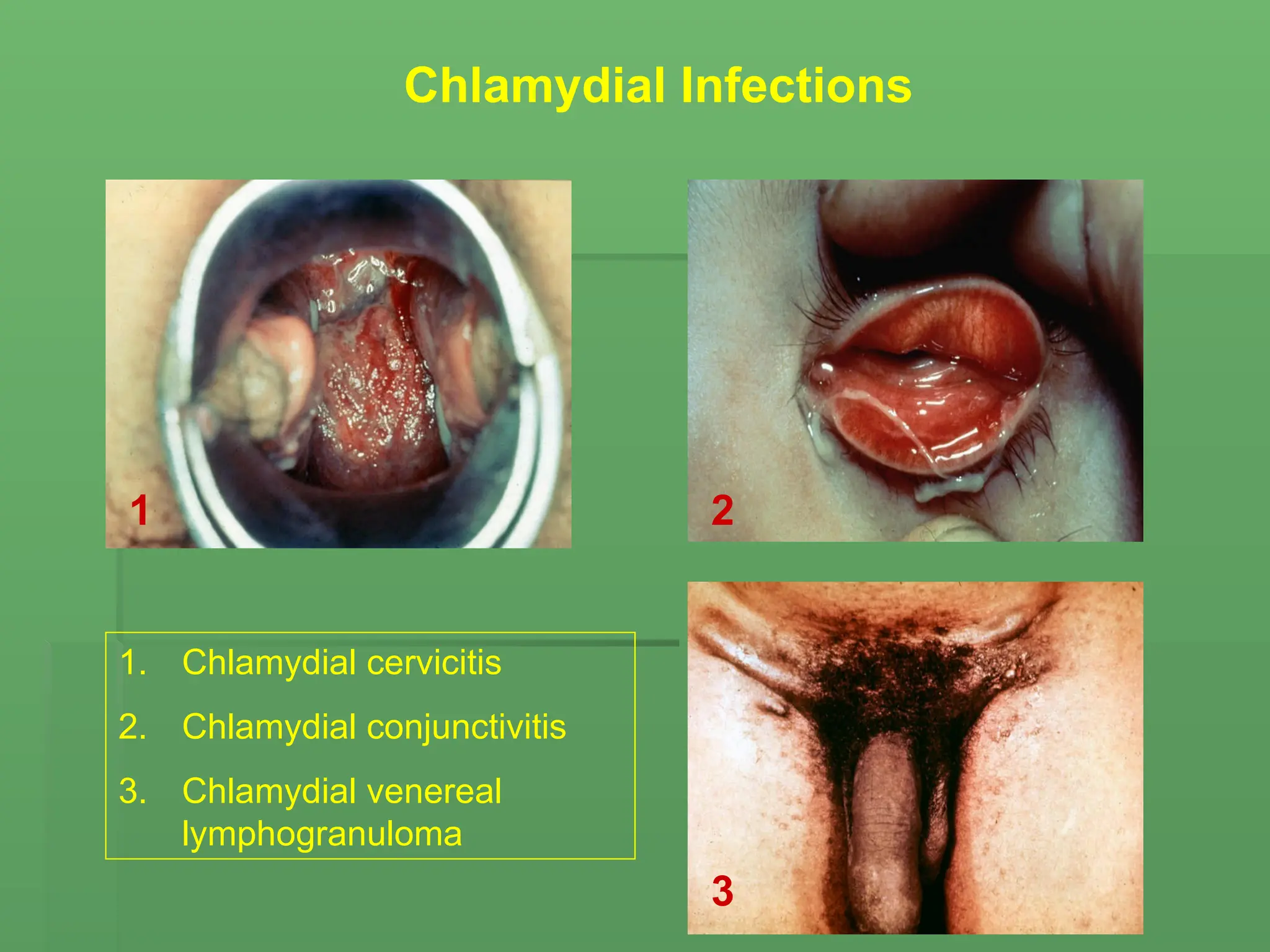
Chlamydial Infections
1 2
3
1. Chlamydial cervicitis
2. Chlamydial conjunctivitis
3. Chlamydial venereal
lymphogranuloma
TRICHOMONAS
Parasitic disease, pathogenic agent can be found in urine, in
vaginal secretion and sperm.
Men often do not present any symptoms, however if any, they
are characterized by a whitish urethral secretion, aperture and
urethral itching.
In Women, symptoms present as an abundant, white or yellow,
frothy secretion with an unpleasant smell, accompanied by
burning and vaginal pain, as well as with pain during the sexual
intercourse.
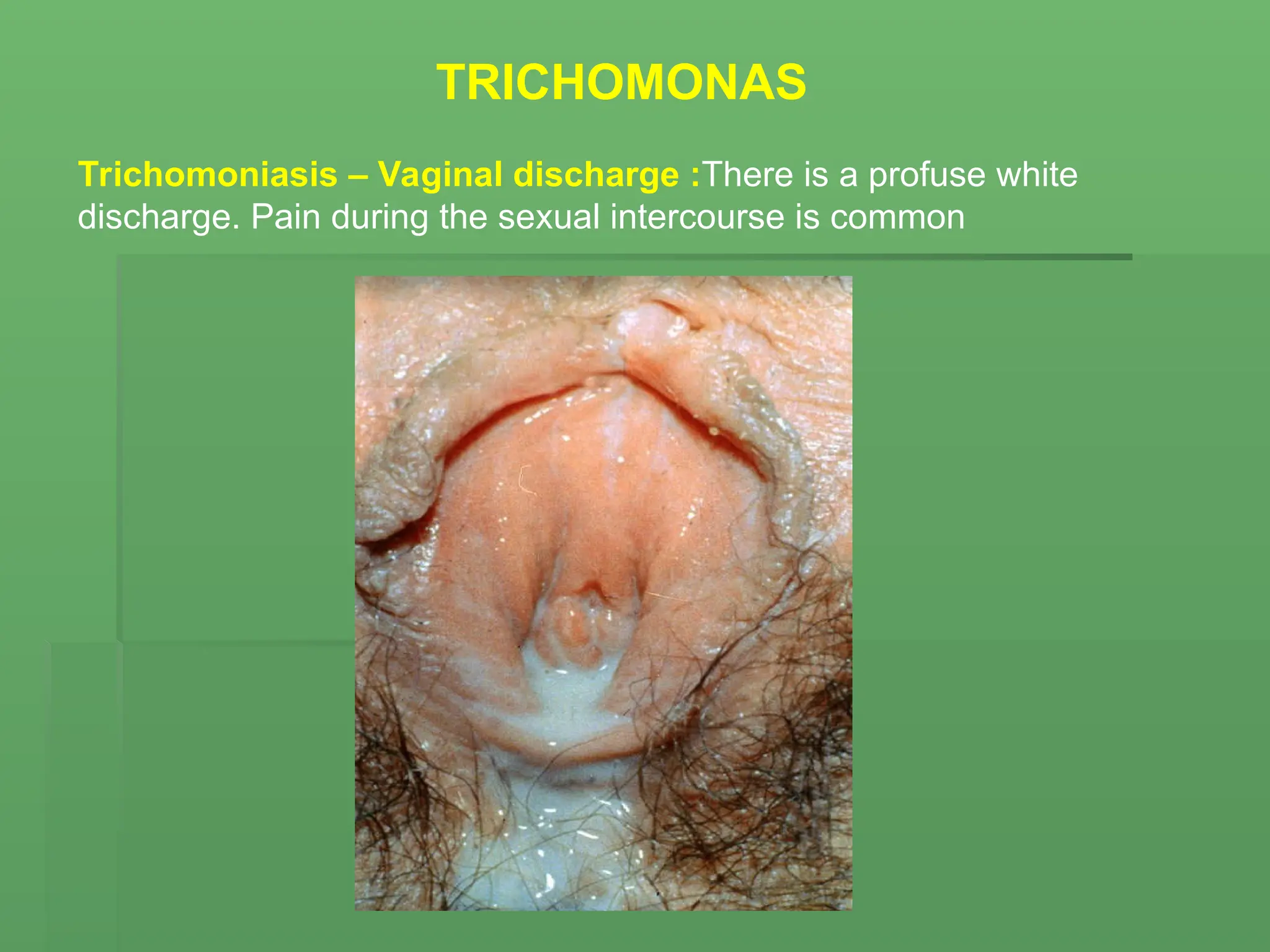
Trichomoniasis – Vaginal discharge :There is a profuse white
discharge. Pain during the sexual intercourse is common
TRICHOMONAS
CANDIDIASIS
Caused by a fungus called Candida albicans.
Symptoms appear 3-90 days after infection.
In men the redness of glandis and prepuce with white, grainy
secretions, and itching.
In women this infection can appear even without sexual intercourse
because of the elevated humidity and heat normally present in the
genital region. It presents with severe itching and redness of entire
surface, with appearance of small white grainy secretions.
May also be induced by an indiscriminate use of antibiotics or by
diabetes.
It requires a long treatment.
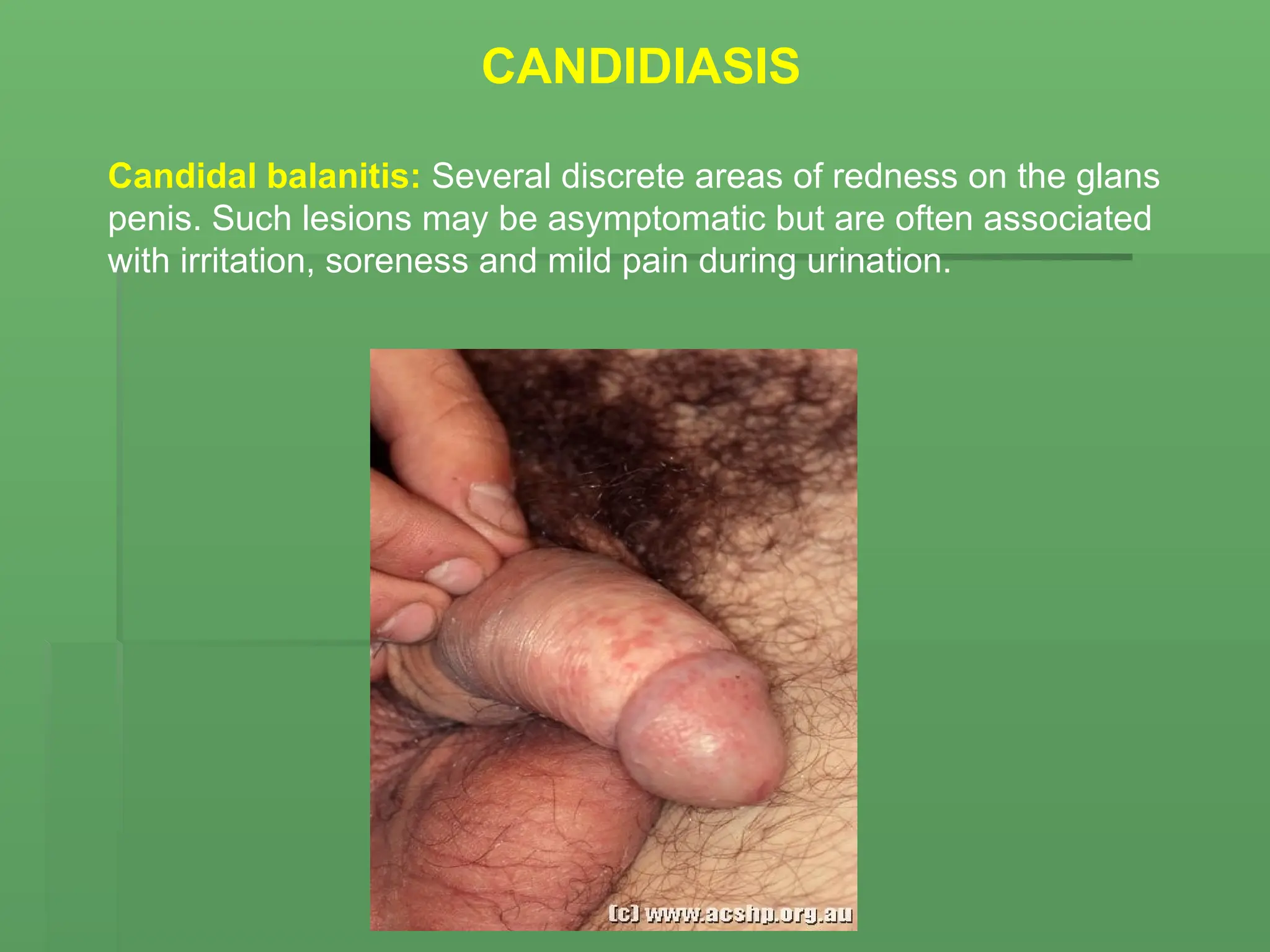
Candidal balanitis: Several discrete areas of redness on the glans
penis. Such lesions may be asymptomatic but are often associated
with irritation, soreness and mild pain during urination.
CANDIDIASIS
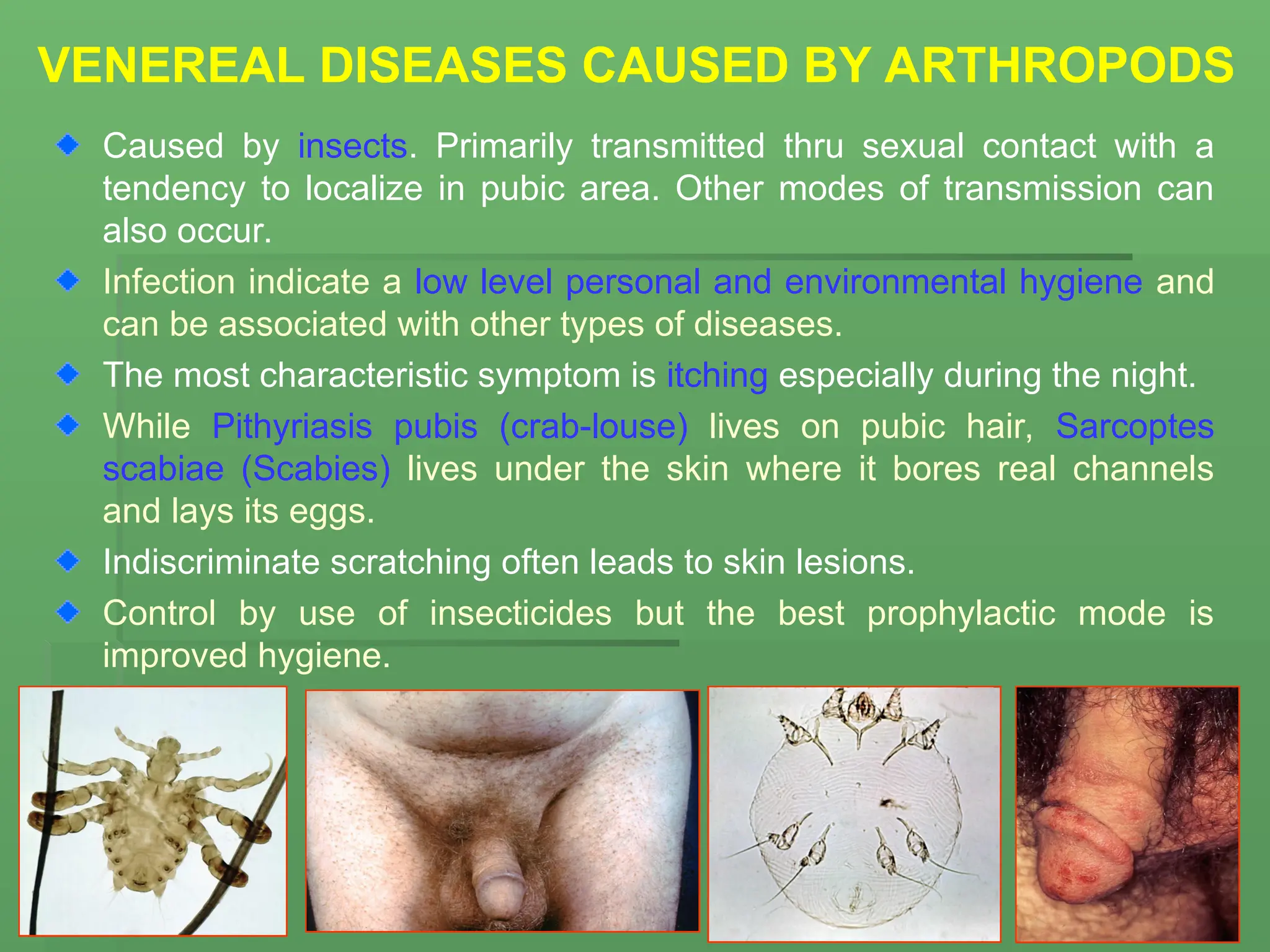
VENEREAL DISEASES CAUSED BY ARTHROPODS
Caused by insects. Primarily transmitted thru sexual contact with a
tendency to localize in pubic area. Other modes of transmission can
also occur.
Infection indicate a low level personal and environmental hygiene and
can be associated with other types of diseases.
The most characteristic symptom is itching especially during the night.
While Pithyriasis pubis (crab-louse) lives on pubic hair, Sarcoptes
scabiae (Scabies) lives under the skin where it bores real channels
and lays its eggs.
Indiscriminate scratching often leads to skin lesions.
Control by use of insecticides but the best prophylactic mode is
improved hygiene.
VENEREAL DISEASES CAUSED BY VIRUSES
GENITAL HERPES
It shows up with small blisters on
external genitalia grouped like
branch or chain. They are painful
and produce burning sensations.
The symptoms begin 3-14 days
after the infection.
Even after the symptoms have
disappeared virus remains in the
body and periodically can cause
the reappearance of symptoms.
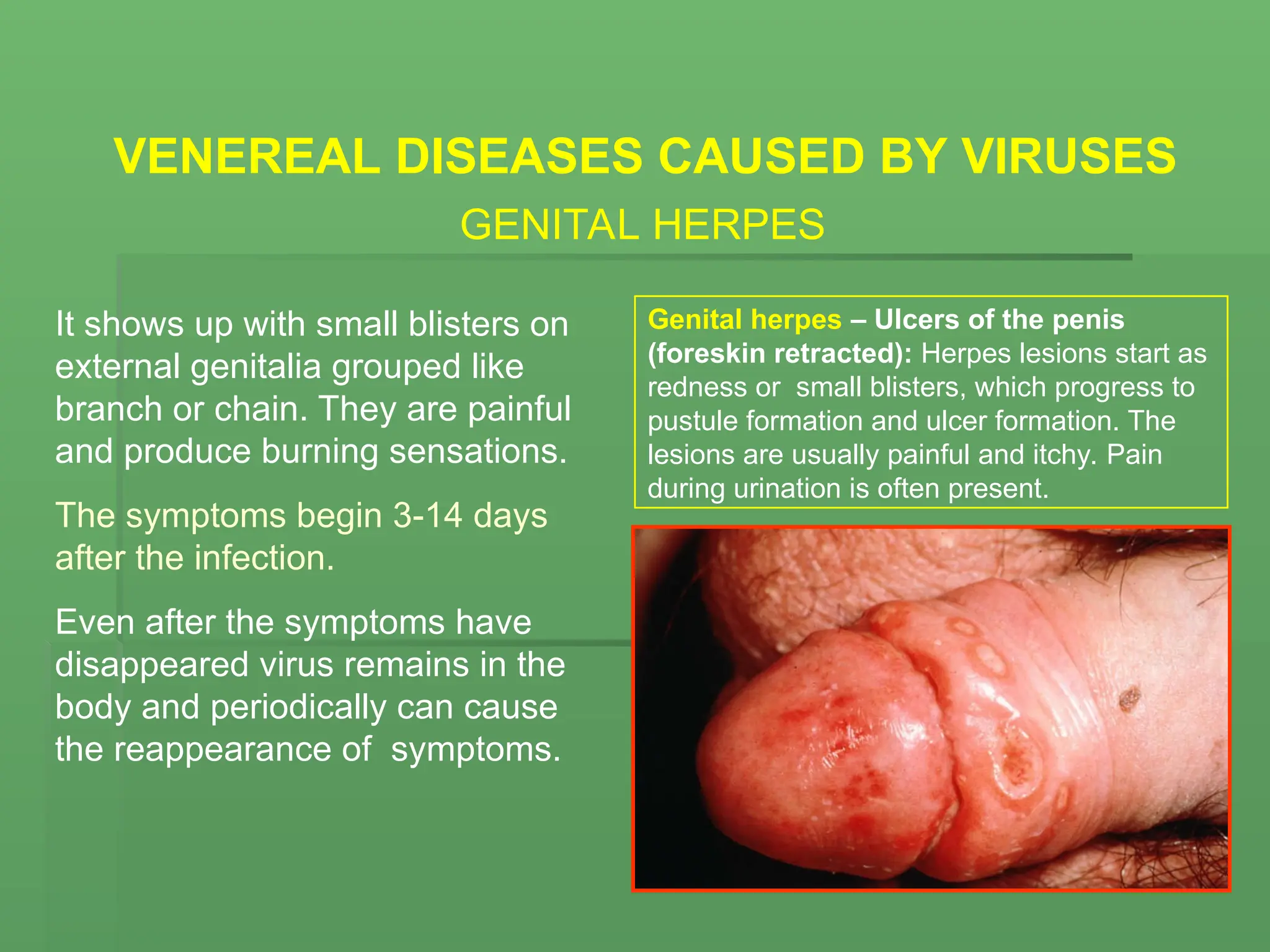
Genital herpes – Ulcers of the penis
(foreskin retracted): Herpes lesions start as
redness or small blisters, which progress to
pustule formation and ulcer formation. The
lesions are usually painful and itchy. Pain
during urination is often present.
CONDYLOMATA
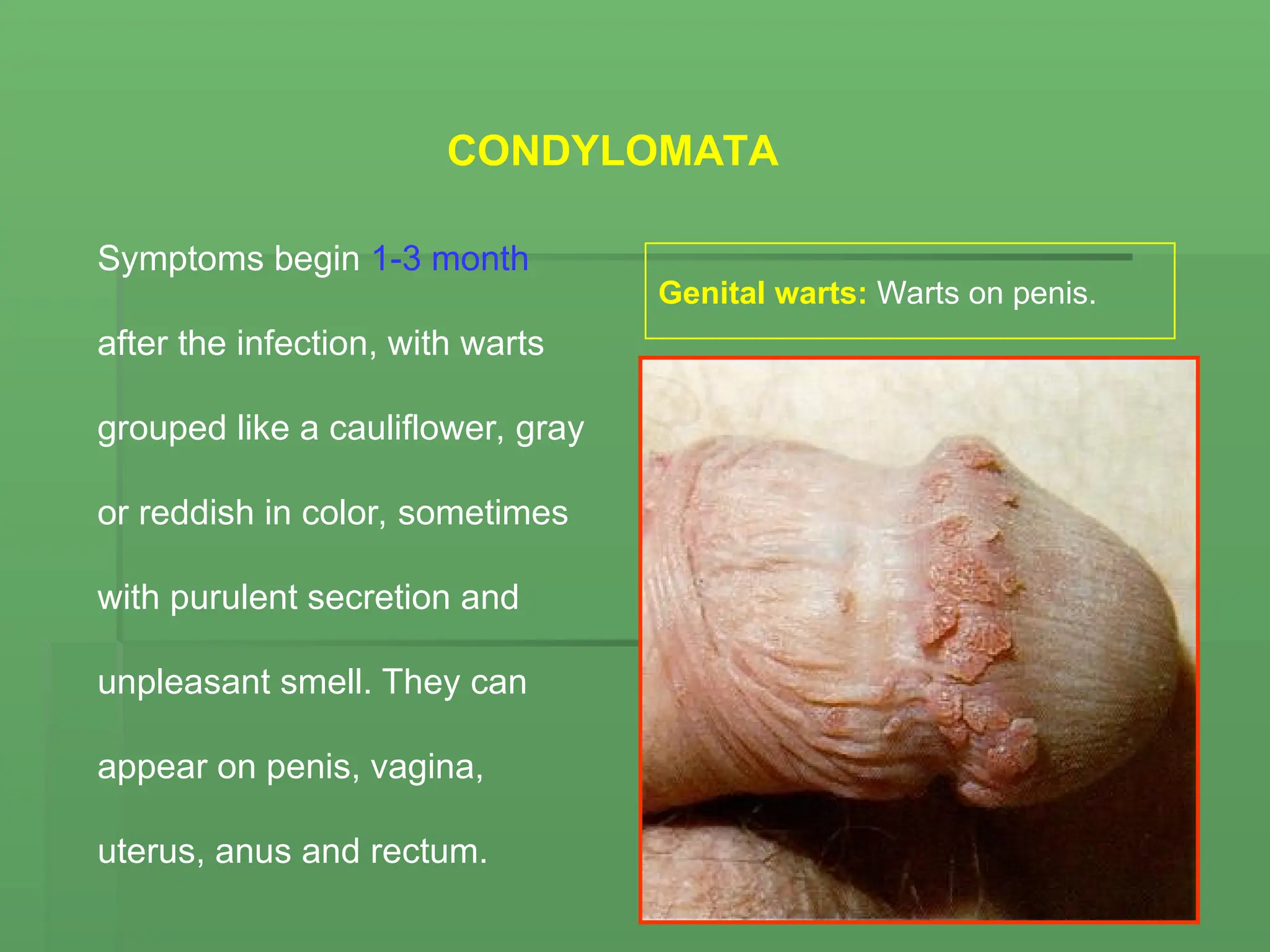
Symptoms begin 1-3 month
after the infection, with warts
grouped like a cauliflower, gray
or reddish in color, sometimes
with purulent secretion and
unpleasant smell. They can
appear on penis, vagina,
uterus, anus and rectum.
Genital warts: Warts on penis.
HEPATITIS B
It is also transmissible by sexual intercourse, because this virus can be
found in saliva, sperm, vaginal secretions, blood.
The symptoms may appear even 6 months after the contracting the
infection.
It damages the liver cells (hepatitis) and often leads to a chronic
disease (cirrhosis and malignant liver tumors).
The virus can be diagnosed using specific blood tests.
Today, safe and effective vaccines exist.
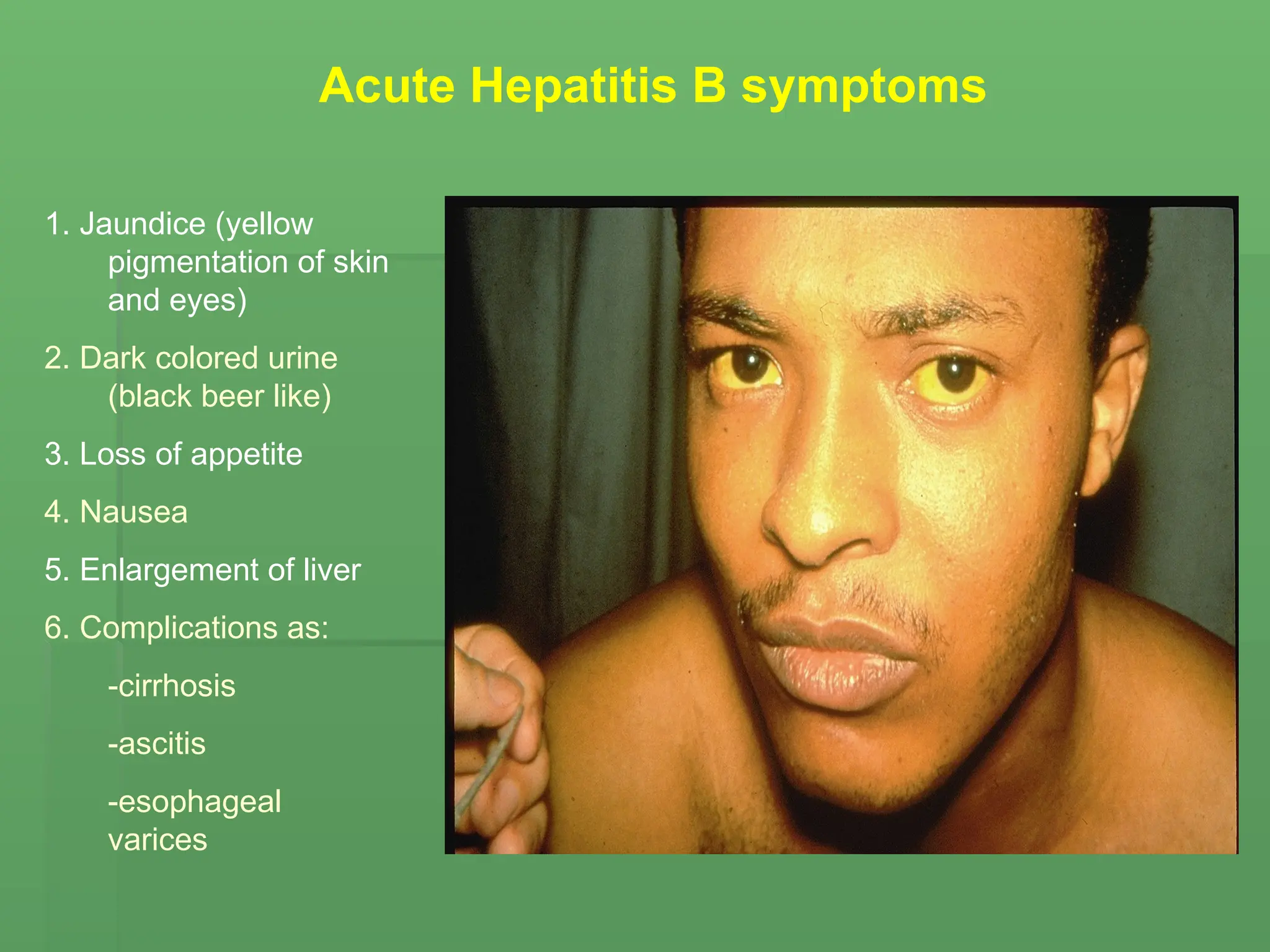
Acute Hepatitis B symptoms
1. Jaundice (yellow
pigmentation of skin
and eyes)
2. Dark colored urine
(black beer like)
3. Loss of appetite
4. Nausea
5. Enlargement of liver
6. Complications as:
-cirrhosis
-ascitis
-esophageal
varices
AIDS/SIDA
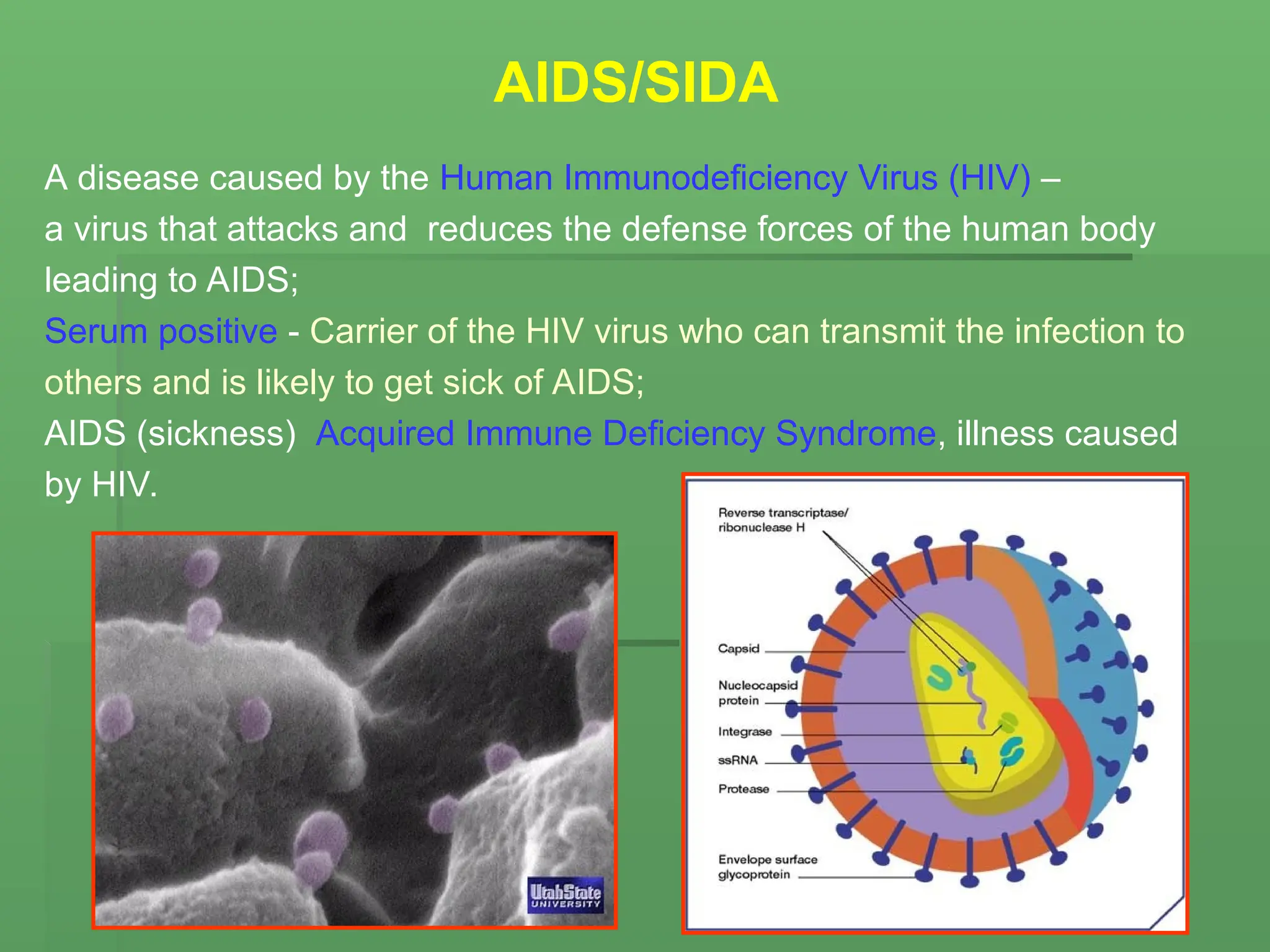
A disease caused by the Human Immunodeficiency Virus (HIV) –
a virus that attacks and reduces the defense forces of the human body
leading to AIDS;
Serum positive - Carrier of the HIV virus who can transmit the infection to
others and is likely to get sick of AIDS;
AIDS (sickness) Acquired Immune Deficiency Syndrome, illness caused
by HIV.
AIDS/SIDA
AIDS - Transmission
1. Sexual transmission – HIV is transmitted by both homosexual and
heterosexual contact; HIV infection is predominantly a sexually transmitted
disease; the virus has been demonstrated in sperm and vaginal fluid.
2. Transmission by blood and blood products – 90 to 100 percent of
individuals who were transfused with HIV positive blood became infected;
among IDUs (injectable-drug users), HIV infection occurs by parenteral
transmission from contaminated drug paraphernalia (needles and syringes).
3. Maternal-Fetal / Infant transmission – HIV infection can be
transmitted from an infected mother to her fetus during pregnancy or to her
infant during delivery. Postnatal transmission has been clearly documented,
strongly implicating colostrum and breast milk as the vehicles for infection.
AIDS – is NOT transmitted thru:
1. CONTACT WITH BIOLOGICAL LIQUIDS - saliva, sweat,
stool, urine, tears (there are no strong evidence for such ways of
transmission)
2. SOCIAL CONTACTS - living, playing, eating, embracing or
talking with a sick or infected person.
3. INSECT BITE OR DOMESTIC ANIMALS
AIDS – natural history
The natural history of HIV infection, without specific management,
involves the following stages:
1. Acquisition of the virus
2. Primary infection (seroconversion illness)
3. An asymptomatic phase
4. Early symptomatic infection
5. Eventual progression to AIDS
An individual is capable of transmitting the virus
throughout ALL stages of HIV infection
FREQUENT SIGNS/SYMPTOMS:
 Fever
 Fatigue
 Pharyngitis
 Joints and muscular pain
 Night sweats
 Inflammation of lymphatic nodes
 Loss of appetite and weight loss
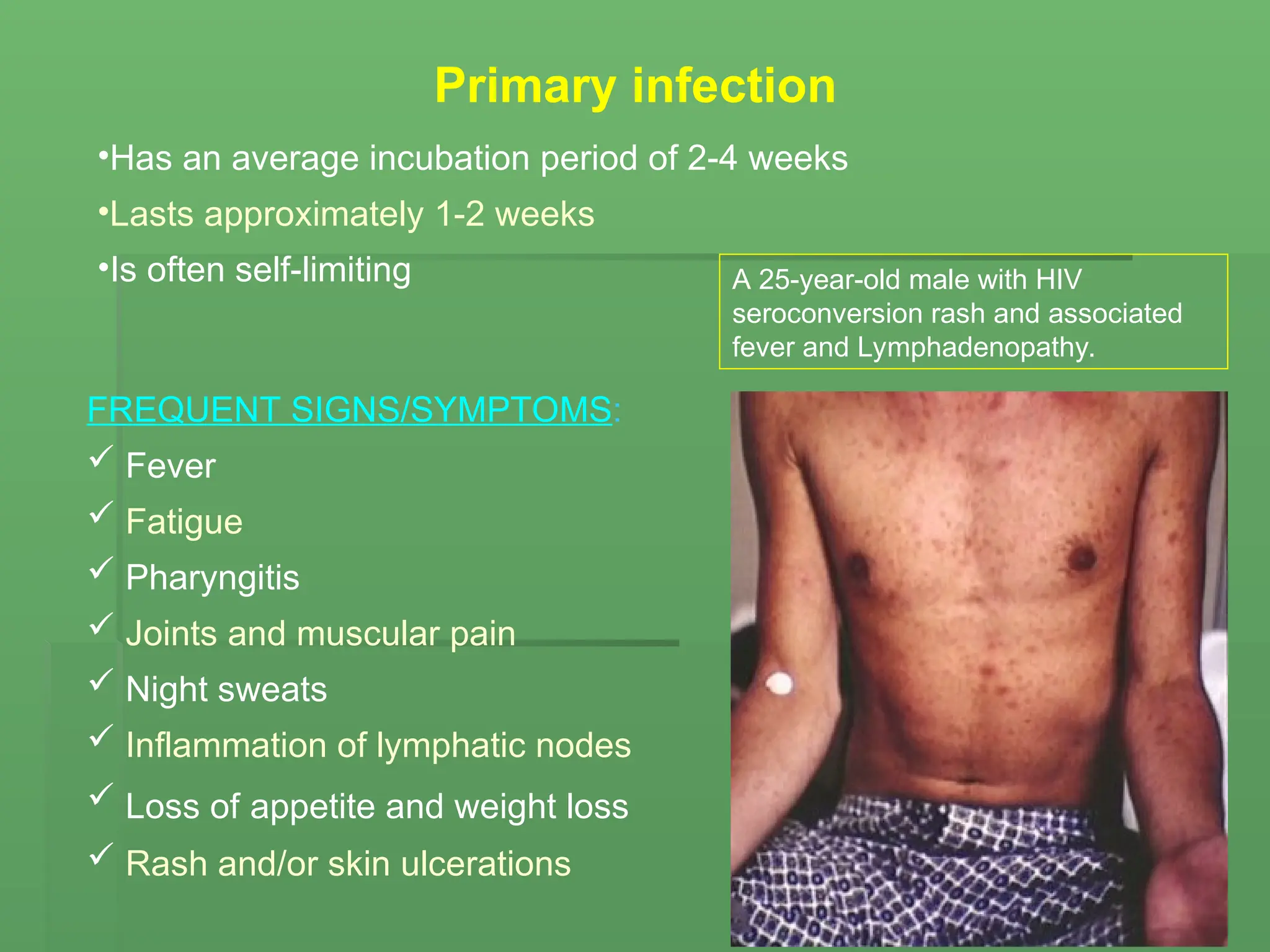
 Rash and/or skin ulcerations
Primary infection
•Has an average incubation period of 2-4 weeks
•Lasts approximately 1-2 weeks
•Is often self-limiting A 25-year-old male with HIV
seroconversion rash and associated
fever and Lymphadenopathy.
Asymptomatic Infection
After acquiring a primary HIV infection, there is an Asymptomatic infection
phase.
phase.
During this period:
During this period:
Viral replication is progressive
HIV is detectable in the lymphoid tissues and to a lesser extent, in the
blood and plasma
blood and plasma
There are no related symptoms
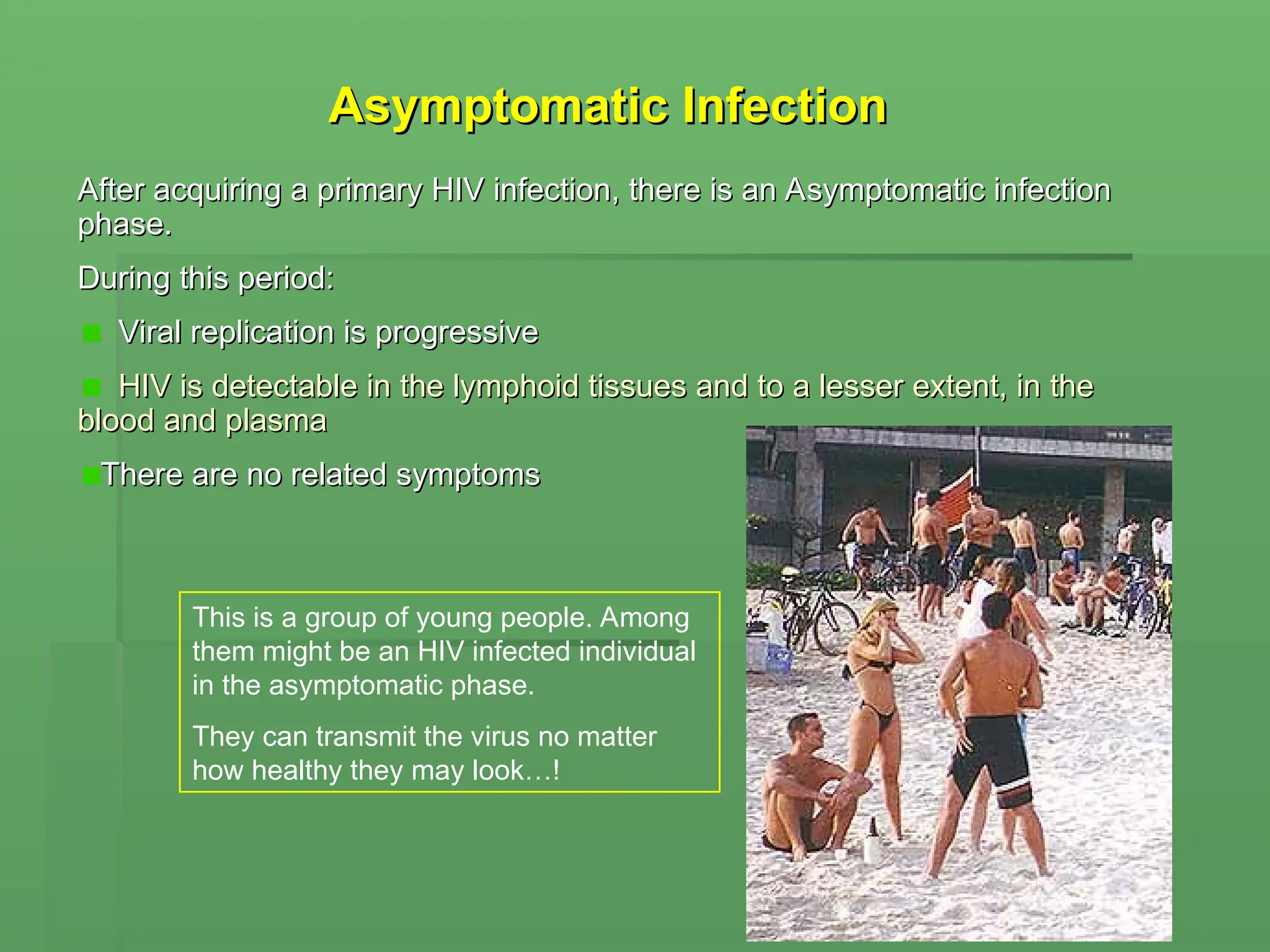
This is a group of young people. Among
them might be an HIV infected individual
in the asymptomatic phase.
They can transmit the virus no matter
how healthy they may look…!
Early symptomatic infection
During the Early symptomatic infection, a continued viral replication
occurs with a gradual decline of the body’s natural defense force.
This is reflected by:
•constitutional symptoms: weight loss, fever, diarrhea, lymphatic node
inflammation, malaise, night sweats.
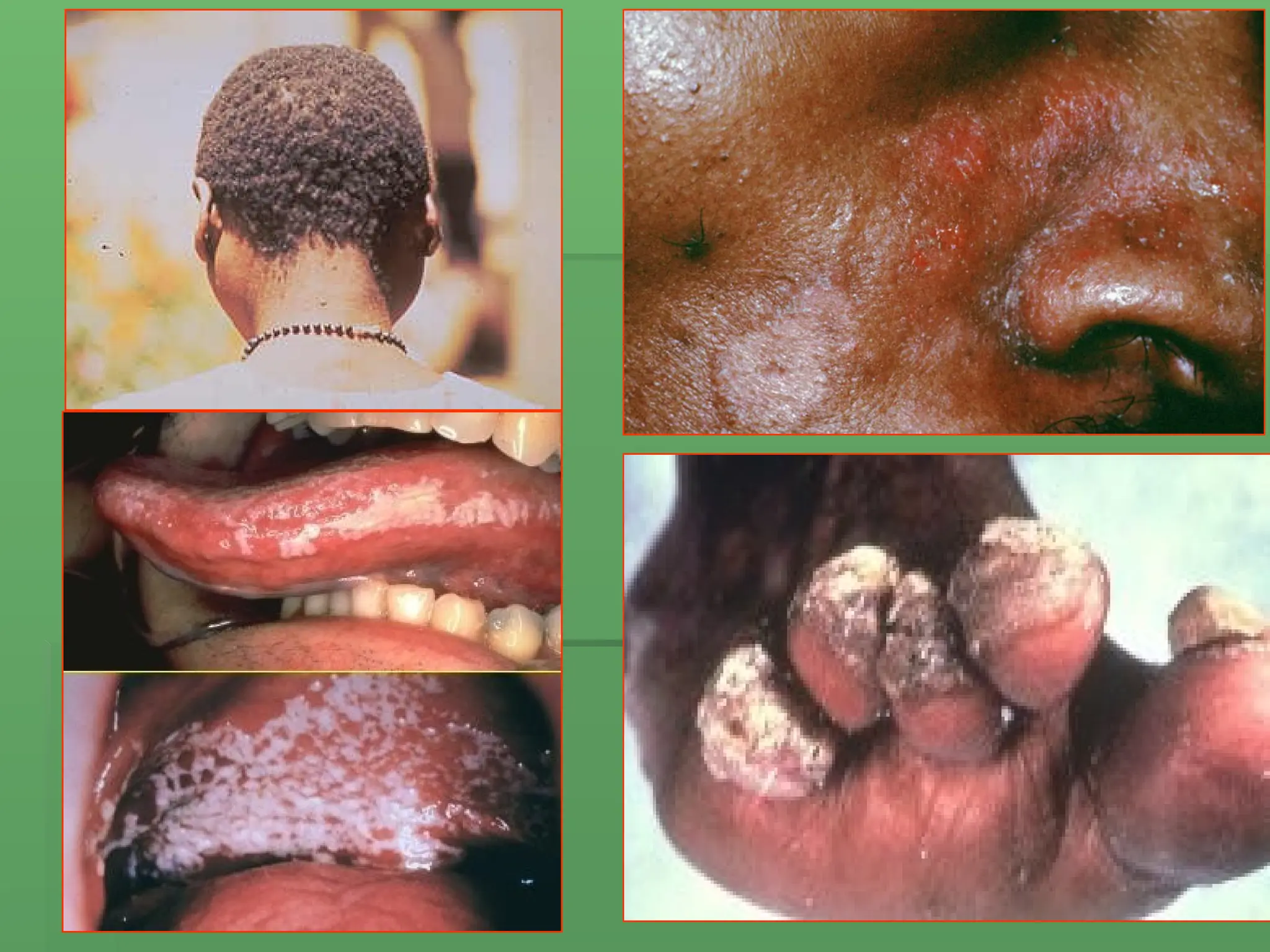
•skin and oral manifestations (provide a good indicator of disease
activity): oral candidiasis, dental abscesses, aphtous ulcers.
•Infections: skin infections, genital fungal infections, ano-genital warts,
herpes, mouth infections, infections due to common generally innocuous
agents.
•laboratory markers
AIDS
At this stage of HIV infection an individual’s immune system is seriously
compromised.
It is characterized by:
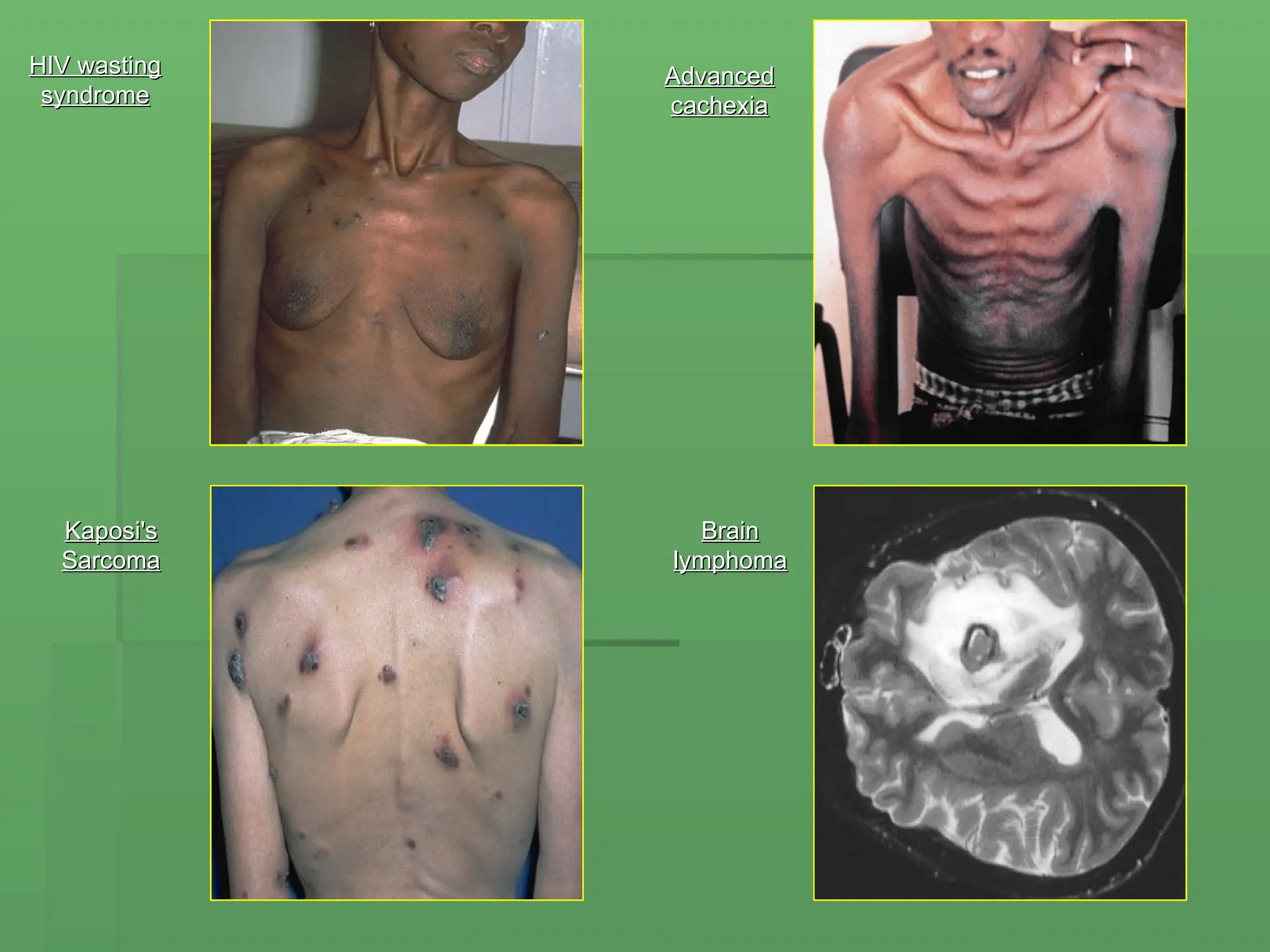
•HIV wasting syndrome
•Brain affections
•Infections: bacterial, mycobacterial, viral, fungal, parasitic
•Malignancies: malignant tumors of lymph nodes, and skin .
HIV wasting
HIV wasting
syndrome
syndrome
Kaposi's
Kaposi's
Sarcoma
Sarcoma
Advanced
Advanced
cachexia
cachexia
Brain
Brain
lymphoma
lymphoma
Disease Management
AIMS:
- to reduce the viral load (anti-retroviral therapy)
- chemoprophylaxis / treatment of associated infections
ANTI - RETROVIRAL THERAPY:
Current treatment scheme has reduced the number of deaths due to
HIV infection, but up to now nobody has been cured.
Combination therapy involves treatment with several drugs belonging
to different classes.
VACCINE:
Currently there is no available vaccine approved for use in humans,
although, several vaccine prototypes have been developed.
Can STD’s be cured or prevented ?
Unfortunately the possible answer to give is partial:
Most of them can be treated (Syphilis, gonorrhea, Trichomoniasis,
candidiasis, etc.).
Some of them can be prevented thru vaccinations (Hepatitis B).
AIDS in particular has no definitive cure
BUT ALL OF THEM CAN BE AVOIDED AND PREVENTED!
How can STD’s be prevented?
Knowing your own partner - it is a fundamental precaution to
reduce the risk before having sex.
Avoiding frequent multiple sexual partners - more than one
partner a year is considered promiscuous behavior,
therefore, risky.
Avoid sexual relations with unknown persons - people
whose attitude and way of life we do not know
Avoid sexual relations with persons with known high risk
behavior promiscuous persons, drug addicts,
homosexuals, bisexuals
How can STD’s be prevented? (2)
When you suspect infection:
 Use condom - not 100% safe against all VD’s,
but significantly reduces risk of contamination.
 Visiting a physician - suspicion of having an
STD; for counseling and treatment
 Abstain from sexual intercourse – avoid sex
when there is suspicion or confirmed STD
 Talking with your partner - regarding own
sexual life, informing him / her about past
infections and relevant practices.
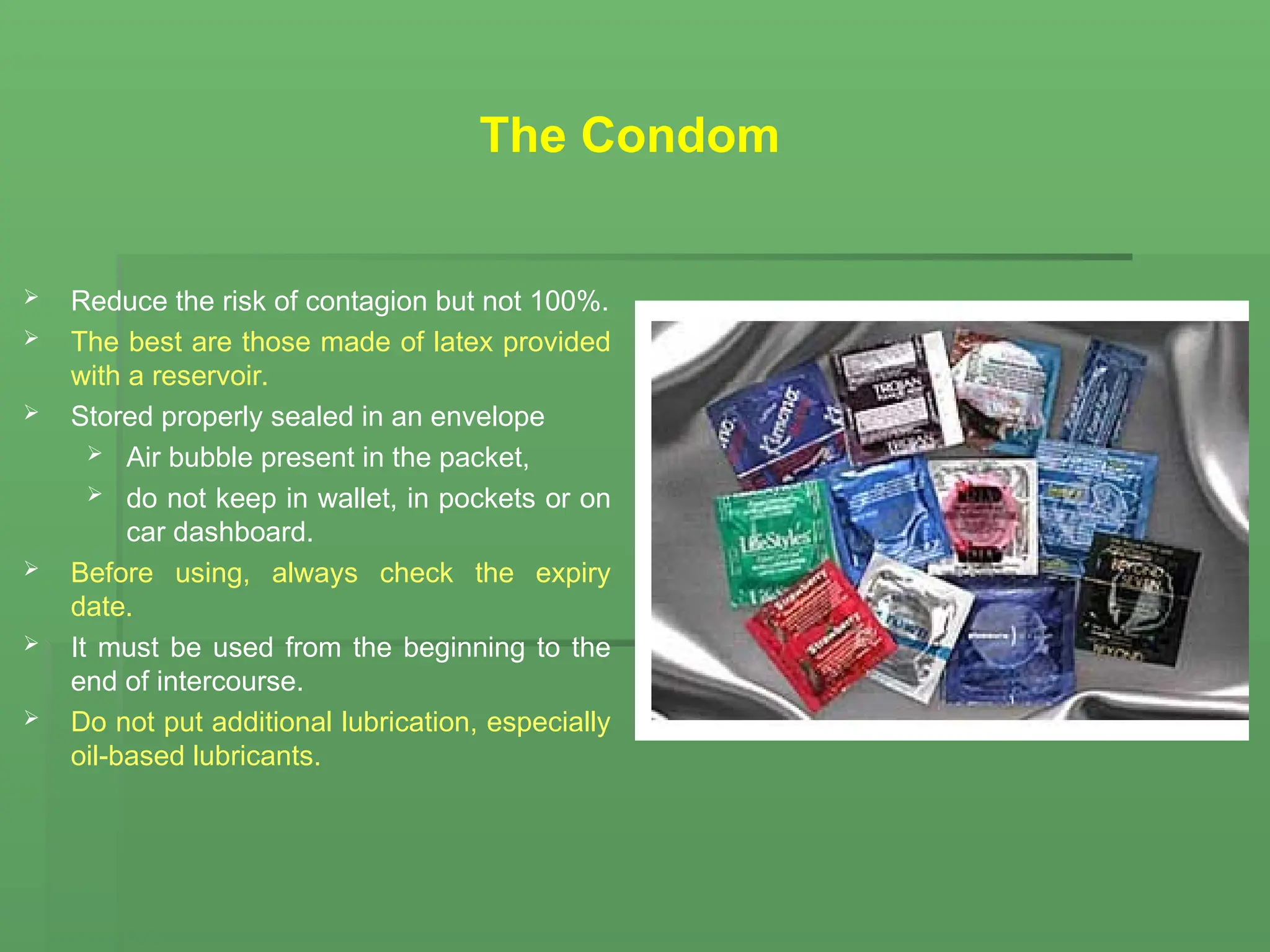
The Condom
 Reduce the risk of contagion but not 100%.
 The best are those made of latex provided
with a reservoir.
 Stored properly sealed in an envelope
 Air bubble present in the packet,
 do not keep in wallet, in pockets or on
car dashboard.
 Before using, always check the expiry
date.
 It must be used from the beginning to the
end of intercourse.
 Do not put additional lubrication, especially
oil-based lubricants.
COMMON MISCONCEPTIONS
 SHE IS A GOOD PERSON !
 SHE IS A CLEAN GIRL !
 SHE LOOKS HEALTHY
 IF I WASH MYSELF IMMEDIATELY, I WILL NOT GET SICK !
 IF THE CONDOM BREAKS, IT IS DUE TO A FABRICATION ERROR !
 ONE TIME ONLY !!!…….. NOTHING WILL HAPPEN TO ME !
 THE CONDOM IS TO BE PUT ON AT THE END OF SEX !
 THE SPERMICIDE CREAM WILL PROTECT ME FROM AIDS !
 STD’s ARE CAUGHT IN THE TOILET !
 STD’s AFFECT ONLY PROSTITUTES AND HOMOSEXUALS !
 PREGNANT WOMEN CANNOT TRANSMIT THE DISEASE !
 STD’s CAN BE PREVENTED WITH PERIODIC ANTIBIOTIC
INJECTIONS !
ARE WE REALLY LIKE THIS ?
STOP IT…!!!
EVEN IF OTHERS DO IT!
REMEMBER !!!
IT IS ALL UP TO YOU…
WHETHER TO AVOID OR
SPREAD A SEXUALLY
TRANSMITTED DISEASE !!!
WE URGE YOU TO REFLECT ON YOUR OWN
PRACTICES…
BY DOING SO, WE CAN HIT OUR TARGET !!!
MAKE THE RIGHT CHOICE…CHOOSE LIFE !!!
Sexual Transmitted Diseases (STD) Prevention Program.ppt

  • 1.
    QHSE Department Sexually TransmittedIllness Control Program
  • 2.
    WELCOME Meeting for preventionof Sexually Transmitted Diseases
  • 3.
    Thru time MANhas evolved from his Prehistoric Ancestor to today’s Modern Man. These changes has brought about huge differences in terms of the following: 1. Wider scope of understanding; open mindedness 2. Culture driven lifestyle 3. Access to information
  • 4.
    IGNORANCE FEAR PREJUDICE TIMIDITY UNINFORMED DON’T -GIVE -ADAMN INSECURITY SUPERFICIALITY CHILDISHNESS
  • 5.
    The wall ofsilent conspiracy over The wall of silent conspiracy over Sexually Transmitted Diseases Sexually Transmitted Diseases can be broken! can be broken! Proper educational information
  • 6.
    TAKE CARE! Not allthat glitter is gold! Sometimes there might be unpleasant surprises that await us!
  • 7.
    YOUR WOULD BEPARTNER INDEED COULD BE LIKE HER! Frequent unprotected sexual intercourse is the major cause of venereal disease transmission !
  • 8.
    WHAT ARE VENEREALDISEASES? Also called SEXUALLY TRANSMITTED ILLNESS - diseases transmitted during sexual intercourse (oral, vaginal, anal). Caused by parasite, bacteria, fungus, virus found in the sexual organs, genital fluids, blood. May occur simultaneously in groups - Superinfections. Does not discriminate age, sex, race. It will infect all unprotected person in contact with the source. Although majority of VD’s are curable, they can lead to Post-Treatment Complications on genitalia and other parts of the body as well. Some VD’s can be transmitted from mother to child in pregnancy. There is NO IMMUNITY in most VD’s. Anyone can be re-infected after successful treatment. Rarely recognized externally without a thorough physical examination and laboratory confirmation. All VD’s are PREVENTABLE thru positive behavioral practices in life.
  • 9.
    THE SEXUALLY TRANSMITTEDILLNESSES ARE... SYPHILIS-lifetime marker GONORRHEA GENITAL HERPES CONDYLOMATOSIS AIDS TRICHOMONIASIS INGUINAL GRANULOMA VENEREAL ULCERS CHLAMYDIA CANDIDIASIS HEPATITIS B – may develop immunity if you survive NON SPECIFIC URETHRITIS PITHYRIASIS SCABIES AMOEBIASIS
  • 10.
    SYPHILIS • Caused bya microorganism (Treponema pallidum) found in the blood, skin and mucosal lesions of affected persons. • It occurs in three stages: 1. 10-90 days after infection the first symptom (painless ulcer) begins at the point of entry. 2. Even without treatment, the ulcer heals spontaneously, but the infection spreads throughout the body. 3. The worm is not felt inside the body, but continuously damage your different organs. It can go on for decades. Treponema pallidum
  • 11.
    Early syphilis (primarystage) – Ulcer: The ulcer is round with a well defined edge. The base is clean. Syphilitic ulcers are painless and not tender until a secondary infection sets in. Typically, they are indurated. Primary syphilis Primary Syphilis lesion
  • 12.
    Early syphilis (primarystage) – Ulcer of the penis: There is a primary lesion of the penis. Penis Cervix Primary syphilis
  • 13.
    Early syphilis (primarystage) – Ulcer of the penis Primary syphilis
  • 14.
    Early syphilis (primarystage) – Ulcers located on other areas: These lesions are that of a finger and that of a mouth (oral lesion). Finger Mouth Primary syphilis
  • 15.
    Early syphilis (secondarystage) – Condylomata lata: Multiple condylomata lata of the perineum. These raised, flat, wart-like skin lesions are a typical pale pink-gray in color. They are highly infectious. Secondary Syphilis Condylomata lata
  • 16.
    Early syphilis (secondarystage) – Skin lesions: syphilitic rash of the forehead. Secondary Syphilis
  • 17.
    Early syphilis (secondarystage) – Skin lesions: leukoderma coli (“collar of Venus”): Whitish patches in areas of increased pigmentation are visible on the neck of this patient. Secondary Syphilis
  • 18.
    Late benign syphilis(tertiary stage): Gummatous disease: multiple defects of different tissues. Tertiary Syphilis
  • 19.
    Very Curable andrarely exceeds the first stage, if treated on time. Quickly Diagnosed by blood analysis. No immunity and reinfection can occur. Treponema pallidum passes thru the placenta infecting the fetus causing congenital syphilis. It is extremely susceptible to high temperature and common disinfectant. Therefore it is transmitted only through direct contact with blood or skin lesions or mucous membranes full of spirochetes. Syphilis - General Issues
  • 20.
    GONORRHEA First symptoms appear3-5 days after the infecting contact. The bacterial agent is called: Neisseria gonorrheae. Characterized by abundant purulent secretion, yellowish, from urethra or uterus - particularly in the morning. Commonly Resistant to Penicillin If neglected and not treated, cause serious complications - sterility, chronic infections, constricted urethra, tubal pregnancy. Transmitted by all forms of sexual intercourse.
  • 21.
    Gonorrhea – Cervicitisand Vaginitis: a white mucopurulent exudate which draining thru the terminal part of the womb (center of picture) and vagina. GONORRHEA
  • 22.
    Gonorrhea – Urethraldischarge: There is mild erythema of the external aperture of urethra which is a common feature. GONORRHEA
  • 23.
    Gonorrhea - Gonococcalarthritis: Swelling and Redness of the hand joints . Arthritis is a common feature of extended gonococcal infection. GONORRHEA
  • 24.
    GONORRHEA Gonorrhea – GonococcalTonsillitis: swelling of both tonsils, with erythema and pustular deposits on the tonsil surface.
  • 25.
  • 26.
    INFECTIONS DUE TOCHLAMYDIA • A very common disease and may cause sterility in men and women. • 1 - 3 weeks after infection, symptoms appear: IN MEN it starts with urethral inflammation, watery secretion, a burning sensation. If left untreated, leads to testicle inflammation. IN WOMEN it presents with prickly pain, vaginal secretion, abdominal pain. The infection can progress to the womb and pelvic cavity (PID) causing severe inflammation and subsequent sterility. VENEREAL LYMPHOGRANULOMA - Another disease caused by Chlamydia characterised by inflammation and swelling of one or more groin lymph nodes. The symptoms begin 3-21 days after the inoculation presenting general malaise, fever, redness of groin area and sometimes swelling of penis. If not treated on time it causes serious and permanent complications.
  • 27.
    Chlamydial Infections 1 2 3 1.Chlamydial cervicitis 2. Chlamydial conjunctivitis 3. Chlamydial venereal lymphogranuloma
  • 28.
    TRICHOMONAS Parasitic disease, pathogenicagent can be found in urine, in vaginal secretion and sperm. Men often do not present any symptoms, however if any, they are characterized by a whitish urethral secretion, aperture and urethral itching. In Women, symptoms present as an abundant, white or yellow, frothy secretion with an unpleasant smell, accompanied by burning and vaginal pain, as well as with pain during the sexual intercourse.
  • 29.
    Trichomoniasis – Vaginaldischarge :There is a profuse white discharge. Pain during the sexual intercourse is common TRICHOMONAS
  • 30.
    CANDIDIASIS Caused by afungus called Candida albicans. Symptoms appear 3-90 days after infection. In men the redness of glandis and prepuce with white, grainy secretions, and itching. In women this infection can appear even without sexual intercourse because of the elevated humidity and heat normally present in the genital region. It presents with severe itching and redness of entire surface, with appearance of small white grainy secretions. May also be induced by an indiscriminate use of antibiotics or by diabetes. It requires a long treatment.
  • 31.
    Candidal balanitis: Severaldiscrete areas of redness on the glans penis. Such lesions may be asymptomatic but are often associated with irritation, soreness and mild pain during urination. CANDIDIASIS
  • 32.
    VENEREAL DISEASES CAUSEDBY ARTHROPODS Caused by insects. Primarily transmitted thru sexual contact with a tendency to localize in pubic area. Other modes of transmission can also occur. Infection indicate a low level personal and environmental hygiene and can be associated with other types of diseases. The most characteristic symptom is itching especially during the night. While Pithyriasis pubis (crab-louse) lives on pubic hair, Sarcoptes scabiae (Scabies) lives under the skin where it bores real channels and lays its eggs. Indiscriminate scratching often leads to skin lesions. Control by use of insecticides but the best prophylactic mode is improved hygiene.
  • 33.
    VENEREAL DISEASES CAUSEDBY VIRUSES GENITAL HERPES It shows up with small blisters on external genitalia grouped like branch or chain. They are painful and produce burning sensations. The symptoms begin 3-14 days after the infection. Even after the symptoms have disappeared virus remains in the body and periodically can cause the reappearance of symptoms. Genital herpes – Ulcers of the penis (foreskin retracted): Herpes lesions start as redness or small blisters, which progress to pustule formation and ulcer formation. The lesions are usually painful and itchy. Pain during urination is often present.
  • 34.
    CONDYLOMATA Symptoms begin 1-3month after the infection, with warts grouped like a cauliflower, gray or reddish in color, sometimes with purulent secretion and unpleasant smell. They can appear on penis, vagina, uterus, anus and rectum. Genital warts: Warts on penis.
  • 35.
    HEPATITIS B It isalso transmissible by sexual intercourse, because this virus can be found in saliva, sperm, vaginal secretions, blood. The symptoms may appear even 6 months after the contracting the infection. It damages the liver cells (hepatitis) and often leads to a chronic disease (cirrhosis and malignant liver tumors). The virus can be diagnosed using specific blood tests. Today, safe and effective vaccines exist.
  • 36.
    Acute Hepatitis Bsymptoms 1. Jaundice (yellow pigmentation of skin and eyes) 2. Dark colored urine (black beer like) 3. Loss of appetite 4. Nausea 5. Enlargement of liver 6. Complications as: -cirrhosis -ascitis -esophageal varices
  • 37.
    AIDS/SIDA A disease causedby the Human Immunodeficiency Virus (HIV) – a virus that attacks and reduces the defense forces of the human body leading to AIDS; Serum positive - Carrier of the HIV virus who can transmit the infection to others and is likely to get sick of AIDS; AIDS (sickness) Acquired Immune Deficiency Syndrome, illness caused by HIV.
  • 38.
  • 39.
    AIDS - Transmission 1.Sexual transmission – HIV is transmitted by both homosexual and heterosexual contact; HIV infection is predominantly a sexually transmitted disease; the virus has been demonstrated in sperm and vaginal fluid. 2. Transmission by blood and blood products – 90 to 100 percent of individuals who were transfused with HIV positive blood became infected; among IDUs (injectable-drug users), HIV infection occurs by parenteral transmission from contaminated drug paraphernalia (needles and syringes). 3. Maternal-Fetal / Infant transmission – HIV infection can be transmitted from an infected mother to her fetus during pregnancy or to her infant during delivery. Postnatal transmission has been clearly documented, strongly implicating colostrum and breast milk as the vehicles for infection.
  • 40.
    AIDS – isNOT transmitted thru: 1. CONTACT WITH BIOLOGICAL LIQUIDS - saliva, sweat, stool, urine, tears (there are no strong evidence for such ways of transmission) 2. SOCIAL CONTACTS - living, playing, eating, embracing or talking with a sick or infected person. 3. INSECT BITE OR DOMESTIC ANIMALS
  • 41.
    AIDS – naturalhistory The natural history of HIV infection, without specific management, involves the following stages: 1. Acquisition of the virus 2. Primary infection (seroconversion illness) 3. An asymptomatic phase 4. Early symptomatic infection 5. Eventual progression to AIDS An individual is capable of transmitting the virus throughout ALL stages of HIV infection
  • 42.
    FREQUENT SIGNS/SYMPTOMS:  Fever Fatigue  Pharyngitis  Joints and muscular pain  Night sweats  Inflammation of lymphatic nodes  Loss of appetite and weight loss  Rash and/or skin ulcerations Primary infection •Has an average incubation period of 2-4 weeks •Lasts approximately 1-2 weeks •Is often self-limiting A 25-year-old male with HIV seroconversion rash and associated fever and Lymphadenopathy.
  • 43.
    Asymptomatic Infection Asymptomatic Infection Afteracquiring a primary HIV infection, there is an Asymptomatic infection After acquiring a primary HIV infection, there is an Asymptomatic infection phase. phase. During this period: During this period: Viral replication is progressive Viral replication is progressive HIV is detectable in the lymphoid tissues and to a lesser extent, in the HIV is detectable in the lymphoid tissues and to a lesser extent, in the blood and plasma blood and plasma There are no related symptoms There are no related symptoms This is a group of young people. Among them might be an HIV infected individual in the asymptomatic phase. They can transmit the virus no matter how healthy they may look…!
  • 44.
    Early symptomatic infection Duringthe Early symptomatic infection, a continued viral replication occurs with a gradual decline of the body’s natural defense force. This is reflected by: •constitutional symptoms: weight loss, fever, diarrhea, lymphatic node inflammation, malaise, night sweats. •skin and oral manifestations (provide a good indicator of disease activity): oral candidiasis, dental abscesses, aphtous ulcers. •Infections: skin infections, genital fungal infections, ano-genital warts, herpes, mouth infections, infections due to common generally innocuous agents. •laboratory markers
  • 46.
    AIDS At this stageof HIV infection an individual’s immune system is seriously compromised. It is characterized by: •HIV wasting syndrome •Brain affections •Infections: bacterial, mycobacterial, viral, fungal, parasitic •Malignancies: malignant tumors of lymph nodes, and skin .
  • 47.
  • 48.
    Disease Management AIMS: - toreduce the viral load (anti-retroviral therapy) - chemoprophylaxis / treatment of associated infections ANTI - RETROVIRAL THERAPY: Current treatment scheme has reduced the number of deaths due to HIV infection, but up to now nobody has been cured. Combination therapy involves treatment with several drugs belonging to different classes. VACCINE: Currently there is no available vaccine approved for use in humans, although, several vaccine prototypes have been developed.
  • 49.
    Can STD’s becured or prevented ? Unfortunately the possible answer to give is partial: Most of them can be treated (Syphilis, gonorrhea, Trichomoniasis, candidiasis, etc.). Some of them can be prevented thru vaccinations (Hepatitis B). AIDS in particular has no definitive cure BUT ALL OF THEM CAN BE AVOIDED AND PREVENTED!
  • 50.
    How can STD’sbe prevented? Knowing your own partner - it is a fundamental precaution to reduce the risk before having sex. Avoiding frequent multiple sexual partners - more than one partner a year is considered promiscuous behavior, therefore, risky. Avoid sexual relations with unknown persons - people whose attitude and way of life we do not know Avoid sexual relations with persons with known high risk behavior promiscuous persons, drug addicts, homosexuals, bisexuals
  • 51.
    How can STD’sbe prevented? (2) When you suspect infection:  Use condom - not 100% safe against all VD’s, but significantly reduces risk of contamination.  Visiting a physician - suspicion of having an STD; for counseling and treatment  Abstain from sexual intercourse – avoid sex when there is suspicion or confirmed STD  Talking with your partner - regarding own sexual life, informing him / her about past infections and relevant practices.
  • 52.
    The Condom  Reducethe risk of contagion but not 100%.  The best are those made of latex provided with a reservoir.  Stored properly sealed in an envelope  Air bubble present in the packet,  do not keep in wallet, in pockets or on car dashboard.  Before using, always check the expiry date.  It must be used from the beginning to the end of intercourse.  Do not put additional lubrication, especially oil-based lubricants.
  • 53.
    COMMON MISCONCEPTIONS  SHEIS A GOOD PERSON !  SHE IS A CLEAN GIRL !  SHE LOOKS HEALTHY  IF I WASH MYSELF IMMEDIATELY, I WILL NOT GET SICK !  IF THE CONDOM BREAKS, IT IS DUE TO A FABRICATION ERROR !  ONE TIME ONLY !!!…….. NOTHING WILL HAPPEN TO ME !  THE CONDOM IS TO BE PUT ON AT THE END OF SEX !  THE SPERMICIDE CREAM WILL PROTECT ME FROM AIDS !  STD’s ARE CAUGHT IN THE TOILET !  STD’s AFFECT ONLY PROSTITUTES AND HOMOSEXUALS !  PREGNANT WOMEN CANNOT TRANSMIT THE DISEASE !  STD’s CAN BE PREVENTED WITH PERIODIC ANTIBIOTIC INJECTIONS !
  • 54.
    ARE WE REALLYLIKE THIS ? STOP IT…!!! EVEN IF OTHERS DO IT!
  • 55.
    REMEMBER !!! IT ISALL UP TO YOU… WHETHER TO AVOID OR SPREAD A SEXUALLY TRANSMITTED DISEASE !!!
  • 56.
    WE URGE YOUTO REFLECT ON YOUR OWN PRACTICES… BY DOING SO, WE CAN HIT OUR TARGET !!! MAKE THE RIGHT CHOICE…CHOOSE LIFE !!!