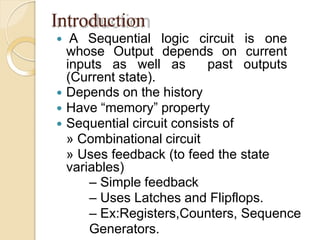
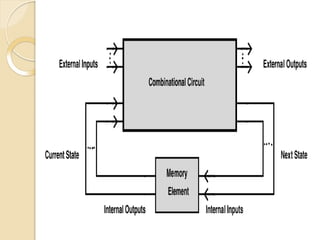
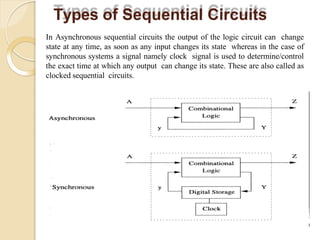
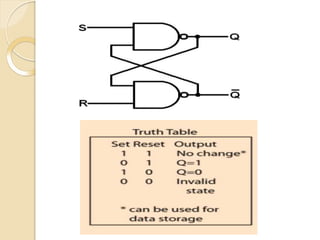
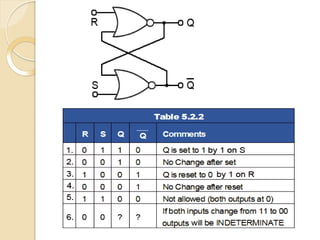
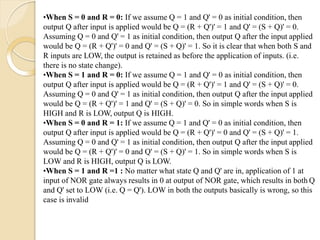
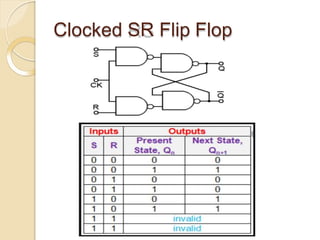
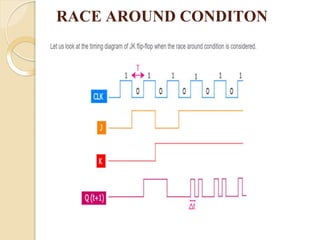
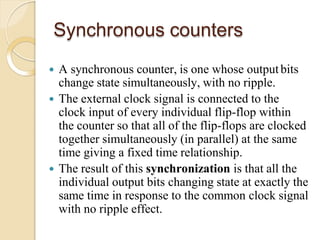
Sequential circuits have memory and their output depends on both the current inputs and past outputs. They contain combinational circuits and feedback loops using latches and flip-flops. There are two main types of sequential circuits - asynchronous which can change state anytime the inputs change, and synchronous which only change on a clock signal.
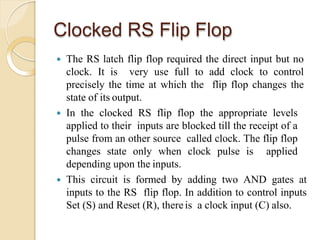
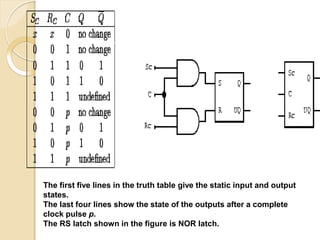
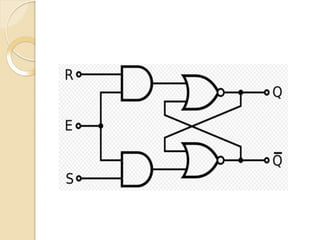
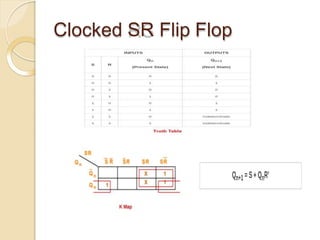
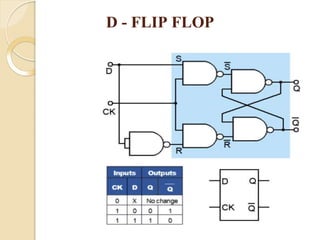
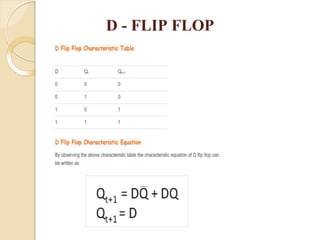
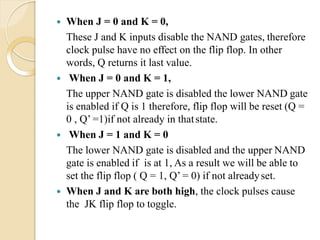
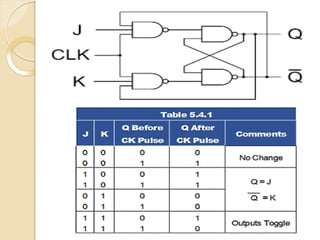
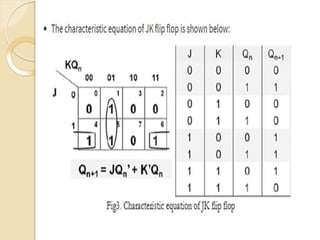
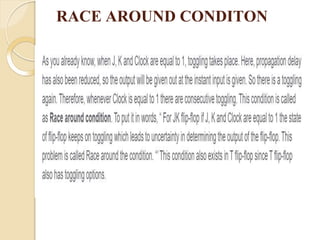
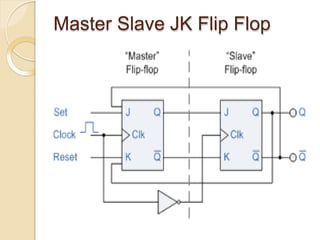
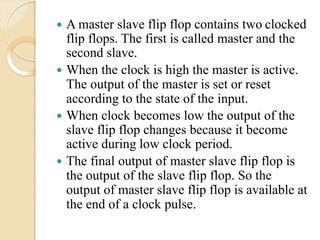
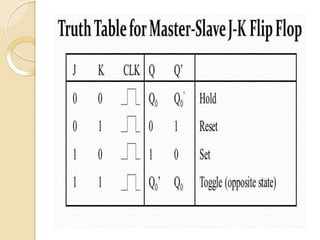
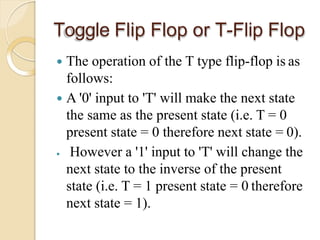
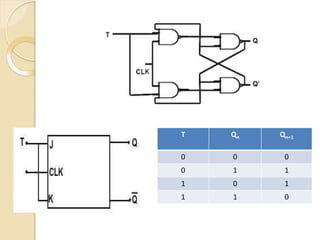
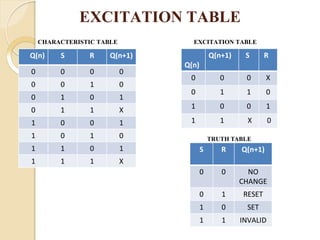
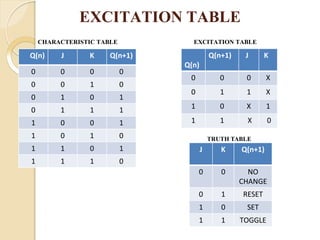
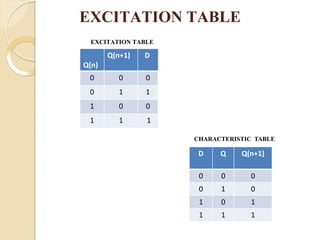
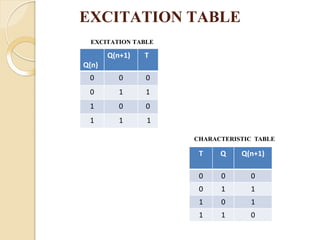
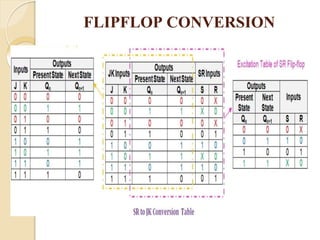
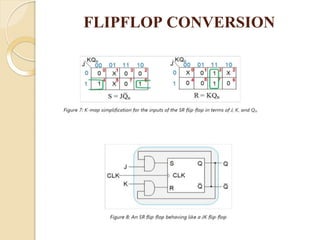
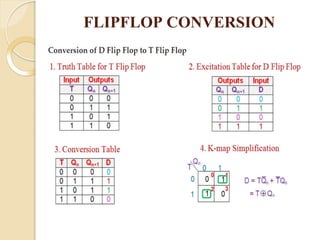
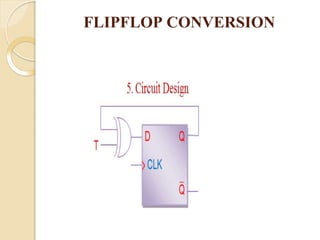
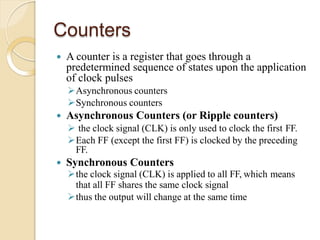
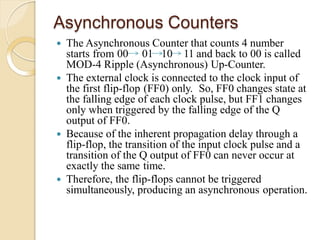
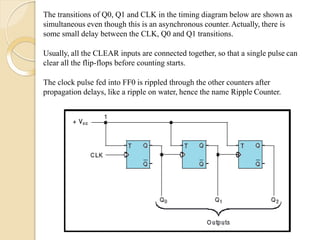
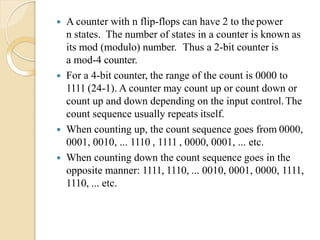
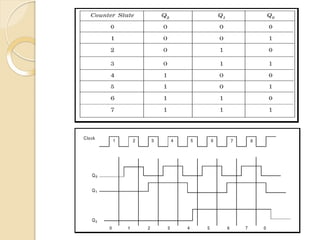
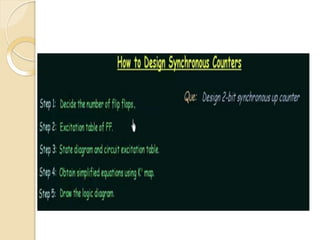
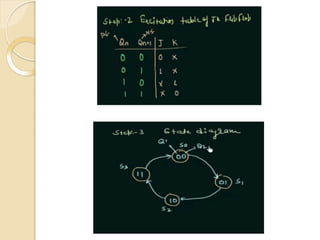
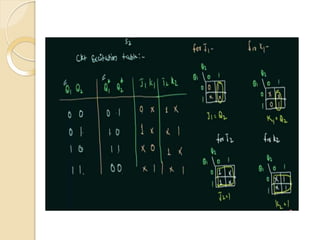
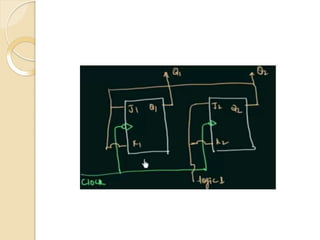
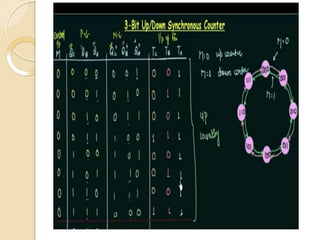
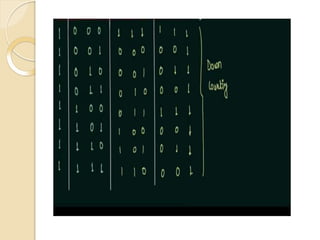
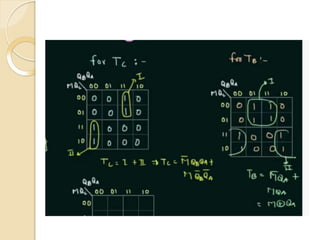
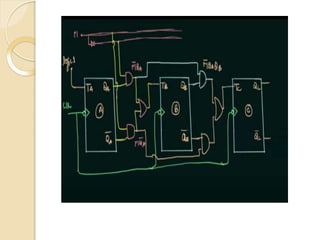
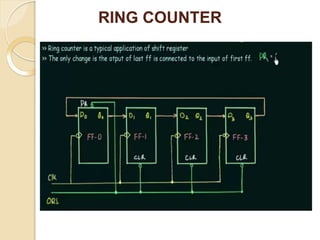
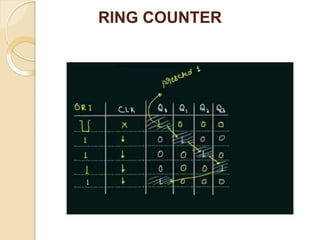
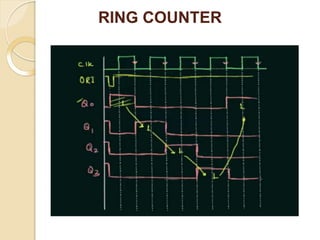
Latches continuously track inputs and can change output anytime, while flip-flops only change output on a clock signal. Common flip-flop types include SR, D, T, and JK. Counters are sequential circuits that cycle through a sequence of states on each clock pulse and are used to count events.


![SEQUENTIAL CIRCUITS [FLIP FLOPS AND LATCHES]](https://cdn.slidesharecdn.com/ss_thumbnails/sequentialcircuits-211203044039-thumbnail.jpg?width=640&height=640&fit=bounds)
![SEQUENTIAL CIRCUITS [Flip-flops and Latches]](https://cdn.slidesharecdn.com/ss_thumbnails/sequentialcircuits-211217082412-thumbnail.jpg?width=640&height=640&fit=bounds)


