


Search Engine Optimization for the New GoogleHas it all changed, what still works, what doesn't?Fionn Downhill | CEOElixir Interactive5425 E. Bell Road, Suite 145,Scottsdale AZ 85254602.494.6326866.734.9650fionn@elixirinteractive.com
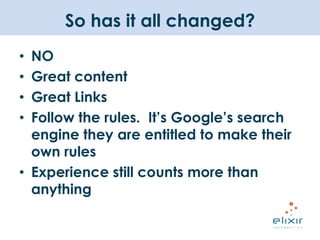
So has it all changed?NO
Great content
Great Links
Follow the rules.  It’s Google’s search engine they are entitled to make their own rules
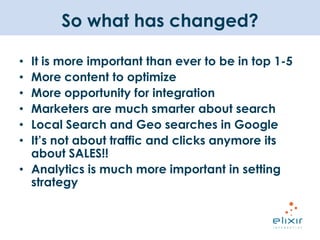
Experience still counts more than anythingSo what has changed?It is more important than ever to be in top 1-5
More content to optimize
More opportunity for integration
Marketers are much smarter about search
Local Search and Geo searches in Google
It’s not about traffic and clicks anymore its about SALES!!
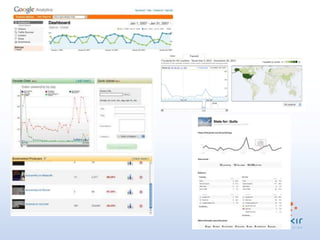
Analytics is much more important in setting strategyHow  to be #1 in GoogleNo one knows for sure – except GoogleBased on our experience, this is what we “think”:Accessibility of the siteSite structureRelevancy of the content to the searchThe popularity of the content  - as measured by linksUser actions – click-through rateLinks, Links, Links, did I say links?
 Integrated results
 Increased relevancyUniversal Search
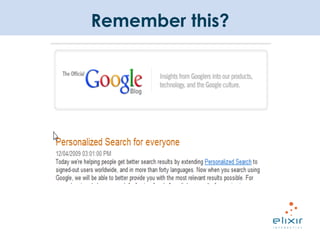
Remember this?
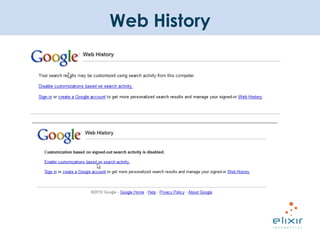
Web History
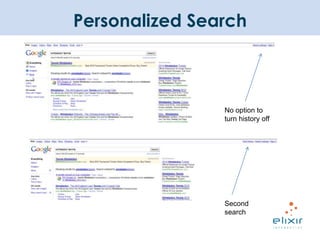
Personalized SearchNo option to turn history offSecond search
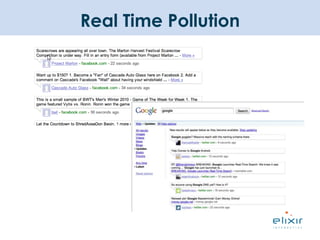
Real Time Pollution
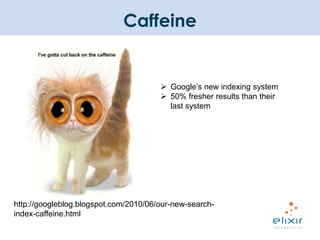
CaffeineGoogle’s new indexing system
50% fresher results than their last systemhttp://googleblog.blogspot.com/2010/06/our-new-search-index-caffeine.html
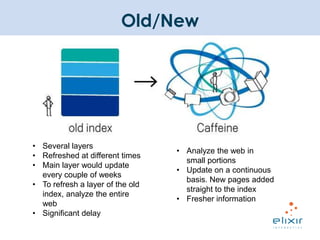
Old/NewSeveral layers
Refreshed at different times
Main layer would update every couple of weeks
To refresh a layer of the old index, analyze the entire web
Significant delay
Analyze the web in small portions
Update on a continuous basis. New pages added straight to the index
Fresher informationMayDay!!Quality content  issues
Deeper Content
Long tail organic terms affected
Higher Quality sites for long tail traffic was the goal – so far I see this result and its positiveSearch Engine Optimization
On-Site Improvements
Best PracticesWhat makes a page successful
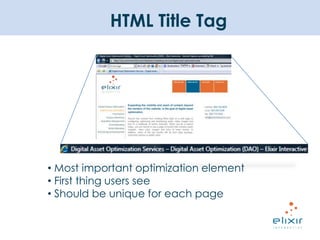
HTML Title Tag Most important optimization element
 First thing users see
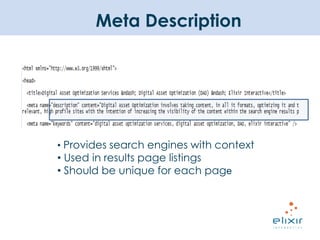
 Should be unique for each page Meta DescriptionProvides search engines with context
 Used in results page listings
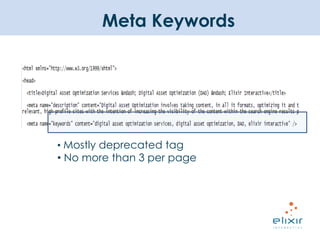
 Should be unique for each page Meta KeywordsMostly deprecated tag
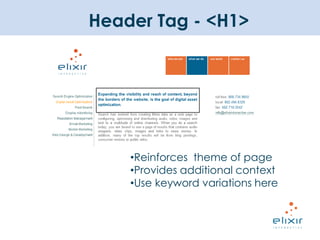
 No more than 3 per pageHeader Tag - <H1>Reinforces  theme of page
Provides additional context
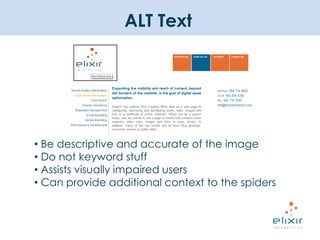
Use keyword variations hereALT Text Be descriptive and accurate of the image
 Do not keyword stuff
 Assists visually impaired users
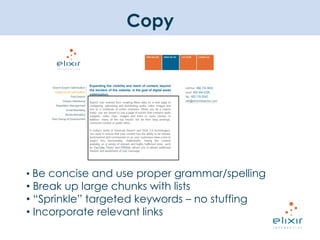
 Can provide additional context to the spidersCopyBe concise and use proper grammar/spelling
 Break up large chunks with lists
 “Sprinkle” targeted keywords – no stuffing
 Incorporate relevant linksWhere does social fit in the mix?
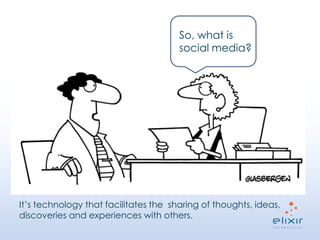
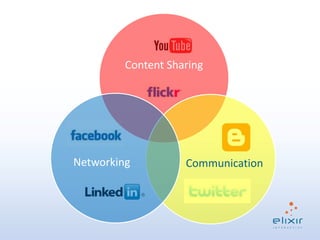
So, what is social media?It’s technology that facilitates the  sharing of thoughts, ideas, discoveries and experiences with others.
Variety of formatsCONTENTRSSForward to friendShare to social/Bookmark
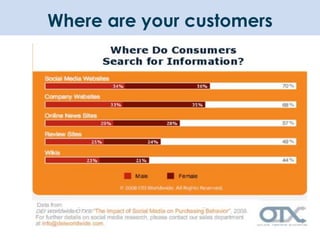
Where are your customers
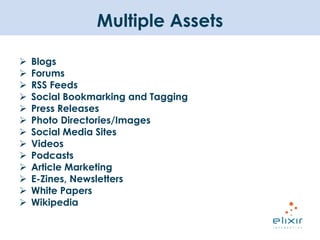
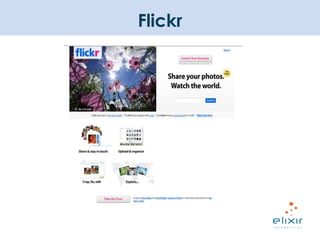
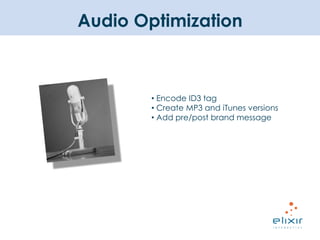
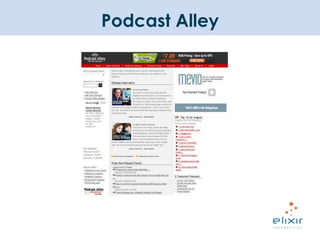
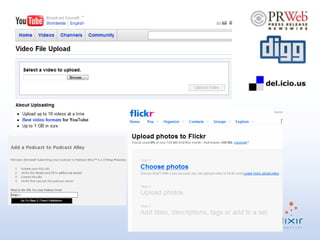
What about those digital assets
So, what’s a digital asset?
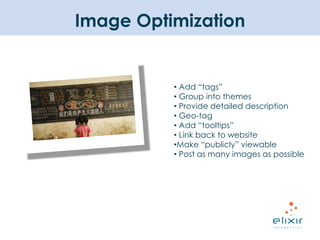
Optimize the assets
The Top Social and Content Strategies

SEO for the new Google - Beyond the Borders of Your Website - Elixir Interactive, Fionn Downhill

Editor's Notes

  • #5  The search engine’s algorithm for determining who gets on the first page of their results is their “secret sauce” Based on years of experience, seeing what works and what doesn’t and doing a lot of reading we have come up with the following criteria that we believe the search engine’s use to determine what sites/content shows up in their results:Site accessibility – can their “bots” get into the site – if there are any obstacles preventing them from indexing (i.e. storing the content in their database) the site, then they will not be able to display that content to the user – such as robots.txtSite structure – is there duplicate content or pages that redirect them endlessly? Certain server related (IT issues) can make it difficult for the spider to index the contentRelevancy of the search – does the content contain the keywords that people are using when they search? If not, how can the search engine display that content?Links – many search engines use the number and more importantly, the quality of the links pointing to a website or piece of content in order to determine its popularity. Think of a link as a vote – from registered voters. The more votes a site/content receives, the more popular it is. Linking could take up a whole session in and of itself.User actions – if one listing gets more clicks than another, the engines may use that information to determine that that particular listing is more relevant and thus give it higher position. And it’s all about to change…. (next slide)
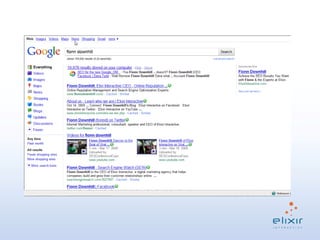
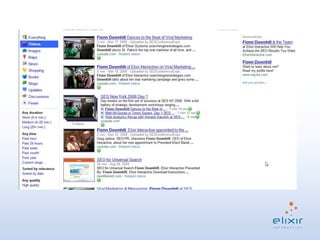
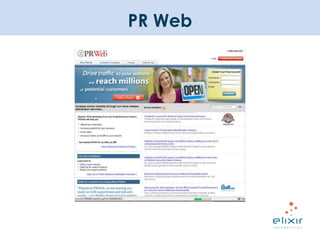
  • #6 The importance of optimizing and distributing your digital assets is of critical importance. The first page of most search results is a combination of news/press, blogs, video and images.You have many more opportunities to rank highly for terms relevant to your business
  • #9 Everyone will potentially see a different results page. By optimizing and distributing your digital assets you are taking the early lead in the race where page 1 visibility will have less of an impact. Being present in multiple channels – especially where your clients and prospects are most likely to be, increases your chances of being found and improves awareness for your brand.Plus – more content = more opportunities for your customers to vote and have it part of their history
  • #17 The “bot” sees the title tag as one of the key indicators of what the page is about – most heavily weighted element on the page First the most part, the title tag is what the “human” user will see in the search engine results page (toggle back to demonstrate)A unique title should be mandatory for every pageA few best practices:The ideal title should be no more than 80 characters as some search engines will cut off anything greater. Spaces are counted as characters. Stop words (i.e. “the”, “is”, “of”, “a”, “and”) and punctuation are ignored by spidersSpecial characters (© ™ ®) must use the character entity. Example ™ = &amp;trade. Do not include HTML code in the title tag The title should be relevant to the content on the page. Target 2-3 keywords per pagePlacing irrelevant keywords or duplicate keywords (i.e. stuffing) in the title is poor practice and can be deemed as spam – this may negatively impact your ability to achieve high visibility within the search engine results pages
  • #18 The Meta description gives the search engine “bot” more information about what the page is about.The “human” user will typically see this description on the search results pageThis description should be unique and relevant to the content on the pageThe max length of the Meta description tag is 325 characters – same rules apply regarding spaces, stop words and special charactersThe ideal description should be 2-3 sentences using the same targeted keywords (as used in the title) for the pageAlways use proper grammar and spellingTry and incorporate a “call to action” to incent the user to click on your listing
  • #19 Most search engines have deprecated the importance of the Meta keywords tag because it has been abused for so long – SpamStill good to include targeted keywords – just in case – but no more than 3 per page. Works for Yahoo and MSN
  • #20 the &lt;h1&gt; or header tag is another important on-page element that gives the search engine “bots” and visitors, more information about the theme of the page. Only 1 ,&lt;h1&gt; tag is allowed per pageDo not “stuff” the &lt;h1&gt; tag with keywords – use derivatives of the primary termsThe &lt;h2&gt; and &lt;h3&gt; tags can be used to provide additional context and support for the primary page themeThese tag recommendations will be applied in the template (h1 in the title box) with the 2009 public Web update 
  • #21 The &lt;img&gt; tag, alternative (“alt”) text provides both visually impaired visitors and search engines “bots” with context about the web page. Not necessary for every graphic on the page, especially small images used for spacingGoogle’s design and content guidelines suggest “Make sure that image ALT tags…are descriptive and accurate.” Yahoo recommends “use ALT text for graphics as it&apos;s good page design to accommodate text browsers or visually impaired visitors, and it helps improve the text content of the page for search purposes.&quot; MSN&apos;s guidelines for successful indexing discourage &quot;stuffing alt tags with irrelevant words in an attempt to increase a page&apos;s keyword density.”  Provide a clear and concise sentence for the image using relevant keywords that describe the picture. This becomes especially important if the image is also a link as it provides necessary context about the destination of the URL. Incorporate targeted keywords where appropriate. Again, “stuffing” the alt text with keywords is frowned upon
  • #22 Be concise and use proper grammar/spelling – remember, you are writing for humans – people scan text – lists are a better choice and can help break up blocks of text. In terms of spelling/grammar – there has been some discussion that the search engines use the quality of the on page content, which could include spelling and grammar, in its algorithm – air on the safe side and always checkThe visible copy on a page provides both humans and search engine spiders the necessary context to understand what the page is about. Not having enough copy limits both audiences from obtaining this understanding and can negatively impact the page content’s ability to gain visibility within the search engine result pages.  The major search engines all state that copy should be written with the human visitor in mind. “Stuffing” a page with keywords intended to artificially boost the visibility of the content within the search engine results pages is manipulative and is viewed as such by the search engines. If discovered, this could result in the devaluing of the content and subsequent drop or removal of such content from their results.Where possible link to other pages or websites that support your content. Make sure to incorporate the targeted keywords in the link text (aka anchor text) to further improve the context of the content. See the Banner Health Public Web Linking Guidelines document for further information. Some additional best practices:Search engines favor websites where content is updated regularly and tend to crawl these sites more often. By visiting the site more often, there is a greater opportunity for the site’s content to be indexed. A site that does not update its content regularly will potentially get crawled less often and may have a more difficult time obtaining visibility for its content within the search engine results pages.  Care should be taken when placing copy within images as search engine spiders and those using text-based browsers are unable to “see” this copy. A balance must be achieved between design aesthetics, accessibility and visibility. Having a great looking page that isn’t accessible will cause problems with visibility within the results pages. When writing copy, consideration must always be given to both human and non-human visitors. Remember: updates are not reflected in the search engine’s index immediately – it may take a few days or even weeks or longer. It depends on the rate at which the site is being “crawled”. This information is available from the Online Services team.
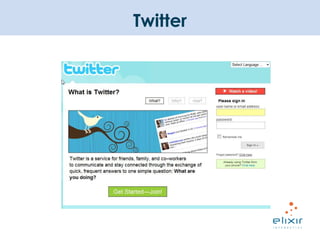
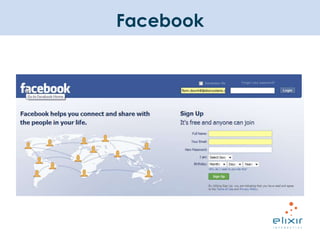
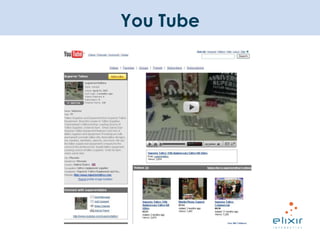
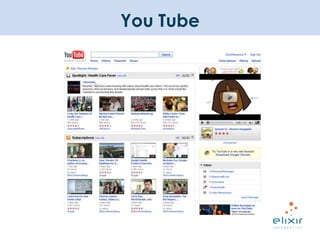
  • #25 80% of internet users watch online video - eMarketerYouTube is the #2 search engine behind GoogleA new blog is created every six secondsFacebook has more than 150 million active users – 70% are from outside the US
  • #26 Ideas for improving the portability of content:Provide users with different formats of content – downloadable PDF, video (multiple formats), podcast (Mp3 and iTunes)Allow users to forward to content to a friendAllow users to post content to their Facebook or other social network profileAllow users to bookmark content and add it to their favorites on Digg and Del.icio.usAllow users to receive an RSS feed of your contentThese recommendations are especially important for content like press releases or other frequently updated content like a blogFor video/audio – add transcript to the page the content is on so spiders have more to feed on. Allow people to embed this content in their own pages/profiles
  • #30 TitleDescriptionTagsTranscript
  • #43 Flash, Windows Media (best), MPEG4 (best for search)
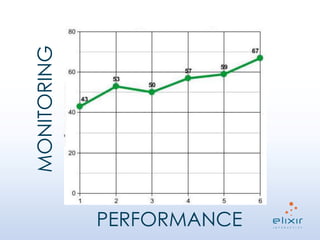
  • #57 Google AnalyticsTubeMogul DashboardYouTube InsightFlickr stats