SEARCH ENGINE OPTIMIZATION 101
Who’s presenting today?
 Writer, Editor, Search Engine Marketer
 330,000 unique visitors
 500,000 page views

LEE WEBER

01
02
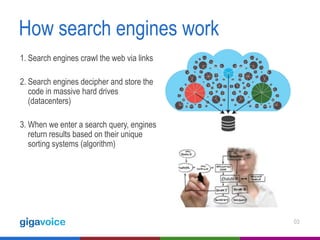
How search engines work
1. Search engines crawl the web via links

2. Search engines decipher and store the
code in massive hard drives
(datacenters)
3. When we enter a search query, engines
return results based on their unique
sorting systems (algorithm)

03
Google’s Datacenters

04
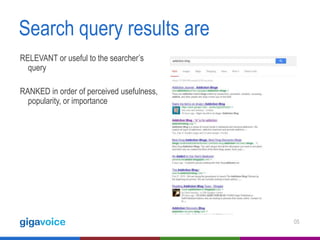
Search query results are
RELEVANT or useful to the searcher’s
query
RANKED in order of perceived usefulness,
popularity, or importance

05
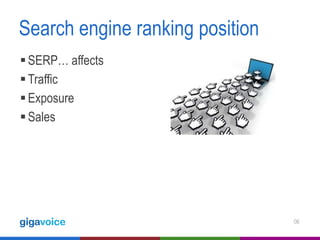
Search engine ranking position
 SERP… affects
 Traffic
 Exposure
 Sales

06
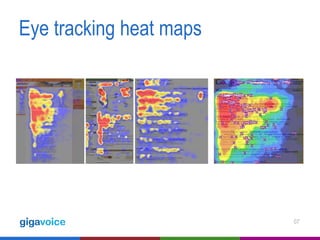
Eye tracking heat maps

07
Why ranking matters
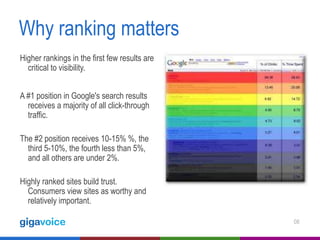
Higher rankings in the first few results are
critical to visibility.
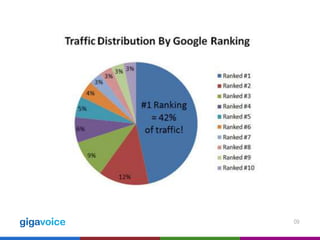
A #1 position in Google's search results
receives a majority of all click-through
traffic.

The #2 position receives 10-15% %, the
third 5-10%, the fourth less than 5%,
and all others are under 2%.
Highly ranked sites build trust.
Consumers view sites as worthy and
relatively important.
08
09
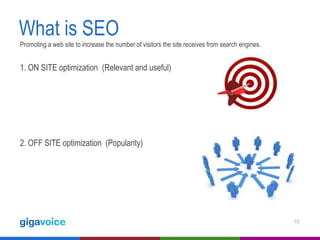
What is SEO
Promoting a web site to increase the number of visitors the site receives from search engines.

1. ON SITE optimization (Relevant and useful)

2. OFF SITE optimization (Popularity)

10
ON SITE optimization
1. Structure websites for engines and readers
2. Create engaging, relevant content
3. Know your keywords

11
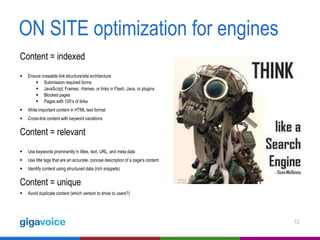
ON SITE optimization for engines
Content = indexed


Ensure crawable link structure/site architecture
 Submission required forms
 JavaScript, Frames, -frames. or links in Flash, Java, or plugins
 Blocked pages
 Pages with 100’s of links



Write important content in HTML text format



Cross-link content with keyword variations

Content = relevant


Use keywords prominently in titles, text, URL, and meta data



Use title tags that are an accurate, concise description of a page's content



Identify content using structured data (rich snippets)

Content = unique


Avoid duplicate content (which version to show to users?)

12
ON SITE optimization for readers
Content = positive experience
 Provide direct, actionable information relevant
to the query
 Deliver high quality, legitimate, credible content
 Use articles, images, and multi-media
 User engagement metrics = Time on page,
number of comments, number of shares,
bounce rate, etc.

Site = usable
 Easy to use, navigate, and understand
 Professionally designed and accessible to
modern browsers
13
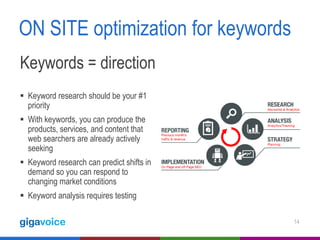
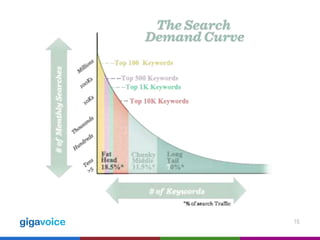
ON SITE optimization for keywords
Keywords = direction
 Keyword research should be your #1
priority
 With keywords, you can produce the
products, services, and content that
web searchers are already actively
seeking
 Keyword research can predict shifts in
demand so you can respond to
changing market conditions

 Keyword analysis requires testing
14
15
My personal recommendations
 Create 50 landing pages
that are keyword optimized
 Cross-link pages with varied
text
 Share across your social
networks
 Expand into video, graphics,
and audio

 My site has 1,200 landing
pages that are keyword
optimized
 They are cross-linked with
varied text
 I share across my social
network
 I am expanding my content
based

16
17
18
OFF SITE optimization
 The “marketing” part
 Requires time, energy, and a budget
 Quality inbound links
 Trustworthy
 Global popularity
 Niche
 Anchor text
 Social sharing

19
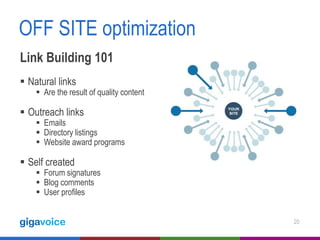
OFF SITE optimization
Link Building 101
 Natural links

 Are the result of quality content

 Outreach links

 Emails
 Directory listings
 Website award programs

 Self created

 Forum signatures
 Blog comments
 User profiles
20
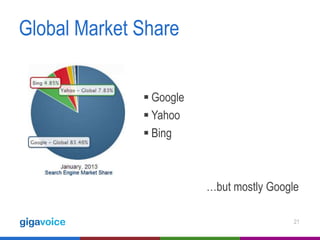
Global Market Share
 Google
 Yahoo
 Bing

…but mostly Google
21
23
Questions?

23

Search Engine Optimization 100

  • 1.
  • 2.
    Who’s presenting today? Writer, Editor, Search Engine Marketer  330,000 unique visitors  500,000 page views LEE WEBER 01
  • 3.
  • 4.
    How search engineswork 1. Search engines crawl the web via links 2. Search engines decipher and store the code in massive hard drives (datacenters) 3. When we enter a search query, engines return results based on their unique sorting systems (algorithm) 03
  • 5.
  • 6.
    Search query resultsare RELEVANT or useful to the searcher’s query RANKED in order of perceived usefulness, popularity, or importance 05
  • 7.
    Search engine rankingposition  SERP… affects  Traffic  Exposure  Sales 06
  • 8.
  • 9.
    Why ranking matters Higherrankings in the first few results are critical to visibility. A #1 position in Google's search results receives a majority of all click-through traffic. The #2 position receives 10-15% %, the third 5-10%, the fourth less than 5%, and all others are under 2%. Highly ranked sites build trust. Consumers view sites as worthy and relatively important. 08
  • 10.
  • 11.
    What is SEO Promotinga web site to increase the number of visitors the site receives from search engines. 1. ON SITE optimization (Relevant and useful) 2. OFF SITE optimization (Popularity) 10
  • 12.
    ON SITE optimization 1.Structure websites for engines and readers 2. Create engaging, relevant content 3. Know your keywords 11
  • 13.
    ON SITE optimizationfor engines Content = indexed  Ensure crawable link structure/site architecture  Submission required forms  JavaScript, Frames, -frames. or links in Flash, Java, or plugins  Blocked pages  Pages with 100’s of links  Write important content in HTML text format  Cross-link content with keyword variations Content = relevant  Use keywords prominently in titles, text, URL, and meta data  Use title tags that are an accurate, concise description of a page's content  Identify content using structured data (rich snippets) Content = unique  Avoid duplicate content (which version to show to users?) 12
  • 14.
    ON SITE optimizationfor readers Content = positive experience  Provide direct, actionable information relevant to the query  Deliver high quality, legitimate, credible content  Use articles, images, and multi-media  User engagement metrics = Time on page, number of comments, number of shares, bounce rate, etc. Site = usable  Easy to use, navigate, and understand  Professionally designed and accessible to modern browsers 13
  • 15.
    ON SITE optimizationfor keywords Keywords = direction  Keyword research should be your #1 priority  With keywords, you can produce the products, services, and content that web searchers are already actively seeking  Keyword research can predict shifts in demand so you can respond to changing market conditions  Keyword analysis requires testing 14
  • 16.
  • 17.
    My personal recommendations Create 50 landing pages that are keyword optimized  Cross-link pages with varied text  Share across your social networks  Expand into video, graphics, and audio  My site has 1,200 landing pages that are keyword optimized  They are cross-linked with varied text  I share across my social network  I am expanding my content based 16
  • 18.
  • 19.
  • 20.
    OFF SITE optimization The “marketing” part  Requires time, energy, and a budget  Quality inbound links  Trustworthy  Global popularity  Niche  Anchor text  Social sharing 19
  • 21.
    OFF SITE optimization LinkBuilding 101  Natural links  Are the result of quality content  Outreach links  Emails  Directory listings  Website award programs  Self created  Forum signatures  Blog comments  User profiles 20
  • 22.
    Global Market Share Google  Yahoo  Bing …but mostly Google 21
  • 23.
  • 24.