UNIT 1:
INTERACTION
1) NERVOUS SYSTEM
2) LOCOMOTOR SYSTEM
Systems related to interaction
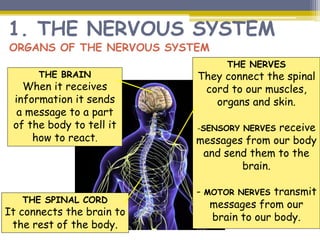
1. THE NERVOUS SYSTEM
ORGANS OF THE NERVOUS SYSTEM
THE BRAIN
When it receives
information it sends
a message to a part
of the body to tell it
how to react.
THE SPINAL CORD
It connects the brain to
the rest of the body.
THE NERVES
They connect the spinal
cord to our muscles,
organs and skin.
-SENSORY NERVES receive
messages from our body
and send them to the
brain.
- MOTOR NERVES transmit
messages from our
brain to our body.
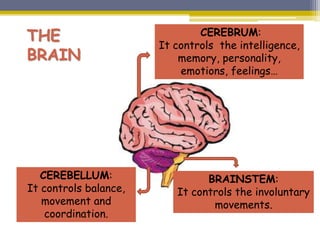
CEREBRUM:
It controls the intelligence,
memory, personality,
emotions, feelings…
BRAINSTEM:
It controls the involuntary
movements.
CEREBELLUM:
It controls balance,
movement and
coordination.
THE
BRAIN
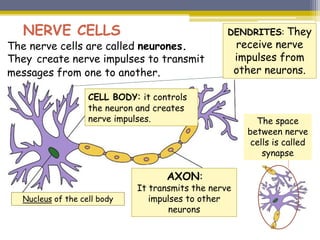
NERVE CELLS
The nerve cells are called neurones.
They create nerve impulses to transmit
messages from one to another.
CELL BODY: it controls
the neuron and creates
nerve impulses.
AXON:
It transmits the nerve
impulses to other
neurons
Nucleus of the cell body
DENDRITES: They
receive nerve
impulses from
other neurons.
The space
between nerve
cells is called
synapse
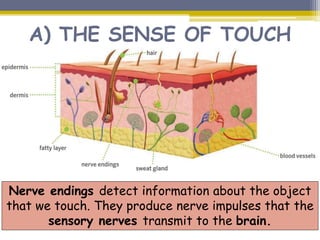
A) THE SENSE OF TOUCH
Nerve endings detect information about the object
that we touch. They produce nerve impulses that the
sensory nerves transmit to the brain.
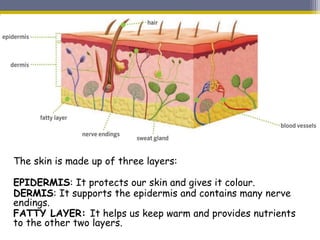
The skin is made up of three layers:
EPIDERMIS: It protects our skin and gives it colour.
DERMIS: It supports the epidermis and contains many nerve
endings.
FATTY LAYER: It helps us keep warm and provides nutrients
to the other two layers.
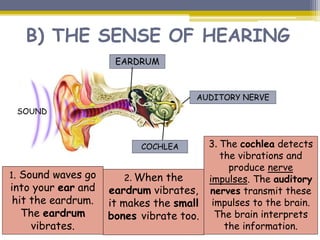
B) THE SENSE OF HEARING
1. Sound waves go
into your ear and
hit the eardrum.
The eardrum
vibrates.
2. When the
eardrum vibrates,
it makes the small
bones vibrate too.
3. The cochlea detects
the vibrations and
produce nerve
impulses. The auditory
nerves transmit these
impulses to the brain.
The brain interprets
the information.
EARDRUM
AUDITORY NERVE
COCHLEA
SOUND
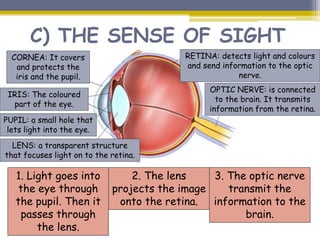
C) THE SENSE OF SIGHT
RETINA: detects light and colours
and send information to the optic
nerve.
OPTIC NERVE: is connected
to the brain. It transmits
information from the retina.
CORNEA: It covers
and protects the
iris and the pupil.
IRIS: The coloured
part of the eye.
PUPIL: a small hole that
lets light into the eye.
LENS: a transparent structure
that focuses light on to the retina.
1. Light goes into
the eye through
the pupil. Then it
passes through
the lens.
2. The lens
projects the image
onto the retina.
3. The optic nerve
transmit the
information to the
brain.
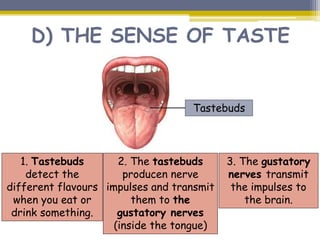
D) THE SENSE OF TASTE
Tastebuds
1. Tastebuds
detect the
different flavours
when you eat or
drink something.
2. The tastebuds
producen nerve
impulses and transmit
them to the
gustatory nerves
(inside the tongue)
3. The gustatory
nerves transmit
the impulses to
the brain.
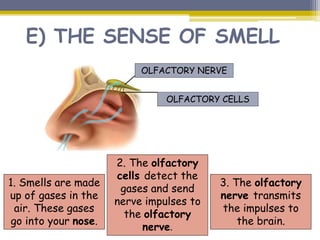
E) THE SENSE OF SMELL
OLFACTORY NERVE
OLFACTORY CELLS
1. Smells are made
up of gases in the
air. These gases
go into your nose.
2. The olfactory
cells detect the
gases and send
nerve impulses to
the olfactory
nerve.
3. The olfactory
nerve transmits
the impulses to
the brain.
2. LOCOMOTOR SYSTEM
The locomotor system is made up of two
systems:
- The skeletal system.
- The muscular system.
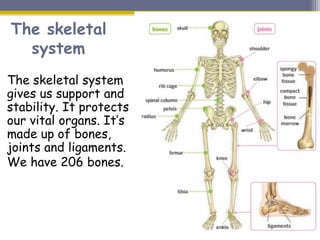
The skeletal
system
The skeletal system
gives us support and
stability. It protects
our vital organs. It’s
made up of bones,
joints and ligaments.
We have 206 bones.
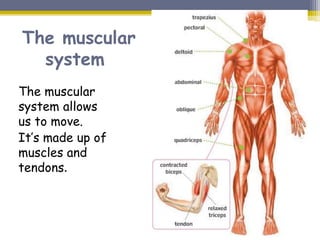
The muscular
system allows
us to move.
It’s made up of
muscles and
tendons.
The muscular
system

Interaction

  • 1.
  • 2.
    1) NERVOUS SYSTEM 2)LOCOMOTOR SYSTEM Systems related to interaction
  • 3.
    1. THE NERVOUSSYSTEM ORGANS OF THE NERVOUS SYSTEM THE BRAIN When it receives information it sends a message to a part of the body to tell it how to react. THE SPINAL CORD It connects the brain to the rest of the body. THE NERVES They connect the spinal cord to our muscles, organs and skin. -SENSORY NERVES receive messages from our body and send them to the brain. - MOTOR NERVES transmit messages from our brain to our body.
  • 4.
    CEREBRUM: It controls theintelligence, memory, personality, emotions, feelings… BRAINSTEM: It controls the involuntary movements. CEREBELLUM: It controls balance, movement and coordination. THE BRAIN
  • 5.
    NERVE CELLS The nervecells are called neurones. They create nerve impulses to transmit messages from one to another. CELL BODY: it controls the neuron and creates nerve impulses. AXON: It transmits the nerve impulses to other neurons Nucleus of the cell body DENDRITES: They receive nerve impulses from other neurons. The space between nerve cells is called synapse
  • 6.
    A) THE SENSEOF TOUCH Nerve endings detect information about the object that we touch. They produce nerve impulses that the sensory nerves transmit to the brain.
  • 7.
    The skin ismade up of three layers: EPIDERMIS: It protects our skin and gives it colour. DERMIS: It supports the epidermis and contains many nerve endings. FATTY LAYER: It helps us keep warm and provides nutrients to the other two layers.
  • 8.
    B) THE SENSEOF HEARING 1. Sound waves go into your ear and hit the eardrum. The eardrum vibrates. 2. When the eardrum vibrates, it makes the small bones vibrate too. 3. The cochlea detects the vibrations and produce nerve impulses. The auditory nerves transmit these impulses to the brain. The brain interprets the information. EARDRUM AUDITORY NERVE COCHLEA SOUND
  • 9.
    C) THE SENSEOF SIGHT RETINA: detects light and colours and send information to the optic nerve. OPTIC NERVE: is connected to the brain. It transmits information from the retina. CORNEA: It covers and protects the iris and the pupil. IRIS: The coloured part of the eye. PUPIL: a small hole that lets light into the eye. LENS: a transparent structure that focuses light on to the retina. 1. Light goes into the eye through the pupil. Then it passes through the lens. 2. The lens projects the image onto the retina. 3. The optic nerve transmit the information to the brain.
  • 10.
    D) THE SENSEOF TASTE Tastebuds 1. Tastebuds detect the different flavours when you eat or drink something. 2. The tastebuds producen nerve impulses and transmit them to the gustatory nerves (inside the tongue) 3. The gustatory nerves transmit the impulses to the brain.
  • 11.
    E) THE SENSEOF SMELL OLFACTORY NERVE OLFACTORY CELLS 1. Smells are made up of gases in the air. These gases go into your nose. 2. The olfactory cells detect the gases and send nerve impulses to the olfactory nerve. 3. The olfactory nerve transmits the impulses to the brain.
  • 12.
    2. LOCOMOTOR SYSTEM Thelocomotor system is made up of two systems: - The skeletal system. - The muscular system.
  • 13.
    The skeletal system The skeletalsystem gives us support and stability. It protects our vital organs. It’s made up of bones, joints and ligaments. We have 206 bones.
  • 14.
    The muscular system allows usto move. It’s made up of muscles and tendons. The muscular system