



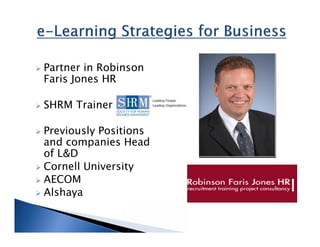
Partner in Robinson
Faris Jones HR
SHRM Trainer

Previously Positions
and companies Head
of L&D
 Cornell University
 AECOM
 Alshaya

What is e-Learning and its utilisation
 Gap Analysis ADDIE
 L&D gap analysis
 Business Strategy
 Why e-Learning
 e-Learning options
 Evaluation
 2014 conclusions

 Senior

Manager
show me the Money
‘wants the return’.
How quickly can
you deliver a
return?
 I cannot release my
staff for training
and development
 Budget cuts













e-Learning is comes in many variations and often a
combination of the following:
Purely online - no face-to-face meetings
Blended Learning - combination of online and face-to-face
Synchronous : chat; videoconferencing; teleconferencing
Asynchronous :email; weblogs; forums
Instructor-led group
Self-study
Self-study with subject matter expert
Web-based
Computer-based (CD-ROM)
Video/audio tape









Masters Programs on line
Leadership and professional qualification
preparation and certification. E.g. Skill Soft,
eCornell and many others.
Downloads for ipad and PCs practice exams for recertification.
Mandatory training: code of conduct, ethics, anti
corruption bribery, health and safety on-boarding.
Testing: ability tests, personality profiling used for
selection or gap analysis. SHL, Saville, Cubiks,
16PF, Strength scope and many others
1. Gather data.

5. Implement

4. Calculate cost.

2. Determine
Needs

3. Propose solutions.
Design

Development

Evaluation

Assessment

Implementation

Systematic development process used to
create employee learning that aligns with
strategic goals
Organizational

Examines KEY SKILLS and
Ability(KSAs) needed as
organizations and jobs
change.

Task

Compares job requirements
with employee knowledge and
skills.

Individual

Focuses on individual
employees and how they
perform.


Is Your Organization a
Learning Organization?



Are opportunities for
continuous learning provided?







Do employees at all levels
reflect a positive attitude
towards learning?
Does everyone accept
responsibility for being a
learner?
Learning is a continuous,
lifelong journey.
Program is delivered to the audience.
Most visible step in the ADDIE process.
Primary tasks are:
Solutions




Senior Managers prefer
the traditional
approach pen paper
and class room.
Staff want classroom
certification






Utilise pilot programs
and road show
demonstrating
capabilities.
Get senior Managers to
use the system.
Demonstrate
competitor or industry
leaders utilisation.








Investments in learning impact business
performance and staff expect a tailored training
program and expect a leading edge approach
Technology enabled learning is essential to
compete
The workplace and talent pool are rapidly
changing Staff are technologically astute and
expect on going development
Staff and Managers need flexible approaches
The world has changed; there is no more
“business-as-usual” due to the economic strain
of the past few years.
 According to the McKinsey Global Institute, there
will be a severe gap in talent due to the 360
million workers who will retire from the global
labor force by 2030. Other training approaches
are needed.
 This leaves you with talent gaps and the need for
a skilled workforce that only comes with a solid
learning program.
 The Middle East and global work place is facing
an unprecedented talent imperative. Are you
prepared?”









During this turning
point, learning
investments have been
proven to accelerate
performance.
Learning fuels
adaptability and
innovation.
Learning improves
engagement and
retention.
Learning is simply
good for business.


Learning supports an agile workforce.



Learning addresses talent shortages.



Learning is the building block between a
skilled workforce and positive business
outcomes.
Organizations with strong learning cultures
significantly outperform their peers:
Organizations with strong learning cultures
significantly outperform their peers:
Different types of data





Subjective: Opinion/
Qualitative
Objective: factual/data/
Quantitative











Individuals need to
want to learn
Take responsibility
for their own learning
Clear objectives
Appropriate learning
methods
Have realistic
expectations
Realistic time scales
 Online

combined
with follow up
classroom
 Lunch and learns
Brown bag training
 Short sharp
learning and
discussions







Was it successful.
What was the
impact on the
business.
Was everything on
the course relevant
and effective.
Did the benefits
outweigh the costs
short and long term






Ethics code of
conduct, Enron,
Banking crisis
Extra Territorial
Laws on Bribery
corruption
Employment
Practices










Masters
Skill Soft, E Cornell
Continuing
Educational Credits
Professional
Development Credits
Cost Effective
Time friendly
Easier to track and
report
Highest level of learning
Evaluation
Synthesis
Analysis
Application
Comprehension
Knowledge
Lowest level of learning
E-Learning Strategies for Business – A SHRM Seminar, Bill Robinson

E-Learning Strategies for Business – A SHRM Seminar, Bill Robinson

  • 1.
      Partner in Robinson FarisJones HR SHRM Trainer Previously Positions and companies Head of L&D  Cornell University  AECOM  Alshaya 
  • 2.
    What is e-Learningand its utilisation  Gap Analysis ADDIE  L&D gap analysis  Business Strategy  Why e-Learning  e-Learning options  Evaluation  2014 conclusions 
  • 3.
     Senior Manager show methe Money ‘wants the return’. How quickly can you deliver a return?  I cannot release my staff for training and development  Budget cuts
  • 4.
               e-Learning is comesin many variations and often a combination of the following: Purely online - no face-to-face meetings Blended Learning - combination of online and face-to-face Synchronous : chat; videoconferencing; teleconferencing Asynchronous :email; weblogs; forums Instructor-led group Self-study Self-study with subject matter expert Web-based Computer-based (CD-ROM) Video/audio tape
  • 5.
         Masters Programs online Leadership and professional qualification preparation and certification. E.g. Skill Soft, eCornell and many others. Downloads for ipad and PCs practice exams for recertification. Mandatory training: code of conduct, ethics, anti corruption bribery, health and safety on-boarding. Testing: ability tests, personality profiling used for selection or gap analysis. SHL, Saville, Cubiks, 16PF, Strength scope and many others
  • 6.
    1. Gather data. 5.Implement 4. Calculate cost. 2. Determine Needs 3. Propose solutions.
  • 7.
    Design Development Evaluation Assessment Implementation Systematic development processused to create employee learning that aligns with strategic goals
  • 8.
    Organizational Examines KEY SKILLSand Ability(KSAs) needed as organizations and jobs change. Task Compares job requirements with employee knowledge and skills. Individual Focuses on individual employees and how they perform.
  • 10.
     Is Your Organizationa Learning Organization?  Are opportunities for continuous learning provided?    Do employees at all levels reflect a positive attitude towards learning? Does everyone accept responsibility for being a learner? Learning is a continuous, lifelong journey.
  • 11.
    Program is deliveredto the audience. Most visible step in the ADDIE process. Primary tasks are:
  • 13.
    Solutions   Senior Managers prefer thetraditional approach pen paper and class room. Staff want classroom certification    Utilise pilot programs and road show demonstrating capabilities. Get senior Managers to use the system. Demonstrate competitor or industry leaders utilisation.
  • 15.
        Investments in learningimpact business performance and staff expect a tailored training program and expect a leading edge approach Technology enabled learning is essential to compete The workplace and talent pool are rapidly changing Staff are technologically astute and expect on going development Staff and Managers need flexible approaches
  • 16.
    The world haschanged; there is no more “business-as-usual” due to the economic strain of the past few years.  According to the McKinsey Global Institute, there will be a severe gap in talent due to the 360 million workers who will retire from the global labor force by 2030. Other training approaches are needed.  This leaves you with talent gaps and the need for a skilled workforce that only comes with a solid learning program.  The Middle East and global work place is facing an unprecedented talent imperative. Are you prepared?” 
  • 17.
        During this turning point,learning investments have been proven to accelerate performance. Learning fuels adaptability and innovation. Learning improves engagement and retention. Learning is simply good for business.
  • 18.
     Learning supports anagile workforce.  Learning addresses talent shortages.  Learning is the building block between a skilled workforce and positive business outcomes.
  • 19.
    Organizations with stronglearning cultures significantly outperform their peers:
  • 20.
    Organizations with stronglearning cultures significantly outperform their peers:
  • 27.
    Different types ofdata   Subjective: Opinion/ Qualitative Objective: factual/data/ Quantitative
  • 28.
          Individuals need to wantto learn Take responsibility for their own learning Clear objectives Appropriate learning methods Have realistic expectations Realistic time scales
  • 29.
     Online combined with followup classroom  Lunch and learns Brown bag training  Short sharp learning and discussions
  • 30.
        Was it successful. Whatwas the impact on the business. Was everything on the course relevant and effective. Did the benefits outweigh the costs short and long term
  • 34.
       Ethics code of conduct,Enron, Banking crisis Extra Territorial Laws on Bribery corruption Employment Practices
  • 35.
           Masters Skill Soft, ECornell Continuing Educational Credits Professional Development Credits Cost Effective Time friendly Easier to track and report
  • 38.
    Highest level oflearning Evaluation Synthesis Analysis Application Comprehension Knowledge Lowest level of learning