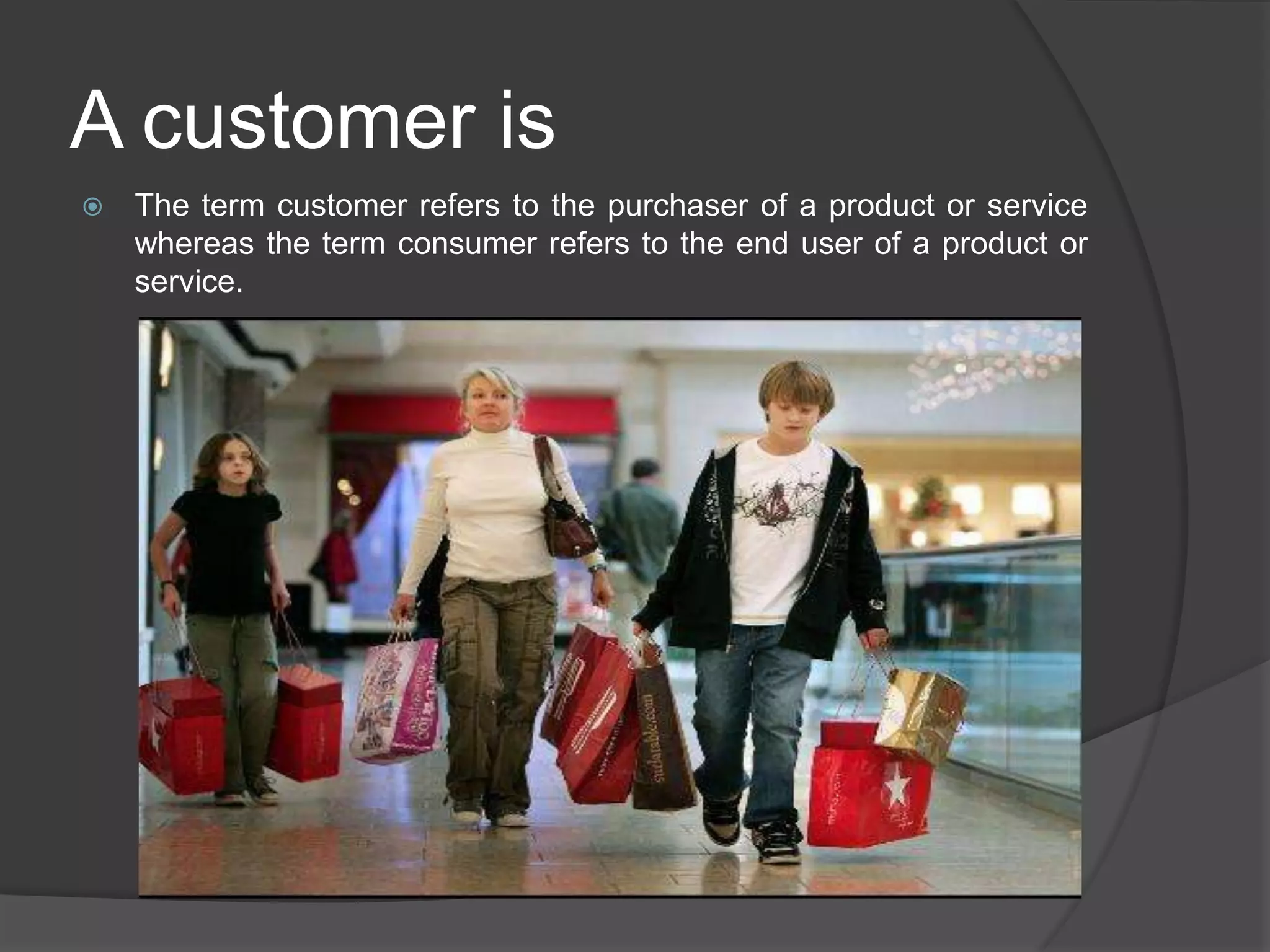
 The term customer refers to the purchaser of a product or service
whereas the term consumer refers to the end user of a product or
service.
A customer is
Factors influencing consumer
behavior
 Cultural
 Social
 Personal
 Psychological
personality
Contd..
 Schiffman (2008) as that the unique
dynamic organization of characteristics
of a particular person, physical and
psychological, which influence
behaviour and responses to the social
and physical environment.
 related to the heredity and the
experience of early childhood.
psychographic
Activities
•Interests
•Opinions
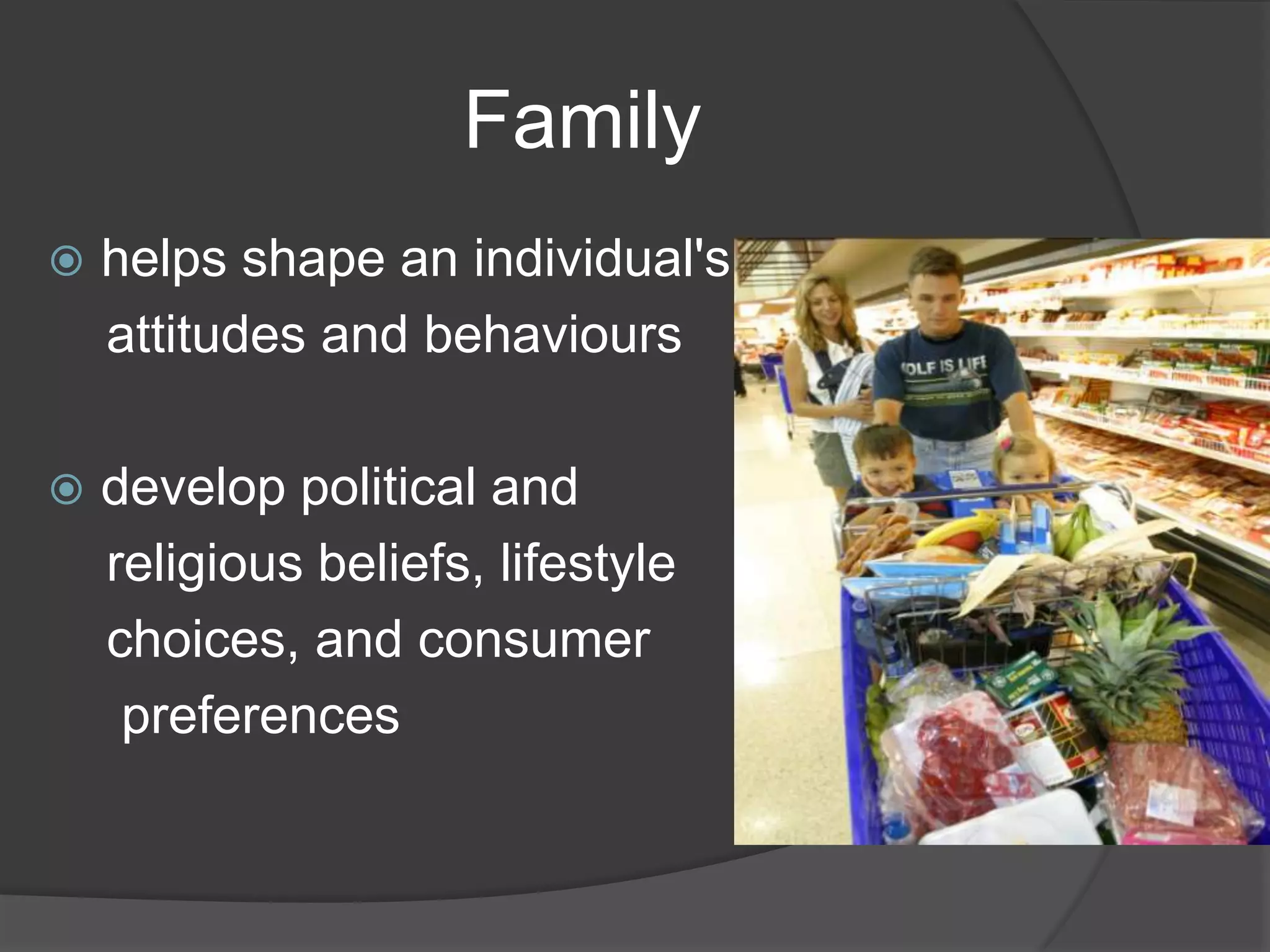
Family
 helps shape an individual's
attitudes and behaviours
 develop political and
religious beliefs, lifestyle
choices, and consumer
preferences
society
outside influences of others
Attitude and life styles
 “the patterns in which people live
and spend time and money.”
 Beliefs and feelings
Values of perception
•Organization,
•Identification,
•Interpretation
 The organization, identification and
interpretation of sensory information in
order to represent and understand the
environment.
 can be shaped by learning, memory and
expectations.
Models of consumer
behavior
 Traditional models:
Economic Model
Learning Model
Psychoanalytic Model
Sociological Model
Economic model
 Law of principal of maximum utility
 Law of equimarginal utility enables a
consumer to secure the maximum utility
from limited purchasing power
 Price effect
 Substitution effect
 Income effect
Learning model
 The response of satisfaction reinforces
the relationship
 Learns to associate connection between
stimulus and response which becomes
habit
 Understanding the response of
consumer at the market place
Psychoanalytical model
 Personality of consumers and their
responses
 Consumer behavior is directed by a
complete set of deep seated motives
Sociological model
 As his role, status, interaction, influence,
group relation, lifestyle, income, occup-
ation, place of residence, social class
etc.
Contemporary models
 Harward seth model
 Nicosia
 Webster and wind
 Engel, balckwell and minard model
Howard sheth model
 Customer lacks well defined evaluative
criteria to judge the product
 Searches for information
 After passing his own personality, his
intake is modified
 Evaluates the brands available
 Seeks greatest potential of satisfying his
motives
example
 Online shopping
Nicosia model
 Proposed by Francesco Nicosia in
1970s
 Incomplete in a number of aspects,
very reductionist
 Variables in the model have not been
clearly defined
 A number of assumptions have been made
that question the validity of this model, for
instance:
 What type of consumer are we talking about?
 The company and the consumer have an
existing relationship? What type?
 Is this for a new product? Is this the first
exchange the consumer has had with the
producer?
example
 Four-wheelers
Engel, Blackwell and minard
model
 Information input
 Information processing
 Decision process stage
 Variables influencing decision making
process
example
 Garment sector
 Social class
 Family
 Lifestyle
 Personality
 Beliefs
 attitudes
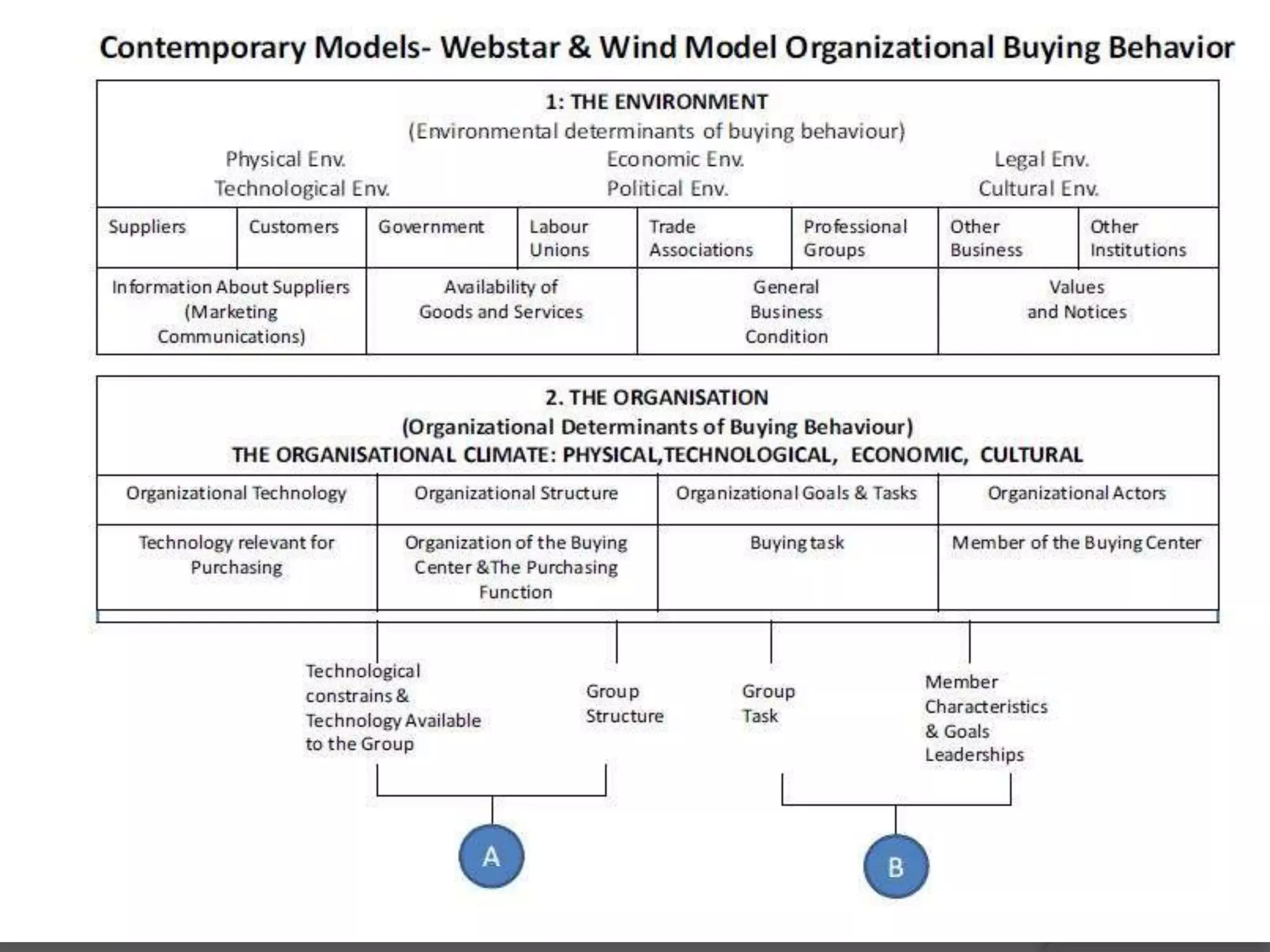
Webster and wind
 partitiones the buying process into
several processes
 processes of decision-making are
determined by environmental and
organizational factors.
 Final buying process rendered as the
mixture of individual and group decision
example
 Automobile manufacturing
• B2B business
• Purchasing tires
conclusion
 Understanding consumer contributes the
best to any organization and for this,
models would work great
Consumer behavior models

Consumer behavior models

  • 2.
     The termcustomer refers to the purchaser of a product or service whereas the term consumer refers to the end user of a product or service. A customer is
  • 4.
    Factors influencing consumer behavior Cultural  Social  Personal  Psychological
  • 5.
  • 6.
    Contd..  Schiffman (2008)as that the unique dynamic organization of characteristics of a particular person, physical and psychological, which influence behaviour and responses to the social and physical environment.  related to the heredity and the experience of early childhood.
  • 7.
  • 8.
    Family  helps shapean individual's attitudes and behaviours  develop political and religious beliefs, lifestyle choices, and consumer preferences
  • 9.
  • 10.
    Attitude and lifestyles  “the patterns in which people live and spend time and money.”  Beliefs and feelings
  • 11.
  • 12.
     The organization,identification and interpretation of sensory information in order to represent and understand the environment.  can be shaped by learning, memory and expectations.
  • 13.
    Models of consumer behavior Traditional models: Economic Model Learning Model Psychoanalytic Model Sociological Model
  • 14.
    Economic model  Lawof principal of maximum utility  Law of equimarginal utility enables a consumer to secure the maximum utility from limited purchasing power  Price effect  Substitution effect  Income effect
  • 15.
    Learning model  Theresponse of satisfaction reinforces the relationship  Learns to associate connection between stimulus and response which becomes habit  Understanding the response of consumer at the market place
  • 16.
    Psychoanalytical model  Personalityof consumers and their responses  Consumer behavior is directed by a complete set of deep seated motives
  • 17.
    Sociological model  Ashis role, status, interaction, influence, group relation, lifestyle, income, occup- ation, place of residence, social class etc.
  • 18.
    Contemporary models  Harwardseth model  Nicosia  Webster and wind  Engel, balckwell and minard model
  • 19.
    Howard sheth model Customer lacks well defined evaluative criteria to judge the product  Searches for information  After passing his own personality, his intake is modified  Evaluates the brands available  Seeks greatest potential of satisfying his motives
  • 21.
  • 22.
    Nicosia model  Proposedby Francesco Nicosia in 1970s  Incomplete in a number of aspects, very reductionist  Variables in the model have not been clearly defined
  • 23.
     A numberof assumptions have been made that question the validity of this model, for instance:  What type of consumer are we talking about?  The company and the consumer have an existing relationship? What type?  Is this for a new product? Is this the first exchange the consumer has had with the producer?
  • 25.
  • 26.
    Engel, Blackwell andminard model  Information input  Information processing  Decision process stage  Variables influencing decision making process
  • 28.
    example  Garment sector Social class  Family  Lifestyle  Personality  Beliefs  attitudes
  • 29.
    Webster and wind partitiones the buying process into several processes  processes of decision-making are determined by environmental and organizational factors.  Final buying process rendered as the mixture of individual and group decision
  • 32.
    example  Automobile manufacturing •B2B business • Purchasing tires
  • 34.
    conclusion  Understanding consumercontributes the best to any organization and for this, models would work great