



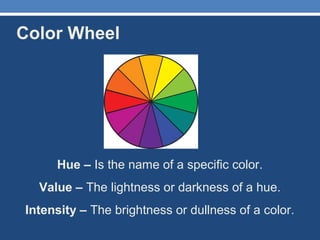










Color is perceived by the human brain based on light signals received from the external world. There are three properties of color: hue (the name of the color), value (lightness or darkness), and saturation (purity). In additive color systems like computer monitors, colors are created from beams of light using red, green, and blue light. In subtractive color systems like printing, colors are created by absorbing certain wavelengths using cyan, magenta, yellow, and black inks. The document provides examples of color theory concepts like primary colors, secondary colors, complementary colors, color wheels, and discusses how color is interpreted emotionally.


