Revathi Mohan 
2’nd year masters in Counselling Psychology
Agenda 
 Self in a Social World 
 Self Concept 
 Social Self 
 Self and Culture 
 Self Knowledge
Self in a Social World 
 Spot Light and illusion 
 Illusion of transparency 
 Self interst colours our judgement 
 Self concern motivates our social behaviour
Social Comparision 
 Comparing ourself wih others 
 It dimnish our satisfaction 
 Eg:Competition
 Success and Failures determines our Self Esteem 
 Other People Judgement how we think others , 
perceive us as a mittor image for perceiving ourself 
 Eg: People feel free to praise others than to critisize 
others
Self Culture 
 I am ________( 5 answers) 
 Individualism Concept of giving priority to one’s 
own goals 
 CollectivismGiving priority to goals of one’s group 
 Interdependent Self Constructing one’s identity in 
relation to others
Self Knowledge 
 Explaining our behaviour 
 Predicting our behaviour 
 Predicting our feeling
Predicting our behaviour 
 Planning Fallacy Tendency to underestimate how 
long it will take to complete a task
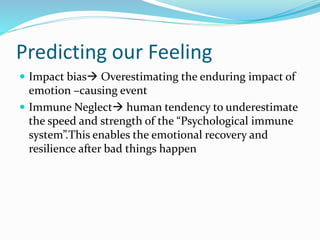
Predicting our Feeling 
 Impact bias Overestimating the enduring impact of 
emotion –causing event 
 Immune Neglect human tendency to underestimate 
the speed and strength of the “Psychological immune 
system”.This enables the emotional recovery and 
resilience after bad things happen
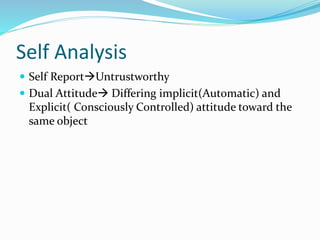
Self Analysis 
 Self ReportUntrustworthy 
 Dual Attitude Differing implicit(Automatic) and 
Explicit( Consciously Controlled) attitude toward the 
same object
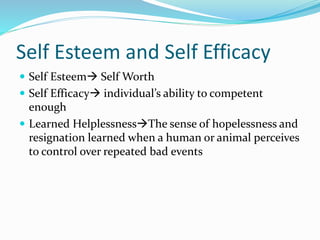
Self Esteem and Self Efficacy 
 Self Esteem Self Worth 
 Self Efficacy individual’s ability to competent 
enough 
 Learned HelplessnessThe sense of hopelessness and 
resignation learned when a human or animal perceives 
to control over repeated bad events

Self in a social world

  • 1.
    Revathi Mohan 2’ndyear masters in Counselling Psychology
  • 2.
    Agenda  Selfin a Social World  Self Concept  Social Self  Self and Culture  Self Knowledge
  • 3.
    Self in aSocial World  Spot Light and illusion  Illusion of transparency  Self interst colours our judgement  Self concern motivates our social behaviour
  • 4.
    Social Comparision Comparing ourself wih others  It dimnish our satisfaction  Eg:Competition
  • 5.
     Success andFailures determines our Self Esteem  Other People Judgement how we think others , perceive us as a mittor image for perceiving ourself  Eg: People feel free to praise others than to critisize others
  • 6.
    Self Culture I am ________( 5 answers)  Individualism Concept of giving priority to one’s own goals  CollectivismGiving priority to goals of one’s group  Interdependent Self Constructing one’s identity in relation to others
  • 7.
    Self Knowledge Explaining our behaviour  Predicting our behaviour  Predicting our feeling
  • 8.
    Predicting our behaviour  Planning Fallacy Tendency to underestimate how long it will take to complete a task
  • 9.
    Predicting our Feeling  Impact bias Overestimating the enduring impact of emotion –causing event  Immune Neglect human tendency to underestimate the speed and strength of the “Psychological immune system”.This enables the emotional recovery and resilience after bad things happen
  • 10.
    Self Analysis Self ReportUntrustworthy  Dual Attitude Differing implicit(Automatic) and Explicit( Consciously Controlled) attitude toward the same object
  • 11.
    Self Esteem andSelf Efficacy  Self Esteem Self Worth  Self Efficacy individual’s ability to competent enough  Learned HelplessnessThe sense of hopelessness and resignation learned when a human or animal perceives to control over repeated bad events