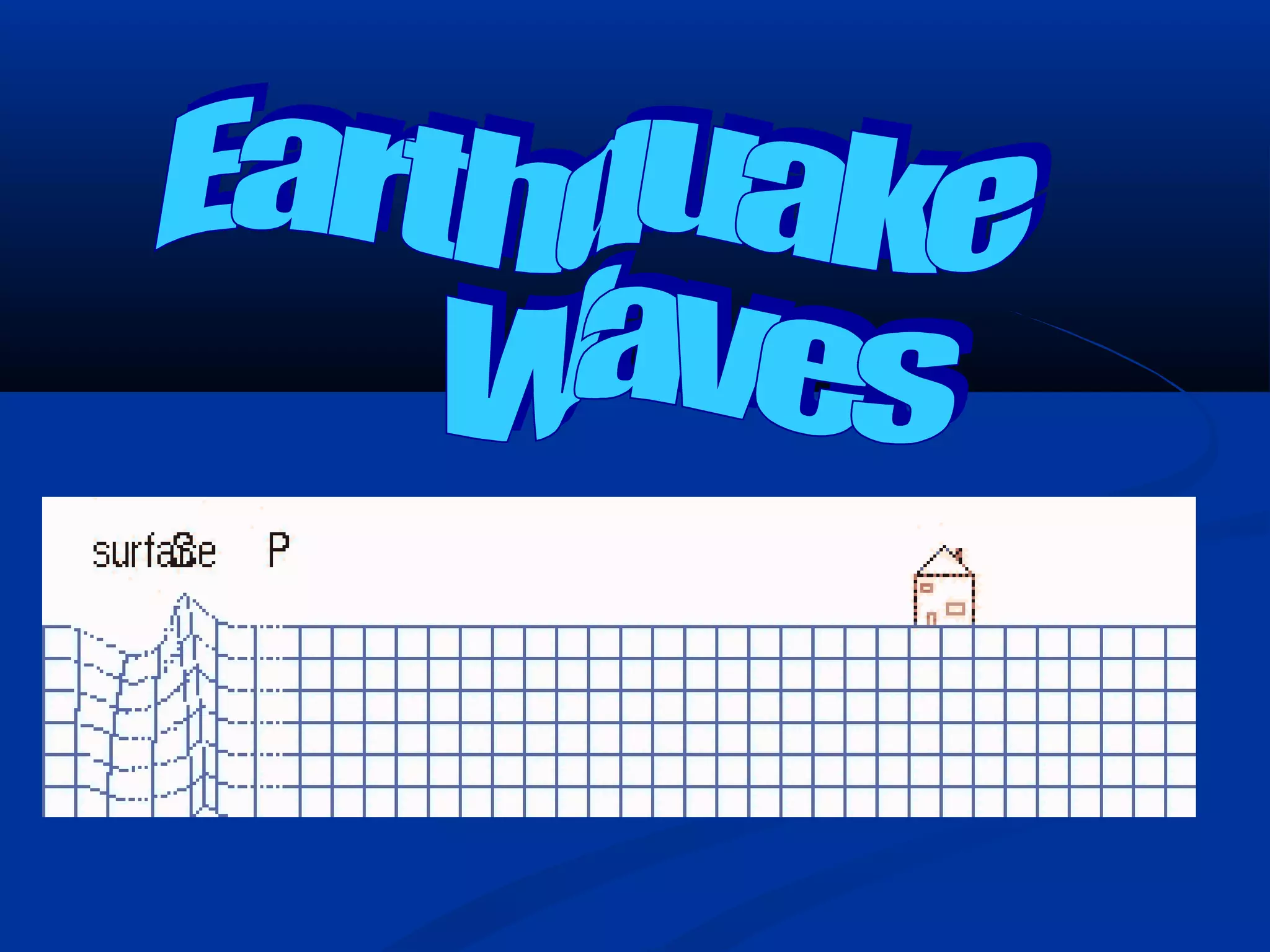
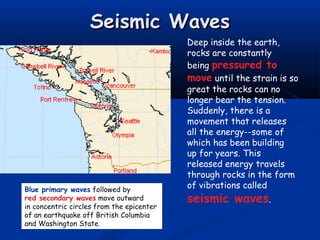
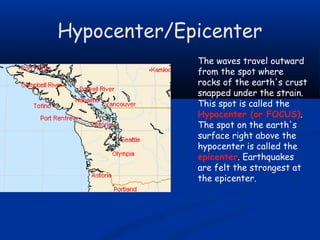
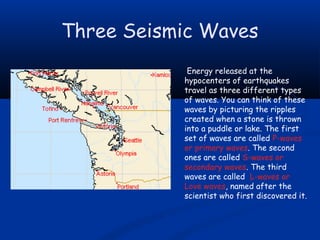
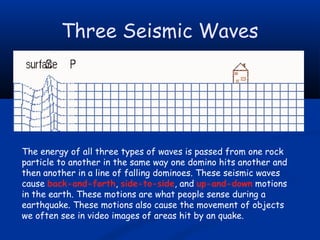
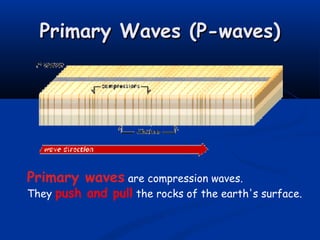
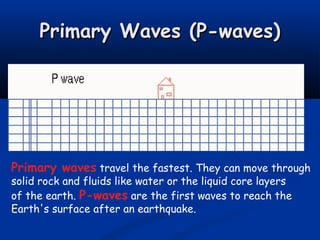
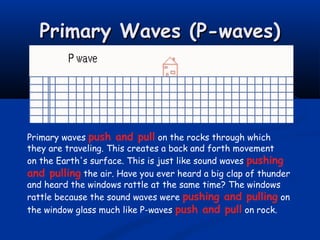
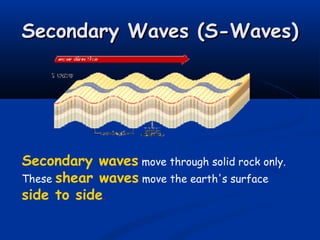
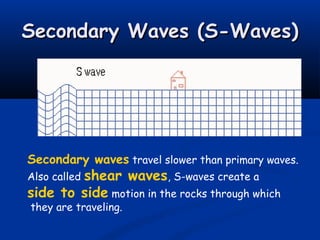
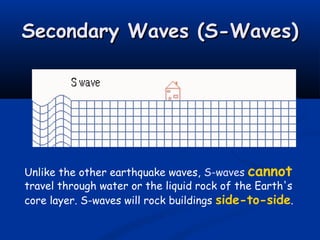
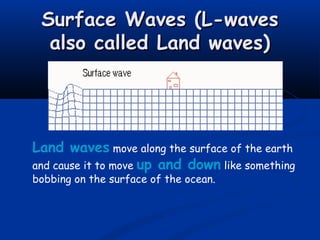
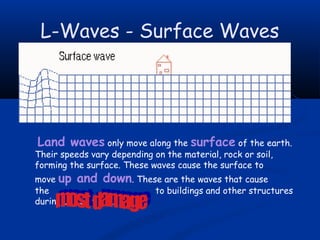
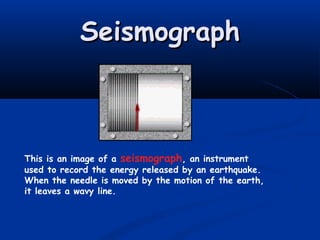
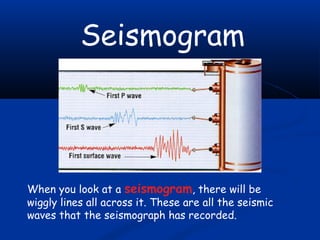
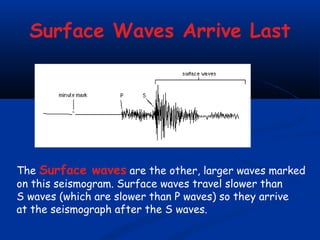
Deep underground, rocks are under constant pressure until the strain becomes too great and the rocks suddenly break, releasing seismic waves. These waves travel outward from the hypocenter in three types - P waves which push and pull, S waves which move sides to side, and L waves which cause surfaces to bob up and down. When recorded by a seismograph, the first indication of an earthquake is typically the P waves, followed by larger S waves, with surface L waves arriving last.