All you need to know about

Volcanoes
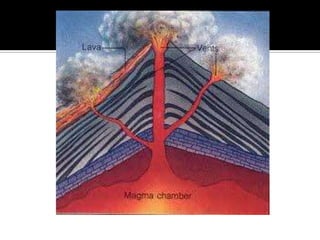
I Magma –
rocks exist as magma deep with in the
Earth’s crust
II. Lava –
magma that reaches the Earth’s surface
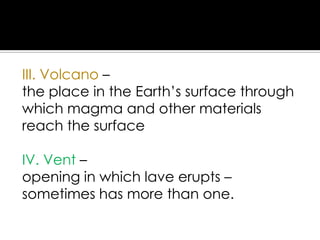
III. Volcano –
the place in the Earth’s surface through
which magma and other materials
reach the surface
IV. Vent –
opening in which lave erupts –
sometimes has more than one.
I. Cinder cones – made mostly
of cinders and rock particles
a. Explosive eruptions
b. Not high but have a narrow

base and steep sides
c. Izalco in El Salvador and
Paricutin in Mexico
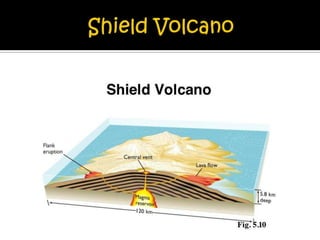
a. Quiet flows
b. Flows over a large area
c. Dome-shaped
d. Mauna Loa on Kilauea in

Hawaii (Forms over a hot
spot)
a. Made up of alternating layers

of rock particles and lava
b. First eruption violent, second
eruption quiet (this is
continuous until the volcano is
formed)
c. Mount Etna in Italy
I.
II.
III.

IV.

Some volcanoes erupt regularly, others
haven’t erupted with in modern history.
Active volcano – is one that erupts
either continually or periodically.
Dormant volcano – one that has been
known to erupt in modern history but is
inactive now.
Extinct volcano – one that has not
been known to erupt in modern history
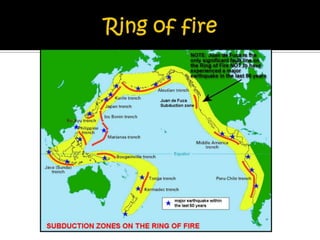
I. Most major earthquakes and
volcanic eruptions occur in three
zones of the world. Scientists believe
that there is great deal of movement
and activity in the Earth’s crust in
these zones.
II. Ring of Fire – zone goes through the edge
New Zealand, the Philippines, Japan, Alaska,
and along the western coast of North and
South America.
 Mediterranean Zone – extends across Asia
into India
III. Iceland to the middle of the Atlantic Ocean
Iv. Mid-Atlantic Ridge – long mountain range of
volcanic mountains under the Atlantic Ocean
V. New parts of the Earth are forming in this
area.
Volcanoes
Volcanoes
Volcanoes

Volcanoes

  • 1.
    All you needto know about Volcanoes
  • 3.
    I Magma – rocksexist as magma deep with in the Earth’s crust II. Lava – magma that reaches the Earth’s surface
  • 5.
    III. Volcano – theplace in the Earth’s surface through which magma and other materials reach the surface IV. Vent – opening in which lave erupts – sometimes has more than one.
  • 7.
    I. Cinder cones– made mostly of cinders and rock particles a. Explosive eruptions b. Not high but have a narrow base and steep sides c. Izalco in El Salvador and Paricutin in Mexico
  • 9.
    a. Quiet flows b.Flows over a large area c. Dome-shaped d. Mauna Loa on Kilauea in Hawaii (Forms over a hot spot)
  • 11.
    a. Made upof alternating layers of rock particles and lava b. First eruption violent, second eruption quiet (this is continuous until the volcano is formed) c. Mount Etna in Italy
  • 13.
    I. II. III. IV. Some volcanoes eruptregularly, others haven’t erupted with in modern history. Active volcano – is one that erupts either continually or periodically. Dormant volcano – one that has been known to erupt in modern history but is inactive now. Extinct volcano – one that has not been known to erupt in modern history
  • 14.
    I. Most majorearthquakes and volcanic eruptions occur in three zones of the world. Scientists believe that there is great deal of movement and activity in the Earth’s crust in these zones.
  • 15.
    II. Ring ofFire – zone goes through the edge New Zealand, the Philippines, Japan, Alaska, and along the western coast of North and South America.  Mediterranean Zone – extends across Asia into India III. Iceland to the middle of the Atlantic Ocean Iv. Mid-Atlantic Ridge – long mountain range of volcanic mountains under the Atlantic Ocean V. New parts of the Earth are forming in this area.