Let the Fun Begin!
A short video Clip
http://www.youtube.com/watch?v=ryrX
AGY1dmE&feature=related
How do we know what it looks like?
 Geologist record the seismic waves that
earthquakes make and study how they
travel through Earth.
 The speed of these seismic waves and

the path they take reveals how the
planet is put together.
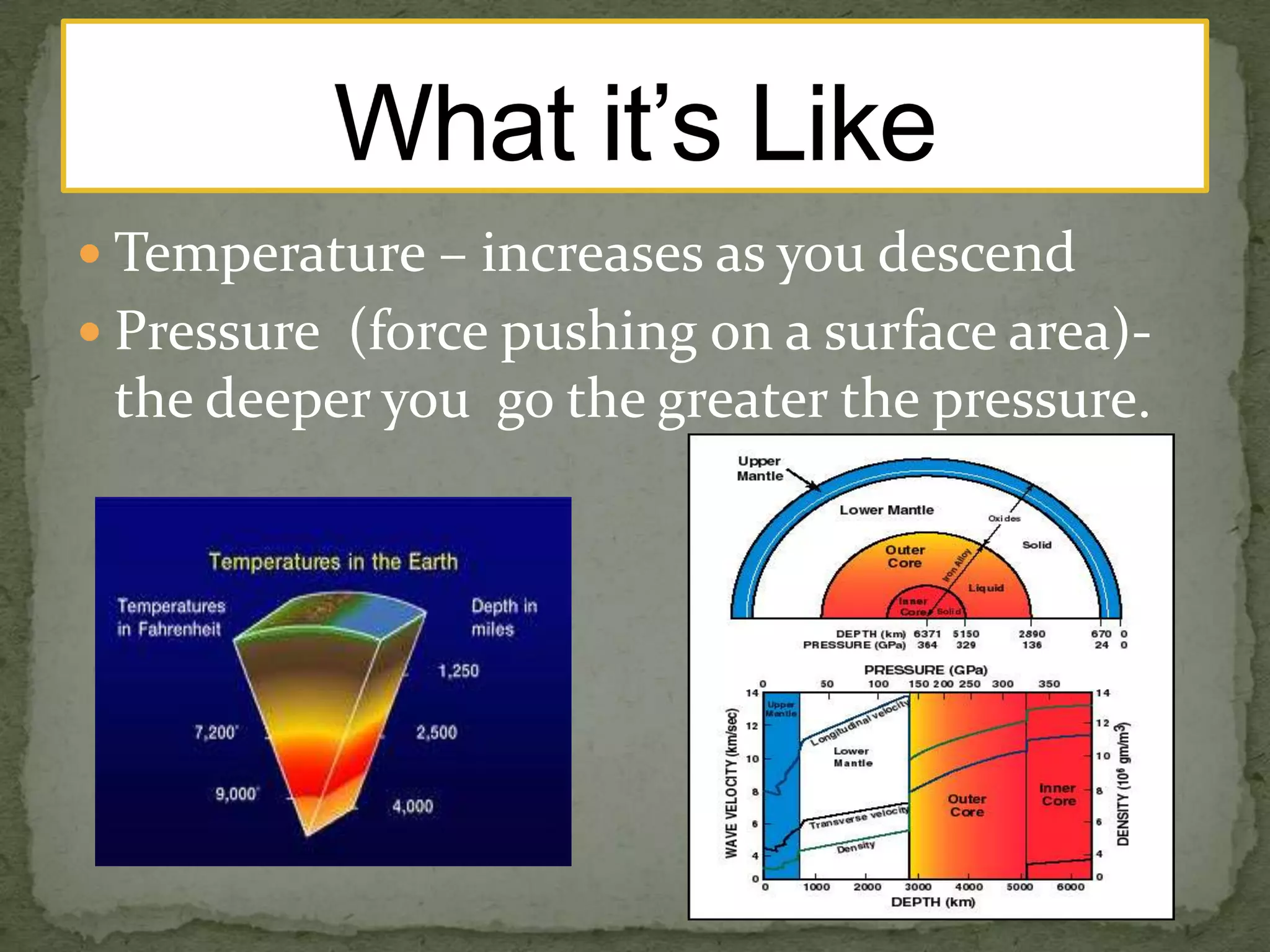
 Temperature – increases as you descend

 Pressure (force pushing on a surface area)-

the deeper you go the greater the pressure.
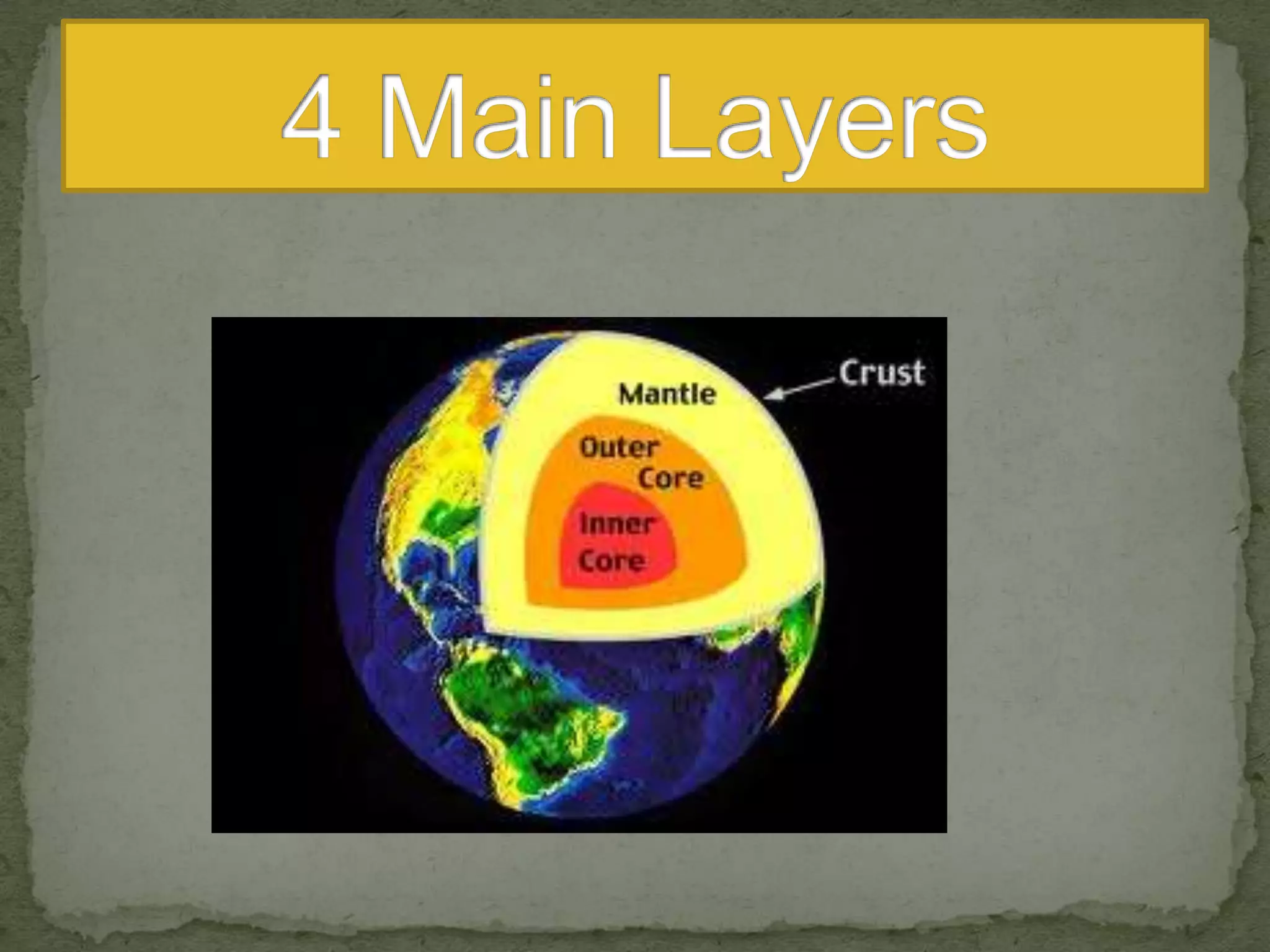
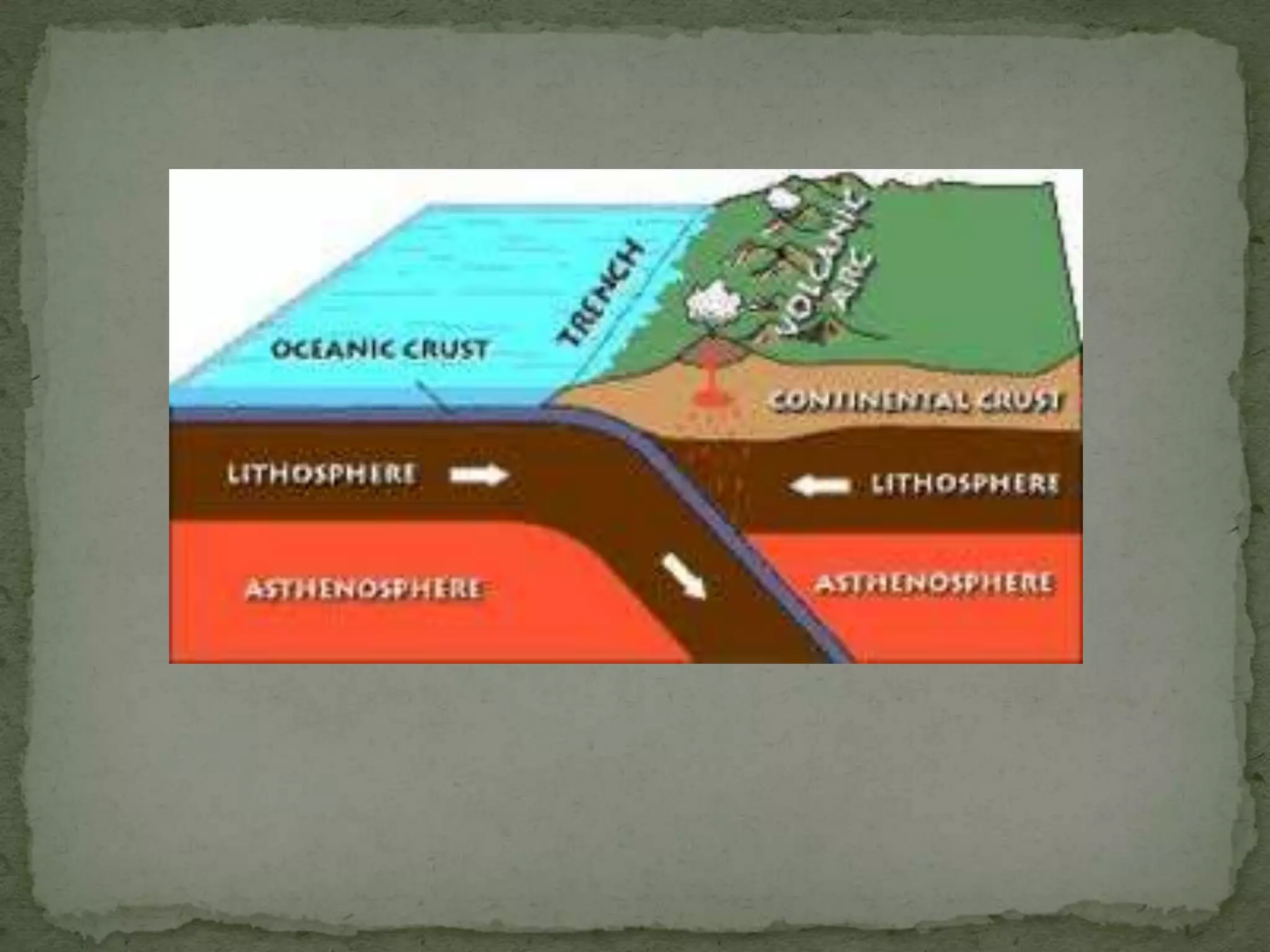
1. Crusts
 Layer of rock that forms Earth’s
outer skin
 Includes both the dry land

(continental) and ocean floor
(oceanic)

Extra: Oceanic is DENSER so it sits
BELOW the continental
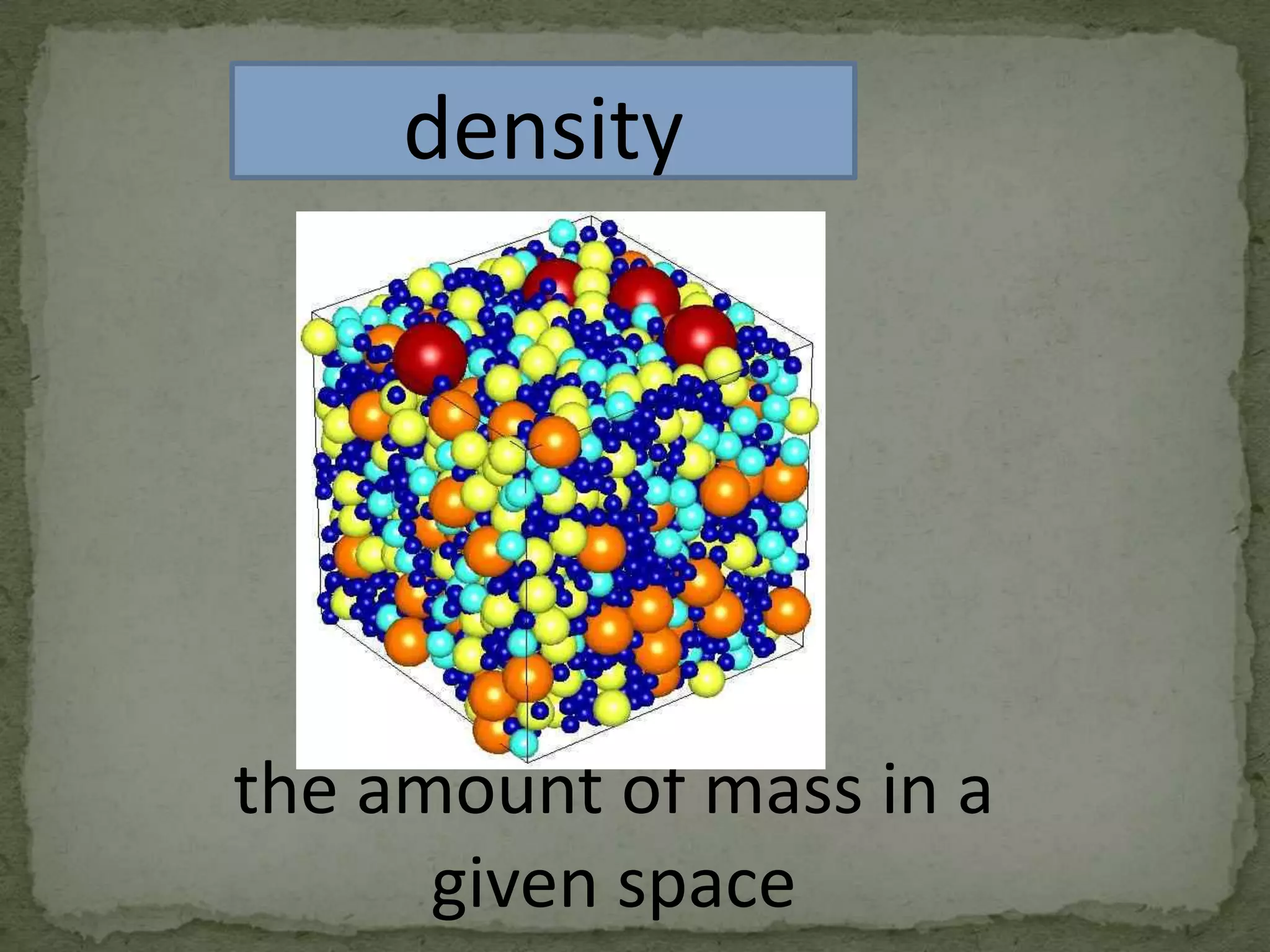
density

the amount of mass in a
given space
 The deepest hole ever drilled into the

continental crust was in the Kola
Peninsula, in Russia.
 It was 12,226 meters deep!
 Because the temperature of the crust

increases with depth, it is impossible to drill
much deeper into the crust.
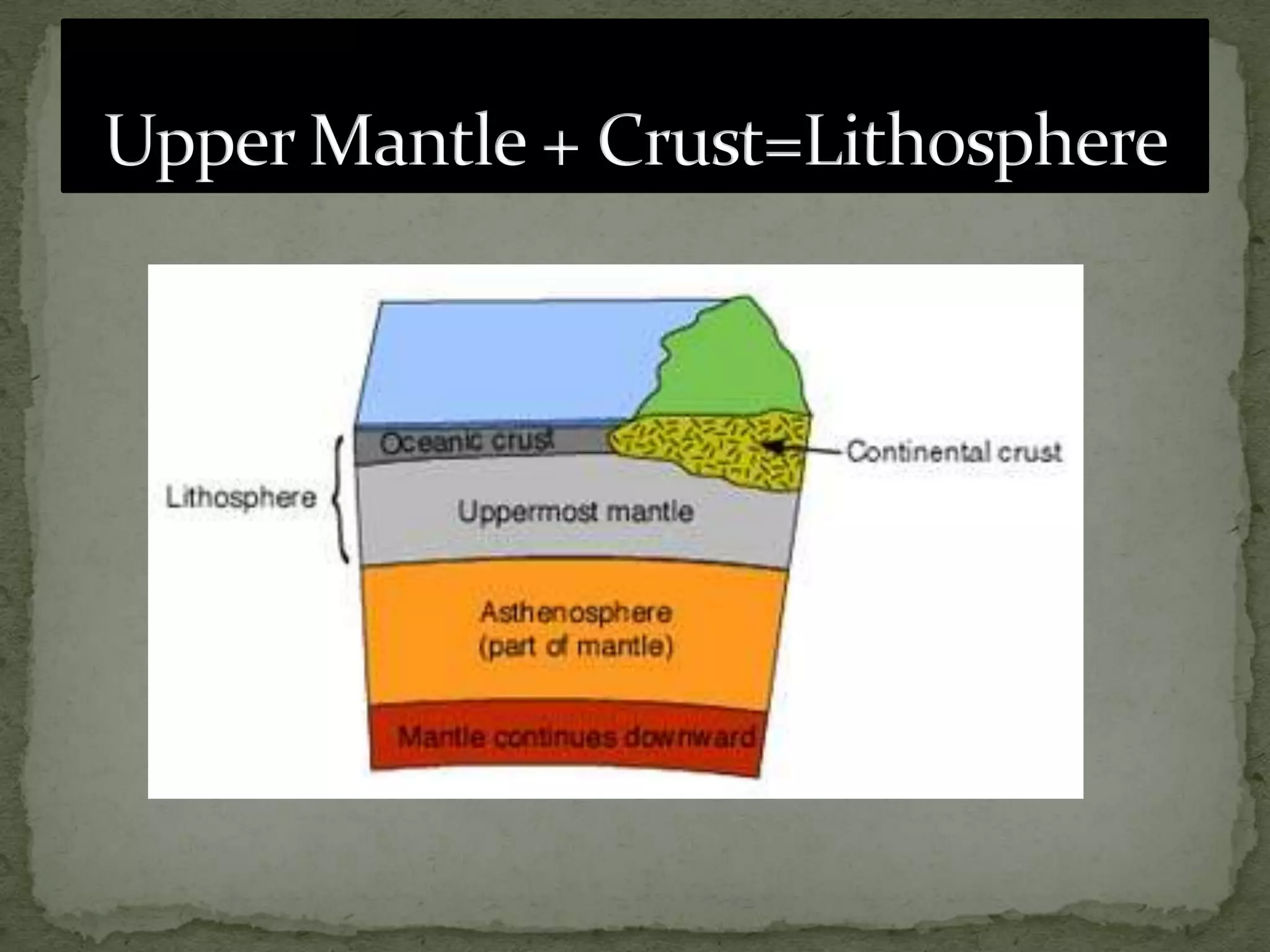
 2. Mantle

 A layer of hot rock
 The uppermost part of the mantle and the

crust together form a rigid layer called the
lithosphere
 Temperature and pressure in the mantle
increase with depth
 Layer beneath the lithosphere that is less rigid
then the rock above it is the asthenosphere.
The material in this layer can flow slowly

Extra: Sometimes it’s called the
3. The core
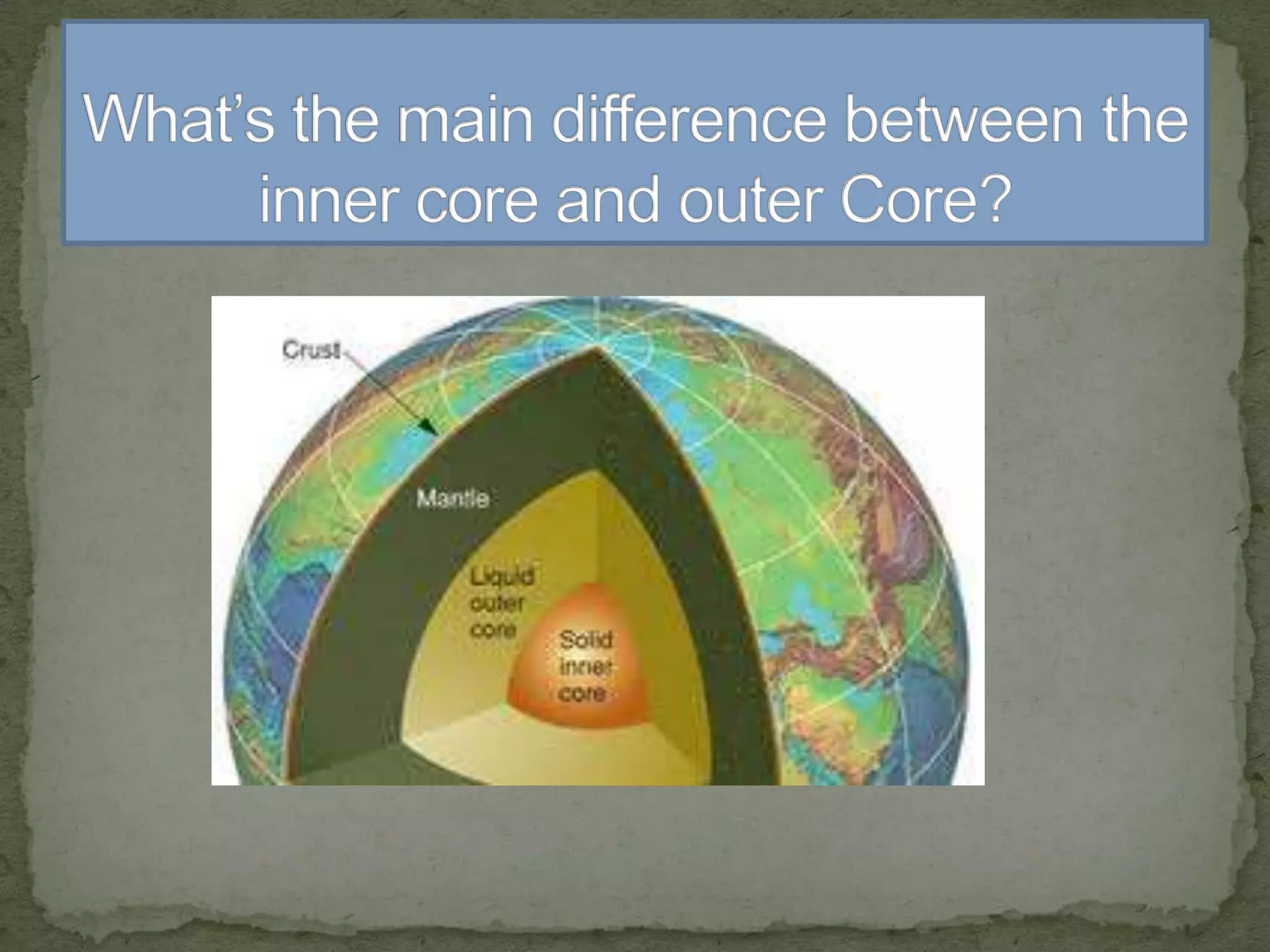
 Metal iron and nickel make up both parts
of the core
 Outer core is a layer of molten metal that
surrounds the inner core (LIQUID)
 Inner core is a dense ball of SOLID
metal, where extreme pressure squeezes
the atoms of iron and nickel so much that
they cannot spread out and become a
liquid.
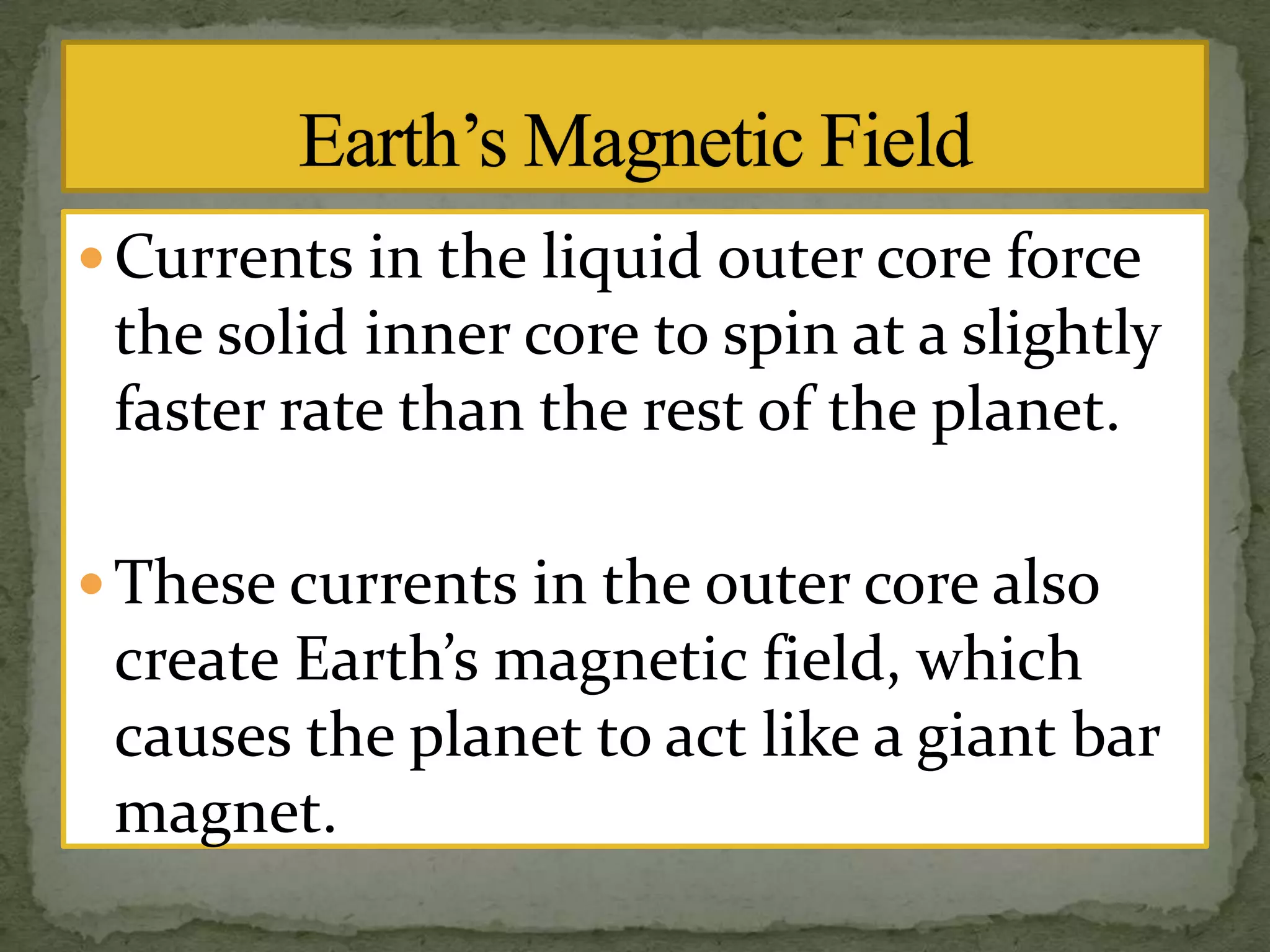
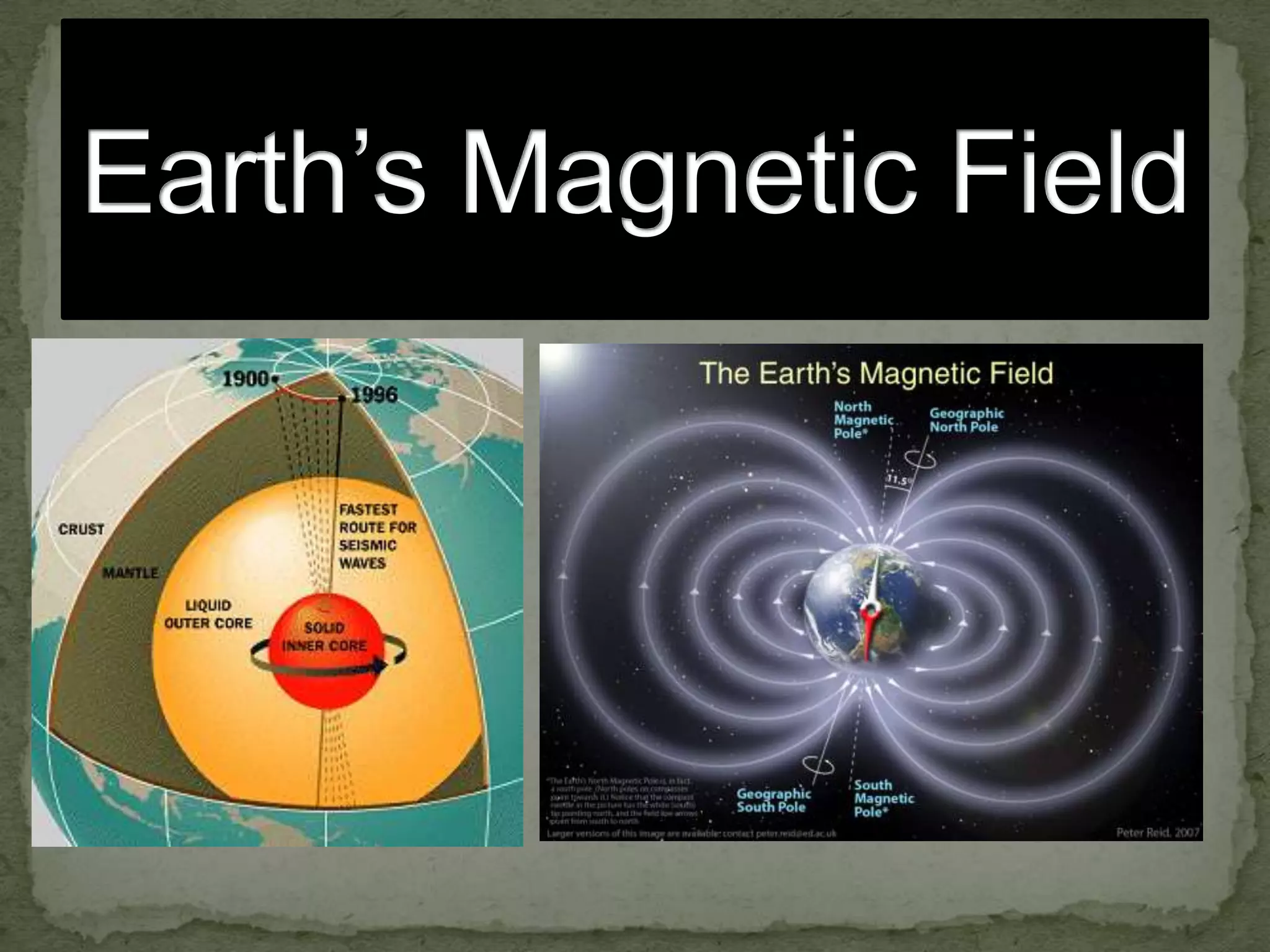
 Currents in the liquid outer core force

the solid inner core to spin at a slightly
faster rate than the rest of the planet.
 These currents in the outer core also

create Earth’s magnetic field, which
causes the planet to act like a giant bar
magnet.
1.

What are the four main
layers of the Earth?

2.

What is the difference
between the oceanic
and continental crust?

3.

What’s the difference
between the inner and
outer core?

Earths structure

  • 1.
  • 3.
    A short videoClip http://www.youtube.com/watch?v=ryrX AGY1dmE&feature=related
  • 5.
    How do weknow what it looks like?  Geologist record the seismic waves that earthquakes make and study how they travel through Earth.  The speed of these seismic waves and the path they take reveals how the planet is put together.
  • 6.
     Temperature –increases as you descend  Pressure (force pushing on a surface area)- the deeper you go the greater the pressure.
  • 7.
    1. Crusts  Layerof rock that forms Earth’s outer skin  Includes both the dry land (continental) and ocean floor (oceanic) Extra: Oceanic is DENSER so it sits BELOW the continental
  • 8.
    density the amount ofmass in a given space
  • 10.
     The deepesthole ever drilled into the continental crust was in the Kola Peninsula, in Russia.  It was 12,226 meters deep!  Because the temperature of the crust increases with depth, it is impossible to drill much deeper into the crust.
  • 11.
     2. Mantle A layer of hot rock  The uppermost part of the mantle and the crust together form a rigid layer called the lithosphere  Temperature and pressure in the mantle increase with depth  Layer beneath the lithosphere that is less rigid then the rock above it is the asthenosphere. The material in this layer can flow slowly Extra: Sometimes it’s called the
  • 13.
    3. The core Metal iron and nickel make up both parts of the core  Outer core is a layer of molten metal that surrounds the inner core (LIQUID)  Inner core is a dense ball of SOLID metal, where extreme pressure squeezes the atoms of iron and nickel so much that they cannot spread out and become a liquid.
  • 15.
     Currents inthe liquid outer core force the solid inner core to spin at a slightly faster rate than the rest of the planet.  These currents in the outer core also create Earth’s magnetic field, which causes the planet to act like a giant bar magnet.
  • 17.
    1. What are thefour main layers of the Earth? 2. What is the difference between the oceanic and continental crust? 3. What’s the difference between the inner and outer core?