1
Ch. Allaylay Devi
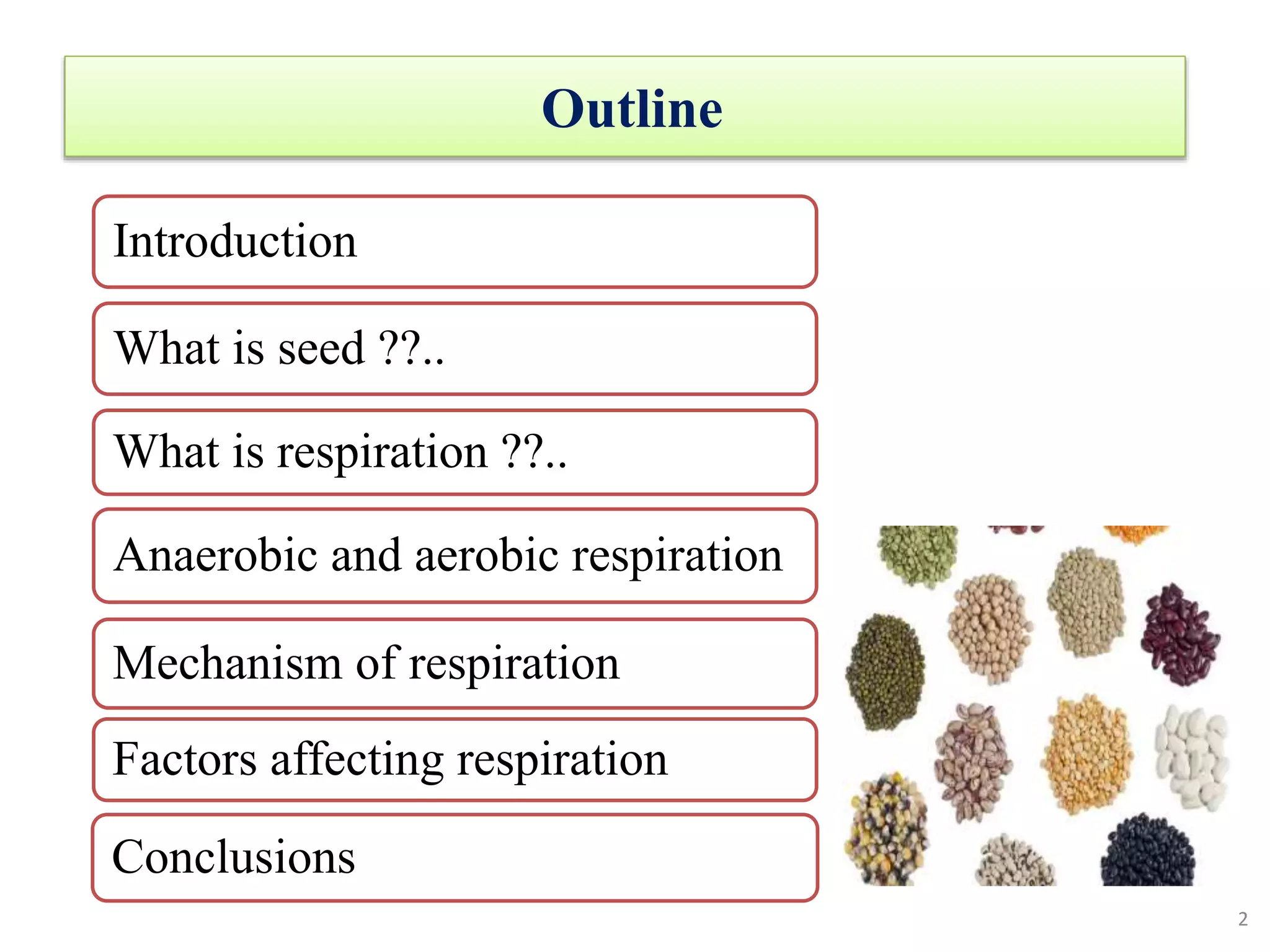
Outline
2
Introduction
What is seed ??..
What is respiration ??..
Anaerobic and aerobic respiration
Mechanism of respiration
Factors affecting respiration
Conclusions
Introduction
The seed, containing the embryo as the new plant in miniature, is
structurally and physiologically equipped to sustain the growing
seedling until it establish as new plant.
Plants are known for their ability to convert Carbon dioxide into
Oxygen.
However, all aerobic organisms take in Oxygen and give off Carbon
dioxide as long as they are alive.
This is true for plants as well as animals. During germination, seeds
use sugars and other molecules as a substrate for respiration.
Respiration is a process of oxidizing food to release energy inside cells.
3
What is seed ???
4
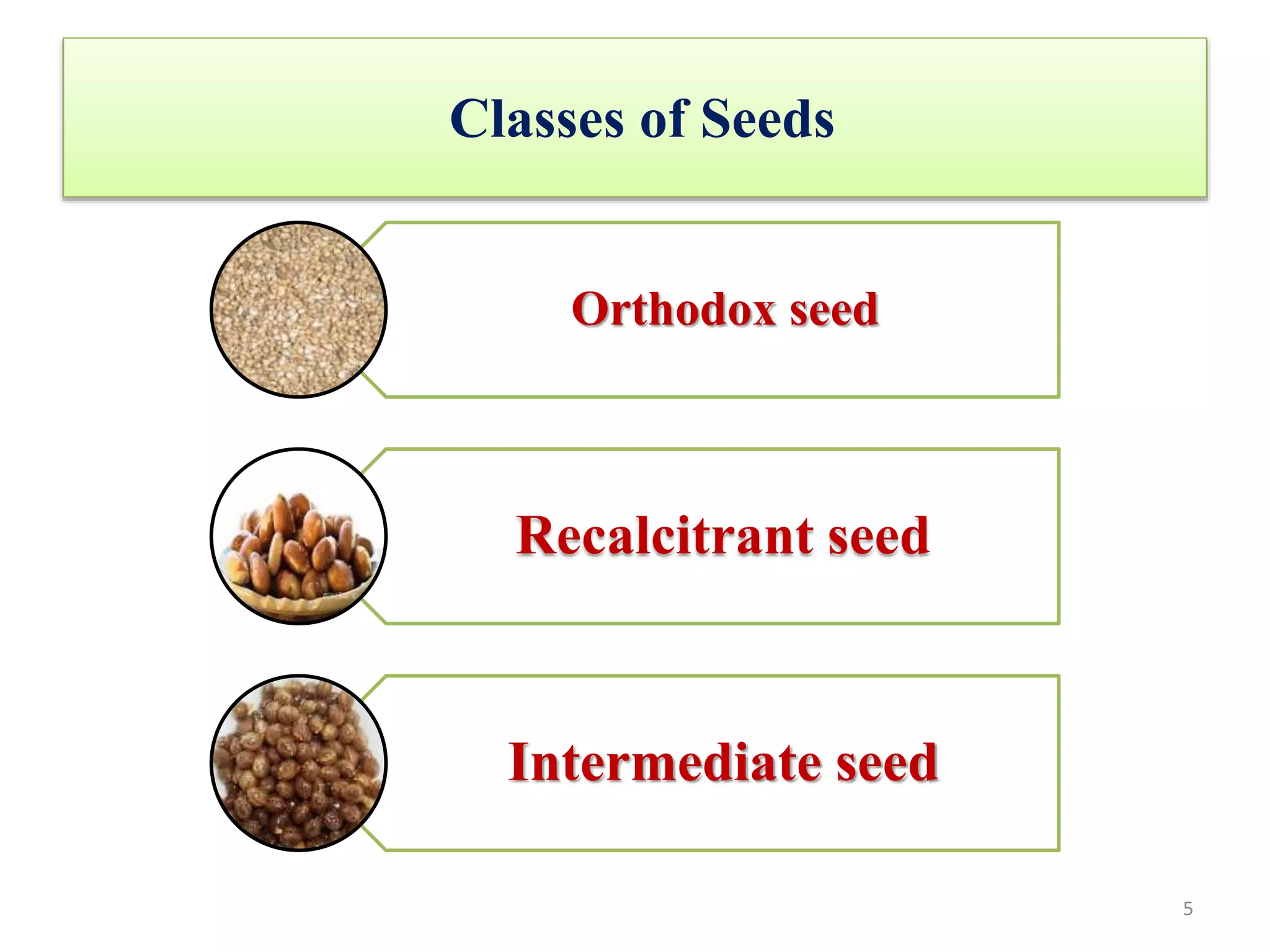
Classes of Seeds
Orthodox seed
Recalcitrant seed
Intermediate seed
5
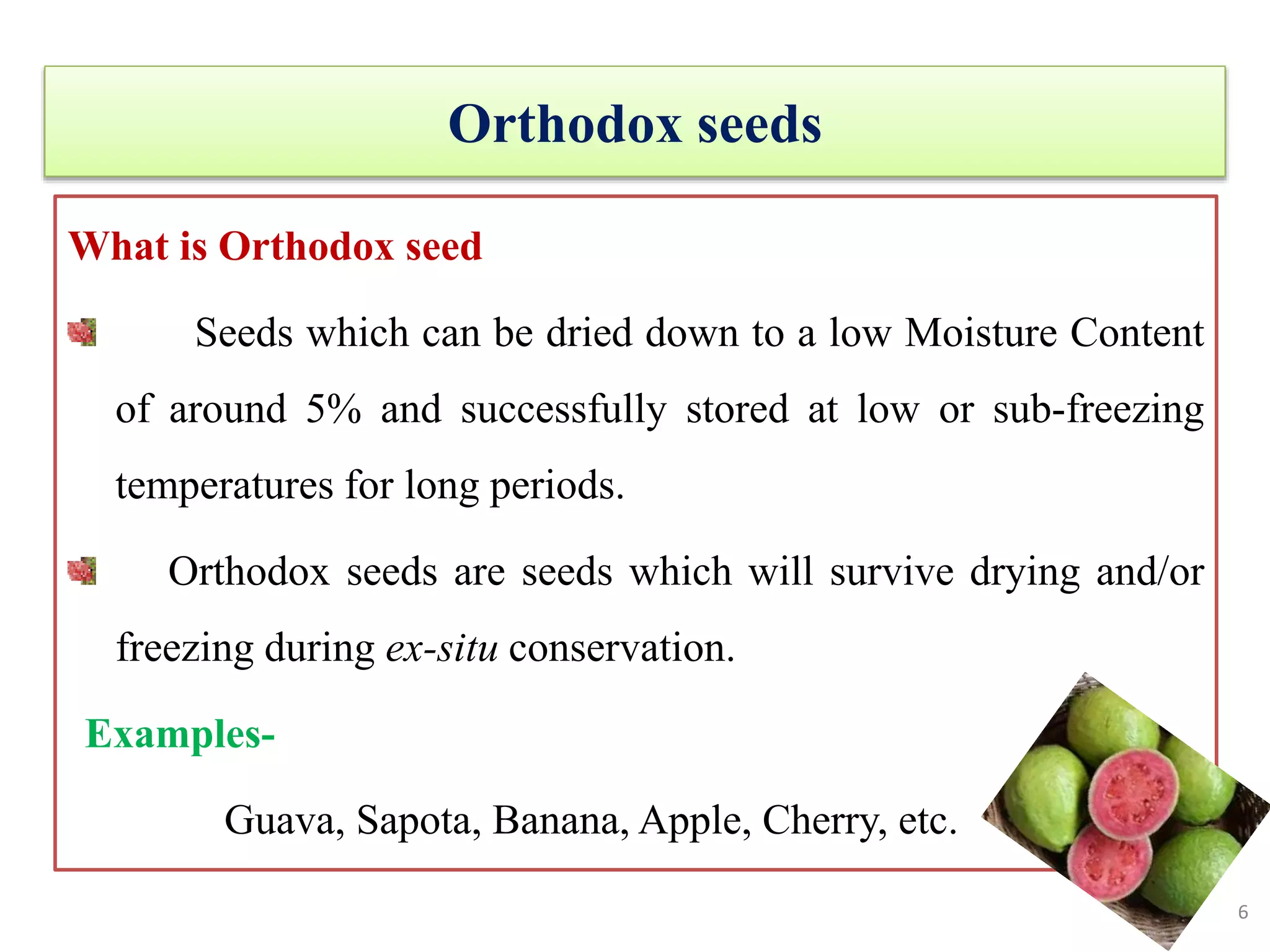
Orthodox seeds
What is Orthodox seed
Seeds which can be dried down to a low Moisture Content
of around 5% and successfully stored at low or sub-freezing
temperatures for long periods.
Orthodox seeds are seeds which will survive drying and/or
freezing during ex-situ conservation.
Examples-
Guava, Sapota, Banana, Apple, Cherry, etc.
6
Recalcitrant seed
What is recalcitrant seed
Seeds which cannot survive drying below a relatively high
moisture content (30–50%) and which cannot be successfully
stored for long periods.
Recalcitrant seeds are seeds that do not survive drying and
freezing during ex-situ conservation.
Examples-
Jamun, Jackfruit, Mango, Litchi, Mangosteen,
Durian, Avocado, Citrus, Rambutan, etc.
7
Intermediate seeds
Which exhibit the drying tolerance characteristic of the
orthodox seeds but are sensitive to low temperature storage
like the recalcitrant seeds.
Examples-
Papaya, Macadamia nut
8
What is respiration ???
 Respiration is the process during which simple carbohydrates,
like glucose, break down into simpler substances and liberate
carbon dioxide and energy.
 The compound used, or oxidized, during respiration is called a
respiratory substrate.
 Carbohydrates, fats, and proteins are examples of respiratory
substrates.
 The rate of respiration can be measured in terms of gas
exchange, that is, consumption of the respiratory substrate
oxygen, or evolution of carbon dioxide
9
Respiratory Quotient
 As we know, during aerobic respiration, oxygen is consumed
and carbon dioxide is released. The respiratory quotient (RQ)
is the ratio of CO2 produced to that of the O2 consumed while
food is being metabolized.
10
Why is respiration important ???
 Provides energy needed by the cell and gives energy to the whole
organism
 During respiration, food energy is changed into a form that plant
cells can used.
 Aerobic respiration returns CO2 to the atmosphere to be used again
in photosynthesis.
 Plants are known for their ability to convert Carbon dioxide into
Oxygen.
 During germination, seeds use sugars and other molecules as a
substrate for respiration
11
How seeds respired ???
 Seeds don't breathe in the same way mammals do. Instead, they breathe at a
cellular level.
 In cellular respiration, the seed uses stored sugars, water and oxygen to burn
energy at a cellular level and germinate, or sprout.
 Respiration increases dramatically as the seed sprouts. The seed continues
to breathe until the plant can make its own food via the process of
photosynthesis.
 The oxygen comes from tiny pockets of air in the soil. Most loose soil has
plenty of air for seeds, but if the seed is surrounded by water, it will not be
able to obtain enough oxygen to germinate.
12
Seeds are alive !
 To function in propagation, seeds must be alive
 Seeds respire, albeit slowly
- consume O2, produce CO2 and H2O
 Seeds have a finite lifespan
- they cannot be stored indefinitely
13
Types of Respiration
 Reactions are catalysed by enzymes
 Main food substance which oxidized in cells is glucose
C6H12O6 + 6O2 enzymes 6CO2 + 6H2O+ energy
 As it takes place in all living cells, it is called cellular respiration
which is used to produce energy for cells to used
 Two types of it :
i. Anaerobic respiration and
ii. Aerobic respiration
14
Anaerobic respiration
 Anaerobic respiration is a type of respiration that does not use oxygen.
 It is used when there is not enough oxygen for aerobic respiration.
glucose → lactic acid (+ energy released)
 It also takes place in plants and some microbial cells in the presence of
little or no oxygen. Examples of this include the roots of plants in
waterlogged soils and bacteria in puncture wounds.
 Anaerobic respiration in plant cells and some microorganisms (such as
yeast) produces ethanol and carbon dioxide, as opposed to lactic acid.
glucose → ethanol + carbon dioxide (+ energy released)
 Aerobic respiration releases more energy per glucose molecule than
anaerobic respiration.
15
Mechanism of Anaerobic Respiration
• It is the process of release of energy in enzymatically controlled
step-wise incomplete degradation of organic food without oxygen
being used as oxidant.
• Therefore, end products are never completely inorganic.
• The term anaerobic respiration is often used in connection with
higher organisms where it occurs in the roots of some water-logged
plants, muscles of animals and as supplementary mode of respiration
in massive tissues.
16
Aerobic Respiration
 Aerobic respiration is the chemical reaction used to release
energy from glucose. It is called aerobic because oxygen from
the air is also needed.
glucose + oxygen → carbon dioxide + water (+ energy)
17
Mechanism of Aerobic Respiration
 There are four steps for aerobic respiration:
i. Glycolytic breakdown of glucose to pyruvic acid
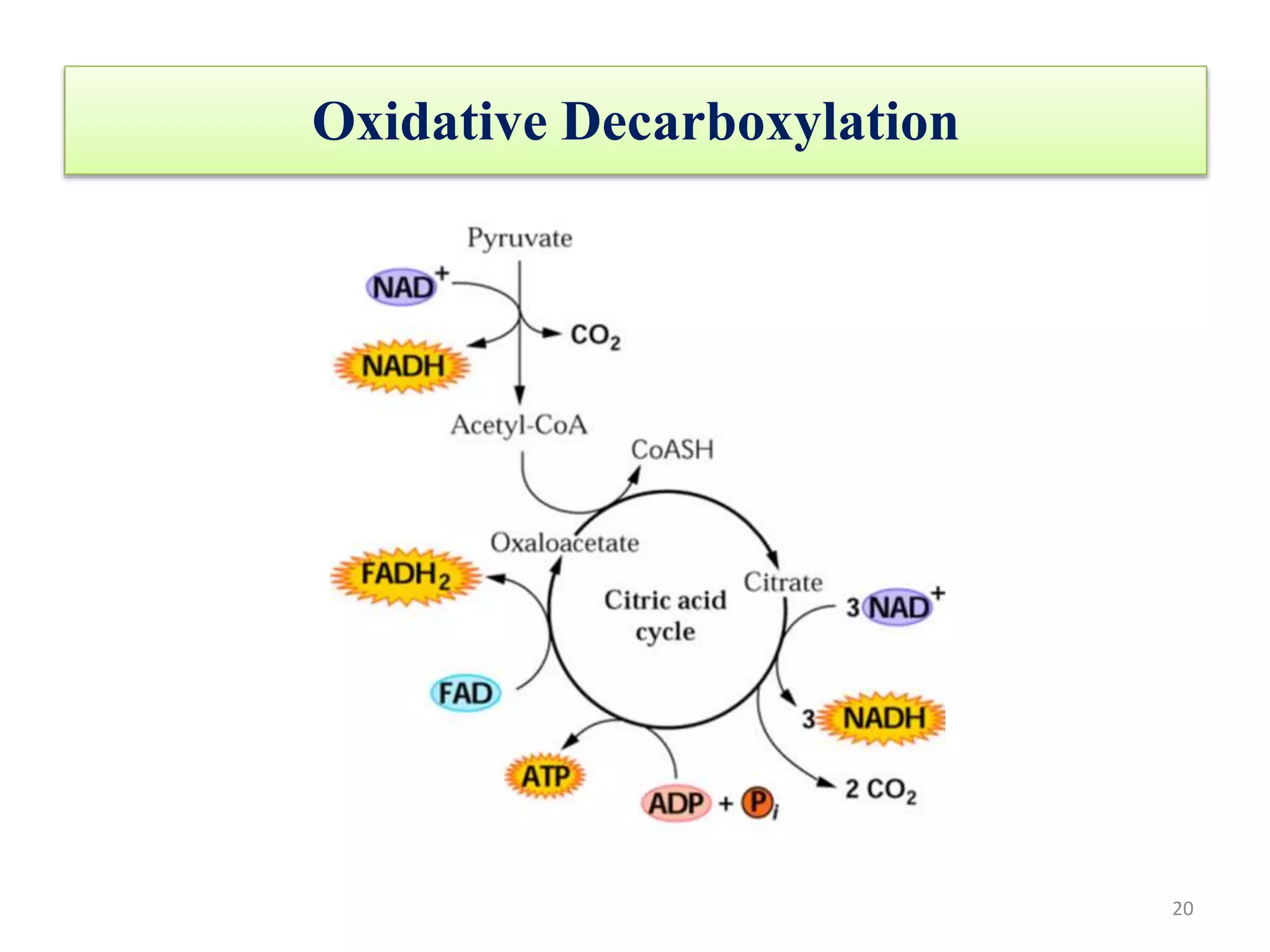
ii. Oxidative decarboxylation of pyruvic acid to acetyl coenzyme A
iii. Kreb’s cycle
iv. Terminal oxidation and phosphorylation in respiratory chain
18
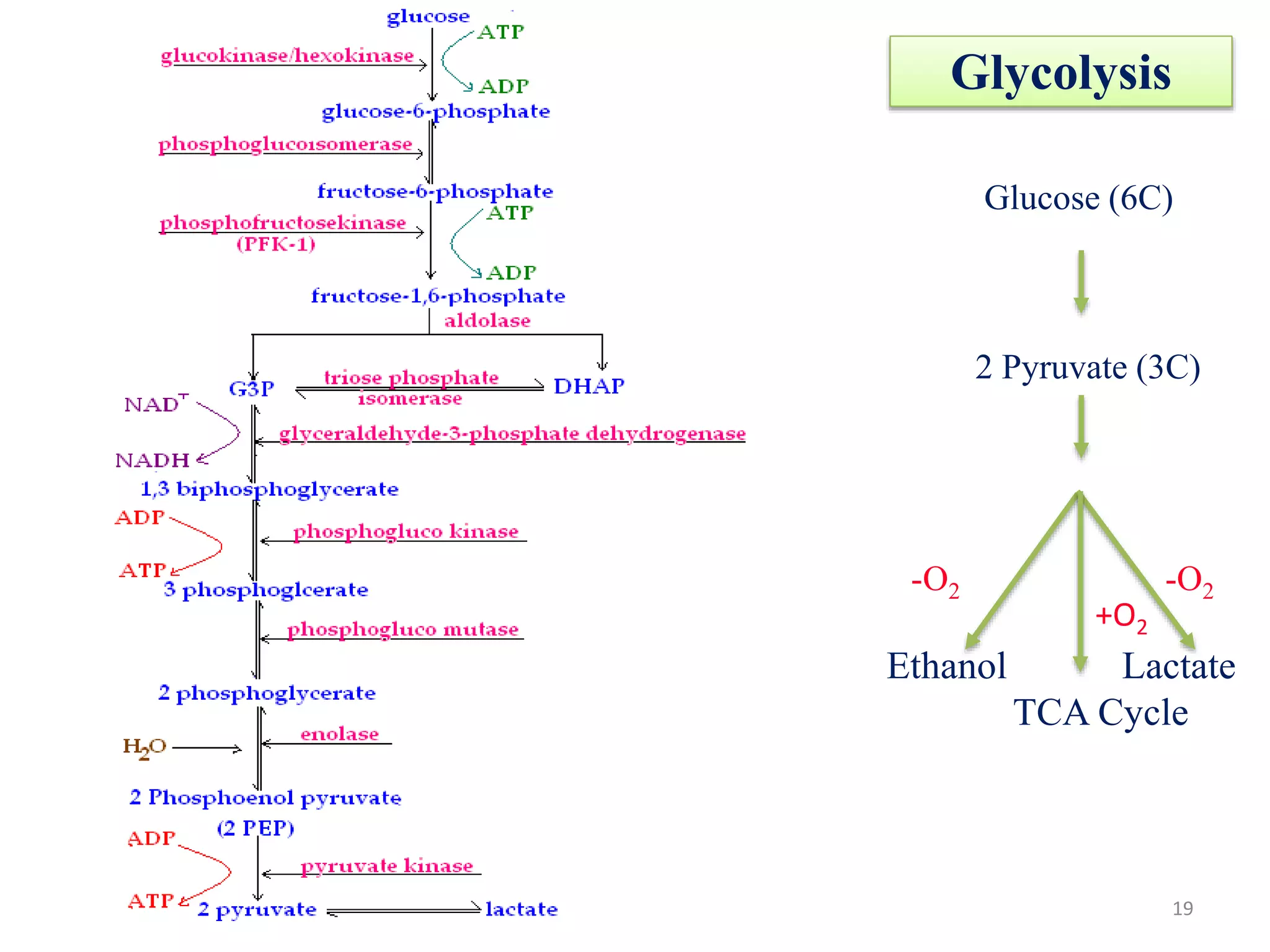
Glycolysis
19
Glucose (6C)
2 Pyruvate (3C)
-O2 -O2
Ethanol Lactate
TCA Cycle
+O2
Oxidative Decarboxylation
20
21
TCA cycle/ Kreb’s cycle
Electron Transport and Oxidative Phosphorylation
22
NADH and FADH2
H+e-
H+e-
4e- + 4H+ + O2 2H2O
ATP
Cyt. oxidase
Three Stages of Respiration
 Glycolysis
– cytoplasm
– with or without oxygen present
– breaks glucose (6C) into 2 pyruvates (3C)
 TCA Cycle
– mitochondrial matrix
– only if oxygen present
– converts pyruvate via acetyl CoA into CO2; generates NADH and FADH2
 Electron Transport Chain
– mitochondrial membranes = cristae
– transfers electrons from NADH and FADH2 to reduce O2 to H2O and
generate ATP
23
Factors Affecting Respiration
 The eight environmental factors effecting the rate of respiration are:
(1) Oxygen Content of the Atmosphere
(2) Effect of Temperature
(3) Effect of Light
(4) Effect of Water Contents
(5) Effect of Respirable Material
(6) Effect of Carbon Dioxide Concentration
(7) Protoplasmic Conditions and
(8) Other Factors.
24
Oxygen Content of the Atmosphere
 The percentage of oxygen in the surrounding atmosphere greatly influence the rate
of respiration.
 But reduction of the oxygen content of the air, however, causes no significant
lowering in the respiratory rate until the percentage drops to about 10%.
 The plant tissues which ordinarily have low rate of respiration are not as seriously
effected by low concentration of oxygen as those which have higher rate of
respiration.
 In certain plants, like rice, on removal of oxygen the rate of respiration in terms of
total carbon dioxide produced actually increases.
 This indicates that anaerobic respiration comes into action when oxygen is no
longer available and that the plant has to respire faster
25
Effect of Temperature:
 Like most chemical reactions, the rate of respiration is greatly influenced
by temperature
 Different plants or plant parts may show considerable variation in regard to
optimum temperature for respiration.
 In certain cases the rate of respiration increases at lower temperature.
 E. F. Hopkins (1925) reported that the rate of respiration in white potatoes
increases if the temperature in lowered to just above freezing point.
 This increase in the rate of respiration is primarily due to increase in the
quantity of respirable materials (such as soluble carbohydrates) which tend
to accumulate in Irish potato at temperature slightly above 0°C.
26
 At temperatures higher than the optimum for respiration, the rate of
respiration (in terms of oxygen utilized and CO2 produced) falls due to
inter-conversions of respirable materials.
 For instance, fats may be formed from carbohydrates by a reaction in which
carbon dioxide is utilized and oxygen produced.
 At very high temperatures, the rate of respiration falls significantly and may
even come to stand still because of protoplasmic injuries
27
Cont…
Effect of Light
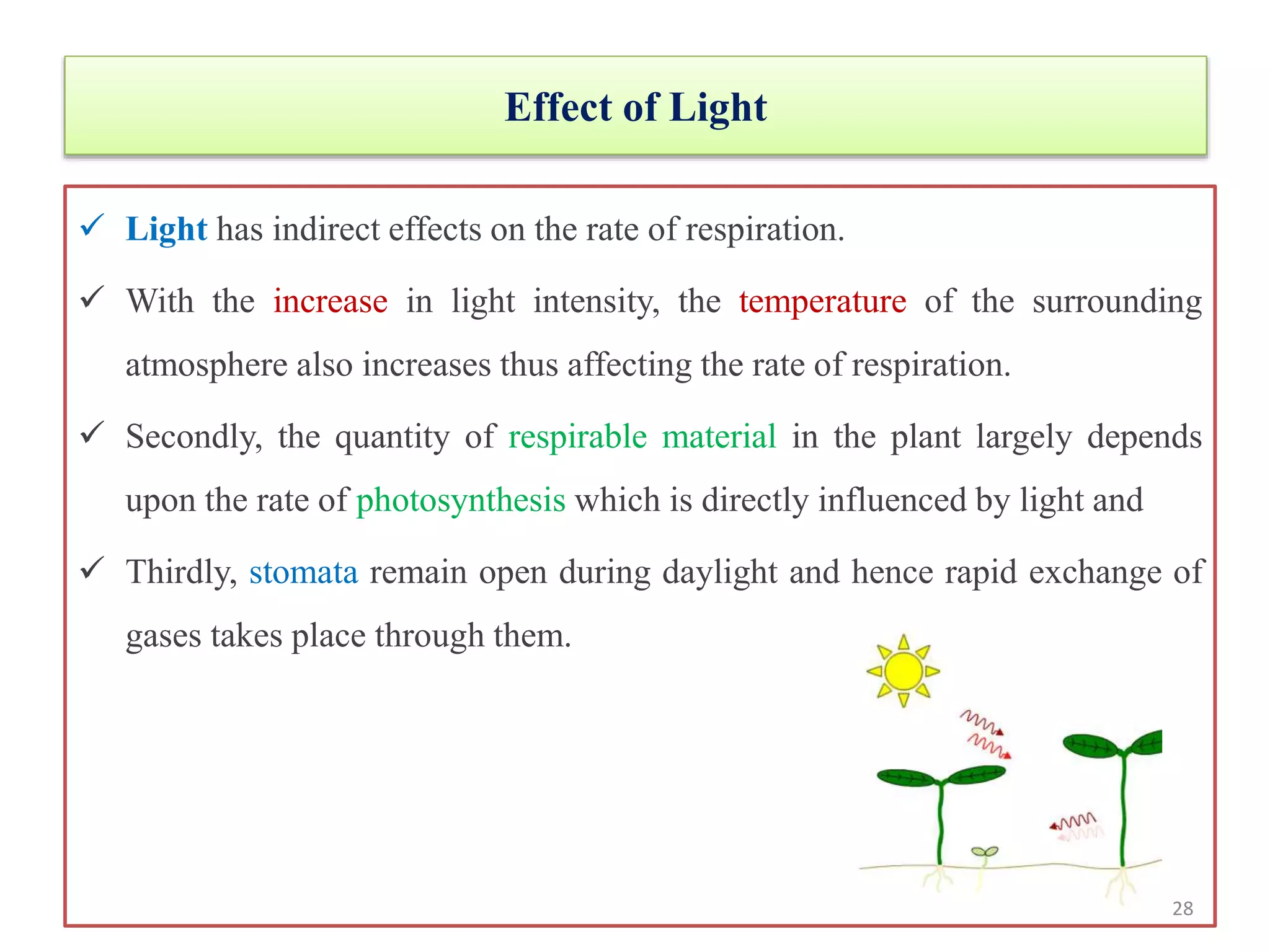
 Light has indirect effects on the rate of respiration.
 With the increase in light intensity, the temperature of the surrounding
atmosphere also increases thus affecting the rate of respiration.
 Secondly, the quantity of respirable material in the plant largely depends
upon the rate of photosynthesis which is directly influenced by light and
 Thirdly, stomata remain open during daylight and hence rapid exchange of
gases takes place through them.
28
Effect of Water Contents
 Over a certain range, water content of the plant tissue greatly influence its
rate of respiration.
 In most of the storage able seeds the moisture content is kept below the
point which allows a rapid respiration.
 With the increase in moisture content, the rate of respiration is likely to go
up with the result a rapid loss of viability will occur and at the same time
the temperature will also rise and the grain may be spoiled.
 Unlike most green tissues, xerophytes, lichens and leafy mosses
(Sphagnum species) can be brought to an air-dry condition at low humidity
without any apparent loss in their viability.
29
Effect of Respirable Material
 Amount and kind of respirable material present in the cells greatly effect the
rate and course of respiration.
 It has been shown that plants respire more rapidly after having been
exposed to conditions favourable for photosynthesis during which
carbohydrates are synthesized.
 Increase in respiration has also been observed to be associated with increase
in soluble sugars.
30
Effect of Carbon Dioxide Concentration
 The rate of respiration is normally not affected by increase of carbon
dioxide concentration in the surrounding atmosphere up to 19%, but as the
concentration increases from 10% to 80%, a progressive decrease in
respiration occurs.
 Specific response to higher CO2 concentration varies with the particular
kind of tissue and plant.
 The effect of CO2 concentration is more significant when the temperature
and oxygen supply are low.
 At a very high concentration of CO2 the plant tissues are injured or even
killed.
31
Protoplasmic Conditions
 The young growing tissues which have greater amount of protoplasm as
compare to older tissues, show higher rate of respiration.
 Their higher rate of respiration support the meristematic activities of the
cells by supplying large amount of energy.
 The degree of hydration of the protoplasm in the cells affects the rate, and
mechanical injury to plant tissues will accelerate respiration.
32
Other Factors
 Various chemicals, such as cyanides, azides and fluorides, have been
reported to possess respiration retarding properties through their effect on
respiratory enzymes.
 Respiration rate may likely be accelerated by low concentrations of the
compounds like ethylene, carbon monoxide, chloroform and ether.
 Chlorides of various minerals, like sodium, potassium, calcium and
magnesium have pronounced effect on the rate of respiration.
 Monovalent chlorides, like KCl and NaCl, increase the rate of respiration
while the divalent chlorides, such as MgCl2 and CaCl2 greatly decrease it.
 Steward and Preston (1941) found cations to depress respiration and
photosynthesis.
33
Conclusion
 Before seeds grow into plants they have to germinate and in order to do so
they absorb a lot of water that will help them respire at a much faster rate.
 Although plants can make sugars using the sun’s energy, when plants need
energy they have to metabolize their stored sugars through cellular
respiration.
 Seed germination can be determined by measuring water uptake or
respiration.
 Plant’s respiration rate is not consistent and depends on many factors.
34
Seed respiration 2

Seed respiration 2

  • 1.
  • 2.
    Outline 2 Introduction What is seed??.. What is respiration ??.. Anaerobic and aerobic respiration Mechanism of respiration Factors affecting respiration Conclusions
  • 3.
    Introduction The seed, containingthe embryo as the new plant in miniature, is structurally and physiologically equipped to sustain the growing seedling until it establish as new plant. Plants are known for their ability to convert Carbon dioxide into Oxygen. However, all aerobic organisms take in Oxygen and give off Carbon dioxide as long as they are alive. This is true for plants as well as animals. During germination, seeds use sugars and other molecules as a substrate for respiration. Respiration is a process of oxidizing food to release energy inside cells. 3
  • 4.
  • 5.
    Classes of Seeds Orthodoxseed Recalcitrant seed Intermediate seed 5
  • 6.
    Orthodox seeds What isOrthodox seed Seeds which can be dried down to a low Moisture Content of around 5% and successfully stored at low or sub-freezing temperatures for long periods. Orthodox seeds are seeds which will survive drying and/or freezing during ex-situ conservation. Examples- Guava, Sapota, Banana, Apple, Cherry, etc. 6
  • 7.
    Recalcitrant seed What isrecalcitrant seed Seeds which cannot survive drying below a relatively high moisture content (30–50%) and which cannot be successfully stored for long periods. Recalcitrant seeds are seeds that do not survive drying and freezing during ex-situ conservation. Examples- Jamun, Jackfruit, Mango, Litchi, Mangosteen, Durian, Avocado, Citrus, Rambutan, etc. 7
  • 8.
    Intermediate seeds Which exhibitthe drying tolerance characteristic of the orthodox seeds but are sensitive to low temperature storage like the recalcitrant seeds. Examples- Papaya, Macadamia nut 8
  • 9.
    What is respiration???  Respiration is the process during which simple carbohydrates, like glucose, break down into simpler substances and liberate carbon dioxide and energy.  The compound used, or oxidized, during respiration is called a respiratory substrate.  Carbohydrates, fats, and proteins are examples of respiratory substrates.  The rate of respiration can be measured in terms of gas exchange, that is, consumption of the respiratory substrate oxygen, or evolution of carbon dioxide 9
  • 10.
    Respiratory Quotient  Aswe know, during aerobic respiration, oxygen is consumed and carbon dioxide is released. The respiratory quotient (RQ) is the ratio of CO2 produced to that of the O2 consumed while food is being metabolized. 10
  • 11.
    Why is respirationimportant ???  Provides energy needed by the cell and gives energy to the whole organism  During respiration, food energy is changed into a form that plant cells can used.  Aerobic respiration returns CO2 to the atmosphere to be used again in photosynthesis.  Plants are known for their ability to convert Carbon dioxide into Oxygen.  During germination, seeds use sugars and other molecules as a substrate for respiration 11
  • 12.
    How seeds respired???  Seeds don't breathe in the same way mammals do. Instead, they breathe at a cellular level.  In cellular respiration, the seed uses stored sugars, water and oxygen to burn energy at a cellular level and germinate, or sprout.  Respiration increases dramatically as the seed sprouts. The seed continues to breathe until the plant can make its own food via the process of photosynthesis.  The oxygen comes from tiny pockets of air in the soil. Most loose soil has plenty of air for seeds, but if the seed is surrounded by water, it will not be able to obtain enough oxygen to germinate. 12
  • 13.
    Seeds are alive!  To function in propagation, seeds must be alive  Seeds respire, albeit slowly - consume O2, produce CO2 and H2O  Seeds have a finite lifespan - they cannot be stored indefinitely 13
  • 14.
    Types of Respiration Reactions are catalysed by enzymes  Main food substance which oxidized in cells is glucose C6H12O6 + 6O2 enzymes 6CO2 + 6H2O+ energy  As it takes place in all living cells, it is called cellular respiration which is used to produce energy for cells to used  Two types of it : i. Anaerobic respiration and ii. Aerobic respiration 14
  • 15.
    Anaerobic respiration  Anaerobicrespiration is a type of respiration that does not use oxygen.  It is used when there is not enough oxygen for aerobic respiration. glucose → lactic acid (+ energy released)  It also takes place in plants and some microbial cells in the presence of little or no oxygen. Examples of this include the roots of plants in waterlogged soils and bacteria in puncture wounds.  Anaerobic respiration in plant cells and some microorganisms (such as yeast) produces ethanol and carbon dioxide, as opposed to lactic acid. glucose → ethanol + carbon dioxide (+ energy released)  Aerobic respiration releases more energy per glucose molecule than anaerobic respiration. 15
  • 16.
    Mechanism of AnaerobicRespiration • It is the process of release of energy in enzymatically controlled step-wise incomplete degradation of organic food without oxygen being used as oxidant. • Therefore, end products are never completely inorganic. • The term anaerobic respiration is often used in connection with higher organisms where it occurs in the roots of some water-logged plants, muscles of animals and as supplementary mode of respiration in massive tissues. 16
  • 17.
    Aerobic Respiration  Aerobicrespiration is the chemical reaction used to release energy from glucose. It is called aerobic because oxygen from the air is also needed. glucose + oxygen → carbon dioxide + water (+ energy) 17
  • 18.
    Mechanism of AerobicRespiration  There are four steps for aerobic respiration: i. Glycolytic breakdown of glucose to pyruvic acid ii. Oxidative decarboxylation of pyruvic acid to acetyl coenzyme A iii. Kreb’s cycle iv. Terminal oxidation and phosphorylation in respiratory chain 18
  • 19.
    Glycolysis 19 Glucose (6C) 2 Pyruvate(3C) -O2 -O2 Ethanol Lactate TCA Cycle +O2
  • 20.
  • 21.
  • 22.
    Electron Transport andOxidative Phosphorylation 22 NADH and FADH2 H+e- H+e- 4e- + 4H+ + O2 2H2O ATP Cyt. oxidase
  • 23.
    Three Stages ofRespiration  Glycolysis – cytoplasm – with or without oxygen present – breaks glucose (6C) into 2 pyruvates (3C)  TCA Cycle – mitochondrial matrix – only if oxygen present – converts pyruvate via acetyl CoA into CO2; generates NADH and FADH2  Electron Transport Chain – mitochondrial membranes = cristae – transfers electrons from NADH and FADH2 to reduce O2 to H2O and generate ATP 23
  • 24.
    Factors Affecting Respiration The eight environmental factors effecting the rate of respiration are: (1) Oxygen Content of the Atmosphere (2) Effect of Temperature (3) Effect of Light (4) Effect of Water Contents (5) Effect of Respirable Material (6) Effect of Carbon Dioxide Concentration (7) Protoplasmic Conditions and (8) Other Factors. 24
  • 25.
    Oxygen Content ofthe Atmosphere  The percentage of oxygen in the surrounding atmosphere greatly influence the rate of respiration.  But reduction of the oxygen content of the air, however, causes no significant lowering in the respiratory rate until the percentage drops to about 10%.  The plant tissues which ordinarily have low rate of respiration are not as seriously effected by low concentration of oxygen as those which have higher rate of respiration.  In certain plants, like rice, on removal of oxygen the rate of respiration in terms of total carbon dioxide produced actually increases.  This indicates that anaerobic respiration comes into action when oxygen is no longer available and that the plant has to respire faster 25
  • 26.
    Effect of Temperature: Like most chemical reactions, the rate of respiration is greatly influenced by temperature  Different plants or plant parts may show considerable variation in regard to optimum temperature for respiration.  In certain cases the rate of respiration increases at lower temperature.  E. F. Hopkins (1925) reported that the rate of respiration in white potatoes increases if the temperature in lowered to just above freezing point.  This increase in the rate of respiration is primarily due to increase in the quantity of respirable materials (such as soluble carbohydrates) which tend to accumulate in Irish potato at temperature slightly above 0°C. 26
  • 27.
     At temperatureshigher than the optimum for respiration, the rate of respiration (in terms of oxygen utilized and CO2 produced) falls due to inter-conversions of respirable materials.  For instance, fats may be formed from carbohydrates by a reaction in which carbon dioxide is utilized and oxygen produced.  At very high temperatures, the rate of respiration falls significantly and may even come to stand still because of protoplasmic injuries 27 Cont…
  • 28.
    Effect of Light Light has indirect effects on the rate of respiration.  With the increase in light intensity, the temperature of the surrounding atmosphere also increases thus affecting the rate of respiration.  Secondly, the quantity of respirable material in the plant largely depends upon the rate of photosynthesis which is directly influenced by light and  Thirdly, stomata remain open during daylight and hence rapid exchange of gases takes place through them. 28
  • 29.
    Effect of WaterContents  Over a certain range, water content of the plant tissue greatly influence its rate of respiration.  In most of the storage able seeds the moisture content is kept below the point which allows a rapid respiration.  With the increase in moisture content, the rate of respiration is likely to go up with the result a rapid loss of viability will occur and at the same time the temperature will also rise and the grain may be spoiled.  Unlike most green tissues, xerophytes, lichens and leafy mosses (Sphagnum species) can be brought to an air-dry condition at low humidity without any apparent loss in their viability. 29
  • 30.
    Effect of RespirableMaterial  Amount and kind of respirable material present in the cells greatly effect the rate and course of respiration.  It has been shown that plants respire more rapidly after having been exposed to conditions favourable for photosynthesis during which carbohydrates are synthesized.  Increase in respiration has also been observed to be associated with increase in soluble sugars. 30
  • 31.
    Effect of CarbonDioxide Concentration  The rate of respiration is normally not affected by increase of carbon dioxide concentration in the surrounding atmosphere up to 19%, but as the concentration increases from 10% to 80%, a progressive decrease in respiration occurs.  Specific response to higher CO2 concentration varies with the particular kind of tissue and plant.  The effect of CO2 concentration is more significant when the temperature and oxygen supply are low.  At a very high concentration of CO2 the plant tissues are injured or even killed. 31
  • 32.
    Protoplasmic Conditions  Theyoung growing tissues which have greater amount of protoplasm as compare to older tissues, show higher rate of respiration.  Their higher rate of respiration support the meristematic activities of the cells by supplying large amount of energy.  The degree of hydration of the protoplasm in the cells affects the rate, and mechanical injury to plant tissues will accelerate respiration. 32
  • 33.
    Other Factors  Variouschemicals, such as cyanides, azides and fluorides, have been reported to possess respiration retarding properties through their effect on respiratory enzymes.  Respiration rate may likely be accelerated by low concentrations of the compounds like ethylene, carbon monoxide, chloroform and ether.  Chlorides of various minerals, like sodium, potassium, calcium and magnesium have pronounced effect on the rate of respiration.  Monovalent chlorides, like KCl and NaCl, increase the rate of respiration while the divalent chlorides, such as MgCl2 and CaCl2 greatly decrease it.  Steward and Preston (1941) found cations to depress respiration and photosynthesis. 33
  • 34.
    Conclusion  Before seedsgrow into plants they have to germinate and in order to do so they absorb a lot of water that will help them respire at a much faster rate.  Although plants can make sugars using the sun’s energy, when plants need energy they have to metabolize their stored sugars through cellular respiration.  Seed germination can be determined by measuring water uptake or respiration.  Plant’s respiration rate is not consistent and depends on many factors. 34